Midwest chefs share their most sentimental takes and nostalgic nods to food from home.
Being “Midwest nice” can be a compliment or criticism, depending on who you ask. It can insinuate passivity or being conflict-avoidant, or it can refer to the general warmth and hospitality of folks from the region. Whichever way you slice it, “Midwest” and “nice” are inseparable, and Rust Belt bars and restaurants are saying so with their chests. The Midwest’s meat-and-potatoes mindset doesn’t always get the best rap, but these haunts are hallowing their hometown foods—keeping them familiar, but making ‘em nice.
Cordelia
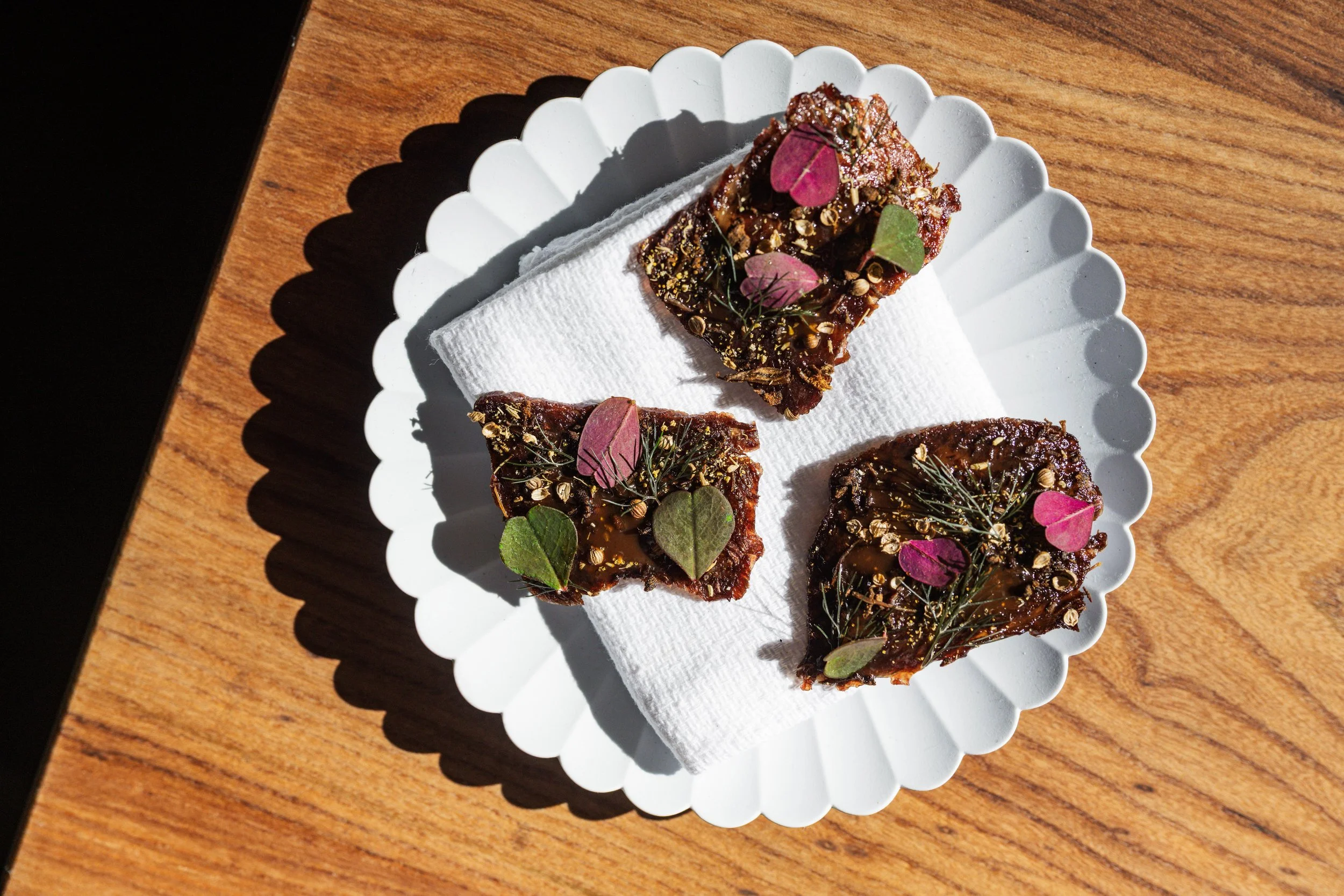
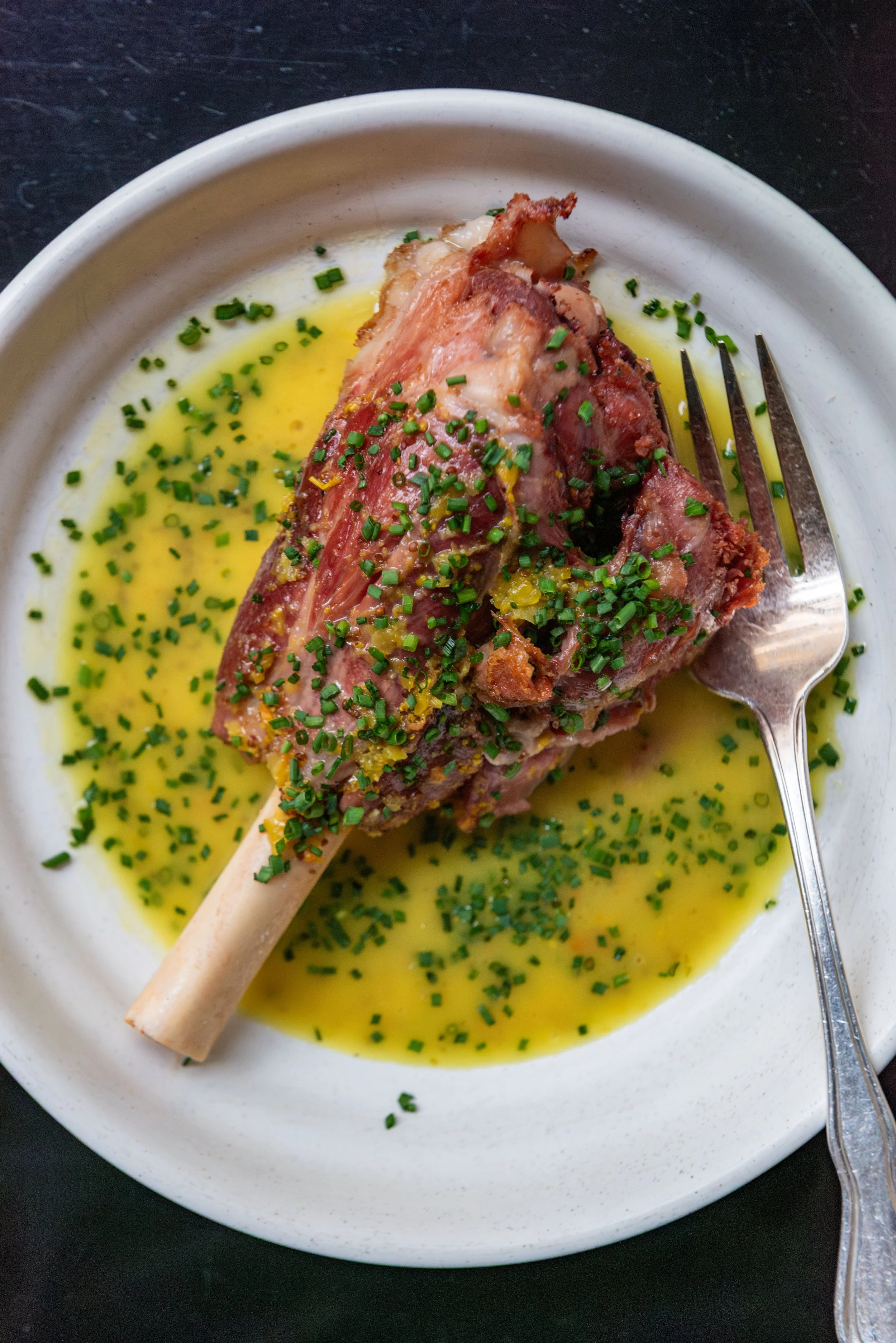
While at Cordelia, former behavioral therapist-turned-cook, Chef Ryan Boone, did double duty as the executive sous and pastry chef. And he’s Cleveland through and through. “A lot of our food celebrates what we grew up eating in the Midwest,” Boone says. “Corned beef is a big thing in Cleveland. We wanted to do some form of an homage to corned beef without just doing corned beef.” He experimented with several proteins, including beef tongue, before landing on lamb. “The lamb was the favorite,” Boone says, noting that brining it with corning spices tones down its gaminess, making it more approachable for diners who might otherwise shy away from the protein.
For the sauce, Boone wanted to capture the essence of what you’d expect on a corned beef plate—but reinvented. He took a mix of vegetables typically served alongside corned beef— cabbage, carrots, onion, fennel, celery—shredded them, salted them, and fermented them like a sauerkraut. Then, he built on those flavors with turmeric and mustard. The resulting fermented vegetable and mustard demi-glace was reduced in chicken stock, then mounted with butter and finished with a handful of chives. Boone originally served this dish on a tasting menu two years ago, and guests immediately recognized it as something that “tasted like Cleveland.” It has stayed on the menu ever since. “It’s a really straightforward meat-and-sauce sort of dish,” Boone says. “I’m about making it pretty, but it’s more important how it eats. A lot of our food reads as simple, but there’s so much going on underneath.”
Bad Medicine
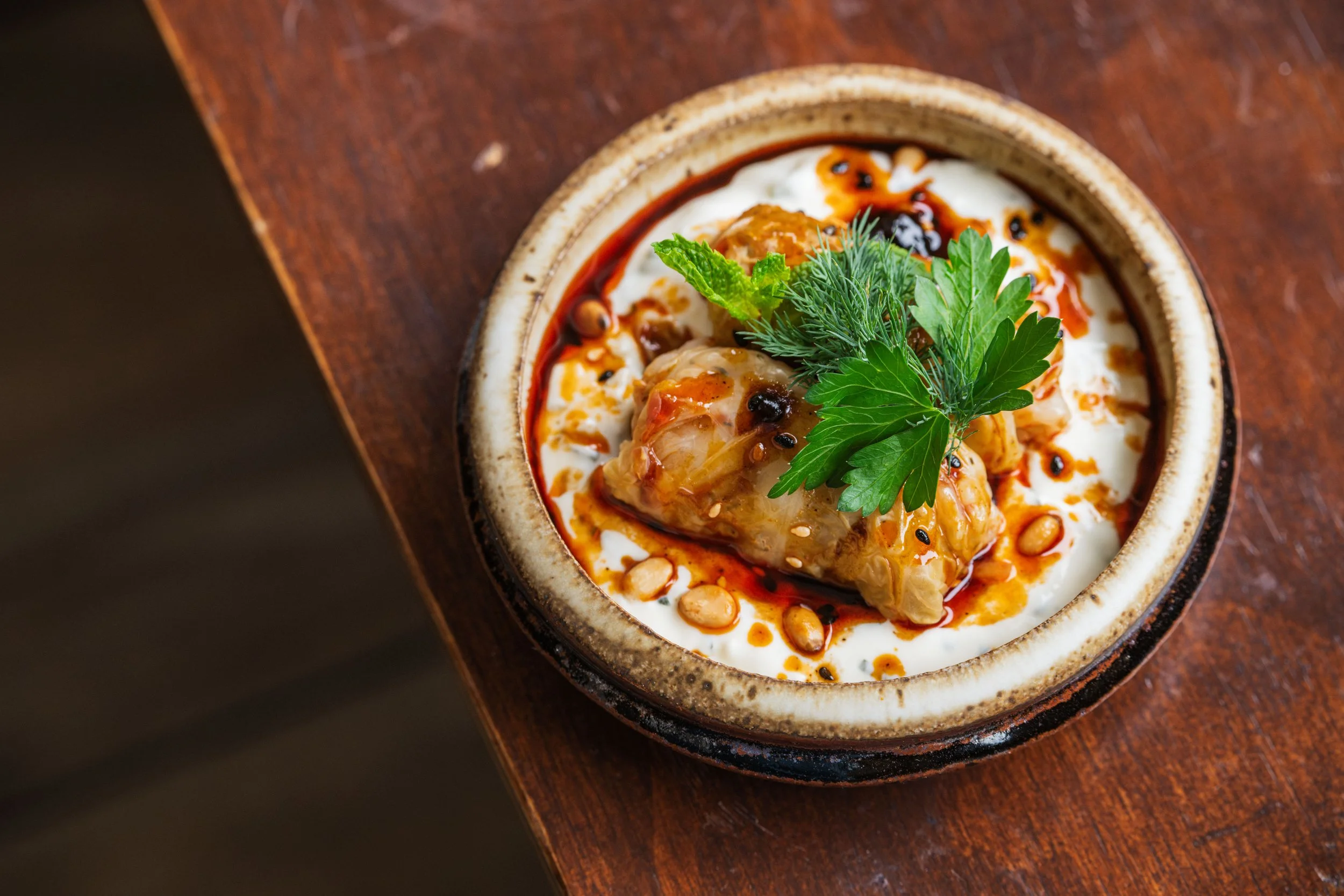
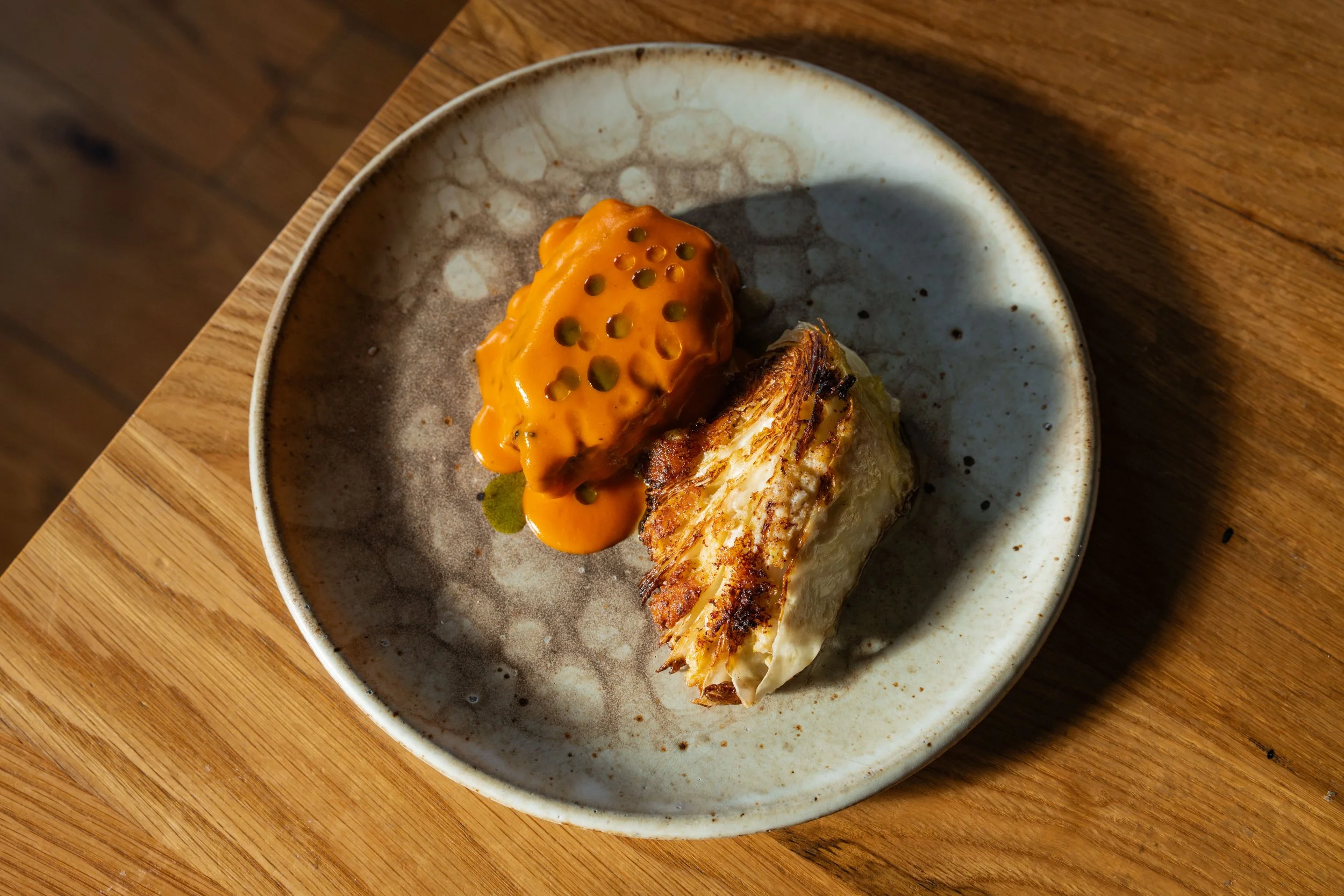
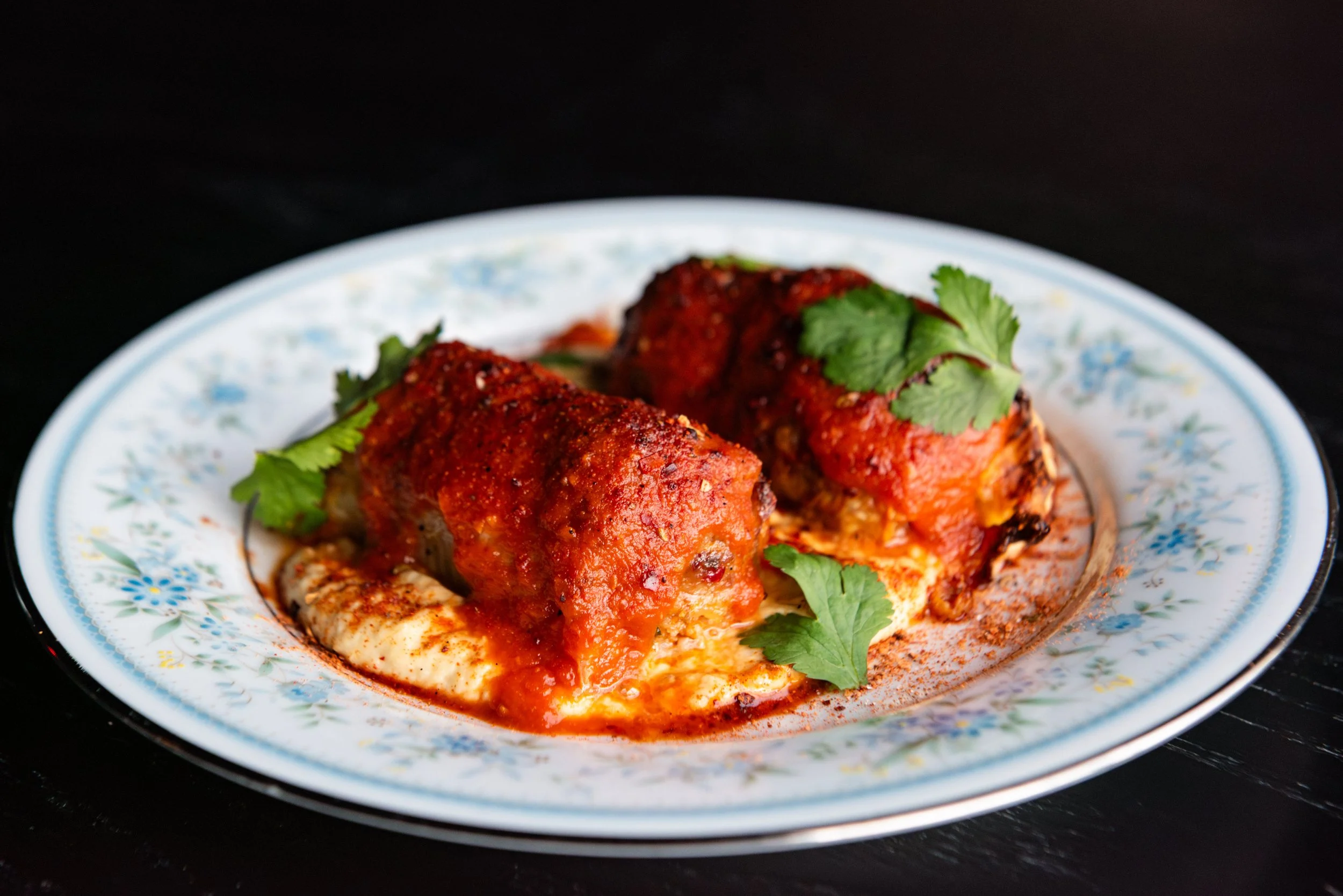
Chef Dennis Davis hated cabbage rolls growing up—both the ones his mom made, and the ones at the festivals around town. But, “I love the idea of them and wanted to create a version of them that I think is good,” he said. At Bad Medicine in Cleveland, he tries to rectify his childhood distastes and let his guests indulge in something memory-inducing, but with a little more heat (recipe on pg. 93). Davis starts with a 50-50 blend of pork and beef, and seasons them with paprika, chile powder, cayenne, oregano, and malt vinegar powder. He adds mirepoix and jasmine rice, and wraps the filling in Napa cabbage. They get cooked in and topped with a spicy harissa sauce, plated over chickpea hummus, and garnished with cilantro. “A lot of people come in and order the cabbage rolls and tell me that it reminds them of their childhood or cooking with their parents,” Davis says. “It feeds into this nostalgia.”
ROOD
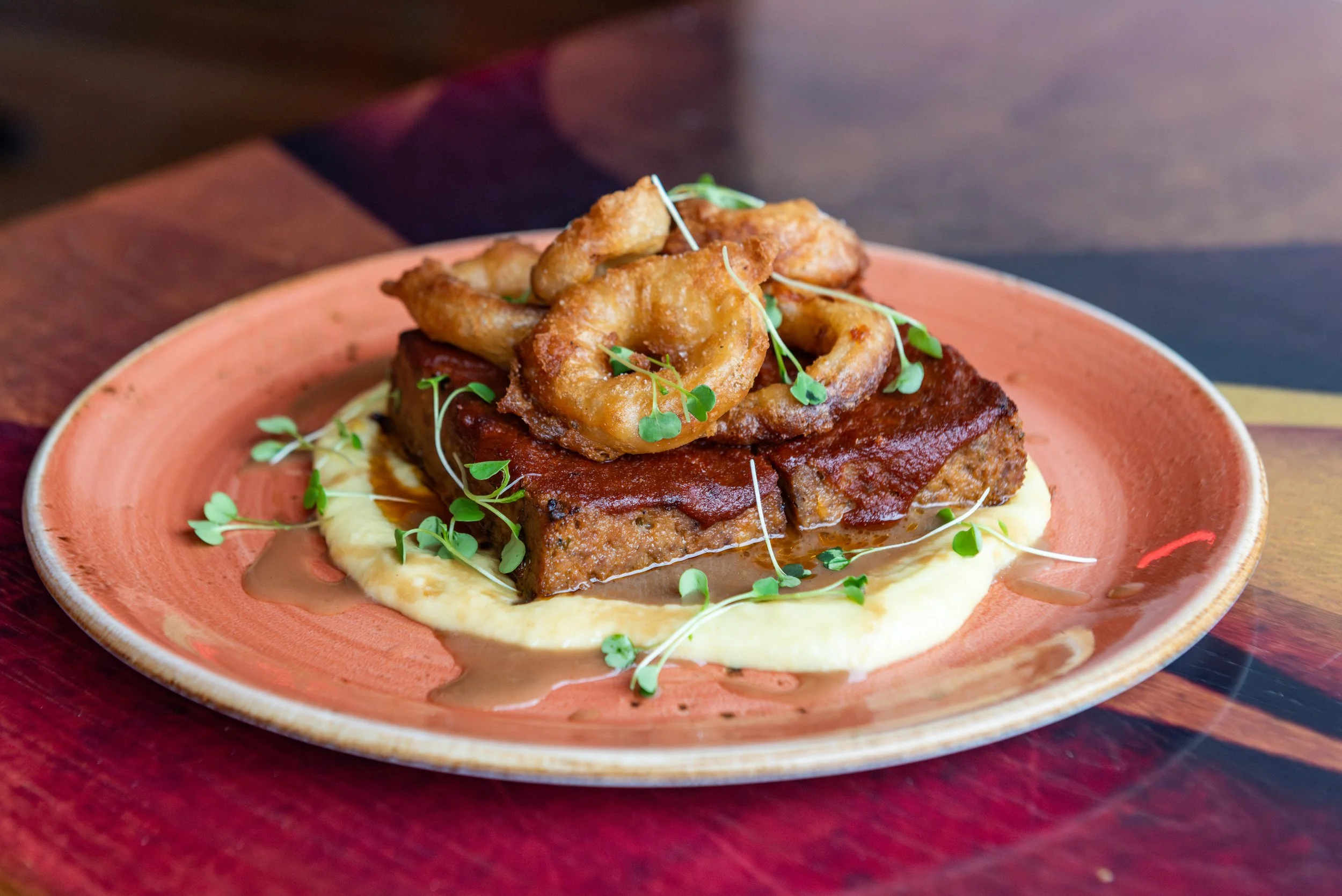
There’s nary a Midwesterner who doesn’t have at least one degree of separation from the gelatin-bound dreams (or nightmares) that meatloaf conjures up. Chef Josh Erickson is no exception—his grandmother made it all the time while he was growing up. At Rood, his fellow chef Ryan Cultrona uses the brick like forcemeat as a vessel for waste reduction as well as high level cooking. It’s truly not your (or his) grandmother’s meatloaf. “You can’t make this meatloaf at home,” Erickson says. “It’s next level.” He starts his meatloaf with wagyu beef scraps he sources from local vendors, which are then dry-aged with a house-made koji. Sweet potatoes used in the accompanying barbecue sauce are also fermented for seven days, and the sauce gets slathered across the top of a slice along with umeshu-battered onion rings. Beneath the meatloaf is a purée of Yukon Gold potatoes. “We don’t want to scare people away from ordering the dish,” Erickson said. “But we still want to put a twist on it.”
FrankieLynn Hot Dogs
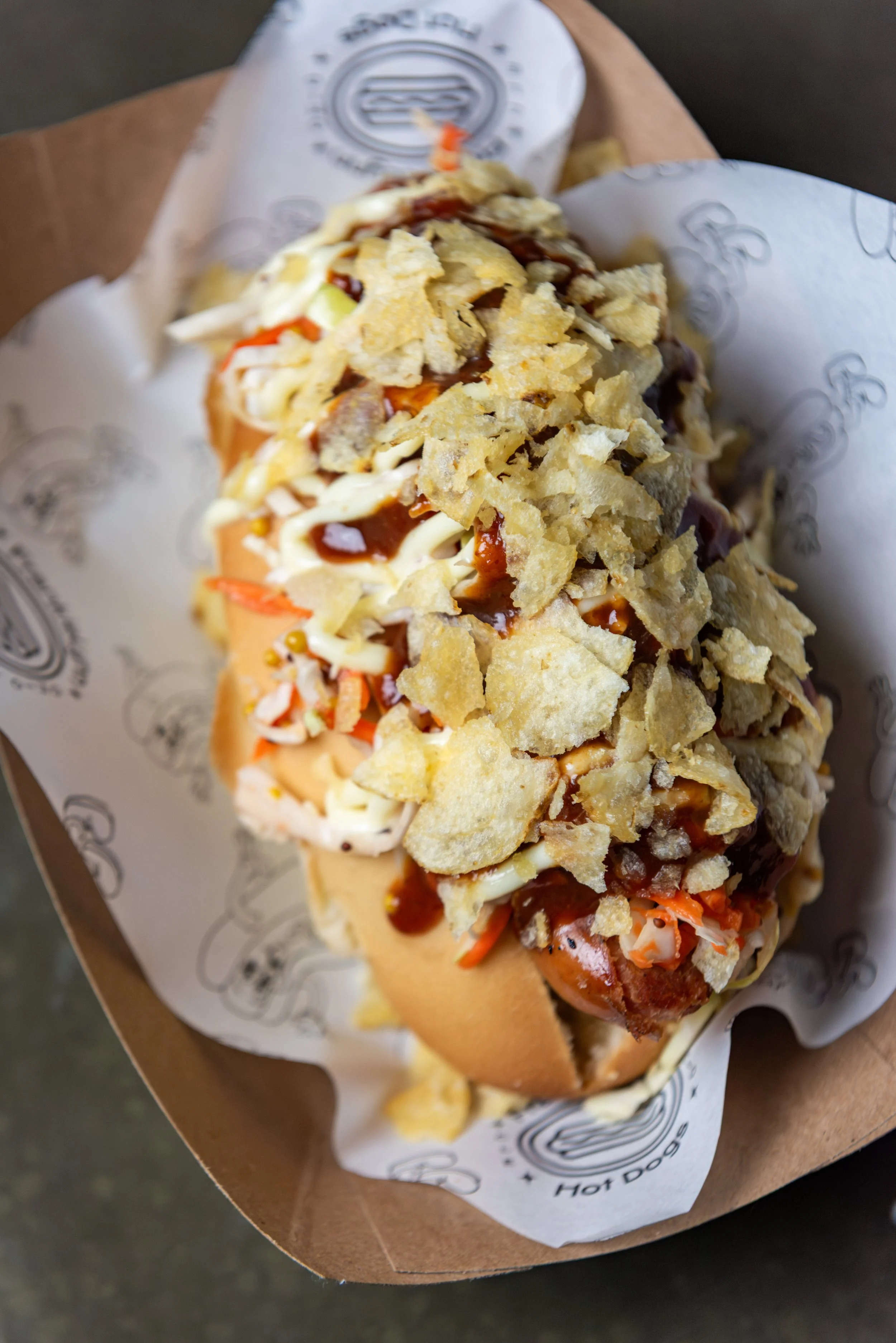
With roots in Cleveland’s restaurant scene, Owner Rachel Ventura turned a long-running joke about a hot dog cart into a mission driven business. There’s hardly anything more Americana than a hot dog: blue-collar, symbolic, and cheap. And while FrankieLynn Hot Dogs definitely ticks the first two boxes, her dogs are anything but cheap. She’s committed to sourcing everything locally whenever possible, from beef to condiments. She works with local farmers, artisans, and small businesses— like J&J Czuchraj Meats for beef, Pastry Chef Nolan Tidwell for buns, and Pop Mustards for mustard. The philosophy behind FrankieLynn begs the question: why represent Midwestern food with anything but Midwestern ingredients? Chef Lloyd Foust, Ventura’s life and business partner, does most of the cooking. He says of their hot dogs, “It was important to put Cleveland on a bun.” The city is especially embodied in their kielbasa-inspired Faux-lish Boy with Great Lakes Brewing BBQ Sauce, and Hartville Potato Chips—a nod to Cleveland’s rich Polish influence. “I can’t really say I ever had one mentor,” Ventura says. “The whole community inspired and participated in this project. It was and continues to be a great community to be a part of.”

EYV Restaurant
A Pennsylvania native and vegetable evangelist, Chef Mike Godlewski’s journey has taken him from dishwashing to chef-owner of EYV Restaurant. He isn't vegan himself, but believes in the importance of seasonal produce in meat-and potatoes towns like Pittsburgh. “I think you see a diversity of restaurants popping up: younger people with Google are driving the market, as opposed to 10 years ago,” he says. “People want to eat lighter … healthier.” The niche of Godlewski’s vegetable forward restaurant exists somewhere between the lines, and perhaps the best example is its rutabaga halušky. Yes— the noodles are made out of rutabaga. “The first question is always: ‘Where’s the rutabaga?’ Then we tell them, and everyone wants to order it,” he says. “We do as much gluten free as possible—just because my wife has celiac. It’s a dick move to open a restaurant your wife can’t eat at.” With its storied Eastern European heritage, the Rust Belt is no stranger to this cabbage, onion, and noodle dish. But Godlewski’s version reimagines the space halušky’s vegetarian ingredients occupy—adding fried brussels sprouts on top and swapping egg noodles for the rutabaga ones alongside a one-hour egg. Instead of an afterthought, they’re at the front of the palate. “I grew up eating [halušky], so I’ve made it a million times. It’s a humble dish, but I wanted to elevate it.”

Martha On The Fly
When Chef Ryan Beck’s brainchild, Martha On The Fly, opened its doors, he hoped eating there would feel like “you’re sitting at a diner, but you’re also sitting at your grandma’s table.” Everything about the restaurant was designed to be approachable and familiar, but more than “just straight up nostalgia.” The heart and soul of Beck’s food is as Midwest as he is. “I’m from the middle of a cornfield in the armpit of Ohio, so if the family went out to eat, chances were it was at Bob Evans,” he says. “They used to have fried mush on the menu, which is basically just fried polenta.” So, Beck thought he might create his own version—in fry form. He says his polenta—shaped like thick-cut steak fries—is just a modernized and better seasoned version of the classic, plus scallions, herbs, and Ohio maple syrup. The accoutrement of the latter, which Bob Evans also uses, completes the salty-sweet theory Beck puts into practice while paying dues to the originator. But, he laments, “I don’t go [to Bob Evans] anymore—I don’t want to sully the memories I have there from when I was a kid.” Is keeping a food memory alive more precious than the food itself? Beck might say so, but either way, it’s downhome Ohio all the same