So Salsifying
Dialing in the microscope on the stuff that makes Symbiotic Cultures’ salsify sticks so savory
Photos: Alexander Zeren
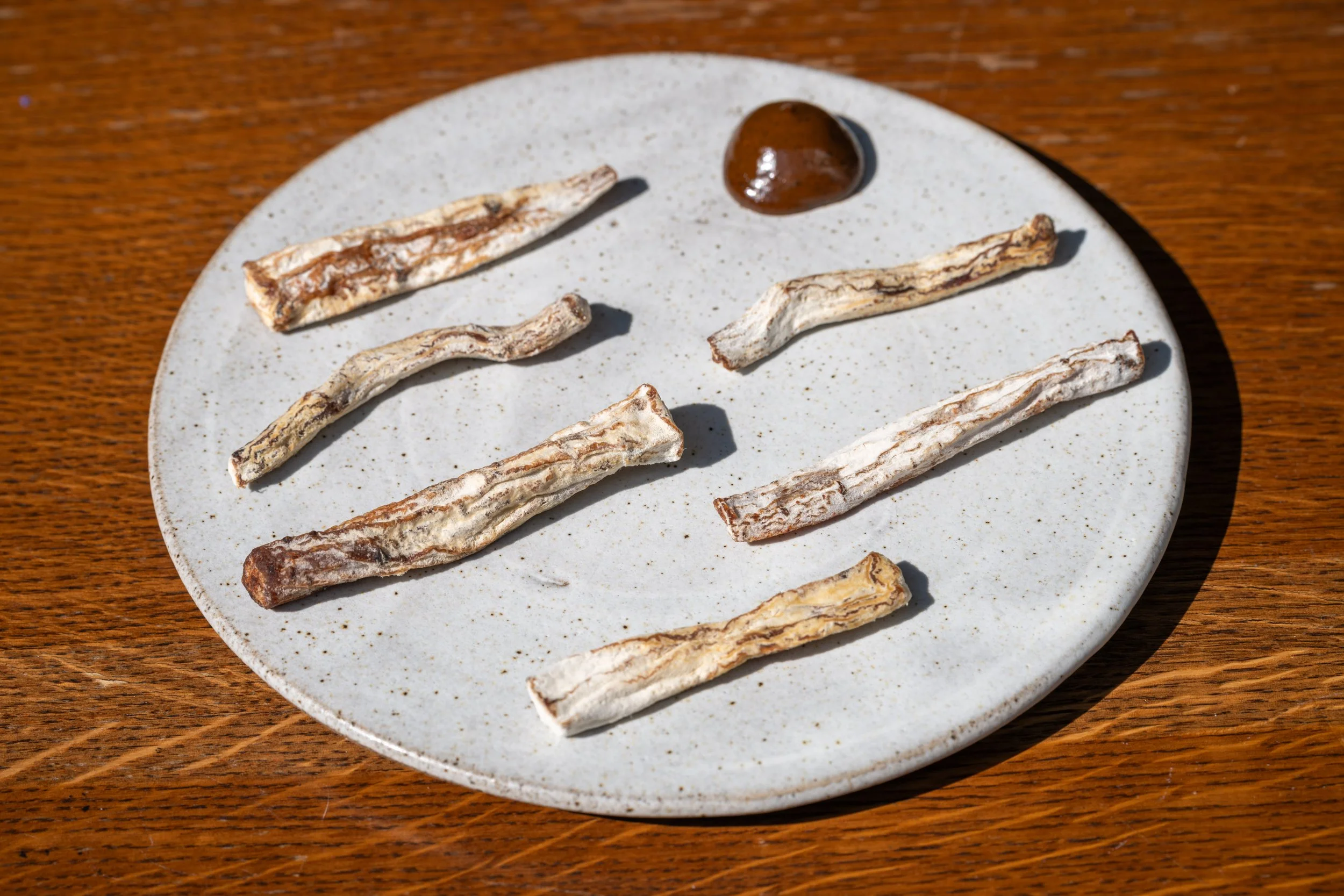
Step aside, Slim Jim. The next frontier of pepperoni is less salacious than you might think. To Fermenter Michelle Pogostkin of Symbiotic Cultures, it’s just salsify. “We wanted to see how close we could get to that meaty flavor using only vegetables and koji,” she says of her salsify pepperoni sticks with pumpkin garum, an exclusive cult favorite at Amino, the monthly tasting menu pop-up she runs with partner and Rising Stars alum Jaimon Westing.
Pogostkin loves the shape. Salsify’s long, fibrous form “looks like a pepperoni stick and has that chew,” she says. She peels the roots, then marinates them one to two days with pepperoni spices—smoked paprika, black pepper, garlic, cayenne, and salt—sealed in vacuum bags so the aromatics penetrate. Next, she cooks the salsify sous vide at 185°F for 45 to 60 minutes, until just tender. From here, the whole project becomes a tightrope walk with moisture. “Koji can’t be too wet or too dry. Too wet and other microorganisms can outcompete it; too dry and the mold won’t take,” Pogostkin explains.
Once the salsify is cooked, she wipes the sticks dry and dusts them with rice flour mixed with koji spores. The coated roots rest on hotel pans with space between each piece, then incubate for two days at about 86°F, with Pogostkin tweaking humidity every few hours and flipping the fermenting salsify after the first day to ensure a full 360-degree bloom. When the fermentation crescendos into a delicate white coat, she dehydrates the sticks for roughly a day—reducing volume by about 30%—which locks in a cured, chewy, jerky-like texture and extends shelf life with its microbial layer.
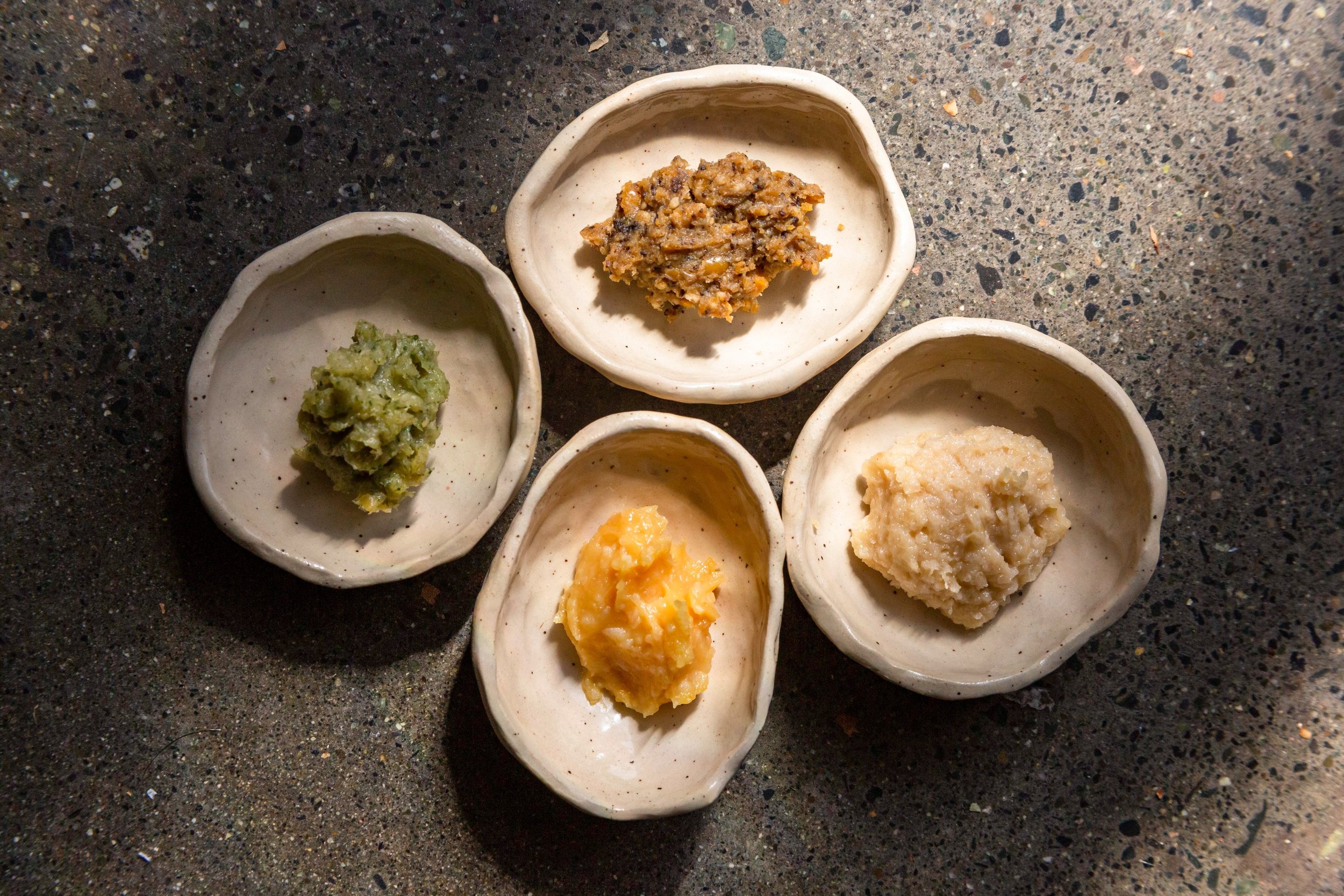
If you come for the sticks, you’ll stay for the sauce. Pogostkin’s pumpkin garum begins with the “guts”—the seeds, skins, cores, and other scrap she’d otherwise discard. The pumpkin is fermented with (you guessed it) rice koji for about a month at 140°F. After the incubation period, she fries the fermented base, then uses the same oil to fry shallots and garlic before blending with verjus, vegetable stock, hemp and nigella seeds, a little brown sugar, and sometimes the solids from her pork garum “for extra complexity.” The result is a smoky-sweet and umami-rich sauce—like pumpkin pie meets smoked turkey at the Thanksgiving dinner table.
The sticks first appeared as part of a plant-based charcuterie course for Amino and took two years to perfect. Along the way, Pogostkin tested burdock, yam, potato, and squash, but salsify won for its structure and bite. The roots aren’t yet local, but everything else is: she sources almost exclusively from Washington farms and prioritizes “number two” produce to reduce waste. “It’s wild how something as humble as a root vegetable can turn into something that surprises people,” she says. Familiar form, unexpected method: a pepperoni that never met meat, engineered by enzymes, moisture control, and a fermenter’s patient hand.