Ferment with Intent
How Pittsburgh's Jackworth Smith is cracking open the history behind ginger beer
Photos: Alexander Zeren
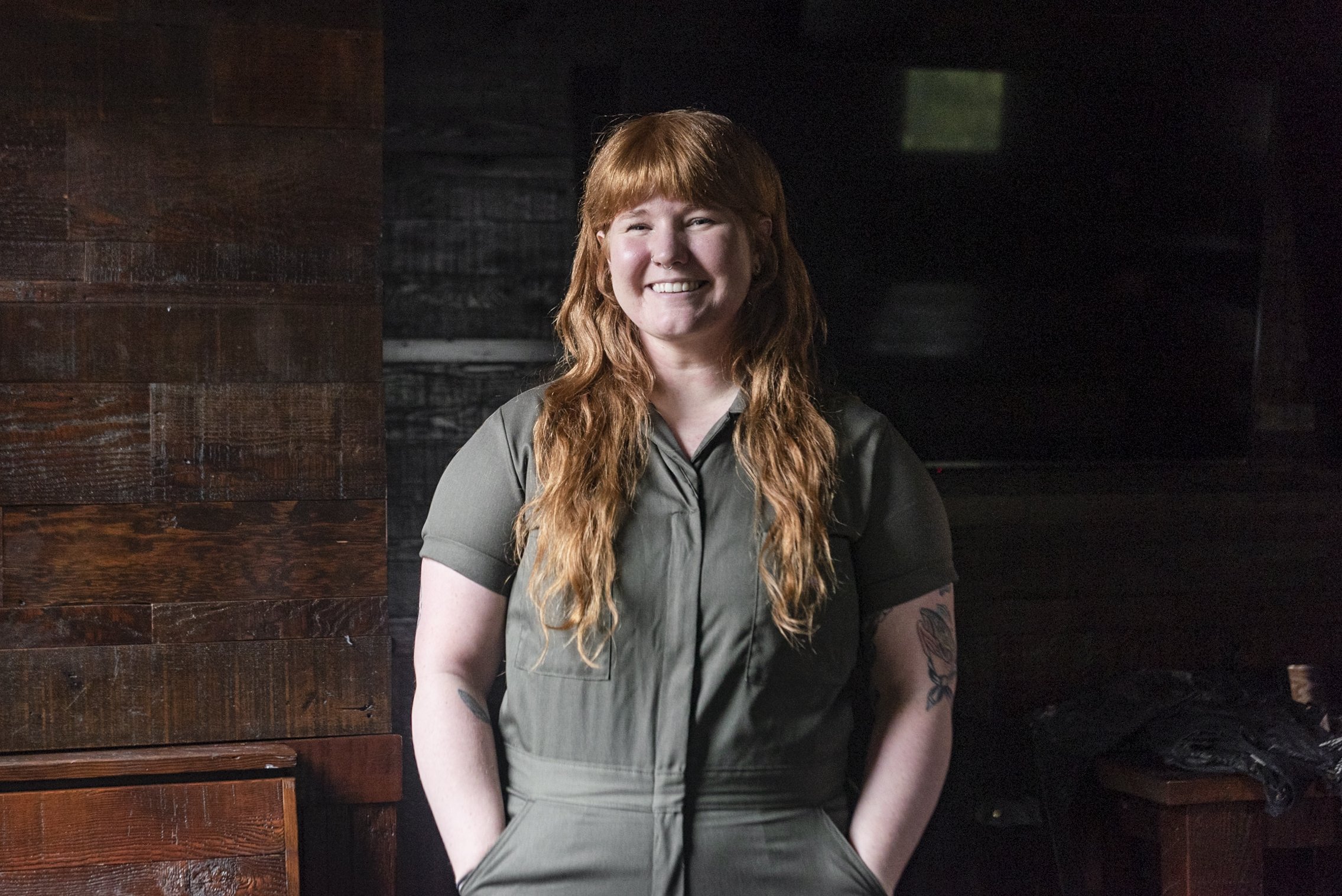
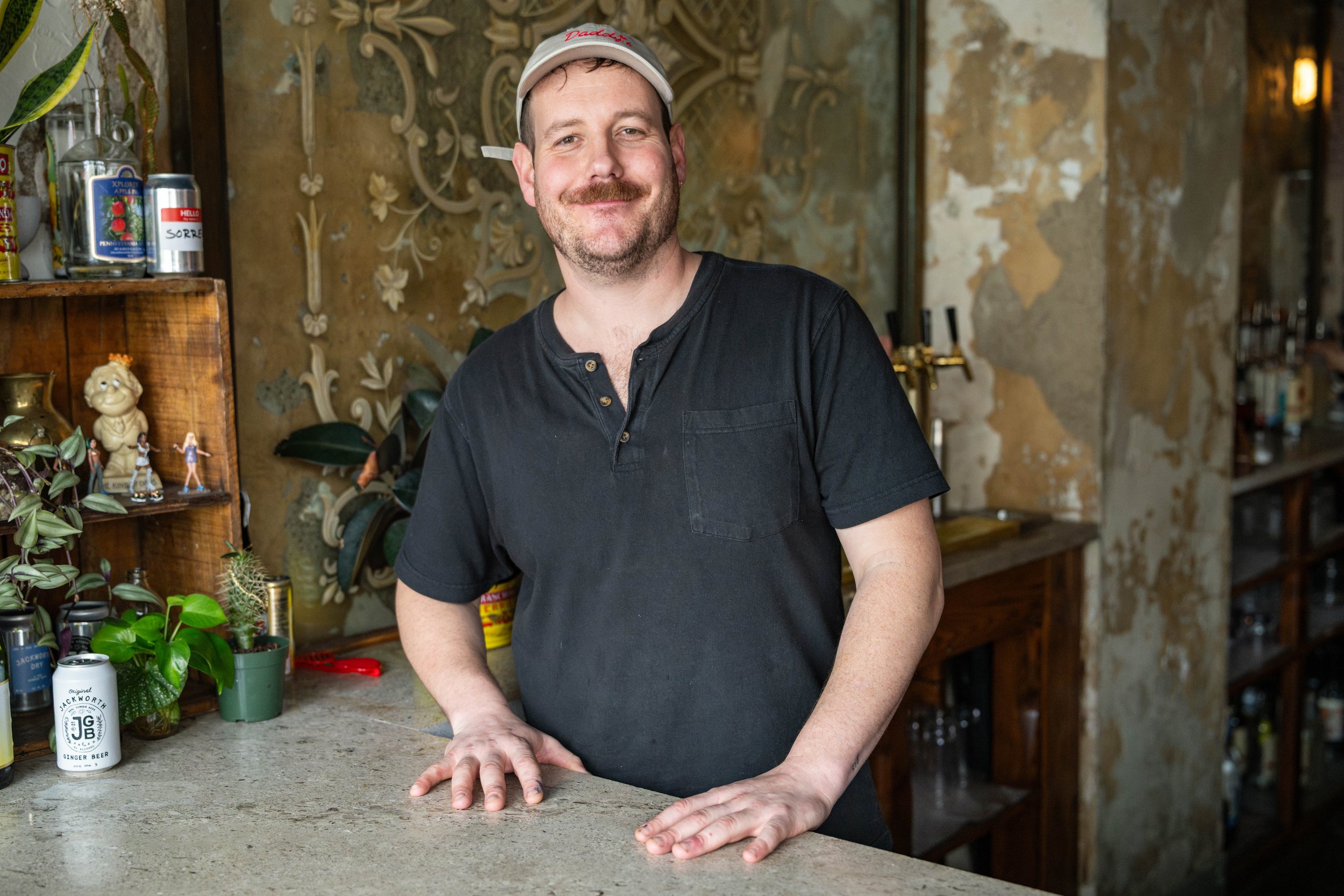
“I have never brewed a batch of traditional beer in my entire life,” says Jackworth Smith, head brewer and co-founder—with his friend Tyler Lewis—of Jackworth Ginger Beer. But a lack of brewing experience wasn’t about to keep him from resurrecting one of America’s once massively popular beverages.
Growing up in his father’s Pittsburgh restaurant, Smith learned a lot about the hospitality industry as a whole. Using a combination of that practical knowledge with some book learning and experimentation, Smith and Lewis have laid roots just a few blocks away from Smith’s childhood home
Smith has long been interested in the history of ginger beer and ginger ale. He started behind the stick at 17 years old, eventually bartending throughout and after college. It wasn't until 2013, however, when Smith was faced with some questions. “I was asked why there was no craft ginger beer. And also, why was it called ginger beer if it wasn't alcoholic?”
So, Smith went on an internet deep dive and discovered that from the mid-eighteenth to early twentieth century, ginger beer was a sharp, pungent, and flavorful brew that ranged in alcoholic content anywhere from 2% to 11% ABV. This beverage, a product of the colonial slave trade’s exporting of ginger and sugarcane from Jamaica and the islands of the West Indies, was a staple in many American diets during a time when the water supply was often teeming with bacteria and viruses. The dawn of national Prohibition in 1920 spelled the end of Americans’ love of alcoholic ginger beer, and, by the 1940s, many regional variations on ginger beer and ginger ale were replaced by overly sugared sodas.
During his research, Smith stumbled upon Wines & Beers of Old New England by Sanborn Brown. The book sparked his interest in the forgotten history of ginger beer. The new curiosity soon turned into a passion, and Smith set out to revive the tradition of ginger beer brewing.
It was a rough start, he says: “The first batch was brewed in my kitchen cupboard when I was living in Philadelphia, and it was a long road to get where we are now—I mean, bottles exploding in my living room.” Still, he stuck it out and eventually streamlined his process.
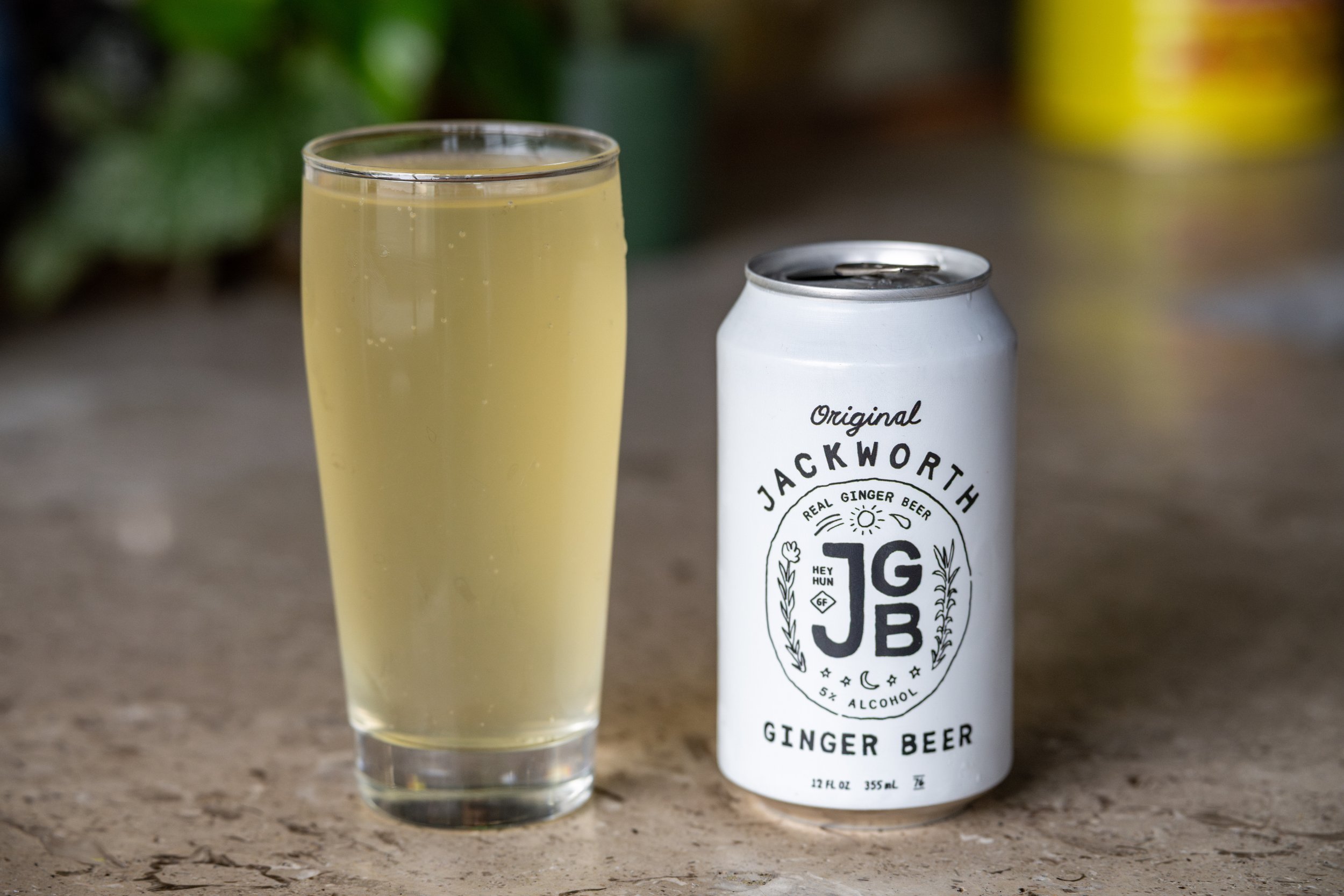
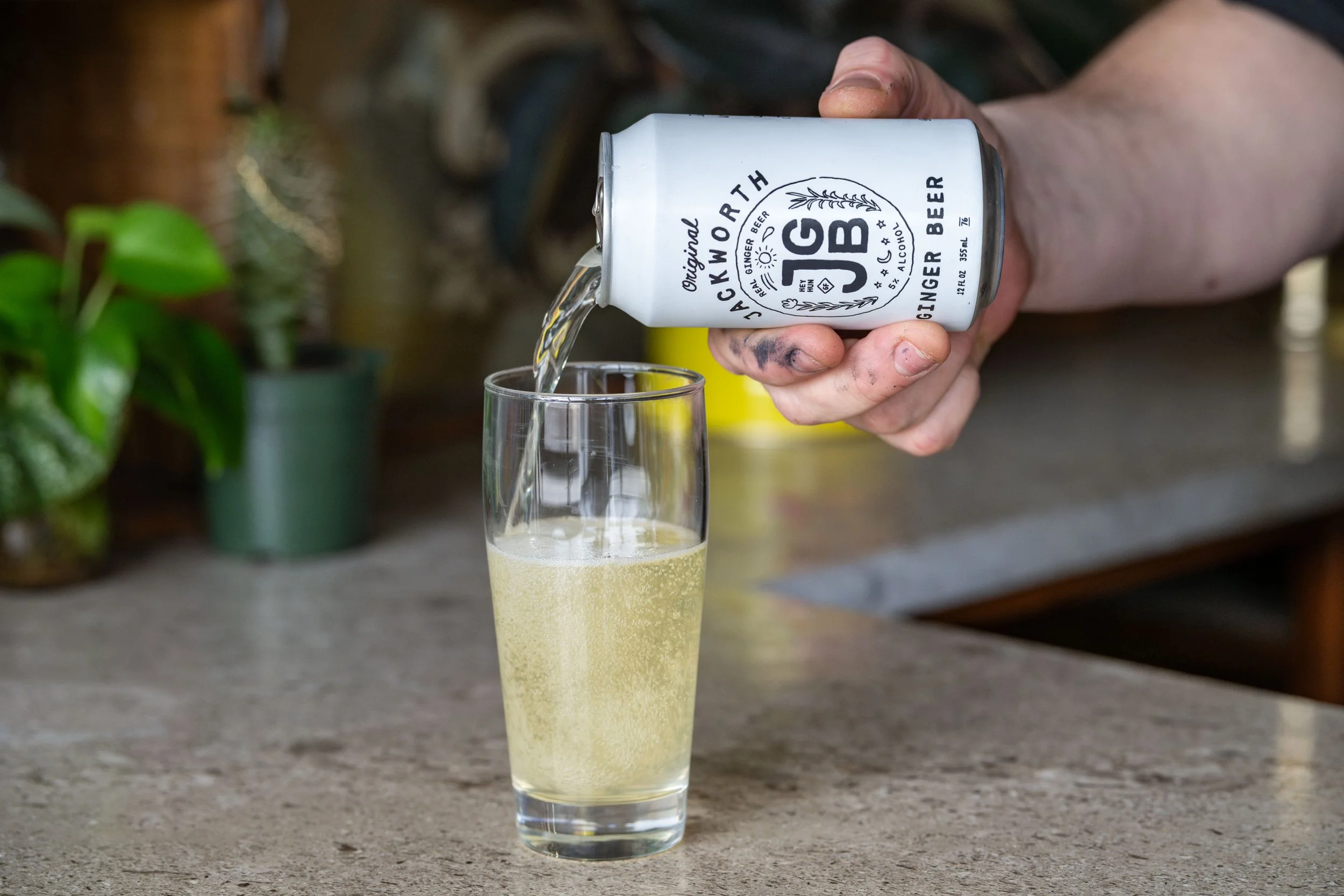
“It's kind of a patchwork of mead, cider, and beer making— kombucha as well,” says Smith. He first steeps organic ginger imported from Peru, white cane sugar, and unrefined raw dark sugar in hot water overnight. “The process itself is pretty darn simple,” he says, although it does require a bit of an investment in equipment. He uses German wine tanks to ferment the sugar mixture with wine yeast for about 12 days. After that, the ginger beer is carbonated in brite tanks, then canned at 5% ABV
As for getting state and federal approval for his venture, says Smith, “there's no precedent for ginger beer” in Pennsylvania’s state liquor laws. “I think because there's the word ‘beer’ in it, and seltzers are traditionally licensed and taxed as beer, we just get classified as a beer,” he says.
Using a Pennsylvania manufacturer’s license, Smith can serve any Pennsylvania-made beer, liquor, or wine at his bar, as long as 51% of the revenue is the product that Jackworth makes himself. Currently, they’re producing the 5% ABV traditional ginger beer, a classic and low-sugar nonalcoholic version, a spicy nonalcoholic version infused with habanero peppers, and a lavender honey nonalcoholic ginger beer. The tasting room is located in the Larimer neighborhood, in what Smith calls a “craft beverage corridor,” a hub of local coffee roasters and brewers. ”It’s really turned into sort of a meeting place of people from different neighborhoods, which is pretty awesome.” Because of their location and nonalcoholic options, Smith says, “we have the luxury of being more collaborative with our product and other people's products, too.”
As Smith sees his goal of “introducing a premium craft ginger beer to Pittsburgh” coming to fruition, he hopes to eventually expand his operation into a “botanical brewery” with dandelion wine, spruce beer, and other less-traditional beverages. “[Our space] has allowed us to make something that was really unique to us, to our taste, and really neat to Pittsburgh. Now that we have some sort of foothold, we really get to branch out.”