Black on Both Sides
The Detroit-based cocktail pop-up centering and celebrating Black excellence

Photos: Alexander Zeren
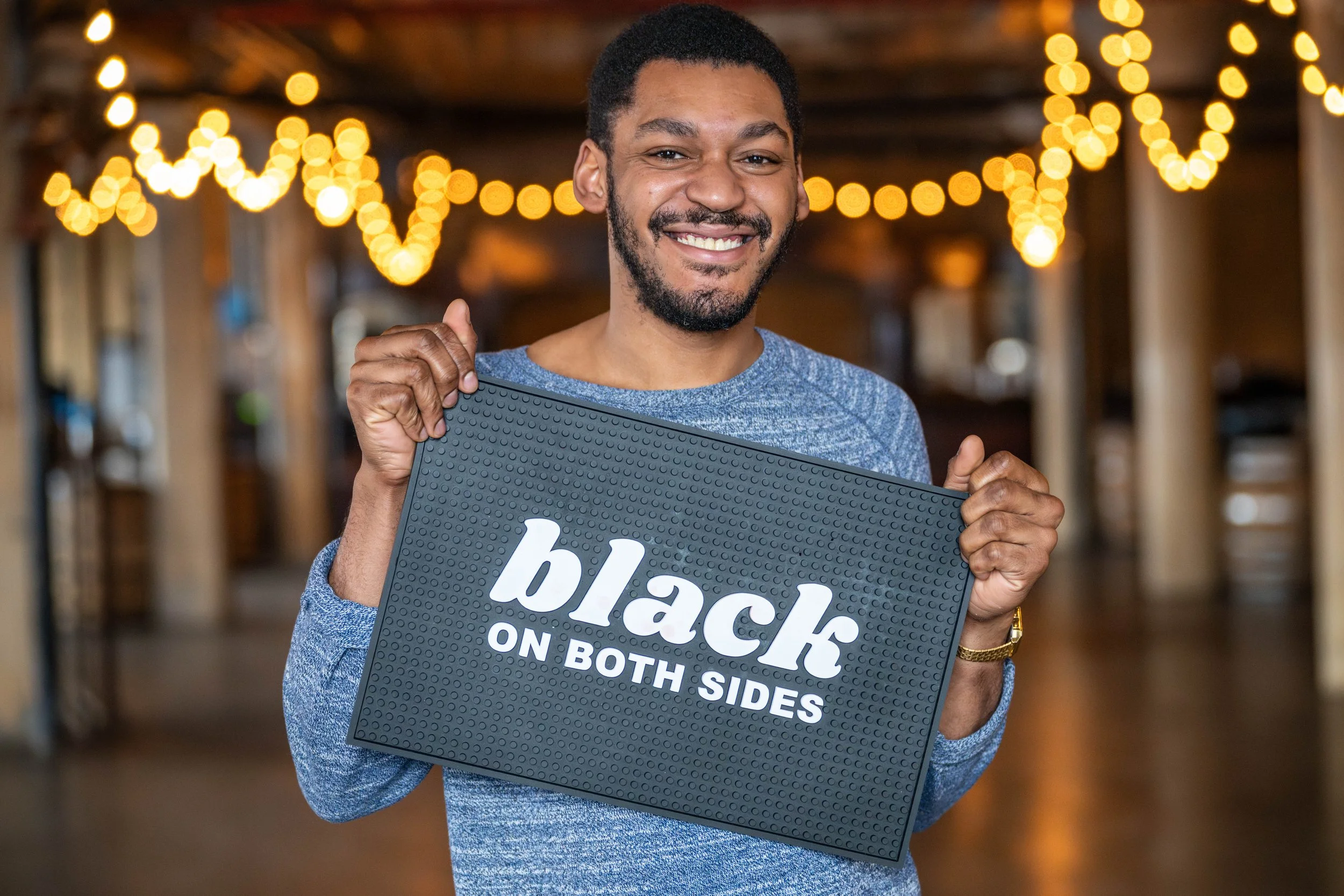
Courtney Burk sat down with Bartenders Lisa Carielle Posey, John Neely, and Andre Sykes of the Detroit pop-up, Black On Both Sides (BOBS), to talk about their business and how they celebrate bartending’s past, present, and future. Through community building and playful, crowd-pleasing cocktails, their mission is to uplift and showcase the expertise, craftsmanship, and creativity of “Black Opulence.”

Courtney Burk: Black On Both Sides is integral to Detroit’s hospitality industry, but for those that don’t know, can you tell us how it all began?
Andre Sykes: It all started with the three of us meeting at a bar and lamenting over the fact that, in 2021 in America’s Blackest city, which was 88% Black at the time, nothing was being done to highlight or showcase the things the Black community has done.
Lisa Carielle Posey: Especially during a time when there was a slow influx of out-of-state hospitality groups that had no idea how to approach Detroit's growing food and beverage scene. They just knew they wanted to be here, make it theirs, and reflect what other major cities were doing, with little-to no regard for the folks that built it, or the market that pays for it. We wanted to reinvigorate those spaces from a place of inclusion; we wanted to make them POC from the front of house to the back of house with people who had talent, but needed a platform
John Neely: This was during Black History Month specifically, and frankly, we were upset and tired of standing by. In less than five days, we took over Willis Show Bar, packed it out beyond capacity for six-plus hours. During the entire event, people kept asking us when it was happening again. We never planned for it to be more than one single call to action. We sat down as a trio and decided to turn it into an organization—a business—and make it real. Almost five years later, growing pains and whatnot, we’re still going strong.
CB: So, how does BOBS work and come together? How do you approach collaboration while preserving individual passion and vision through the work you do?
LCP: It's interesting how we all fell into our positions very quickly. I think we came in with respect for each other's strengths and let it rock. For me, I take care of the people side of things. I do our menus, our flyers, our social media, then market that media and book the talent. John's the numbers guy, and Andre is the more creative of the three of us. He's got a certain curiosity about cocktails that keeps both John and me on our toes.
AS: I like to think about a three-circle Venn diagram, and the center is Black On Both Sides. That’s also how we’ve been able to, in my opinion, revolutionize our pop-up. It’s not a temporary thing— we’ve been hosting longer residencies and popping up across the country, and if we’re honest, most pop-ups don’t last as long as we have. We’ve been able to convert it into a business structure that is viable and symbiotic for the proprietors of the spaces we pop up in.
CB: Let’s talk a little bit about the mission of BOBS, and the reason the pop-up is more than temporary.
JN: The mission, universally, is to celebrate people of color and LGBTQ+ people in hospitality. But fundamentally, hospitality, by definition, has always been Black. The longer mission is to start the first modern Black hospitality group that is run by us, for us. We understand the industry, and we’re not afraid to get our hands dirty. It’s a different style of ownership that’s hands-on, not in the aspect of micromanaging, but boots on the ground. I feel like that’s something that Detroit deeply needs right now.
AS: Facts, and we call that Black Opulence because it’s steeped in history. We want to celebrate POC and LGBTQ+ people, but specifically Black people and their contributions. We feel like the torchbearers for our ancestors; the Tom Bullocks and every unnamed Black server, Black bartender, who has come up over the past 150 years of American hospitality
JN: When you’re here and when you’re gone, we want you to get your recognition. The only way that happens is by owning a space where you can put those things on menus, in people’s faces.
AS: Exactly, and that’s Black Opulence.
CB: What do you feel is missing from the hospitality scene in Detroit right now?
JN: Less gatekeeping: Invite people to things, open your arms, bring people in, and stop being so weird about outsiders. Everyone around the city has told me, almost religiously, that their resume was treated like a demon mark because they were out-of-towners looking to move here. We have to be more open, more approachable, and invite people into the city and the ecosystem. If we don’t, we don’t get better, and what good does that do any of us?
LCP: More curiosity. More inclusion, honestly. Some bars get in the way of themselves and are secretly in competition with the next bar's menu. We're also in a really good place to start a large gathering annually, similar to the Bartender's Weekend that San Diego puts on. We need to connect, to check in on each other, and to keep each other excited.
AS: Detroit is a very chef- and owner-driven city. I mean that for everything, from local awards to popularity, and I would like to see that shift from the macro to the micro. I’d like to see pastry chefs, bartenders, beverage managers, sommeliers, and wine directors recognized for the things they do.
CB: What is your take on the future of Black business ownership in Detroit’s hospitality industry?
LCP: I think we're beginning to understand what ownership actually is in Detroit, and that gives me hope. It's completely possible to own something these days, just go down Livernois Ave. It's Black as hell. But location is everything, and we don't have to force ourselves to be surrounded by fresh eyes and fads when we could be where the people want to spend time with us and become regulars, and where the land is a little cheaper too.
AS: Last month, I wrote an editorial for Tales of the Cocktail, titled The Owners Sleep Blissfully. This is a small excerpt from the end of that article, and I think this really hits those notes: "We have to wake up ownership and the industry out of their blissful sleep with uncomfortable truths and even harder conversations so that we can build actionable efforts from discourse and mutual respect. It is time to pivot from our antiquated structures of business and damaging working habits to take our future into our own hands. Let’s build an equitable Black community, one business at a time."