Seattle’s pastry chefs are narrowing their focus and thriving with single- item concepts.
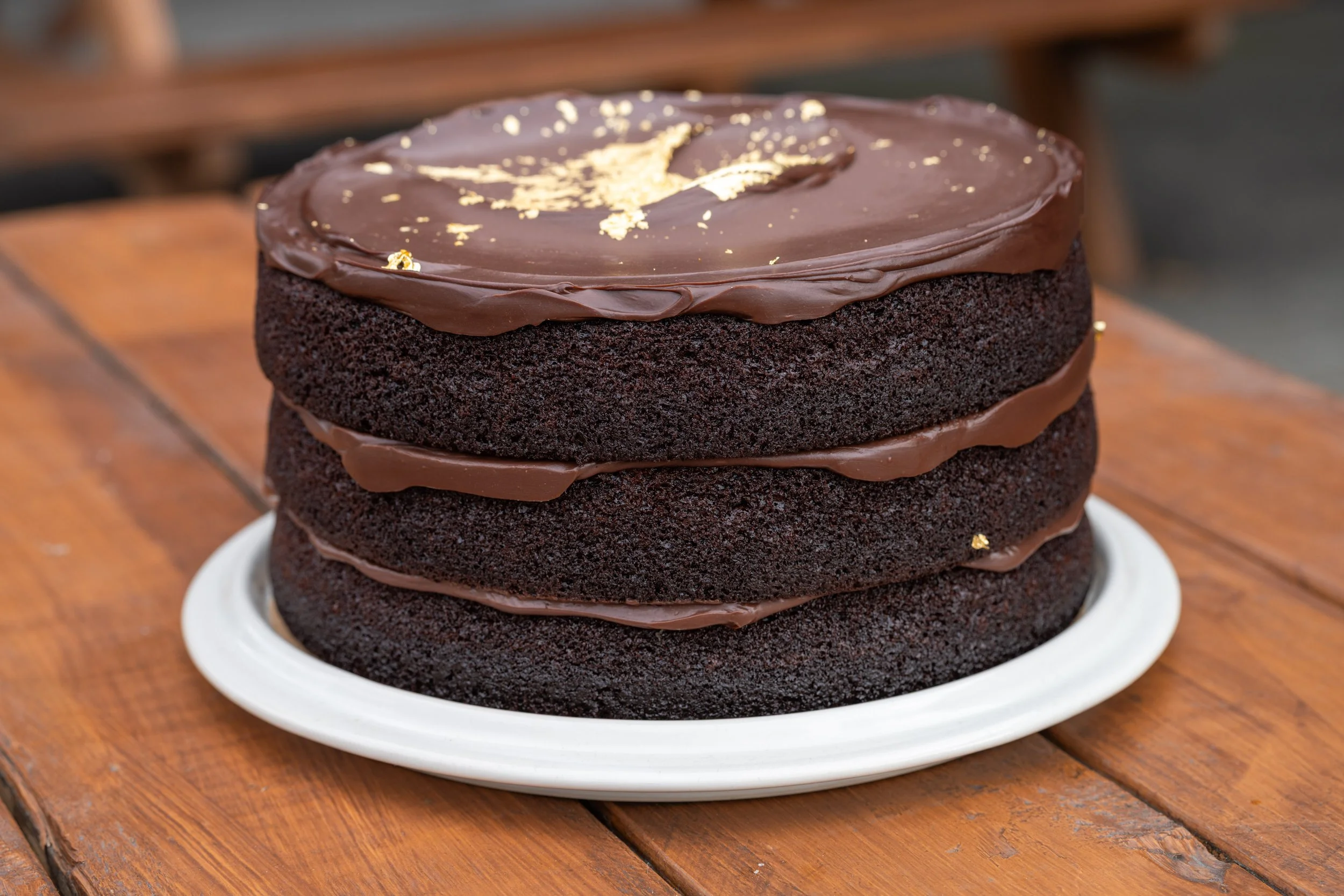
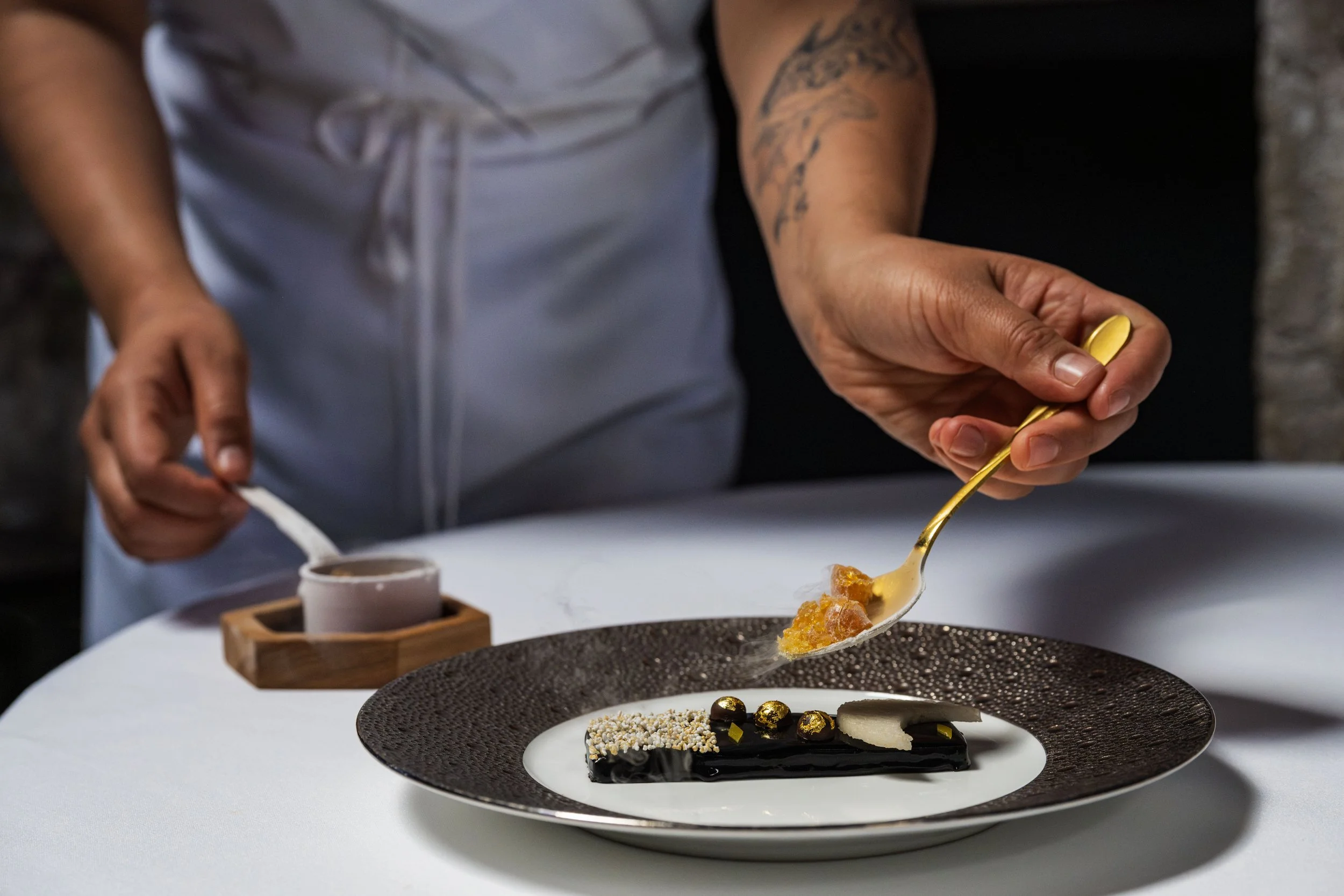
Nine Pound Porter Chocolate Cake: Chocolate Cake, Porter Beer, Semisweet Chocolate Ganache, Edible Gold at Deep Sea Sugar & SalT | Photos: Alexander Zeren
These days, it’s hard to be a pastry chef. Beyond the standard challenges that come with the job—operating with a low budget, nimble team, or limited space—simply finding the right professional fit or a place to grow has become increasingly rare.
As rising costs and shrinking demand push against the aspirations of many in the industry, some restaurants feel forced into a corner when it comes to the sweet side of the menu. To combat the conditions, a growing number of pastry professionals in Seattle are taking a step away from the traditional bakery and restaurant format. Instead, they are opening specialized concepts that focus on a specific kind of pastry, baked good, or “hero” item. For most of these chefs and bakers, it typically starts from a place of love and admiration for the pastry itself.
“I had already been baking and cooking professionally for seven or eight years,” says Pastry Chef Charlie Dunmire of Deep Sea Sugar & Salt. “I was going to go to school for graphic design. I was burnt out in kitchens. In the meantime, I got hired as a cake decorator. I had never done cakes before. As soon as I started it was like an aha! moment. It was baking and dessert, but also art and design and architecture and color, all these things I really love.”
Dunmire took that passion and built a business of her own out of layers and layers of cake over the next ten years. Her shop, which expanded into a larger location in 2023, offers a variety of rotating and seasonal cakes by the slice (along with whole cakes to order). “We have been asked to serve other things,” says Dunmire. “But as long as this business model works for us, we will stay cake only. We have tapped into something really beautiful that works for the customers and works for us.”
For Baker Pamela Vuong, it was an obsession with custard-filled brioche doughnuts that brought about the start of her business, The Flour Box. After discovering them online, specifically the doughnuts from the folks at Bread Ahead Bakery in London, Vuong set out to perfect a recipe of her own. “I experimented at home and got them right after 30 or 50 tries,” she says. “It took lots of tweaking, but I eventually got there and they still are one of my favorite things to make. And luckily the public seems to enjoy it.” Every two weeks, Vuong and her team dream up four different flavor combinations for her pillowy pastries, drawing in devoted fans every time the menu flips over. She also offers a brownie and gluten-free Basque cheesecake, both of which have become “sleeper hits” with Vuong’s regulars.
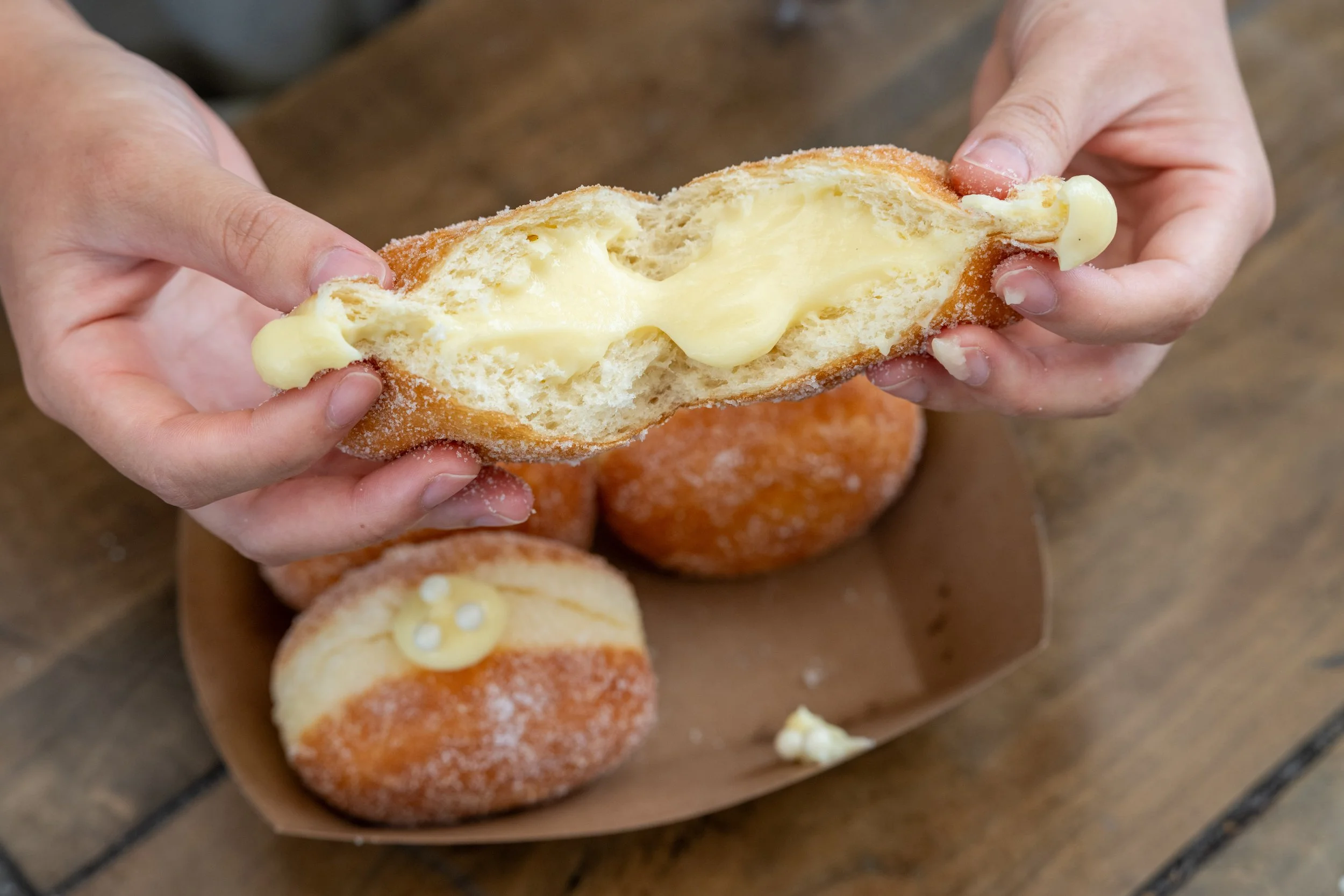
Brioche Donut with Corn Cream Filling at Flour Box
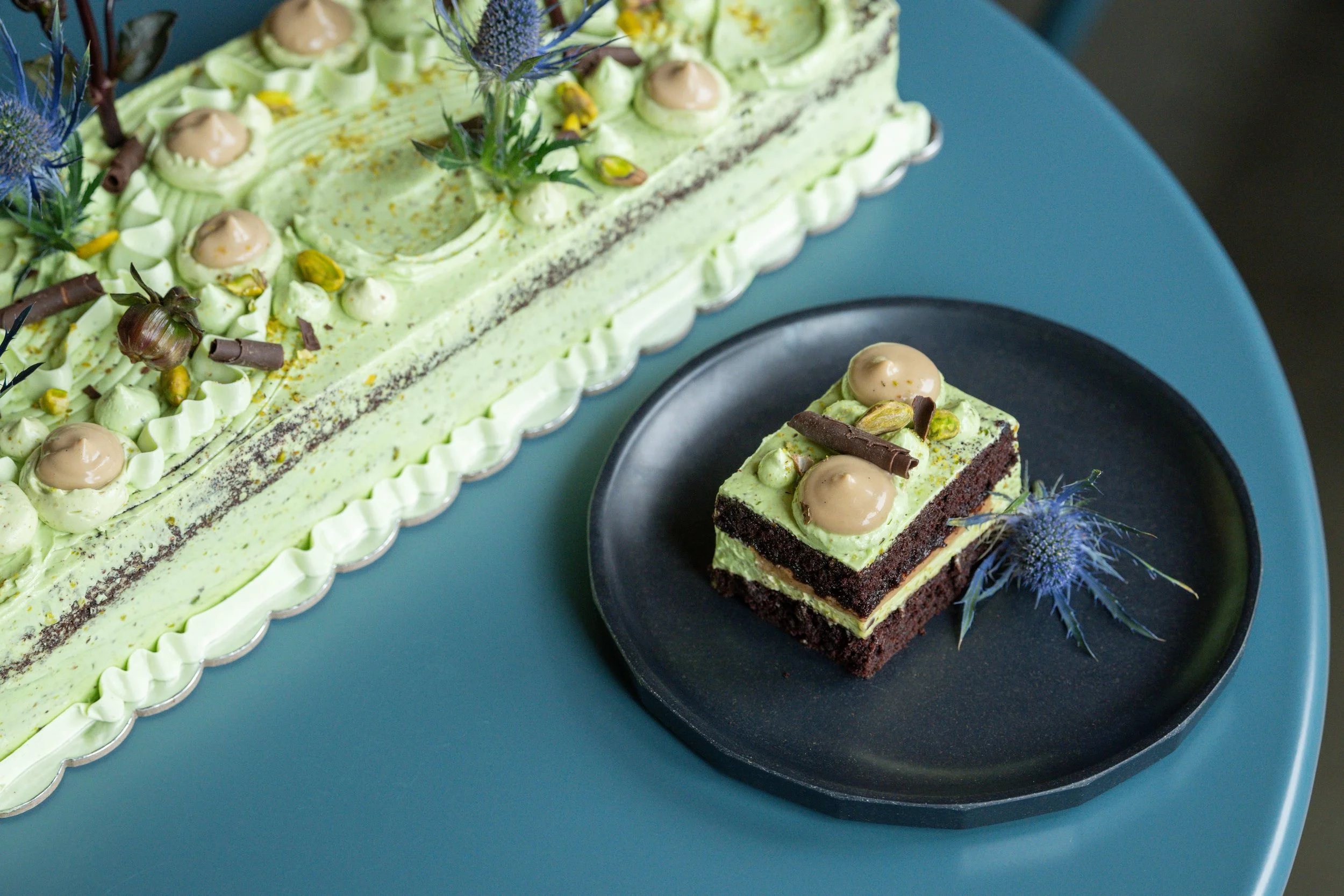
Pandan-Pistachio Mocha Cake: Gluten Free Chocolate Sponge Cake, Pistachio Cream Cheese Buttercream, Pistachio-Pandan Buttercream, Espresso Haupia, Chocolate “Cigarettes,” Pistachios, Thistles, Dahlias at Paper Cake Shop
For both Dunmire and Vuong, the consistency of their product presents an opportunity to figure out the kinks and explore unusual flavors. “The benefit of specializing in one thing or having a much smaller menu is that it allows you to focus on what you're creating and give it your 100 percent,” says Dunmire. “There are so many bakeries that are so wonderful, but they have 320 different things in their case. That's incredible. I love that. But to dial into one thing and push your creativity into that and expand it and see all the things you can do, it feels better to me.”
Specialization gives pastry chefs and bakers an opportunity to foster confidence in their craft, build muscle memory, and adapt when needed. “I can tell you what is missing and measure it in the palm of my hand,” adds Dunmire.
It’s a strategy that brings in business too. While Vuong initially thought she’d have other items like cinnamon rolls and cakes available daily, the customer response was decisive. To her, it was a win-win. “When there are too many offerings, people get decision paralysis,” says Vuong. “People like knowing that businesses specialize in one thing because it should mean they do it really well.”
But it doesn’t mean that these chefs are stuck, either. Dunmire and her team, for example, have about 15 to 20 different bases in the bank for their various, rotating cakes. And Vuong has pushed past the typical boundaries of doughnuts by introducing savory riffs into her repertoire. If anything, the boundaries these chefs have created for themselves also allow them to look at things from a brand new angle.
“If we had more items I would not have the time or creative energy to do more of the flavors,” says Vuong. “I would be spread out thin. So, I do think knowing that it has to be a cream or custard filling in the doughnut makes it feel more approachable.”
Pastry Chef Gabby Park realized that idea along the way. At Paper Cake Shop, she has brought to life Chef Rachel Yang’s specific vision for an Asian-inspired, American-style sheet cake shop by bringing her own aesthetics and techniques to the table. Park worked with Yang to develop an understanding of cake as “a vessel for so many flavors at once,” she says. “We wanted them to be self-contained desserts, with sauces and crunchy elements and garnishes. A plated dessert, but in the form of cake.”
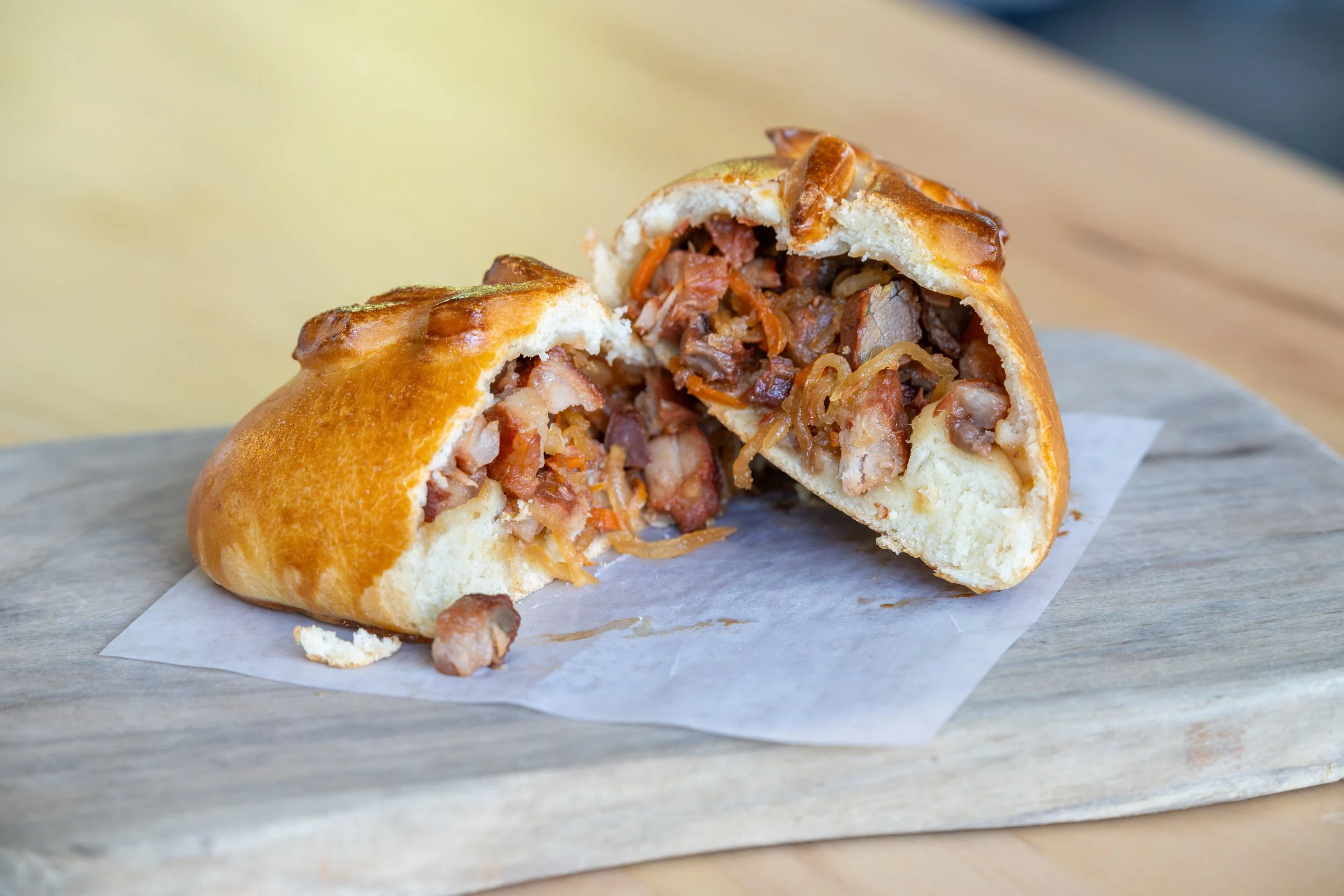
Pork Liempo Pinoyshki at Pinoyshki Bakery and Cafe
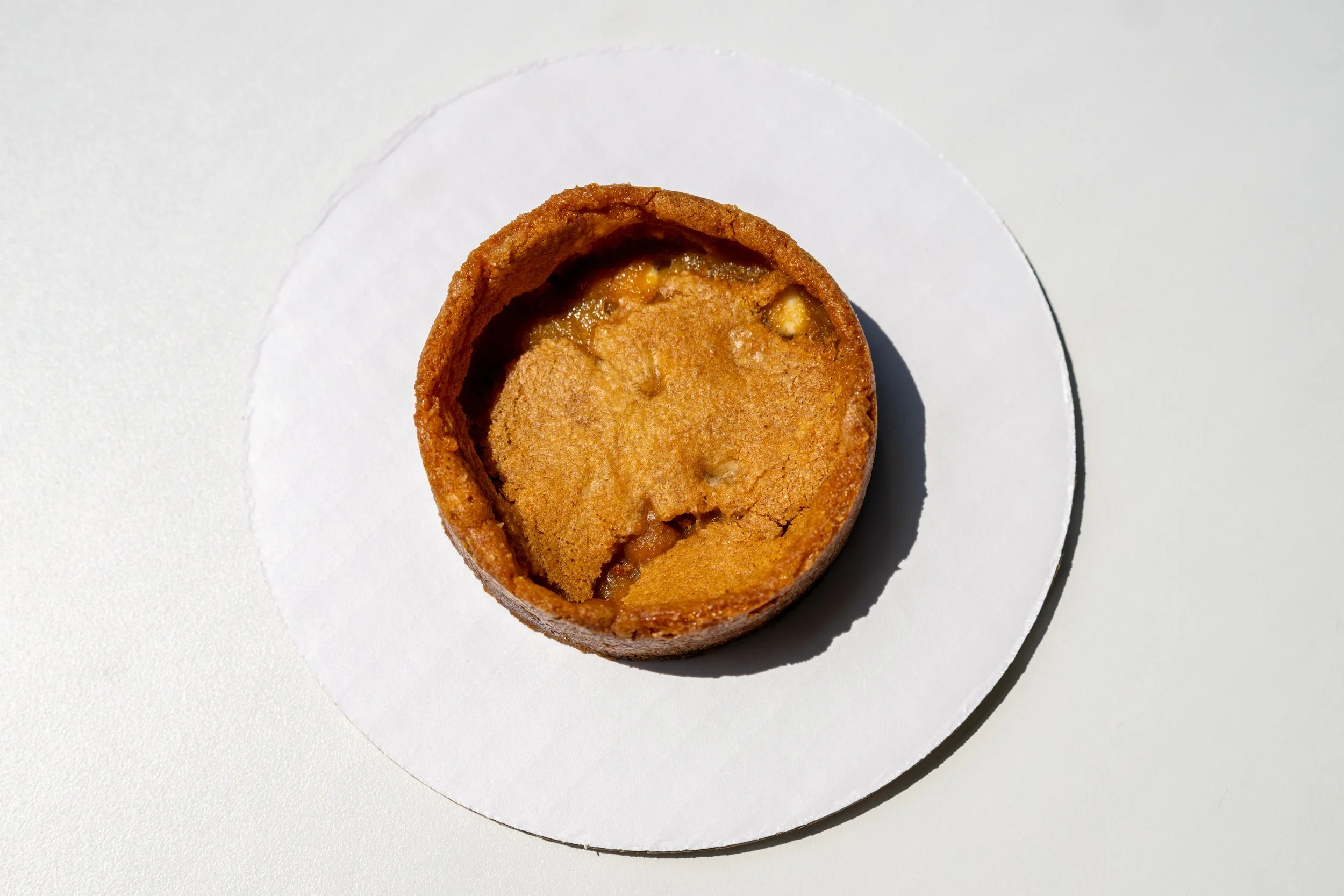
Caramel and Cream Cookie At Lowrider Cookie Company
It was easier said than done, but Park soon figured out how “the restrictions could be helpful.” She’s spent the past few years incorporating a broader range of techniques into the building of each of her cakes, adding fruit and miso to caramels and rethinking the way ganaches can support the overall structure and texture of the finished dessert.
“Now that we have been in business for a couple years, we are trying to out do what we have done in other years,” she says. “It would be easy for us to do the same thing in a different format, but we are exploring the possibilities that we haven't even thought about yet.”
When Filipino-born Pastry Chef Alyssa Anderson and her husband moved to Seattle in 2015, they came across Piroshki on 3rd, a charming Downtown Eastern European bakery, and saw that the shop was for sale. The piroshkis, Russian hand pies made from a fermented dough and stuffed with meat or other savory fillings, reminded Anderson of “empanadas and siopao in the Philippines,” she says. The bakery was also “run by immigrants, so I felt a kinship towards them.” Anderson and her husband took over ownership of the bakery the next year.
Anderson worked alongside the kitchen staff learning the recipes for the dough and various fillings, but soon saw an opportunity. “I tried out Filipino flavors and it grew from there,” she says. The piroshki is “a very flexible vehicle for a whole variety of fillings,” regardless of whether they come from Eastern Europe, an island in the Pacific, or somewhere else entirely. That experiment evolved and Anderson reimagined the bakery as Pinoyshki Bakery and Cafe, tying together her Filipino roots to the Russian pastry. With over 20 different flavors, including two rotating seasonal piroshki, and a small offering of other traditional Eastern and Western European pastries, Anderson now has a horde of sweet toothed Seattle-natives hooked.
For some pastry chefs, the decision to specialize also makes economic sense. “I was in the industry before,” says Pastry Chef Emily Allport of Lowrider Cookie Company. “Getting to make those different items—cakes, croissants, breakfast pastries, and desserts—was really fun. I loved that, but when I thought about it from a business perspective, I saw lots of different ingredients that I would always have to have on hand. A lot of training when it came to hiring. I knew, for me personally, that that was not what I wanted to deal with as a business owner.”
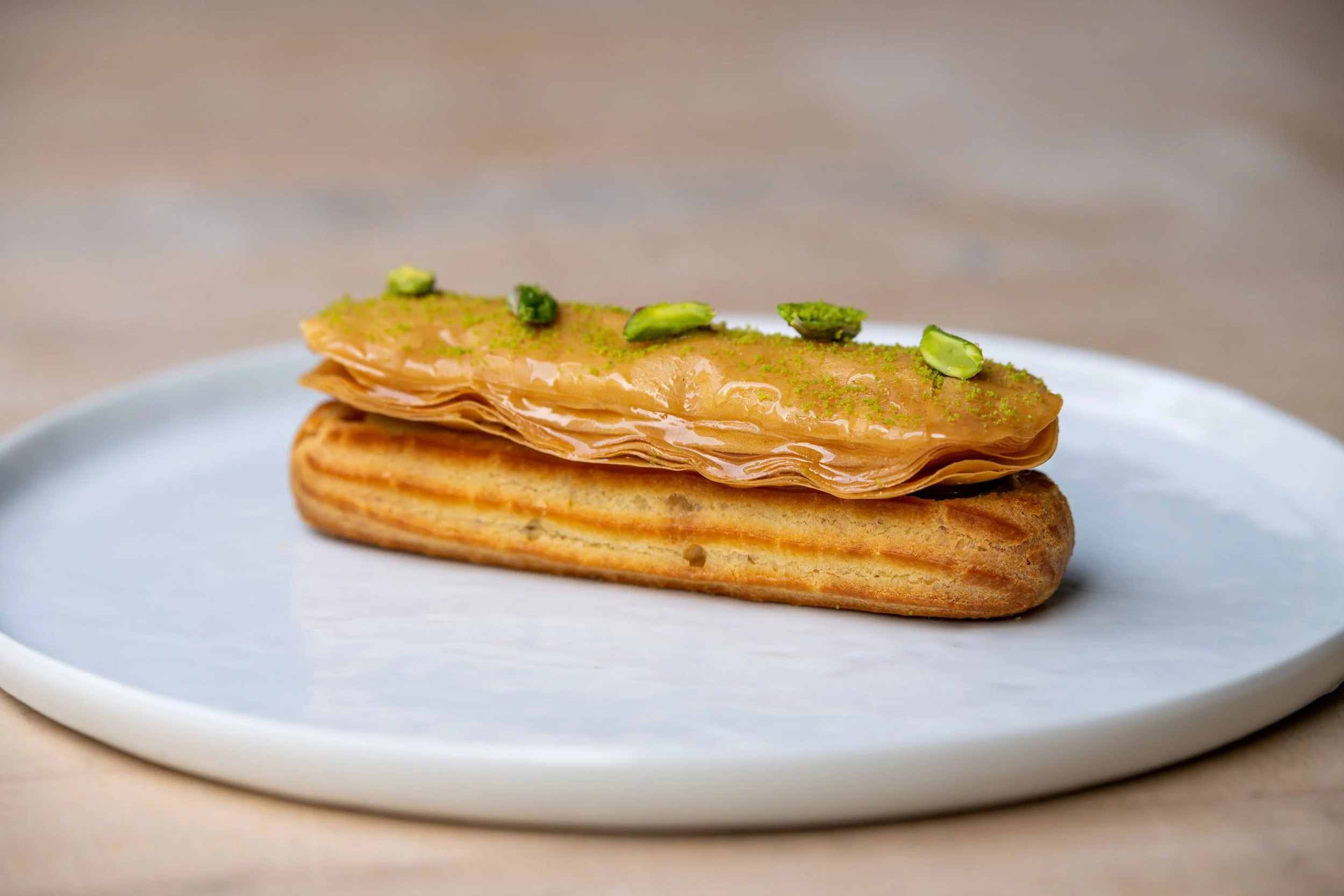
Baklava Éclair, Pistachio Cream, Pistachio Praline, Phyllo, Baklava Syrup, Pistachios, Pistachio Dust At Butter Shtick
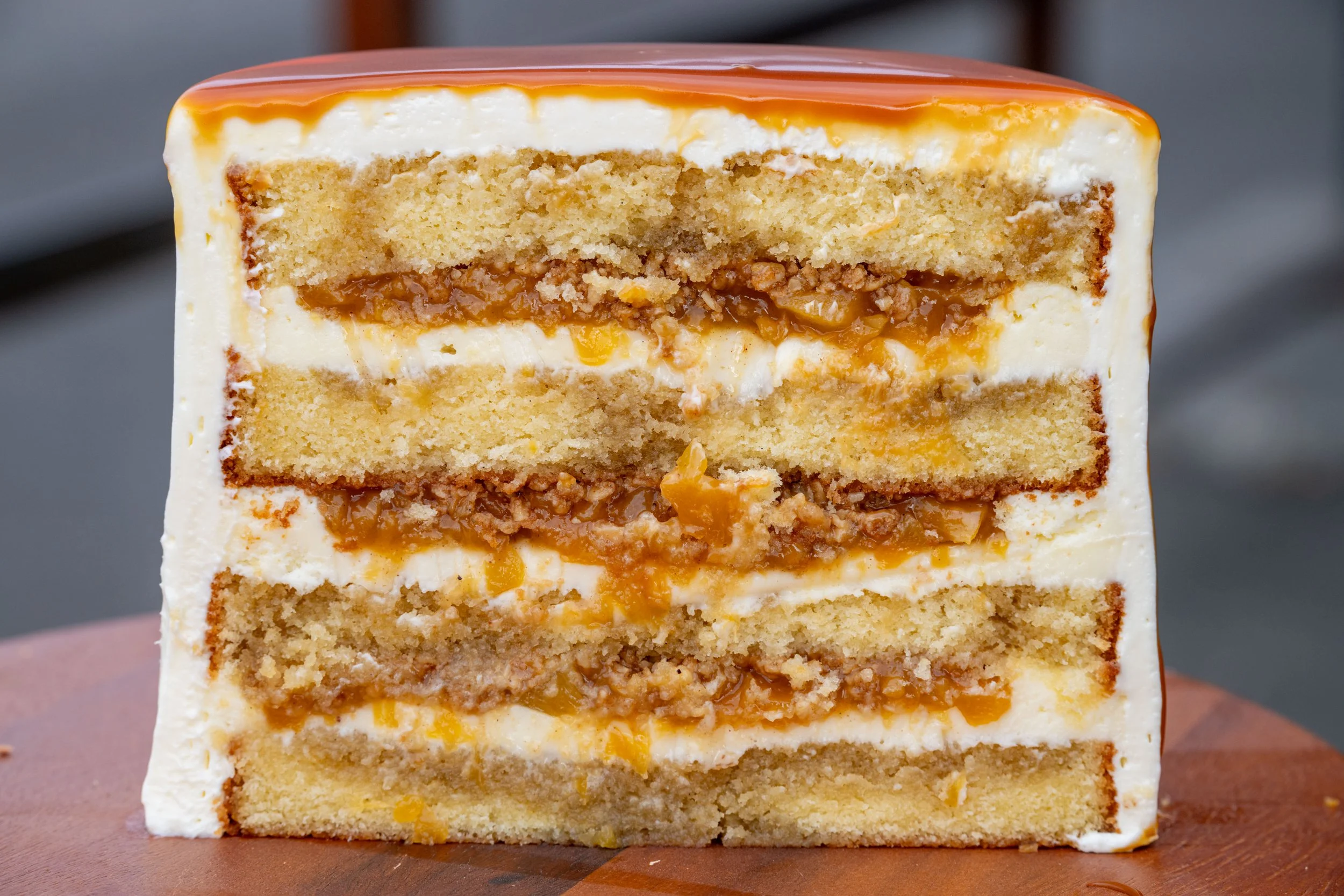
Sour Cream Cake, Vanilla Custard, Blackberry Jam, Pistachio Butter, Blackberry-Cream Cheese Frosting, Salted Whipped Cream, Blackberries at Deep Sea Salt & Sugar
Allport’s solution: cookies. “They make everyone happy. They make me happy. And creatively, they are such a good outlet,” she says. “I chose one product, [but] I didn't feel like I was going to lose my creativity in that.” Since starting her business in 2017, she has expanded to several locations across the city (including one at the airport) and shaped her menu into an accessible yet exciting collection of sweets. There are typically nine different cookies available: six signature cookies and three rotating monthly flavors, including one stuffed cookie.
Like Allport, Pastry Chef Samantha Gainsburg of Butter Shtick also worries that expanding her menu could lead to even bigger problems. “It becomes hard to streamline things if I'm making too many different products,” she says. Her pop-up started with a focus on choux pastries, like eclairs, and house-made chocolates, but has since cautiously added a limited selection of additional items based on customer response and demand.
The challenge, for businesses like Gainsburg’s, is to maintain a niche while also responding to the market. “With the current economic environment there are a lot of unknowns,” she says. Rising costs, particularly when it comes to tariff-prone ingredients like chocolate, as well as labor challenges in the city have made production difficult. Her approach was to draw a line in the sand; figure out what works and what she wants to avoid. Instead of incorporating labor-intensive items like laminated pastries or breads into her program, she has decided to keep her pop-up limited to “choux, chocolates, tarts, and cookies,” she says.
Walking that tightrope is no easy feat and demands a bit of stubbornness (and patience). When it comes to cakes at Paper Cake, Park knows “it's not for everyone,” she says. But, “niches are good. When you appeal to everyone, you don't appeal to anyone.”
Luckily, Seattle is welcoming these businesses with open arms. The city is “such a dessert and bakery climate. It's so dark and cold for so many months of the year,” says Dunmire. “The community, the Pacific Northwest ingredients, it’s all a perfect recipe—for what we do—to succeed.”