Fruit, Forward
Tropical fruits are taking center stage in showstopping ways.
At first glance, Miami’s relationship with tropical fruit seems obvious. The city is awash in guava pastries, mango cocktails, and passion fruit desserts. But beneath the expected lies an electrifying shift—one where chefs are treating fruit with the same level of nuance and technique as a dry-aged ribeye or a well fermented sourdough. They’re brining mangos like olives, turning banana peels into caramel, and distilling deep umami from the typically sweet-tart taste of star fruit.
For years, Miami’s culinary reputation revolved around Cuban sandwiches and stone crabs. Now—in this city steeped in a molasses-thick history crystallized by its striking intersection of cultures, cuisines, and colorful personalities—a new wave of chefs is quietly transforming the way people think about fruit. It’s a shift seen across the city.
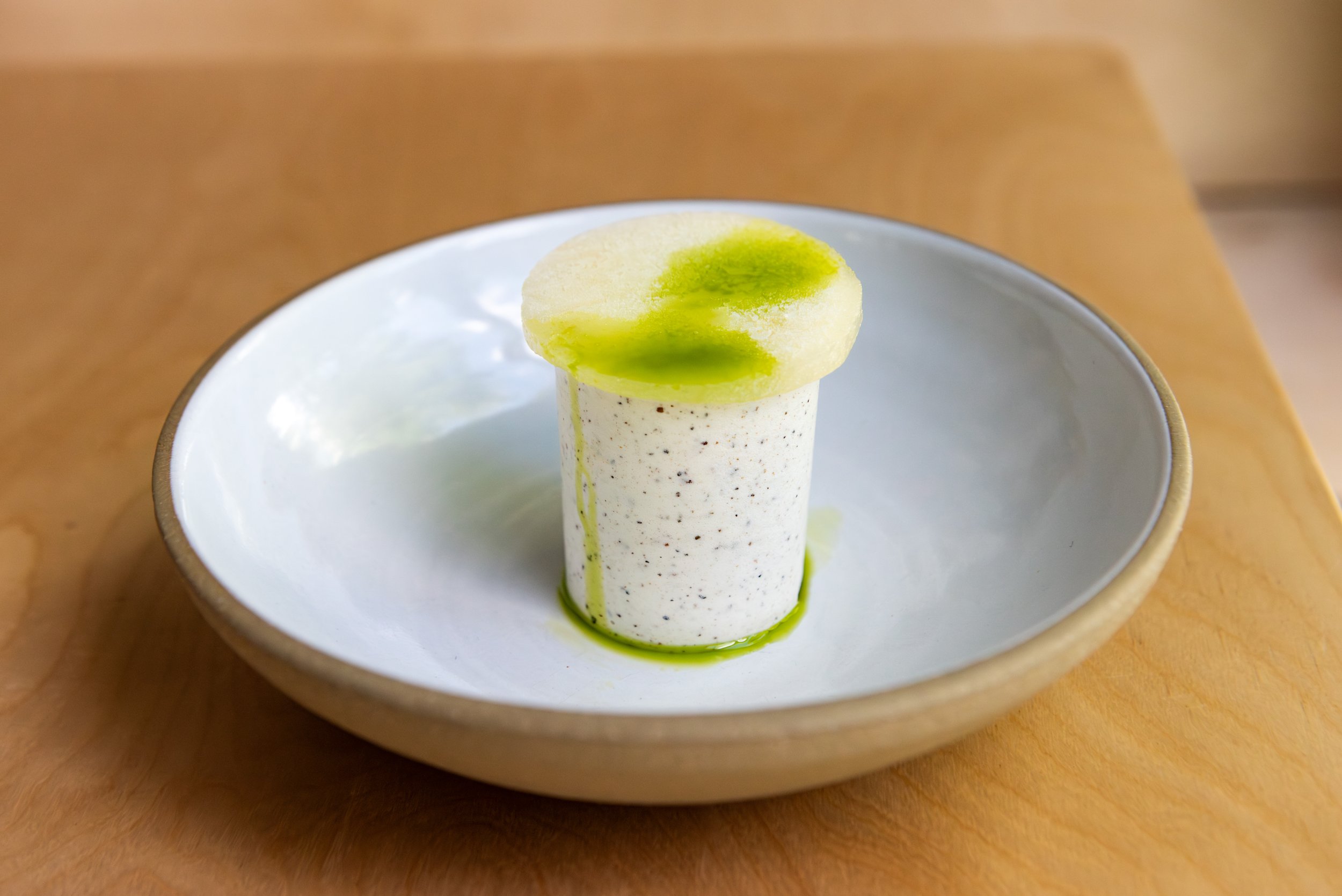
Fig Leaf Ice Cream, Starfruit Sorbet, Starfruit Ice, Fig Leaf Oil, Juniper Berry Meringue at Recoveco | Photo: Alexander Zeren and Will Blunt
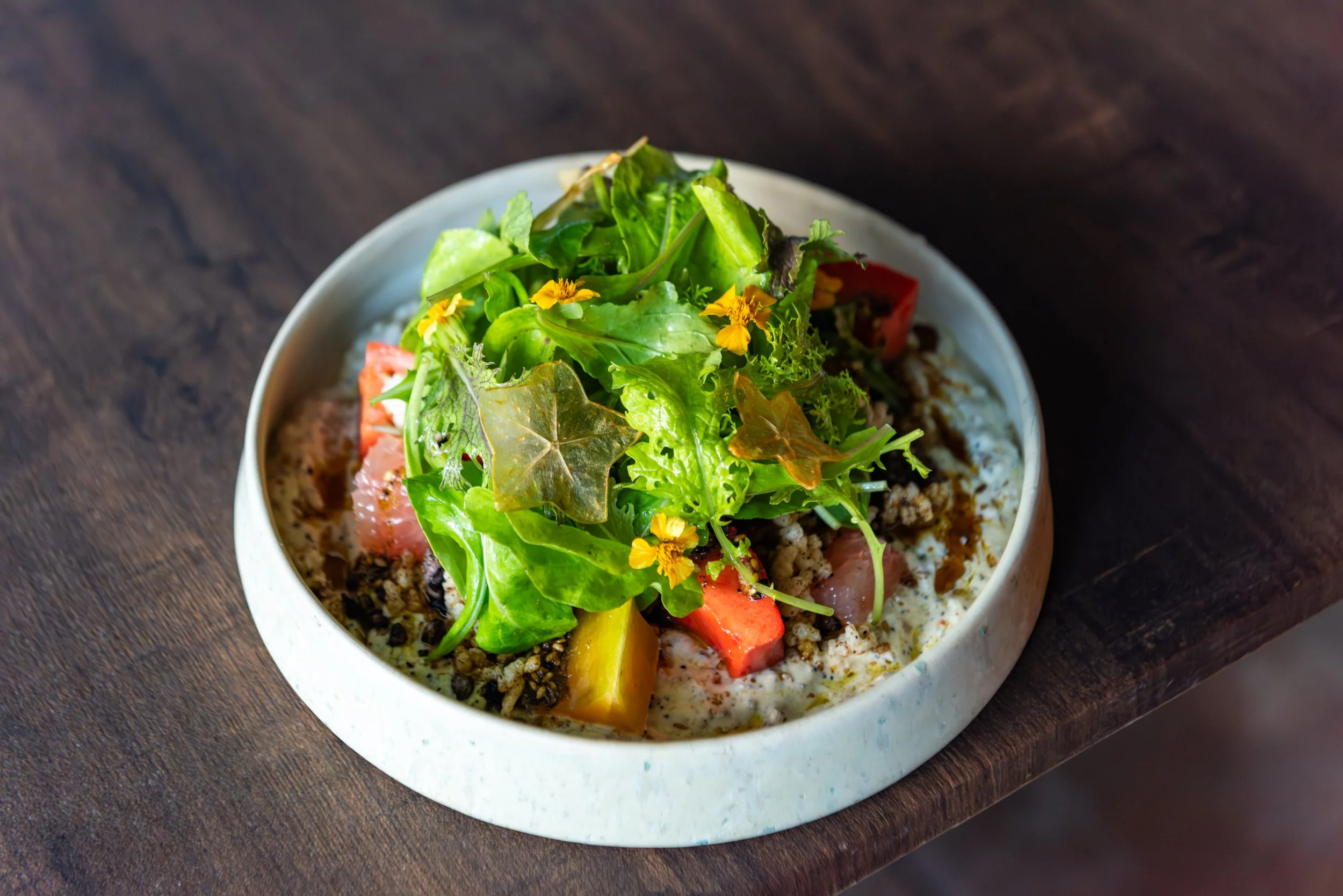
Mamey, Avocado, Starfruit, Pomelo, Arugula, Seeded Yogurt, Za’atar Oil, Puffed Rice At EntreNos
Carambola
At Recoveco, Chef Maria Teresa Gallina takes advantage of fruit’s sweet-savory ambiguity. One of her signature desserts pairs a sorbet of carambola—also known as star fruit—with fig leaf ice cream. The tartness of the carambola cuts through the creamy, nutty depth of the fig leaf. It’s a powerfully simple dish, sure, but it’s equally a study in juxtaposition.
Chef Evan Burgess of EntreNos has always seen fruit as more than a supporting act." We do a lot with fruit, but we always want to think of it in a savory sort of situation,” he explains, “utilizing everything with that mentality of, ‘How can I turn this into something that's balanced?’” Carambola takes a front seat at EntreNos, sliced super thin and dehydrated to be used as chips atop a fruit salad, alongside mamey, avocado, pomelo, arugula, seeded yogurt, za’atar oil, and puffed rice. Burgess and his co-chef Osmel Gonzalez also use carambola behind the scenes, turning it into dill pickles, making koshō with its unripe green form, and fermenting the flesh and imbuing it, alongside the juiced carambola dill pickles and other aromatics, into a fumet and reduced cream sauce to top grilled fish.
These tricks aren’t gimmicks—they’re innovations of the trade, exemplifying one of the core tenets of good cheffing: creative innovation without waste. Techniques like these are redefining the way chefs approach fruit, showing that it can be manipulated in the same way proteins and grains have been for centuries.

Pan de Yuca, Parmesan, Cotija, Mozzarella, Smoked Butter, Cacao Honey, Guava Jelly, Mamey Chutney at Cotoa
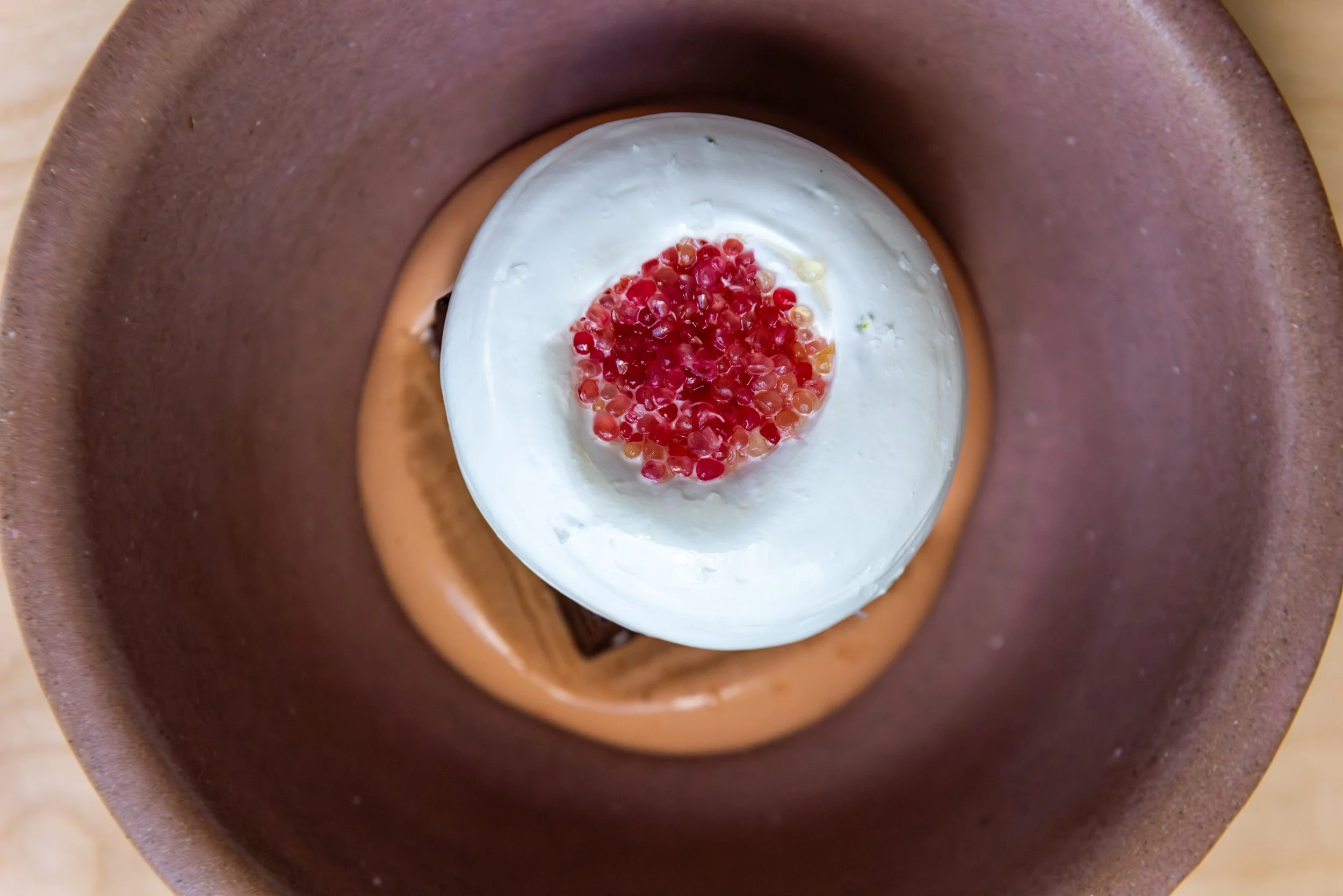
Venezuelan Chocolate Cake, Mamey Custard, Marshmallow, Citrus, Finger Lime, Shaved Mamey Pit at Recoveco
Mamey Sapote
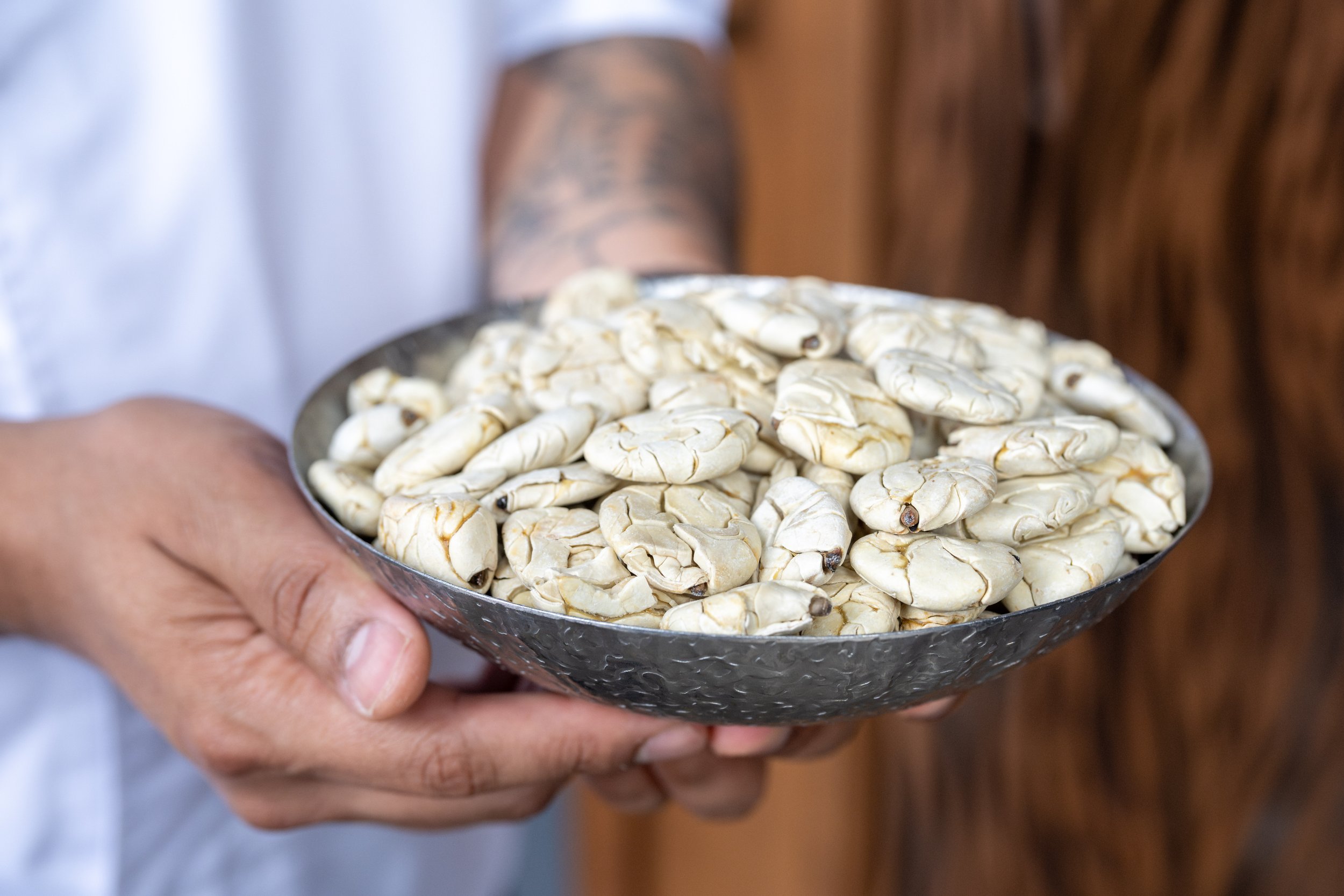
Gallina has also turned her attention to mamey sapote—not just its custard-like flesh, but also its often-discarded seeds. “Mamey seeds taste more like almonds than almonds themselves,” she says. After cracking them open, she thinly shaves the kernels. The shavings get infused into syrup, unlocking a deep, nutty essence that she uses to garnish desserts, like Recoveco’s Venezuelan chocolate cake with mamey custard, marshmallow, citrus, and finger lime.
Miami’s fruit-forward evolution isn’t just happening in kitchens—it starts with the city’s farms and rare fruit growers. Many of these chefs work directly with small-scale farmers to ensure they’re getting peak-season produce that hasn’t been sitting in cold storage for weeks.
Gallina is a member of Miami’s Rare Fruit Council, a group dedicated to promoting the development and use of tropical fruits in South Florida. She says if she could introduce the Miami dining public to one tropical fruit, it would be canistel, a starchy, custard-like fruit often overlooked in favor of its more famous cousin, lucuma. She’s always on the lookout for its best forms when the season rolls around in late autumn. “It's important that I maintain relationships with people that have been growing it for a long time because, due to their time and experience, they will nail the best varieties,” Gallina says. “I think the good thing about fruit in South Florida is that there is a lot of it.”
Chef Alejandra Espinoza of Cotoa has built strong relationships with local purveyors, using the seasonal calendar from Natoora, an international greengrocer and distributor, to track what’s freshest. “People from Miami often don’t know mamey or star fruit,” she says. “But when they try it, they ask, ‘What is this?’” That curiosity is what drives her to introduce diners to new flavors. Espinoza uses Natoora to source her mamey sapote, which she uses to make a chutney that’s served alongside Cotoa’s cheesy pan de yuca. Cooking the mamey down concentrates the natural sweetness of the creamy, salmon-colored flesh. The addition of lemon and vinegar cuts the sugar and plays foil to the mozzarella, cotija, and parmesan. “In Ecuador, we always eat pan de yuca with something sweet,” she says. “The tartness of the chutney brings up all the flavor from the three cheeses.”
Building strong relationships with local purveyors ensures that chefs are getting the good stuff—grown in and around South Florida whenever possible, or at least the best quality product from the closest possible region. When the going is good, the possibilities multiply.
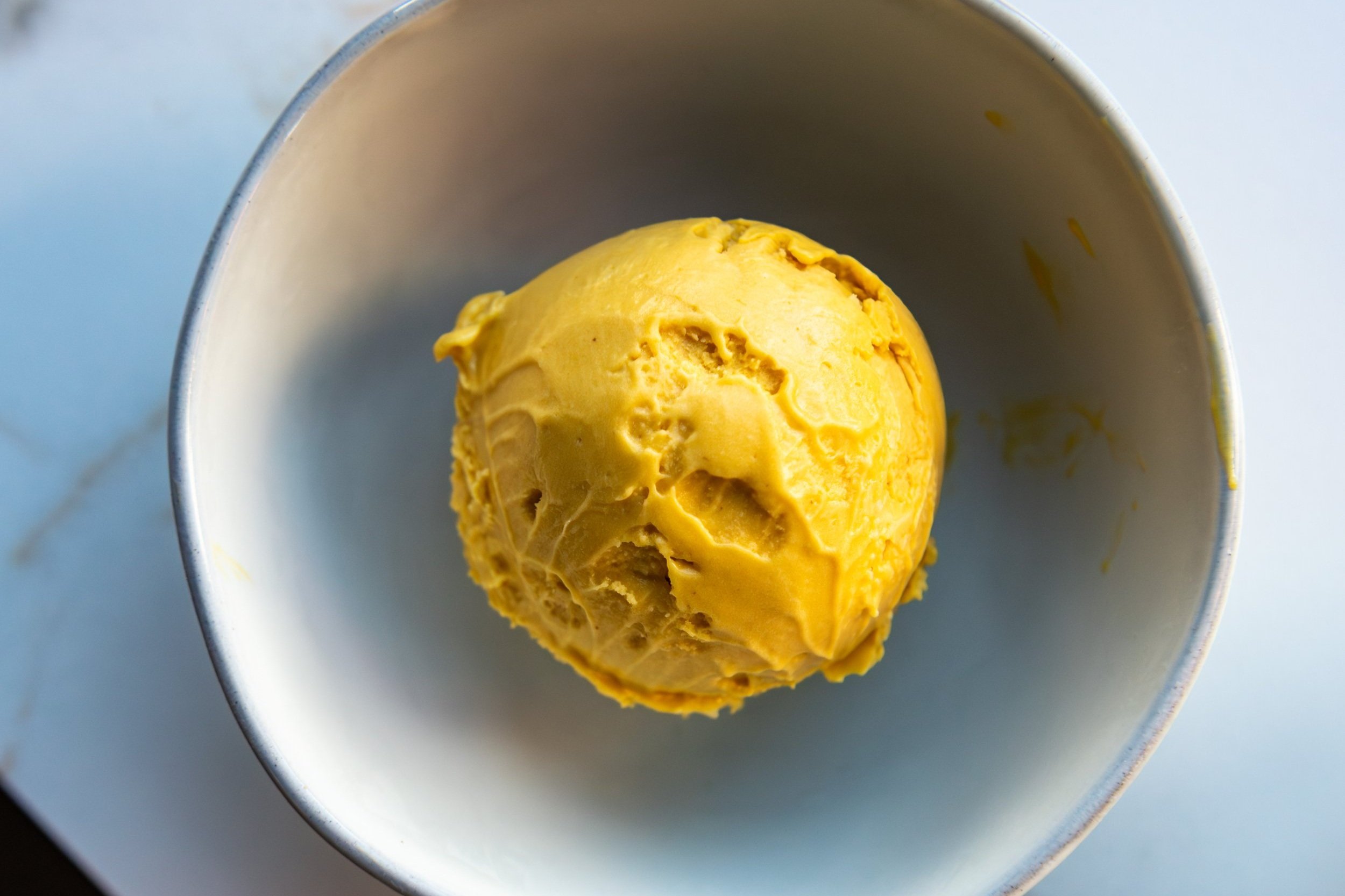
LuCuma GElato at Pasta wynwood
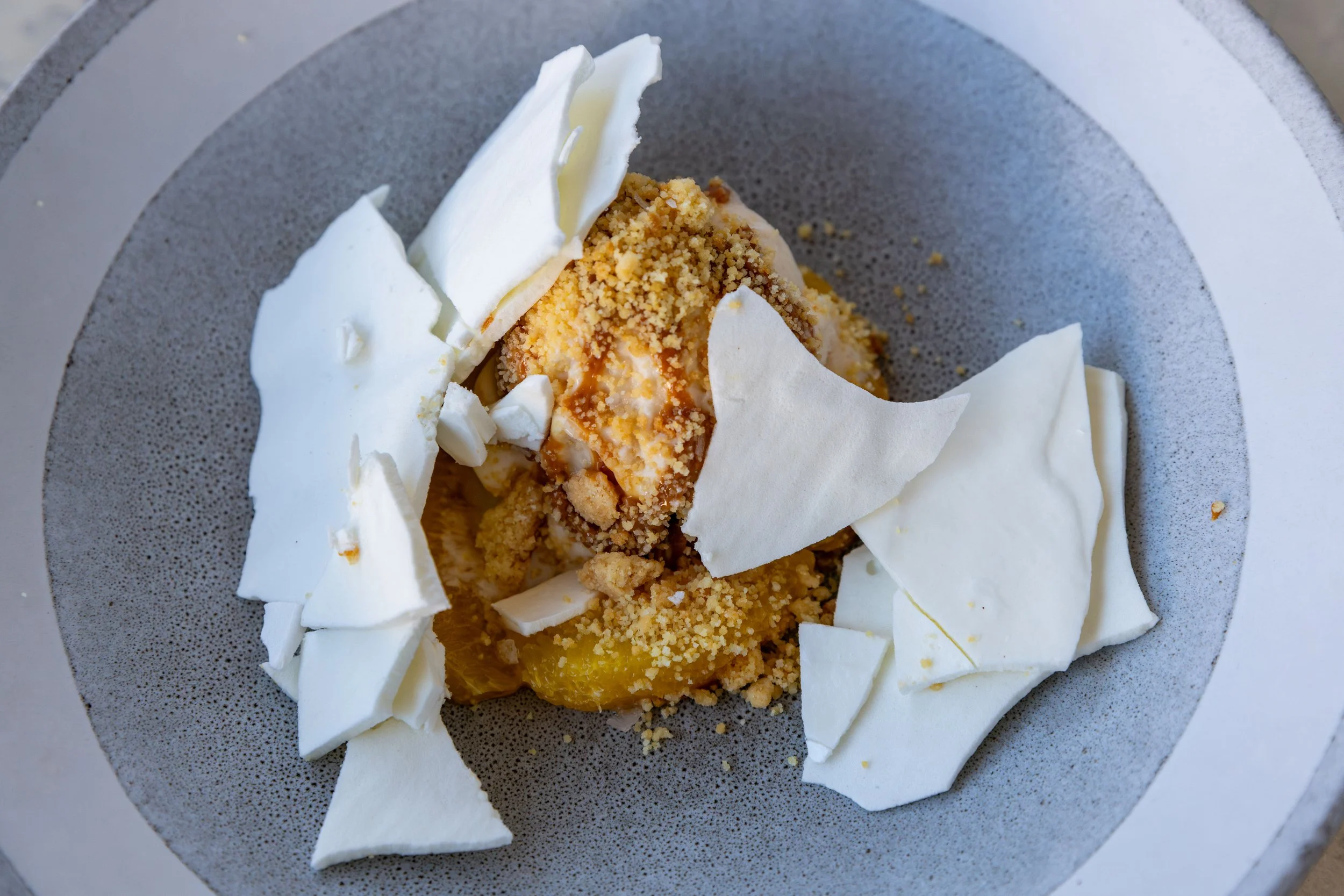
Cherimoya Ice Cream, Manjar Blanco, Milk Crumble, Navel Oranges, Orange Meringue at Atomica
Lucuma
On the other hand, introducing unfamiliar fruits to diners comes with its own set of challenges. Most people know what to do with mangos and guavas, but how do you sell them on canistel or black sapote? The key, chefs say, is education.
Pastry Chef Janice Buraschi of PASTA leans into her diners’ inherent curiosity. She uses lucuma in her gelato, knowing that its flavor defies easy description. “Lucuma is hard to describe—it tastes like lucuma,” she says. “It’s like truffle; you can’t compare it to anything.” That mystery, Buraschi says, is what makes people curious to try it.
Cherimoya
For decades, fruit was relegated to a supporting role in Miami kitchens—something to be blended into smoothies, served on the side, or turned into jam. But now, it’s becoming the focal point of dishes, with chefs treating it like they would any other deeply flavorful ingredient.
At Atomica, Chefs Javier Cussato and Carmen Ibarra spin a cherimoya ice cream that leans into the fruit’s distinctive qualities, which they pair with Florida oranges. “Cherimoya isn’t super sweet—it’s pretty creamy and tangy,” Cussato explains. “Orange and cherimoya are kind of a match made in heaven.”
Diners may not know these fruits by name, but they respond to flavor. That’s why, as fruit makes its way onto more menus, it’s being introduced through strategic pairings and engaging storytelling. The narratives Miami chefs are weaving with their product bring their guests into the fold as an integral part of the plot.
If Miami’s chefs have their way, tropical fruit will move beyond an accent and become a lasting statement—a primary part of the dining experience. The next step? More experimentation, more preservation, and deeper collaborations with farmers to cultivate new varieties suited to Miami’s climate.
“I have this whole theory about humans not really deserving fruit, because it's just so readily delicious,” Gallina says, “There are many delicious things in the world. But fruit is one of those things [for which] nature will do so much of the work, that by the time that you get it, there's very little you have to do.”