Both Here and There
A new wave of Houston chefs is strengthening the bond between heritage and cooking.
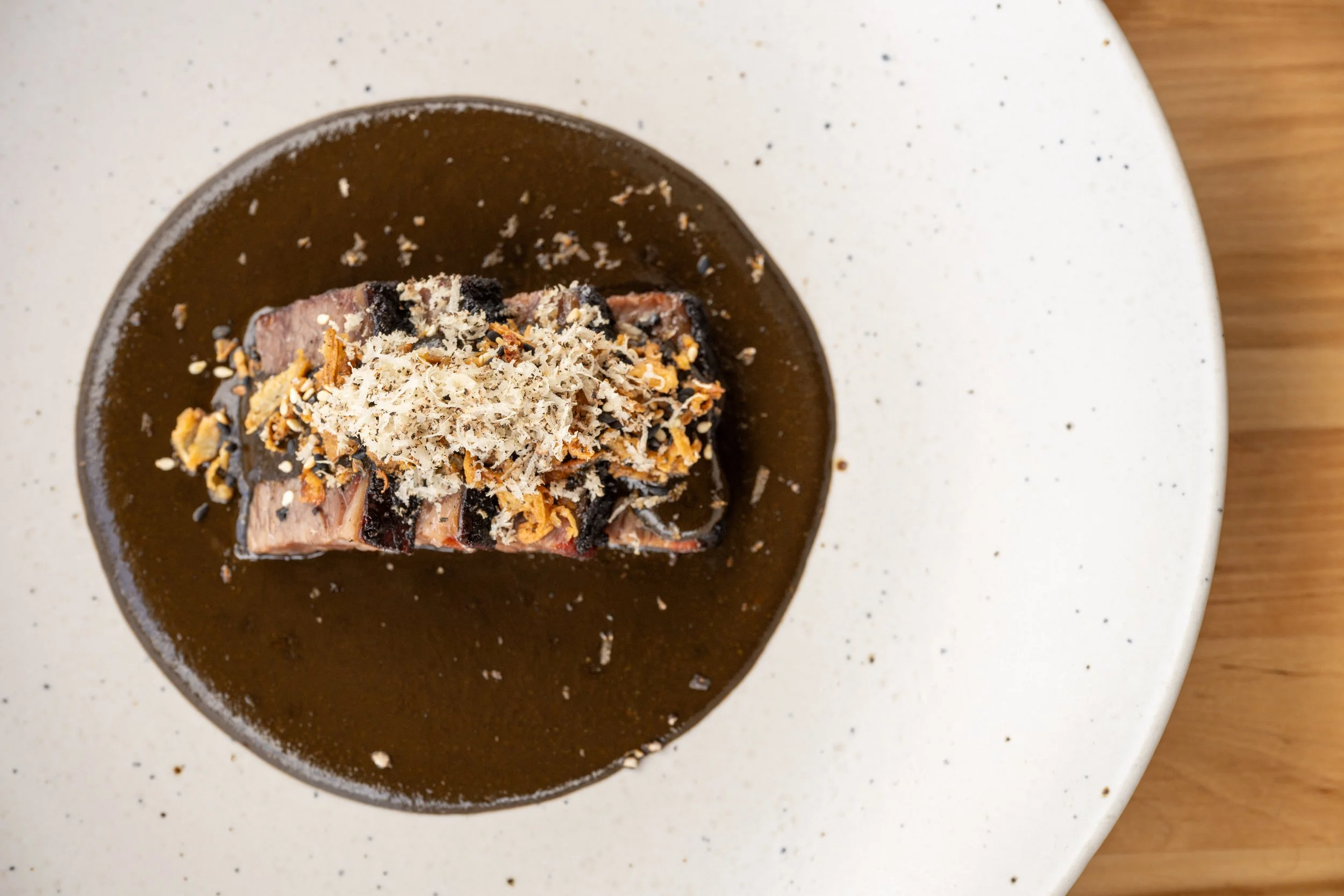
Maximo’s Smoked Short Rib, Truffle Mole Negro, Crispy Onion, Sesame Seeds, Shaved Truffle, Conico Rojo Tortillas | Photos: Will Blunt and Alexander Zeren
In Houston, for a long time, Mexican food was something you ate, not something you talked about. And when people did talk about it, they were usually talking about something smothered in orange cheese.
“I think we all have that shared experience of what Mexican food was when we were growing up,” says Chef Emmanuel Chavez of Tatemó. “So, all I grew up knowing or thinking was Tex-Mex. But I knew the difference because I had Mexican food when I was nine, 10, living [in Mexico]. So when I came back here, it was very basic—just shredded lettuce, tomatoes, beef, flour tortillas.”
For many, that “basic” became the default. “To me, Mexican food has always been like the mom-and-pop shop down the street,” says Chef Adrian Torres of Maximo. “Very simple, very cheap … You get chilaquiles rojos. You get a caldo. Super simple food.”
And yet, that wasn’t the whole story—not even close.
“We used to go to this pool hall after work that had these amazing tacos and salsas,” says Restaurateur Hugo Ortega. “It reminded me of what used to be, you know, for me living in Mexico.” But that flavor memory carried something heavier. “When my wife, Tracy, asked me, ‘What if you opened a Mexican restaurant?’ I said, ‘That’s a lot of work.’ Because I remember those years that I lived with my grandmother on top of the mountains… we literally ate to live.”
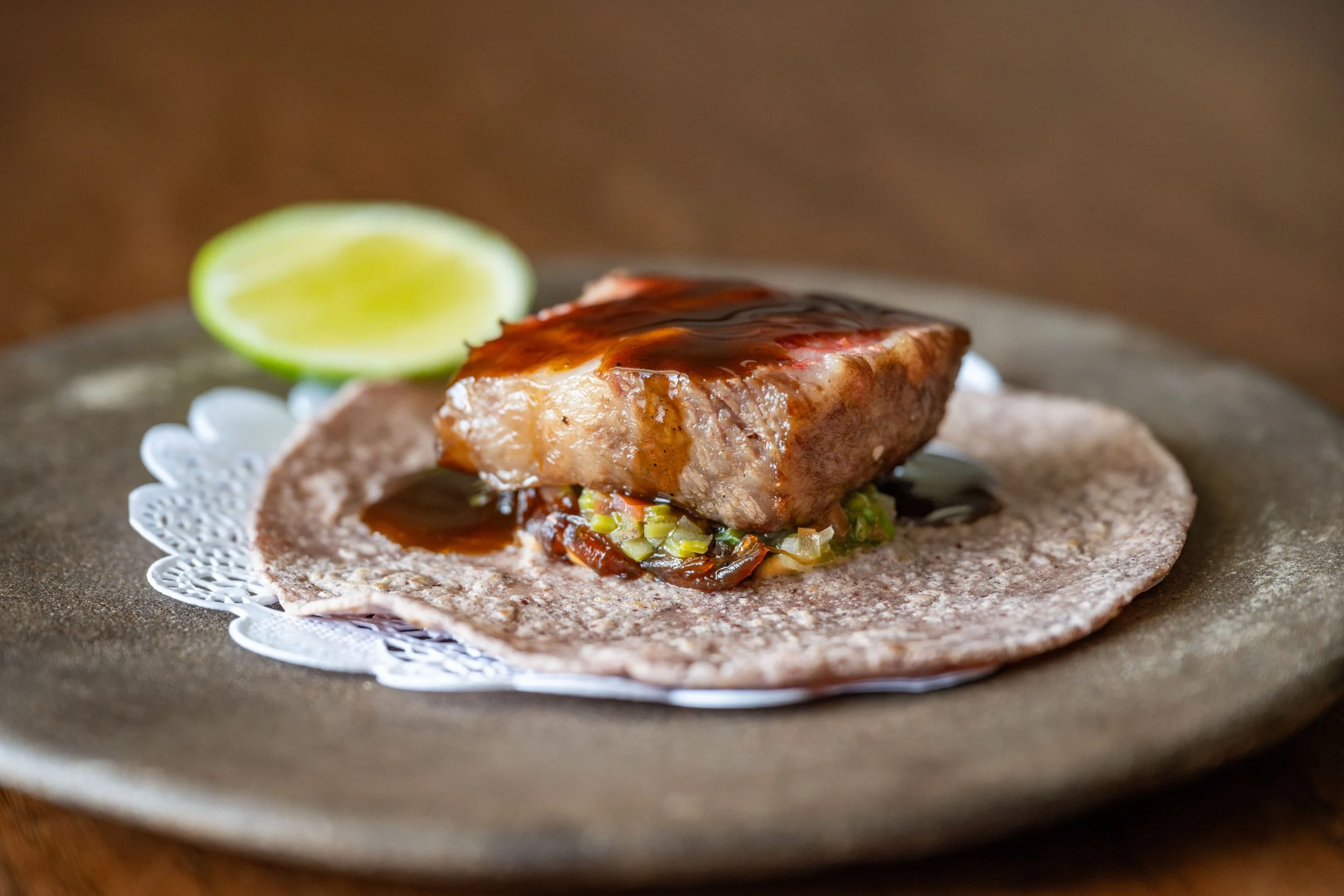
TaTemo’s Cachetada: Japanese A5 Wagyu, Conico Rojo Tortilla, Recado Negro, Encacahuatado Sauce, Cured Nopales, Caramelized Shallots, Conico Rojo Tortilla
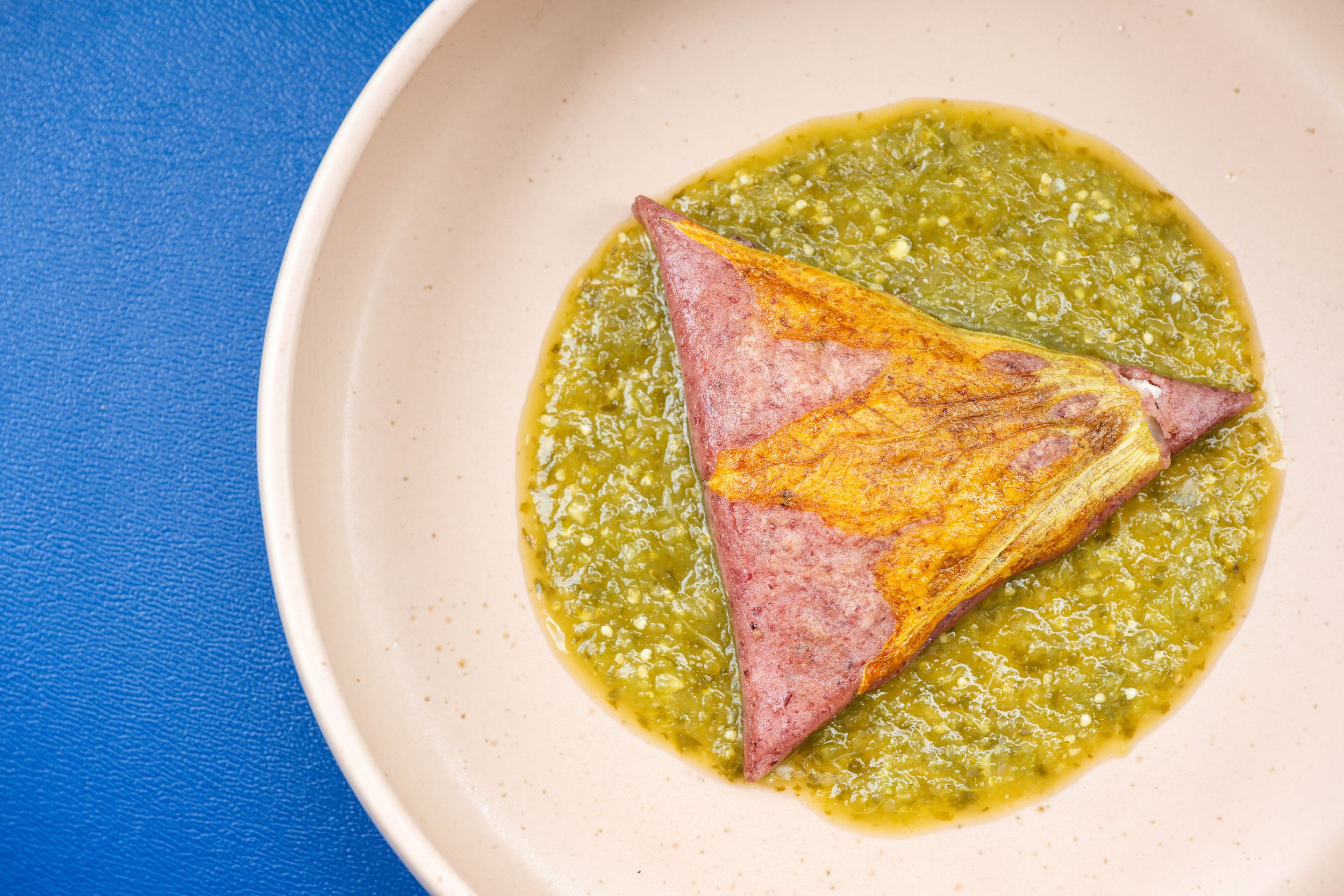
Maximo’s Squash Blossom Tetela, Requesón, Heirloom Tomatillo Salsa
Ortega eventually did open that restaurant. And then another. And another. Hugo’s in 2002. Caracol in 2013. Xochi in 2017. “I started to see that our cuisine was not represented as it should be. It was stereotyped,” he says. “So my goal was to cook the food that I knew and loved, to show people how diverse and beautiful it really is.”
He brought back a molino from Puebla. “My uncle and I installed the molino and basically the rest was history. We were able to make a master recipe for moles … cook the corn and then turn it into masa.”
That moment—when Ortega turned on the molino—sent ripples through the city.
“I feel like Hugo Ortega is pretty much the founding guy bringing in higher-end authentic Mexican food” to Houston, says Chef Thomas Bille of Belly of the Beast.
“I think he has led the way very, very gracefully.”
Torres, who worked at Xochi early in his career, agrees: “He’s like the first person who, in Houston, got established as a chef with real authentic Mexican food and never washing it down… He was just way ahead of his time.”
But for the generation that came next—Chavez, Torres, Bille, Baker Stephanie Velasquez of Casaema and Papalo Taqueria, and Chef Hector Gonzalez of Better Luck Tomorrow—embracing that legacy came with its own set of risks.
Gonzalez recalls seeing it that way for most of his life: food as a means of sustenance. A humble gesture, never something to spotlight. That perspective began to shift when he entered the professional kitchen and realized how rich and underrepresented his own culinary roots were.
For Velasquez, the turning point came at Xochi, where she met her partner Chef Nicolas Vera. “For me, Mexican food growing up just meant very happy and cheesy, which I love. And it was just focused a lot on the blend of Tex-Mex and Mexican,” she says. “At Xochi, I learned what real Mexican food was.”
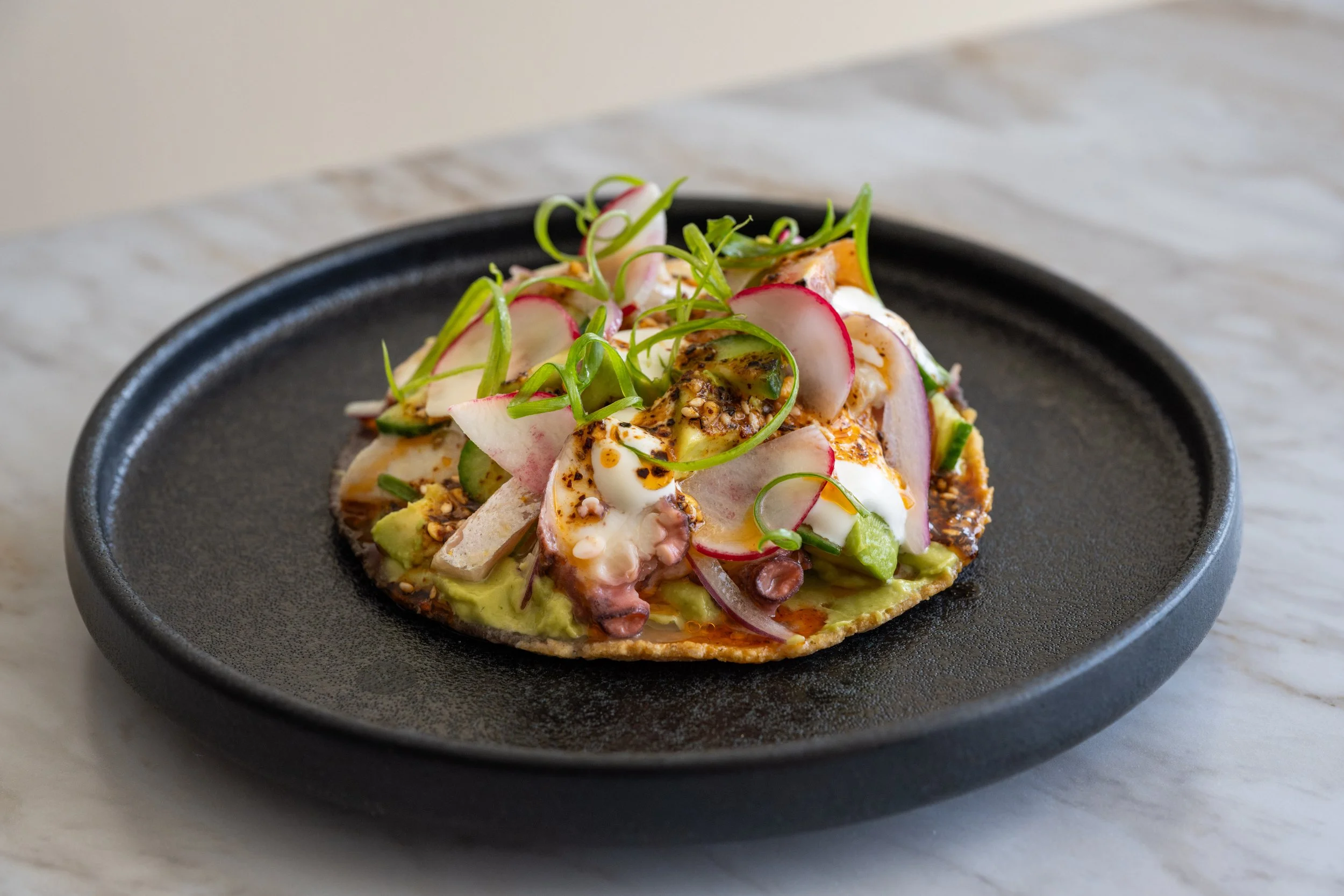
Belly of the Beast’s Ceviche Mixta Tostada, Shrimp, Octopus, Hiramasa, Uni, Cucumbers, Tomatoes, Onions, Serrano Chiles, Yuzu Avocado Purée, Baja Crema, Leche de Tigre, Peanut Salsa Macha, Radish, Scallions
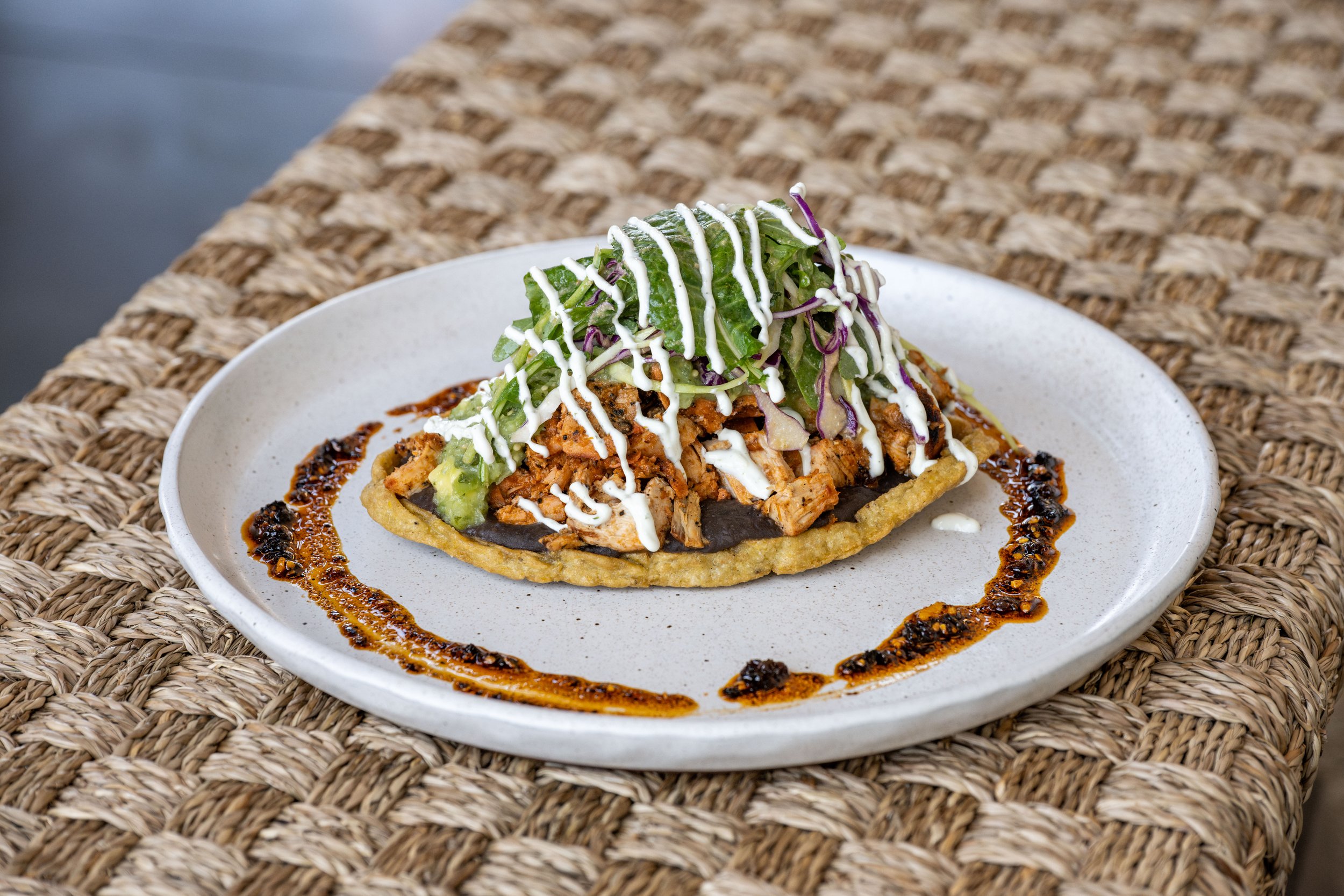
CasaEma’s Chicken Huarache, Black Beans, Cabbage, Salsa Paloma, Salsa Macha, Pipián Vinaigrette, Crema
Torres experienced a similar awakening at Maximo. When he first joined, the menu leaned heavily into Tex-Mex—fajitas, refried beans, the familiar canon. “I was making food I wasn’t proud of,” he remembers. After being handed the reins at Maximo, Torres transformed the concept entirely. Once a faltering spot slinging Tex-Mex standards, the restaurant is now packed nightly, its revival powered by personal, technique-driven food. “But they gave me the green light to do my food … and we’ve been crushing ever since.”
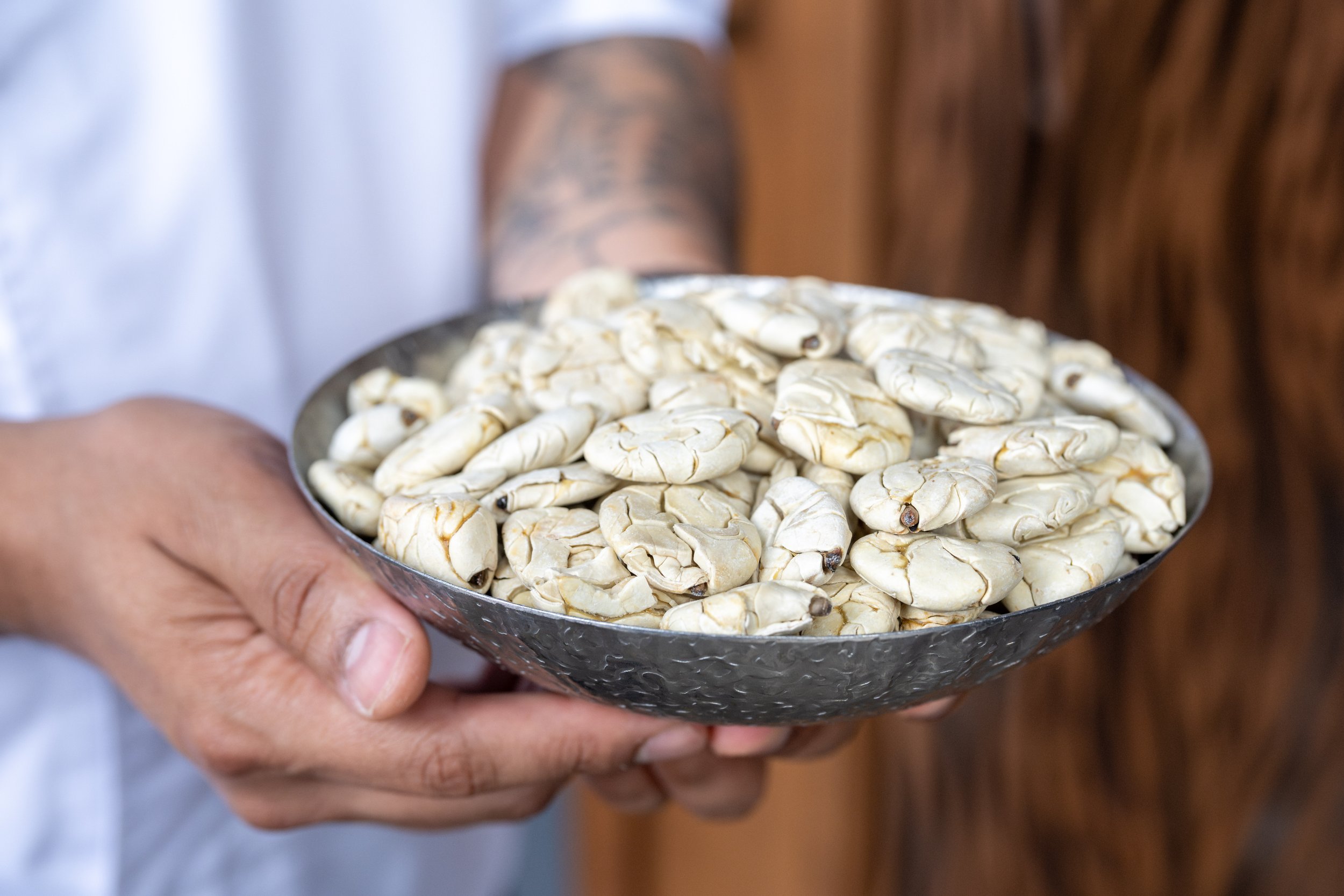
At the heart of that seriousness is masa. Nixtamal. A ritual and a backbone. Velasquez points out that diners are beginning to realize its value—not just as a staple, but as a nutritious, deeply cultural ingredient. “It has calcium, it has minerals, it has benefits to your body, and it also tastes very good. It’s the base of almost every Mexican menu … there's a certain pride because every restaurant has their own way of making it.”
Nixtamalization is sacred, but also exhausting. It’s the ancient process of cooking dried corn in an alkaline solution—traditionally water and slaked lime—then resting and grinding it to make masa. Once a rare sight in the U.S.—even in professional kitchens—nixtamalization is now the status quo among chefs serious about cooking Mexican food with any kind of integrity.
To some, it’s just a technique that yields better-tasting tortillas. But in Houston, it’s also a symbol—a reclamation of heritage and knowledge once deemed unprofitable or unnecessary. It resists shortcuts. It resists assimilation. And in kitchens across the city, it stands as a silent yet deafening counterpoint to the flattening forces of Tex-Mex and cheap tacos.
For many, nixtamal is a non-negotiable, not a luxury. “In Mexico, they say ‘Sin maíz, no hay país,'" says Bille. There is no country without corn.
And maybe there’s no Houston without it either.
“I think it’s just us taking back what belongs to us and honoring our culture,” says Torres. “At one point … we had to wash down our culture, in a way, to fit in.” As a Houston-raised DACA recipient born in San Luis Potosí, his presence in the kitchen is its own kind of statement. “I’m Mexican at heart, but I don’t know Mexico … I can’t go. But then also, the U.S. doesn’t fully embrace me because I’m still a DACA recipient. So I’m in this weird gray area.”
The phrase for it, he says, is “ni de aquí, ni de allá.” Neither here, nor there.
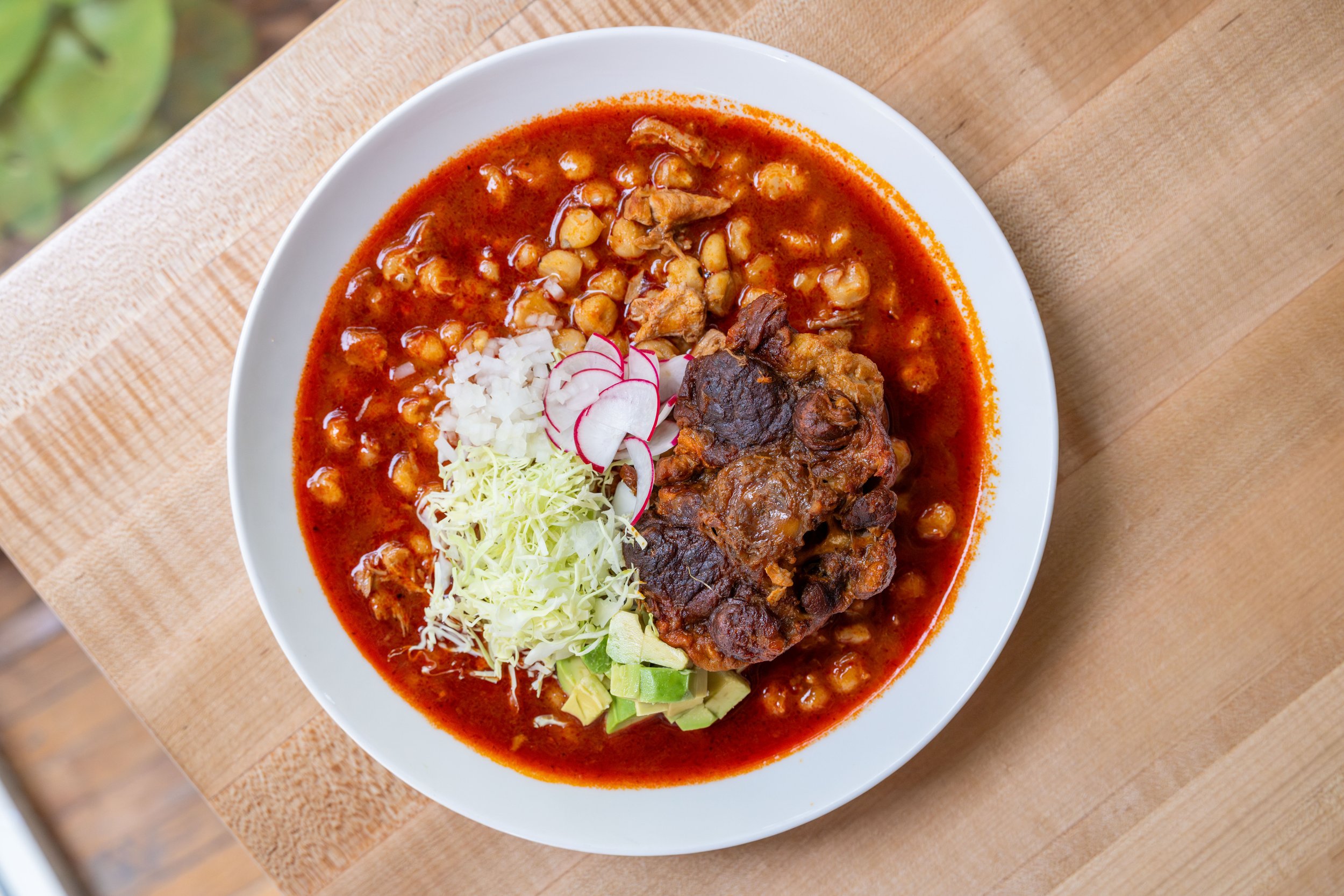
Better Luck TOmorrow’s Red Pozole, Oxtail, White Hominy, Shaved Cabbage, Radish, Yellow Onion, Avocado, Tostadas, Lime, Chile Piquín
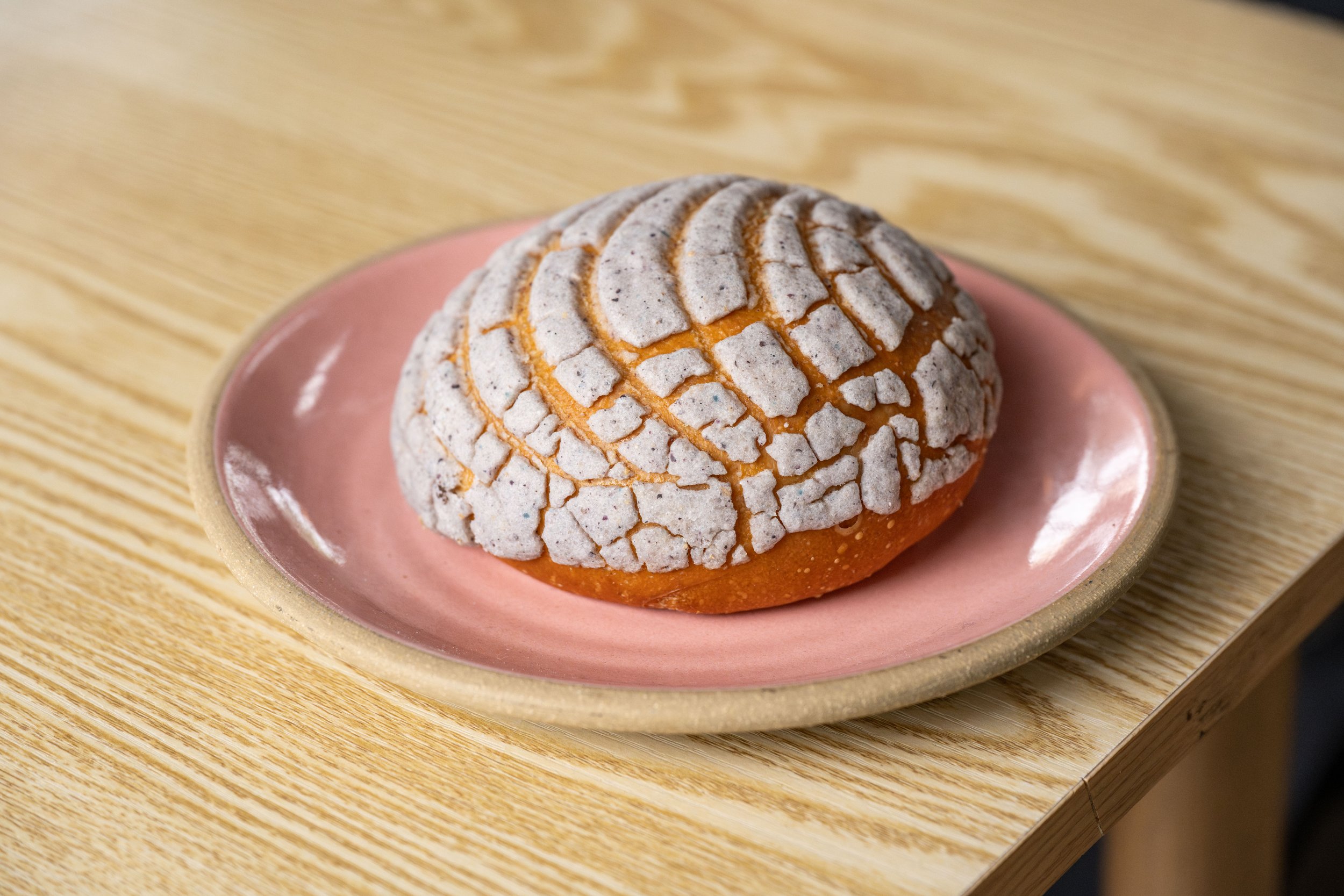
CasaEma’s Carrot Cake Donut, Cream Cheese Frosting, Blood Orange Gel, Cinnamon, Dehydrated Blood Orange, Orange Zest
“When I bring tortillas home from work, [my mom will] tell me stories of when she was little—how she’d cook the nixtamal and take the pot to the community molino to grind it. That’s so beautiful and so important to me,” Torres says. “For me, it’s like, how do I honor my people and honor myself and my family? Food is one of the first places and the easiest and the best to start doing that.”
It’s a contradiction: This moment when diners are more curious than ever about Mexican cuisine, even as Latin American immigrants, the ritual backbone of the hospitality industry, are vilified politically. Politicians stoke fear while cooks press tortillas.
“How can you hate someone so much and enjoy their culture so much at the same time?” Bille asks. “It’s so hypocritical.”
In some corners of the country, identity is criminalized. But in Houston, it’s being dished out fearlessly.
“I don’t want to say it’s a form of protest,” says Velasquez, “but it is a form of staying true to ourselves. It’s a lot easier to conform to what the masses want … but the food we’re putting out is upholding traditions. Being able to cook, bake, roast coffee, and use Mexican ingredients—it helps us stay true to who we are.”
And for diners wondering how to support? “Get to know the people making your food,” she says. “You don’t have to be best friends—but humanize service industry workers of all backgrounds. That goes a long way.”
“For every immigrant that comes … this will continue to be the land of opportunity,” says Ortega. “After I came and I crossed the border illegally back in 1984 … I cooked for presidents. I cooked for George Bush. I cooked for Barbara Bush. I cooked for Bill Clinton.”
And in Houston, that blueprint is being redrawn every day, in molcajetes and molinitos, over boiling pots of nixtamal and smoky planchas. This food is history, yes, but also presence, labor, protest, and pride. A fire that was never extinguished. It just needed more hands to stoke it.