Gotta Drink 'Em All
Bar Kaiju deals a good hand of scary monsters and nice spirits.

Bartender Derek Stilmann of Bar Kaiju | PHotos: Will Blunt
What do ferments and fire-breathing dragons have in common? At first, you might think, not much, but Bartender Derek Stilmann would say otherwise. Bar Kaiju, his monster-inspired cocktail bar—concealed and perched above The Citadel food hall—was first catalyzed by his obsession with fermentation.
A veteran of bartending competitions and the former manager of some of the city’s best cocktail bars, Stilmann started to dream up a bar of his own shortly after the pandemic. “As I was building this bar, I realized that the fermentation process wasn't what interested me, it was the cultural significance of those ferments in different parts of the world,” says Stilmann. “I wanted that to be a part of the bar.” His desire to translate traditions, flavors, and culture through his cocktails and concept led him down an unusual path.
“I knew that fermentation was something that America doesn’t really love,” says Stilmann. “I was looking for what elements have cultural significance. What landed [were] these monsters.” As he built out the bar, its grungy, minimalistic aesthetic—inspired by bars in Japan and South Korea, where Stilmann hosted a month-long pop-up—reinforced the idea. Monsters were not only culturally relevant, they were also, quite simply, fun and “easy to understand.” So, Stilmann and his team got to work, researching monsters and developing cocktails for the menu.
To generate ideas, Stilmann and his staff dive into folklore, urban legends, and popular culture from around the world to find new monsters. They compile their discoveries into a PowerPoint presentation and talk through each of the creatures. To keep his head above the water and not overwhelm his staff, Stilmann created “the pillars,” which guide cocktail creation and help the bartenders stay focused on the concept. The pillars hit on three main points, “where they come from, who created them, and what they act like,” says Stilmann. “That gives us a guideline to build these drinks and tie us into the monster. [It] gives us limitations and a road map, which is extremely helpful. When you are throwing things at the wall, you don't want the wall to be massive.”
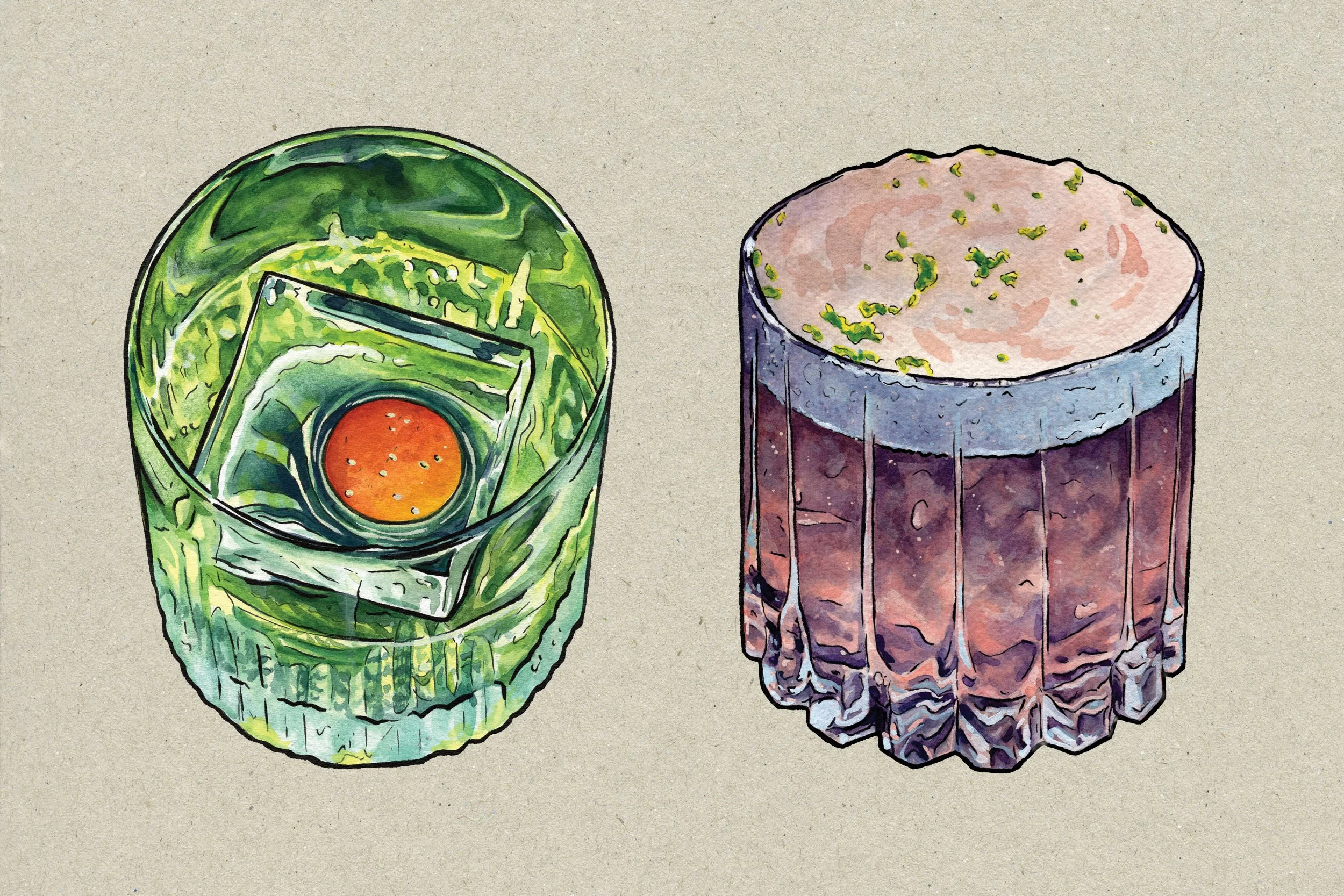
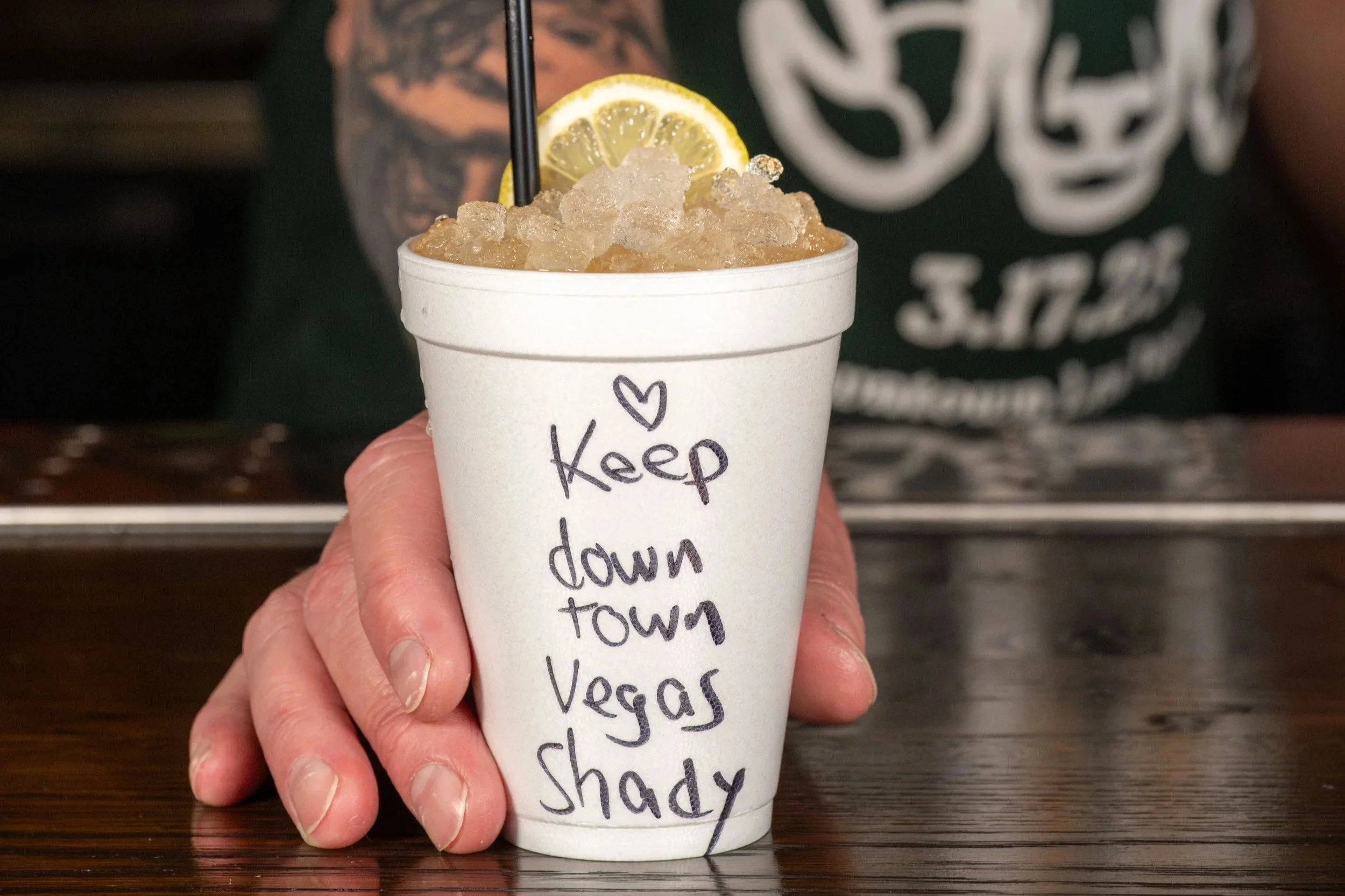
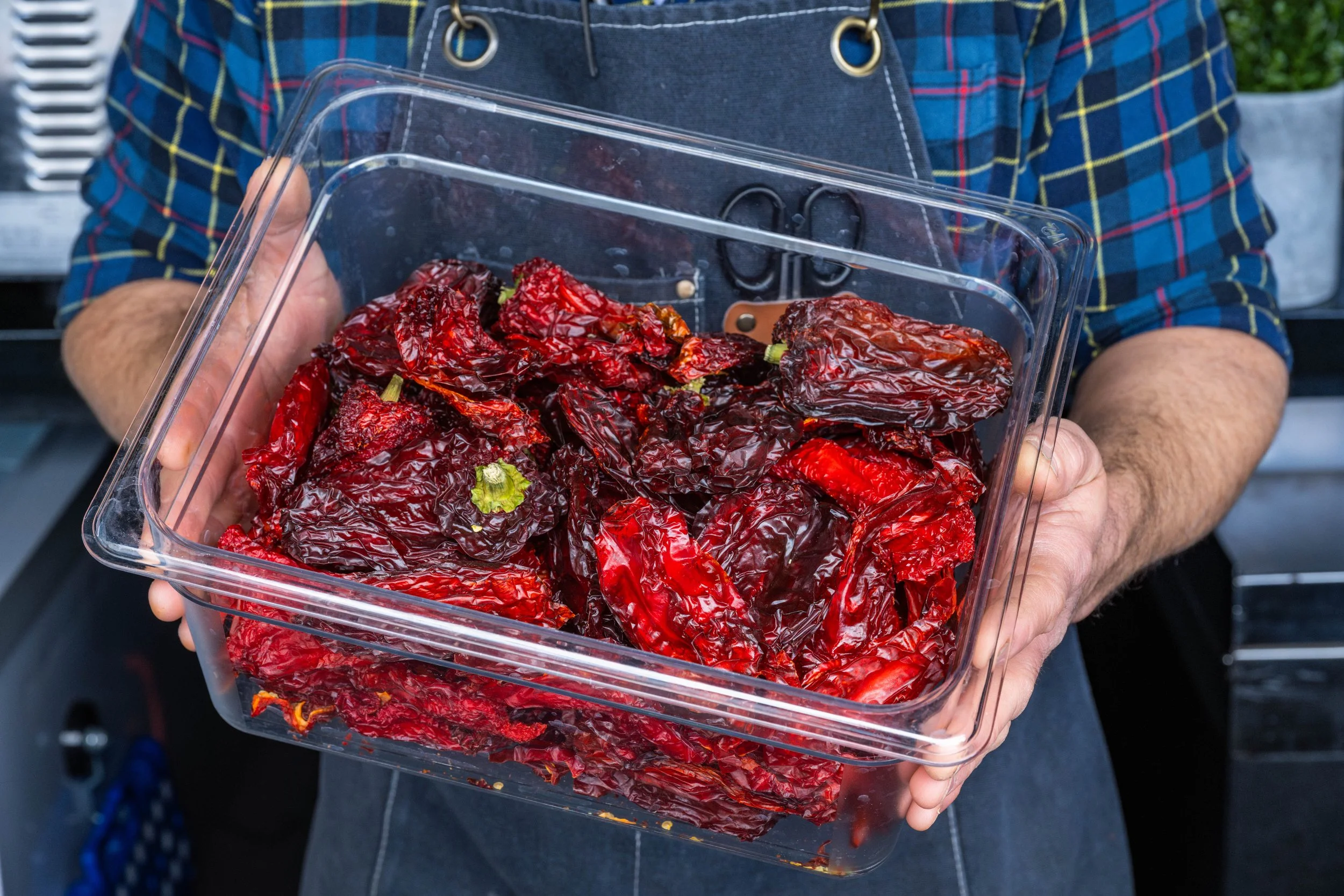
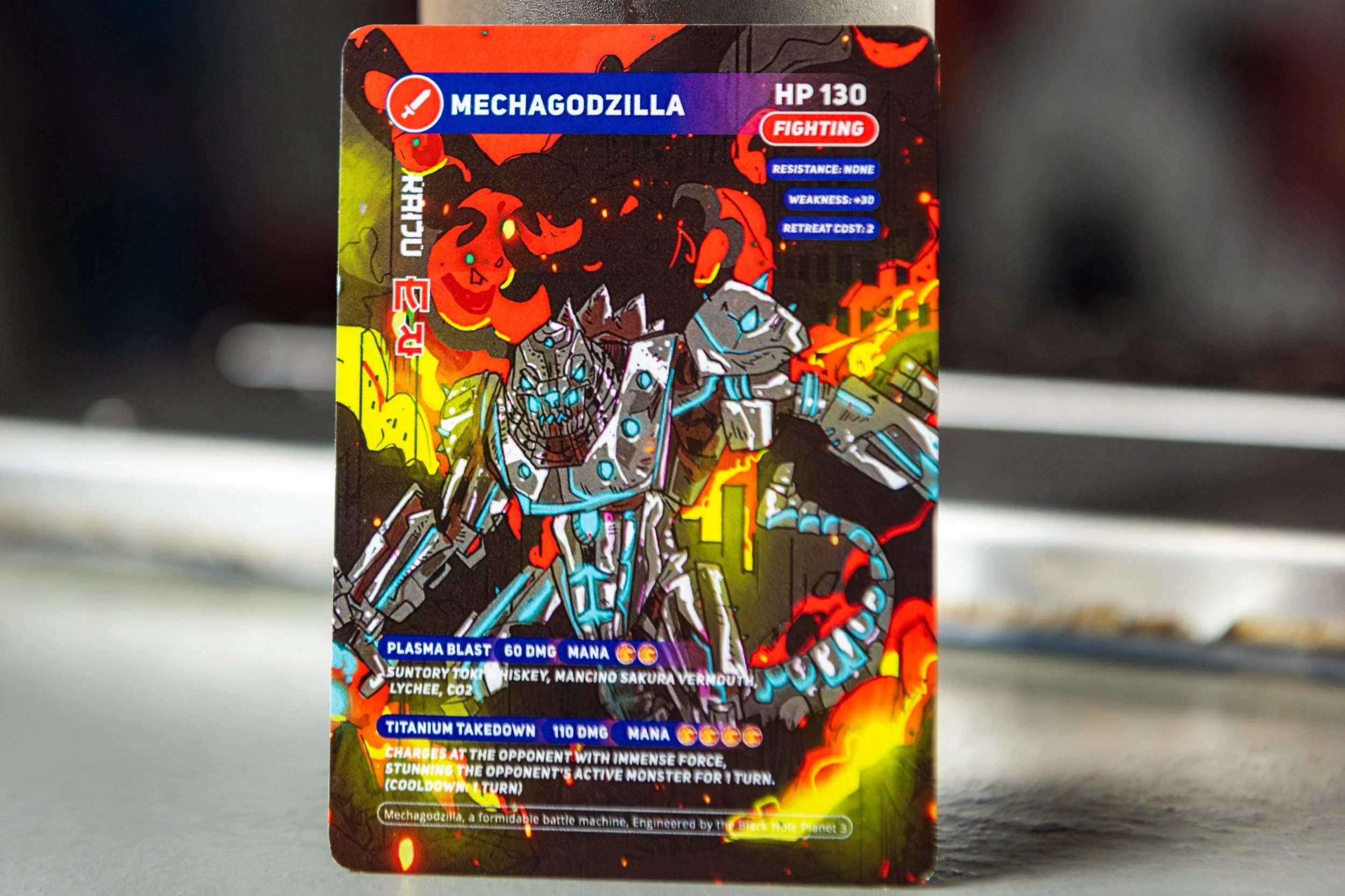
The result is cocktails like the Mechagodzilla, a towering, ice-cold whisky highball that draws on the Japanese origins of the creature through its build, but also includes a force-carbonated sakura cherry blossom soda—with Mancino sakura vermouth, whisky, and lychee—to tie back to the monster’s cultural and regional flavors. Or take the Güije, for example, a cocktail based on the “troublesome” monster from Cuban culture (recipe on pg. 93). It features a blend of Jamaican pot still rum and a Criolla rum infused with roasted garlic, bay leaf, cinnamon, and other spices alongside a maduro oleo saccharum. Finished with mango and lime juice, the cocktail pays homage to the monster’s geographic origins while drawing on culturally significant ingredients. Even the cup—inspired by the Cuban drinking vessel, the jícara—plays a role, with its “calligraphy art,” says Stilmann. “We chose this particular cup because the cocktail was inspired by the Canchánchara,” which is traditionally served in a jícara, he explains. And, “It's been tagged up. [Since] the Güije is a mischievous creature, it is something it would probably do.”

While Stilmann and his team scour the internet for inspiration, sometimes guests have stories of their own to share; tales from their own childhoods and cultures. According to Stilmann, that sense of nostalgia is what has helped the concept thrive. So, he doubled down on it.
For their second menu variation, Stilmann decided to try something different. A card collector himself, Stilmann came across a large format deck of Pokémon cards. They were “menu-sized cards!” he says. “How cool would that be? To make a trading card game! We might as well make it playable too.” He drove full throttle into the idea and started to research how classic trading card games like Pokémon and Magic: The Gathering work. Stilmann was “constantly refining [it] until we got to a version that seemed playable and fun. The amount of effort it took to do this was scary.”
The cards, which feature striking artwork from Eric Bonhomme and display the cocktail’s ingredients for guests, give brief descriptions of the monsters they are inspired by and have a set of corresponding attacks for gameplay. “Now, it’s at the point where we have sold over 500 packs of cards. We have a local game card place that wants to hold our cards. It's insane,” says Stilmann. “So, we keep making more.” Along with new monsters and cocktails, Stilmann also hosts tournaments at the bar, where guests can battle each other for limited-edition cards.
A surprising benefit to the off-kilter menu format is that it is “something tangible that can be experienced with or without the beverage,” says Stilmann. As non-alcoholic drinks continue to rise in popularity, there is an advantage to offering an experience that appeals to people who don’t drink as much as it does to those who do. Some guests come into the bar to play the card game and sip on drinks like the Kitsune which showcases the bar’s house-made non-alcoholic gin, as well as non-alcoholic versions of both blanc and sweet vermouth.
Getting to this point, however, wasn’t easy. Building a niche concept can be particularly challenging. “If you can’t explain it in two to three sentences, then it's not going to pan out,” says Stilmann. “It is so easy for this concept to have been very niche and kitschy. If you hyperfocus or don't step back to see how it can be approachable to a lot of people, you won't have a successful product and business.”
The best way to stay approachable, according to Stilmann, is to boil your concept down to the essentials. “You sometimes miss what the significant part of your thing is. For us, it's nostalgic and connects you to other cultures. That's it. Everything else comes from that. The cards, the artwork, that just connects you back to it.”