No Waste Left Behind
Divide and utilize is the name of the game at Barbacana.
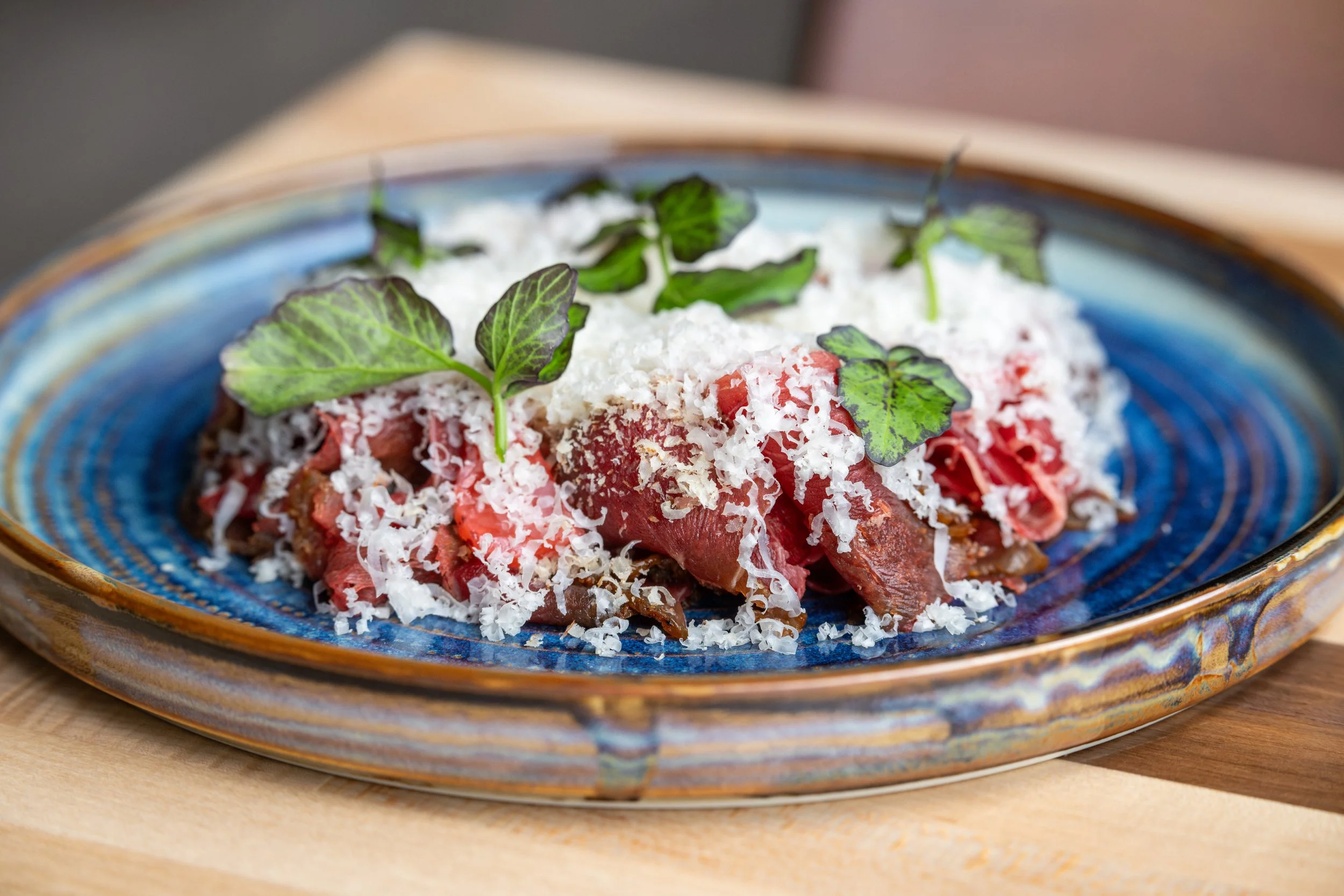
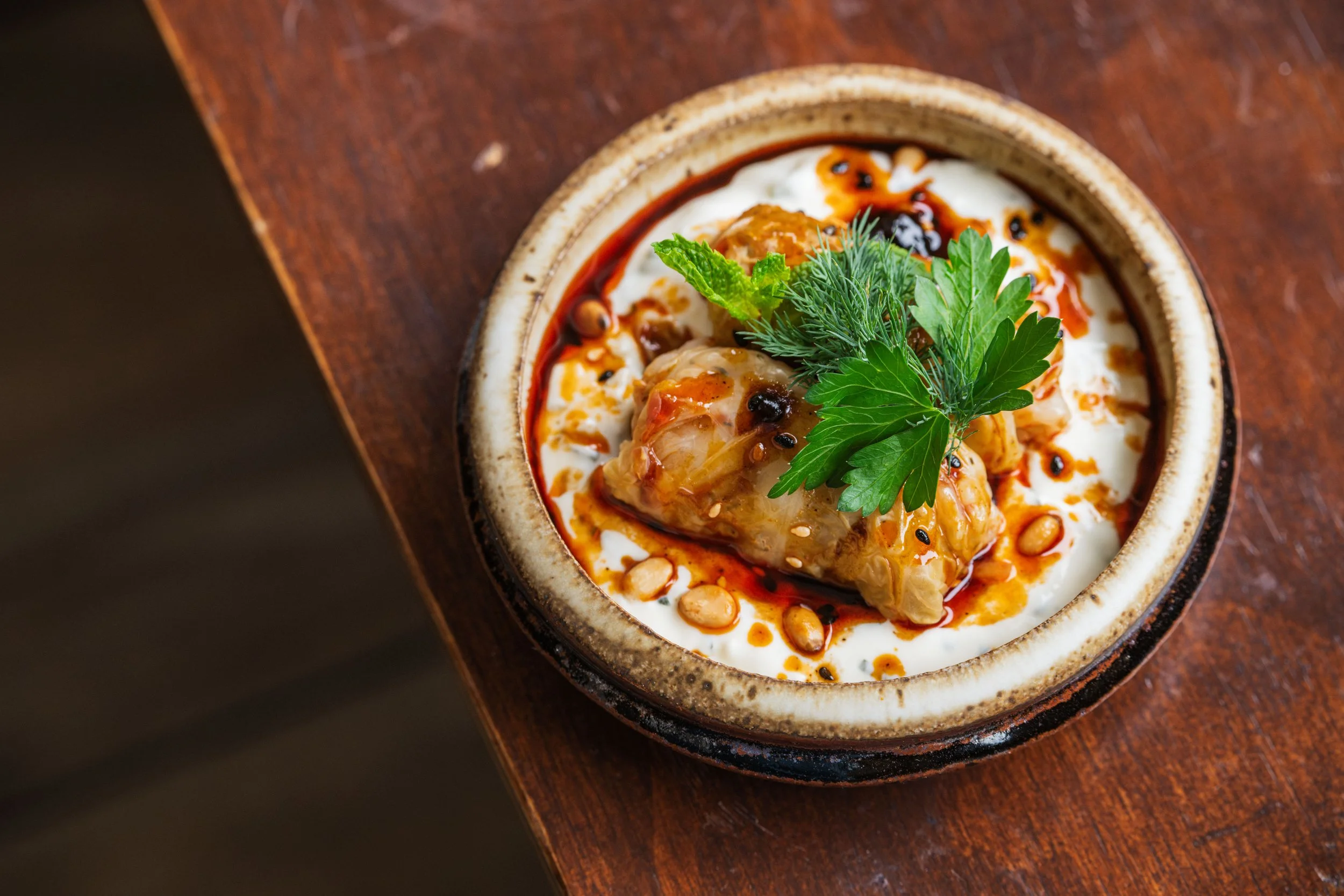
Basturma-Style Wagyu Carpaccio, Grated Pecans, Puffed Buckwheat, Pickled Strawberries, Aged Goat’s Milk Gouda, Red Watercress | Photos: Alex Zeren
From preserved lemons to tepache to sweet tea vinegars, a low-waste mindset is fueling creative and collaborative dishes at Barbacana. Led by Chef-Owner Chrisitan Hernandez, the restaurant blends his dedication to local produce and agricultural products with techniques and flavors he’s picked up while working at restaurants in Houston, New York, and Mexico City. Most importantly for Hernandez, though, is the way sustainability guides him and his team.
From preserved lemons to tepache to sweet tea vinegars, a low-waste mindset is fueling creative and collaborative dishes at Barbacana. Led by Chef-Owner Christian Hernandez, the restaurant blends his dedication to local produce and agricultural products with techniques and flavors he’s picked up while working at restaurants in Houston, New York, and Mexico City. Most importantly for Hernandez, though, is the way sustainability guides him and his team.
As he prepared to open a restaurant of his own, Hernandez looked for ways to limit waste, reduce food costs, and inspire his staff. Post-COVID, his mission was to build “a creative and sustainable restaurant that can weather the storms we have seen,” he says. “Anyone can cook a steak. What’s harder is to find ways to creatively solve problems in a restaurant.” Inspired by restaurants like Noma, Hernandez zeroed in on techniques and methods, like fermentation and preservation, that utilize scraps or extend the shelf life of ingredients while offering distinct flavor to dishes. It is especially useful in a place like Texas, where the shorter growing season and occasionally harsh climate can make access to certain kinds of produce fleeting or nearly impossible.
Since growing his team, collaboration has also become a key tool in his effort to keep costs down and limit food waste. Along with Pastry Chef Priscilla Treviño and Bartender Gustavo Perez, Hernandez looks for multiple applications for a single ingredient—sometimes on short notice.
This past spring, when local Texas strawberries were in season, everyone got in on the action. Hernandez decided the tart-leaning berries were the missing companion to a basturma-style wagyu carpaccio dish he had been working on. The strawberries “are more acidic and bright in my opinion. So, finding ways to highlight that rather than shying away from it” was the goal, he says. Hernandez pickles the berries—extending their shelf life and drawing out their tart flavor—and serves them alongside the carpaccio, grated pecans, puffed buckwheat, aged goat’s milk gouda, and red watercress.
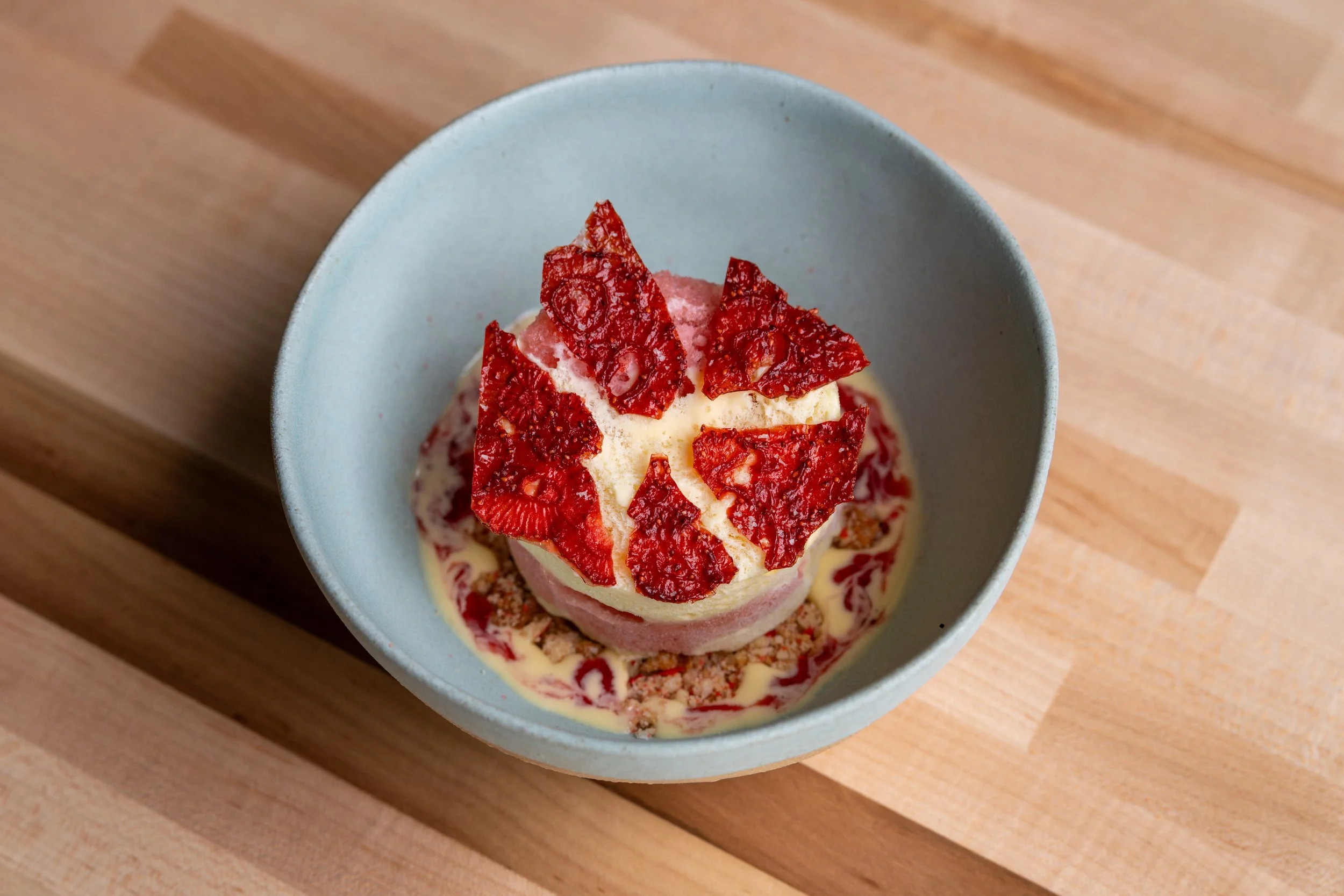
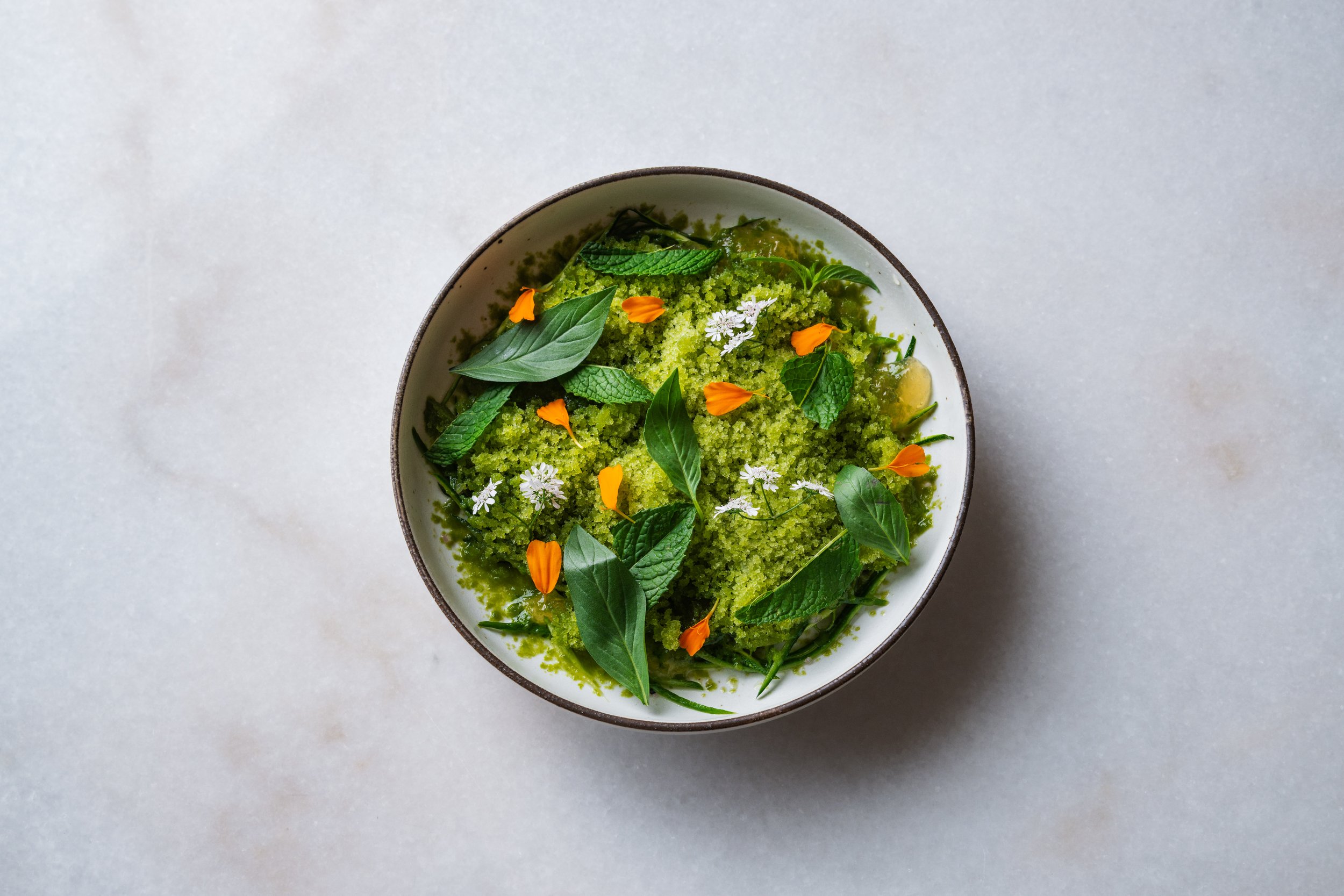
Strawberry-Thyme Semifreddo, Shortbread Crumble, Strawberry Tuile, Strawberry Pop Rocks, Strawberry-Thyme Crème Anglaise
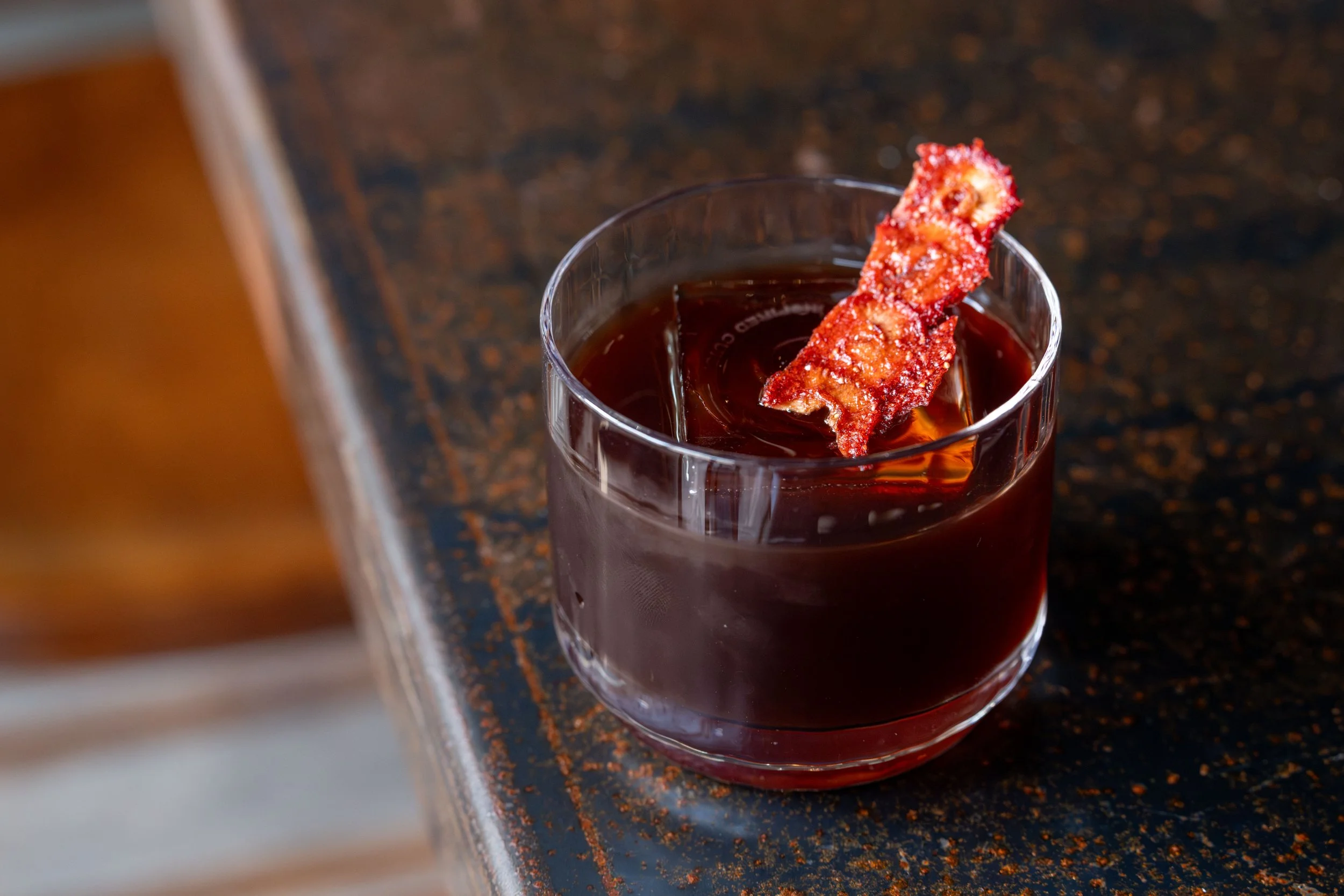
Strawberry Moon: Brown Butter-Washed Rye Whiskey, Campari, Sweet Vermouth, Strawberry Syrup, Strawberry Balsamic Vinegar, Strawberry Jam Chip
For Treviño, taking a look at the ingredients already coming through the door typically offers more ideas than staring at a blank canvas. “When I saw [Christian] was getting strawberries in, I had to get in on that,” she says. “I ordered more of them and decided to incorporate them into the dessert.” Her strawberry-thyme semifreddo with shortbread crumble, strawberry-thyme crème anglaise, strawberry pop rocks, and a strawberry tuile makes the most of the seasonal ingredient while differentiating itself—in style and flavor—from Hernandez’s savory dish.
“When I met Christian,” says Treviño, “it was something we bonded over, that sustainability aspect. I would throw away lemons and oranges and be like, ‘I wish there was something I could do with this’. So, it really opened my eyes. We can pretty much do anything with anything.”
Perez sees it in a similar light: “You can always work an item 20 different ways. That's the main thing. Looking outside the norm for a way to use different vegetables and fruits,” he says. It’s about “teamwork and brainstorming with people who aren't bartenders.” That’s how he figured out the recipe for his Strawberry Moon cocktail. The Boulevardier riff with brown butter-washed whiskey, Campari, and sweet vermouth showcases the potential of leftovers and scraps with the addition of a house-made strawberry syrup, strawberry balsamic vinegar, and a dehydrated strawberry jam chip as a garnish. “Pastry had strawberries, so I made the syrup, and the balsamic I saw in the chef's pantry [and] thought it would taste good in the drink,” he says.
The low-waste approach isn't just encouraged, it's part of the way Hernandez trains his team and runs his kitchen.
“For me, the biggest part has been building the structures behind everything,” says Hernandez. “Our recipe book and tech sheets, all the waste is built into there. Most tech sheets for cauliflower say, cut off the florets. For ours, it says, cut off florets and then [it] has the two pounds of stems listed, and there is a waste procedure. So, even if we don't have a plan for it immediately, we know what the scraps will be. It activates the brain. It's part of the recipe, figuring out where it will go.”
Those limitations drive creativity, pushing Hernandez and his staff to innovate when scraps are left on the table. They have dedicated themselves to squeezing out every last drop of an ingredient, if they can. “If someone spent 18 months plus to raise beef, we shouldn't be throwing any of this away,” says Hernandez. “From the leaves people don't eat to the fruits they do, [we are] paying homage to the people that really produce our food.”
The environmental benefit of a low-waste kitchen is clear, but it is, more simply, an economic opportunity as well. As the cost of goods continues to rise, especially in the food service industry, discarded scraps are real dollars headed straight for the trash. Recalibrating and building systems that minimize this waste can be game changing for chefs and restaurateurs. And as skilled labor becomes increasingly challenging to hire, providing staff with tangible opportunities to learn new techniques, flex their creativity, and collaborate are invaluable selling points well worth the effort.