
Nothing About Us Without Us
The boon and blight of raising Seattle’s minimum wage floor, and how the city’s hospitality pros are retrofitting their business models
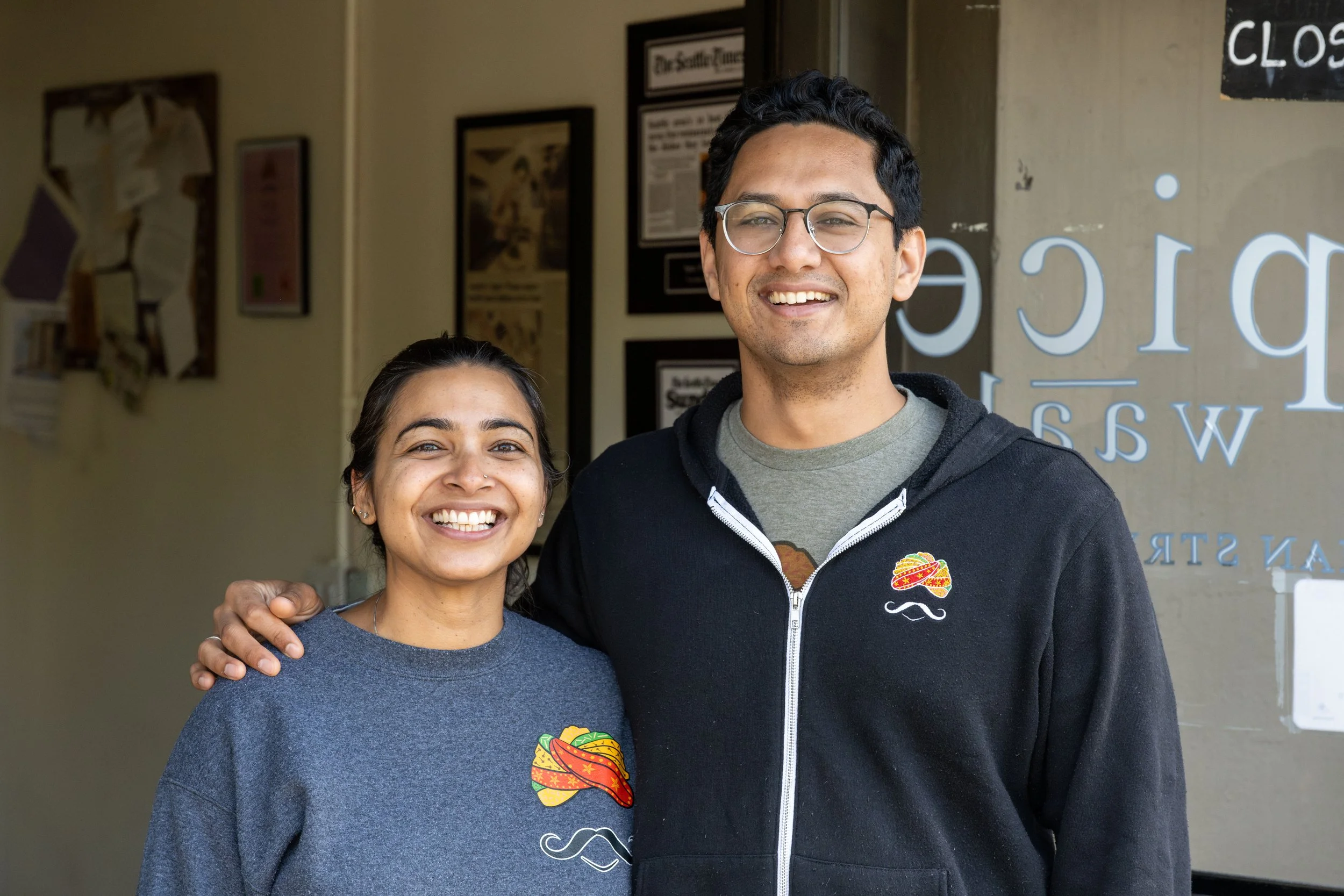
Restaurateurs Uttam Mukherjee and Aakanksha Sinha of Spice Waala. |. Photos: Will Blunt and Alexander Zeren
When Seattle’s minimum wage rose to $20.76 per hour in January 2025, it capped a decade-long rollout that began with the city’s 2014 Minimum Wage Ordinance. For many small restaurants, it also reopened questions that never really went away: how to pay fairly, stay solvent, and keep people working when every cost moves at once.
“The City’s Minimum Wage Ordinance, which went into effect in 2015, requires the annual minimum wage increase to reflect the rate of inflation,” said Callie Craighead, Press Secretary for Mayor Bruce Harrell, in a statement to StarChefs. “This is an automatic inflation adjustment that happens every year, and our office does not play a role in setting it. Thus, there was no consultation with business owners.”
For owners and restaurateurs, the shift was discordant and came at a fragile moment after years of inflation, reduced dining demand, and pandemic aftershocks that left little margin for error in a post-tech city. Amazon and Microsoft, which account for nearly 40 percent of Seattle’s employment, are slashing or freezing their workforce in stark numbers. The result is a major metropolitan area with less and less disposable income to spend on food and drink.
This has made raising the wage floor even tougher for business owners who aren’t bringing in as much revenue as they were during the city’s tech boom. While most agree the minimum wage increase is a socioeconomic step in the right direction, the means by which it has been attained, they feel, came without regard to the idiosyncratic needs of small businesses.
At Spice Waala, co-founders Uttam Mukherjee and Aakanksha Sinha built their business on the principle that Indian street food should be accessible and made by fairly treated employees. “A lot of people aren’t able to get access to affordable, fresh food,” he said. “We wanted to create that space. Whoever, no matter what your income level, can come in and get something to eat.”
That philosophy hasn’t changed, but the math around it has. “The thing that’s more challenging is the fact that all of these changes are happening at the same time,” he said. “Not only did the total compensation go away, but the cost of goods has been skyrocketing, the taxes have been increasing, the rent has been increasing. Also, people’s appetite to eat out has been declining.”
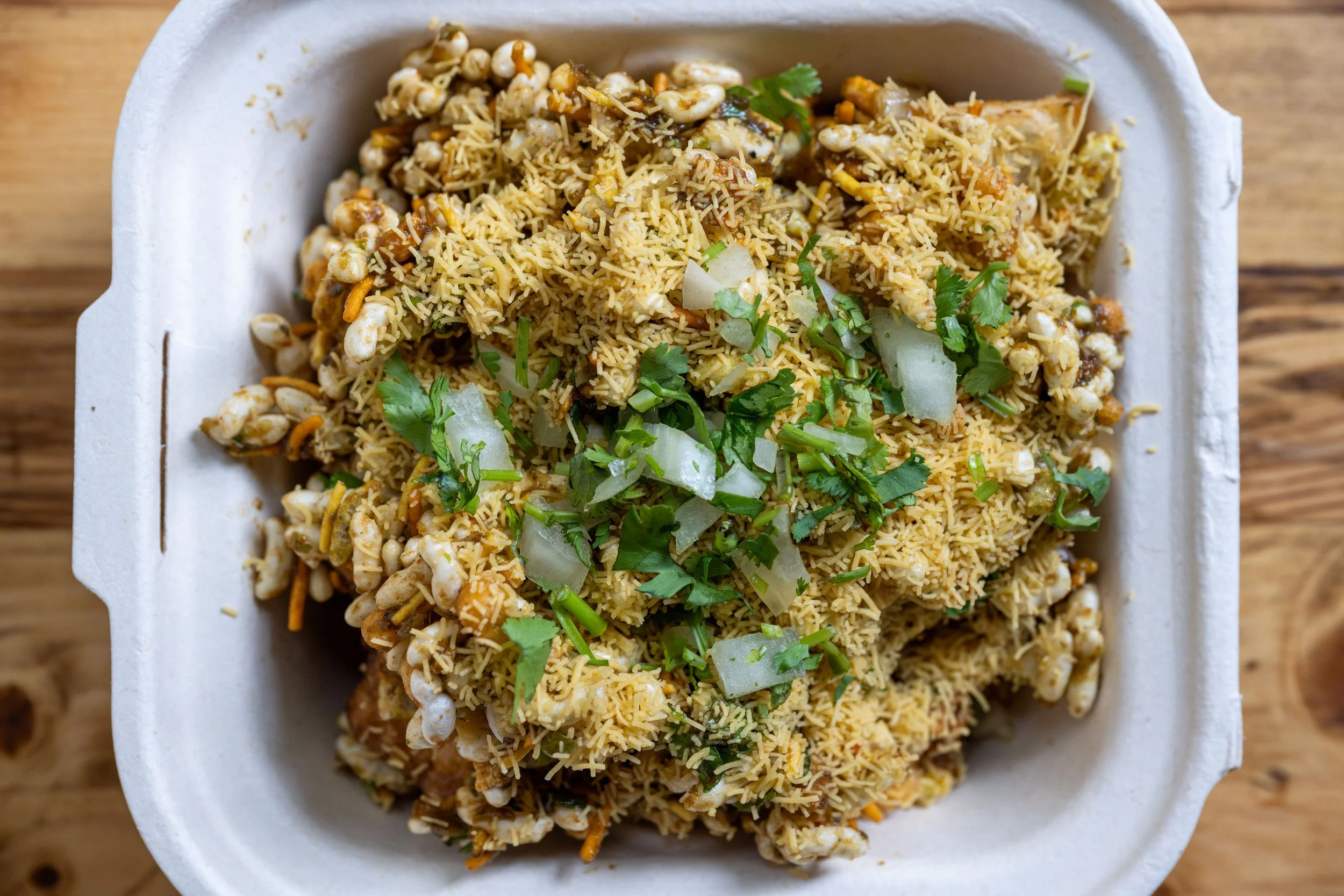
Behl Puri: Puffed Rice, Onions, Fried Chickpea Batter, Papri, Tamarind Chutney, Cilantro Chutney, Peanuts, Cilantro at Spice Walaa
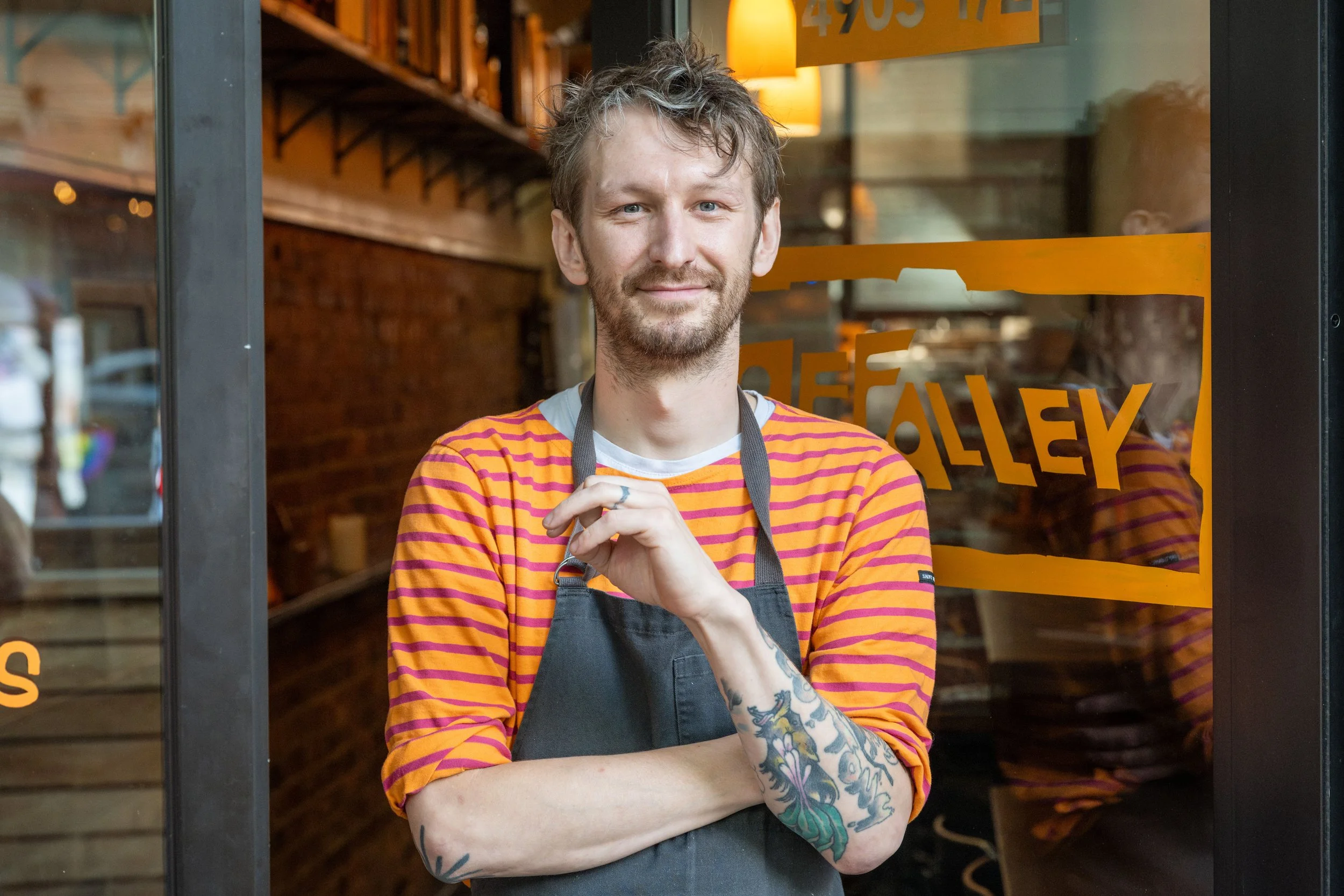
Chef Evan Leichtling of Off Alley
Those pressures forced him to make difficult adjustments. “We had to reduce our total number of employees in two out of our three locations,” Mukherjee said. “We’ve had to raise our prices. And we’ve also had to try to entice customers to come in on a more regular basis.”
That has meant new programming, higher-margin specials, and a push on large-format catering. “We are still trying to hold [our employee benefits] as non-negotiable,” he said. “We have not made any changes. We’re holding the line on all of those for right now.”
Those non-negotiables are what keep his employees around year after year; the restaurant concept boasts an average year and a half retention rate. After tips, without benefits, Spice Waala’s entry-level employees earn about $28 to $30 an hour. They are offered health insurance plans at a minimum 50 percent employer-paid premiums. Profit sharing happens every quarter along with a comprehensive 401(k) plan and transportation programs.
But it’s an ongoing battle for what Spice Waala views as doing the right thing. Mukherjee cited one example that hit fast-casual operators especially hard.
“Last year, the city put in place legislation that changed the way that delivery drivers were being paid, and suddenly our revenue fell by 50 percent on Uber Eats and 30 percent on [the other] platforms,” Mukherjee said. “They put in legislation which was the right intent, which was to pay a living wage to delivery drivers. But Uber Eats and DoorDash took that and said, okay, great, we’re just going to charge $5 to $10 on every order to the customers. Where our food would be $12, suddenly it went to $30. Customers just dropped immediately.”
Mukherjee’s assessment is even-handed. “If you look at it from the standpoint of people trying to earn a living wage in a city that’s becoming extremely expensive, then you would say that the changes are appropriate,” he said. “The thing that is tough to assess, though, is the impact of all of this.”
In Columbia City, Chef Evan Leichtling of Off Alley decided to meet the policy head-on. “We removed our service charge entirely,” he said. “We built it into our prices. We basically raised our prices across the board by 20 percent.”
He’d long resisted the model that split service fees between front and back. “When you apply a service charge in Washington state, it is considered part of a revenue stream,” he said. “It’s taxed on the business. So, a lot of people are saying, ‘Well, if it’s considered a revenue stream and I’m paying business taxes on it, I’m going to treat it as a revenue stream.’ A lot of places do a hybrid model where servers take 10 percent, the house takes 5 percent, and 5 percent goes to the kitchen. For me, that language has always been murky.”
Leichtling’s structure prefers to iron out the hierarchy. “Everything we do here is a very flat model,” he said. “Cooks are running food. Servers are doing dishes. We’re all working together as a seamless team.”
It’s not cheap, but he does it on purpose. “My labor costs for the majority of the year have been over 40 percent. The big thing for me is making things fair for everybody so everyone’s getting paid fairly, everyone’s making a livable wage,” he said. “I wanted to take that guesswork out of my employees’ paychecks.”
For Or’el Anbar, restaurateur and co-founder of Model Restaurant Group, the adjustments began with triage. “We omitted a few positions because we couldn’t afford them,” he said. “We omitted the back server positions, so we didn’t have any bussers or runners anymore. We omitted a lot of the prep positions, so the total body count in our restaurant went down.”
His teams redistributed the workload. Servers bus their own tables, prep lists get longer, and responsibilities are handled under different job titles, when possible: say, a dishwasher peeling potatoes during a lull.
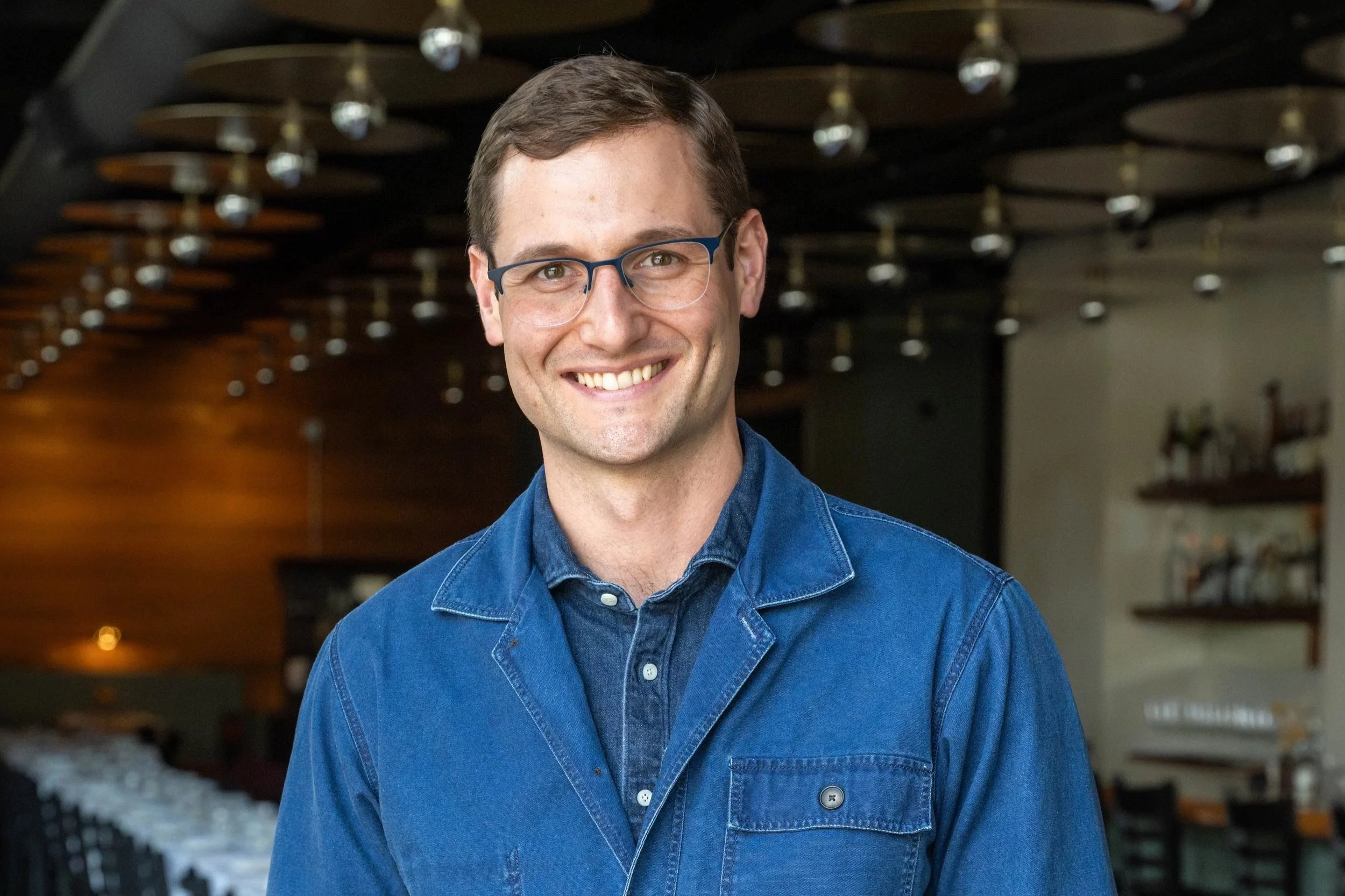
Restaurateur Or’el Anbar of Model Restaurant Group
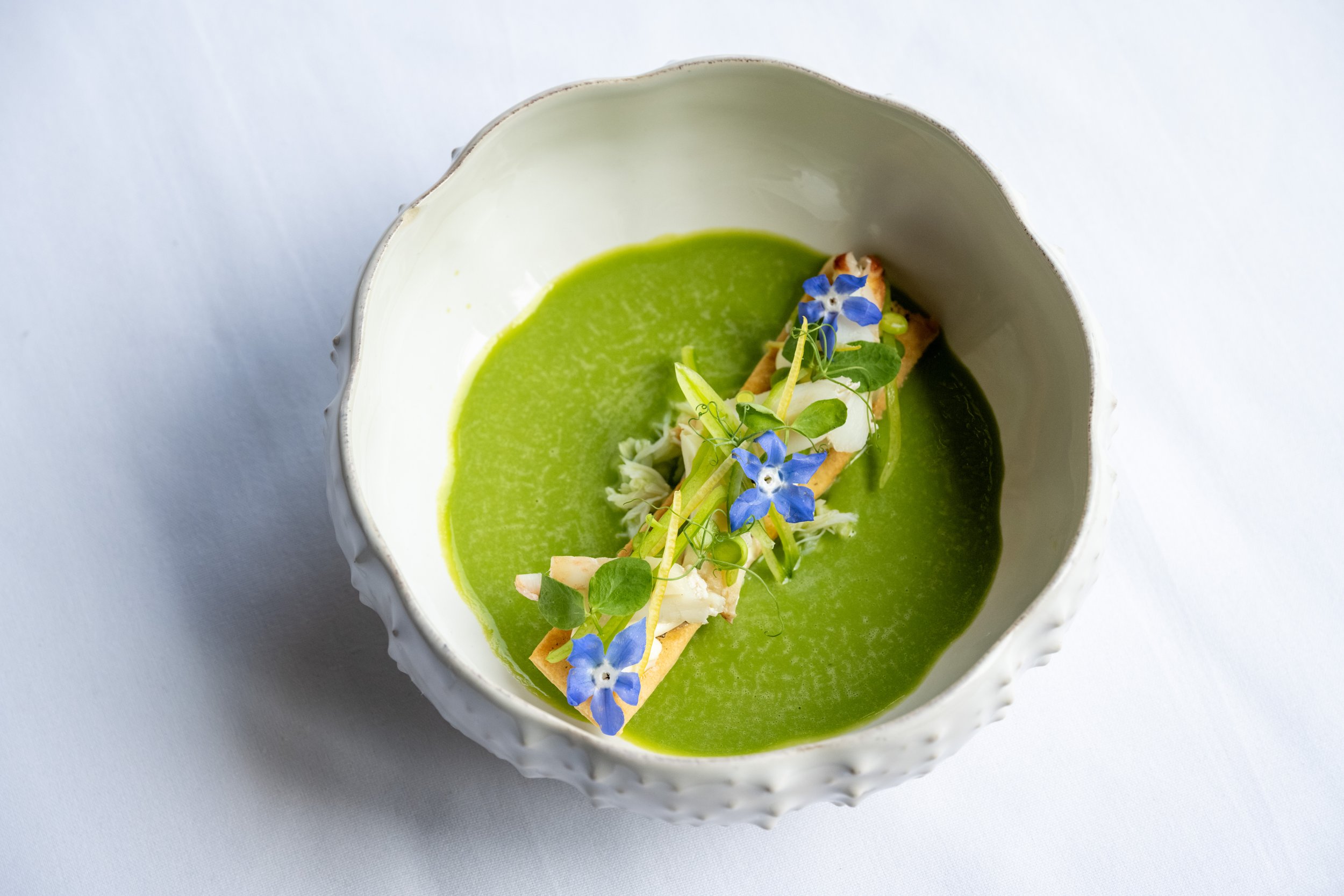
Chilled Pea Soup, Dungeness Crab, Buttermilk Panna Cotta, Shortbread Cracker, Saikyo Miso-Crème Fraîche at Greenwood American Bistro
The beginning of the year is when sales slow down in Seattle the most, and the effect was exacerbated even further due to the wage increase, Anbar said. He’s blunt about the city’s policies. “My feeling is that these policy changes are just totally tone-deaf to what’s going on in the restaurant industry,” Anbar said. “When increased price pressure creates wage compression—basically, when labor prices go up—you’re paying your lowest skilled employees more similarly to the way you’re paying your highest skilled employees.”
In her statement on behalf of the mayor’s office, Craighead added that the administration offers “technical assistance and outreach and education” through the Office of Labor Standards, and pointed to a proposed Business & Occupation tax change that would raise the exemption threshold from $100,000 to $2 million in gross revenue, where “about 76 percent of current B&O taxpayers—small and medium sized businesses—would no longer owe the tax.”
This tax restructuring proposal was emphatically approved by Seattle voters on November 4, 2025. Until the effects of what relief, if any, it’ll bring are actualized, the horizon remains opaque. For now, Seattle business owners can only speculate about the future of their city and continue to crunch the numbers as they meet them head on.
“Positions are just going to be replaced by technology and automation to make restaurants kind of like a more viable business model,” Anbar said. “The real problem in Seattle has nothing to do with wages. It has to do with [Seattle] not being an attractive city for people to live in anymore.” The unattractiveness he points to is in the city’s structural livability. As he sees it, it’s the combined effects of high cost of living, limited housing, tax burdens, and policy friction that make it hard for both residents and small business owners to sustain themselves.
For Leichtling, the city’s economics defy simplification. “The economic stuff in Seattle right now is a complicated conversation,” he said. “Everyone’s looking for a silver bullet. And the thing I just keep telling people is, ‘Look, there’s no silver bullet. It’s a 12-shot revolver and it’s loaded with silver bullets.’”
Whether that revolver is shaped like new legislative policy, or a seismic shift in the way Seattle eats and drinks, remains to be seen. Still, for operators throughout Seattle, the question is how to preserve the integrity of their work in an increasingly unforgiving landscape. They’ve adapted through new pay models, leaner teams, and higher prices, but the broader calculus of survival keeps shifting with every cost and every policy change.
“The legislative changes have the right intent,” Mukherjee said. “But the impact on small businesses is significant. We’re still trying to figure out what sustainability looks like in that reality.”
Seattle’s restaurant scene has long been defined by its ingenuity and conscience. Whether those same instincts can build a dignified, symbiotic relationship between hospitality workers, their employers, and the city they work in will determine what kind of city Seattle becomes for the people who feed it.