Pity the Redfish
One of the Gulf Coast’s greatest comeback stories
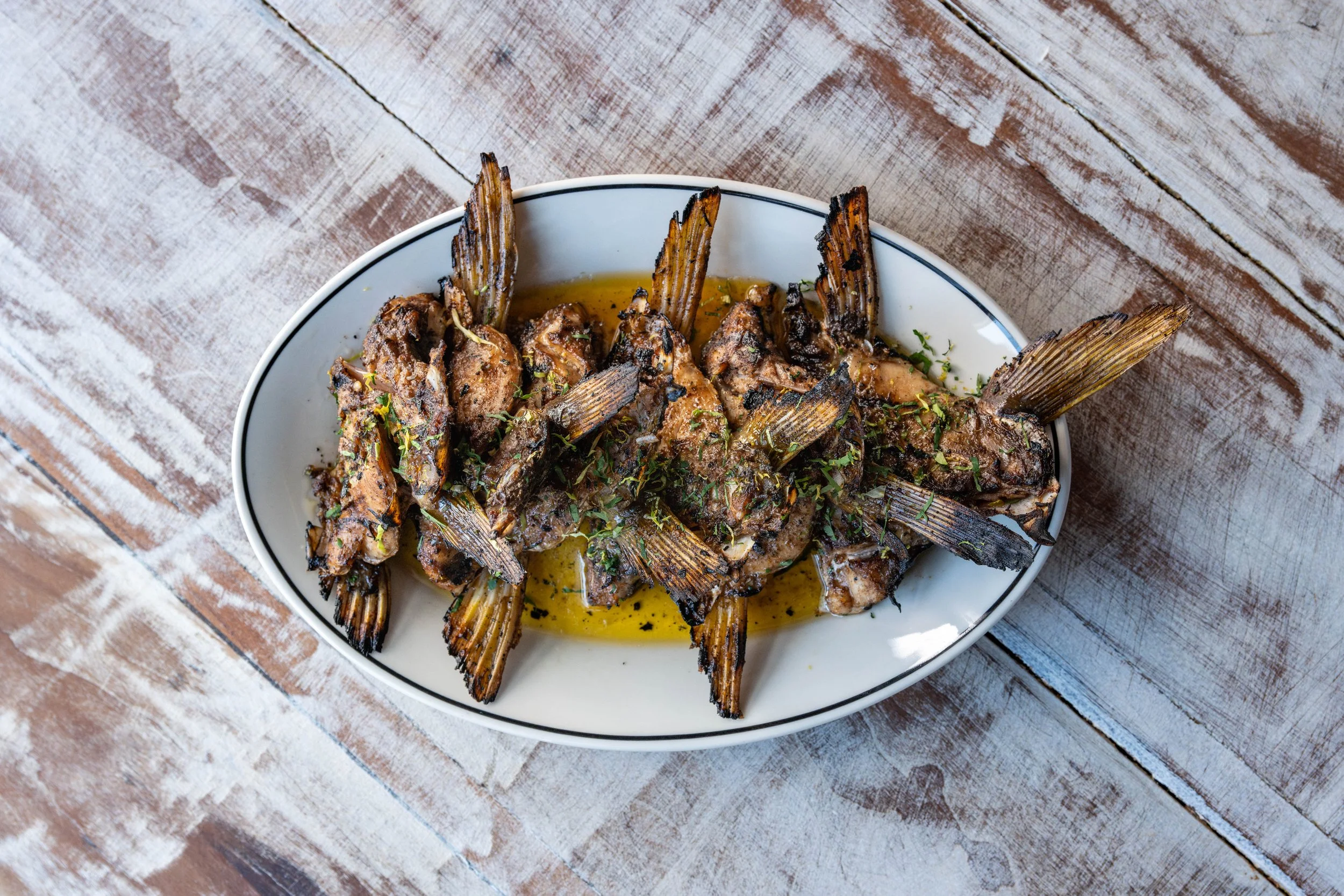
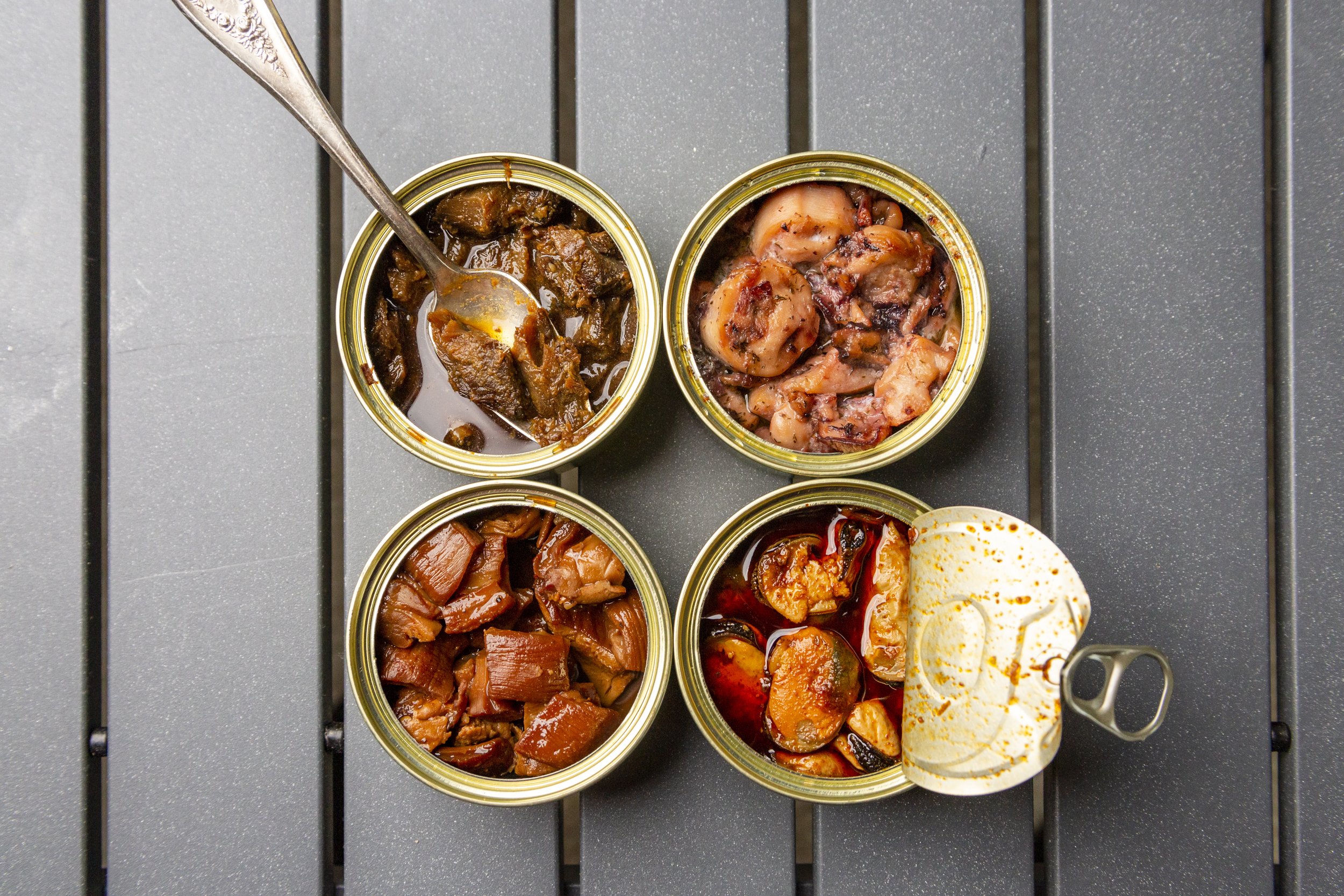
Josephine’s Grilled Redfish Collars, Jerk Spice, Habanero ButteR | Photos: Will Blunt and Alexander Zeren
It’s perhaps one of the most compelling Texan comeback stories unrelated to football. And it’s something in the water. For a long time, the redfish—Texas’s beloved red drum—was slipping toward the brink.
Chef Lucas McKinney remembers when catching a redfish was uncommon. Growing up in Southern Mississippi, “I’ve been cooking redfish my whole life, catching them from the wild,” he says, but back then, speckled trout were far more available. Landing a redfish was a special event.
In the late 1970s, mounting evidence showed that red drum populations were collapsing. That period marked a critical turning point: in 1977, Texas established daily bag limits and, in 1981, passed the landmark “Redfish Bill” (HB 1000), prohibiting the sale of wild-caught redfish in state waters—effectively ending commercial harvest in Texas, the first among Gulf states to take such action. The federal zone followed in 1987, and in 2007, President Bush extended protection nationwide via executive order.
The collapse wasn’t caused by commercial harvest alone. In the early 1980s, Louisiana’s own Chef Paul Prudhomme popularized “blackened redfish,” a searing-hot skillet preparation—which would become a staple technique in Cajun cooking—that became a nationwide craze. Demand for the dish exploded, and so did fishing pressure, sending wild stocks into freefall almost overnight.
Reaction to the species’ population nosedive followed suit quickly. Public-private collaboration unleashed a stocking initiative: beginning in 1982, hatcheries released fingerlings—juvenile redfish—into bays. By 2024, the Texas Parks & Wildlife Department had released its one billionth marine hatchery-produced fingerling. The result was a rebound in average age and size of redfish, with mortality rates dropping by roughly 50 percent compared to 1981—yielding a thriving, resilient wild fishery.
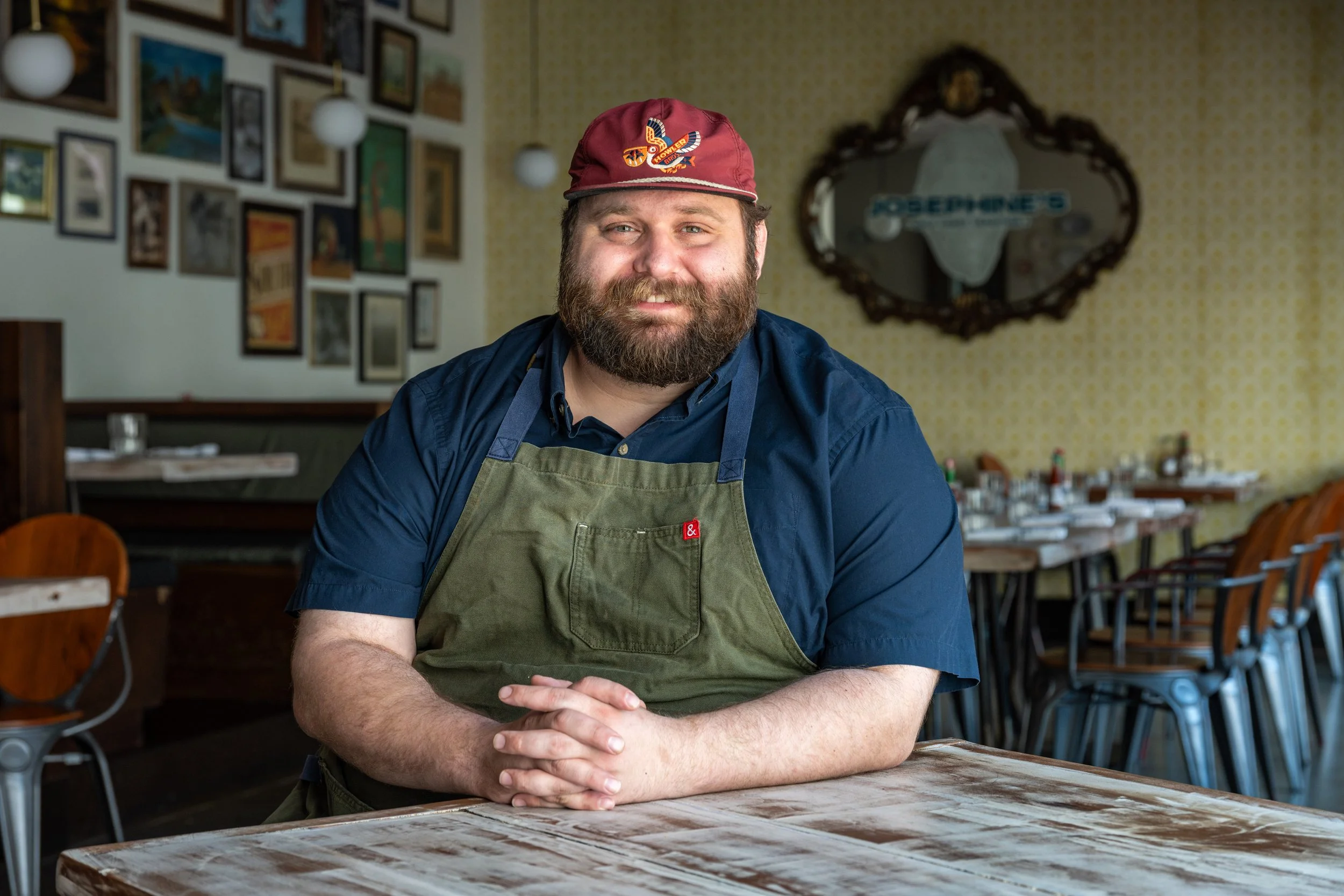
Chef Lucas McKinney
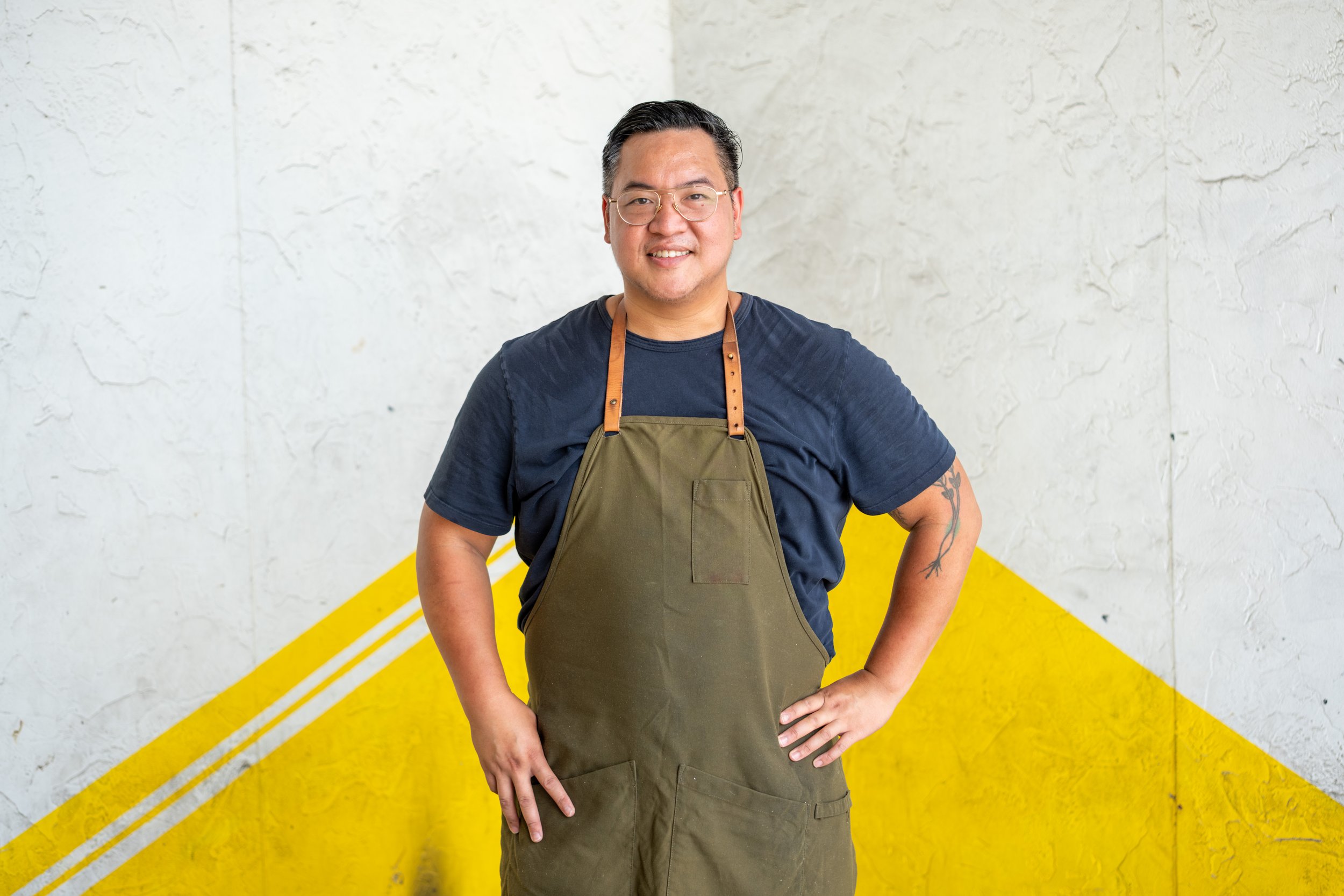
Chef Justin Yu | Photo: Caroline Fontenot
Now at Josephine’s, his Houston restaurant, McKinney makes the fish a menu centerpiece. But rather than wild-caught, he sources farm-raised fish from purveyors in the region. “We wanted to tell the story through our ethos at Josephine’s,” he says. “A lot of guests don’t realize that it’s farm-raised,” at first.
That education starts with his staff. He frames the choice as both environmental and economic: farm-raised is the only legal option in Texas, and buying locally keeps dollars in-state. “This is a Texas industry,” he says. “It’s as local as you’re going to get.” Nearly all of the nation's farmed redfish comes from Texas, about 98 percent.
To meet the demand in the market following the ban of commercial redfishing, farming began to boom. While farmed fish often gets a bad rap in the food world, modern techniques are revitalizing the once-threatened Third Coast staple. Advances in aquaculture now enable consistent, sustainable production of high-quality redfish using land-based systems that protect coastal environments and support wild population recovery.These farms operate with rigorous biosecurity and resource management, providing chefs with reliable access to the longtime Gulf product.
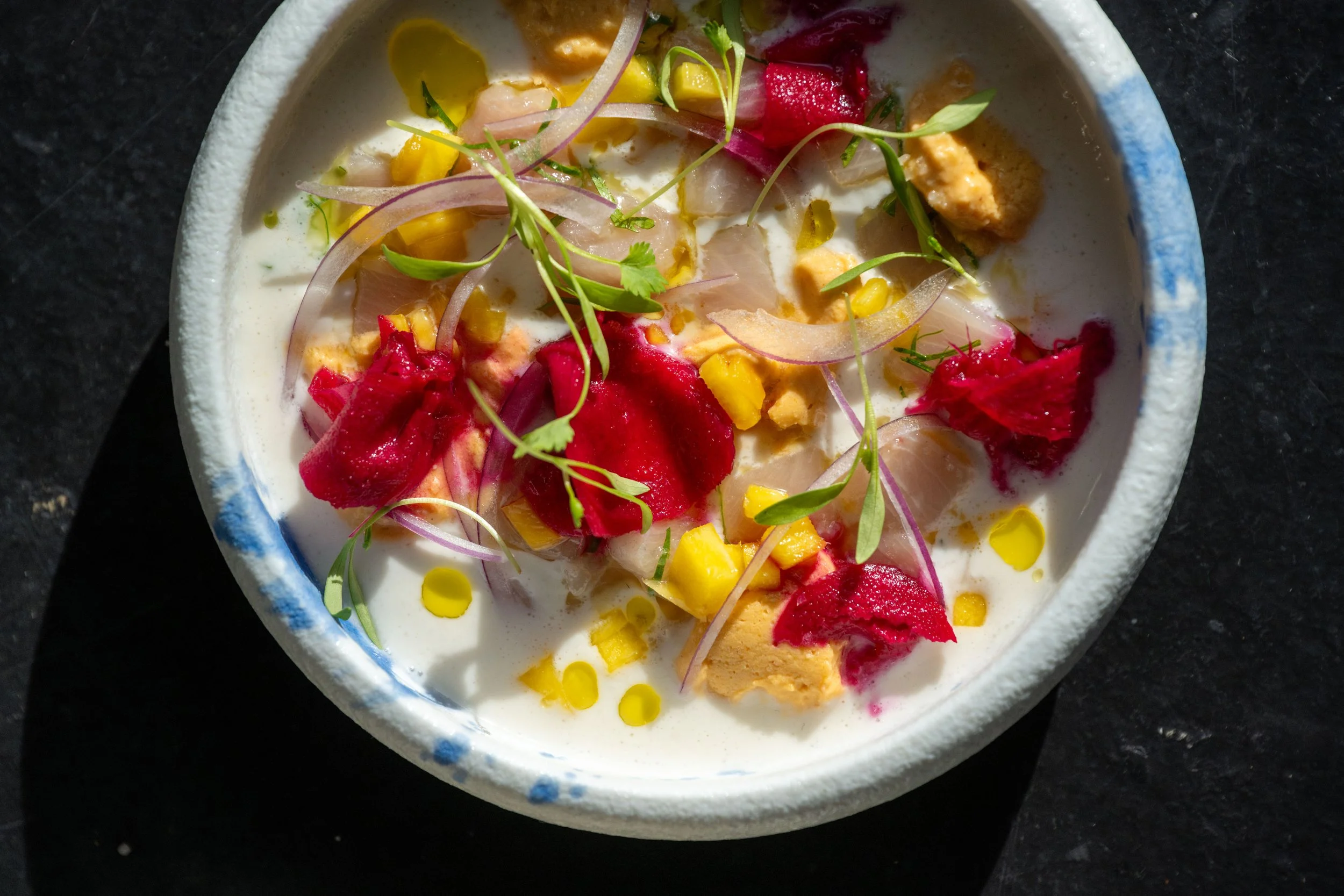
But fish don’t grow overnight. Farm-raised fish take up to two years to reach market size, and McKinney makes sure his team understands the work behind each fillet. “Someone raised it, fed it, harvested it. Many hands were involved,” he says. That’s why he’s committed to using the whole fish—from redfish on the half shell to jerk redfish collars—turning what might be discarded into menu highlights.
For McKinney, the redfish rebound offers a model for other industries: “It is a total success story. Other industries can take a blueprint from this and ask, what other products can we figure out how to make sustainable like this?”
At Theodore Rex, Chef Justin Yu takes a different but complementary approach. For him, the appeal starts with texture. “It has a really interesting flavor … it’s meaty, which a lot of times you don’t get in Gulf products because they grow so fast,” he says. Unlike many warm-water fish, which tend toward delicate flakes, farmed redfish offers what he calls “a really great texture-to-flavor ratio … almost swordfish-like.”
Yu embraces its Southern cultural resonance. “I’m sure everybody’s heard the story of Paul Prudhomme… almost wiping out the entire redfish population,” he says. “That craving is something almost everybody who grew up in the South had, no matter what kind of background you came from.” Serving farmed redfish, in his view, reconnects diners to that shared memory while keeping pressure off the wild fishery.
On his menu, redfish gets a distinctive treatment: a single slice of house-made pain de mie pressed to one side, pan-cooked in butter until golden brown and delicious. A drizzle of local honey, cracked black pepper, lemon, and a broth of peas and dashi engulf the “breaded” fish from below.
For Yu, the farm’s proximity is part of the value. “Palacios is not too awfully far away,” he says. That connection allows him to talk with guests about how the fish is raised and why farmed seafood, often maligned, can be part of the solution. “It’s always nice being able to tell the story of the regenerative process of farmed redfish,” he says. “People tend to think of it as an everyman’s fish … and it’s really cool to show it can be served in different ways and still be just as delicious.”

Pain de Mie-Crusted Redfish, Honey-Bonito Butter, Green Pea Pureé, Redfish Fumet Emulsion, Fermented Green Garlic-Spring Onion Mix
But what does it mean to be regenerative—to go beyond sustenance?
Two hours southwest, in Palacios, Texas, Turtle Creek Aquaculture demonstrates how the process works on the water. Founded by Nasir Kureshy and his family in 2010, the farm integrates its ponds with surrounding wetlands, preserving existing habitats and planting new areas in partnership with the Matagorda Bay Foundation.
“Each pond develops an ecology of its own,” Kureshy explains. Stocking densities are kept low, and the fish grow in a more natural environment. Spawning happens indoors; larvae feed first on zooplankton, then on a prepared diet before moving to intermediate and grow-out ponds until they're three pounds or more.
The fish, Kureshy says, behave and taste like their wild counterparts. And while production is designed for efficiency, it’s never at the expense of the Gulf. The redfish are never exposed to any antibiotic, hormone, or chemical treatments. When discharged, the brackish water they live in, Kureshy says, is pumped out cleaner than it was when it was pumped in. And the redfish is only the beginning.
“We would like to evolve into doing different species—croaker, maybe pompano. Increase our fish production, but also impact the ecology around us in a beneficial manner. Wetlands are a focus: producing plants for mitigation projects along the Texas coast.”
He also urges transparency: “Consumers should be aware of where their product is coming from. Restaurants should find out where their food actually came from and let the consumer know. That onus may be on the restaurant industry.”
The arc of Texas redfish—from near extinction to a thriving wild and farmed supply—is more than a fisheries rebound; it’s a model of how regulation, science, and local enterprise can align. Turtle Creek’s wetlands-centric approach, paired with chefs like McKinney and Yu who reimagine the ingredient for modern diners, proves it’s possible to restore natural populations while building a resilient, locally-rooted industry. And an affordable one at that: the current market price for Turtle Creek’s redfish is about five bucks a pound for wholesale.
In an era when many species face similar pressures—overfishing, habitat loss, climate stress—the redfish comeback offers a rare note of optimism. But it’s not a fixed victory. The Gulf of Mexico itself is changing: wetlands are disappearing, coastlines eroding, and the waters that sustain this fishery grow warmer and more volatile each year. The same forces that once pushed redfish to the brink still exist, and the homeostasis depends on constant vigilance—farms maintaining high environmental standards, chefs continuing to champion local sources, and policymakers holding the line on protections.
Keeping it on the plate will require the same persistence, especially as the Gulf’s footprint shrinks and the fight for its resources grows sharper. The redemption arc of Texas redfish is caught up in the larger question of whether we can hold onto the waters and the culture that shaped it in the first place.