On The Plate: Rainy Day Pakora
Breaking down Chef Mayank Istwal’s striking take on the nostalgia-fueled Indian fritter at Musaafer
Photos: Will Blunt
One of Chef Mayank Istwal’s fondest childhood memories is of rain. Growing up on a farm in the foothills of the Himalayas, where monsoon season arrived each summer, rain was a familiar companion.
As a child, Istwal was fascinated by the water droplets clinging to the large, drooping leaves of the elephant ear plants growing in his backyard. Monsoon season also meant sitting down with his family to eat onion-potato pakora with masala chai. Now, as culinary director of The Spice Route Co. restaurant group and executive chef of Musaafer, Istwal brings the deeply personal memory to the Indian restaurant’s tasting menu, transforming the vegetable-potato fritter into an expression of his childhood. “I wanted to create an OG pakora that people would remember,” says Istwal. “It's the nostalgia. Onion [pakoras] are very traditional.” Istwal’s black onion pakora represents his Indian upbringing, memories foraging with his grandfather, and his commitment to zero-waste cooking. “I promote my philosophy, the four Fs: flora, fauna, farm, and food. [There’s] a responsibility to feed the diners the right food.”

Chef Mayank Istwal’
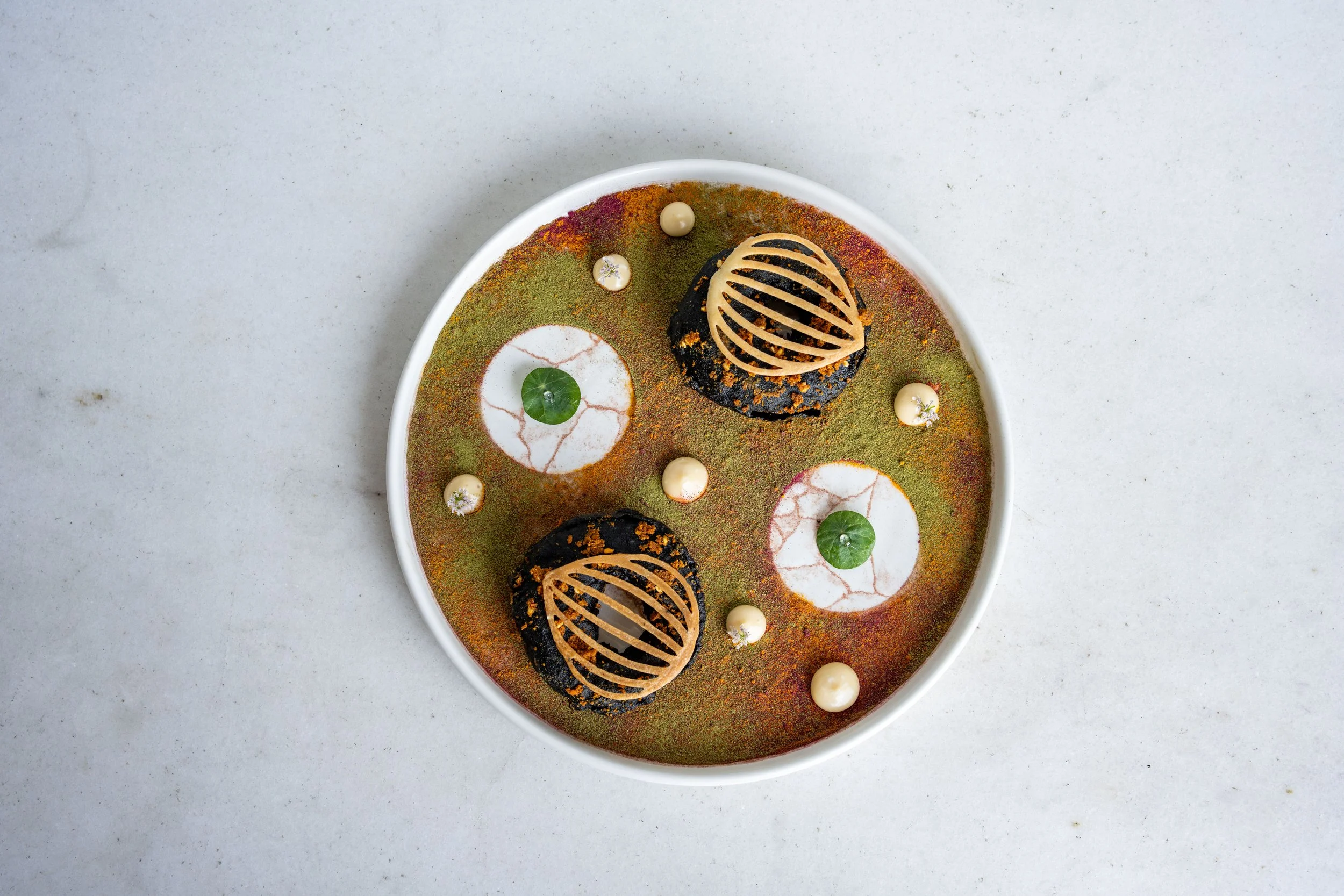
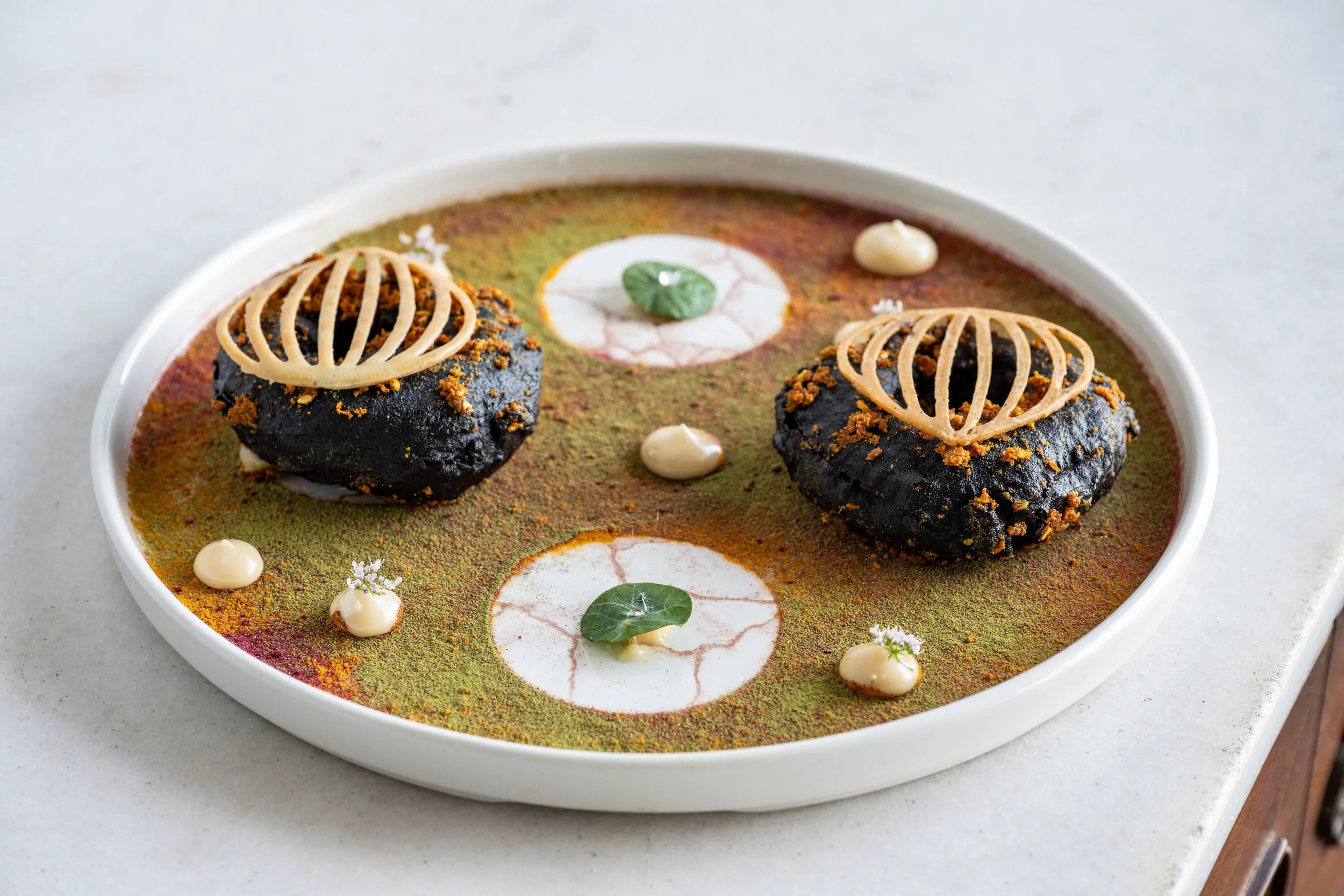
Black Onion Pakora, Mango Powder, Chaat Masala, Fermented Black Garlic Emulsion, Smoked Chile, Nasturtium, Liquid Glucose
Onion Batter
In pursuit of a zero-waste kitchen, Istwal uses every part of the onion, including its skin. The skins are charred and dehydrated before getting blitzed with activated charcoal powder to achieve the pakora’s striking black color. The charred onion powder is then mixed with sparkling water, turmeric, cumin, and a trio of flours. Istwal uses rice flour, all-purpose flour, and tapioca flour for a crispy, light batter.
Black Onion Pakora
“I'm really in love with onion rings here in America, and I thought I could make [the pakora] into an onion ring.” Istwal slices a white onion into thick rings and painstakingly arranges them into two layers. “It’s a very time-consuming process.” To make sure the two rings stick together, the inside of the outermost layer of the onion is coated in a mixture of boiled potatoes, more onions, ginger, chaat masala, turmeric, cumin, cilantro, and chiles, referencing the typical potato component of a pakora. The onions are then coated in the batter and fried three times. “The first fry is for the texture. The second fry builds another wall so it holds the emulsion inside. Then we fry it again.” The fritters are then seasoned with a house-made spice blend. For service, the middle of the pakoras are punched out, filled with a black garlic emulsion, and then topped with an onion-shaped tuile to add another layer of texture and onion flavor.
Black Garlic Emulsion
According to Istwal, there are three guiding principles for a successful dish. “There is umami. Kokumi, the texture of fat, is the vessel to take umami forward. Capsaicin is the third. When you have these three components, you achieve nirvana.” Istwal brings both umami and kokumi by way of a black garlic emulsion. He ferments black garlic seven days before combining it with egg yolks, soy sauce, sugar, oil, salt, and lime juice. The sauce is then piped into the center of the pakora, so when guests bite into the fritter, the tangy aïoli hits their palate with a punch of umami and depth of flavor.
Sesame Spice
For some crunch and an even stronger sense of home, Istwal tops the pakoras with a toasted sesame-forward spice blend. “The spice blend is very special.” Amchur powder is the leading flavor (“very nostalgic for me”), while Kashmiri chile powder, salt, sugar, chaat masala, cumin, onion powder, and garlic powder add more depth and heat to the mixture. Istwal also adds a key ingredient: maltodextrin. “It’s so the spice sticks to the pakora. It absorbs the oil from the fritters.” The nutty spice blend lends more texture and body to the airy pakoras.
Sauces and Plating
Istwal’s plating of the pakoras is yet another way to celebrate his culture and memories. He dusts the plate with a colorful mosaic of turmeric powder, beetroot powder, and moringa, embodying the bright hues of Diwali and the geometric patterns of rangoli. Istwal then garnishes the plate with small nasturtium leaves—reminiscent of his farm’s elephant ear plants—speckled with liquid glucose raindrops to evoke freshly fallen rain. The pakoras are served with traditional mint chutney and tamarind chutney, rounding out and balancing the dish with sweet and herbaceous notes. “It’s not only about the five sensory experiences, but the sixth sense: the diners. It’s the element of surprise with the black garlic emulsion, or the little water droplet on the leaf. It’s about connecting with the diners and capturing my nostalgia on a plate.”