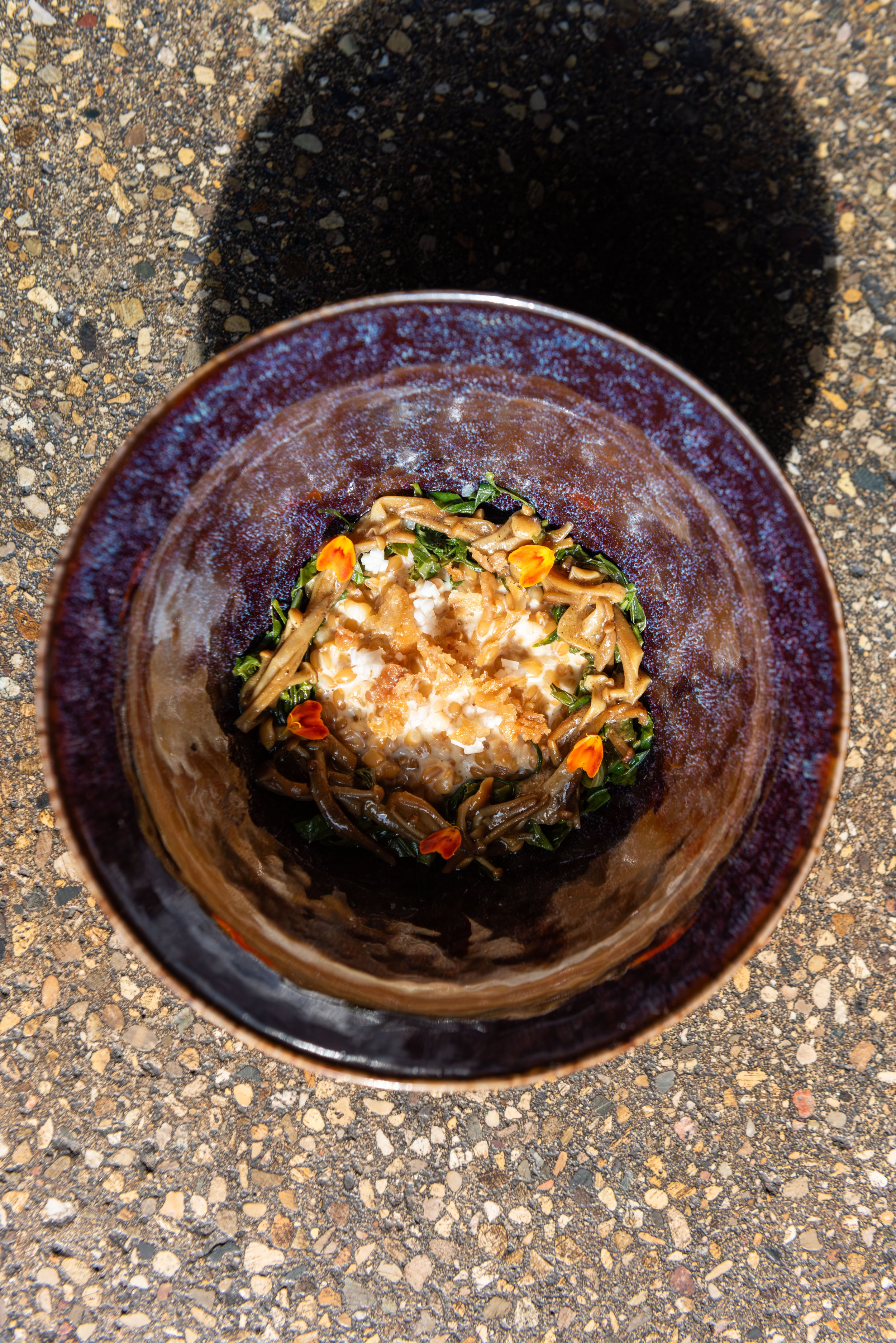
Chefs Leah Engel and Alex Halmi are milling local Washington wheat for fresh pasta built on the simplicity of the seasons.
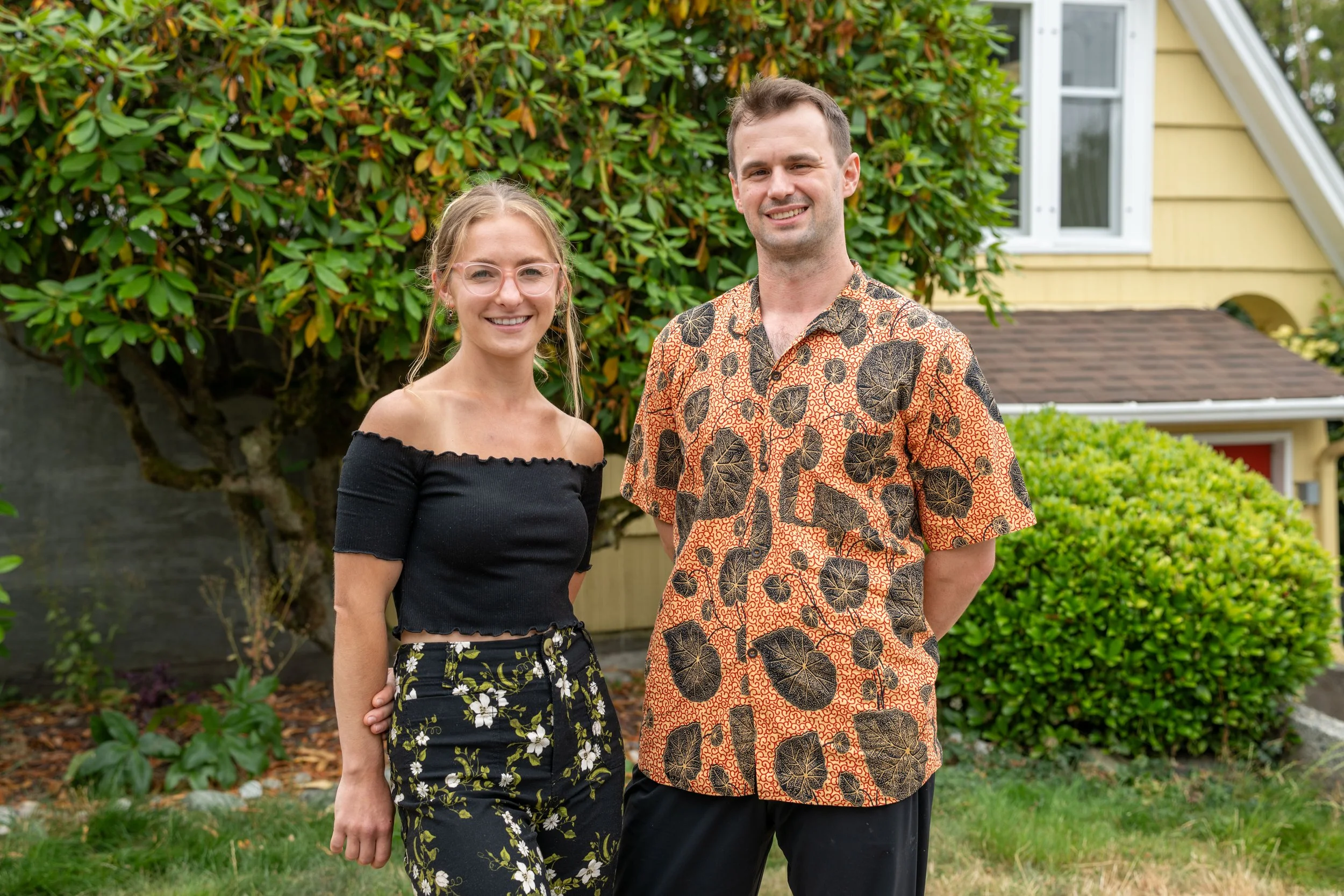
Chefs Leah Engel and Alex Halmi |. Photos: Alexander Zeren
When Chefs Leah Engel and Alex Halmi say they cook local, they mean it. The work and life partners met when Engel was working for Tonnemaker Hill Farm doing produce deliveries to restaurants like Salare, where Halmi worked at the time.
A few years later, as they decided on how to start a business of their own, they thought of their initial goals: highlight seasonal produce, get a feel for opening a restaurant, and use only local ingredients when possible.
“Sometimes when people go local, they don't go from the bottom up with pantry items,” explained Engel. “We were also making sure that all of our pantry stuff was coming locally, and that for us begins with grains.”
Engel previously worked in restaurants that milled their own grains, and knew it was something crucial for their concept, Cafe Lolo. Beginning at a farmer’s market was the obvious choice—it was something familiar without the big leap of a brick-and-mortar.
“When you're cooking outside in a 10’x10’ tent, there is only so much you can do. So, we figured pasta would be the easiest way to get started,” said Engel.
After trial and error, they landed on a blend of Bluebird Grain Farm’s hard red wheat and semolina for their pasta. The whole grains cost about 50% more than if it were pre-milled—not to mention it’s a few extra hours of labor a week—but profit margins are high enough that it does not translate into an upcharge. After countless experiments with different shapes, from campanelle to lumache, they realized how the different pastas cling to different sauces. It’s these types of decisions that are necessary when working in a small space like a farmer’s market stall.
On the pastry side, Engel plays around with the different types of wheat without worrying about breaking their only extruder. When milling grains for pastry, she realized she was able to swap the all-purpose flour from Halmi’s childhood sugar cookie recipe with a Sonora wheat. The result is a tastier, more flavorful sugar cookie.
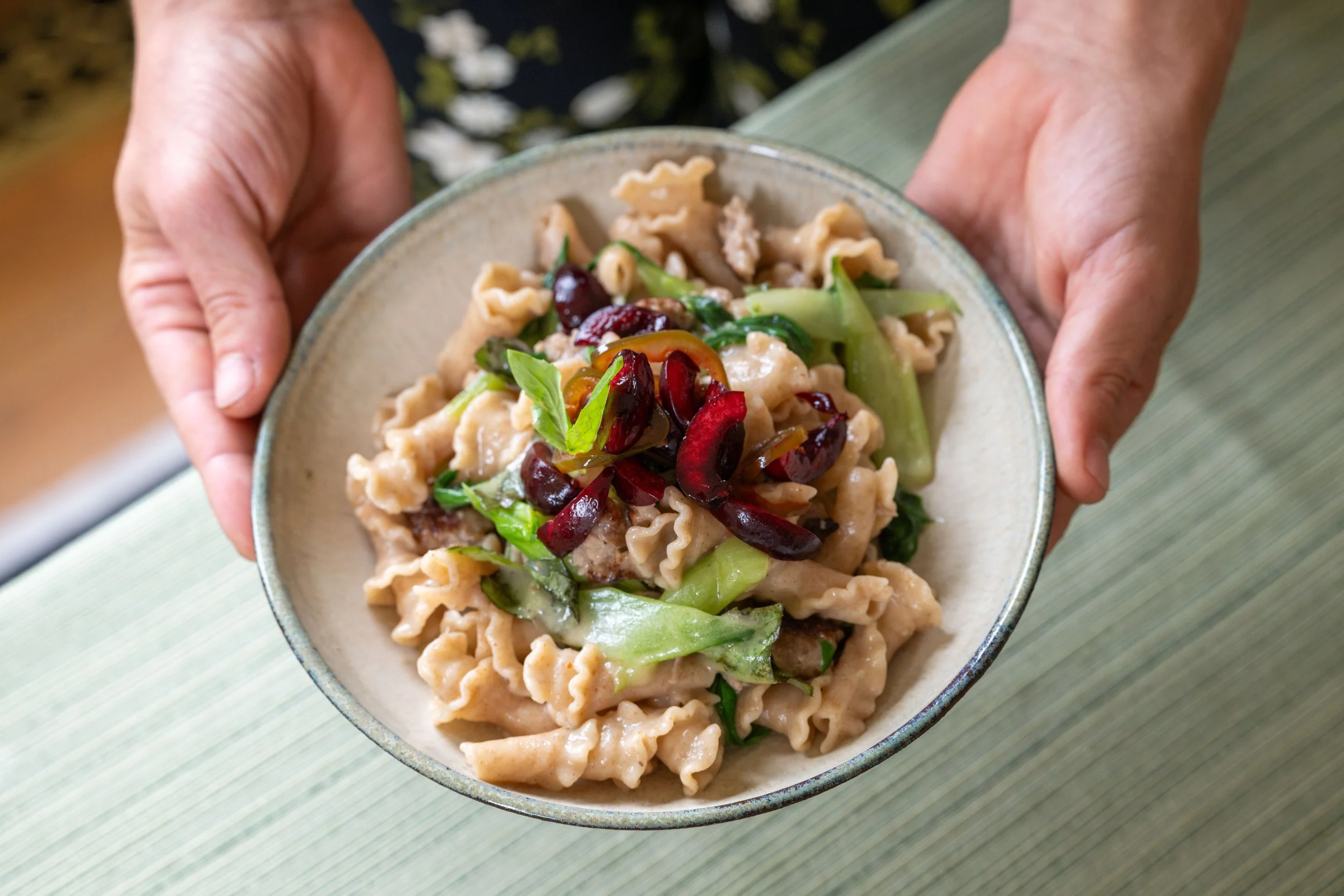
Bluebird Hard Red Wheat-Semolina Campanelle, Pork Sausage, Onion-Turnip Sauce, Attika Cherries, Flowering Mustard Greens, Pickled Jalapeños, Basil
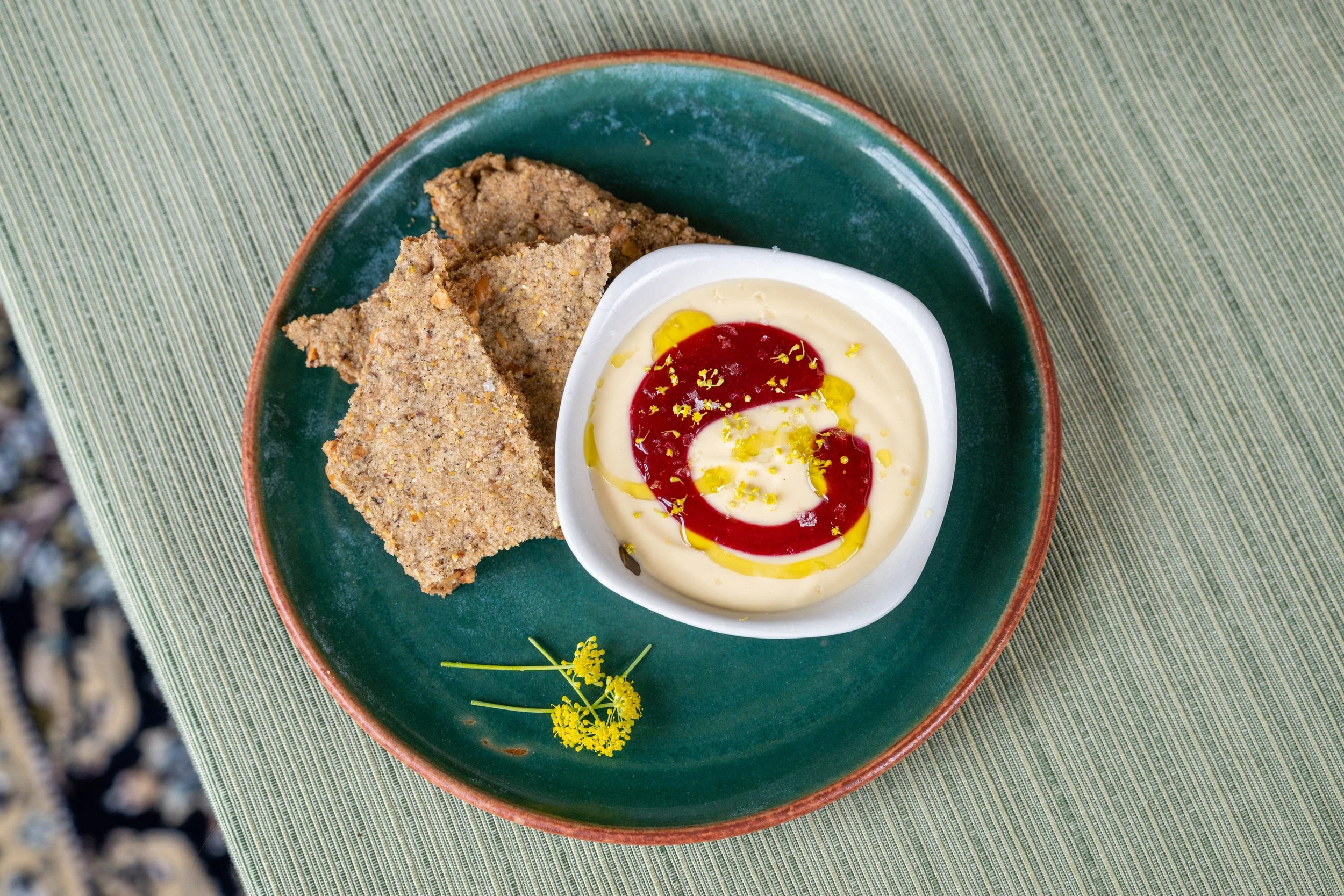
Fava Bean Purée, Tomatoes, Pickled Cucamelons, Radishes, Herbs, Scallions, Borage, Black Bread
“I'm not really into laminated pastry or things like that,” explained Engel. “So when you have more of that rustic, homey-style, then you're actually able to sub in a lot of these more unique flours for really, really good flavor. I think it just makes everything better—like an easy swap.”
While Engel and Halmi's commitment to serving local and seasonal ingredients starts with the milled flour, it doesn’t end there. Their menu showcases two types of pastas, which are served hot and adorned with a plethora of seasonal produce they find at the markets, creating combinations like pork sausage with onion-turnip sauce, attika cherries, flowering mustard greens, and pickled jalapeños. They have all they need to churn out pastas under their tent, from stovetops to prep stations.
To decide what to pick out, they follow the lead of farmers, believing in the mantra that everything that grows together goes together. The local produce they buy depends on a number of factors, be it peak-season surplus or the ideal flavor pairing for an already-picked piece of produce.
The flavor of the pasta, though, does not influence the produce picked. The hard red wheat is slightly nutty, but not overbearing with its whole wheat flavor. At the end of the day, they can always rely on “classic pairings.”
“If you can find it in a salad, you can translate those flavors into a pasta,” said Halmi.
What began as a commitment to the seasonal, local ingredients inspired by the market stalls around them turned into a deeper understanding of the different ways wheat can be manipulated.
Engel and Halmi intend to transition into a brick-and-mortar—they have signed with a broker and are in the process of finding a space—and will bring Chef Brett Bankson of Three Sacks Full on to head the beverage program. Moving to a brick-and-mortar will also help cover some of the costs from milling the grains, as Halmi and Engel look to finding fun ways to upcycle produce.
By expanding into a bigger location, Engel and Halmi also look forward to expanding their offerings from just pasta to everything from salads to sandwiches. And, of course, showcasing the myriad ways they use freshly-milled grains.
“We can mill a lot finer if we're going to do pastry baking products, we can mill a little coarser if we want to do pasta, and we could even just do slightly cracked wheat if we want to do porridges and stuff like that,” said Engel. “It opens up a whole world of how to use the grains that we’re able to source by having our own mill.”