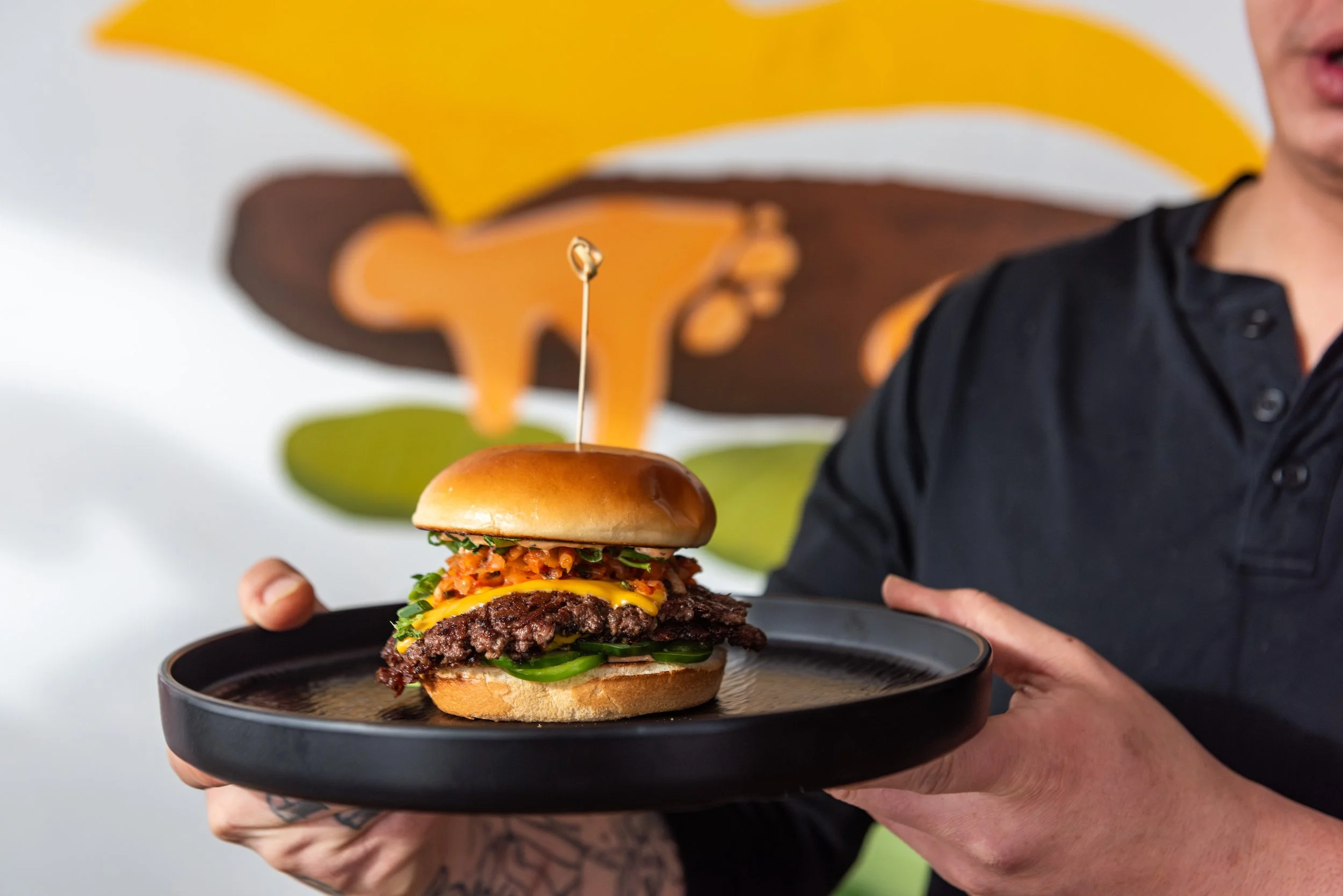
2025 Houston Kitchen Notebook
An in-depth look at some of our favorite dishes and cocktails from our time on the ground in Houston.
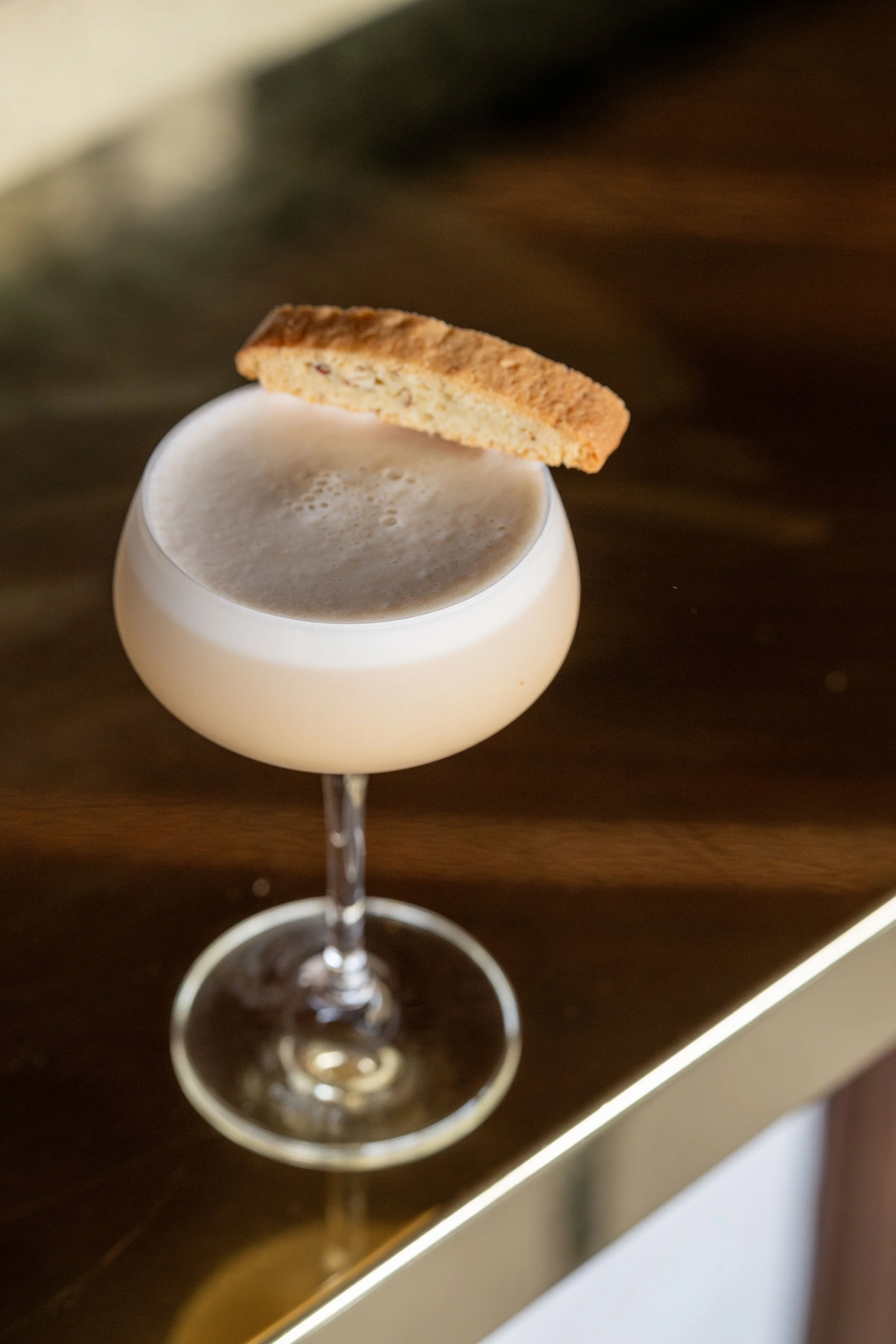
BISCOTTI FLIP
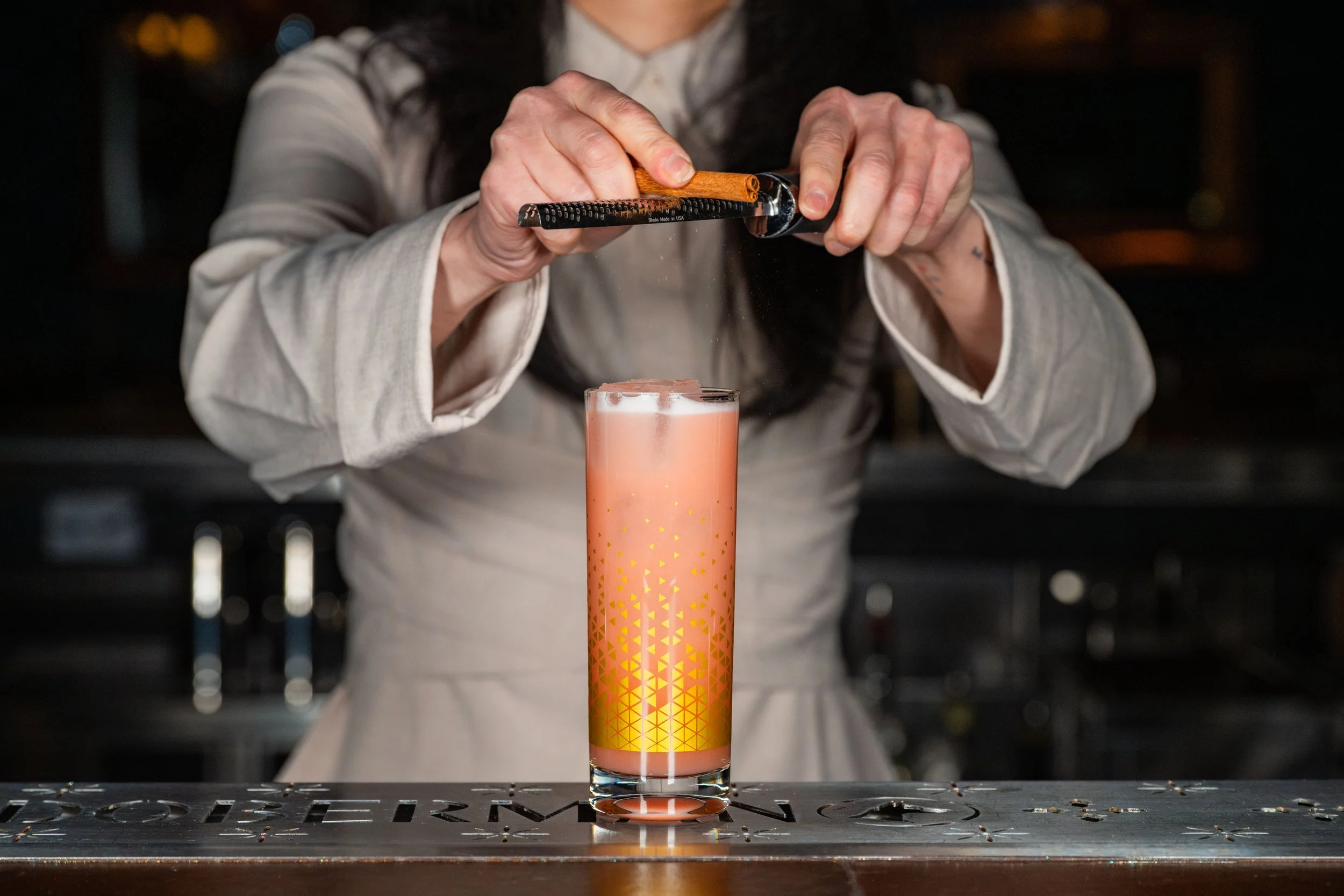
After tasting rare whiskeys and rums with a local distributor, Bartender Drew Bennett got an unexpected surprise when his liquor rep went back to his car and returned with a bottle of Faretti’s biscotti liqueur. The peculiar spirit stole the show. Bennett jumped at the chance to develop a new cocktail with the liqueur for the menu at Anvil. “My two favorite cocktails are dry martinis and dessert-style cocktails, so it's [right] in my wheelhouse,” says Bennett. “I always gravitated towards Brandy Alexanders and Grasshoppers, those more decadent drinks.” From the start, he knew the cocktail would be a flip-style drink, using a whole egg to provide a smooth, creamy texture. House-made orgeat boosts the nutty, almond flavors of the liqueur while blackstrap rum introduces “this really rich, almost like an overwhelming molasses flavor,” says Bennett. Along the way, though, he realized the cocktail was in desperate need of a little more “heat and proof.” To balance out the sweetness, Bennett blends the blackstrap rum with some overproof, Planteray O.F.T.D. rum. The ingredients are shaken hard and dry before the cocktail is double strained into a coupe glass and garnished with a miniature biscotto. “When it came out, it wasn’t the most sold, but it was definitely more popular than I thought,” says Bennett. “People see it go out and want it. It’s the fajita effect.”
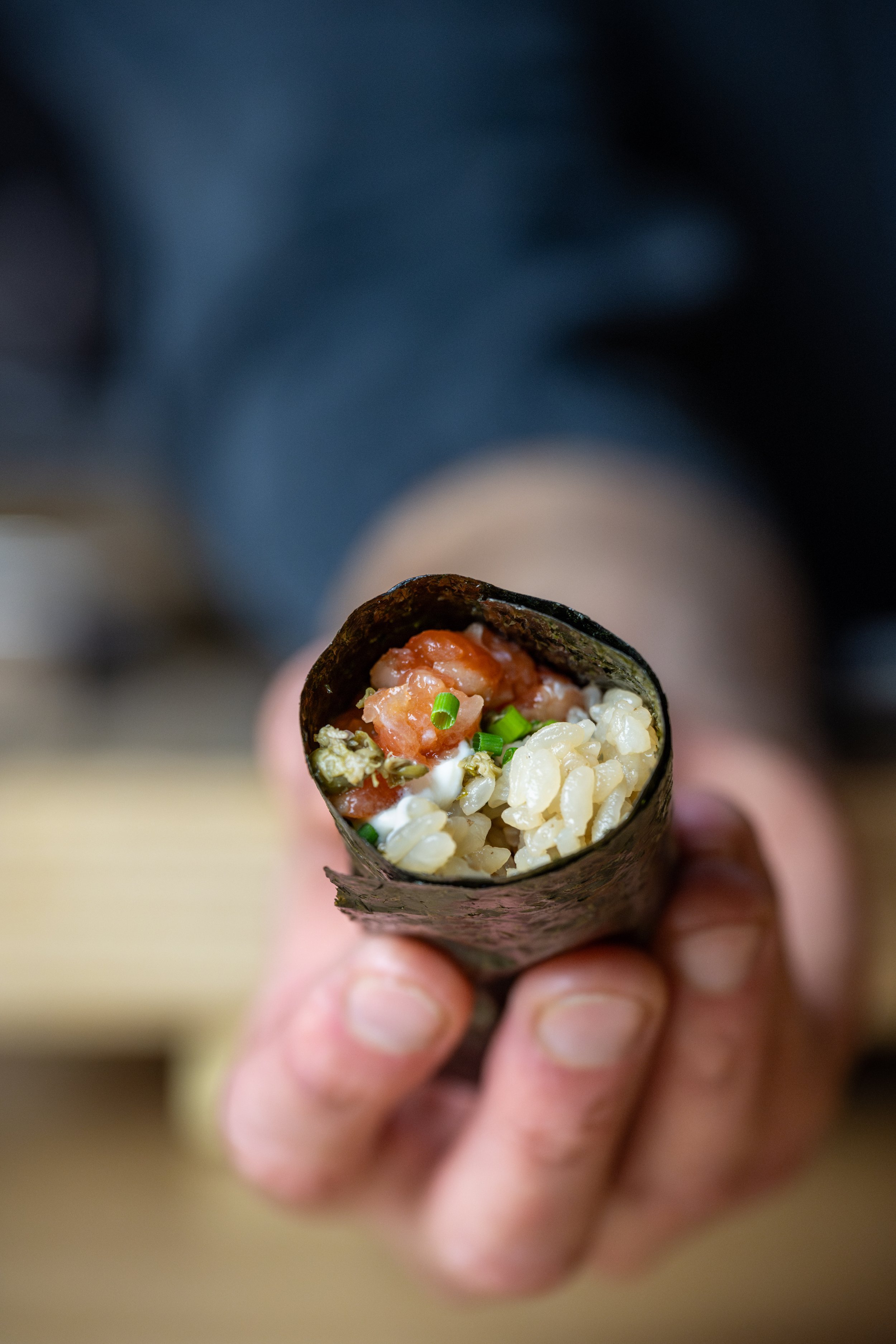
Lox Bagel Handroll
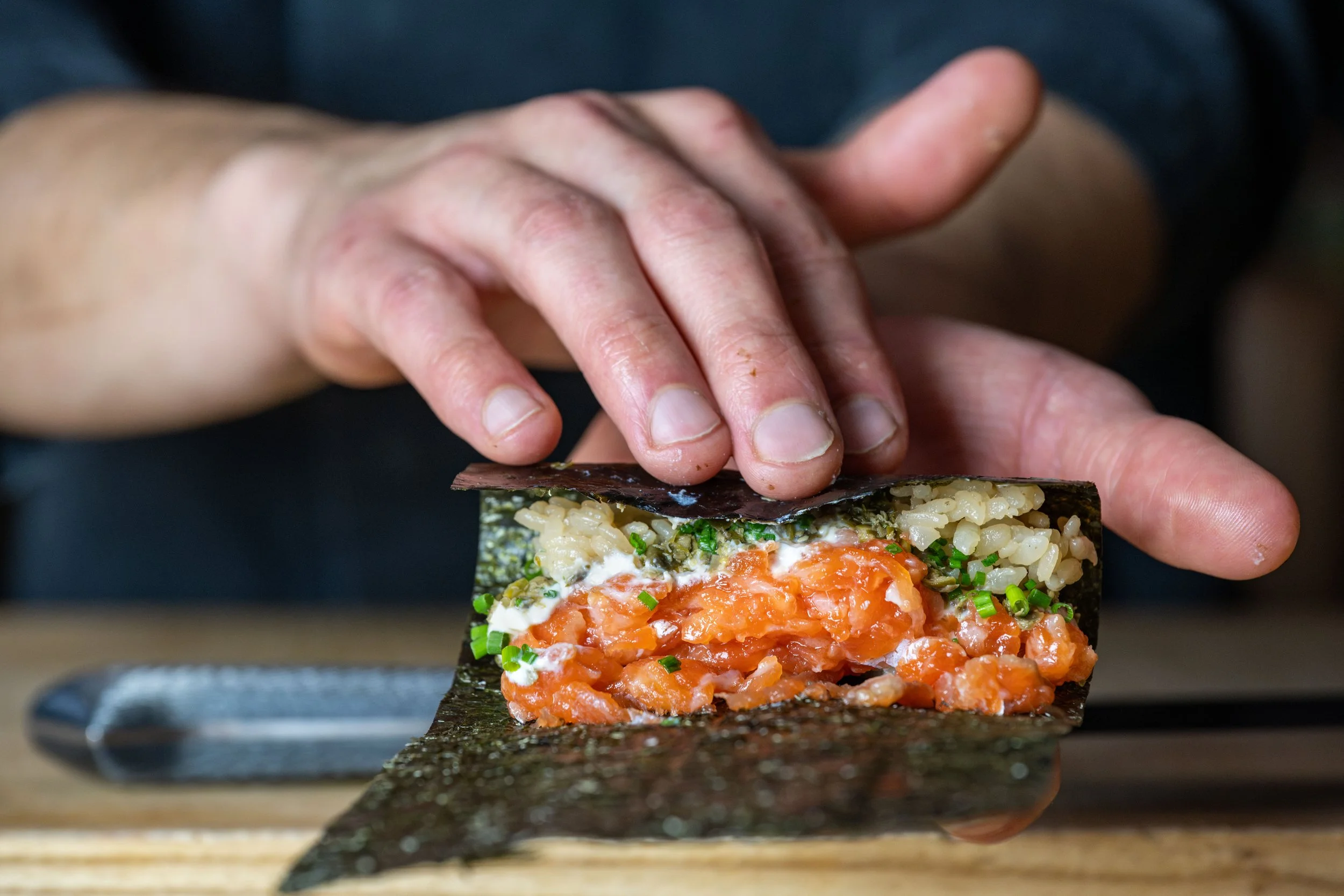
“The lox bagel was fucking bomb,” says Chef Luis Mercado of Kira, remembering a recent trip to New York with his business partner Chef Paolo Justo. “We thought, ‘Why don’t we just grab the flavors of a lox bagel and refine it a little bit and introduce it into sushi?’ And then, we went down this rabbit hole.” They followed it to the lox bagel handroll—Kira’s elegant nod to the tried-and-true New York sandwich—with none of the kitsch of cream cheese. Mercado and Justo start with trout: “It has a little bit more of a briny, cleaner flavor with a very good balance of fat,” says Mercado. The trout is lightly smoked over Japanese applewood, then paired with a smoked tofu cream—an idea Mercado first encountered years ago in Miami. It’s as simple as it is smooth: smoked silken tofu puréed with dashi. To capture realistic bagel-shop flavors without overwhelming the sushi format, the team turns to freeze-dried crème fraîche and chives. “It was just a matter of thinking about how we can put in the most flavor … without it being completely covered with cream cheese,” says Mercado. The warm, springy sushi rice is seasoned with a blend of rice vinegar, brown rice vinegar, sea salt, and raw Okinawan kokuto sugar—cooked to 85% hydration using nanatsuboshi grain from Hokkaido. It’s all wrapped in crisp Hayashiya nori from Toyosu Market, chosen for its lasting snap and durability from the moment the handroll hits the guest’s plate to the moment it hits their palate. Finished with pickled capers, chives, and sour cream powder, the handroll is a clever riff that isn’t “trying too hard,” Mercado says.
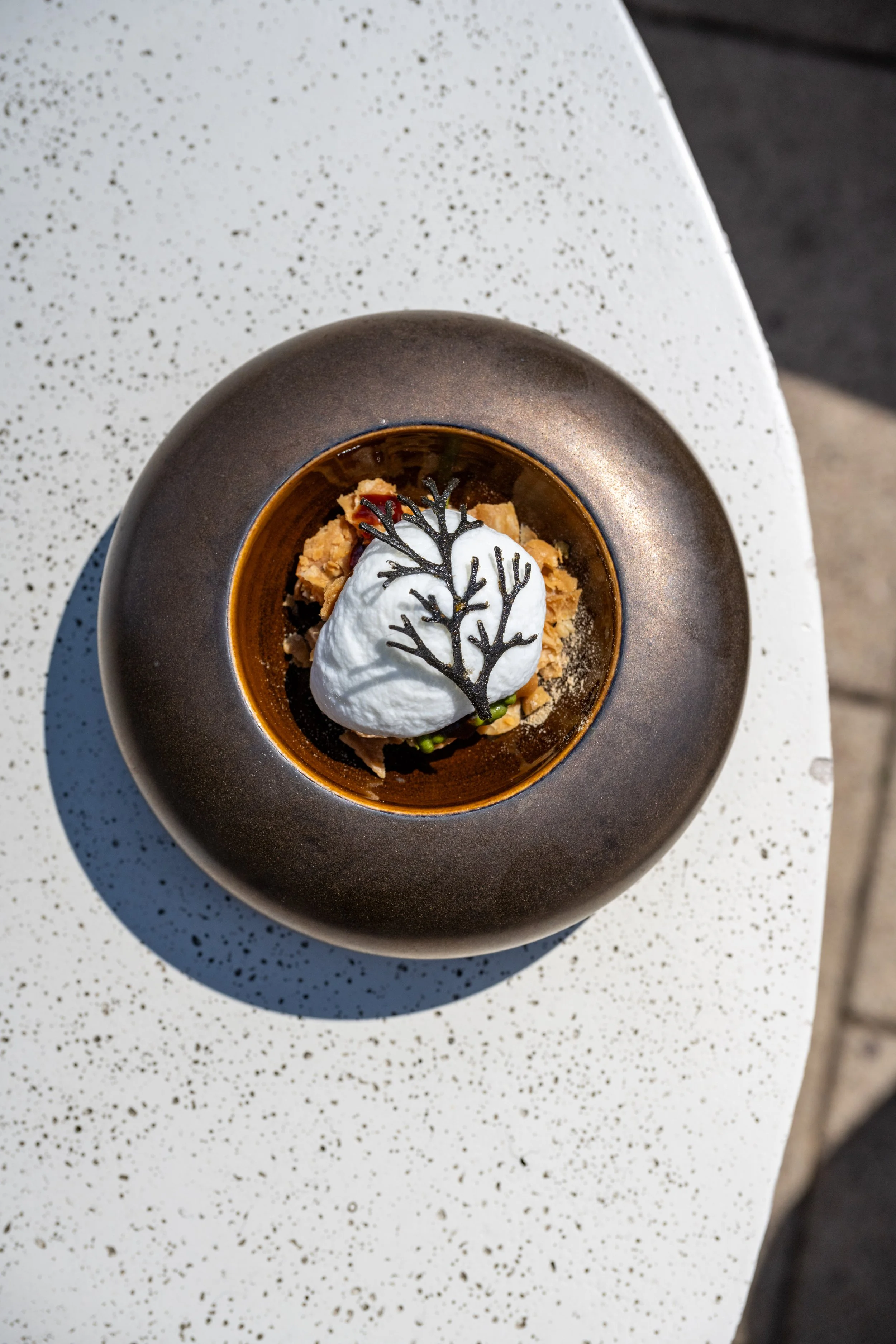
PAPDI CHAAT
At Amrina in The Woodlands, Texas, Chef Jaspratap “Jassi” Bindra brings a Delhi streetside classic from his childhood into the spotlight with his papdi chaat—a dish meant to surprise midway through the tapas bar's six-course tasting menu. “The mid-course can start to feel boring,” he says. “I wanted to add a little charm.” It begins with the papdi—a crisp, tri-fold dough made from all-purpose flour, ghee, and oil. The fat is mixed in lukewarm and folded through the flour with salt and ajwain seeds until the hard dough forms a stiff crumble. Rested, then fried, it develops a khasta—the crispy, flaky structure that gives the bite both crackle and tenderness. On top, Bindra layers an eight-hour lamb chili made from hind shanks, cooked down with tomato purée, ginger, garlic, garam masala, and Kashmiri chile powder—a Texan take on lamb keema curry. Tamarind gel brings brightness and sweetness; mint-cilantro chutney adds earth and heat. A tangy yogurt mousse, lightly scented with rose, nods to Delhi’s chaat vendors who decorate their carts with petals to entice passersby. “That smell of freshness stuck with me,” says Bindra. The chaat is finished with an herbaceous chimichurri tuile—shaped like a twig and balanced precariously atop the pillow of mousse—which is infused with chile oil, garlic, and cilantro. Bindra says his favorite thing about it is the harmonic bite the layers create altogether. “You take the spoon and drool over everything … it’s like a flavor bomb,” he says. “I haven’t found any haters for that dish.”
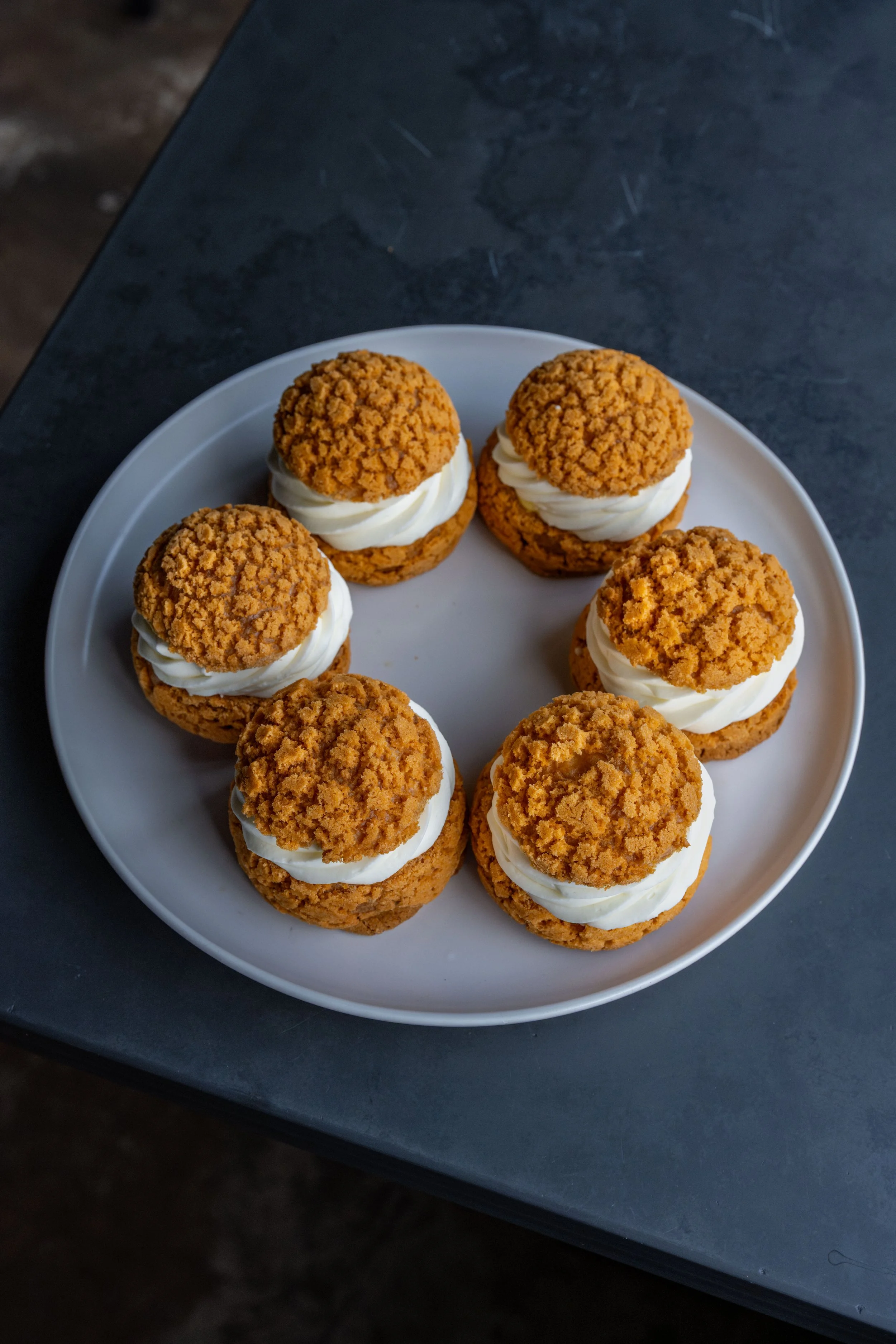
CALAMANSI PAte Au Choux
As a kid, Pastry Chef Christina Au typically stayed away from the “too-sour” citrus growing from her parents’ calamansi trees. Now, she can’t get enough of it. “I have a calamansi tree and bay laurel on my patio,” says Au. “My dad is Vietnamese, and he always said that if you plant something that’s not edible, it’s a waste of soil.” So, for one of Blacksmith’s rotating weekend pastry specials, Au wanted to combine her beloved citrus with another one of her favorite things: choux pastry. Au starts with a classic choux paste; calamansi zest introduces the citrus flavors early on, while calamansi juice replaces the typical addition of water. The choux pastries are topped with a salty-sweet craquelin—to “help keep a consistent shape”—and are baked until golden. The choux are then lined with a thin smear of melted white chocolate to “keep it from getting soggy” before they’re coated in a layer of tart, bright calamansi curd. Finally, the pastry is filled with a bay leaf-infused sweetened whipped cream, bringing airiness and a subtle herbaceousness to the dessert. Au’s seasonal choux pastries have become customer favorites. “I have regulars that show up every Friday morning, and by Sunday, [the choux] are gone. I love making them. It’s my top-five favorite dessert.”
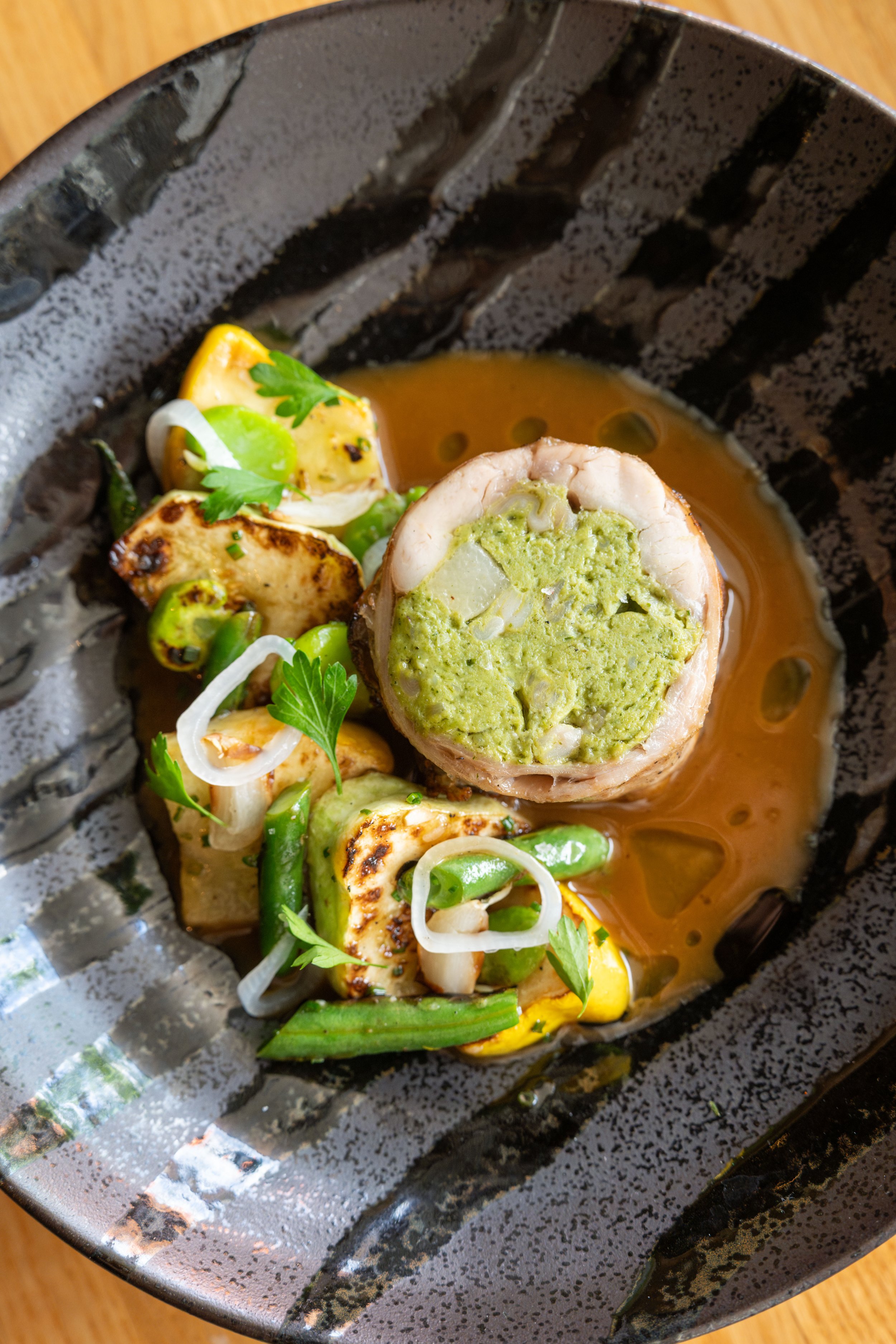
RABBIT ROULADE
For Chef Lung Ly, rabbit season is a special time of the year. Making the most of the six skinned rabbits he got for his restaurant, 93’ Til, last May, Lung dried and processed the meat before turning it into a crowd-pleasing roulade. For the springtime dish, he grinds the meat from the front and hind legs and then incorporates heavy cream, eggs, herbs, house-made bacon, and house-cured lardo. The variations of pork add depth of flavor and much-needed fat to the otherwise lean meat mixture. “I have done a similar roulade before,” says Ly, “but thought it could use a little more fat this time around.” The ground rabbit filling is piped onto seasoned rabbit saddle, rolled into a log, and wrapped in caul fat. The roulade is then cooked sous vide and seared before service. To accompany the rabbit, Lung turns to the seasons to guide him. Grilled pattypan squash, green beans, fava beans, and spring onions tossed in lemon juice and Aleppo pepper brighten up the dish with crisp, fresh, and verdant flavor. For service, the roulade and the grilled vegetables get coated in a luscious jus made from the reserved rabbit bones that have been roasted, cooked down, and mounted with plenty of butter and lemon juice. “You can get stuck,” says Ly. The rabbit roulade “makes me feel ‘cheffy’ again, and it's good for the staff too: They learn to break down a whole rabbit. They geek out, I geek out, we all win.”
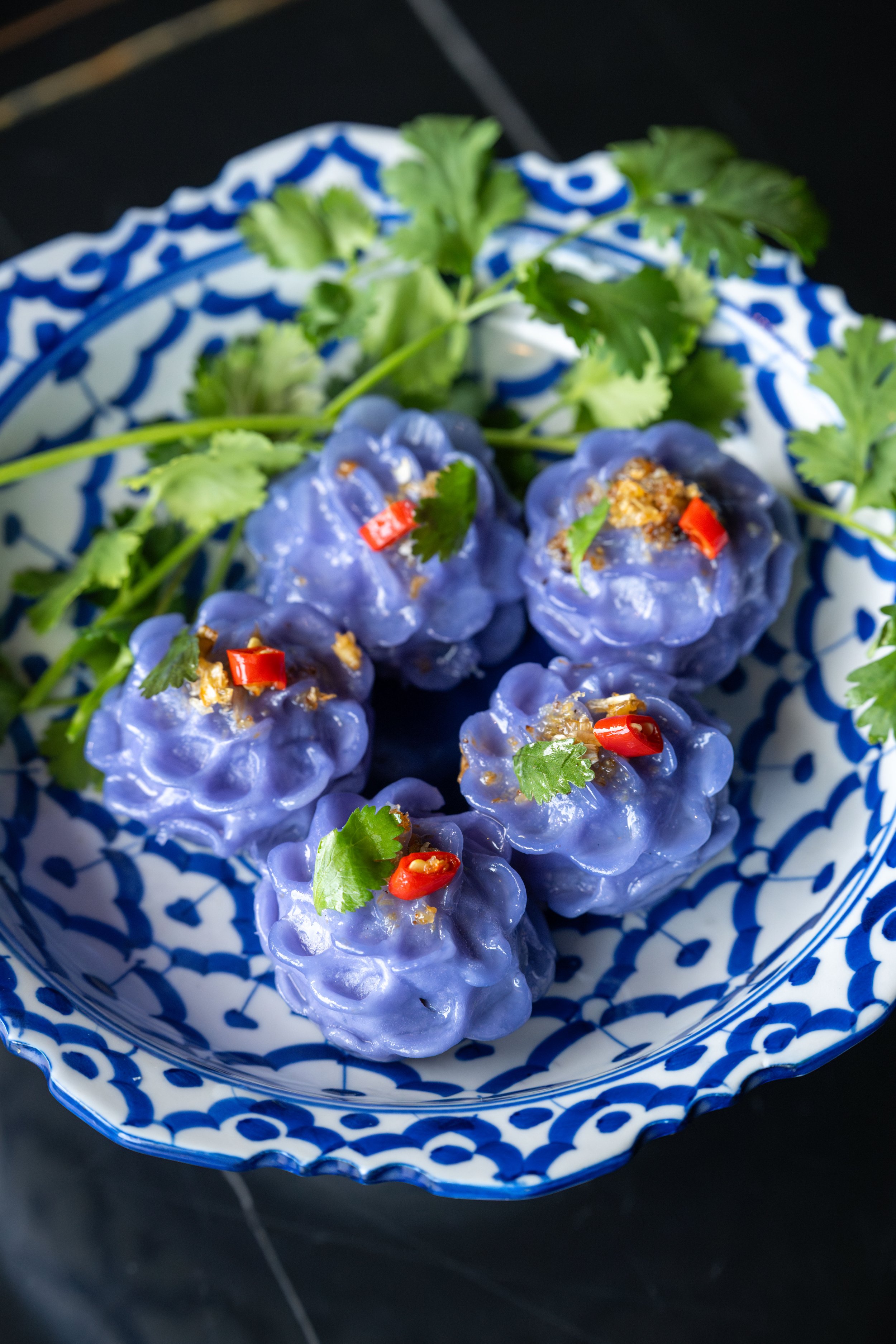
CHOR MUANG
At MaKiin, Chef-Owner Lukkaew Srasrisuwan weaves traditional and historical dishes onto her menu. The goal is to expand Americans’ knowledge of Thai cuisine beyond the ever-popular pad Thai. One such dish is her chor muang, or flower dumplings. “This is a Thai royal family recipe,” explains Srasrisuwan. To make the historically royal snack, she starts with the dough; a combination of four different flours—rice, glutinous, tapioca, and arrowroot—along with lemon juice and a butterfly pea flower tea for its deep regal blue hue. The filling typically includes chicken, but Srasrisuwan opted for a vegan route instead. Coriander root, garlic, and white pepper are blended together then stir fried with peanuts, shallots, radishes, and palm sugar before being stuffed into the dough. Once the dumplings are ready to steam, Srasrisuwan and her staff have to work quickly before the dough dries out. The intricate flower shape is constructed by hand with specialty tweezers to mimic delicate petals. Srasrisuwan selects one person from her team to focus entirely on the dumplings. “We train for about a week to make them pretty, and then an extra two to three weeks to make them fast.” During service, guests are encouraged to eat the dumplings with cilantro and a slice of Thai chile. Srasrisuwan hopes that her chor muang, and the menu at large, fosters understanding and connection between her guests and Thai culture. “My staff are more [like] ambassadors. They have a story to tell: what is it, why is it here, and how to eat it properly.”