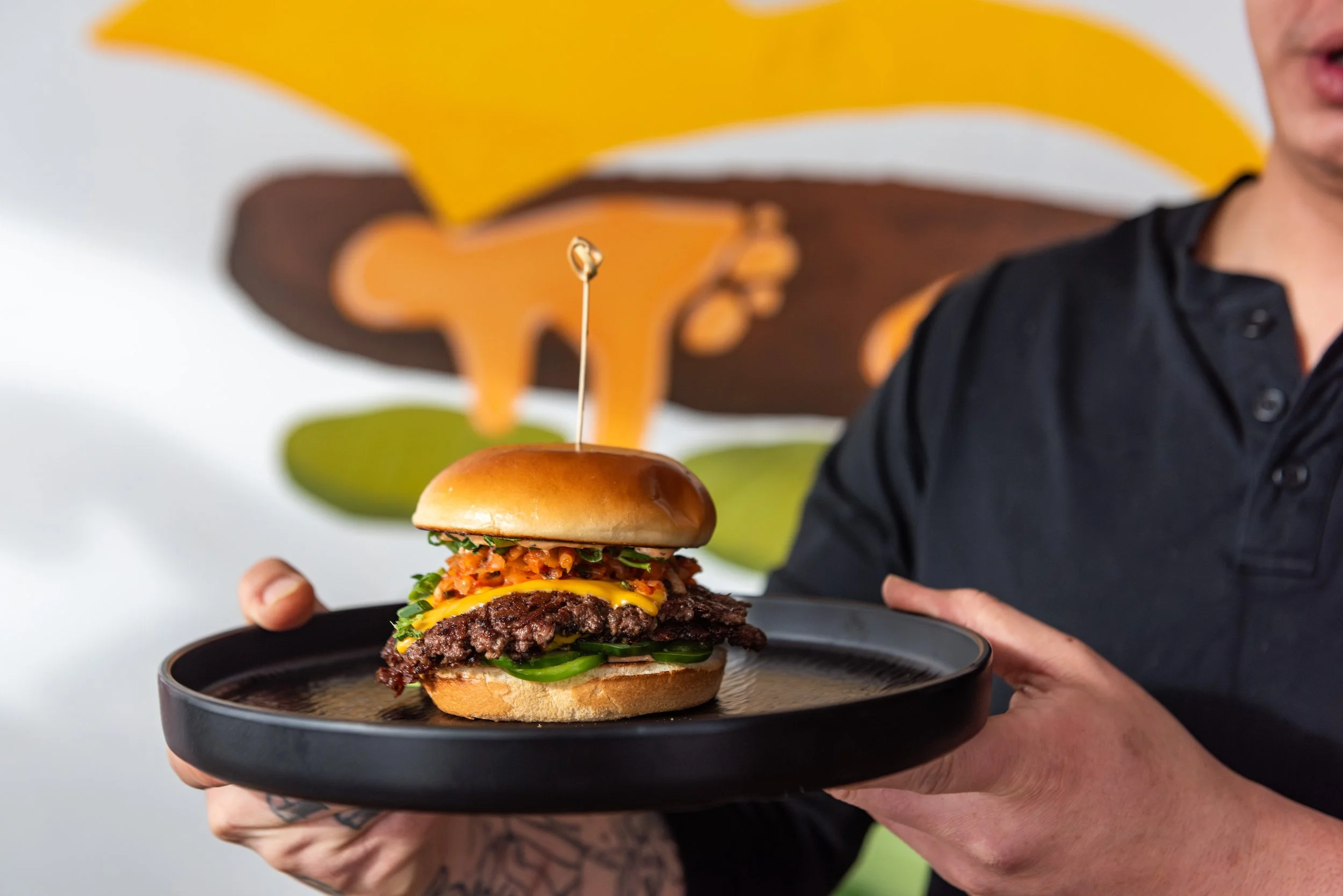
An in-depth look at some of our favorite dishes and cocktails from our time on the ground in Miami.
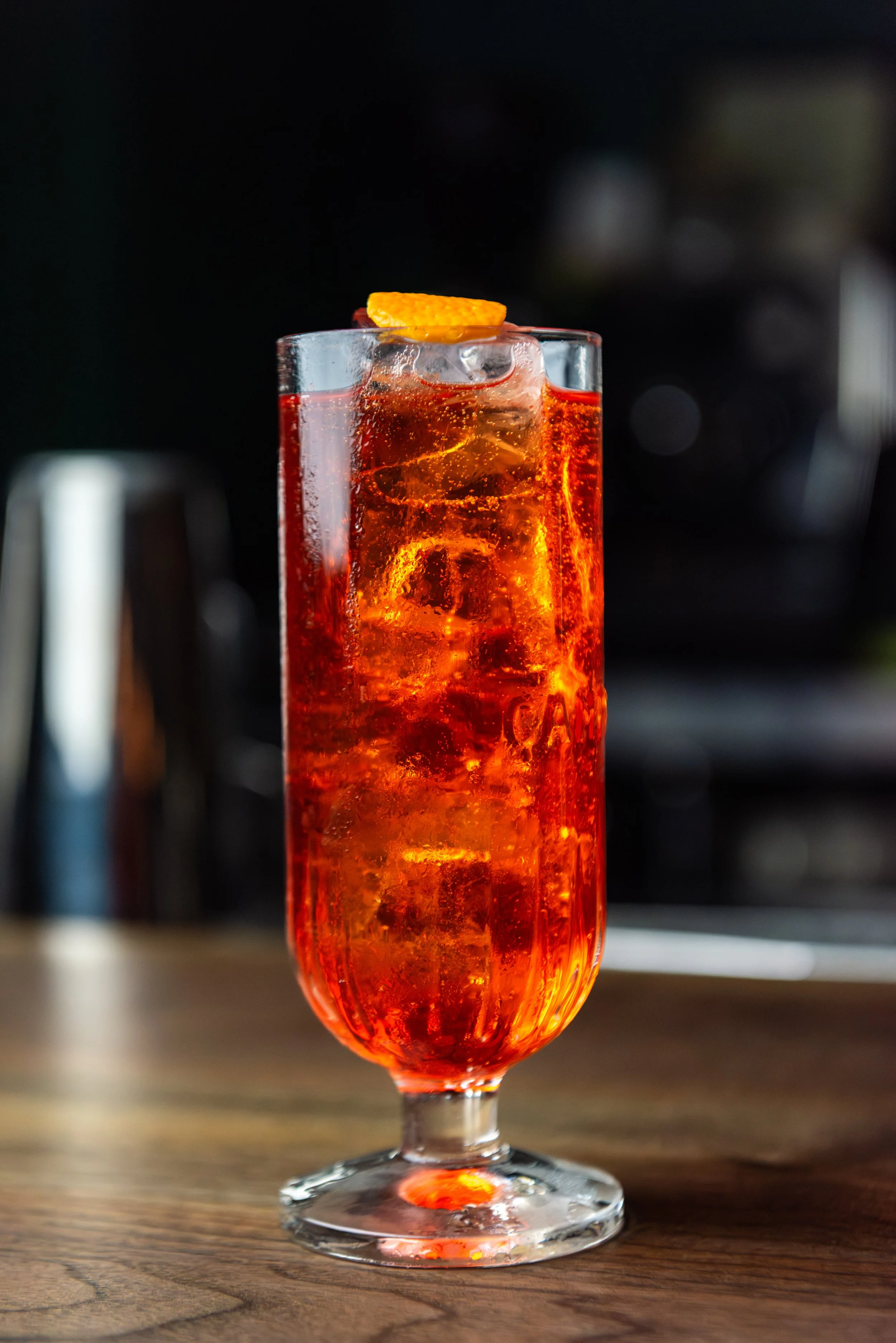
VELOCE
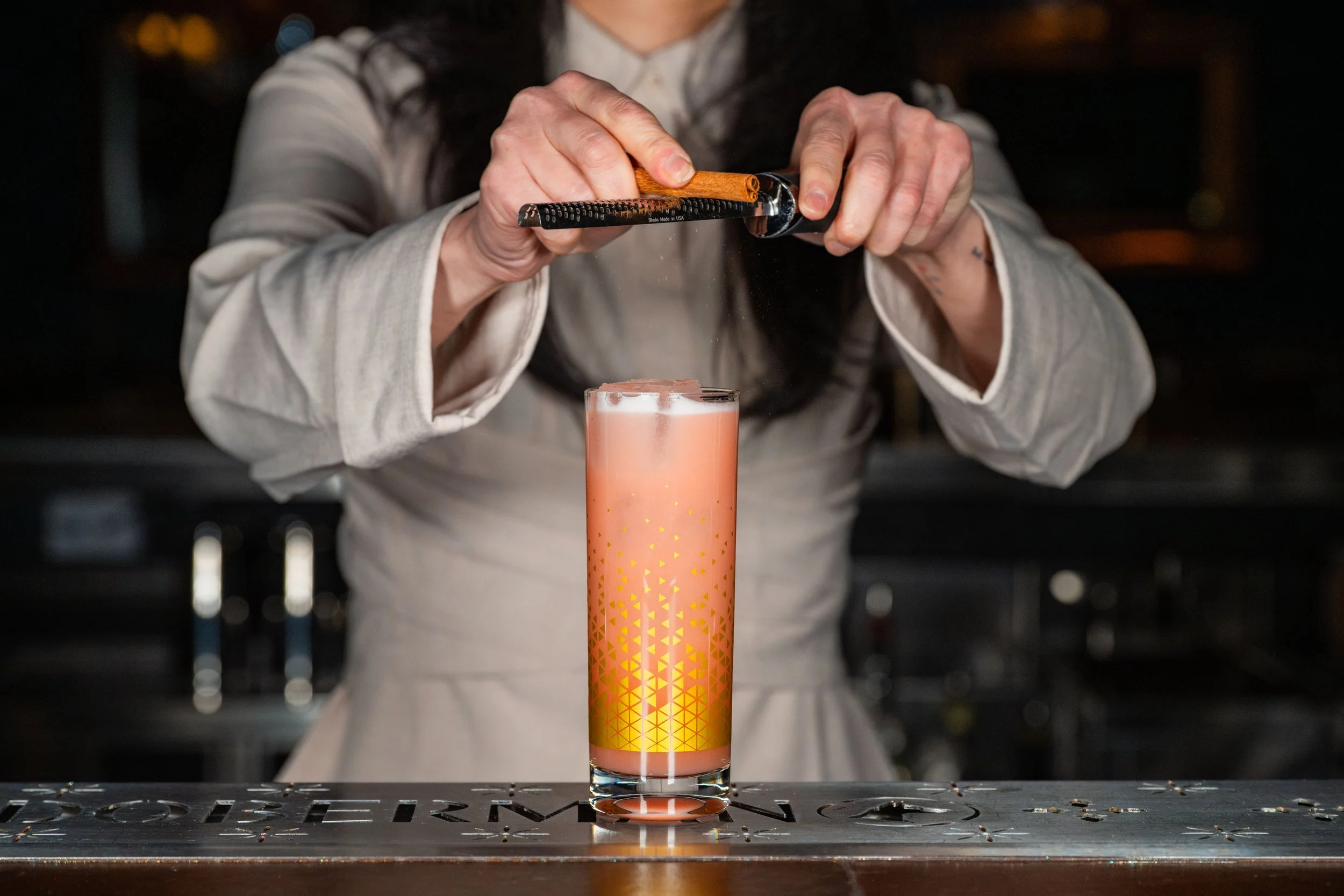
At ViceVersa, “the general idea of our menu is taking classic aperitivo-style drinks, but making them more approachable for the Miami market, and also adding some sort of Latin ingredient,” says Bartender Ricardo Acevedo. To beat the Florida heat and quench guests’ thirsts, Acevedo and his team turned to an aperitivo all-star, Aperol, as a guiding light. For the Veloce, Acevedo pairs the mellow, crowd-pleasing, Italian amaro with some funky and unexpected companions. Orange wine and red wine vinegar “make the cocktail pop,” says Acevedo, adding acidity and depth without relying on lime juice or citric acid. “It brings that level of acidity that makes you want to drink more of it. You take a sip and it makes you salivate a little bit more, and [it] pairs very well with food.” Tying the cocktail back to the bar’s central themes, Acevedo also reaches for a small amount of smoky mezcal to round out the drink and reference the city’s Latin culture and community. “Even though it has non-classic ingredients, like mezcal, if you go to a plaza in Milan or Rome, someone is drinking something with similar DNA.” The refreshing, food-friendly drink is then force carbonated and garnished with a grapefruit coin for a crushable cocktail that’s even better with an oyster, crudo, or cheesy slice of pizza.
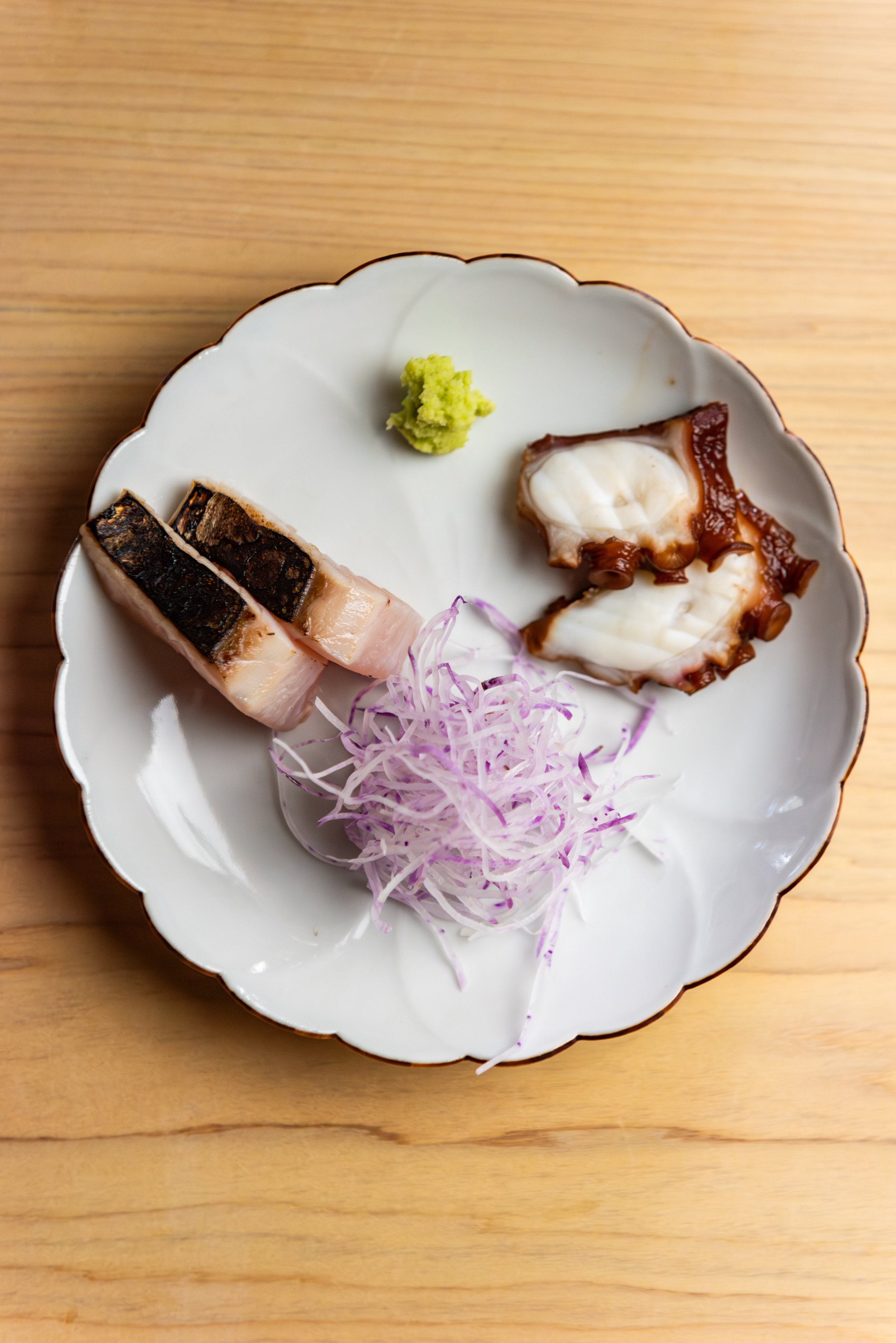
Sawara and Tako
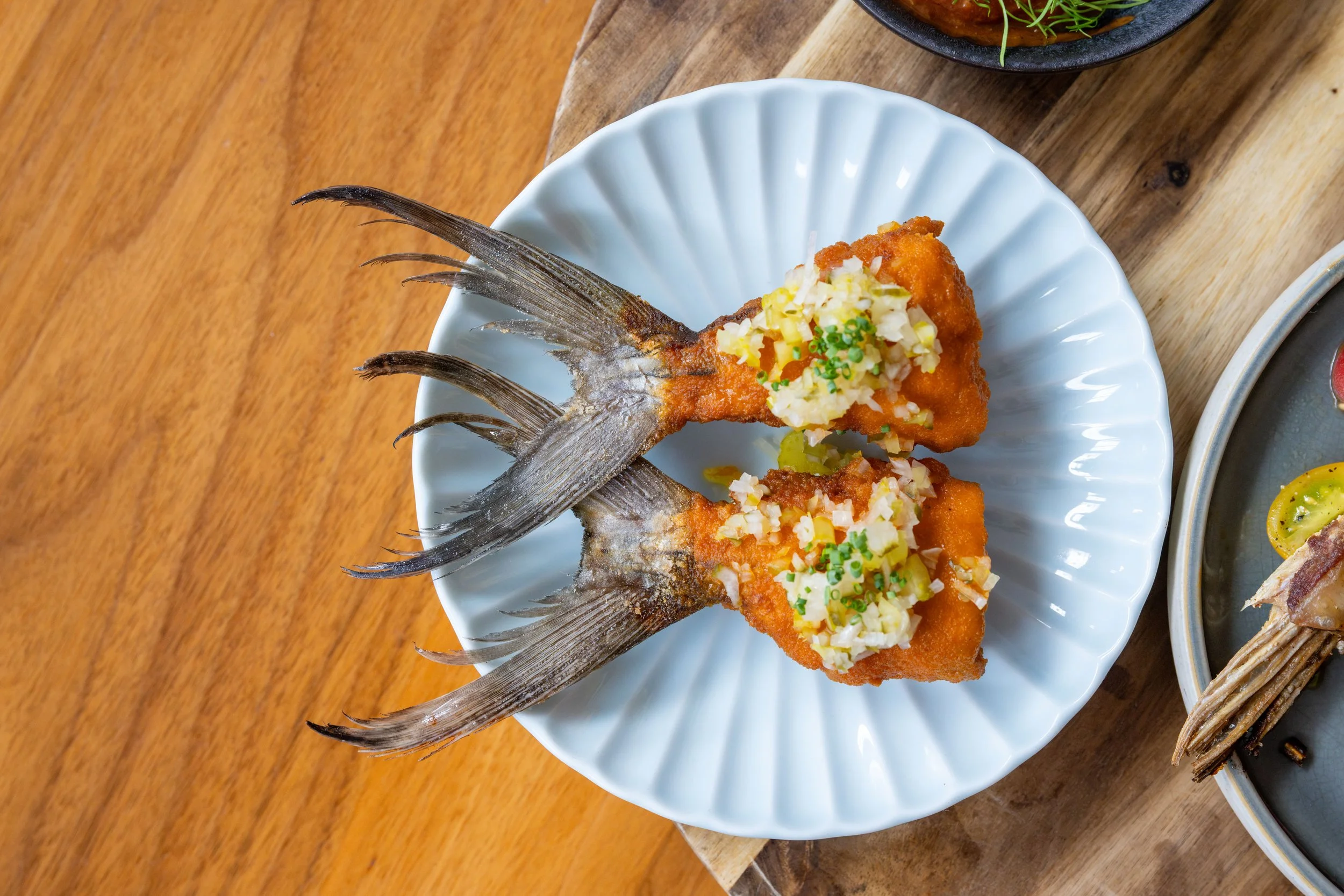
For Chef Shingo Akikuni, the sashimi at Shingo is an opportunity to demonstrate the importance of technique and seasonality. This past fall, when line-caught sawara from Mie Prefecture in Central Japan came into season earlier than usual, Akikuni jumped at the chance to showcase the mackerel's texture and flavor to guests. While there are a lot of popular preparations that involve a hard sear of the fish, Akikuni “kisses the skin side on the Japanese binchotan—for just a matter of seconds—to get a little bit of texture,” he says. “The fat between the skin and the meat is something [I wanted] to preserve and not render out completely.” To complement the pieces of sawara, Akikuni also wanted to highlight “something classic.” He takes tako from Tokyo Bay and massages it with salt for 30 minutes before he places it in an ultra-low super freezer at -122°F. Traditional methods call for tenderizing the octopus by using a rod, but Akikuni “realized, through trial and error, that you can achieve the same level of tenderness, if not more, by aging it for a short period of time in the super freezer.” He boils the octopus with sake, soy sauce, and mirin for around 15 minutes and then immediately slices it for service. Akikuni completes the dish of delicate and smoky sawara and rich, tender tako with thinly sliced, palate-cleansing daikon radish, freshly-grated wasabi, and soy sauce.
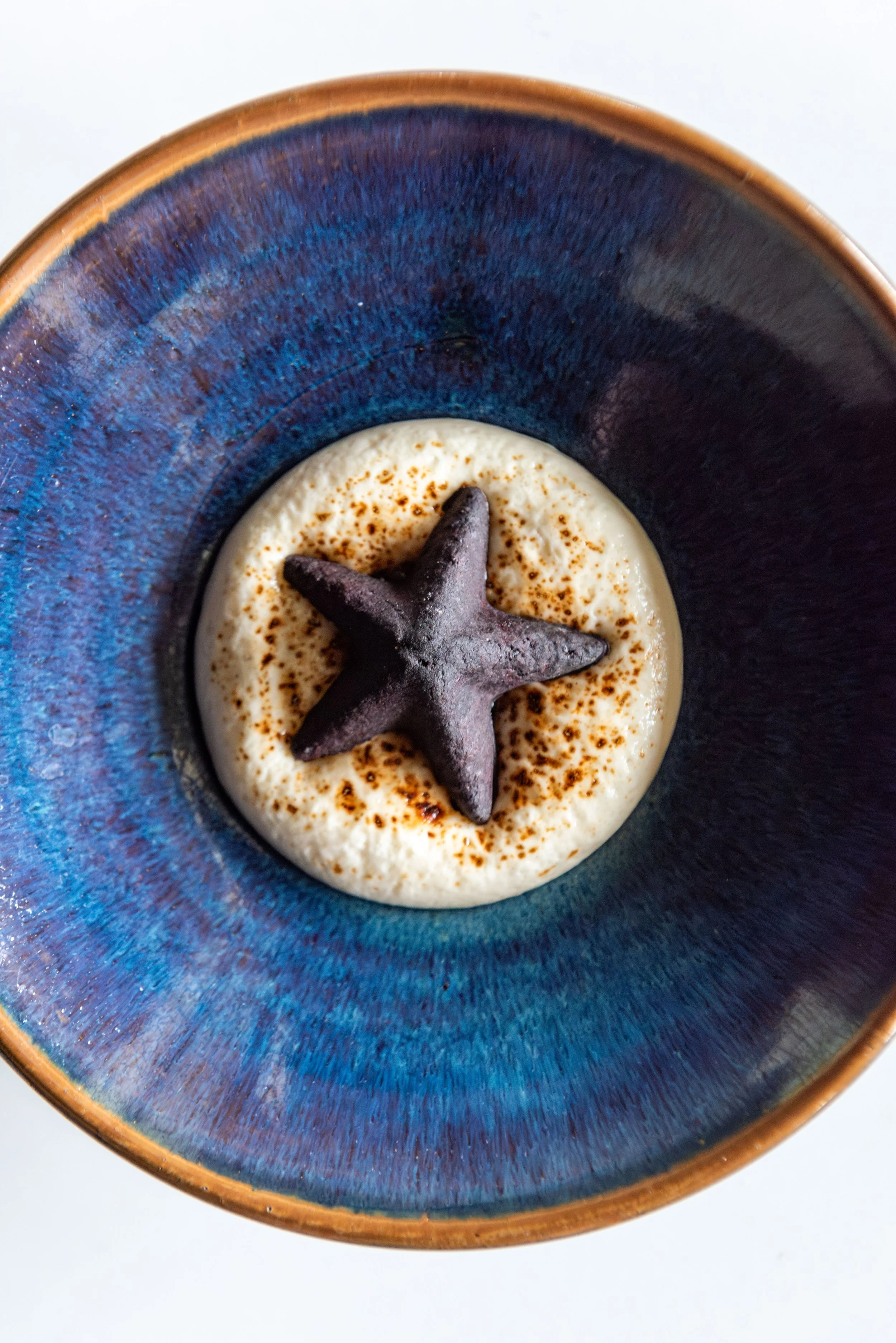
Jameson's Day on the Beach
Memories are often a catalyst for culinary creations, and at Kojin 2.0, Chef Pedro Mederos draws on one of his most precious family moments. The dish, Jameson’s Day on the Beach, is inspired by a trip to the beach with his wife, Chef Katherine Mederos, and their three-month-old son, Jameson. “I’m the only guy from Miami that really despises the beach,” says Pedro. “I thought he would hate it too, but he loved it. He picked up everything possible—trying to get him to not eat everything was a nightmare.” To commemorate the trip, Mederos translated their beach day into a seafood forward dish. He begins with Hokkaido scallops, which are quickly seared to develop a golden crust and then gently poached in a chive-butter emulsion. Mederos then pipes an ocean espuma—made of puréed scallop, fish trim, heavy cream, lemon juice, and parmesan—over the top for a boost of salinity and oceanic flavor. The briny foam is then brûléed until golden to “look like sand,” and topped with a bump of caviar and a starfish-shaped tuile. For a touch of decadence, the tuile is stuffed with mascarpone, sour cream, and a rich and funky truffle goat cheese. “I would give up every ounce of caviar to go back to that beach for just a second.”

El Cordero
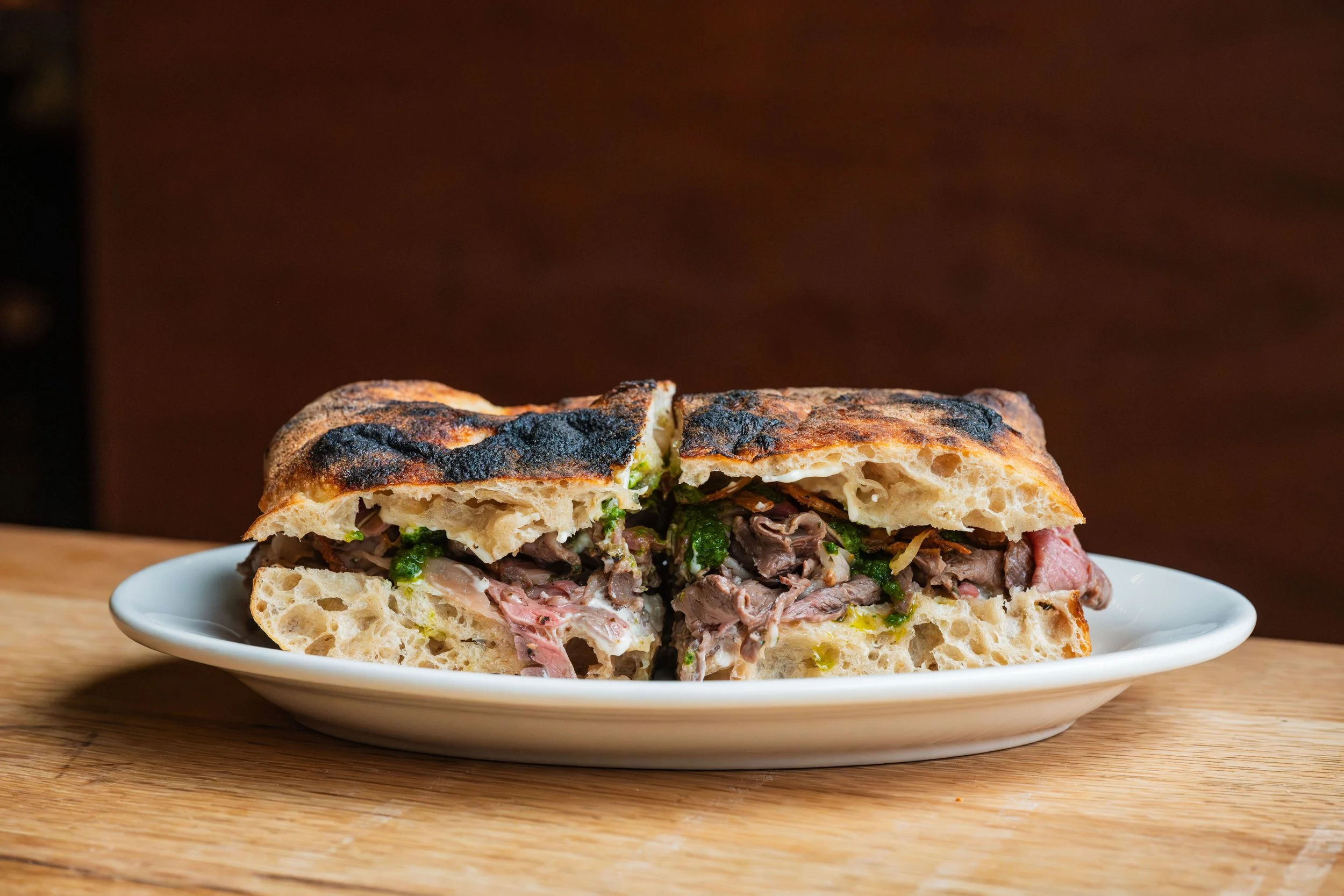
While Chef Jean-Paul Fung was planning the menu for La Mar by Gastón Acurio’s tenth anniversary dinner, he knew he needed something to really drive it home. “We wanted to showcase all the diversity that Peruvian cuisine has,” he says. “It has a lot of Chinese and Japanese influences.” And, as a lover of Korean food and half-Chinese, half-Peruvian himself, Fung thought it only natural that he tie all the strings together into what he calls El Cordero. As the Spanish name insinuates, the star of the dish is a saddle of lamb—a cut that comes from both sides of the loin, and is rather uncommon in Miami. “When I was staging at Atoboy in New York, they used lamb saddle when Chef Mark [Nobello] was there,” Fung says. “I love the cut—it’s super tender, awesome to work with. You have more meat than just getting a rack itself.” The saddle is seared, sliced, and shingled atop a mole-inspired ‘picante’ sauce made with Peruvian red potatoes, peanuts, chocolate, Peruvian chiles, and Chinese spices. A house-made limo and rocoto chile crunch garnishes the top. El Cordero is served alongside banchan-style accouterments, like Napa cabbage kimchi with rocoto chile subbed in for gochugaru, seaweed chaufa, daikon pickled with Fung’s grandmother’s recipe, and palm-sized leaves of lettuce. The idea is to get creative—mix and match the lamb and banchan into custom wraps. “I love the playfulness of it,” Fung says. “You get all these cultures in there, and it all goes well together.”
Solstice
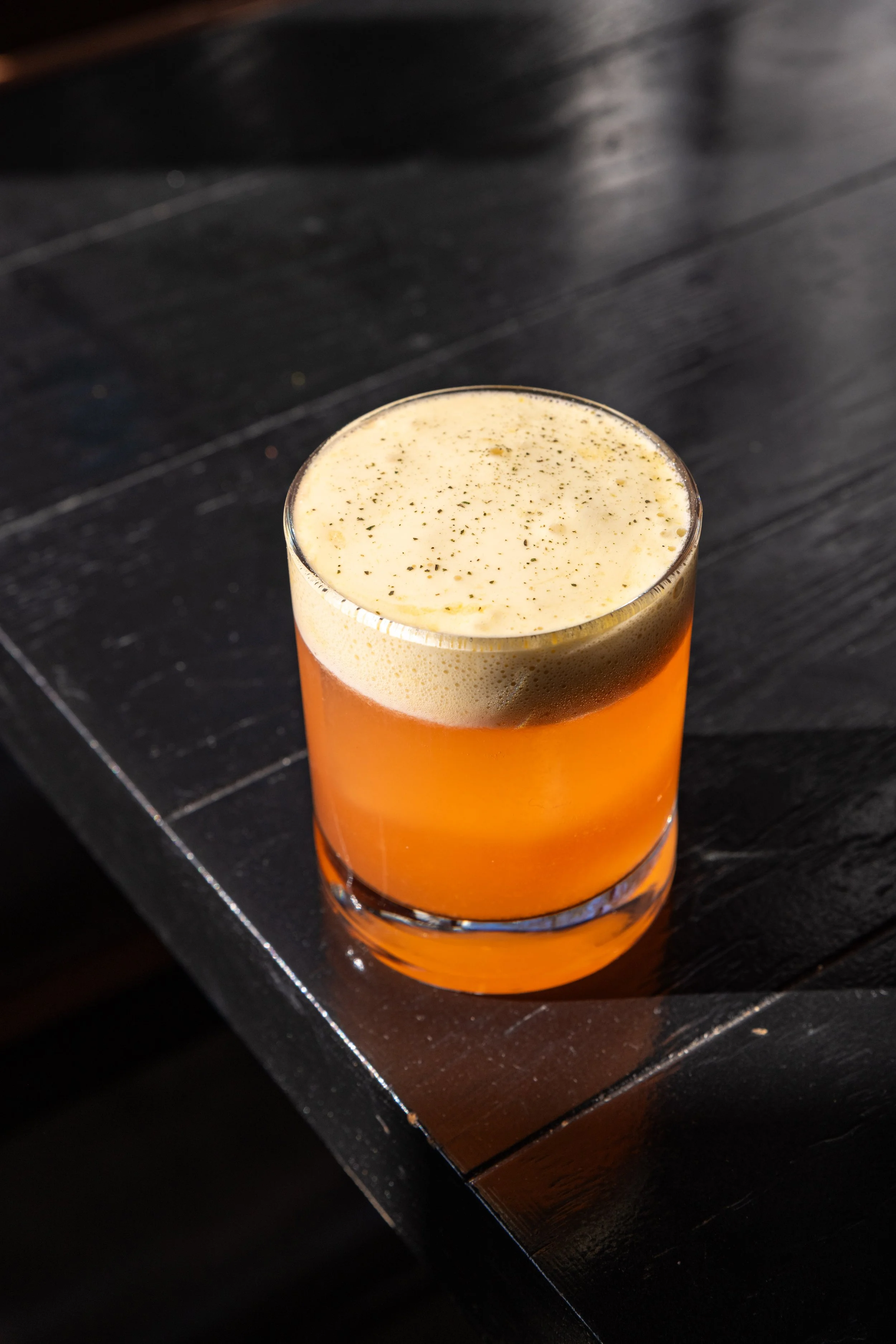
When you have easy access to fresh, high-quality produce, the possibilities are endless. That’s the case for Jackie Rey, former Beverage Director of Stubborn Seed. “Chef Jeremy [Ford] has his farm down in Homestead, so we utilize as much produce from the farm as possible,” says Rey. Allspice berries caught her eye, so she decided to incorporate the warming spice by way of a sabayon. “The sabayon was the first move for me.” Rey experimented with a combination of spirits for the sauce, but eventually settled on an allspice-infused chardonnay with a hint of Madeira. “The combination of the Madeira and the nutty, spicy notes, cut with a little chardonnay, help [the allspice] shine perfectly.” The sabayon is hand-whipped and held warm for service, “but, at the end of the day it’s Florida, and it’s hot,” so Rey incorporates tequila, Aperol, pineapple and lime juices, and an apple cider vinegar-fueled pineapple shrub to “cut through the heaviness” of the spice and introduce some lighter, tropical flavors. Finally, Rey dehydrates and blitzes the allspice leaves into a powder that’s sprinkled atop the sabayon. The creamy, warm sauce complements the cold, refreshing cocktail, resulting in a dynamic, well rounded sip. “I’ve always loved the kitchen and admired chefs. So adapting culinary techniques is my favorite part [of the job.]”
THE CABRITO
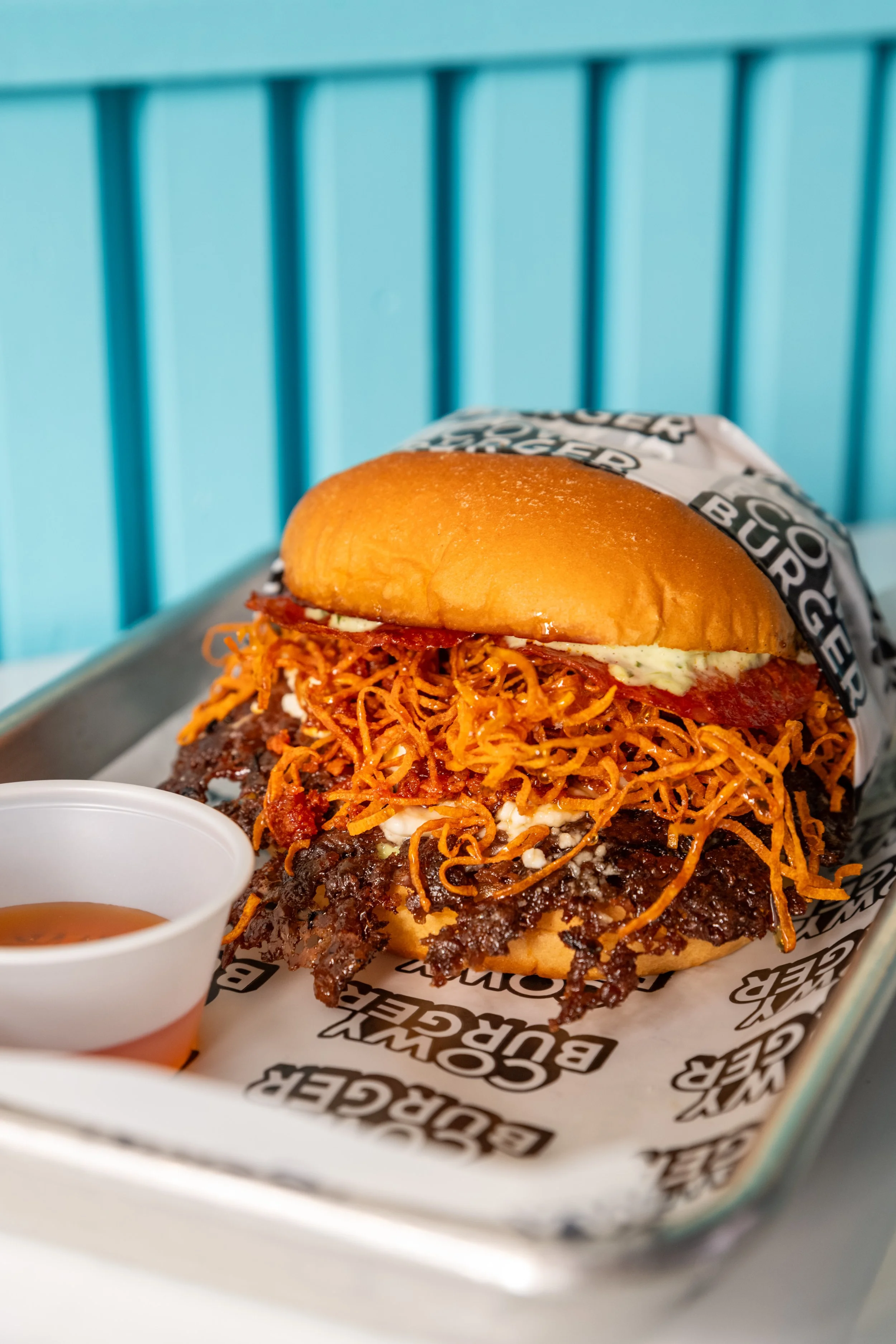
The Cabrito didn’t happen overnight. It started as a thought, a memory of home, with flavors that Chef-Co-Owner Guillermo Felipe of Cowy Burger had grown up with, but never seen on a burger. Felipe knew he wanted to pay homage to Spanish chorizo, which was always in his family's fridge during his childhood. It begins with a chorizo patty—made of both Cantimpalo and ground Spanish chorizo—which goes on top of a smashed ground beef patty, flattened to create the quintessential crispy edges and juicy center. He first paired the burger with tangy, creamy goat cheese, and the combination was electric—but something was still missing. “Inventando un poco con sabores,” Felipe recalls. “I was experimenting with flavors that aren’t common together.” He knew the burger needed contrast. For both texture and sweetness, Felipe adds crispy spirals of fried sweet potato, as well as a drizzle of either hot or regular honey over the top, plus more served on the side. Lastly, Cowy Burger’s ubiquitous green sauce with garlic, cilantro, parsley, peppers, and celery adds a vegetal brightness to the mix of otherwise rich and intense flavors. “It’s very satisfying,” he admits, “seeing something that has always been in my home— something that is a staple for my family—become one of our most popular burgers here. People take a bite, and they’re surprised. And then they love it”