A Little Ode to Chinatown
At Itsumono, Chef Sean Arakaki channels old school Chinatown flavors into a char siu-inspired stuffed quail.
Photos: Alexander Zeren
Around the corner from Itsumono is one of Chef Sean Arakaki’s favorite lunch spots: Kau Kau BBQ. The beloved, old school Chinese barbecue restaurant in Seattle’s International District is legendary for their addictive daytime special. “It was like $9.95 and you would get two choices of meat, fried rice, and vegetables,” says Arakaki.
“Their char siu is, in my opinion, the best in the city.” Arakaki’s love for the local haunt eventually became a lucrative and unexpected source of inspiration when he started to develop a quail dish for the menu at Itsumono. “We just so happened to get Chinese food for lunch,” he says. “And we realized we could stuff the quail.”
Before it is stuffed, the quail gets the full char siu treatment. Sleeve-boned quails are marinated in garlic, brown sugar, oyster sauce, hoisin, red wine, shaoxing wine, red fermented bean curd, five spice, honey, and obligatory red food coloring. “Traditional char siu isn’t artificial red,” says Arakaki. “But in Chinese American restaurants, that is important.” After 24 to 48 hours, the quails are pulled from the marinade, pat dry, and prepped for stuffing.
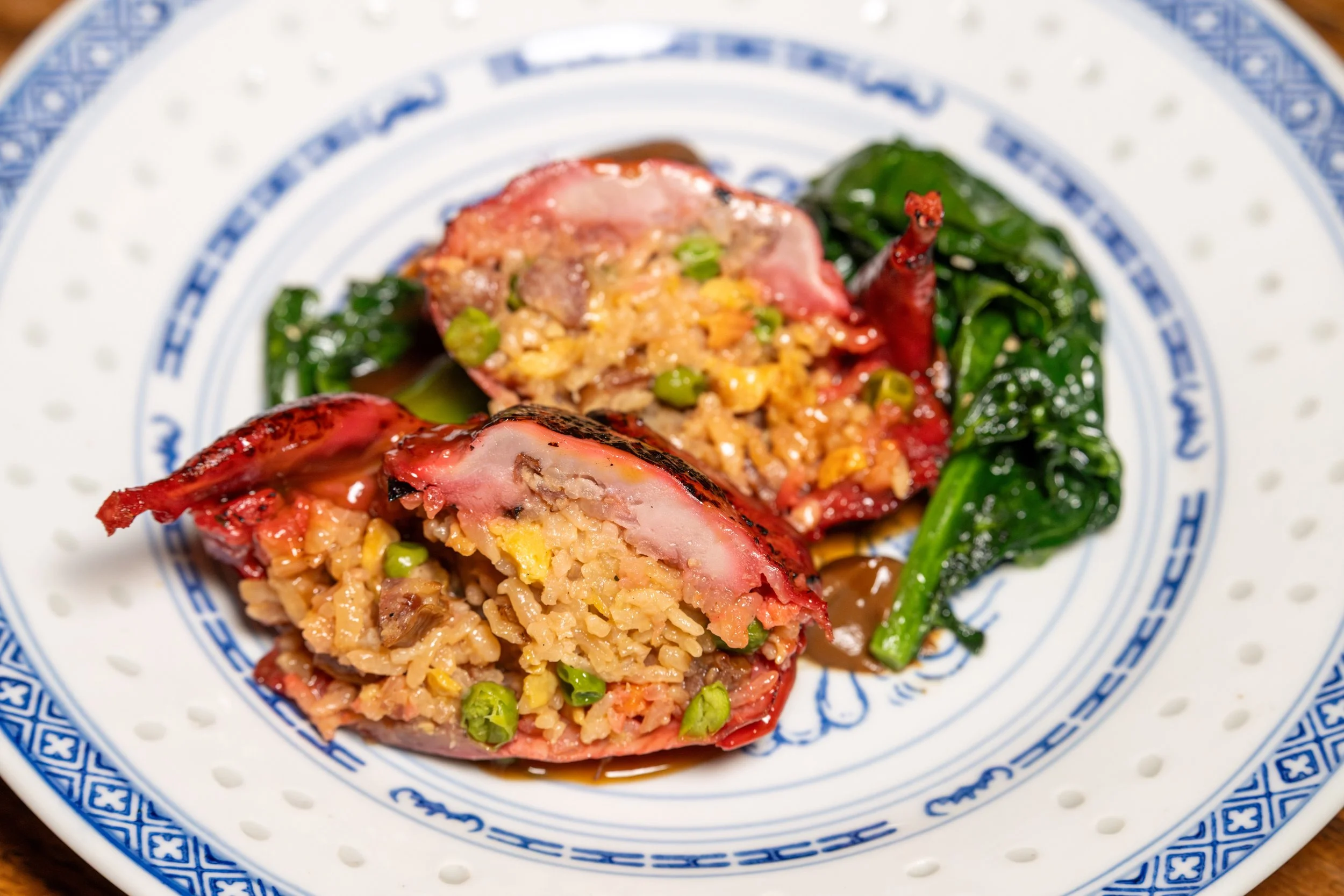
Pulling from one of the core components of Kau Kau’s lunch special, Arakaki makes a homestyle fried rice—one that is “closer to the fried rice we would make back home in Hawaii,” he adds—with ginger, garlic, carrots, onions, and peas. Rather than jasmine rice, however, Arakaki relies on the texture and flavor of a short grain rice. “It's a little bit of a different product, but it lends itself better to stuffing. A little more glutinous and soft,” he explains. The rice is also amped up by the addition of lap cheong, rather than spam, to provide another savory note and build on the dish’s Chinese influences. The fried rice is cooled on a sheet tray before it is scooped and portioned into balls.

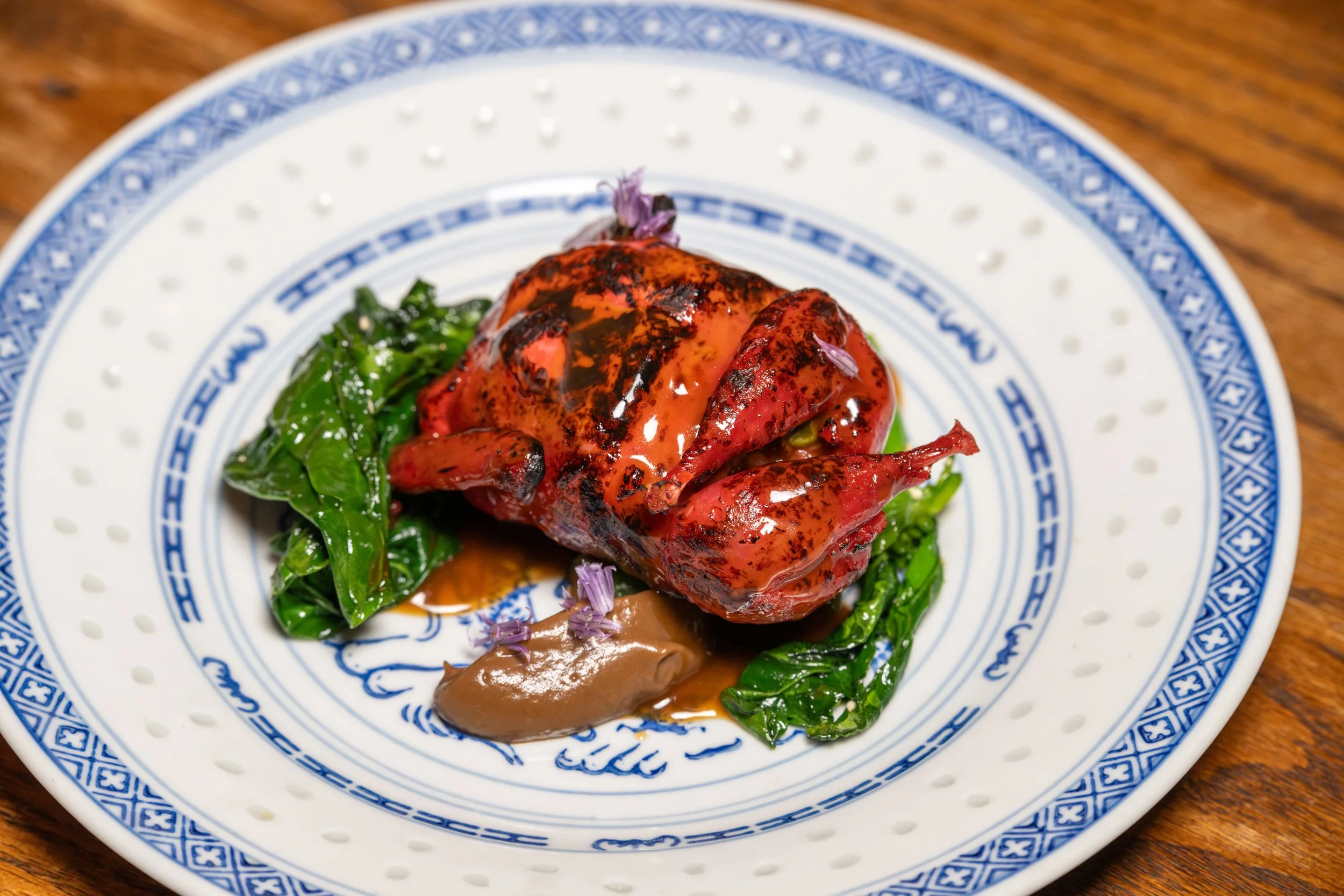
Arakaki stuffs the portioned lap cheong fried rice into the marinated quails, tucks the wings and legs, and wraps them tightly in plastic wrap to set. When ready, the stuffed quails are steamed for around 18 minutes. “We found that it was the gentlest way of cooking it,” says Arakaki. “Quail is delicate. To get the inside hot enough and everything thoroughly cooked, steaming was our best option. We tried roasting it, but it didn't work. Tried poaching it, not great. We tried deep frying it once, but it didn't work either.” The striking red tint of the char siu marinade seeps into the outer layer of the quail, creating that nostalgic, char siu feel that Arakaki builds on by scorching the skin with a kitchen torch “to get that charred char siu” look and to develop some of “those nice dark bits,” he says.
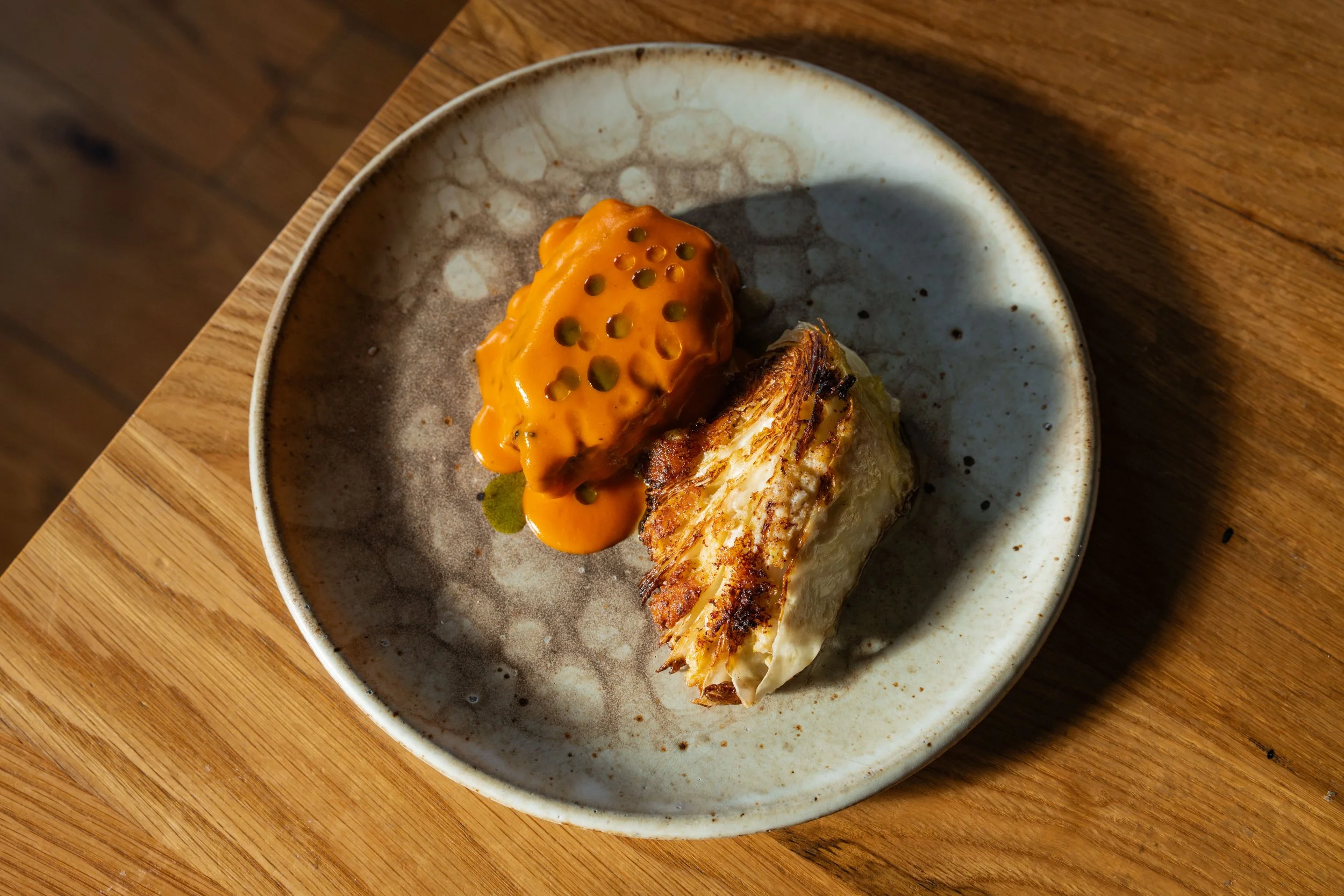
But Arakaki wasn’t done. “The idea of the one choice of meat with fried rice and a vegetable, we took that one step further and put it on a plate,” he says. To support and balance the hefty and dramatic stuffed quail, he blanches and sautés some gai lan with a bit of lemon juice. Arakaki also whips up a black garlic-eggplant purée, which utilizes the leftover scraps and cheeks from another dish at the restaurant, his eggplant dengaku. “It works really well with the quail,” he says. “You cut into it and the rice spills out and then there is the purée to collect it all.”
The gai lan, eggplant purée, and stuffed quail are plated and draped in a rich, fragrant, and gleaming sauce that is straightforward, but effective. Arakaki adds hoisin and five spice into Itsumono’s standard chicken stock-based demi glace. “We thought the dish needed a hit of hoisin,” says Arakaki. It is a “super classic flavor, maybe not with char siu, but [it] has that Chinese barbecue vocabulary.”
The complete dish playfully toes the line between homage and invention, with each of the components contributing to the overall flavor and Arakaki’s hyperlocal narrative. “We sort of just took something simple and delicious and made it a little convoluted,” Arakaki jokes. The dish “makes us feel closer to Chinatown and the International District as a whole. We are an International District restaurant and have these influences, but definitely strong ones from Chinatown. So, people got a kick out of that. People don’t expect that at something they thought was a ramen shop.”
It’s Chinatown on a plate while staying true to Itsumono’s own eclectic, comforting atmosphere.