Beyond the Brisket
Texas sausage and ribs get their time in the spotlight.
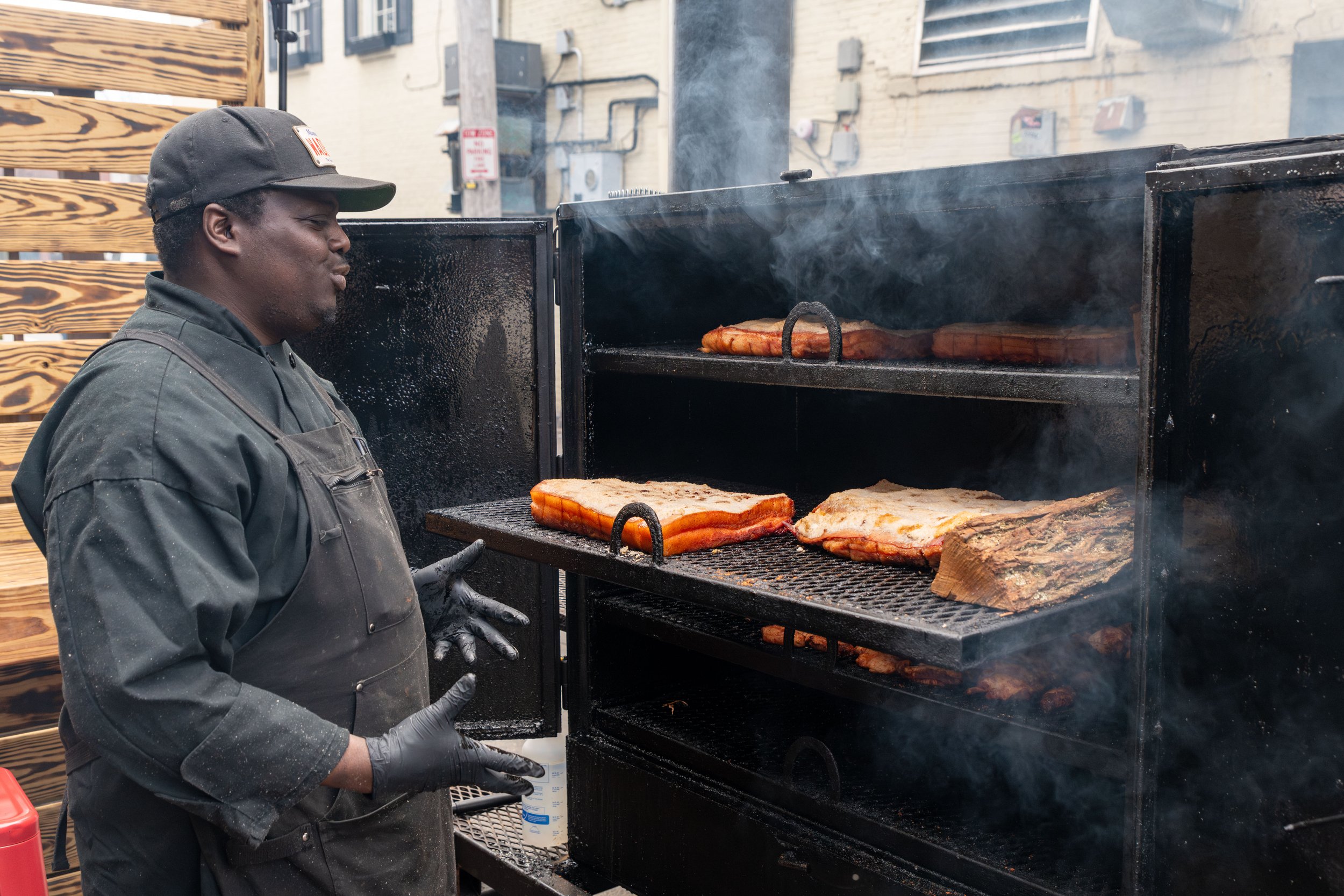
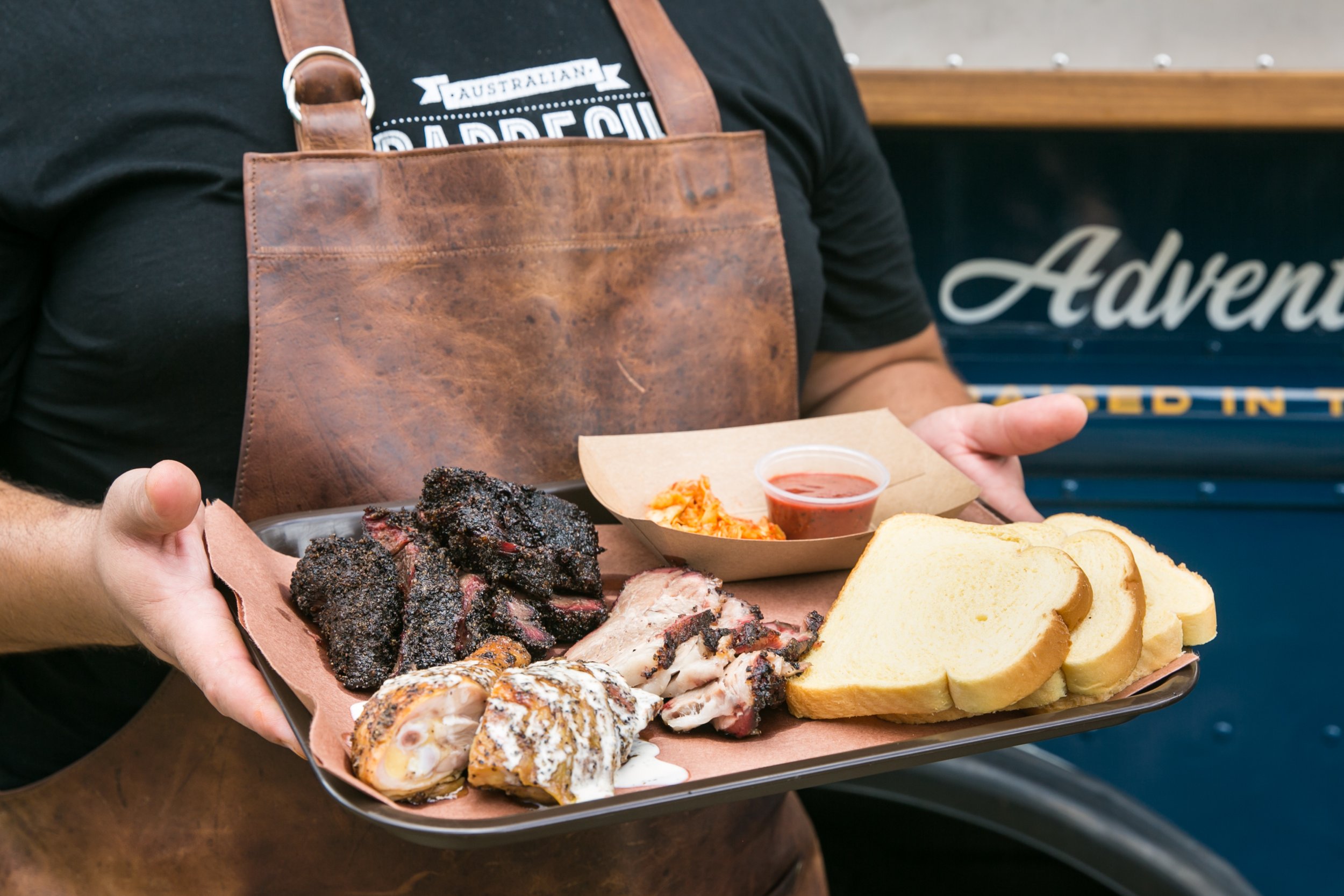
Across Houston, and Texas for that matter, there’s a Holy Trinity that dominates the plates and trays of diners. Brisket, ribs, and sausage are the essential pillars, core tenants, and smoky commandments at the center of Texas-style barbecue. Brisket, in particular, has become the eyecatching, steadfast star in the lineup, and a benchmark of quality for pitmasters throughout the state. These days, however, as chefs and pitmasters look for ways to differentiate themselves from the growing and sometimes crowded market, riffs on ribs and sausage have become more personal and creative without abandoning the beloved traditions that anchor Texas-style barbecue.
Pinkerton’s Barbecue
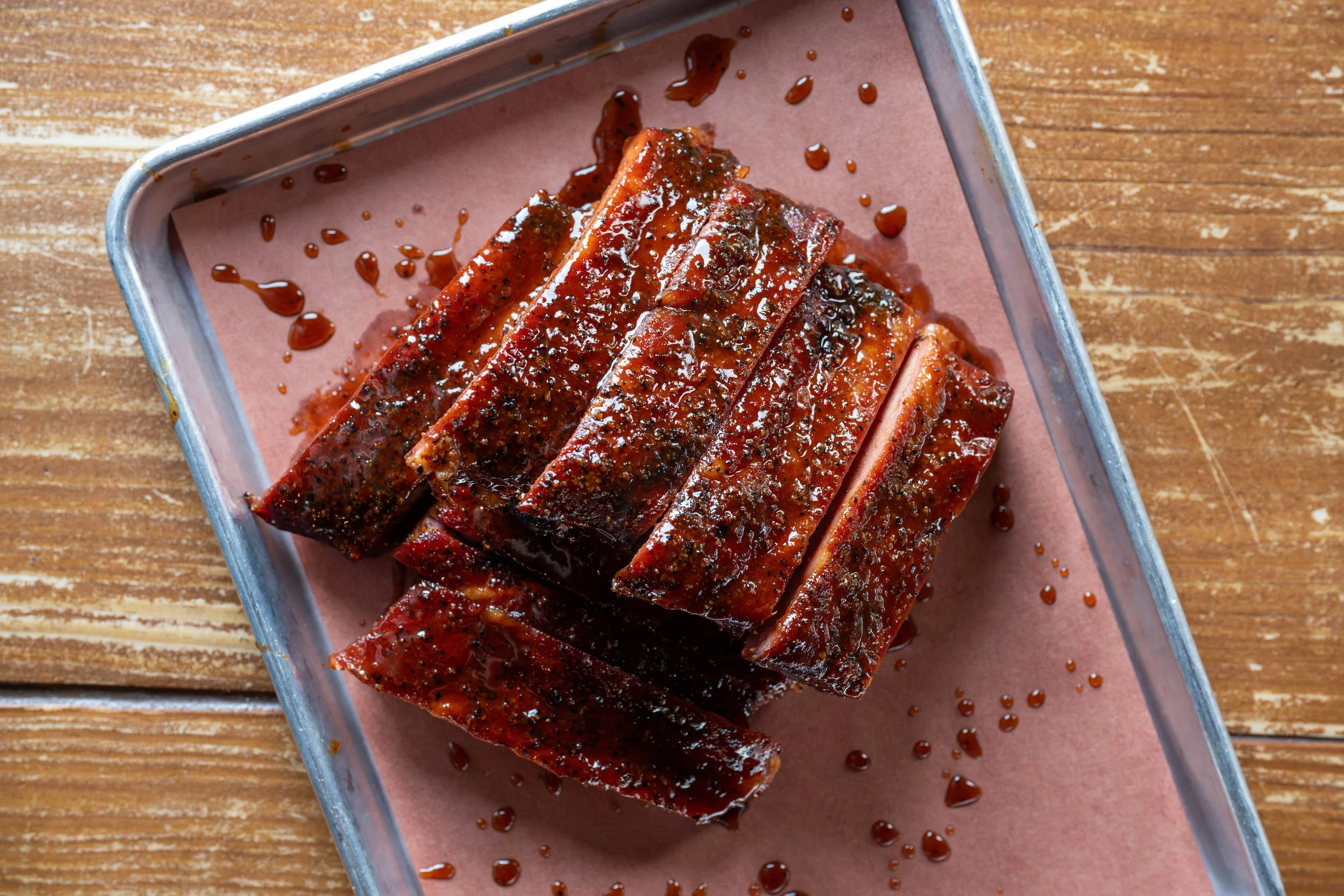
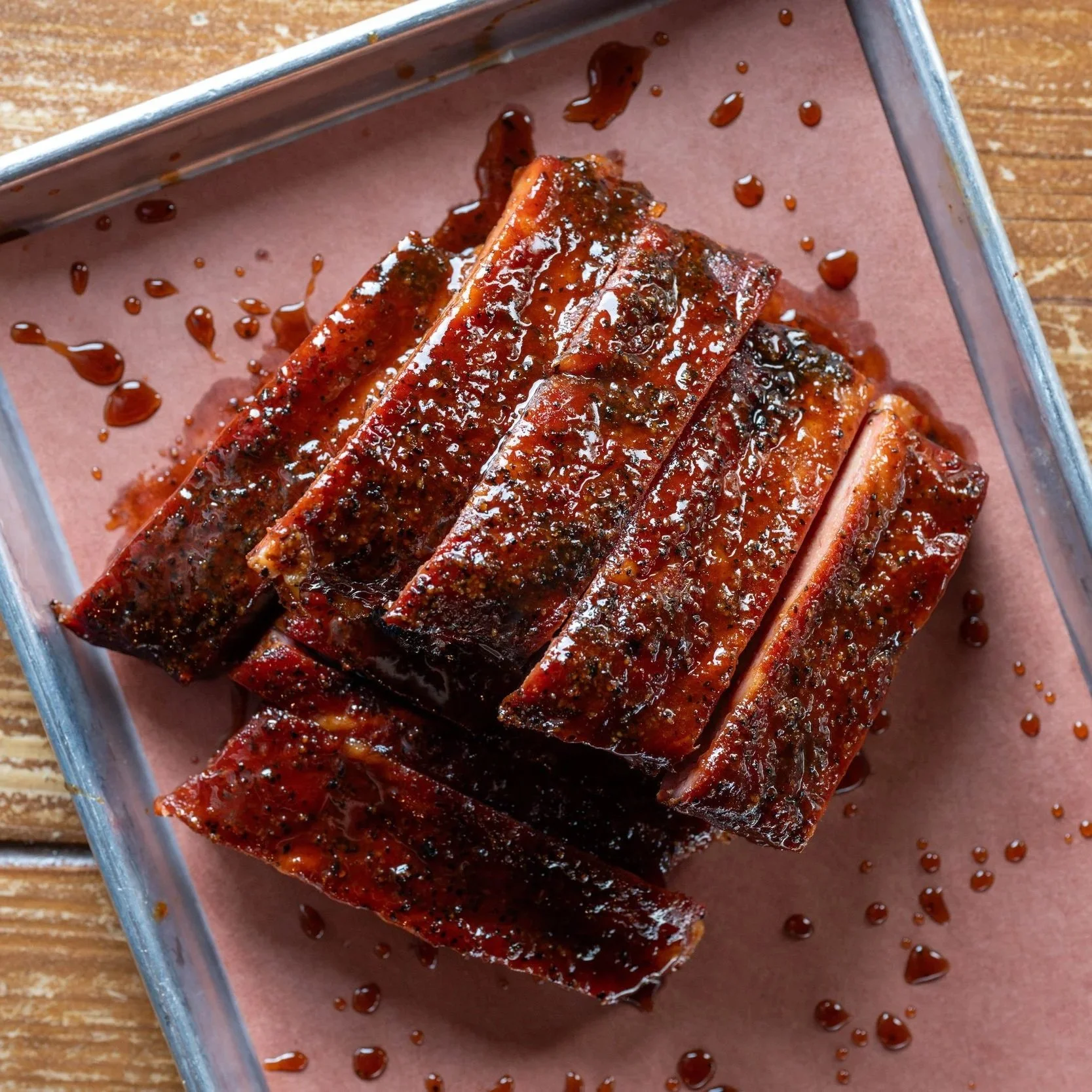
Before opening his restaurant, Pitmaster Grant Pinkerton entered into a barbecue contest to try and raise some money for a brick-and-mortar of his own. He got right to work developing a rib recipe that would beat out the competition. “The guys in the competition world do glazes for their ribs, so I made my own,” says Pinkerton. “They were all using stuff out of the bottle. I broke out my pots and pans.” Although he didn’t win the contest, his pork ribs with a sweet ‘candy paint’ glaze soon became a crowd favorite, and are still on the menu at Pinkerton’s Barbecue. Built with some “sugar and jellies,” the glaze is “not a thin sweet syrup. It's a very deep and rich sauce.” The ribs, which Pinkerton likes to cook a little hotter than usual, get wrapped with a Tennessee-style vinegar sauce and some sugar before they go back onto the smoker. They get coated in a sweeter rib rub to “set the bark” and are finished with the glaze. “There were some people who told me in the beginning, ‘Well this isn't a traditional Texas-style rib.’ It might not be for you, but it is original to me. It's who I am and what I like. Turns out lots of other people like that, too.”
LATE AUGUST
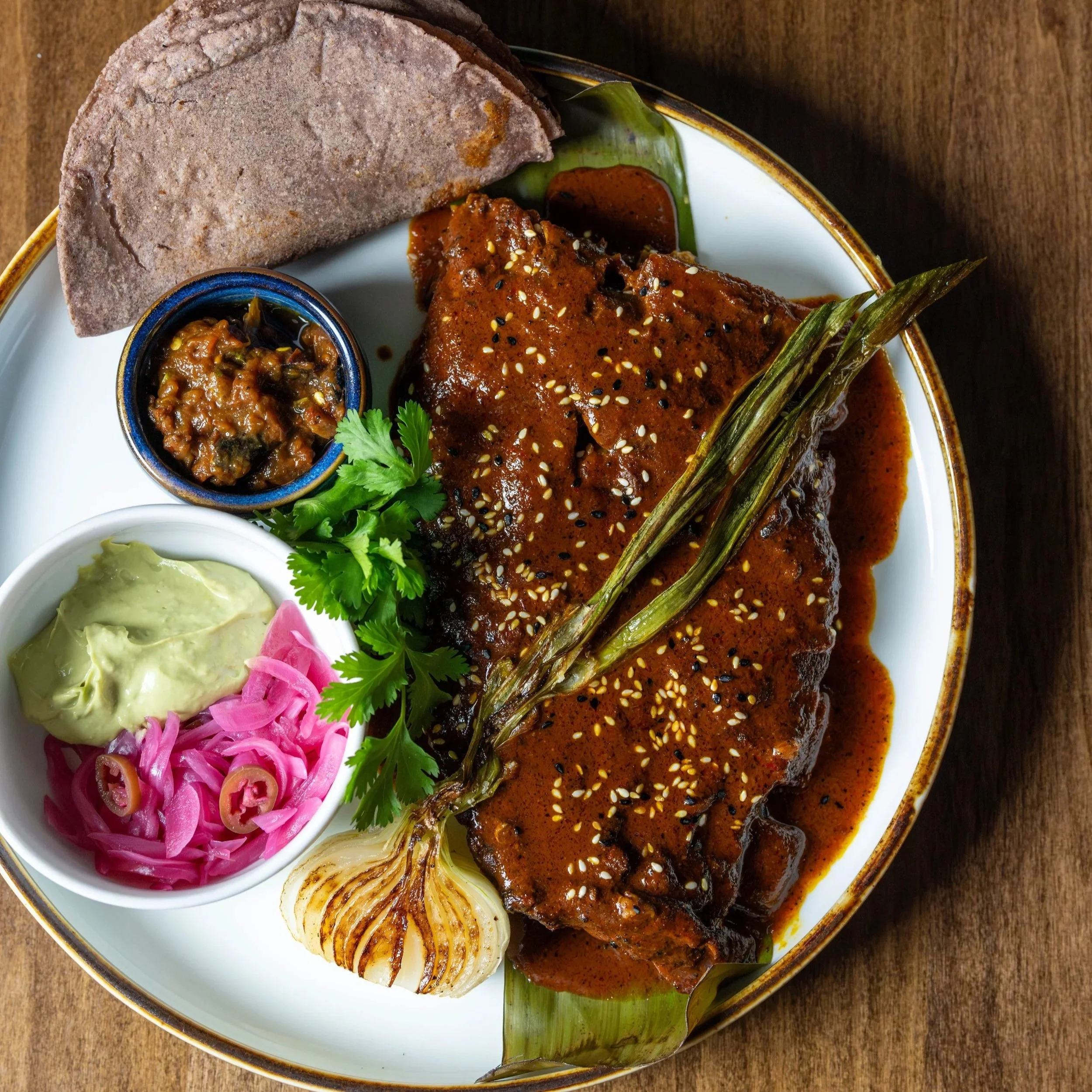
With acclaimed, traditional barbecue available all around the city, putting barbecued ribs on your menu can be daunting, but for Chef Sergio Hidalgo, it's another way to pay tribute to the “Afro-Mexican” identity already on display at Late August. Along with Chef-Owner Chris Williams, Hidalgo was “thinking about cochinita pibil,” the slow roasted pork dish from the Yucatán, while developing a rib dish for the restaurant. His barbecue spare ribs pay homage to Houston’s culinary culture while incorporating Mexican techniques and flavors. The ribs are coated in a rib rub, seared on the grill, and then covered in an achiote marinade with sour orange, cumin, and other spices before they are left to sit overnight. Hidalgo adds the ribs and beef stock to a hotel pan lined with banana leaf and roasts them for five hours at 275°F. Served falling off the bone with a Creole salsa, avocado crema, pickled red onions, and red corn tortillas, the ribs highlight “not just smoke, but all the spices,” says Hidalgo. It is “distinct but subtle enough where you get the banana leaf aroma and you taste the salsas.” The end result is a composed dish that marries Texas smoke and Yucatán spice.
PERSEID
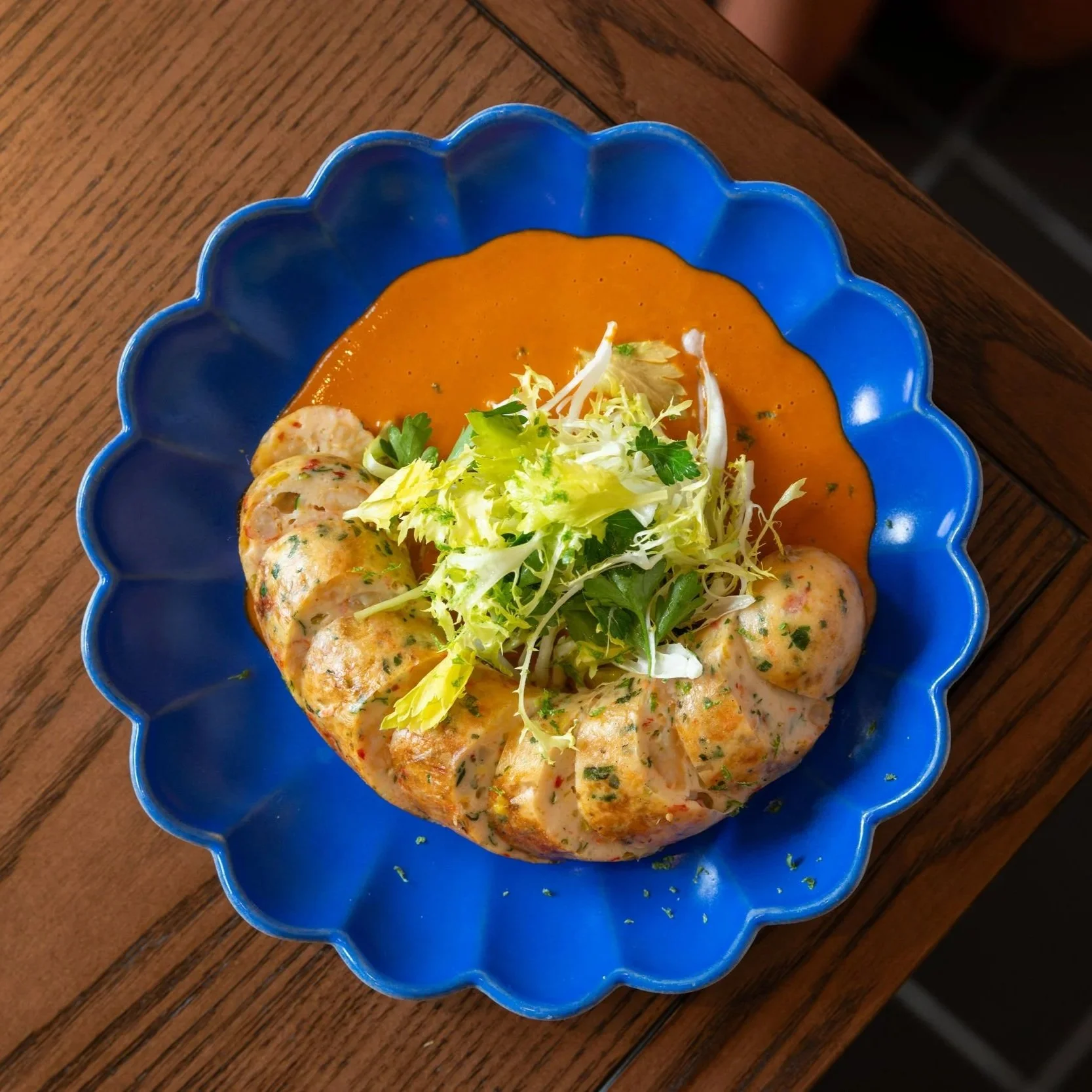
For Chef Michael Le of Perseid, creating dishes that fit within the restaurant's “French bistro through the eyes of Houston” concept means relying on some of the region’s beloved ingredients and techniques. His crawfish sausage does just that, using the flavors of the Gulf to blend French style with Houston’s barbecue legacy). “It’s not a traditional smoked sausage,” says Le. “In Texas, you think of snappy, meaty sausage, but here it is a boudin blanc. It’s tender, light, and flavorful. I don't think anyone in town is doing something like this.” His sausage starts with Gulf shrimp, which Le turns into a farce and blends with egg whites, heavy cream, onions, celery, green bell peppers, hot sauce, cayenne, and a Cajun seasoning blend. The mousseline-like mixture gets stuffed into hog casings, cooked sous vide, and seared. For service, the sausage is plated alongside a frisée salad and a Creole sauce made from the reserved shrimp shells. “For something to be as elegant and elevated as this sausage, but deliver this much flavor is something I'm really proud of,” he says. “It's also a good dish you can share with your friends.” Le is staying true to the French format of Perseid while finding ways to infuse a little bit of Texas into every bite, flexing his creativity one link at a time.
KHOI BBQ
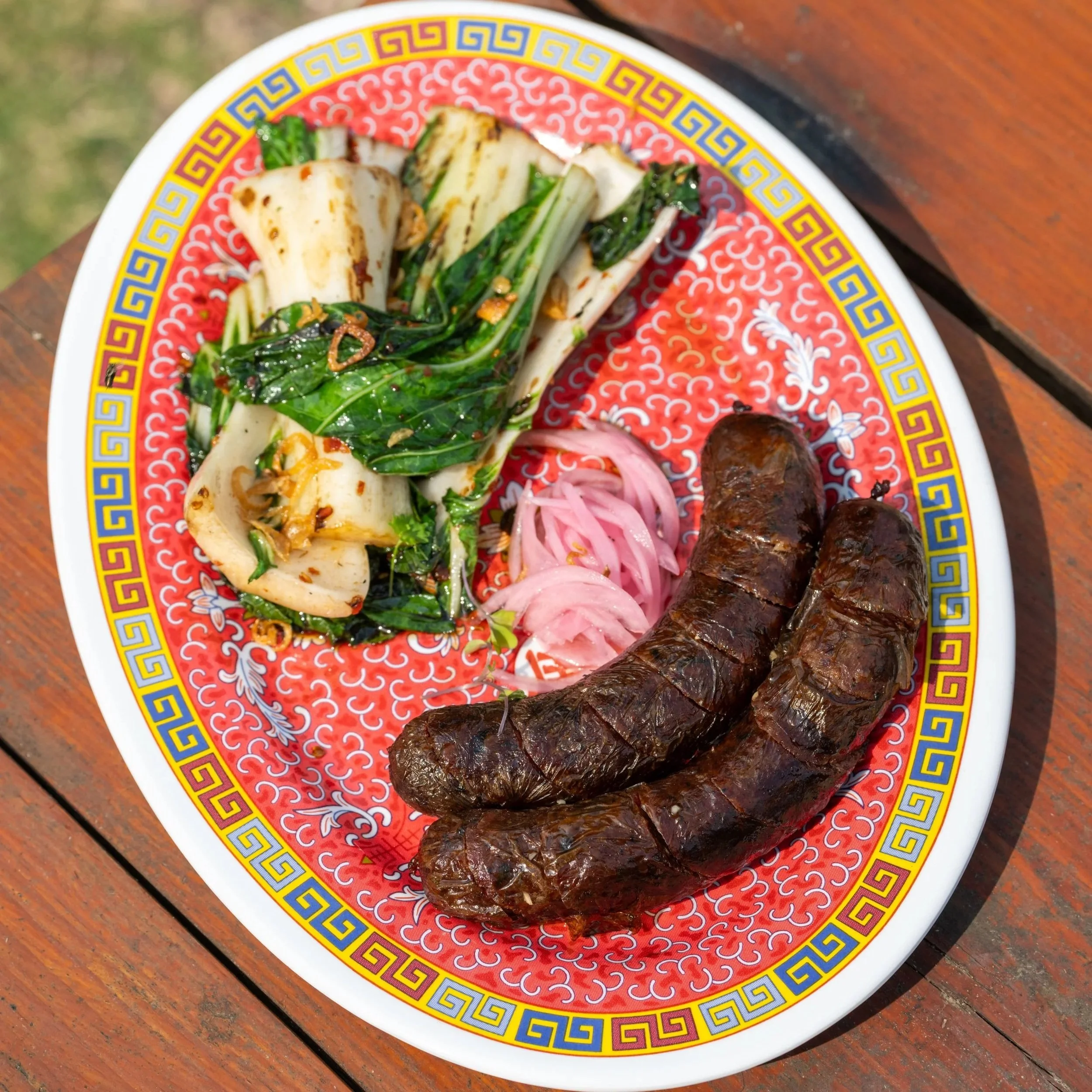
“Bò lá lốt is a ubiquitous Vietnamese dish,” says Pitmaster Don Nguyen. “If you go to Vietnam, to the streets of Saigon or Da Nang, where I am from, people are grilling it. I grew up eating it a lot.” So, when Nguyen’s Vietnamese-inspired barbecue pop-up, Khoi BBQ, started to take off, he decided to give bò llá lốt—traditionally grilled beef wrapped in lolot leaf—a central Texas makeover. “The purpose was to use the brisket trimmings,” he says. “A lot of barbecue joints use their trimmings for burgers. We wanted to do something different … I was thinking, how can I be creative?” He grinds the brisket trim and folds in lemongrass, fish sauce, lolot leaves, and honey before the meat is stuffed into hog casings. The sausage is then cold smoked for around six hours. While Vietnamese flavors are on full display, Nguyen is insistent on paying homage to historical Central Texas techniques, aiming for a “Polish-Czech-German-style” sausage that has plenty of smoke and “a really satisfying snap.” The bò lá lốt reflects Nguyen’s mission at large. “Doing barbecue gave me agency,” he says. “We ended up here because of war and randomly assigned Social Security numbers and ended up in Texas. This duality of identity. Not American or Vietnamese. This was my way of telling that story.”
TRUTH BBQ
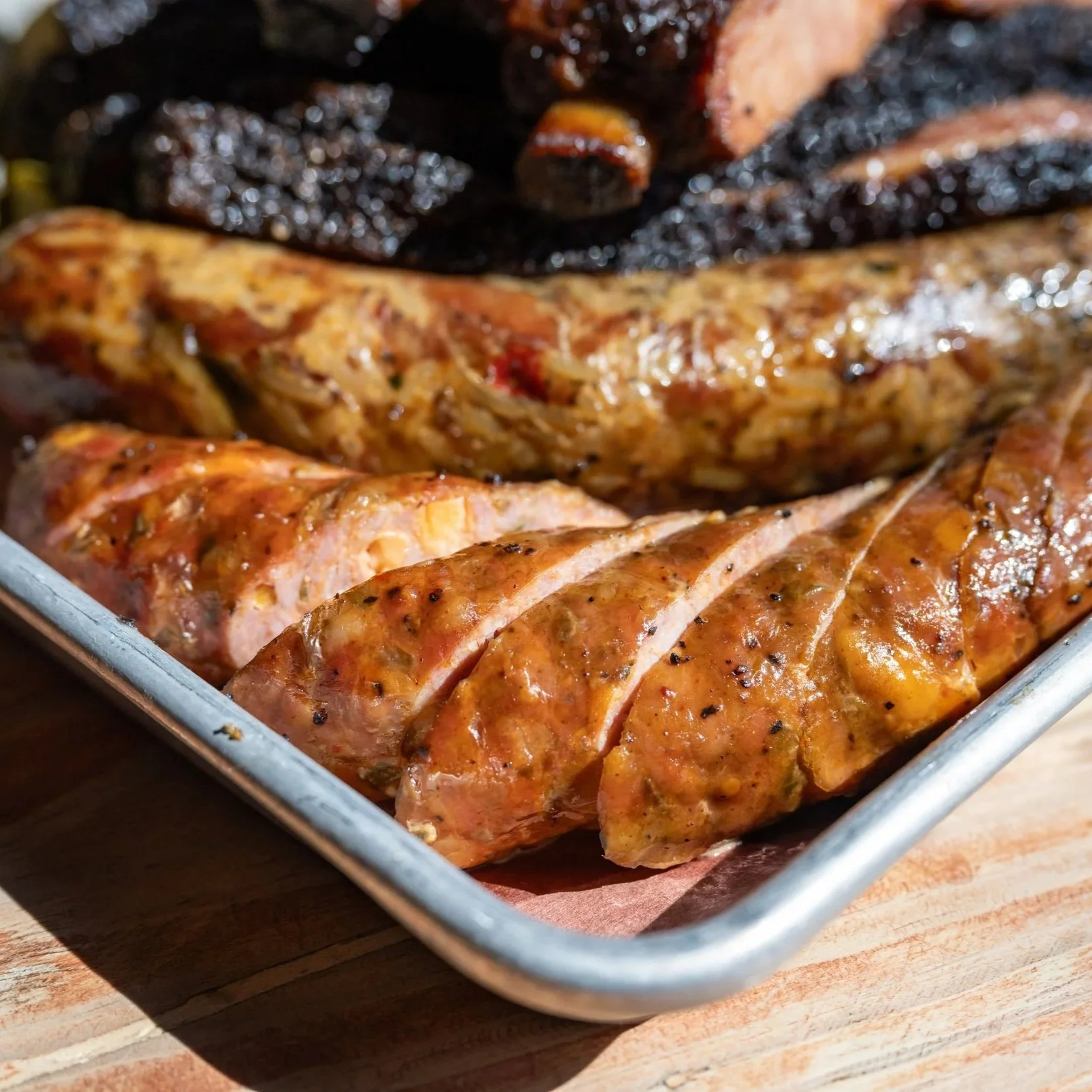
In the Gulf Coast region, boudin is a delicacy. “I grew up eating it,” says Pitmaster Leonard Botello IV. “Driving through [Louisiana] and eating boudin. My wife and I still do that. Hit all the little hole-in-the-wall spots. But they are iconic.” As common as it is, though, the popular Cajun sausage wasn’t the kind of dish you’d expect to find at a barbecue joint. When he started Truth BBQ in 2015, Botello wanted to stay true to Central Texas-style barbecue, building on the culinary traditions established back in Lockhart, Texas—those “old-school, iconic spots that have been around for generations.” His boudin, which repurposes leftover brisket, fits within the mold while bringing another culinary custom to the table. The smoked brisket is braised and then shredded, “Italian beef-style,” before it’s mixed with its own cooking liquid, the Cajun trinity, and Cajun spices. The hot beef mixture is combined with cooked rice, stuffed into a hog casing, and smoked. “You want texture and peppers and grains of rice and brisket,” says Botello. “When we started doing this, everyone was doing regular sausages. We just loved eating this, and we were trying to figure out a way to not waste cooked brisket that we spent 17 hours on.”
BAR-A-BBQ
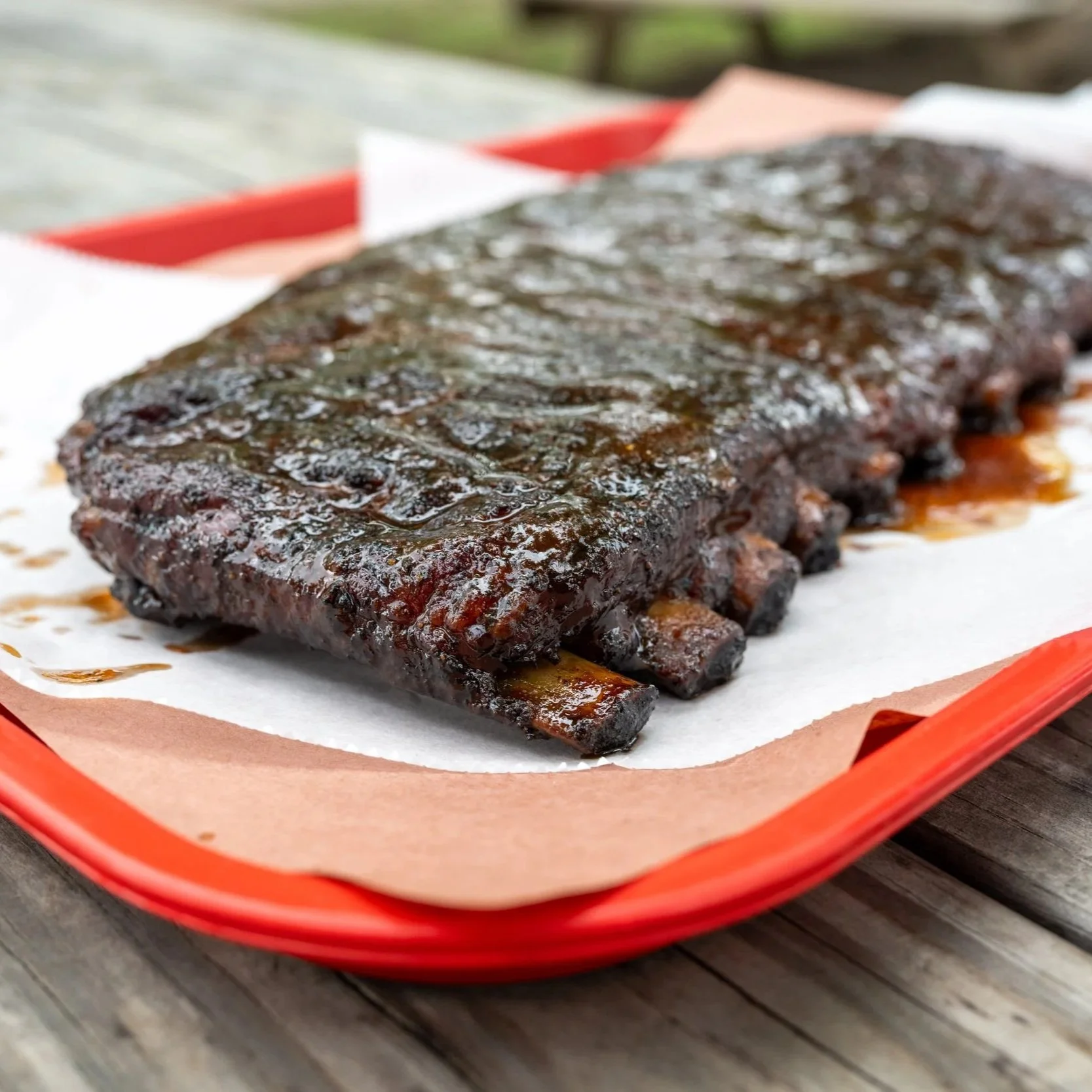
Striking the right balance between authenticity and individuality is important to Pitmaster Cooper Abercrombie and the barbecue he serves at Bar-A-BBQ in Montgomery, Texas. Abercrombie believes that “you can play with brisket to a certain degree,” but pork ribs are the cut that are “always a little different,” he says. For his take, Abercrombie trims down five-pound spare ribs and coats them in 16 mesh black pepper and a Lawry’s-like seasoned salt. They go on to the pit for about four to five hours at a higher heat until they reach a temperature of around 190° to 195°F. Cautious of overcooking, the ribs come off the heat a little early and are wrapped in foil to finish. The last touch is a cumin-forward glaze, which coats the ribs before they’re served to guests. “The glaze has got a good bit of acid to it, something to offset the post oak richness of the pork fat,” he says. It is “a thinner sauce, not gloopy or sticky. That's barbecue to us: A little bit of having to lick your fingers when you're done.” Abercrombie’s riff sticks to the essentials, but introduces punchy, bold flavors that capture his distinct point of view. As he sees it, “Texas barbecue right now is going through a huge blending of cultures that I think is awesome. At the same time, I want respect paid to the trinity: brisket, ribs, and sausage. But who am I to tell anyone they can't do something, or blend something? You can stay in the realm, but put your own regionality and spin on it. The places that have lines out the door have them because of that. Replicate our process and traditions, but pour your own flavor profile on it.”