At Audrey, Chef Sam Jett reimagines tomato gravy and sack sausage with the help of some old-school techniques.
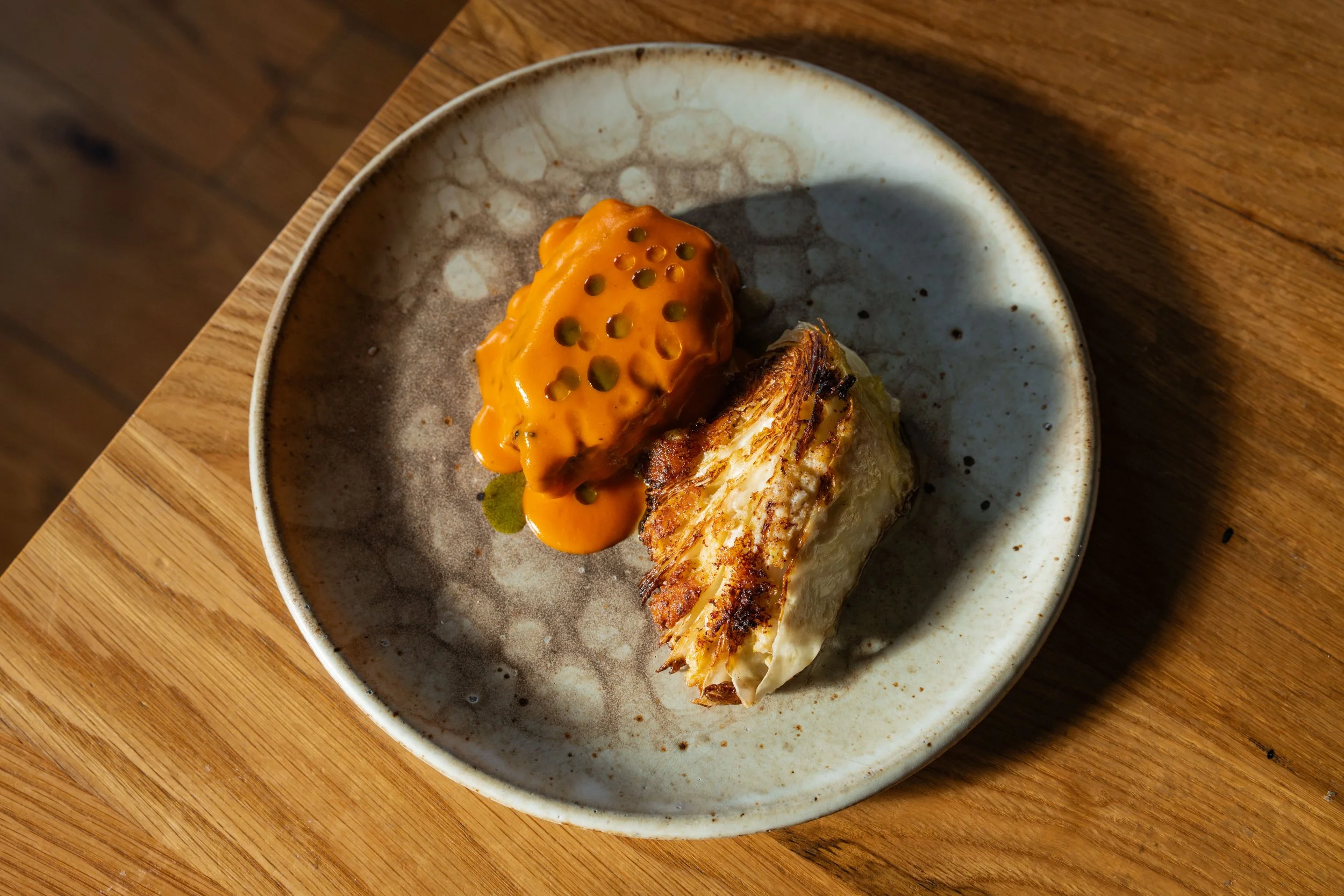
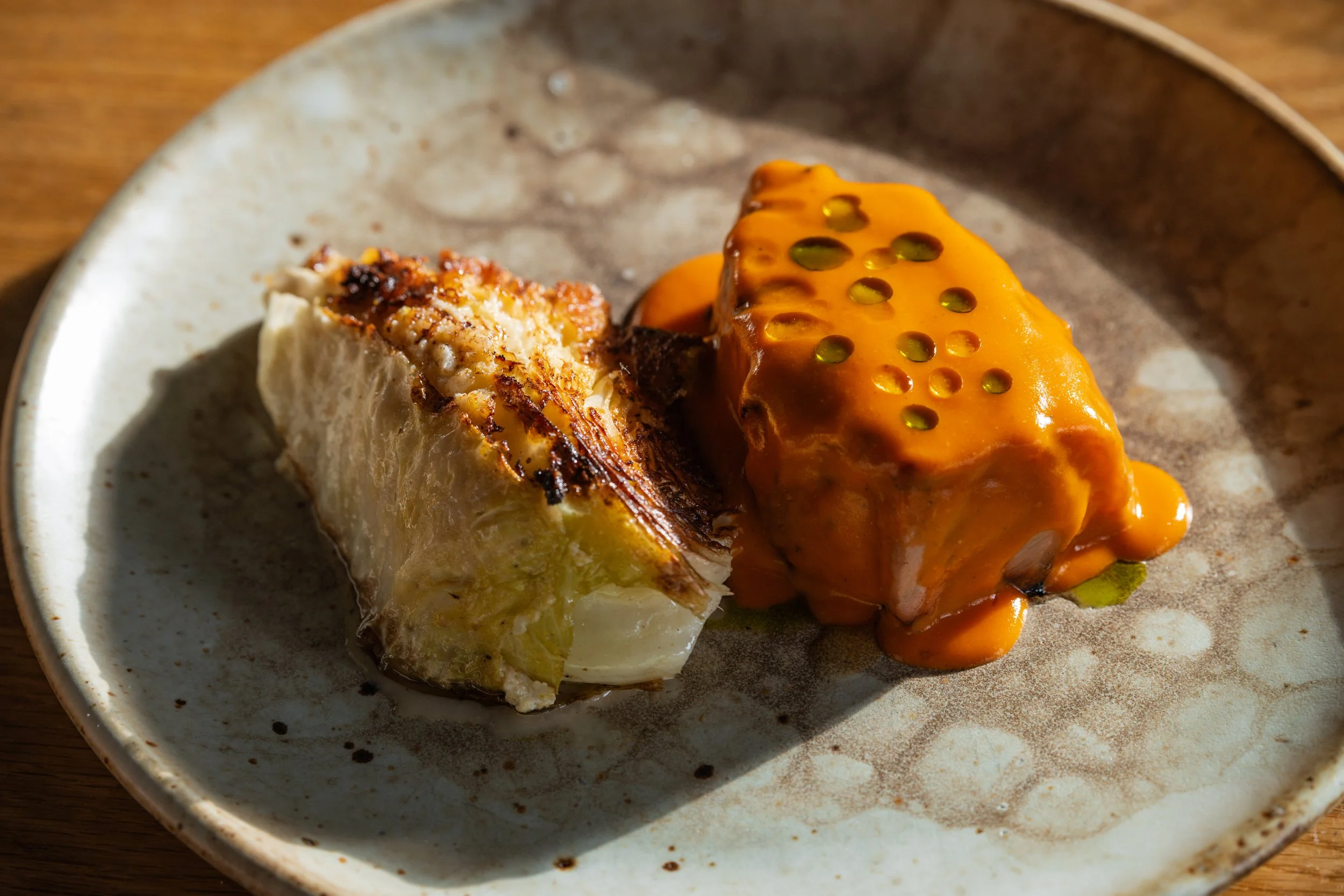
Grilled Pork Chop, Tomato Gravy, Pork-Stuffed Cabbage, Mashed Cabbage, Scallion OiL. |. Photos: Alexander Zeren
Since taking over as the executive chef at Audrey, Chef Sam Jett has doubled down on local sourcing, technique-driven cooking, and the restaurant's Appalachian focus.
This past fall, Jett was drawn to a classic combination while developing a new dish for the menu. "Tomato gravy and pork sausage are as old-school Appalachian as it gets," says Jett. Although it is "traditionally a breakfast thing," he wanted to intensify the flavors and make it his own.
But as the bounty of summer began to fade and the cold of winter settled in, Jett was equally inspired by what he saw coming through the door: cabbage. "We decided to riff off of a classic dish called chou farci, a French stuffed cabbage served with a tomato sauce," says Jett. "It seemed like a little match made in heaven. How do you make a redneck, hillbilly version of chou farci?"
GRILLED PORK CHOP
At Audrey, whole-animal butchery is the name of the game. Pigs coming in from Bear Creek Farm are hung for about four days before they are processed. Most cuts served at dinner are "high on the hog: shoulder, chop, and tenderloin," says Jett. The chop, used in this case, is aged for an additional seven days, creating a texture and flavor that is "a little more firm and concentrated." For service, the aged pork chop is brushed with lard and seasoned with salt, pepper, and coffee grounds before it is tempered over hickory embers and grilled over the flame. As it cooks, Jett sprays the chop with a housemade pork garum—pork fermented in koji and salt until it achieves a fish sauce-like flavor. "It gives it more richness and more Maillard [reaction] and gets a richer crisp on the exterior for sure."
TOMATO GRAVY
Although Jett, a Tennessee native, was unfamiliar with Appalachian tomato gravy until he started working at Husk in Nashville, he quickly developed a fondness for the sauce. Popular in parts of Kentucky and West Virginia, the gravy is traditionally made with cornmeal, tomatoes, and lard. While looking to preserve those flavors and ingredients, Jett also wanted to develop something that felt true to his ethos.
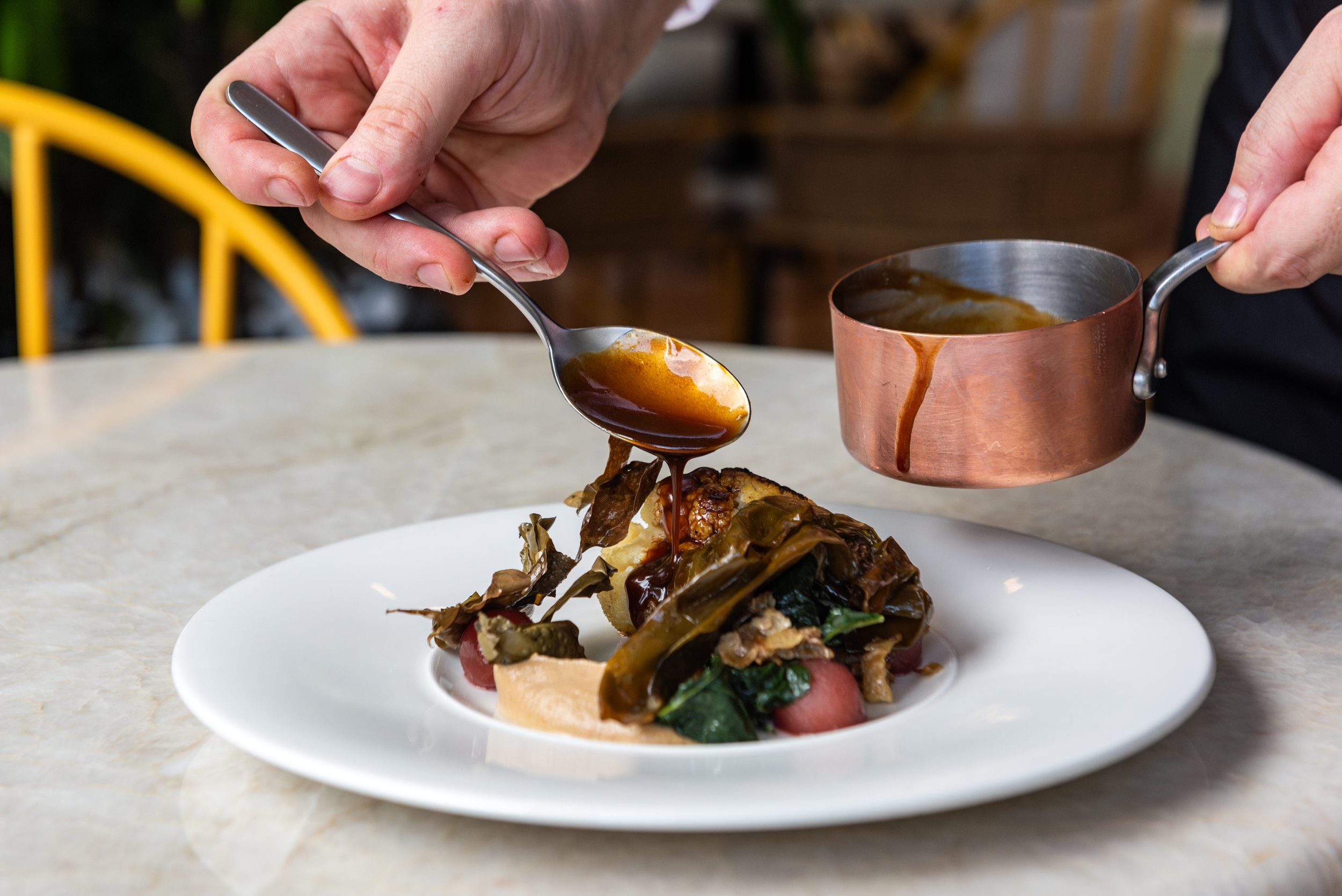
For his gravy, Jett cooks it "like a tomato sauce in Italy, when you fry in olive oil with garlic and onion," he says. "It's like that [but] with lard and cornmeal." To the simmering fat and corn, he adds jarred tomatoes—sourced from a local Amish community in West Tennessee—and cooks them until the mixture is fully reduced. Jett then incorporates more of the tomatoes, repeating the process several times until a concentrated gravy remains.
Traditionally, tomato gravy is thickened with milk and butter, but Jett's slow reduction process makes it possible for him to achieve a similar creaminess without the use of added dairy. In addition to the nostalgic texture, the gravy also provides a striking amount of acid to balance out the fatty, salty pork. As much as technique is central to the end result, Jett also credits the farmers: "Typically canned tomatoes get sweet; this is the opposite," he says. "It just gets super, super bright. I don't need to add a ton of acid to the sauce."
The gravy is finished with a touch of lemon juice, housemade hot sauce, and black pepper, and spooned generously over the pork.

Chef Sam Jett of Audrey
SACK SAUSAGE
After processing the whole pig, additional off-cuts and scraps are made into a variety of sausages at the restaurant. To complement the chop and incorporate both Appalachian tradition and the energy of chou farci, Jett and his team make a sack sausage. Similar to an American breakfast sausage, sack sausage derives its name from Appalachian technique. "Back in the 1700s, they didn't have readily available casings all the time," says Jett. "They would stuff [ground pork] in muslin cloth or sacks and hang them in the smokehouse to dry. Sitting at whatever uncontrolled temperature, it would develop a funk, or ferment." At Audrey, he simulates that process in a more modern way. Inspired by a John Egerton recipe, Jett and his butcher, Chef Christian Jacobi, make pork sausage with dried sage and pepper flakes and stuff the mixture in muslin cloth. The sausage is dried for three days and then smoked for another three days, alternating between the smoker and the fridge in 12-hour increments and developing "a really beautiful smoke flavor, and sour and funky umami," says Jett.
STUFFED CABBAGE
Eager to make the most of an abundant seasonal ingredient, Jett lightly steams Caraflex cabbage until the layers can be pulled apart. Separately, he turns the sack sausage into a farce by combining the meat with buttermilk, cornmeal, and rice. "With chou farci you usually dunk [cabbage] in water and peel the layers," says Jett. "For us we were able to figure out a way to quarter the cabbage and pipe the farce in between the layers instead." The stuffed cabbage is steamed once more to cook through and set.
CABBAGE PURÉE
Similar to the way he transforms pork scraps into sausage, Jett also makes use of the cabbage scraps. The cores and leftover leaves are cooked down in a hefty amount of Amish butter and puréed into a rich, creamy sauce, which sits underneath the pork and soaks up the flavors of the gravy.
SCALLION AND SWEETBAY MAGNOLIA OILS
For a final burst of color and flavor, Jett makes use of two distinct oils. The first, scallion oil, is made by blending scallions and neutral oil at high speed until the mixture reaches a temperature of 140°F, at which point he strains the liquid through a coffee filter over ice. The sweetbay magnolia oil is processed differently. Jett also forages for the ingredient himself. "I have a few good patches here around town," he says. Jett breaks up the sweetbay magnolia wood as much as possible before adding it to a hotel pan with neutral oil. He cooks the wood oil at 140°F for four hours in a combi oven before the mixture is strained and reserved. Both oils are playfully dotted over the tomato gravy, adding herbal, allium notes to a hearty seasonal dish inspired, in equal measure, by Appalachian and French traditions.