On The Plate: Momos on the Move
At Tapori, Chef Suresh Sundas reimagines the Tibetan and Nepalese dumpling for the D.C. crowd.
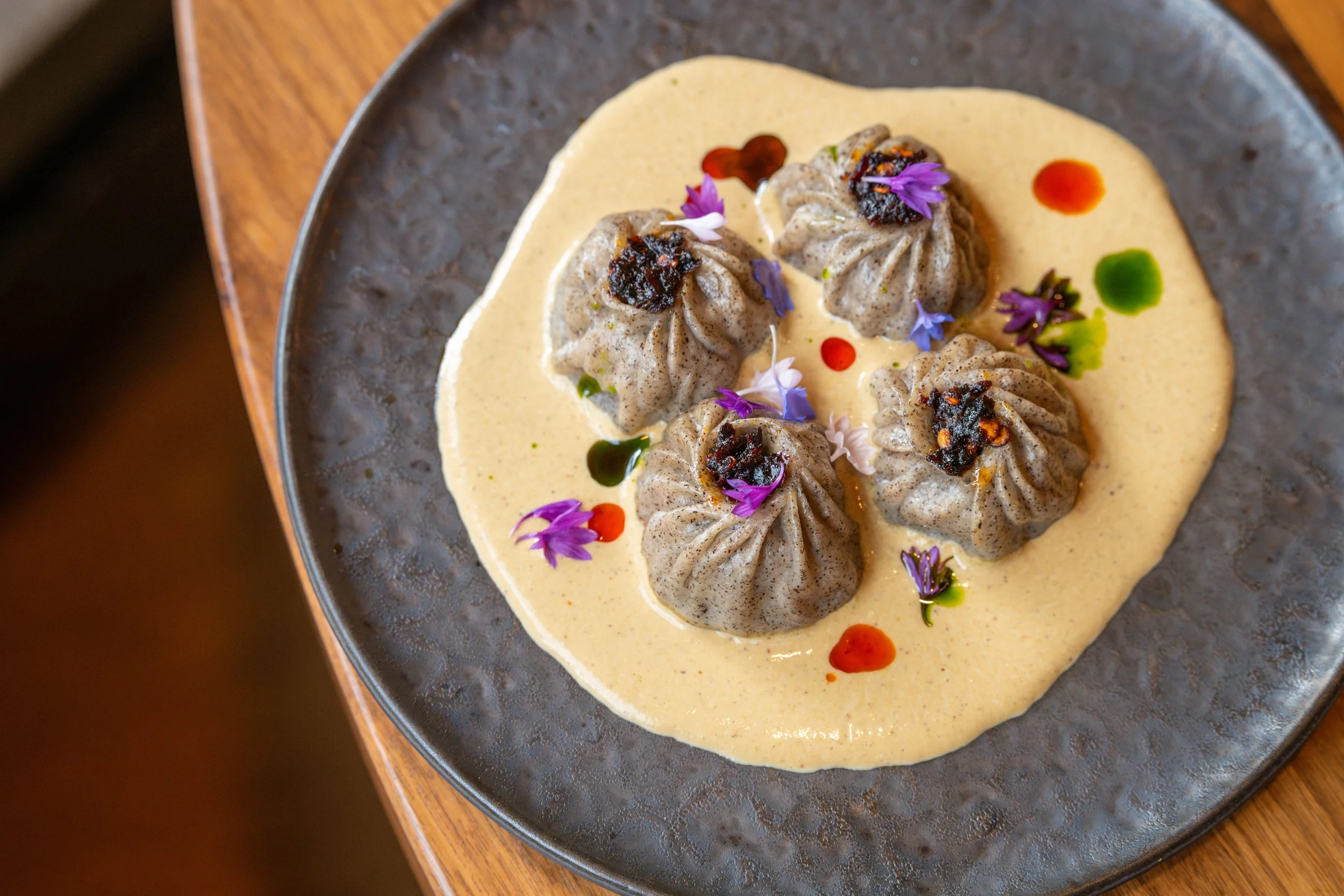
Wagyu Buckwheat Momos, Peanut-Sesame-Soy Bean Chutney, Red Chile Chutney, Green Oil, Red Oil, Flowers | Photos: Alexander Zeren
Although he is originally from Nepal, Chef Suresh Sundas built a career in hospitality cooking Indian food at restaurants like Tashan in Philadelphia, Pennsylvania, and Rasika in Washington, D.C. He opened his first restaurant, Daru, in 2022, and followed it up with a second, Tapori, in 2025—along with his business partners, Restaurateurs Dante Datta and Calvin Kim. While Daru gained a dedicated local following for Sundas’ original Indian-inspired dishes, Tapori dives into tradition. The menu covers a range of regional cuisines from the Indian subcontinent, focusing on street foods in particular. For Sundas, however, it also presented an opportunity to bring his Nepalese roots into the kitchen.
In the city of Darjeeling, in Northeastern India’s West Bengal state—not far from where Sundas was born and raised—residents can frequently be heard speaking Nepali and digging into dishes that resemble Nepalese cuisine. To bring this region to life, Sundas turned to a familiar, hearty, and beloved Nepali street food: the momo. The dish itself, which traces its origins to Tibet, traditionally boasts a filling of minced water buffalo, scallions, and Thai green chiles, which is wrapped in an all-purpose flour dough, steamed, and coated in a cold sesame-soybean chutney. For his riff at Tapori, though, Sundas is pushing the boundaries of the format with an indulgent twist.
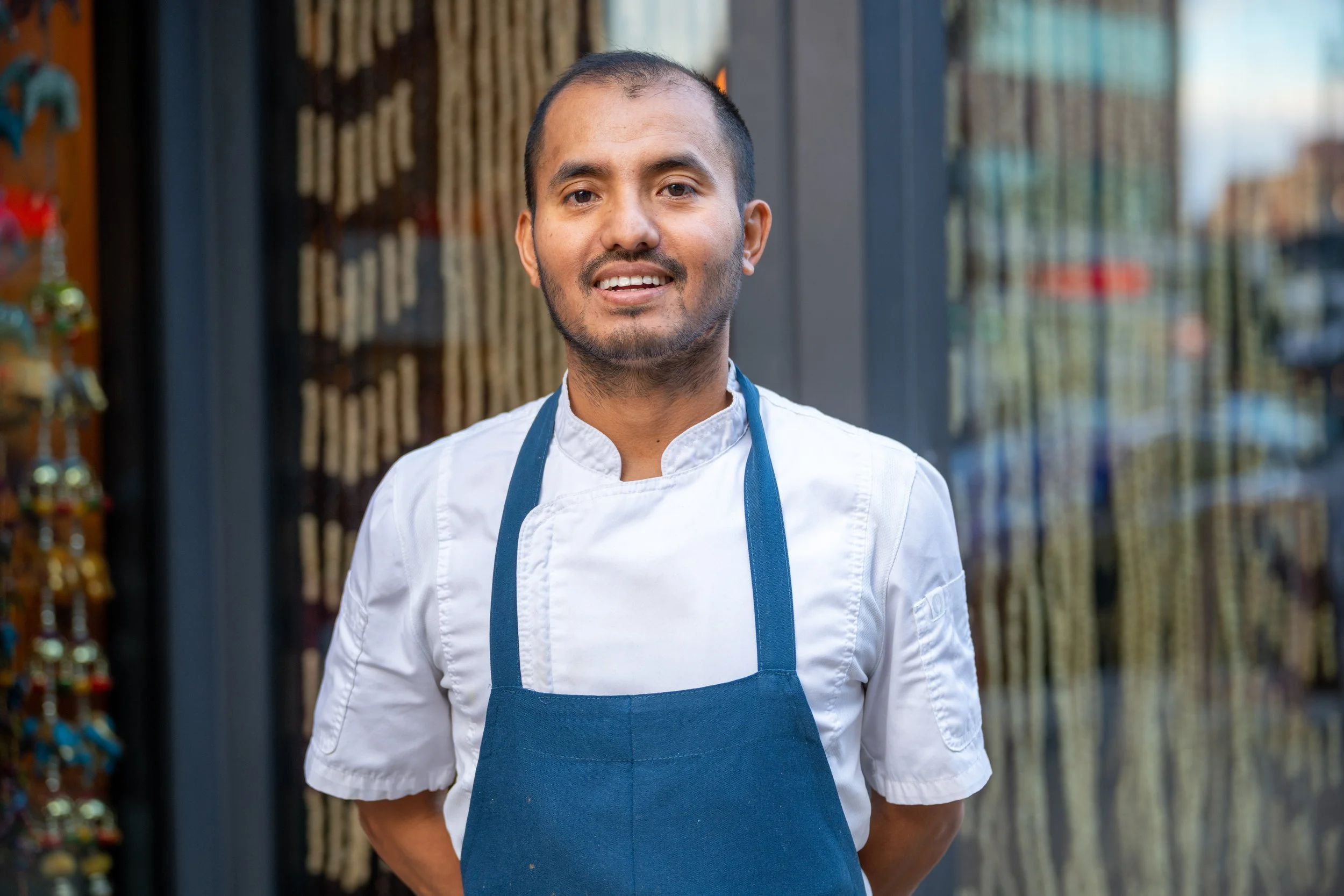
Chef Suresh Sundas
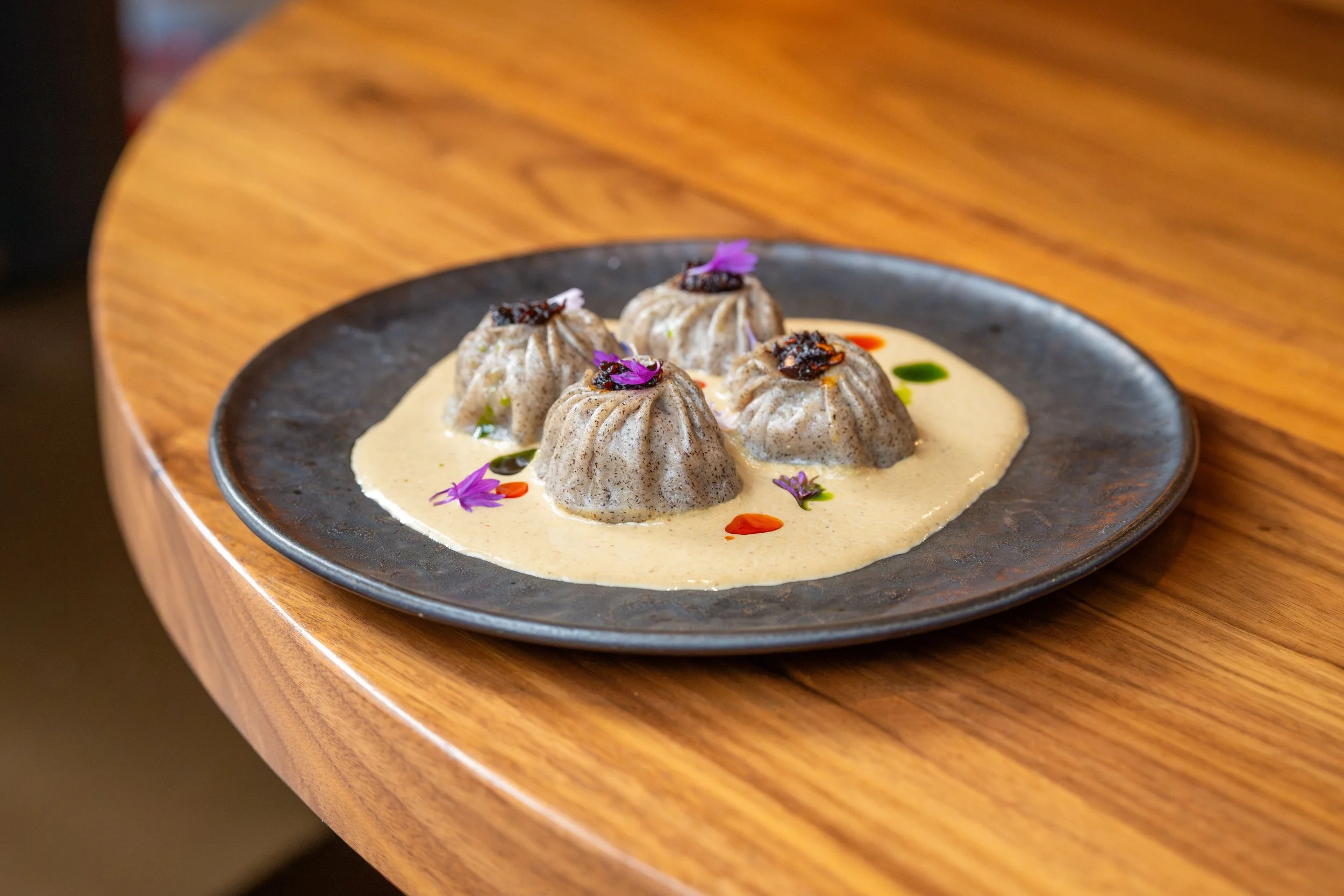
Wagyu Momos
Wagyu Buckwheat Momos
Even though beef is an uncommon protein in Nepal and Northeastern India due to religious beliefs and a lack of access, Sundas was drawn to its fatty, meaty flavor as an anchor for his take on momos—not to mention the preferences of American palates. His filling combines unctuous, ground wagyu beef with scallions, red onions, garlic, ginger, dark soy sauce, and cilantro. The meat mixture is then stuffed into buckwheat dumpling wrappers, which are made in-house. “We decided to use buckwheat flour because beef is a fatty meat and all of it is absorbed by the buckwheat,” says Sundas. Using a 3:1 ratio of buckwheat to all-purpose flour—since there “wasn’t enough stretch from the buckwheat” alone—Sundas combines the dry ingredients with eggs and salt, portions the dough, and rolls them into balls. The momos are then stuffed and folded into smaller circular dumplings, which Sundas prefers to the alternative moon shape.
Sesame-Peanut-Soy Chutney
Like the version he ate growing up, Sundas’ wagyu momos are bathed in a cold, savory, nutty chutney. To make the silky, smooth sauce, he combines sesame, soybeans, and peanuts with ginger, Thai green chiles, and red chiles. Sundas also incorporates timur, a fragrant, citrusy Nepalese sibling to the far more common Sichuan peppercorn, and dried plum powder, which brings “a unique type of acidity,” says Sundas. “Different from lemon.”
Dried Chile-Garlic Chutney
In addition to the smooth, rich nut-based chutney, Sundas also tops each momo with a red chile chutney. Roasted dried chiles, roasted garlic, and oil are combined with more timur and dried plum powder. “It brings spice, crunch, [and] some garlicky flavor to it,” adds Sundas.
Flowers and Oils
For a last hit of subtle flavor, the dish is dotted with a cilantro- and spinach-based green oil and a Kashmiri chile-based red oil. A final sprinkling of edible flowers provides charming color and visual variance.
Sundas’ momos draw on his past and present but speak to an even longer legacy. “If any dish that comes from hundreds of years ago will carry forward another hundred, it's this one: the momo,” he says. “It carries my culture and cuisine. To be honest, to do a chicken curry or a dal, some people don't like it. But the dumpling, everyone loves it.”