Next Step, Wine
Celebrated D.C. restaurants are upping the ante, investing in their wine programs with the help of some determined sommeliers.
Illustration: Rachel Krohn
If success is tied to how well you leverage momentum, then building on accolades and public attention is key to finding longevity in the hospitality industry. Reaching higher and farther, however, is easier said than done. Across the country, chefs and restaurateurs are constantly thinking about ways to improve their business and create efficiencies without compromising quality or value. In Washington, D.C., two notable restaurants have found a way to draw attention, build on their reputations, and keep guests engaged by making dedicated and deliberate investments into their wine programs.
In 2021, less than a year after opening, Jônt received two Michelin stars. The restaurant’s meteoric and hard-earned success brought with it a new set of expectations. While Chef Ryan Ratino and his team continued to push from the culinary side, General Manager Andrew Elder and Wine Director Gabriel Corbett saw an opportunity. “We always knew good wine with good food, but the bottle list was pretty small. There were only 75 or 80 wines on the list,” says Corbett. “We started talking about going for a Wine Spectator Best of Award of Excellence. We got approval from ownership to start building out the wine list.”
Corbett and Elder got to work figuring out what the identity of Jônt’s wine program would be going forward. Before they took on the task, the program leaned towards Burgundy and Bordeaux, but lacked a clear vision. To get a sense of what worked (and what didn’t), Corbett and Elder started sourcing wines from all over the world, casting a wide net and “seeing what would sell,” says Corbett.
That initial international approach gave them a chance to test the limits and reach of guests’ preferences while workshoping pairings for Ratino’s French- and Japanese-inflected food. It also allowed them to “hone in on the profitability side as well.” One strategy Corbett implemented to save cost and stay a step ahead was to place orders and sort out pairings months in advance, when possible. “When it comes to allocations, if I have extra money in the budget I will buy stuff for the next season,” he says. That way “we can make commitments now and get a better deal which will help with the bottom line as well.”
There were “no major overhauls,” says Corbett, but Champagne and Burgundy sales outpaced nearly everything else. As a result, the program—which boasts around 350 to 370 SKUs at any given time—splits its focus into thirds: “a third Champagne, a third red and white Burgundy, and a third everything else.”
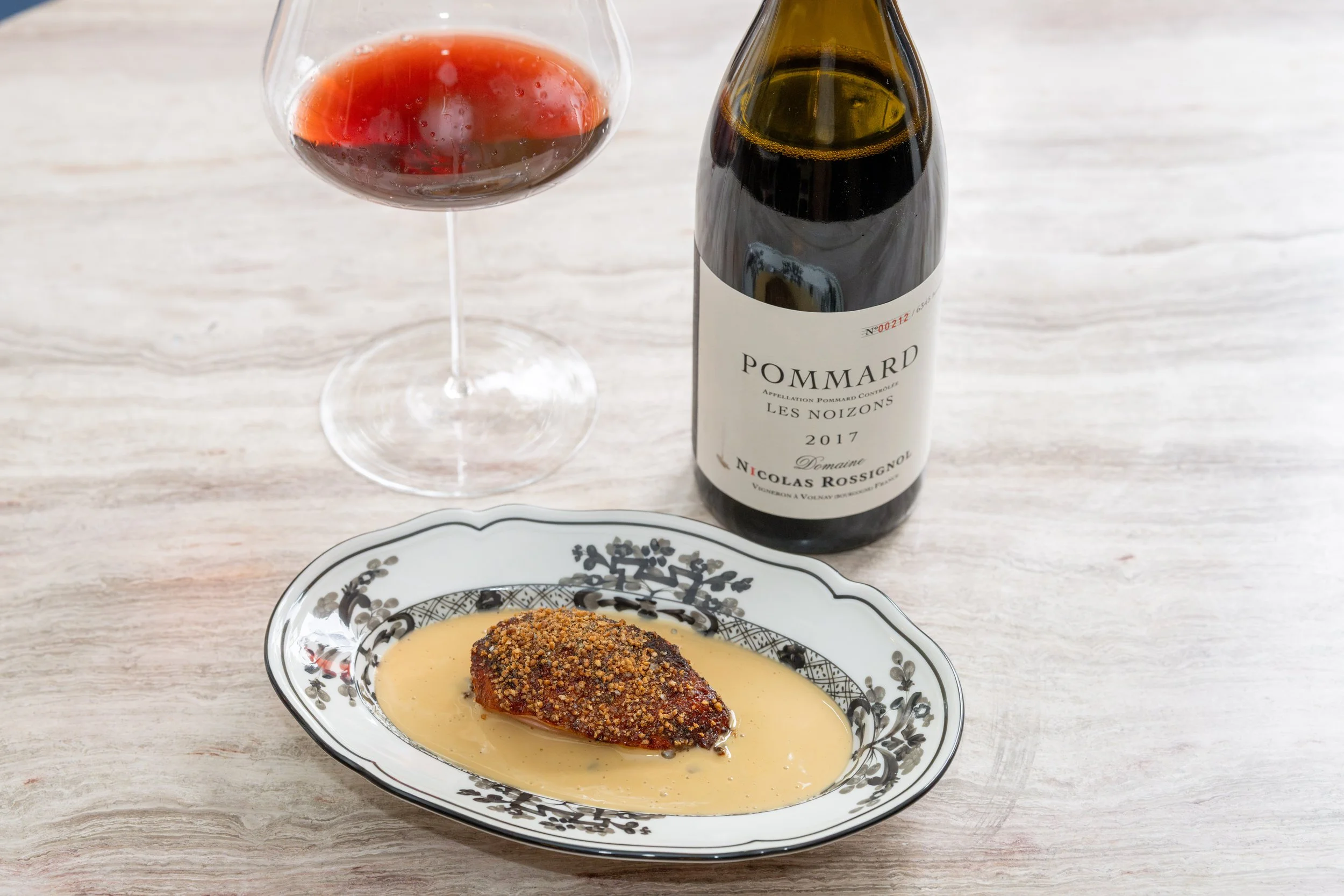
Stuffed Quail, Koji-Honey Glaze, Chestnut XO Sauce, Foie Gras-Truffle Sauce Vin Jaune paired with Pinot Noir, Nicolas Rossignol, Pommard, Burgundy, France, 2017 at Jont | Photos: Alexander Zeren
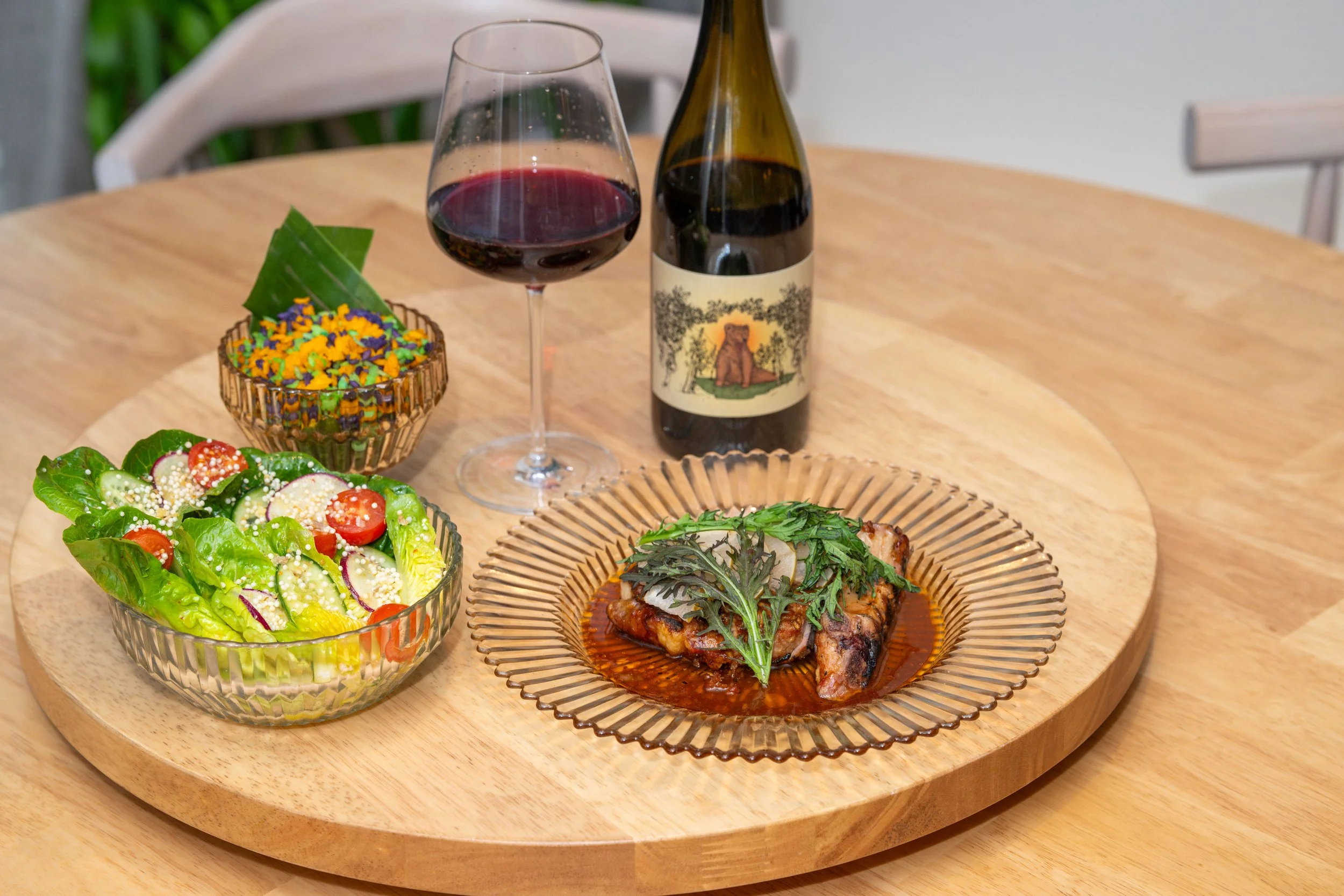
(1) Lemongrass-Marinated Pork Chop, Asian Pears, XO Jus; (2) Coconut Milk Steamed Rice, Durian, Pandan, Ube; (3) Gem Salad, Cucumbers, Radish, Cherry Tomatoes, Mango Nước Chấm paired with Grenache/Mourvedre, Brij Wines, Oso Rouge, San Luis Obispo Coast, California, 2024 at Moon Rabbit
Sommelier Amanda Pedrick, over at Chef Kevin Tien’s Moon Rabbit, is on a similar path. After about a year of working as a server at the lauded Vietnamese-inspired fine dining restaurant, Pedrick stepped up to help expand and refine the wine program alongside Director of Operations Andrew Limberg.
“We never wanted to overshadow our cocktail program,” says Pedrick, pointing to the recognition Bartender Thi Nguyen has received from organizations like Michelin and Punch. Competing with the food, cocktails, and desserts—from Pastry Chef Susan Bae—was never the goal. But, eventually, guests began requesting wine pairings and a more expansive list.
Since 2024, Pedrick and Limberg have fostered the growth of the wine program while staying true to the restaurant’s identity. “We were always leaning in a natural wine direction,” says Pedrick. “We use purveyors that are intentional and sustainable. It’s in that vein of having almost like a familial aspect behind them. A lot of wines we have right now are from a lot of husband-and-wife operated businesses. I don't know if that’s a coincidence or just where it is.”
While growing pains are unavoidable, Pedrick has focused on “learning about the finances behind” the program, building relationships with distributors, and zeroing in on wines that pair best with Tien’s nuanced, Southeast Asian flavors. But right now, the focus is more on improving service and educating her team. Along with table side pours and more dynamic bottle presentation, Pedrick is “getting staff members trained and able to talk about our offerings and why they work.”
Figuring out best practices takes time, though. For Corbett, growing the wine program into what it is now—with three tiers of pairing options, as well as an N/A option, that now make up around sixty percent of beverage sales—took a bit of experimentation. “I would say, first of all, a piece of advice: make sure you are within budget, don't go buck wild about things you get really excited about but may not work,” he says. “Make sure you understand the identity of the restaurant.”
Like Pedrick, Corbett also points to the importance of education as a tool to help bring structure and success to a restaurant’s wine program. “Be present on the floor and with your staff when training them as well. I love staff education. Getting into the nitty gritty or chemistry is not as important as the story of the wine. It's one of the most important beverages in the history of the world. Every bottle has this connection and it's really something special.”
With a noted decline in drinking across the country, justifying a wine program can be tough. For restaurants with notoriety and accolades, it's an opportunity for success as much as it is for failure. “With all the media and awards we have been receiving, there is a slight pressure,” says Pedrick. “How do we continue to do this? What is next? What will we expand into? I’m asking those questions.”