Wine professionals are satisfying the city’s red wine cravings despite the Miami heat.

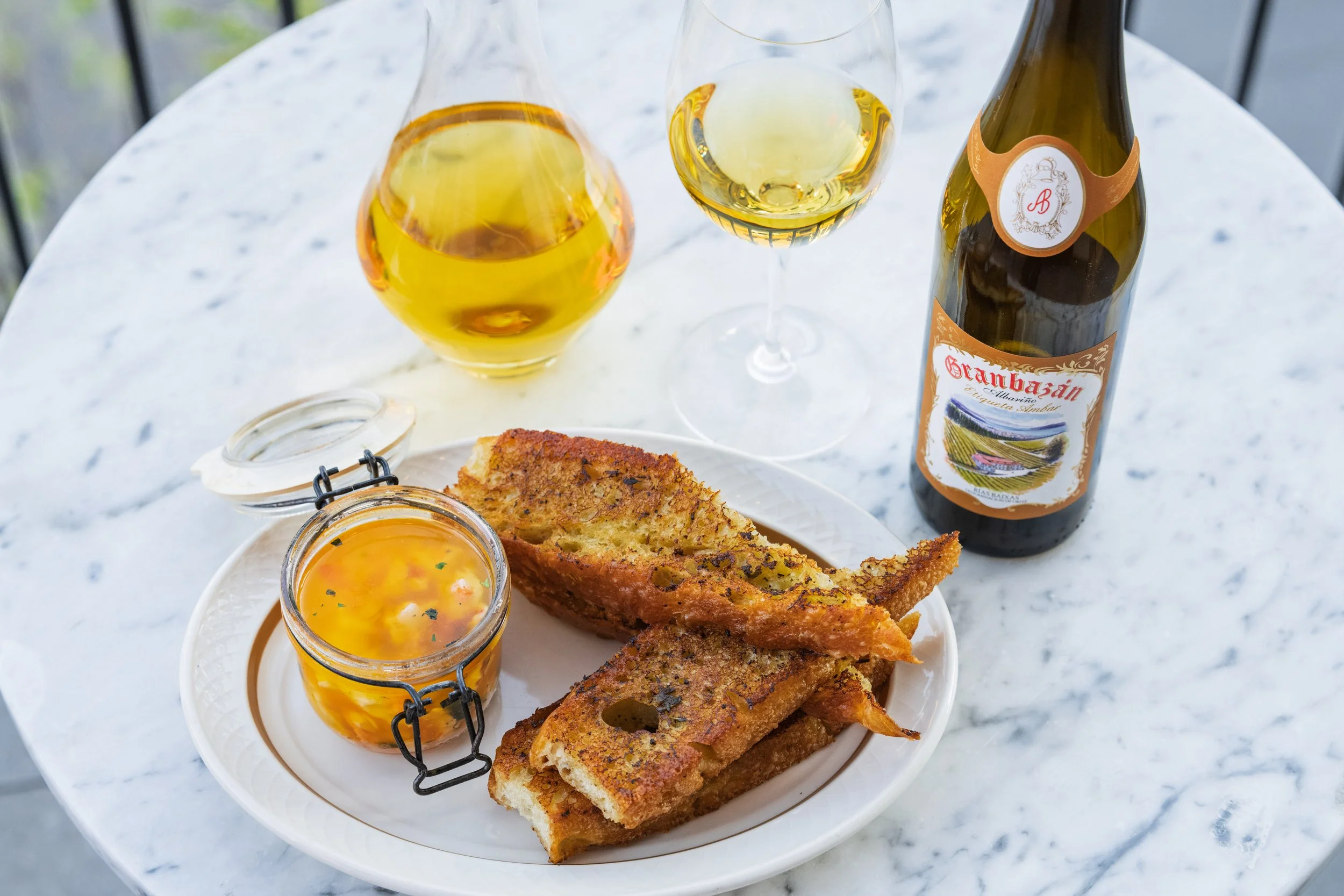
Lardo Crostini, Spiced Honey, Thyme, Fresno Chiles paired with Corvina/Rondinella, Corte Gardoni, “Le Fontane Bardolino,” Veneto, Italy, 2021 at Water Lion | Photos: Will Blunt and Alexander Zeren
Despite the sometimes brutal heat and year-round humidity, Miami is, surprisingly, a red wine town. Diners typically look for large, familiar producers; big, bold wines from the Napa Valley, Chile, and Argentina; as well as old world wines from France, Spain, and Italy. For sommeliers and wine professionals in the city, these preferences may boost their check averages, but they also pose an unavoidable challenge, especially when certain dishes are lighter and not a supportive companion for heavy red wines.
While many drinkers and diners across the country swing for robust Californian and South American reds, Miami’s local community has been particularly committed to the genre. Unsurprisingly, guests “want to drink what they like,” says Beverage Director Kaori Yoshioka of Shingo. And with a strong influence from Latin American culture across the city, people are ordering “malbec, tempranillo, and big bold California cabernet,” adds Yoshioka. Sommelier Mika Nasako agrees. “Even at a Japanese restaurant we offer a couple Rioja wines and Napa cabs to satisfy those guests,” she says. There is a wide range of wines and sakes on the list at Hiden, but Nasako always keeps familiar, recognizable favorites in her rotation.
Red wines can be an abrasive partner to the delicate flavors of raw fish, but, despite the climate and the cuisine, sommeliers like Yoshioka and Nasako are using them as a way to build rapport and trust with customers. “In Japan, if you go to a sushi restaurant, you don't see a red wine,” says Yoshioka, but “I always have red wine in the pairings because I want to make it interesting.” She’s taking aim at guest’s expectations while making sure there’s something for everyone by pairing dishes like unagi kabayaki with a 2022 Domaine Faiveley pinot noir. It is also why Nasako offers otoro nigiri with a 2021 Hirsch Vineyards pinot noir: “I wanted to use red wine more for our guests and our clientele,” she says.
For Sommelier Joshua Gosline, some of that demand for big Napa cabernets “might be from another side of Miami: people who are purchasing something just for the price and the familiarity and the name to impress people.” Before joining the team at Water Lion, Gosline saw this firsthand while working at restaurants across the city. “I think Miami has never classically been a wine town. It's always been a cocktail town. So, there’s this assumption that the average Miamian is only drinking big bold reds because they don't know more, or places haven't offered more,” he says, but that’s not necessarily the case.
While chefs, servers, and sommeliers “drive your experience” in places like New York, according to Sommelier Marco Adamo, “here in Miami, people want what they want. They almost want to dictate [their] experience.” To get around these constraints, Adamo has built a wine list at Walrus Rodeo that directs people towards bottles outside of their comfort zone. “The food we do requires you to drink on the smoother side,” says Adamo. You won’t find much cabernet sauvignon on the list. You also won’t typically see wines from Bordeaux or Napa, or even California. Instead, Adamo focuses on “Barolo and Barbaresco, that kind of bold.”
Gosline is doing something similar, pouring a selection of reds that satisfy those looking for something big and bold without relying on bottles of malbec or Napa cab. “We don't give the average Miamian enough credit for being open-minded. People are open to being steered in a new direction if you give them a reason to,” he says. At Water Lion, “we're an all by-the-glass list. I can try people on things and go in a completely different direction.”
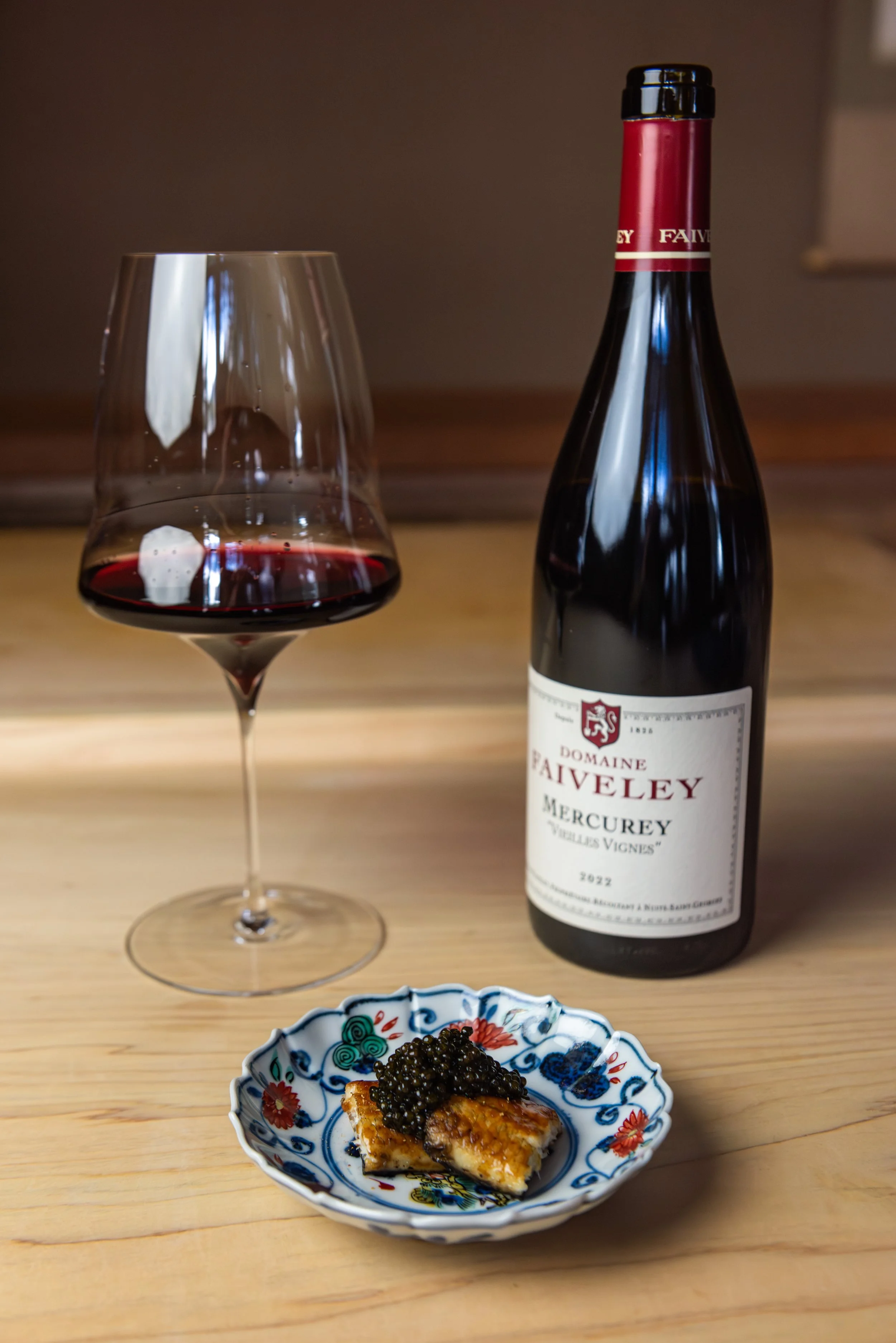
Unagi Kabayaki and Kaluga Caivar paired with Pinot Noir, Domaine Faiveley, Mercurey Vieilles Vignes, Bourgogne, France, 2022 at Shingo
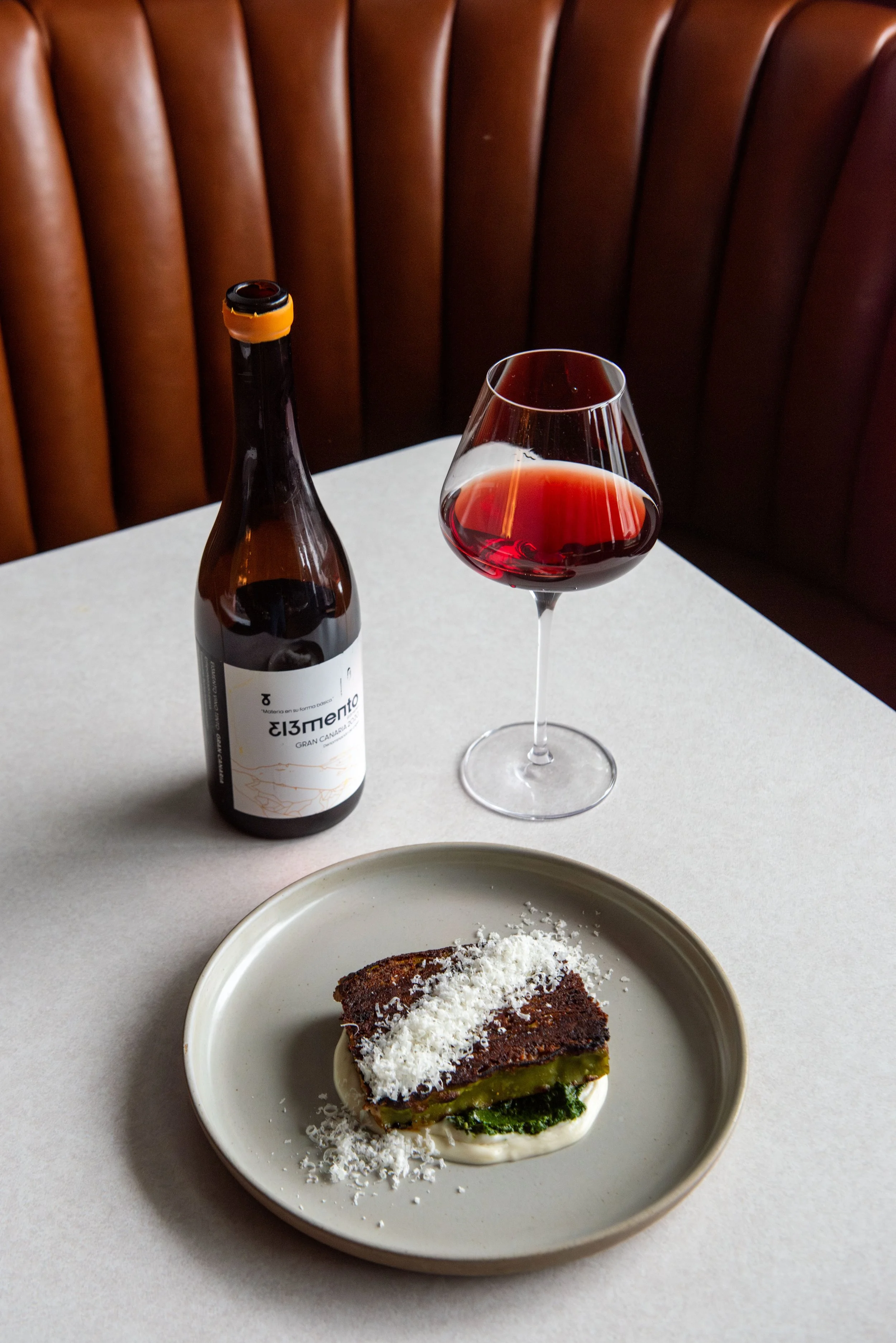
Mustard Green Lasagna, Pesto, Lamb Ragu, Grana Padano, Stracchino paired with Listan Negro, Bien de Altura, “El3mento,” Canary Islands, Spain, 2020 At Walrus Rodeo

Otoro Nigiri paired with Pinot Noir, Hirsch Vineyards, San Andreas Fault, Sonoma Coast, California, 2021 at HidEN
That under-the-radar open-mindedness is gaining traction, thanks in large part to the same growing multicultural, global community that has traditionally leaned towards more conventional pairings. “Miami has diverse cuisine now,” says Nasako. There is “French, Italian, Japanese, Korean, and Chinese, and a growing interest in food and wine pairings. I think it's because of many factors, [but] during the pandemic many people moved to the city. I still get people who only consume heavy wine in my restaurant, but they are open to trying new wines” as well.
This shift presents an opportunity for sommeliers to focus on wines that have compelling stories, and are well-suited for both the climate and the clientele. Certain selections in Miami’s warm weather can fulfill the needs of both a dish and a diner. “When you consider reds, light-bodied chilled reds are perfect here,” says Gosline. “It makes the most sense with our humidity. A chilled white is good, but once it warms up that is a different story. This is where we like to push skin contact and light-bodied reds” like the 2021 Corte Gardoni corvina and rondinella blend which he pairs with lardo crostinis, spiced honey, thyme, and Fresno chiles.
Capturing the attention of guests, and pulling at their heartstrings, can oftentimes lead them to open up their palate. For Adamo, sharing his experience of working with his friend, Carmelo Peña Santana, at Bien de Altura in the Canary Islands has been a great way to articulate to guests the significance of the wine in their glass, and tell them more about producers. “Every bottle on the menu is sentimental. As soon as I look at the label, there is always a memory,” he says. Connecting the the 2020 Bien de Altura listán negro “with my perspective and the past, was a perfect match” for Walrus Rodeo’s mustard green lasagna with lamb ragù, pesto, Grana Padano, and stracchino.
There are, however, always obstacles. “Learning about the intricacies of Burgundy or seeing a cabernet over and over again, and not knowing you can steer away from there, can be either boring or intimidating” for guests, says Gosline. “You gain more wine geeks and enthusiasts when you show them something new or different. [It] makes it more democratic.” Staying receptive, and encouraging guests to do the same, can sometimes help move the needle.
And while there will always be inflexible guests, Adamo says that’s part of the fun. It is “a challenge, yes, [but] a challenge I take with pride. A personal mission. That's what we do.” By continuing to educate as much as they can and supporting more local, independent distributors, there is room for Miami sommeliers to “build this community here in Miami,” says Adamo. They are “sharing wine and knowledge and stories, and going from there. One place after another.”