Sommelier Eric Moorer opens up about his dedicated domestic wine program
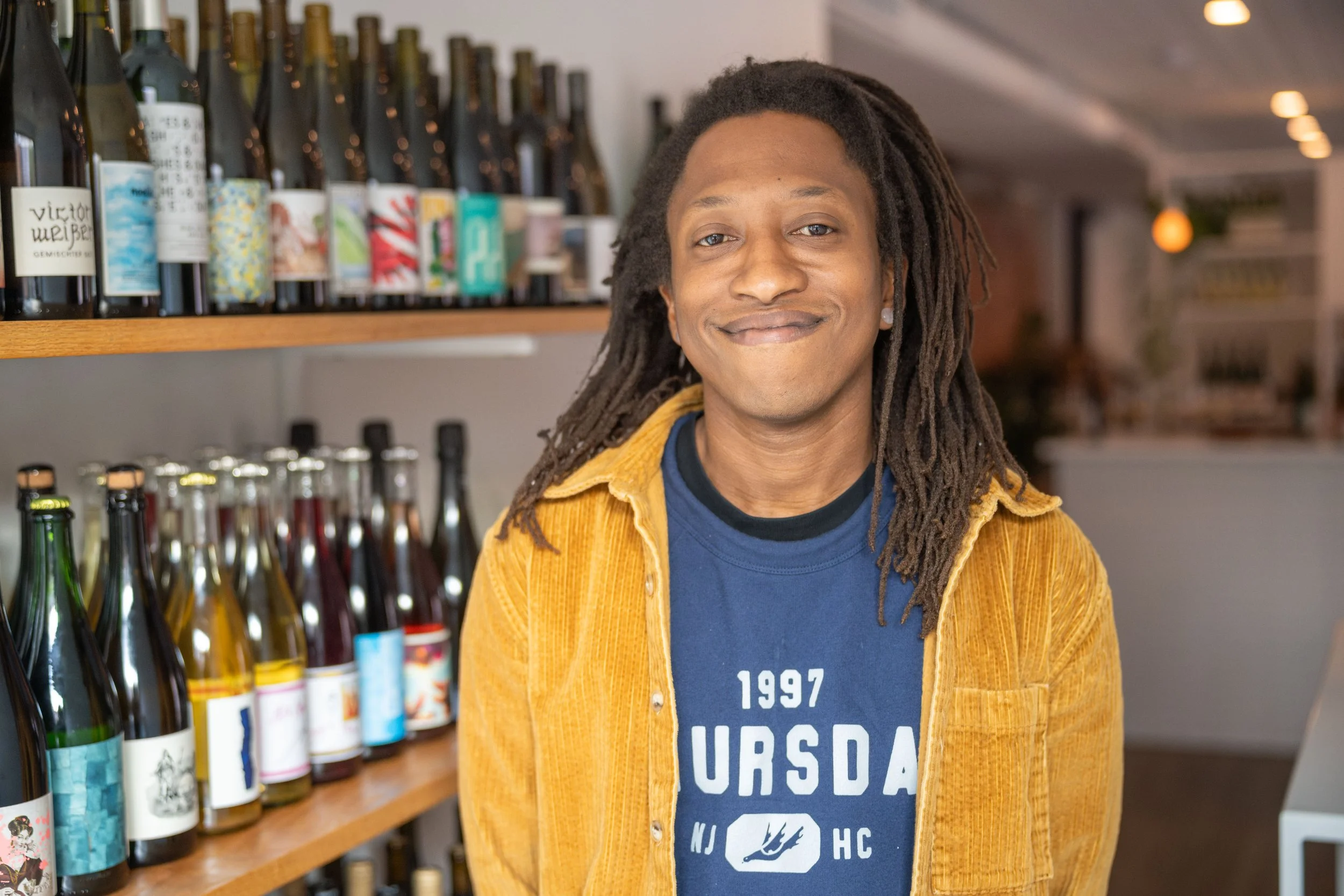
Sommelier Eric Moorer of Gemini | Photos: Alexander Zeren
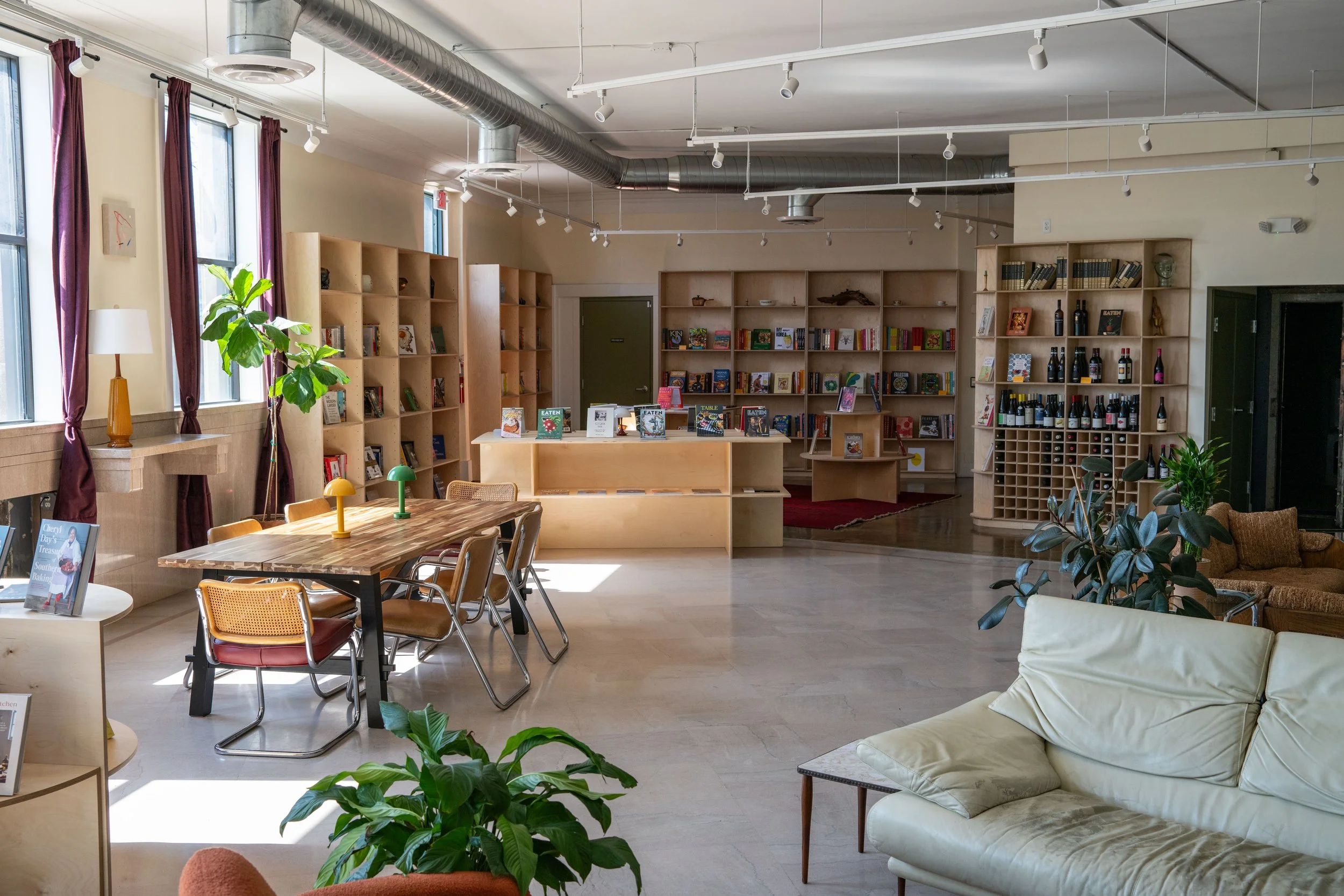
In Washington, D.C., patriotism isn’t scarce, but you might not expect to find it on the shelves of your local bottle shop. At Gemini, Chef Johnny Monis and Anne Marler’s wine shop and wine bar, American viniculture is front and center thanks to Sommelier Eric Moorer. After a trip to Paris, where local French wines dominated lists and menus, Moorer became envious of the pride French sommeliers and patrons had for their homegrown wines. So, he decided to make a change. Moorer directed his attention, and buying power, towards American-made wines. Combined with his interest in natural winemaking, the pivot to buying “local” meant that he was supporting the people in his own backyard, championing a community that’s often overlooked yet right under our noses. StarChefs Staff Writer Jason Lyons sat down with Moorer to discuss his American-focused wine program, its challenges and successes, and his vision for the future.
JASON LYONS: How did you go about building an American wine-focused beverage program? How do you manage it now?
ERIC MOORER: We work with a lot of really cool distributors that have lists cut out for domestic producers. We have an ability, here in D.C., where we can go directly to winemakers. We can talk to them and get their wines in here. One day I looked at the shelves and I was like, there are 85 wines on the shelf and 73 of them are American. It felt really good.
At this moment in time, we are working with wines that are coming from the continental U.S. Would we like to expand that into more North America or the Americas in general? If the opportunity presents itself with the right producers, then we could think about that, but right now it's about putting a spotlight on producers that make up what we have here. And reminding people that you don't always have to seek something that is very familiar to find something that is of quality.
JL: How do you balance quality, affordability, and customer education while staying true to your mission?
EM: There is this very frustrating thing about the price of wine, people are curious why some places can sell $9 bottles of wine. Well, people are not getting paid along the way. We are doing research on the practices of the producers we are working with. With that, there is a bit more of a cost, but margins are slim and I'm taking on the winemaker’s perspective. There is inherent affordability to our model that helps alleviate stressors when it comes to paying for a bottle of wine, but quality is the first thing we refuse to bend on.
I started with things that were more graspable. Then we started introducing things that were unfamiliar, like different hybrid varieties used on the East Coast. And it just gave us this freedom of expression that we weren't afraid to push boundaries and could really try to educate people on our rich and diverse grape growing culture throughout the country.
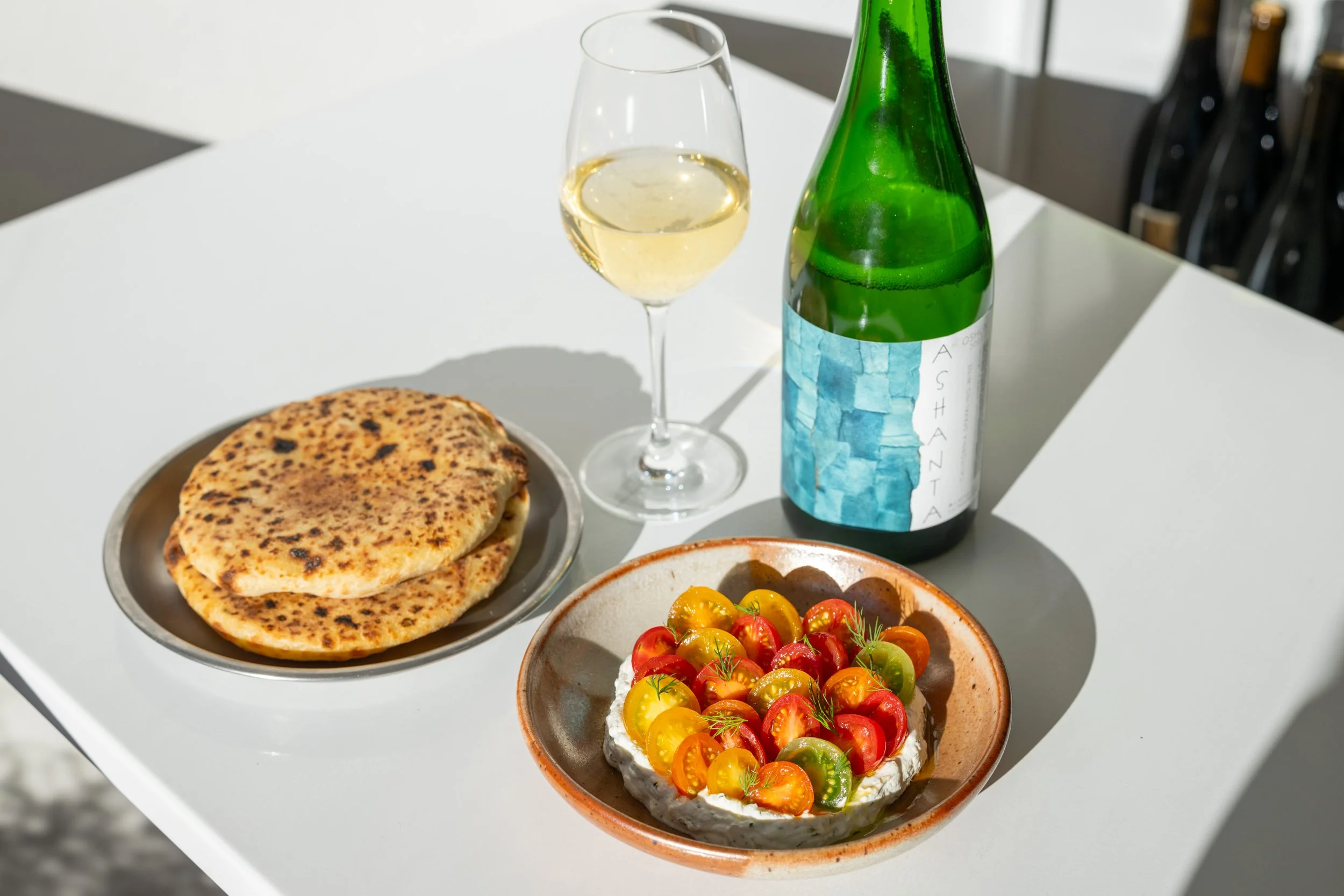
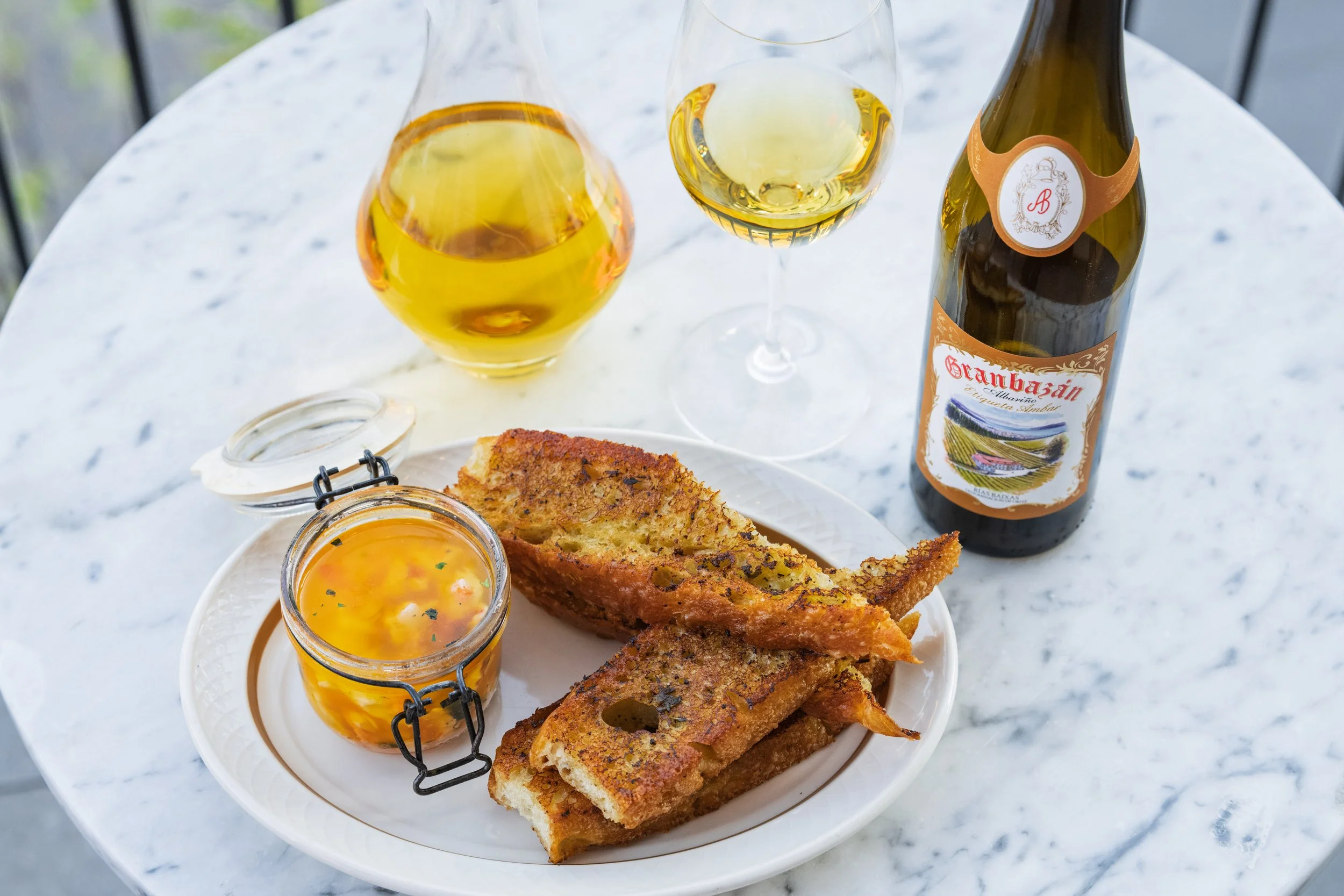
Tomatoes, Tzatziki, Dill, Sourdough Pita paired with Chardonnay/Carignan, Ashanta, Oshun, Sebastopol, California, 2023
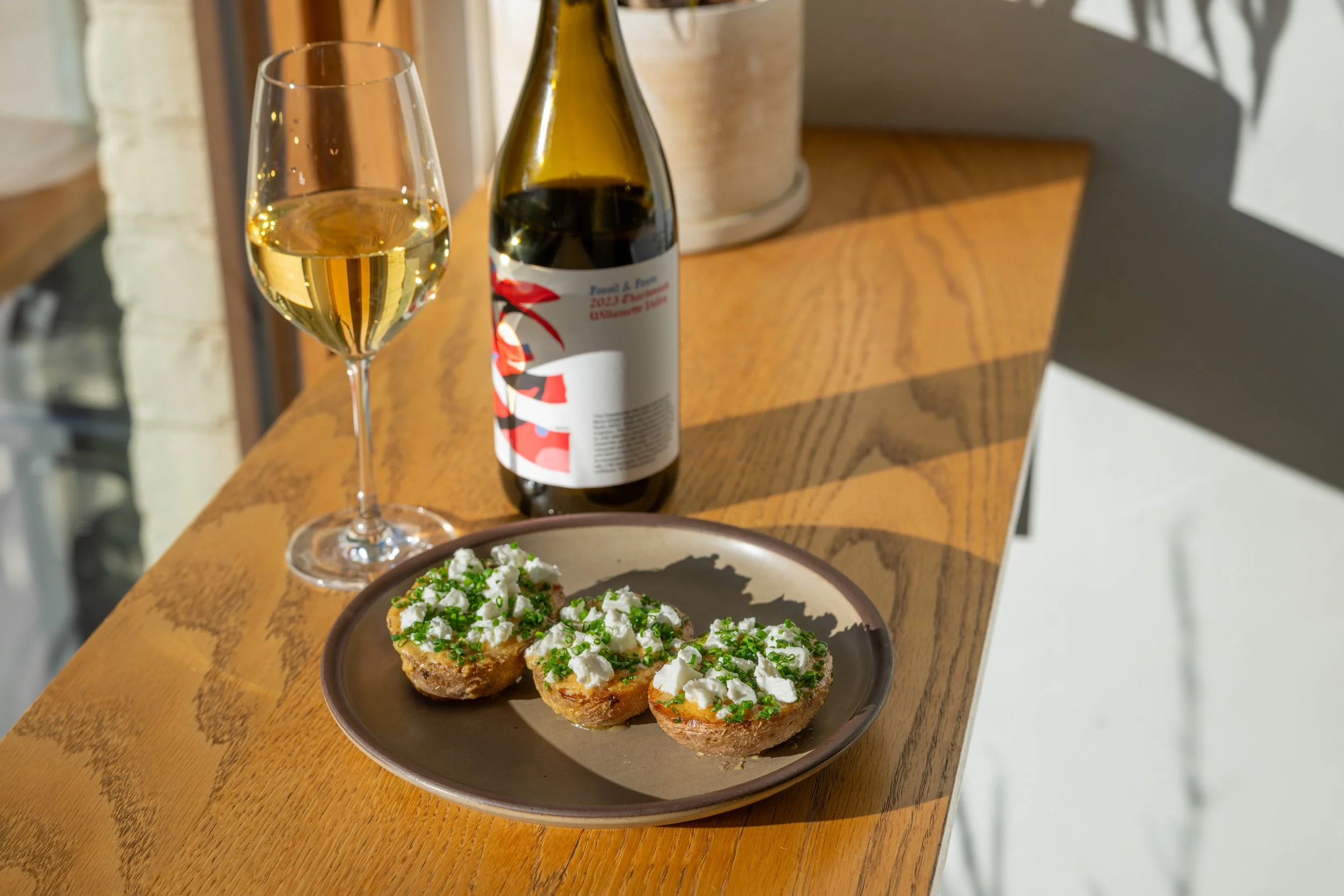
Roasted Japanese Sweet Potatoes, Feta Butter, Green Onions paired with Chardonnay, Fossil & Fawn, Willamette Valley, Oregon, 2023
JL: What is the biggest misconception about American wine? How are you challenging those expectations?
EM: I think these wines lack the prestige, that's a way you could put it. There is a view that you are not getting a certain name for your dollar, but just because you are unfamiliar with something doesn't mean that there isn't value in it. We have a Eurocentric idea of what quality wine is, but it’s our job and duty to highlight that that is not the only way.
I think that we do a good job highlighting different regions of the country. The topography is different: there are mountains, or forests, or valleys that are bringing in air from the sea or the mountains. There is such a wide diversity of geography and soil type and weather patterns and climates. We are constantly showing people that we can have wines of acid, texture, and structure, and they can all come from a place that is wildly different from a wine made one, two, three hours away.
JL: Where do you make concessions? What are you willing to be flexible on and where do you draw a line?
EM: I don't think we are super rigid in the idea that we have to have zero sulfur wines, or the most hands-off wines. Putting forward or platforming local wine, you need to understand the situation. In Virginia, there is huge disease pressure, given the humidity. Downy and powdery mildew. And, of course, bugs. But people are doing everything they can to be as organic as they can be. If that means most years they don't spray, but some years they have to, that is a concession we will make. Making this wine in as clean a fashion as they can, as “low intervention” as they can—a term I love to use. We aren't blind to the decisions and choices winemakers have to make.
JL: What is your outlook on the future of American wine?
EM: I think that within the wine community there is respect and attention being paid. I think that there is an access problem that prevents a lot of people in the U.S. from getting wines because of the way distribution works for the most part. But I do think that we have more and more education and information in the hands of our customers. People going out and visiting these producers themselves. I think that, slowly but surely, we will get to a place where people are genuinely more curious about the wine being made here, and we are just at the beginning of that.