2026 Las Vegas Kitchen Notebook
An in-depth look at some of our favorite dishes and drinks from our time on the ground.
Steak Gilda and Frites
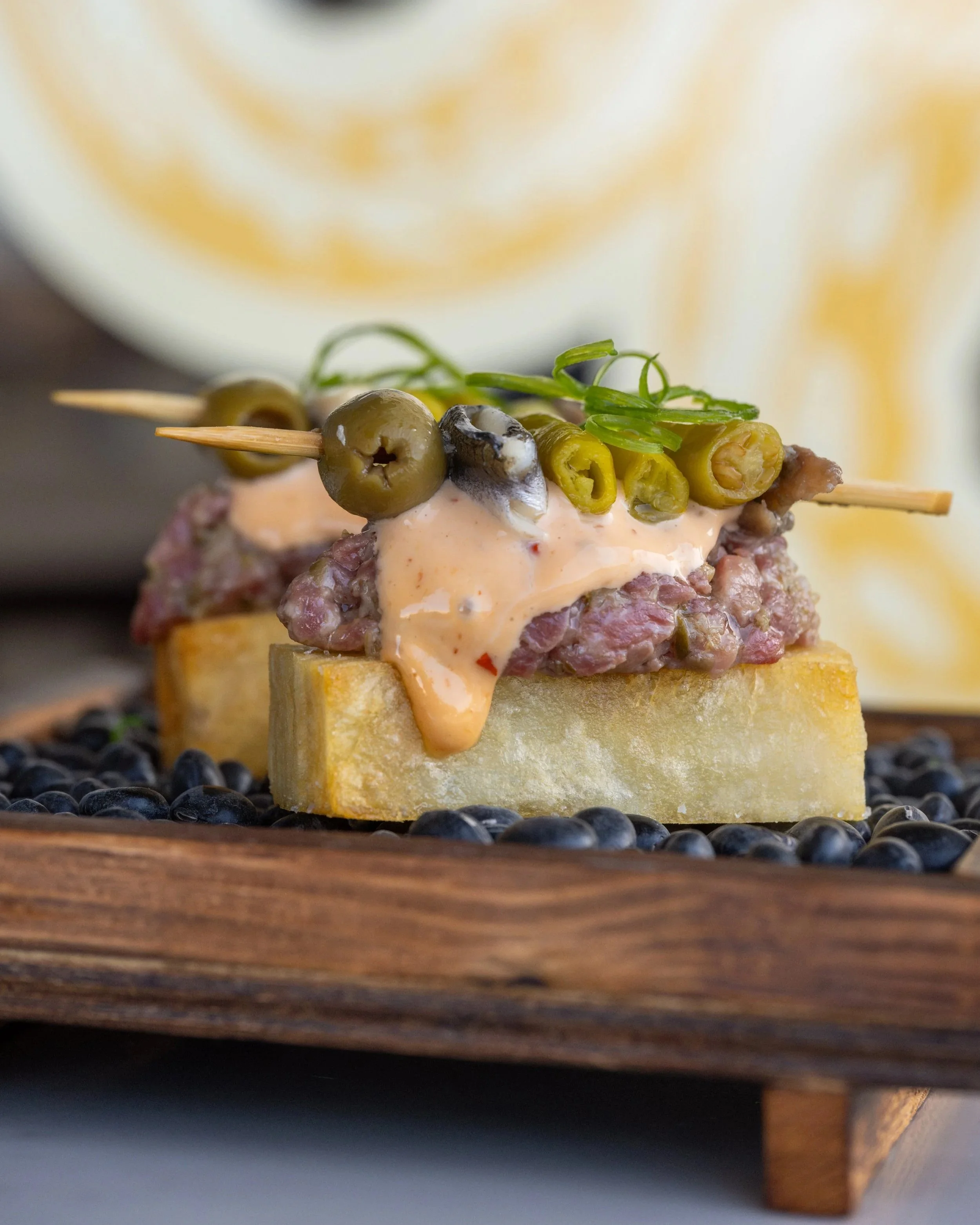
When Chef Oscar Amador returns to the Basque region of Spain, his favorite way to start the day is with a gilda, a traditional type of pintxo, and a little vermouth. At his restaurant, Amador Cocina Fina, he marries Las Vegas and San Sebastián with his play on steak frites. It starts with a potato pave boasting 11 layers of thinly sliced potato, which he bakes, presses, and cools to form a cake, before slicing into squares and frying them. Amador hand-cuts hanger steak and mixes it with capers, mustard, anchovies, Worcestershire sauce, chives, and shallots before shaping the tartare into a quenelle and setting it atop the potato square. He then blends adobo, chipotles, and sambal into mayonnaise for a less traditional bravas sauce which he spoons on top of the potato cake. He finishes with a skewered gilda on top. Amador uses Manzanilla olives, boquerones, brown anchovies, and pickled piparra peppers in his version. The sourness counters the fatty, umami quality of the tinned white anchovies, not unlike the play of flavors present in a traditional steak tartare. “In the Basque country, when you go to have your first vermouth, you always order the gilda,” says Amador. “It’s very refreshing, it opens your appetite because of the pickle and the pepper, so I was like, how do I do it in a more fine dining way?” It’s best enjoyed, says Amador, with Barcelona-style vermouth–vermouth seasoned with orange bitters, gin, and lemon.
SAHARA
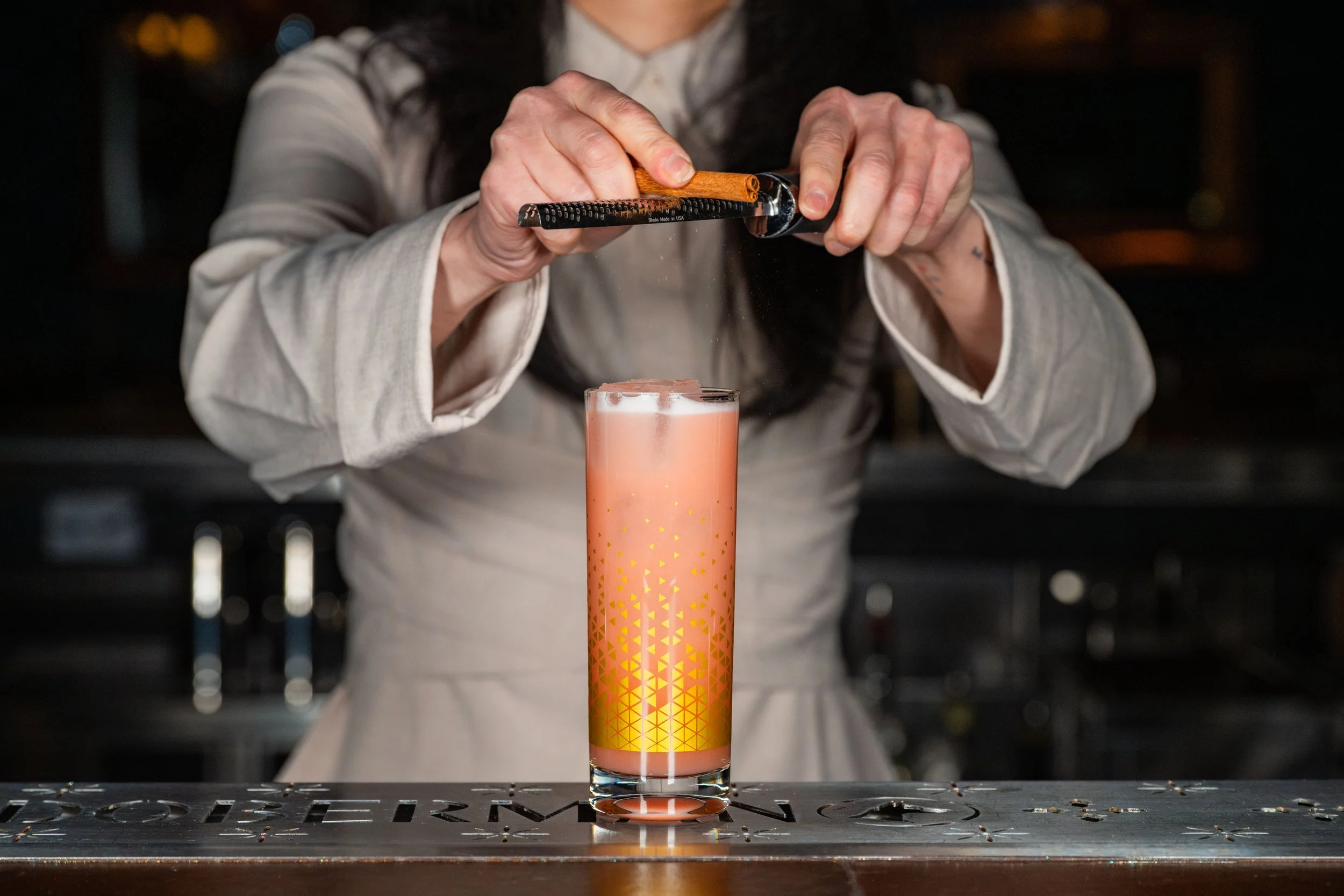
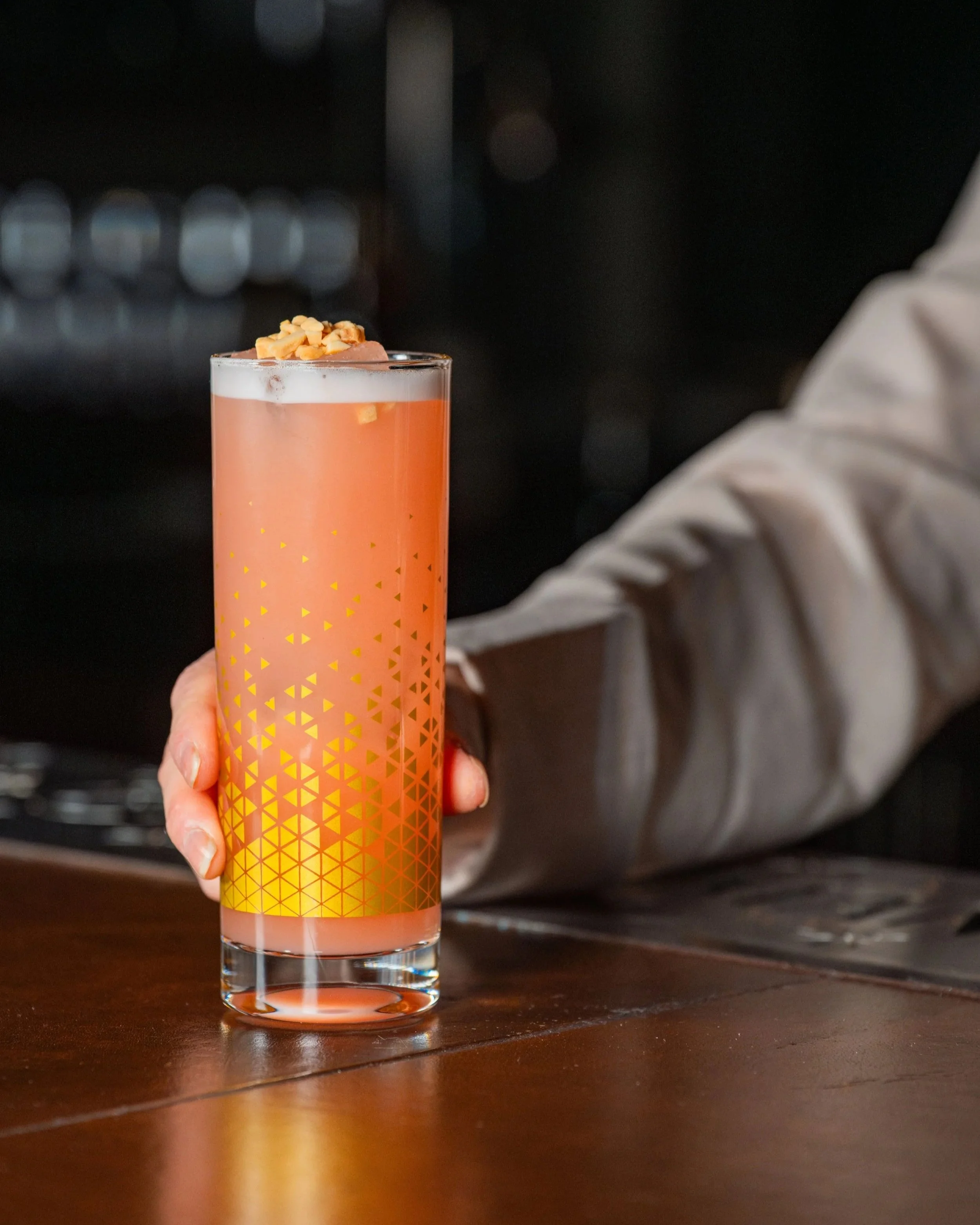
For Bartender Juyoung Kang, horchatas were love at first sip. When she first moved to California, Kang tried every horchata she came across. One restaurant behind her apartment particularly stood out, where the woman combined her husband’s favorite hibiscus milk with her horchata and sold it topped with peanuts. “I like that the inspiration came to me based on my experiences,” says Kang. “It’s like someone else’s history became part of my history.” Named after the desert in North Africa where horchata originated, Kang’s Sahara cocktail at Doberman Drawing Room starts with a cantaloupe cordial, which she makes by adding sugar and citric acid to freshly juiced cantaloupes. Next up is a hibiscus syrup, made from oversteeping hibiscus flowers and combining it with more sugar and citric acid. “The reason why this drink doesn’t have any citrus is because it doesn’t need it,” explains Kang. “It’s already in both of the cordials, and hibiscus flowers are naturally acidic.” To the syrup and cordial, she adds blanco tequila and unsweetened rice milk. The melon balances the floral, citrusy hibiscus, complementing the sweetness from the agave in tequila. It’s shaken, strained, and topped with chopped peanuts and grated cinnamon. The cinnamon drives the horchata inspiration home, and the peanuts add salt and texture to the cocktail—and harken back to her time in California. “One little ingredient, like peanuts, just solidifies it,” says Kang. “Kind of like a cherry on top of a dessert.”
Karioka
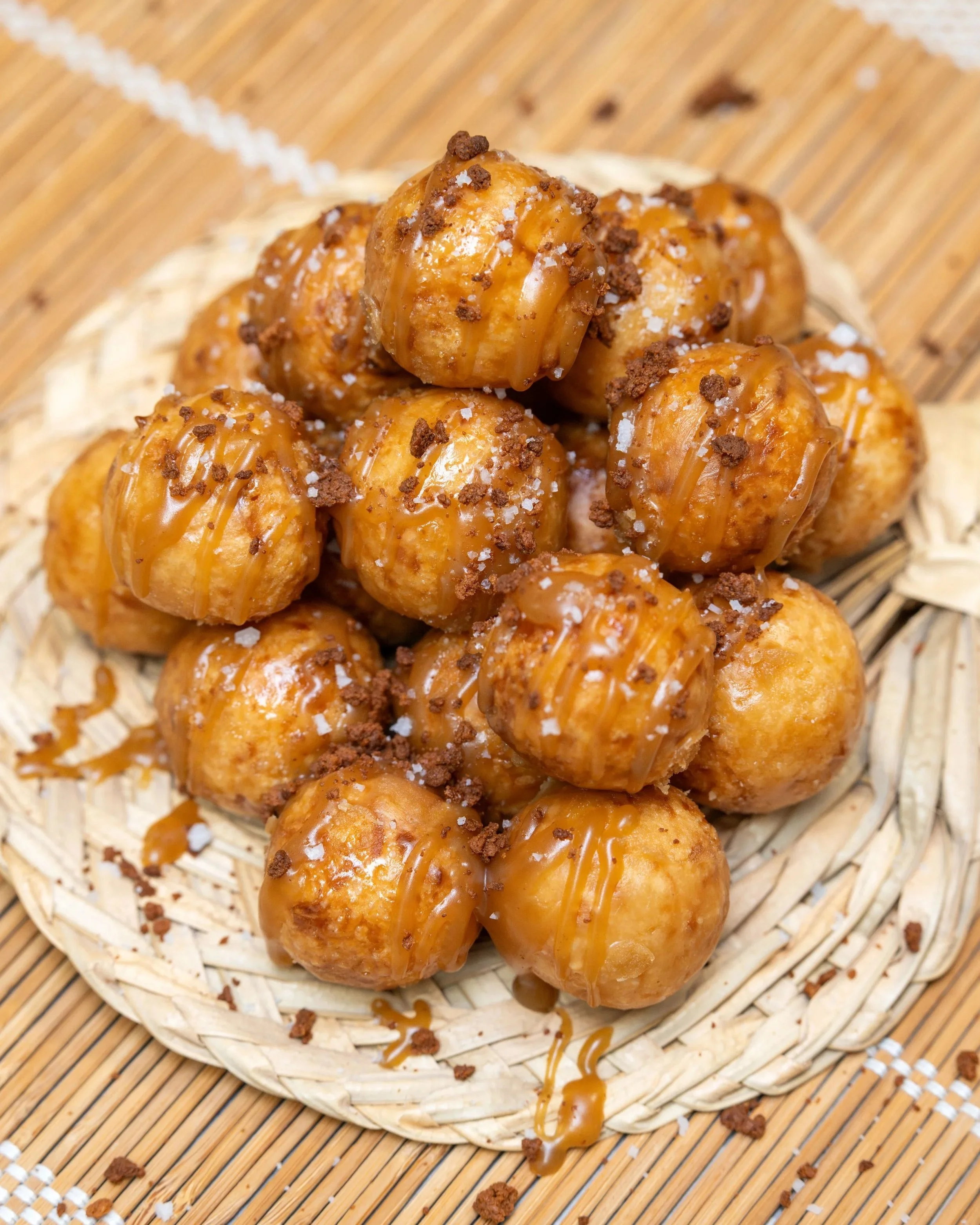
Although she hadn’t been to the Philippines in over 20 years, Baker Kimmie Mcintosh was blown away by a bite of karioka, a Filipino street food, that she tried at the bakery inside of Las Vegas’ Seafood City Supermarket. “My mind was racing about what I would do differently,” says Mcintosh. “I wanted to heighten the coconut in it.” The popular coconut fritters are typically served on a skewer and covered in a coconut milk glaze, but Mcintosh wanted to intensify the flavor and bring even more texture. For her pop-up, Milkfish Bakeshop, she combines shredded coconut, glutinous rice flour, and coconut milk to make the dough for her fritters, which she fries and then tosses in a coconut milk-brown sugar glaze. To boost the flavor, Mcintosh whisks together Filipino coconut jam, heavy cream, brown sugar, and melted butter to make a “cocojam sauce,” which is simmered and thickened before it is drizzled on top of the fritters. Mcintosh then garnishes the warm, sticky karioka with housemade latik—toasted coconut curds that are common in the Philippines. “It has this great almost acidic and savory note to it,” says Mcintosh. And “you realize the resourcefulness of Filipinos and how they use every part of the coconut.” She finishes the fritters with a generous pinch of Filipino sea salt to balance out the sweetness. It is a “perfect encapsulation of what we do,” says Mcintosh.
Boar-and-Wagyu-Stuffed Squid
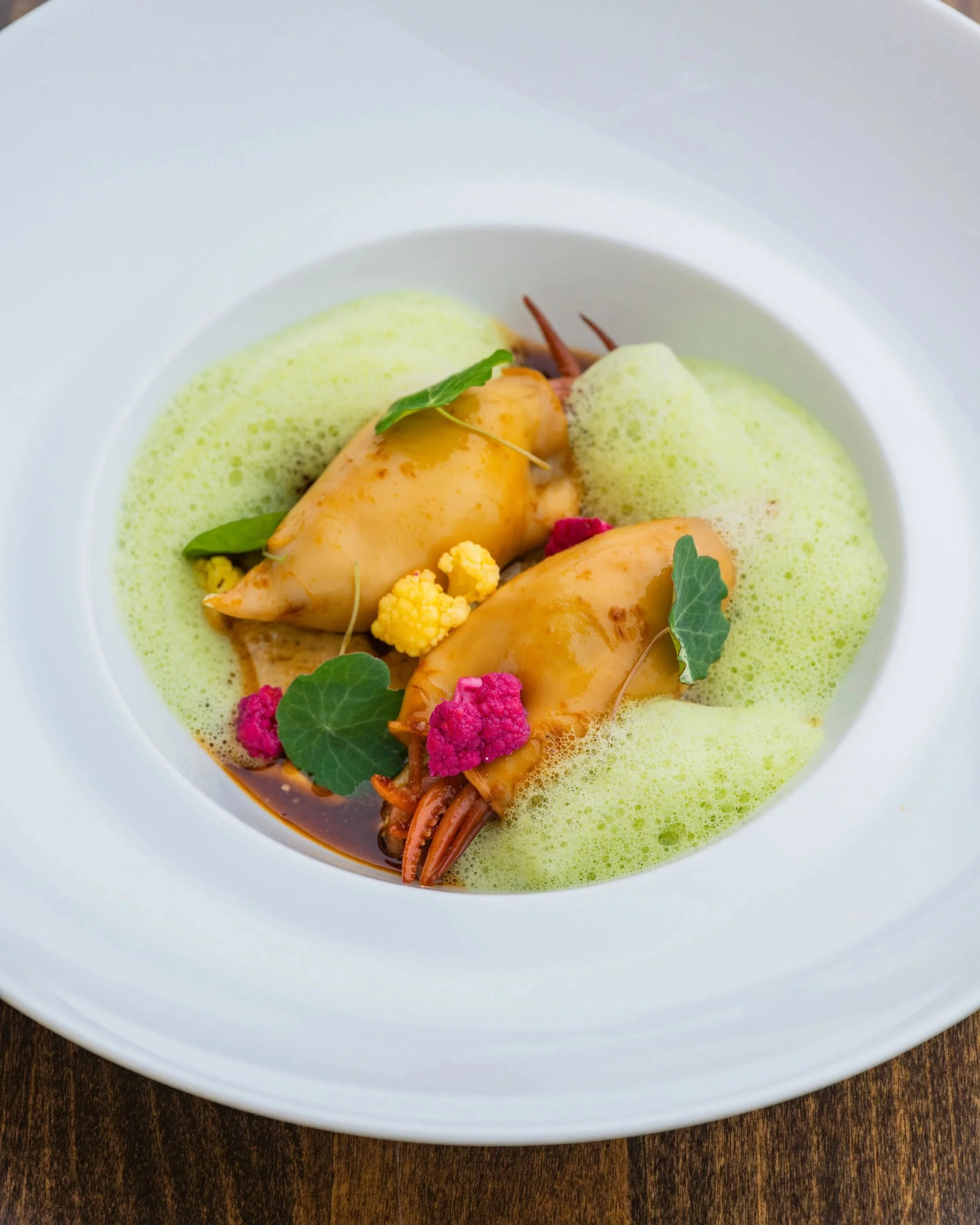
For Chef Yuri Szarzewski, his wild boar-and-wagyu-stuffed squid at Partage is an homage to home. “It’s about representing the south of France,” says Szarzewski. “We have a lot of hunters near the forests, and downhill we have the Mediterranean Sea where we have a lot of fish markets.” And so, his surf-and-turf dish was born. He starts by making an unconventional sausage. He cleans Rhode Island squid, which he uses instead of a typical intestine casing, because they’re “thin and have the sensation of a casing.” After stuffing the squid with wild boar and wagyu, he sears it, deglazes the pan with white wine, covers, and steams for around an hour and a half. Szarzewski then works on a burnt onion purée. He chars onions and purées them with butter for about 30 minutes until jammy. Separately, he blanches tarragon and blends it with milk, cream, butter, and soy lecithin to make a tarragon foam. Szarzewski spreads the burnt onion purée across the bottom of the plate for service, topping it with the stuffed squid, pickled cauliflower—which are “really bright and pop up the dish”—and a demi-glace made from beef bones that has been reduced overnight. For pick-up, he adds the foam and garnishes the dish with a final touch of nasturtium. “People don’t think you can make a sausage with a squid, so I think it’s funny to see their reaction,” says Szarzewski. “But when they try it, they seem to be magically touched by it.”
Three Kings
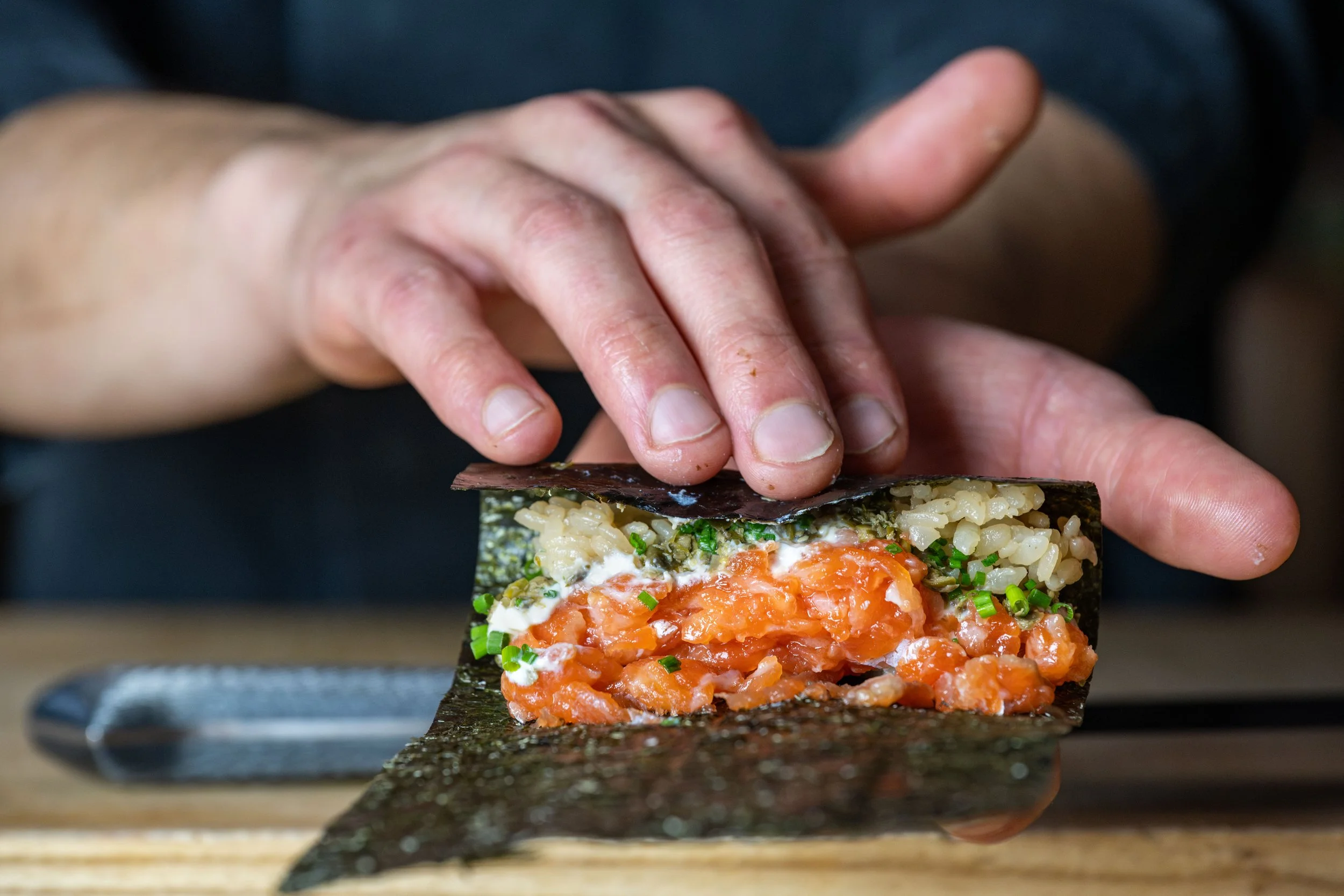
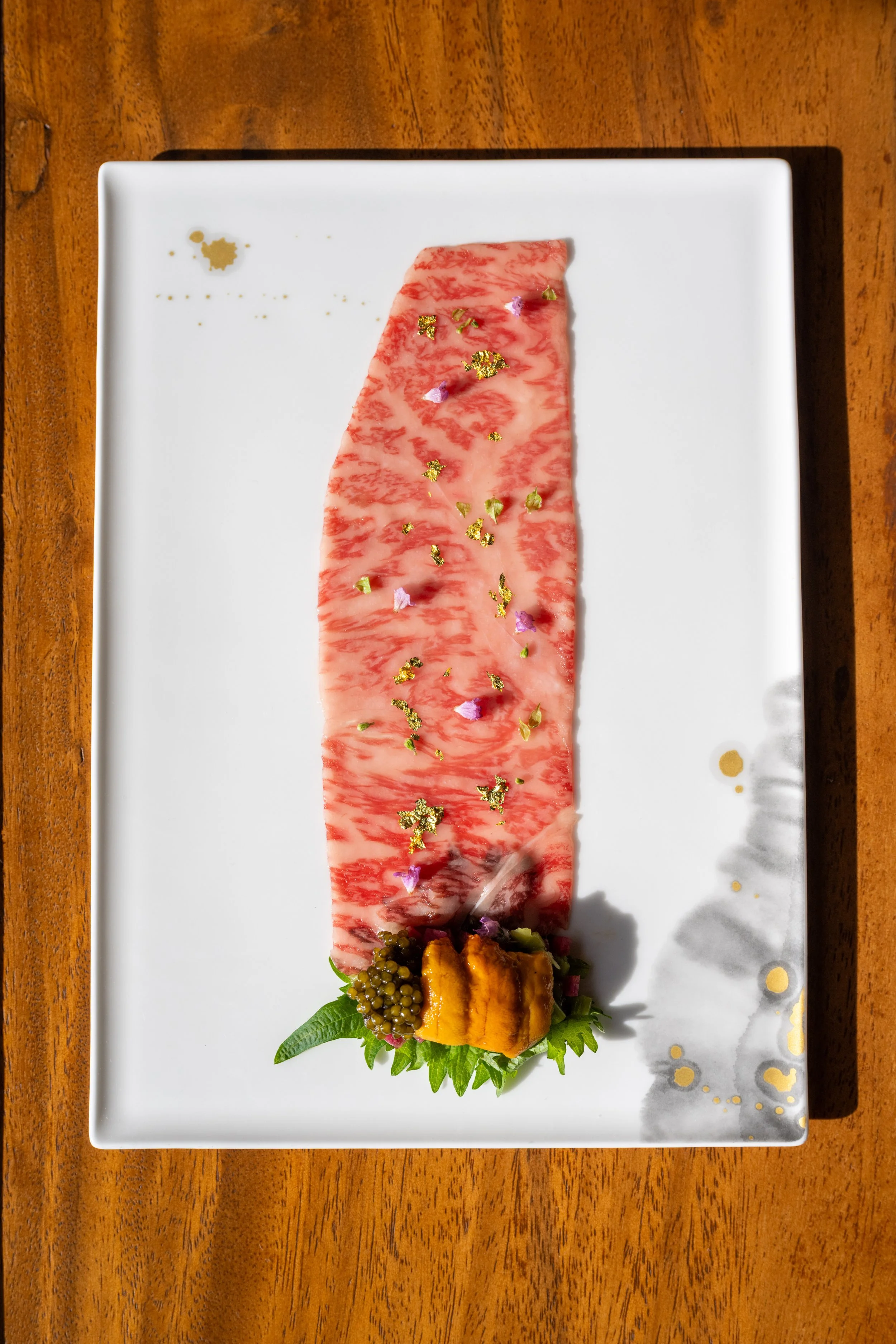
As a certified master sushi chef, Chef Jeff Okada Ramsey of Mizumi at Wynn Las Vegas drew inspiration for his Three Kings dish, a representation of the three luxury “kings” of fine dining—uni, wagyu, and caviar—from his time living in Japan. While there, he was a regular at a standing-only izakaya called Kanemasu, where he ate a dish that would eventually inform the Three Kings. “The richness of the uni and beef, plus the brininess, really worked,” says Ramsey. For his iteration, Ramsey uses Yonezawa beef or “phantom beef,” named because of its rarity, as the base of the Three Kings. The beef isn’t as marbled with intramuscular fat as other premium beef like Kobe. Instead, it offers a meatier, more balanced flavor, which Ramsey describes like “working with gold.” The beef is partially frozen, cut thinly on a slicer, and then lightly brushed with irizake, a sauce made from reduced sake. On one side of the beef, he places shiso leaf, watermelon radish, pickled wasabi root, and a dashi soy gelée, made by infusing soy sauce and mirin with a bonito flake-dashi powder. Finally, uni sourced from Hokkaido and Ossetra caviar are placed atop the gelée and wasabi root. No utensils are needed—guests can roll the ingredients together and eat with their hands—though, guests are always welcome to roll with chopsticks. That’s when “the dance starts to happen and the different combinations of flavors come out,” says Ramsey. “It becomes very impactful.”
Lamb and White Bean Ragoût
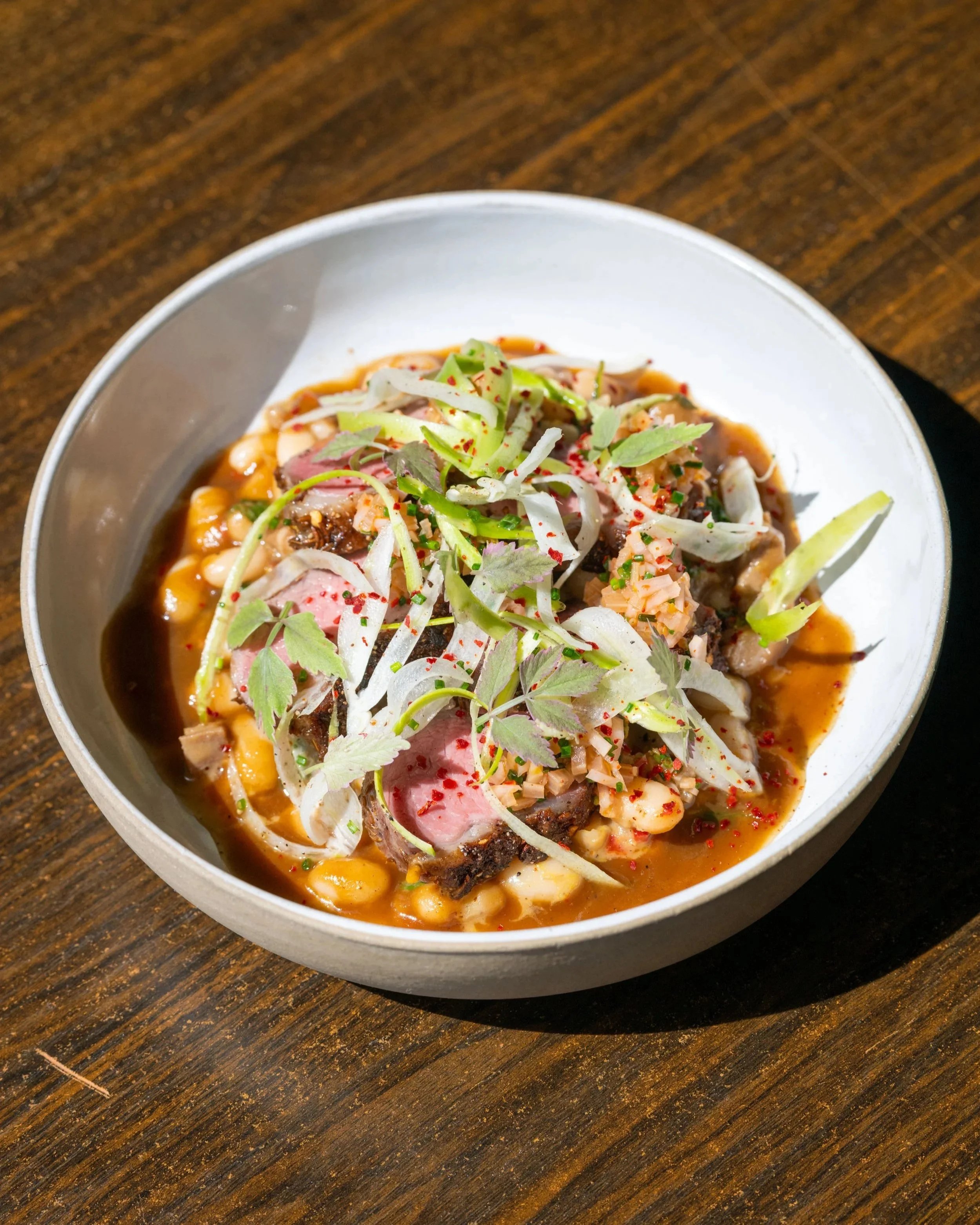
While developing a lamb course for the menu at Sparrow + Wolf, Chef Alec Paki was inspired by duck confit and some “phenomenal beans” he and the chef team shared at Mon Ami Gabi. “The beans, for me, is really where it all started,” says Paki. For his dish, Paki cooks white beans with a rich housemade vegetable stock before preparing the lamb. He braises lamb tongues with lamb stock, ginger, shallots, thyme, and bay leaf at 160°F for 24 hours. The tender tongues are then trimmed, cleaned, and diced while Paki strains and reduces the remaining braising liquid. Doubling down on lamb, Paki marinates a boneless lamb loin with its fat cap in a mixture of garlic, shallots, cumin, star anise, Sichuan peppercorns, fennel seeds, dried orange peel, and olive oil. “You get a nice anise hit,” says Paki, and the peppercorn is “not like a mala, tongue-numbing [spice], but a soft citrusy back note to it.” The fat cap is rendered on a plancha over low heat. He then sears the lamb, basting it in its own fat until tender and “unctuous.” For service, Paki warms the white bean ragoût with Champagne vinegar, shallots, piquillo peppers, and the diced braised lamb tongue and its juices. He reduces the mixture and mounts it with butter before adding a squeeze of lemon juice. The beans are plated with a generous amount of torn mint and topped with slices of the seared lamb loin. For balance, Paki garnishes the dish with some pickled fennel and rhubarb along with thinly shaved fennel, chives, pink tip parsley, and a sprinkle of gochugaru.