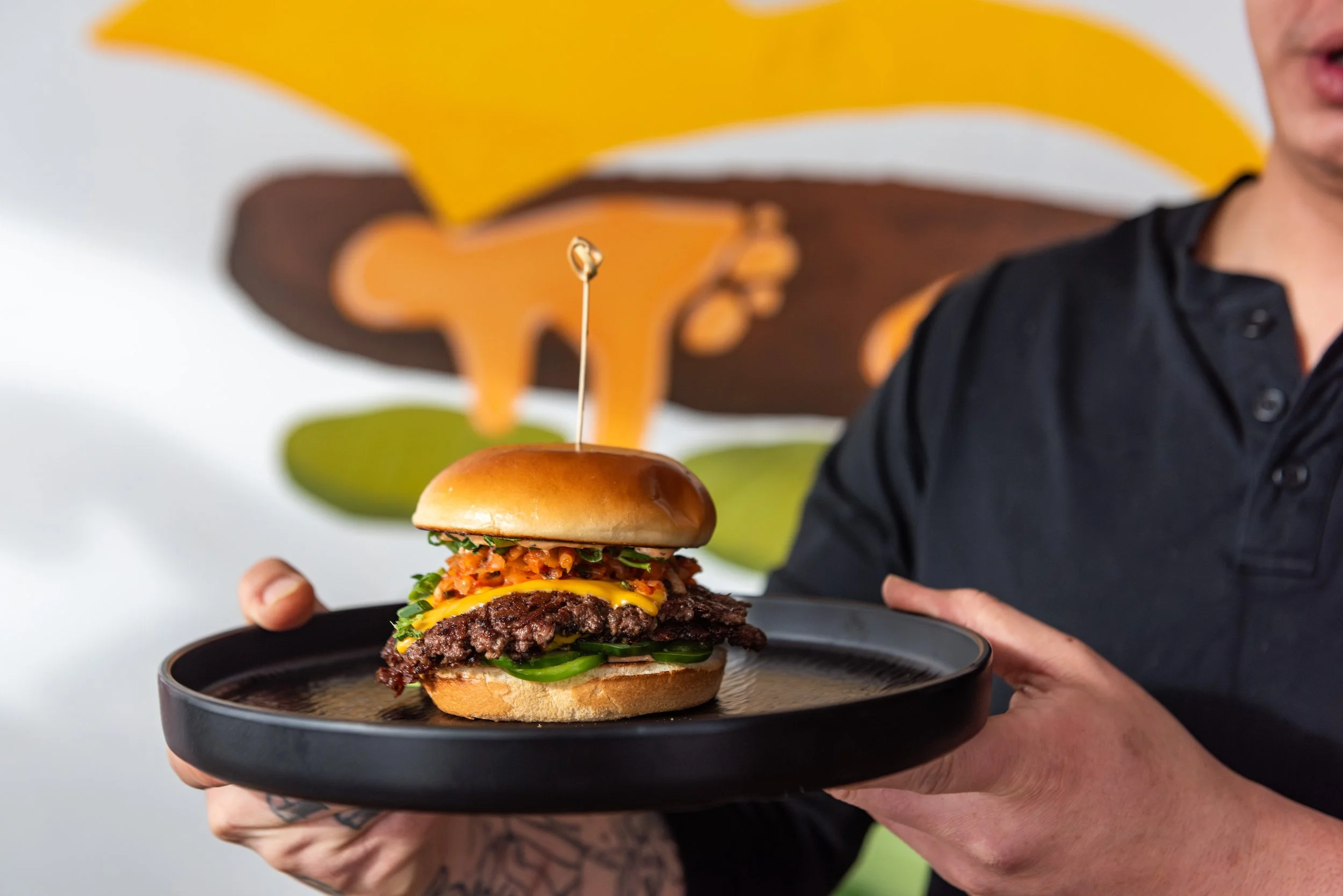
An in-depth look at some of our favorite dishes and cocktails from our time on the ground in the DMV.
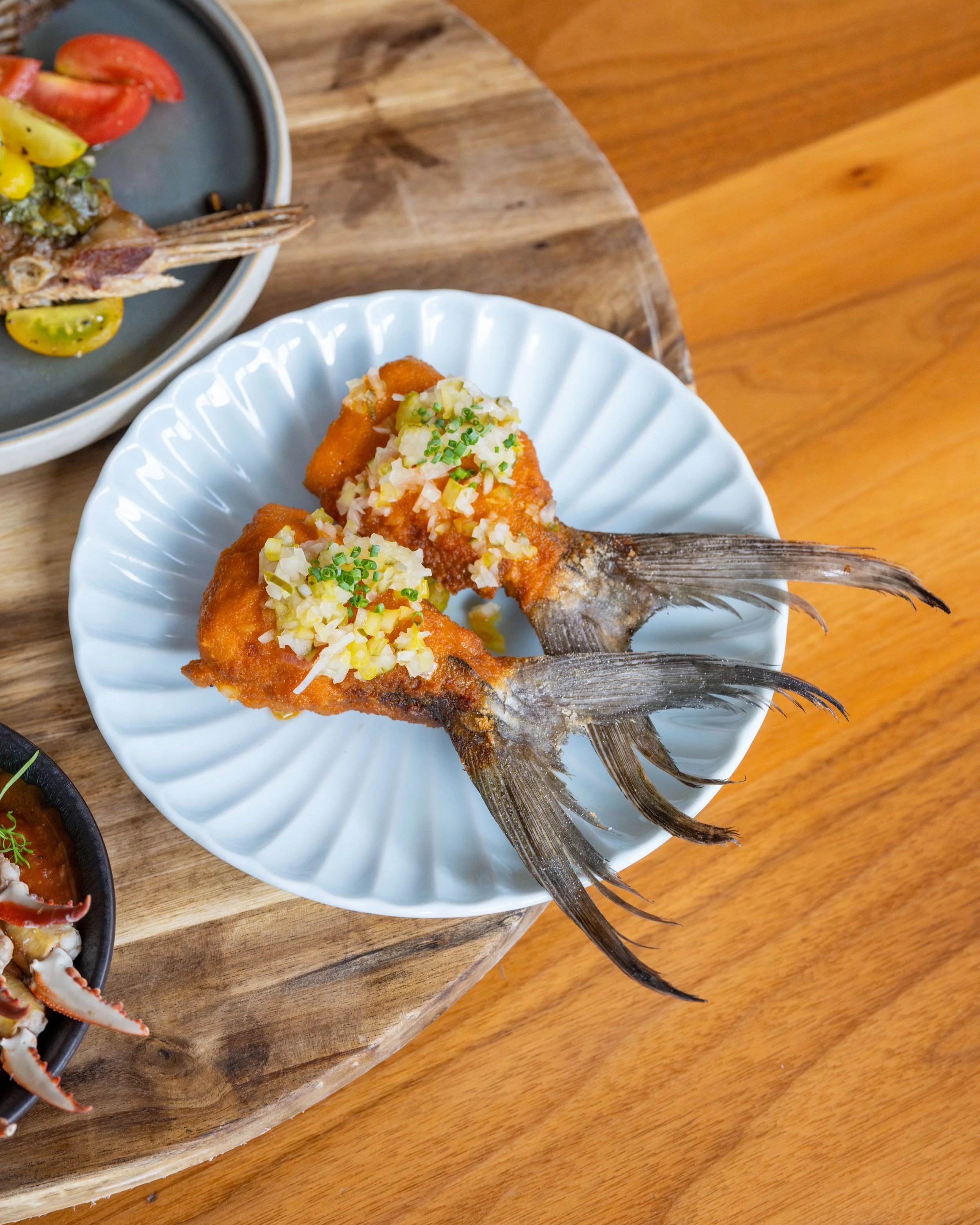
BUFFALO MACKEREL TAILS
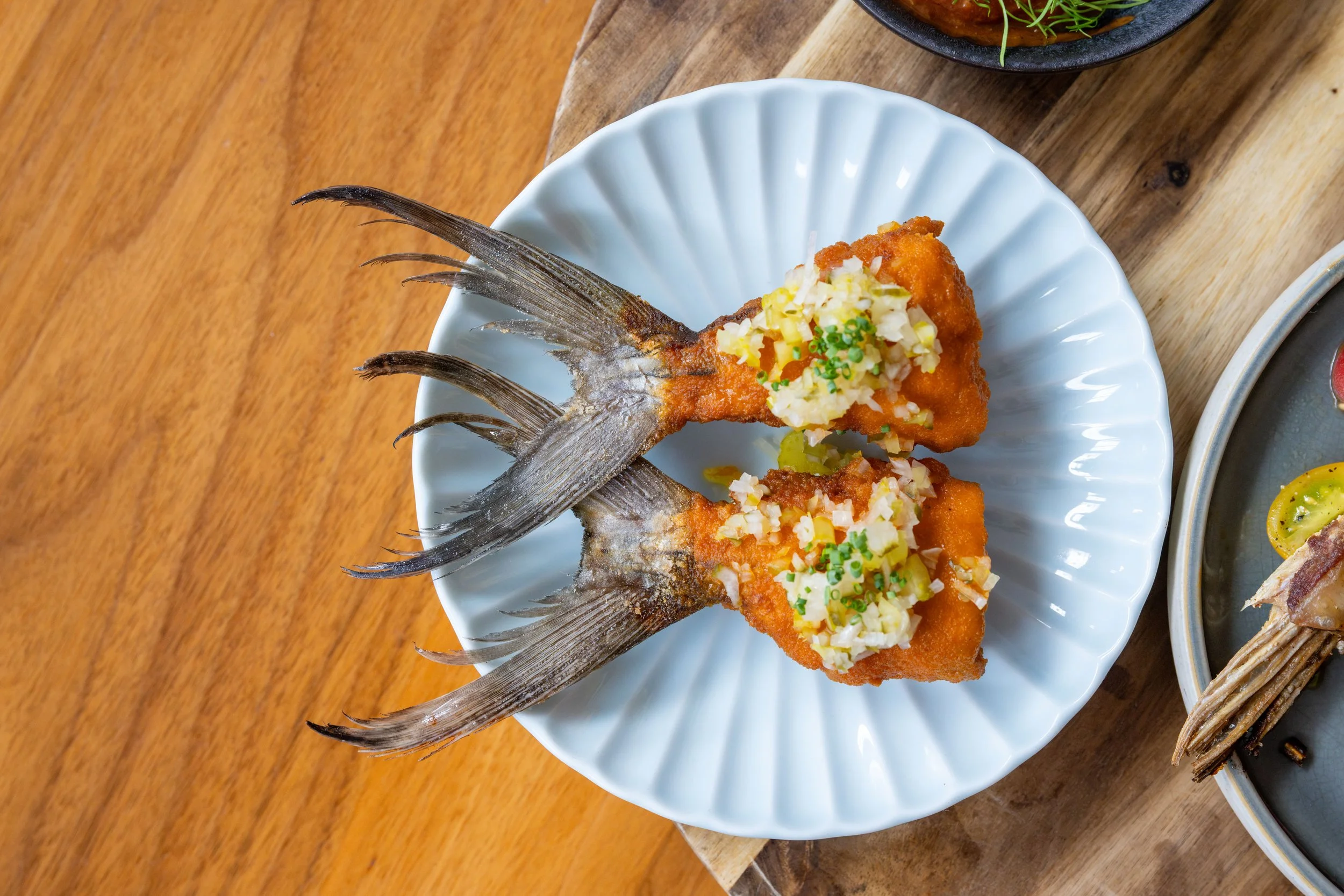
Whenever there is fish byproduct left on the table, Chef Matt Brusca and his team get to work dreaming up clever snacks and one bite beauties for Alewife’s popular Siren Song Platter. “When we get in fish at the restaurant, we get the whole fish,” says Brusca. “So, there is always byproduct—collars, tails, cheeks, cuts still on the fish.” This past year, leftover mackerel tails got a makeover when Brusca reimagined them as a beloved bar snack. The connection was simple: “The mackerel tail looked like a chicken wing to me,” Brusca explains. For service, he dunks the reserved mackerel tails into a mixture of buttermilk and housemade hot sauce. He then coats them with a gluten-free dredge made with masa harina, corn starch, and rice flour. The tails are dropped into the fryer—set at 350°F—for about four to five minutes. “I like to leave them medium on the inside,” says Brusca. “Mackerel gets bitter when you cook it too much.” The crispy tails are then seasoned with salt and pepper, and lightly glazed with a buffalo sauce, which Brusca makes by simmering and emulsifying more of Alewife’s housemade hot sauce, a knob of butter, Worcestershire sauce, and honey. Served in pairs, the tails are topped with a relish of pickled celery and shallots, and some dill to cool down the spice and richness of the dish. The result: a bold bite that is both satisfying and sustainable.
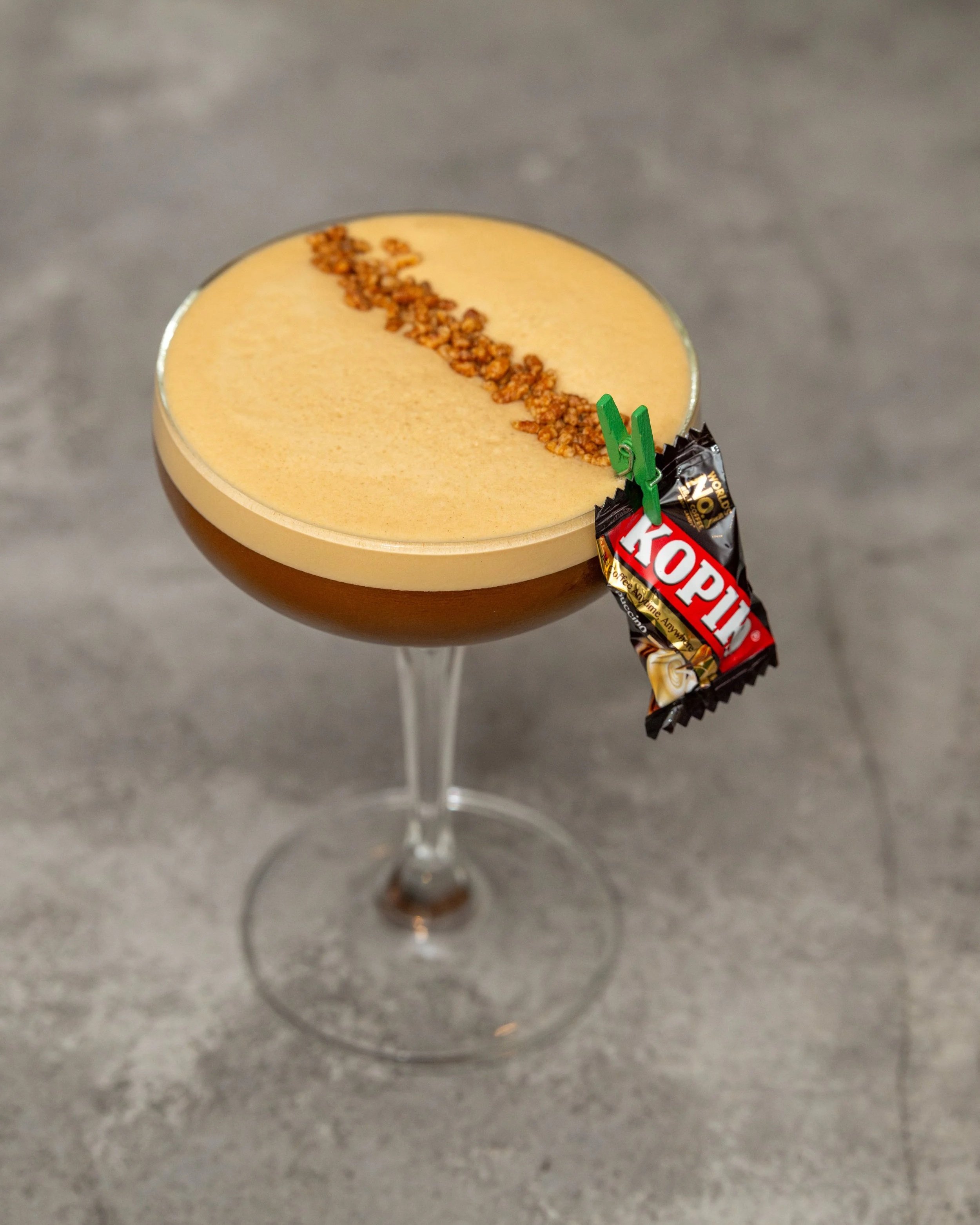
CAFÉ DE OLLA
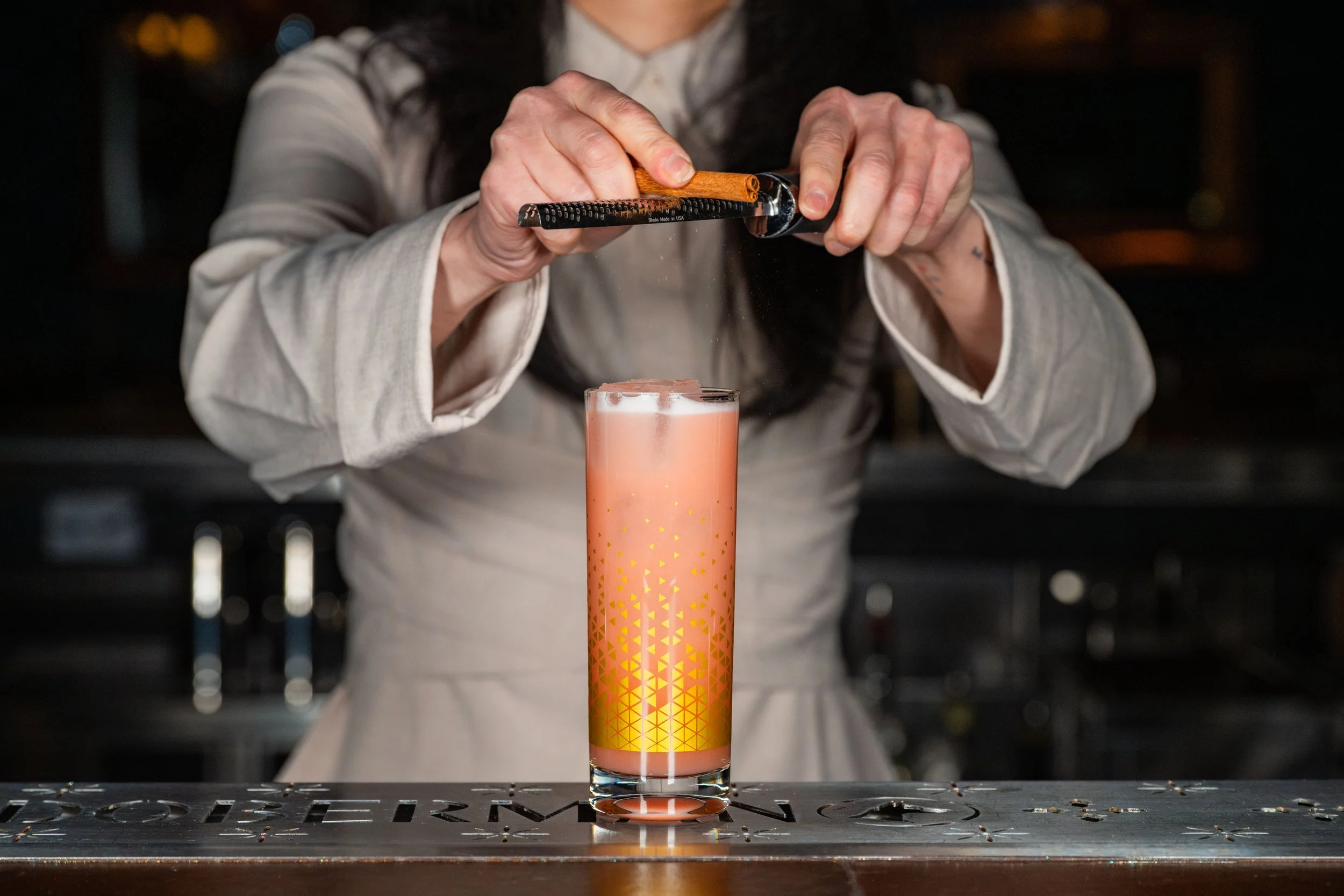
At D.C.’s Providencia, Bartenders Daniel González and Pedro Tobar are creating cocktails that sing with notes of nostalgia and home. Inspired by their Salvadoran roots, the Café De Olla cocktail merges Latin American ingredients with the best parts of an espresso martini. “We, as Latinos, started drinking coffee at a young age, probably around six or seven,” says Tobar, whose grandmother served him coffee and pastries every morning as a kid. As a result, the Café De Olla “tastes like you are dipping a pastry in your coffee.” Building on a base of 12-year aged Salvadoran rum, Gonzalez and Tobar add a couple ounces of their housemade horchata—done the Salvadoran way with rice, sugar, and loads of toasted cinnamon and sesame—and instant coffee. “Back home all we drink is instant coffee,” adds Tobar. “So, we wanted to pay respect to that.” The duo then incorporates a bit of Mexican coffee liqueur to round out the texture of the drink. The cocktail is garnished with an espresso candy and toasted Japanese rice, which brings a touch more flavor and texture, according to Gonzalez. The decadent, nutty drink “reminds people of their grandmas,” says Tobar. “We had one guy come in, and he almost shed a tear. That's exactly what we were going for with the drink and what we do. Providencia is based on simple things that remind people of back home.”
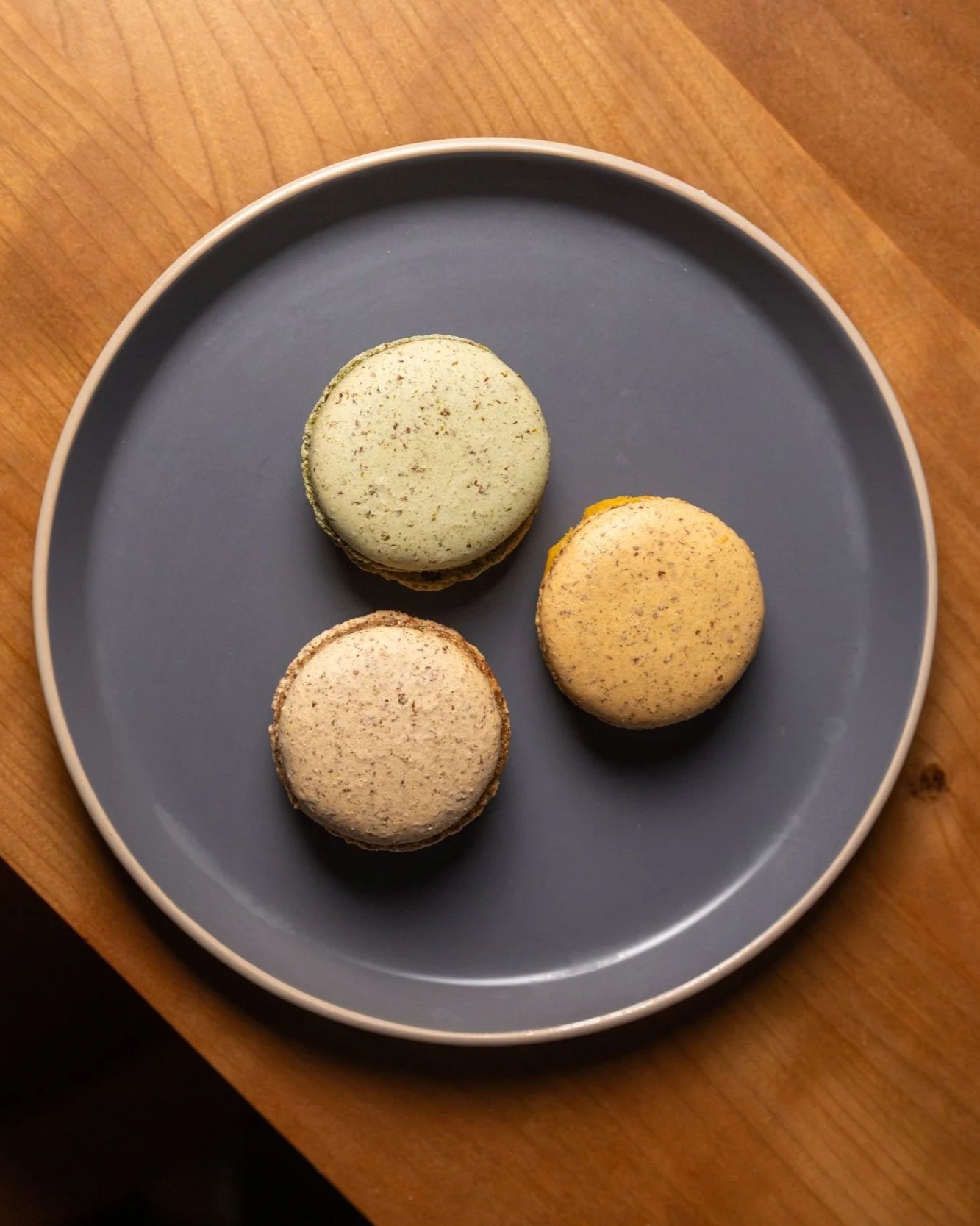
MACARONS
"If I eat it and I immediately can identify what it is, then that's good for us," says Chef Manuel Sanchez, who runs Sacré Sucré in Baltimore alongside his husband and business partner Dane Thibodeaux. His macarons are built around that single test: intensity of flavor, no guessing. Traditional macarons run 50:50 almond flour to confectioners' sugar; Sanchez pushed it to 60:40, cutting sweetness while adding body. Then came the flour itself. Most shops use blanched almonds for that smooth, pale shell. He went with raw, which brings more oil and a speckled, rustic look. It is “harder to work with, but worth it,” he says. The batter runs thicker, and each batch is its own puzzle. "I don't feel like I'll ever get bored making them," he says. "It's never the same.” His pistachio macaron uses half pistachio flour, half almond, and the ganache is built on house-ground pistachio paste with no added butter. For the vanilla macaron, he soaks Madagascar, Papua New Guinea, and Tahitian beans in cream, folds in an absurd number of pods, then powders the dried husks into the shell. His seasonal pumpkin macaron relies on roasted kabocha squash purée instead of butter and is tied together by a pumpkin-warm spice filling. Every component reinforces the next. The texture is heartier than most—still chewy, but with plenty of structure and undeniable flavor.
FONDANT SUNCHOKES
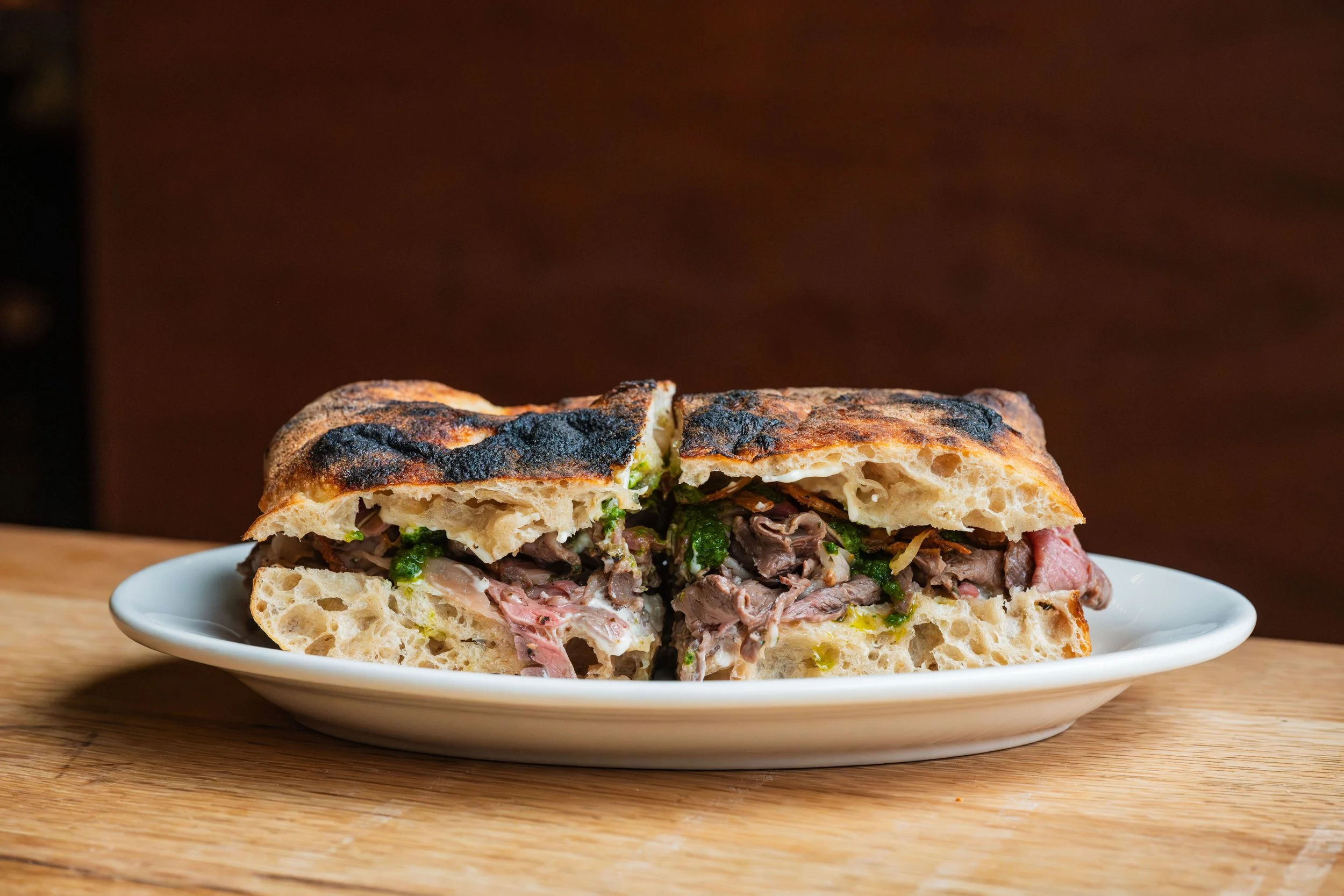
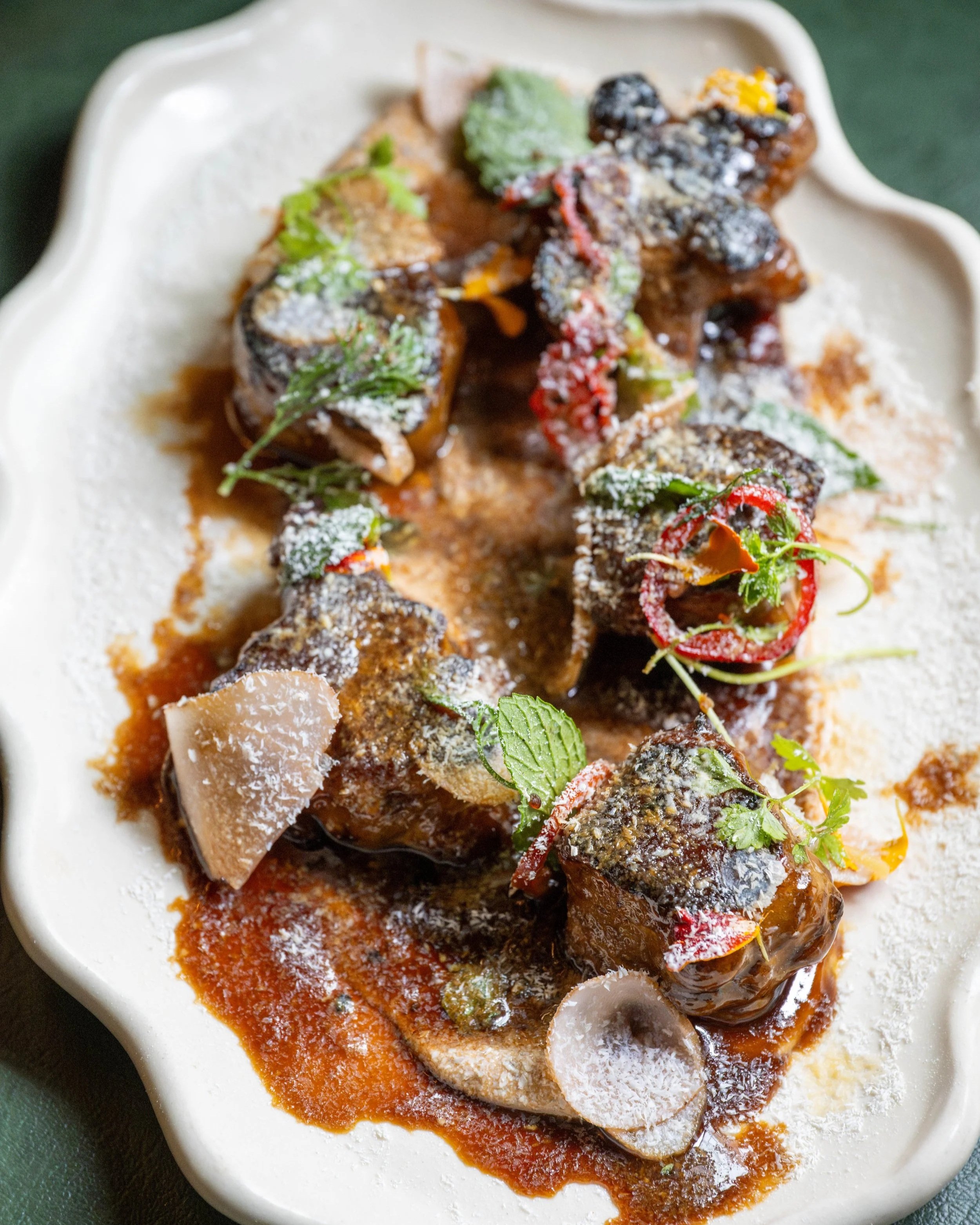
"I love fondant potatoes," says Chef Nico Christiansen of La’ Shukran. "That really classic French potato where you sear it in a pan with equal parts stock and butter, and reduce it all the way down." But he didn't want to cook another potato dish. His mind went to sunchokes: still a tuber, but with more personality. The sunchokes, which come from a Virginia farm, are confited in olive oil with garlic, shallots, bay leaf, coriander, star anise, burnt cinnamon, and black pepper. They hit the grill for char and smoke before getting lacquered in a sticky chicken jus spiked with carob molasses, bringing tamarind-like flavor and body to the dish. Beneath the painted sunchokes sits a black garlic harissa labneh, whipped with Sherry vinegar and urfa biber pepper. Above, a shaved jameed—a pressed fermented yogurt with bright acidity and the funk of aged pecorino. Pickled sunchokes and fresh chiles provide relief from the richness while herbs keep it bright. The texture of the lacquered sunchokes lands somewhere between a mashed potato and a ripe plum—soft, but not mushy. "It's that melt-in-your-mouth situation," Christiansen says, "but it still has a little resistance." Bold and concentrated, the dish is built for the cold D.C. winter and combines classic French technique with the flavors of the Levant.
GNOCCHI WITH TUNA BOLOGNESE
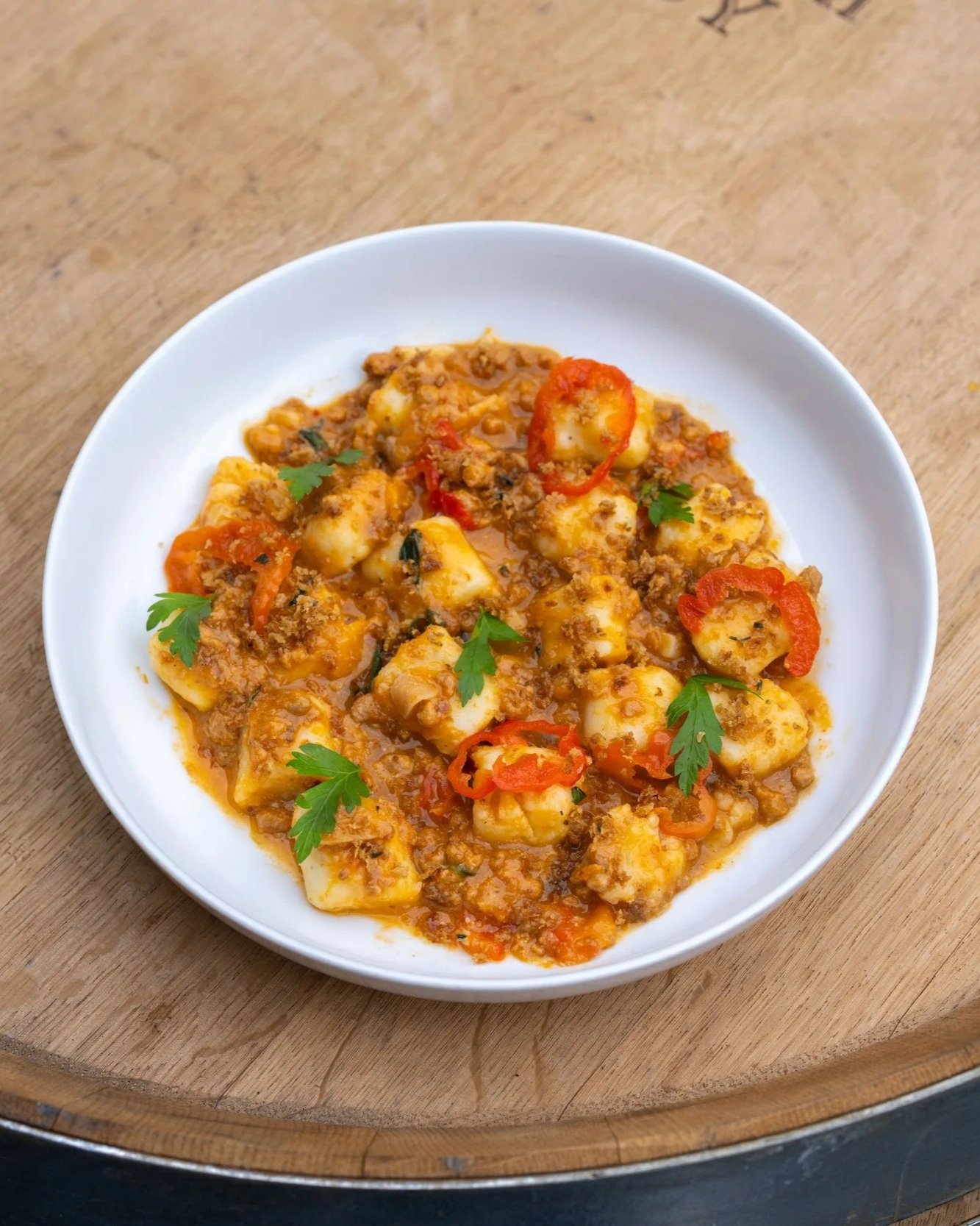
When life gives you too much tuna, make…bolognese. At a.kitchen+bar at Hotel AKA in Washington, D.C., that’s exactly what Rising Stars alum George Madosky is doing. “It’s a way to utilize something without it going to waste,” he explains. His gnocchi with tuna bolognese starts with riced potatoes, which get folded in with egg yolks, all-purpose flour, brown butter, and rosemary salt to form the pillowy pasta. For the tuna, it’s ground and seared in a rondeau with mirepoix, white wine, tomatoes, aromatics, and a fish fumet. Madosky braises it for around six hours so that “it gets tender, or it won’t be right.” He then adds Sherry vinegar and fish sauce, as well as some pickled ají dulce peppers, which are “very sweet, very aromatic, and not spicy.” For the final touches, Madosky sprinkles on toasted Sicilian oregano breadcrumbs, along with a few more of the pickled peppers to garnish. “The peppers bring a nice bit of acid and a little bit of this bright surprise that really sets the dish off and makes it very special,” Madosky says. “Without it, it would still be a very good, hearty, pasta dish, but it takes it to a new level.”
CHERRY & FENNEL
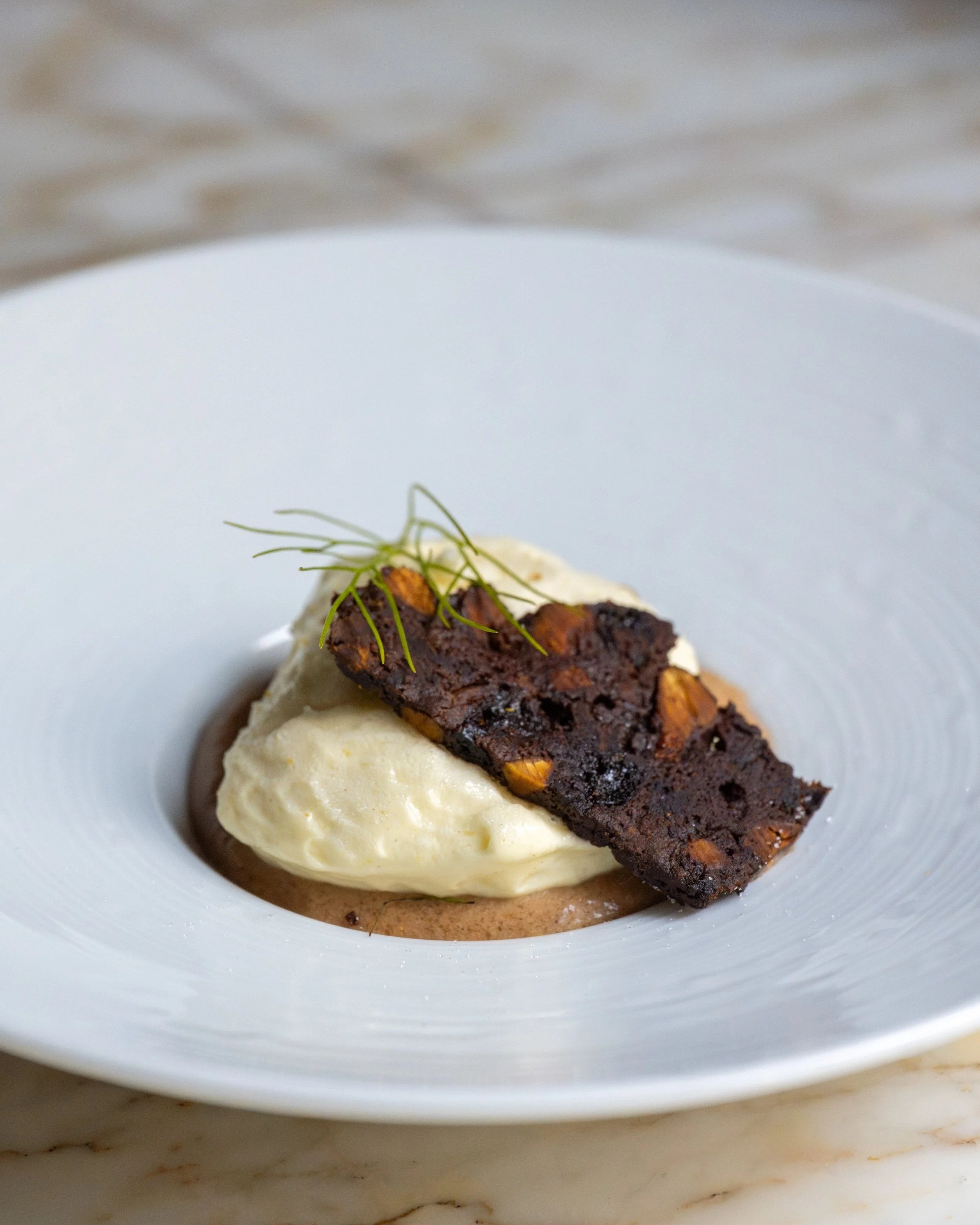
“I hadn’t really seen anybody put fennel into a dessert before,” says Pastry Chef Emily Heleba of Magdalena at The Ivy Hotel. “Through trial and tasting, the anise and cherries went really well together. From there, it was just kind of born.” Her cherry and fennel dessert starts off with a cherry diplomat cream. Heleba combines pastry cream with a cherry purée—made with fresh or dried cherries, depending on the season—along with whipped cream. The diplomat cream is “not too overpowering on its own,” says Heleba. So, to boost the tart and sweet flavors of the dessert, she tops the cream with cherries that are roasted with sumac and brown sugar, and warmed on pickup. Using a cream whipper, Heleba pipes on a Pernod and white wine sabayon. The plate is garnished with fennel sugar, which packs an anise-forward punch, and a deli-slicer-thin biscotti made with pistachios, cherries, and chocolate chunks. The biscotti is baked in a log, thinly sliced to maintain its identity as only a garnish, and dehydrated further “to just get that final crisp.” What at first may seem like a humble dish hides a bright surprise underneath its many layers: the cherries. “You just scoop down and see this pop of red,” Heleba says. “I always like a plate like that, where you discover something as you're eating it.”