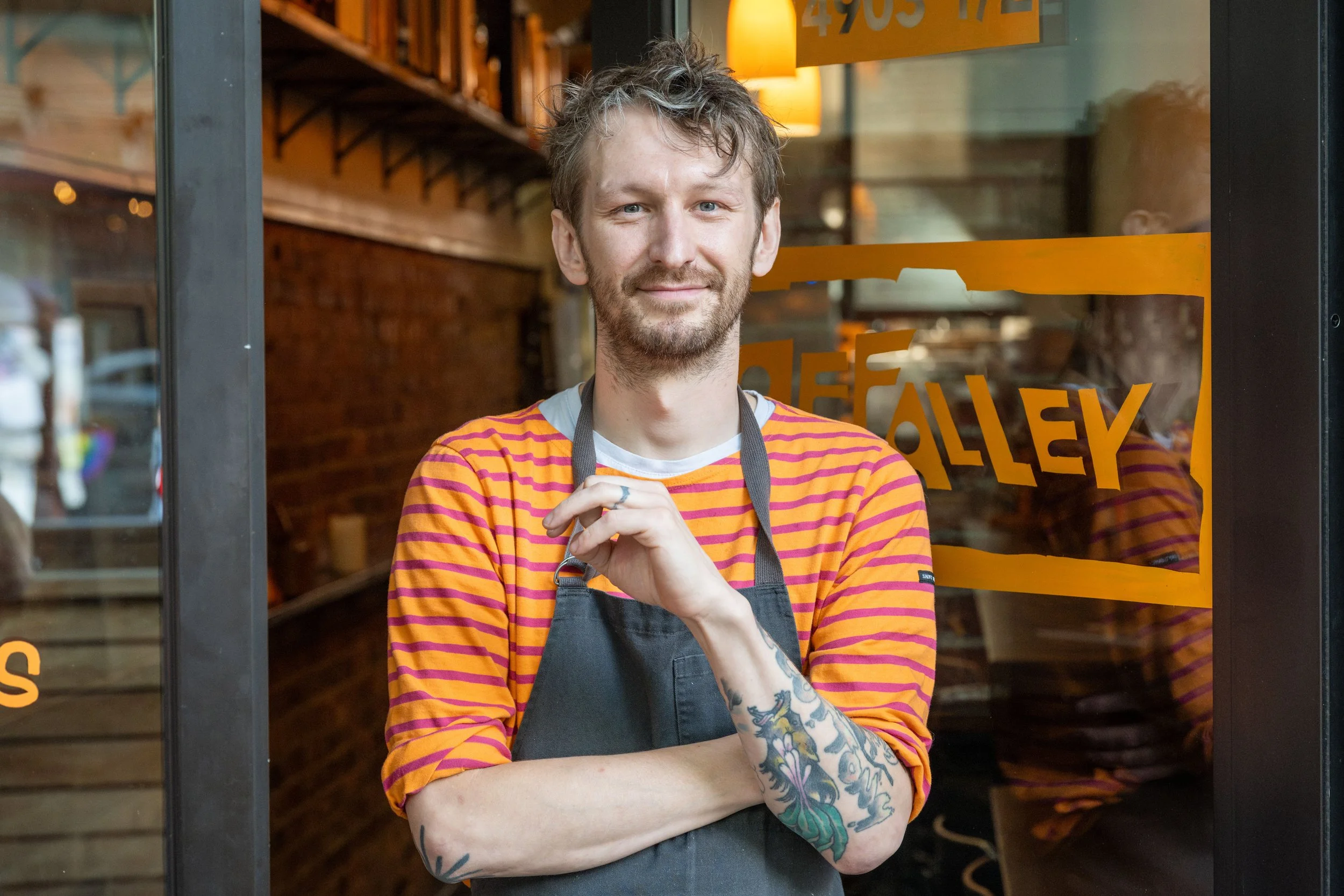
How Mera Kitchen Collective, a worker-owned cooperative, built itself into a community juggernaut, thanks to an extra serving of hardwork and homecooking
Photo: Will Blunt
In Baltimore, a restaurant sprouts from a formerly vacant storefront like chrysalis. A shell that Emily Lerman used to walk past every day, wondering what might come of it. Now she knows, because she helped will it into being.
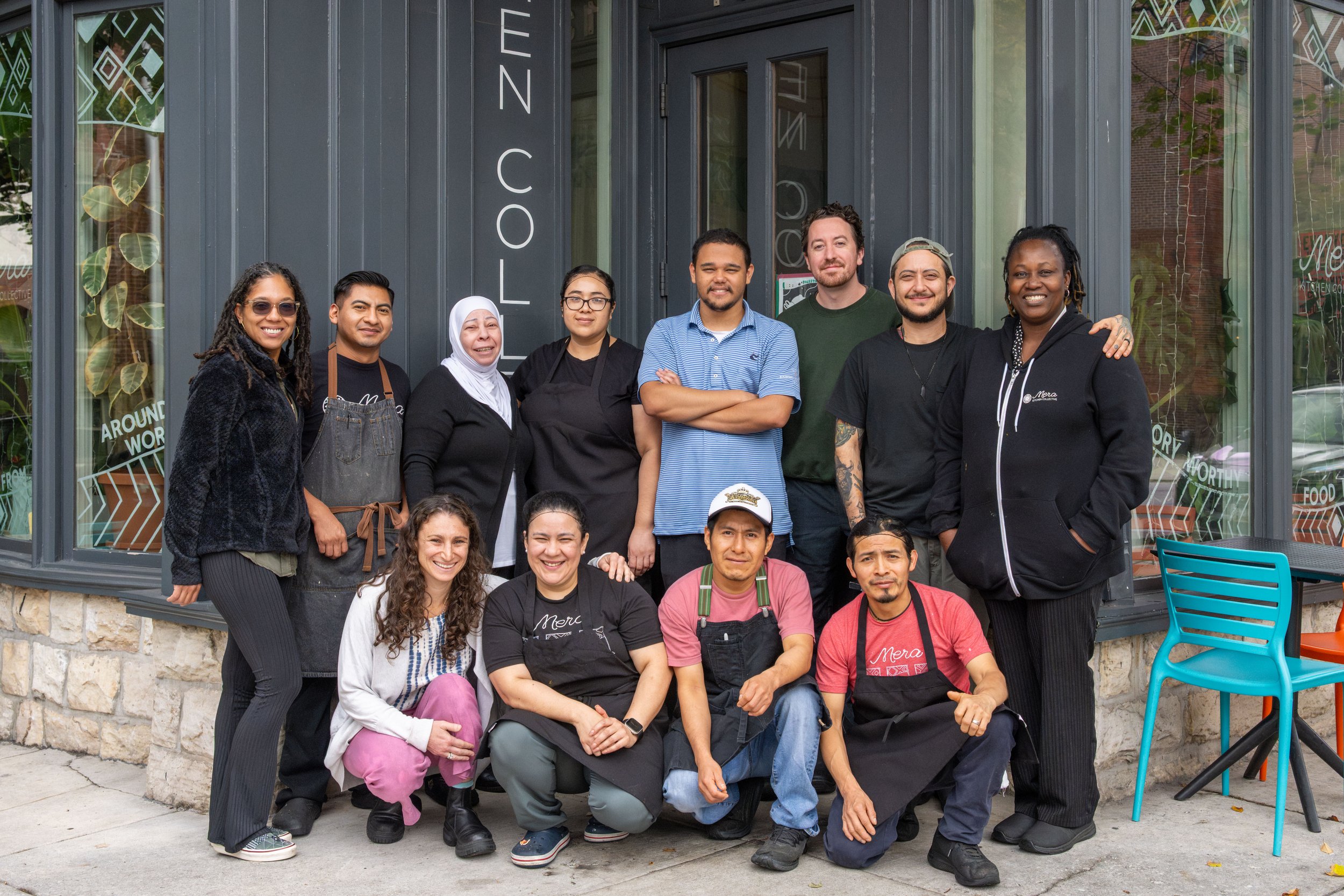
Mera Kitchen Collective is a worker-owned cooperative serving food from Honduras, Syria, Palestine, Burkina Faso, and beyond. It is also something harder to categorize: a workplace where the dishwasher can become an owner, where recipes are scaled from grandmotherly intuition to restaurant production, and where democracy happens slowly—sometimes painfully so—but intentionally nonetheless.
"I don't have all the amazing culinary experience that they have," Lerman says of her co-founders and team. "Being a little bit naïve was a good thing, because we were like, ‘We can totally do this thing.’"
The origin story is sort of accidental. Lerman spent years coordinating field operations for Doctors Without Borders across Central and West Africa, and then came to Baltimore for a master's in public health. During a research trip to Congo, she encountered women's empowerment groups—collectives where members pooled income and lent to each other. The model stuck with her. Back in Baltimore, she met Lilianne Makole from Cameroon, who wanted to cook, and Syrian-born Iman Alshehab, who also wanted to cook.
Their first meeting was at Red Emma's, a local worker-cooperative café and bookstore. From there, dinner at Aisha Alfadhalah’s house. Then another. Eventually, Hersh’s, a restaurant in Southwest Baltimore let Alshehab take over the kitchen for a Syrian feast. There, people started asking if they catered.
"We were like, 'Uh, yes, we do. We cater,'" Lerman recalls. And some initial chaos returned momentum.
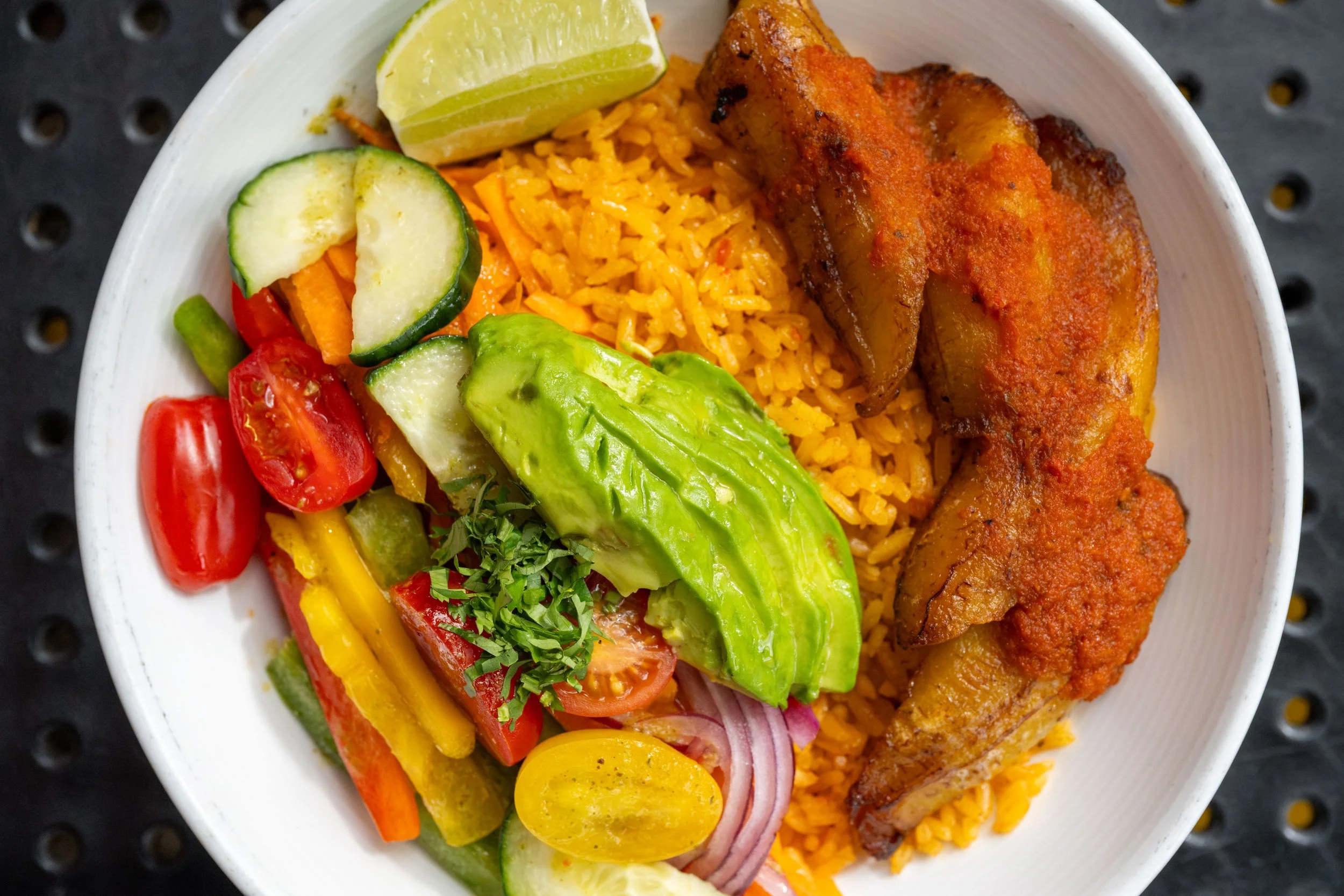
Chef Chef Emilienne Nebie Zongo’s Riz Gras: Bell Peppers, Plantains, Crudité, Tomato Sauce, Lime, Ginger-Habanero Hot Sauce, Vegetarian Spice Mix, Jasmine Rice
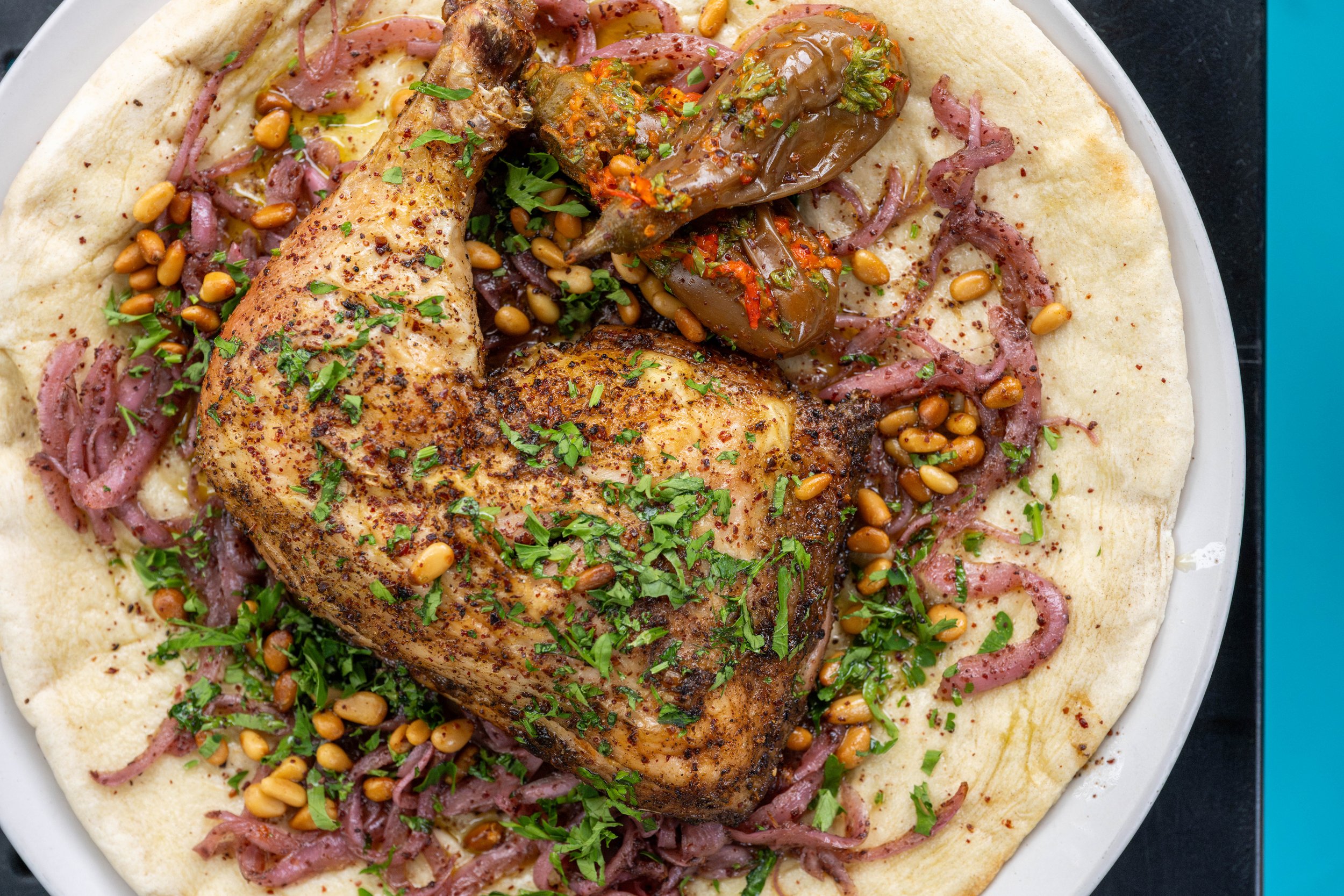
Chef Chef Marcelle Afram’s Musakhan with Chicken Leg Quarters, Palestinian Seven Spice, Caramelized Onions, Toasted Pine Nuts, Taboon Bread
When the pandemic hit, their catering pipeline collapsed. But something else emerged: a community meal commitment that would eventually produce over 250,000 free meals. They started a GoFundMe in March 2020. Grants and World Central Kitchen came with funding. Strangers from other restaurants, suddenly jobless, joined the team.
By late 2021, they faced a choice. "We were either going to call it a day and say that things were good, this is great, we've done a lot of things," Lerman says. "Or we can, you know, turn hard right and open a restaurant."
They chose the hard right. The building down the street—which had been vacant for over a year—became Mera's home. They finally opened in March 2022.
What they have built is unusual. There are five worker-owners now, with more on the pathway. The structure is a hybrid model. All current owners have an equal ownership stake. Buy-in is $1,000, and can be paid off through a payroll deduction.
"There's a pathway to ownership that people are eligible for after two years and after favorable reviews and feeling that the commitment has been demonstrated," Lerman explains.
Prospective owners go through a worker-owner readiness training program run by the Baltimore Roundtable for Economic Democracy, alongside new owners from other local co-ops. It's part education, part unlearning. "It is a very different structure," Lerman says. "We have Marcelle [Afram] here who's our culinary director, so he's able to coordinate and orchestrate and really guide the team, but it is meant to be that people are able to bring their ideas and their vision."
Ownership doesn't come with a windfall. It comes with more meetings, more responsibility, and the weight of collective decision-making. "Democracy takes time," Lerman says.
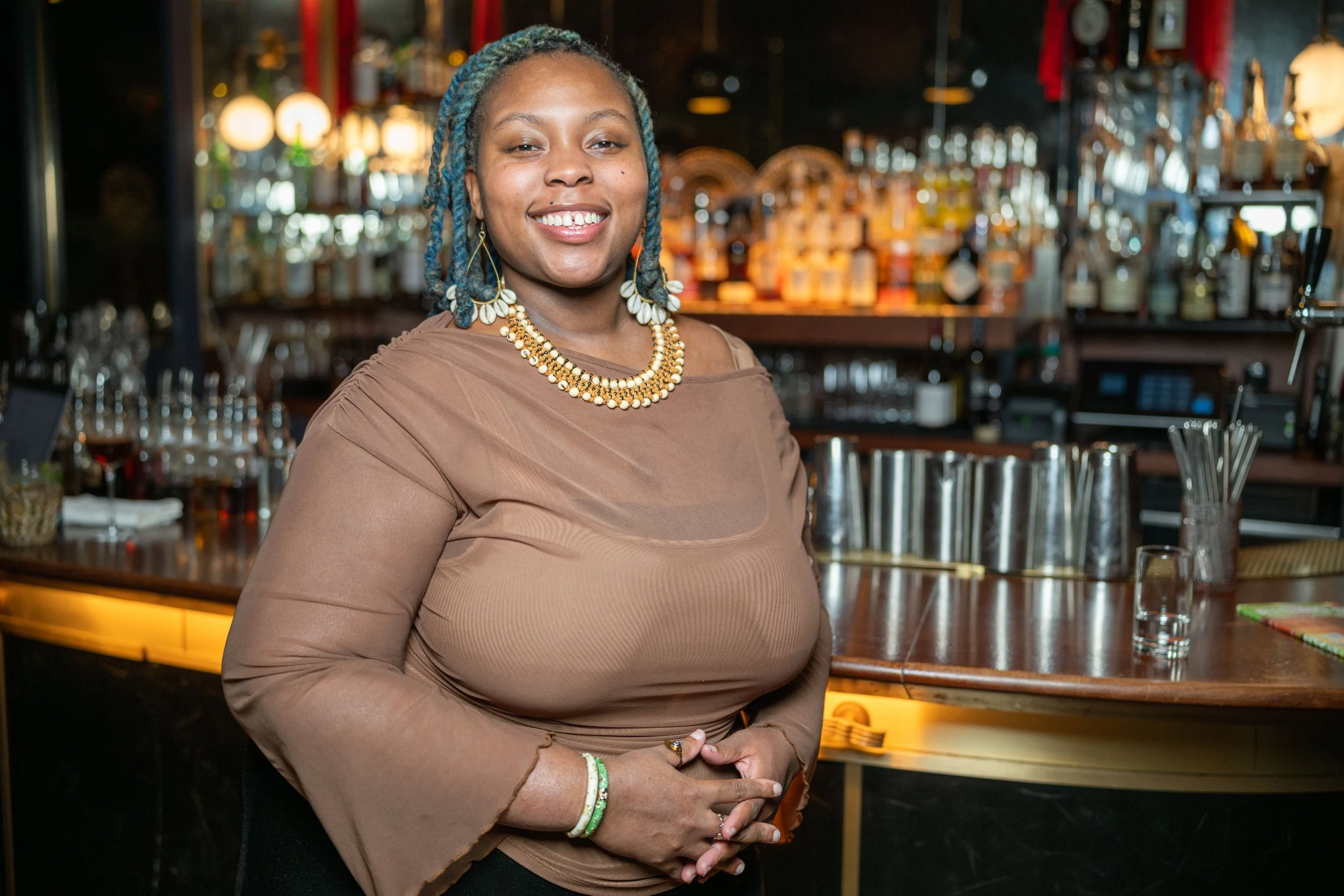
Alexus Snovitch, who started as Mera's first front-of-house hire in March 2022 and became a worker-owner last summer, describes the shift: "I feel like I have to be more in tune with the people." After two decades in hospitality, Mera is her first job where giving back to the community is woven into the work itself.
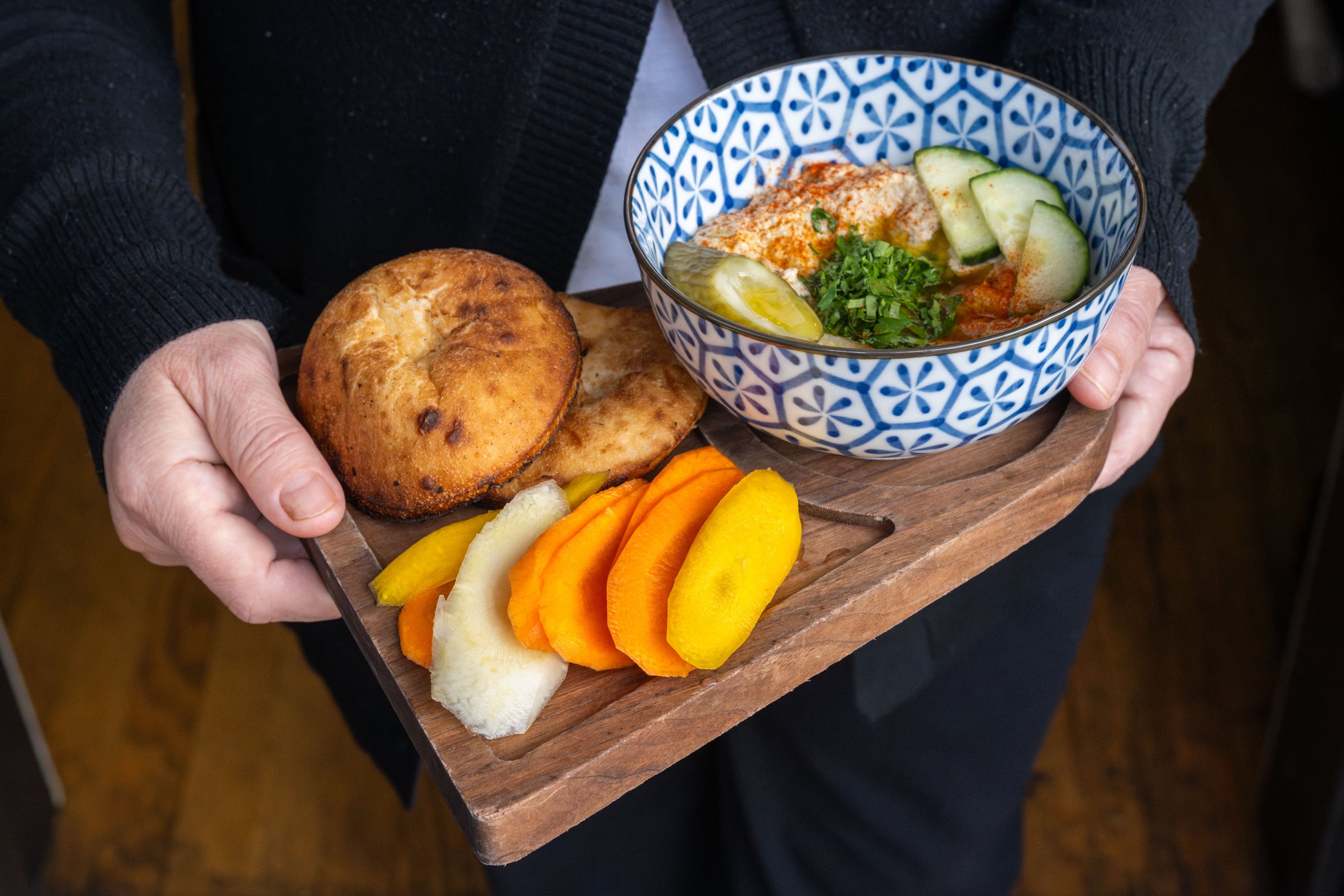
Chef Iman Alshehab’s Mutabal with Pita

Chef Sara Ordoñez’s Tamal Hondureño: Chicken, Carrots, Corn, Onions, Green Beans, Chickpeas Tomatoes, Masa, Tomatillo Salsa Verde, Pickled Escabeche
The food is personal by design. Alshehab prepares mutabal, a coarse Syrian eggplant dip she insists on naming correctly: "A lot of people are familiar with what they call baba ganoush, but really in Syria, this is the dish." Sara Ordoñez makes Honduran tamales from her grandmother's recipe—masa, braised chicken, carrots, corn, chickpeas, wrapped in banana leaf and double-steamed. Emilienne Nebie Zongo's Burkinabé plantain and avocado bowl uses colorful peppers to mirror the Burkinabé flag. "When people eat, I want to bring them home a little bit," she says.
And there is Afram's musakhan: Palestine's national dish, built for the olive oil harvest. Chicken confited in Lebanese olive oil, rubbed with sumac and seven-spice, served over lacto-fermented onions and taboon bread. The sumac comes from Turkey and the za'atar comes from farmers in Jenin, Palestine. "We're in a constant state of reclamation," Afram says. "This is a good entryway to our culture and story."
Afram, who joined as culinary director in 2025, sees his responsibility as stewardship rather than authorship. He helps take his coworkers’ dishes from family memory to scalable and repeatable service-friendly recipes. "Every dish begins with a personal lineage," he explains. "It's about respect for where these techniques and tastes come from."
Though the work is noble, it’s far from easy. Mera has implemented a 20-percent livable wage fee on all checks, but Lerman knows it's not enough. To give employees free health benefits would cost around $12,000 a month, but they have an employee assistance fund through their MK Foundation. She and Alfadhalah have kept their day jobs so they're not drawing from a limited pool. "It’s common that someone’s getting exploited along the way," Lerman says of the restaurant industry's economics. "It's just a really tough model."
Still, they refuse to open on the Friday after Thanksgiving, Christmas, and July 4. They're closed Sunday and Monday so staff can be with family. They give paid weeks off. Beyond the restaurant, the collective continues to fundraise for Gaza relief, LGBTQ+ rights, and local Baltimore organizations.
Salha Balala, a part-time staff member since 2019, puts it simply: “As more of us find ourselves abandoned by cruel and indifferent institutions, community is our strongest shield."
What Mera proves is that a restaurant can be a site and statement of resistance, even if it can't solve everything. It can pay better than most, even if not as much as it would like. It can give workers a vote, even when the resulting change is slow. It can do the right thing, despite it not being the easiest.
"I would love to have a business where everyone can really have family-sustaining jobs," Lerman says. "I don't know the answer to that. But that would be the goal."
Answers or not, the work ticks on. The tamales are double-steamed. The dining room fills the belly of the building it’s made whole. Inside, there is something for everyone.