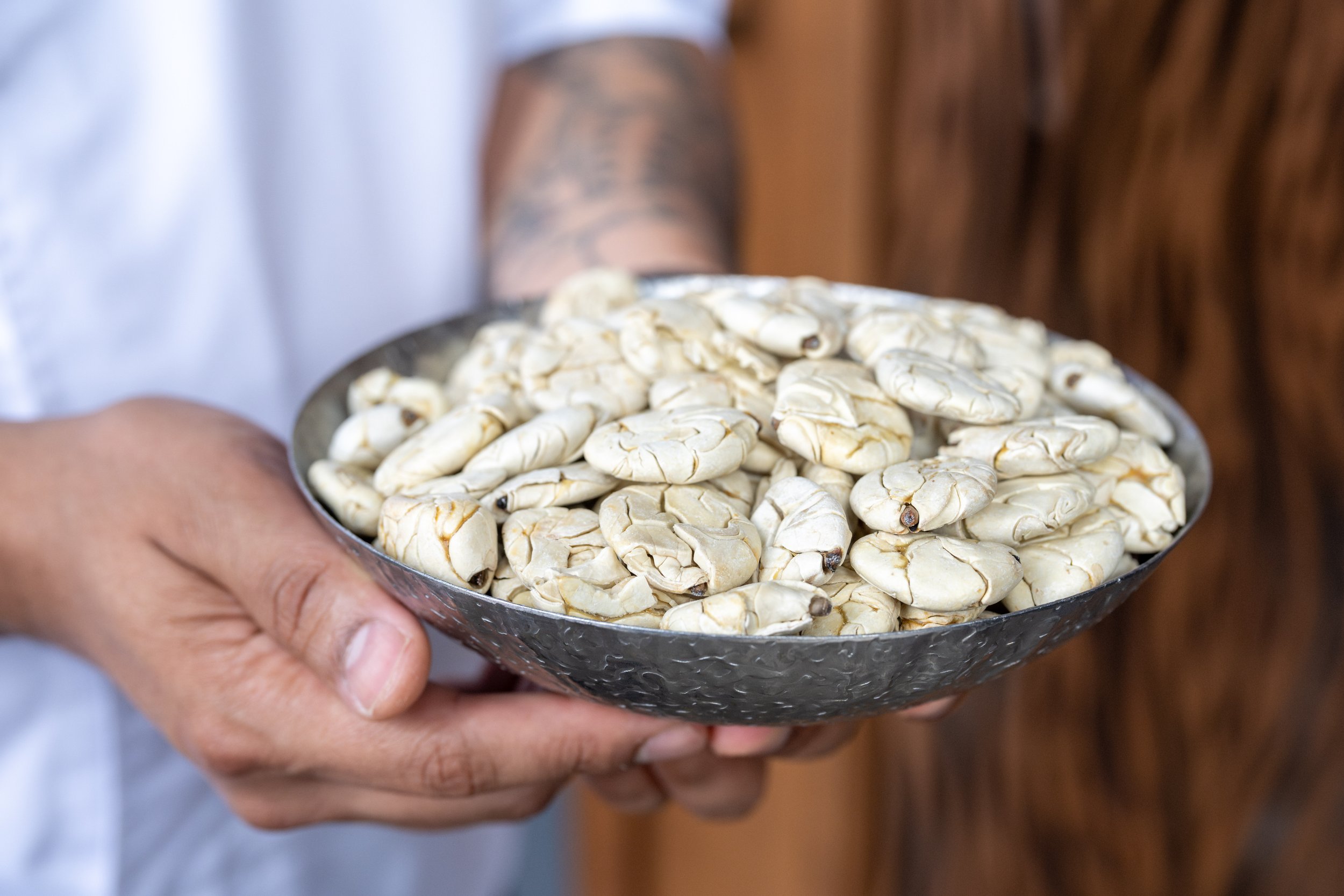
Macambo (also known as Theobroma bicolor) is at the center of the dessert menu at Causa.
MAcambo at Causa | Photos: Will Blunt
Most people have never heard of macambo. Chef Carlos Delgado wants to change that. At Causa, his tasting menu restaurant in Washington, D.C., the Peruvian-born chef has built an entire dessert program around Theobroma bicolor—a wild relative of cacao that grows in the same Amazonian lowlands, often planted as a shade tree for its more famous cousin. The fruit looks like a swollen cacao pod. The flavor reads like white chocolate, but earthier: nutty, faintly vanilla, with more depth and body than the confectioner's version. "It's something that resembles a wild white chocolate that's natural," Delgado says. "You don't have to do anything to make it look like something else."
Delgado first tasted macambo years ago while dining at Central in Lima, Peru. He then traveled to the source: a three-hour trek into the Amazon near Tarapoto, where a women's co-op processes the fruit by hand. The region has history. In the 1990s, many of these farmers grew coca leaf for the cocaine trade. U.S.-backed crop substitution programs—part of a broader effort to offer legal alternatives for farmers—encouraged a shift to cacao and its relatives. Macambo became one of those surrogates: a high-protein seed with real market potential, now championed by a new generation of growers. "This ingredient that grows in our backyard," Delgado says. "Nobody really knows about it."
He sources the fermented beans through brokers he's cultivated over two decades of cooking Peruvian food. At Causa, the process mirrors that of good chocolate: the beans are lightly roasted to release their oils, then refined in-house for three days. Delgado balances the paste with cocoa butter and sugar to land at roughly sixty percent macambo—enough to show off its character without muddling the palate. "For something so delicate, you need to approach it that way," he says.
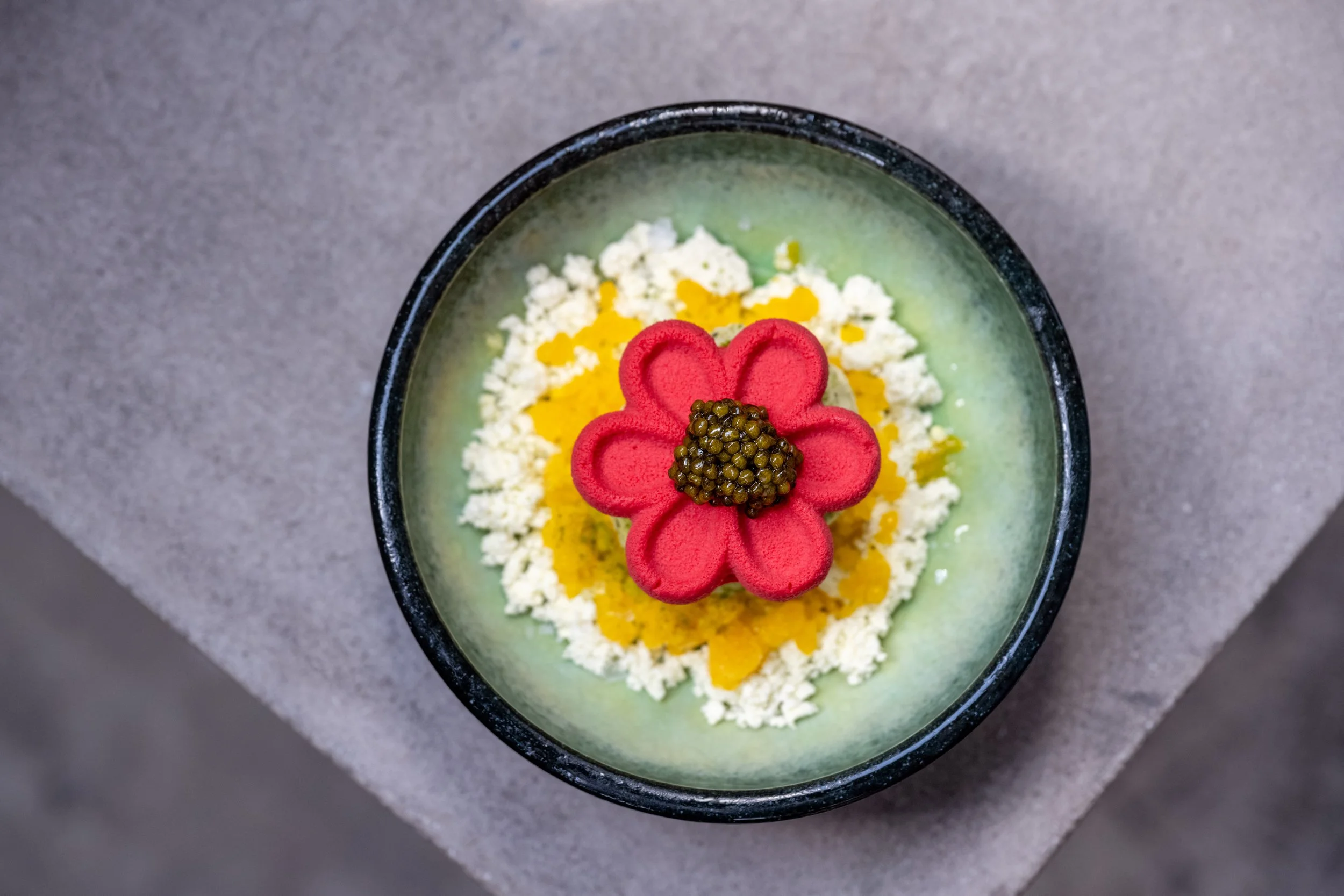
Chef CarloS Delgado’s Chazuta with Macambo Ganache, Macambo Mousse, Passion Fruit-Huacatay Gelato, Mango Ice, Huacatay Oil, and Golden Osetra Caviar
Causa’s current dessert, named Chazuta after the town where the co-op operates, layers macambo mousse and ganache with huacatay oil, passion fruit-huacatay gelato, golden osetra caviar, and a flicker of Maldon salt. The fat from the macambo sticks around as a base note for each bite. "Whatever flavor you eat, that macambo is gonna start and it's going to linger at the end," Delgado explains.
The ingredient is a little more pricey than your average chocolate, but he still goes through over a thousand pounds a year—an improbable volume for an ingredient most American diners have never tasted. But that's the point. Delgado built a greenhouse on the roof of the restaurant to grow potato leaves and other “impossible-to-source” Peruvian ingredients. Macambo fits the same logic: if he can't bring guests to the Amazon, he'll bring the Amazon to them. "I'm not selling you food," he says. "I'm selling you an idea that makes you want to travel to Peru."