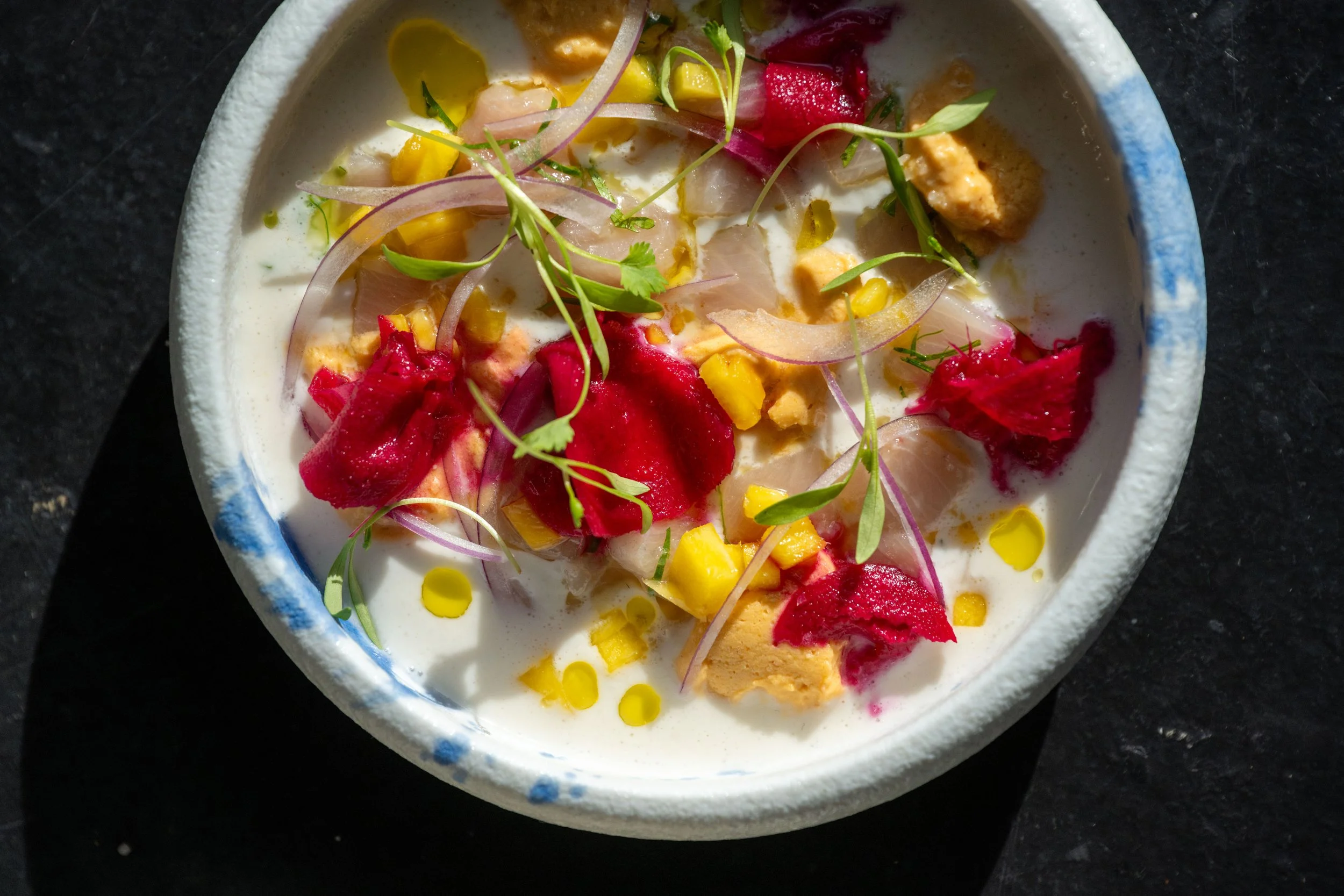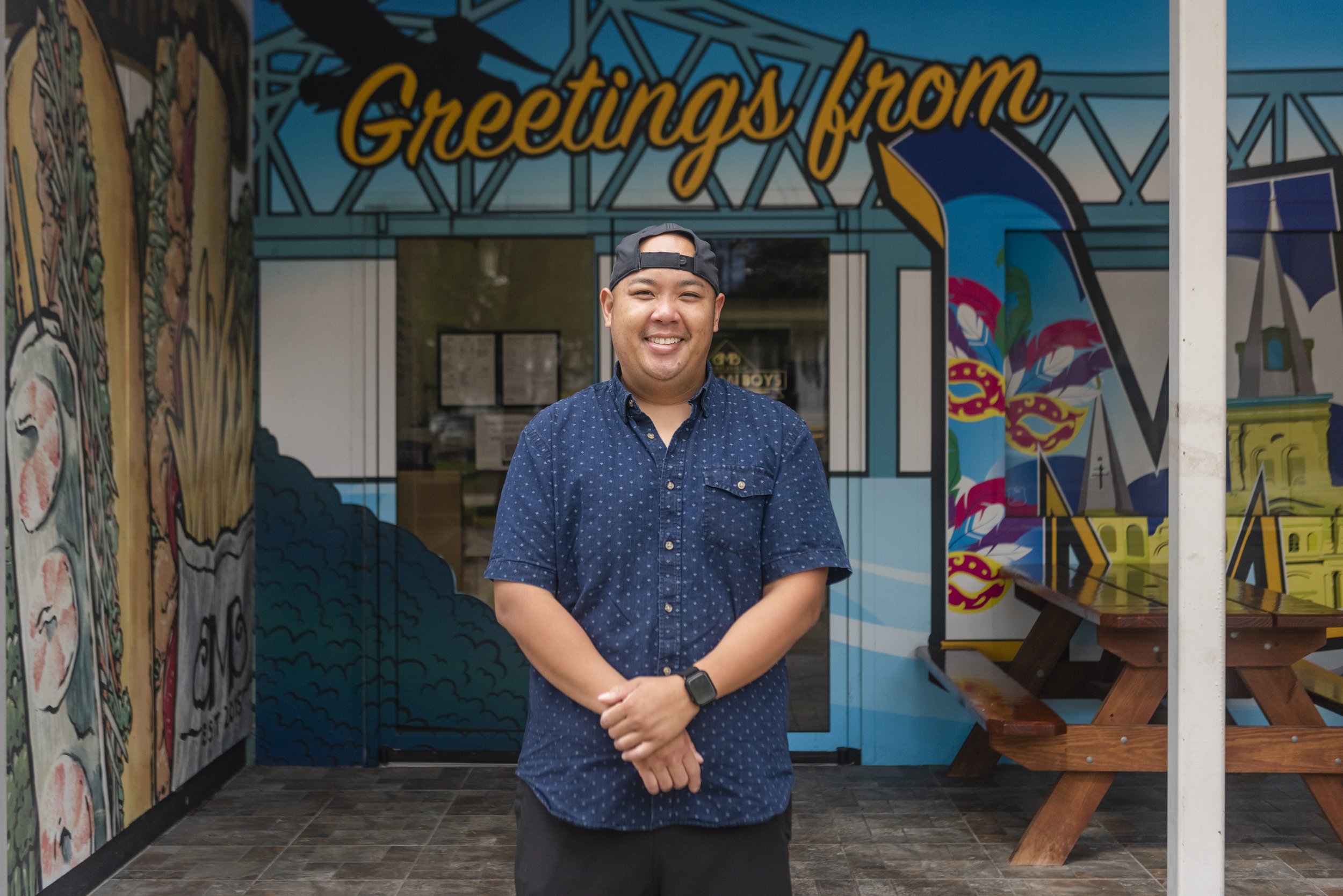
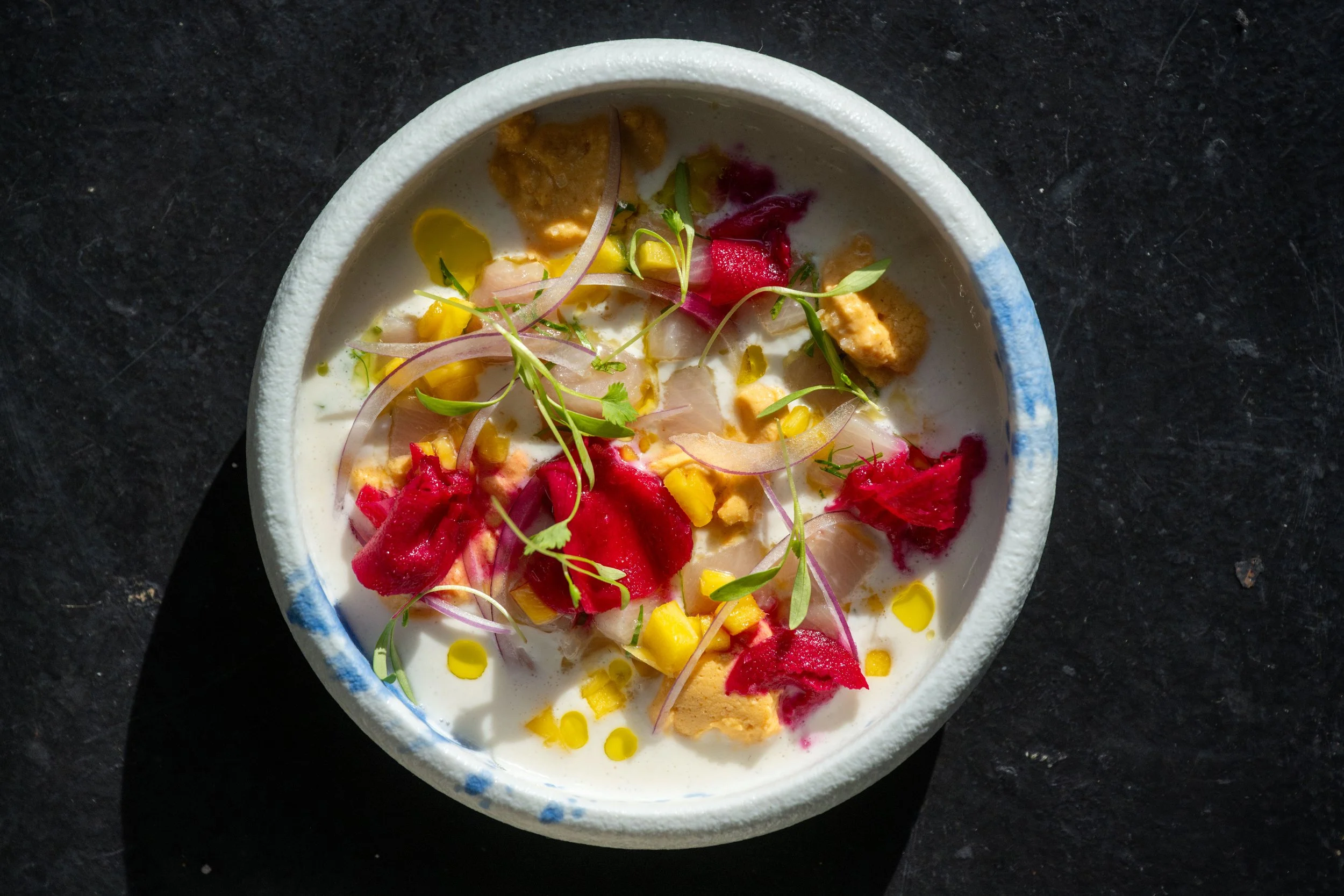
Chef Jamie Tran translates a nostalgic Vietnamese salad into a flavor-packed hamachi crudo.
Photos: Will Blunt
In Vietnamese, the word for salad is gỏi, but directly translated, gỏi also means something like to “mix together joyfully.”
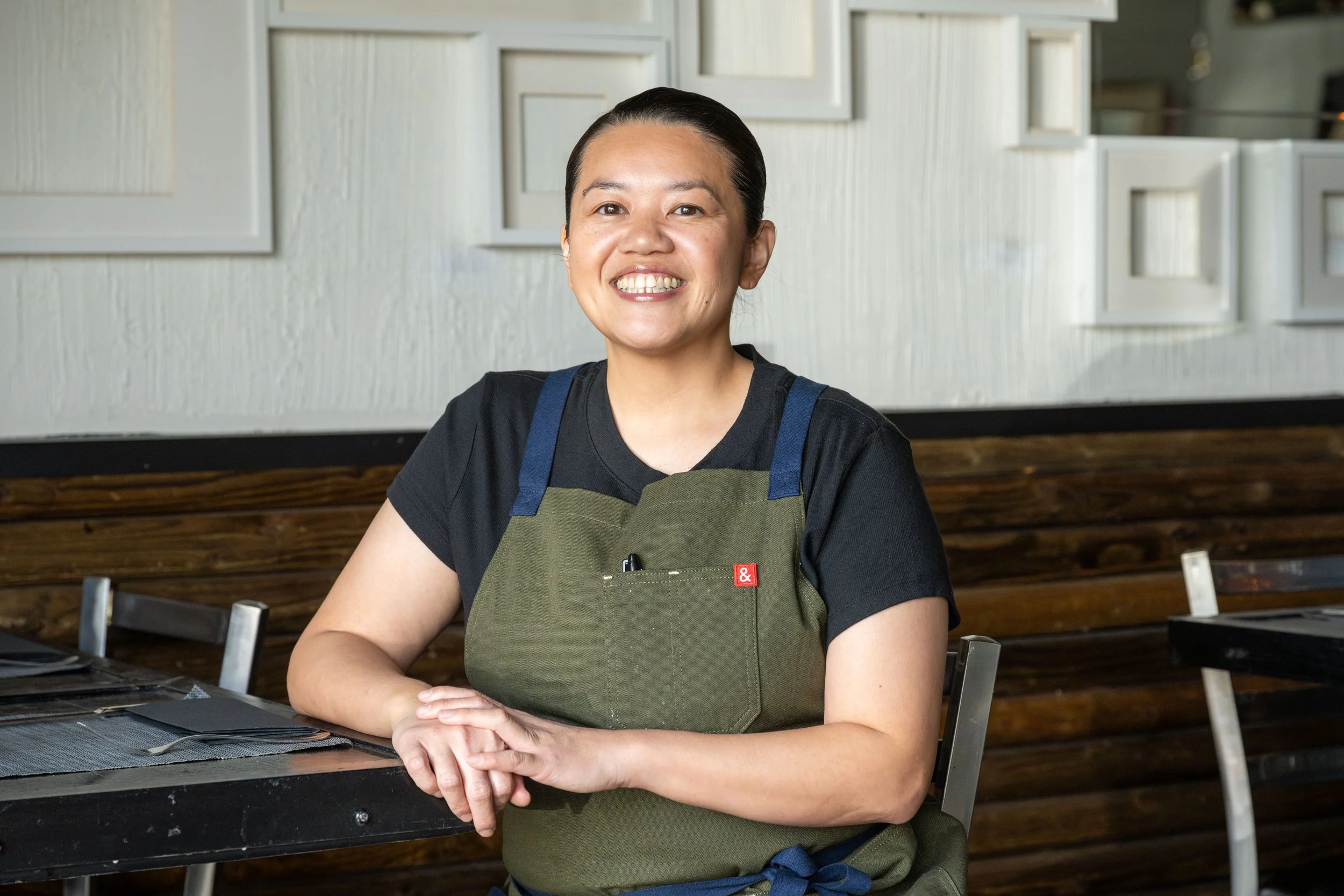
Chef and Owner Jamie Tran of The Black Sheep finds her own kind of joy in distilling the nostalgic elements of gỏi xoài, a Vietnamese cold mango-shrimp salad, into a hamachi crudo. “To me, it’s all about freshness—sweet, sour, crunchy, bright flavors. I wanted to take that flavor and texture profile and translate it into a crudo,” says Tran.
Tran, who grew up in California, got into the kitchen at a young age. Her father was a chef, but Tran’s mother also offered an early viewpoint on the transformative nature of food. “I wanted to cook with my mom; we had rolling blackouts in California and she would take old empty cookie tins and turn them into makeshift stoves, cooking braised pork belly, rice, and vegetables,” says Tran. “That’s when I realized food is love and that I wanted to cook.” This resourcefulness and joy, so to speak, can be felt in every bite of Tran’s flavorfully concentrated and bright crudo.
Coconut Broth
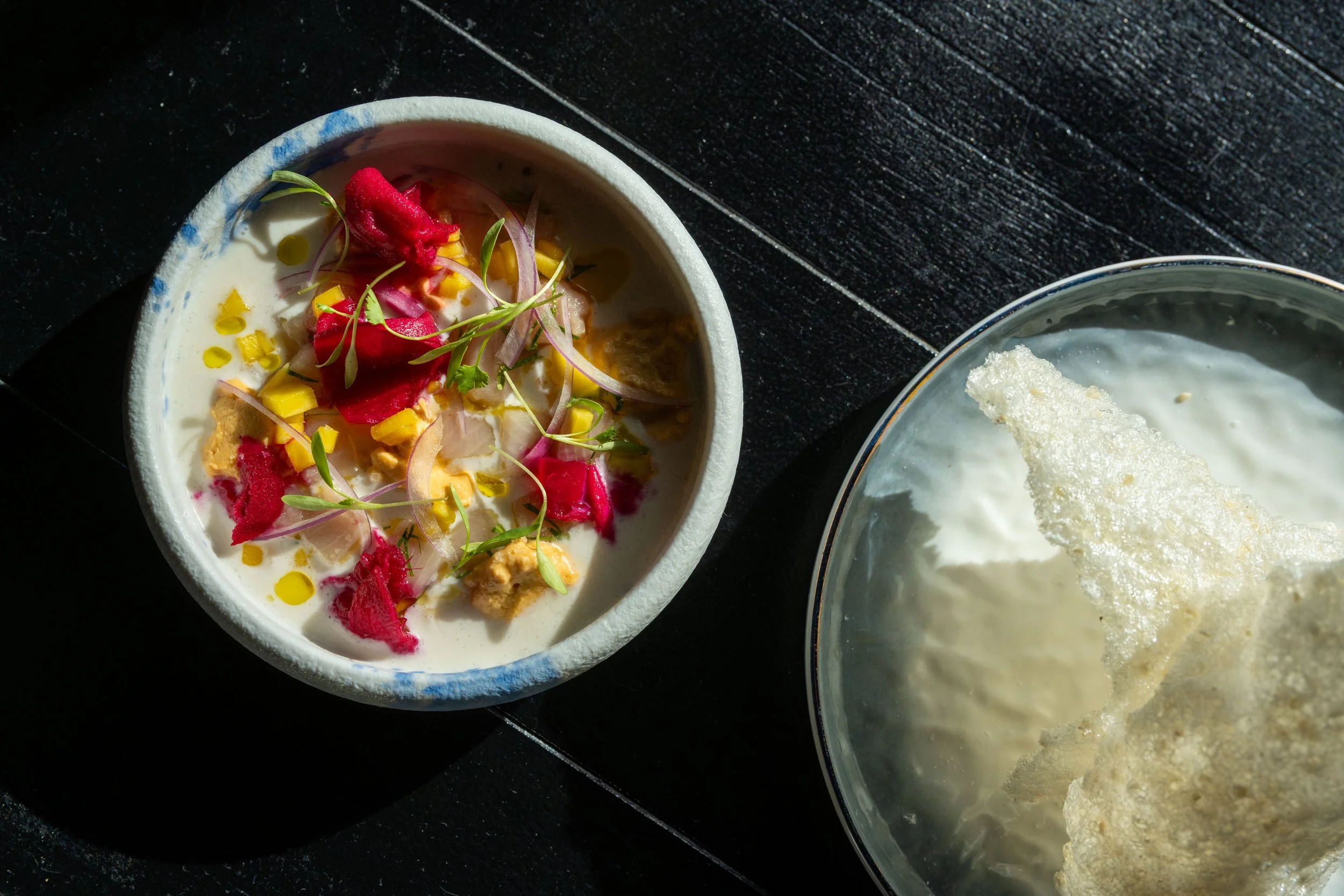
The base sauce of the crudo is a coconut broth. Tran takes both the flesh and juice of a coconut and blends it together, then strains it and reinforces the liquid with coconut milk. She infuses this mixture with aromatics like ginger, Thai chile, onion, lime zest, and garlic via a vacuum sealed bag, which she sous vides for one hour at 100°F. Tran lets the broth rest before straining it, allowing the flavors to marry overnight. Finally, she adds lime, lemon, and orange juice to lift the sweet fat of the coconut.
Hamachi
Tran trades shrimp for hamachi, choosing a fish that would act as a receptive canvas for bold flavors while keeping the dish accessible to her loyal regulars. “It’s become my go-to and lets me keep the dish affordable for locals while still using the same quality product.” The hamachi is thinly sliced like sashimi.
Tom Yum Gelée
To incorporate even more Southeast Asian flavors, Tran makes a rich tom yum gelée. She starts by creating the base of a tom yum soup, roasting discarded shrimp shells from other dishes to echo the shrimp flavor of traditional gỏi xoài. She sautées Southeast Asian aromatics like lemongrass, lime leaves, galangal, ginger, and garlic, and then adds stock to create a broth, which she reduces until thirty-percent remains. “I reduce it all the way down, and set it into a gelée so you get these concentrated, seafood-driven bursts of flavor that change from bite to bite thanks to the way the gelée, fish, fruit, and herbs come together,” says Tran.
Beet-Pickled Ginger
To bring balance to the crudo, Tran juices beets to extract out an earthy sweetness and combines it with rice vinegar to form the base of a cold brine. She then adds kombu for further umami and salinity before rounding out the flavors by adding salt and rock sugar. She submerges thinly sliced ginger in the pickling brine and lets it sit for 3 hours. The dish is topped with a delicate amount of the punchy, aromatic ginger.
Coconut Cracker
Traditionally, gỏi xoài is eaten alongside shrimp chips or bánh phồng tôm. Tran reinterprets this in a coconut chicharrón that builds texture in the crudo. “I’m obsessed with texture and don’t like flat, one-note, mushy food,” says Tran. She begins by cooking rice down in coconut milk until it reaches a reduced, near congee-like texture. Tran then spreads the paste onto silicone-lined sheet trays and dehydrates it overnight. She then fries pieces of the dehydrated coconut until the paste puffs into a cracker, which Tran serves alongside the crudo.
Garnish
Tran finishes the crudo with fresh ripe mango, unlike the traditional green mango in gỏi xoài, which leans more tart. Cilantro and red onion complete the dish, and harken back to the gỏi xoài that Tran’s mother made for her growing up.