Branching Out
How the Bay's chefs are translating California’s towering trees into one-of-a-kind dishes
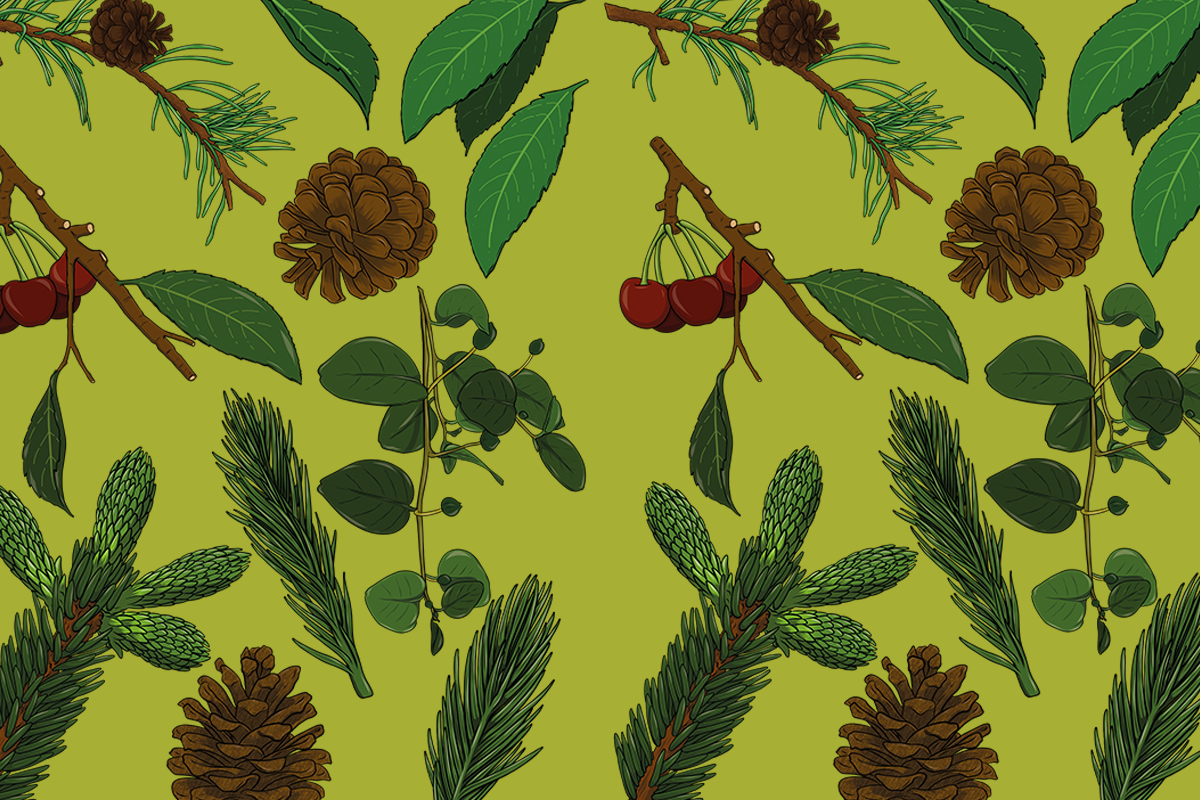
Illustration: Max Erwin
California is lauded for its unbridled, natural bounty, and nothing is more widly Californian than its abundant trees. From the stately pine to the mammoth Sequoia, the trees in California are the gift that keeps on giving. In San Francisco, chefs are finding ways to represent California’s lush forests on the plate, with imaginative dishes alive with the distinctive smell and taste of its iconic flora.
PASTRY CHEF ELLIE ESTRADA-LONDO OF NISEI
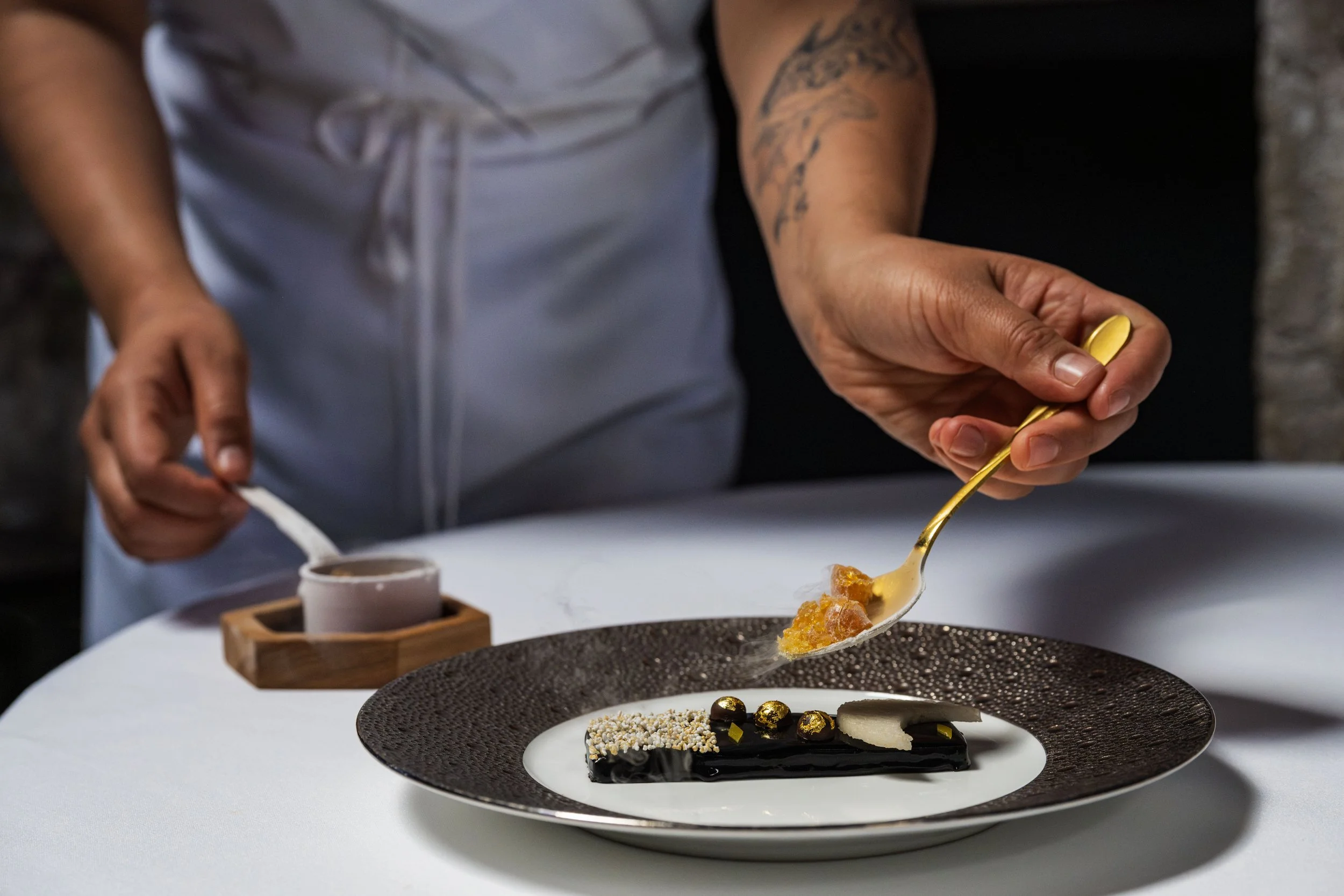
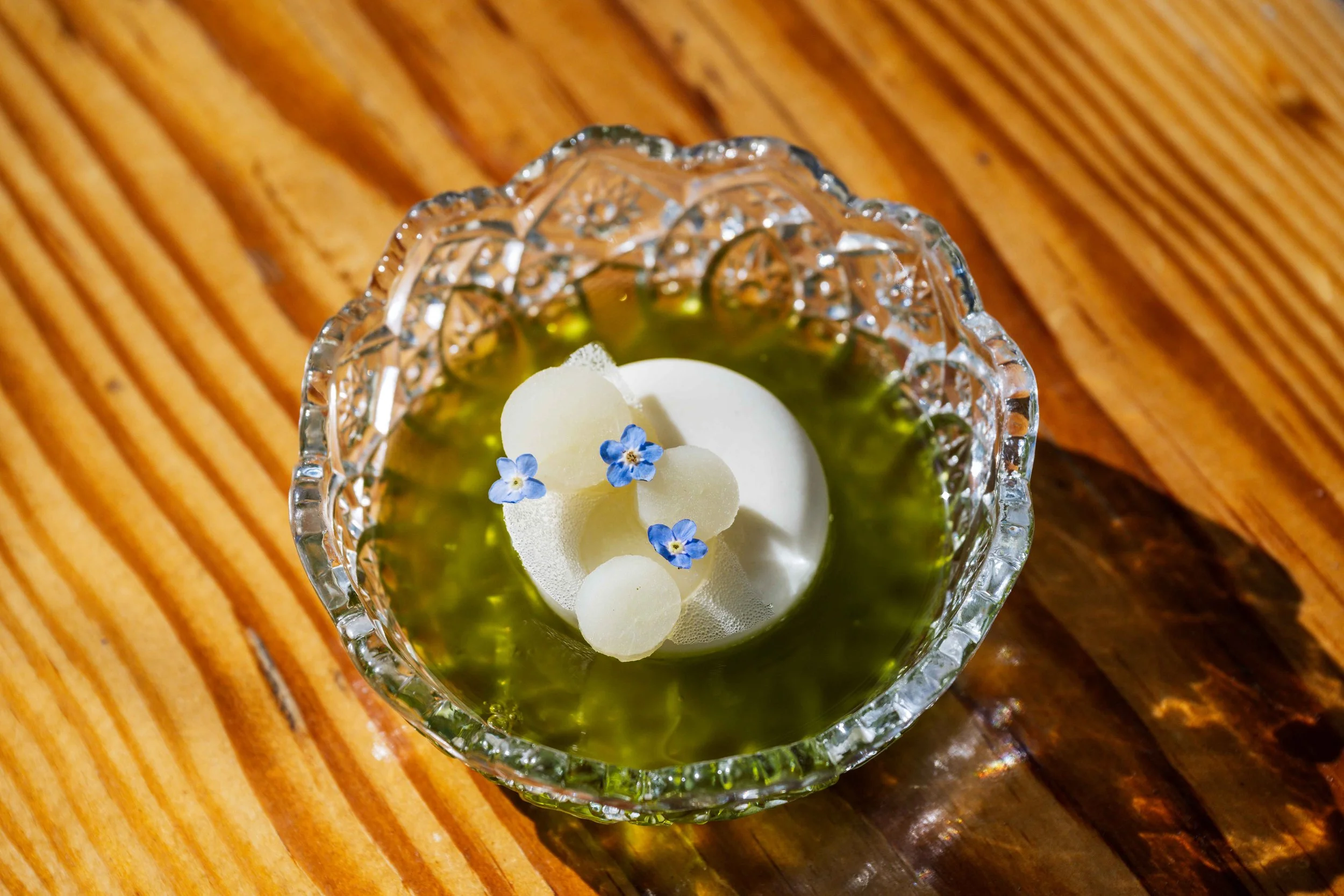
Pears and Pine California Redwood Fog: Buttermilk-Ginger Namelaka, Sake- and Ginger-Poached Pears, Opaline Glass, Pine “Vinaigrette”
Pastry Chef Ellie Estrada-Londo looks to nostalgia when conceptualizing her playful desserts for the tasting menu at Nisei, and her first childhood visits to the California redwood forest inspired one of her favorite creations. “As someone who’s not from here, the first time I ever went into the Redwoods Forest for a hike, it was so unforgettable,” Estrada-Londo says. “I really wanted to distill the sense memory of breathing in the redwoods that I closely associate with my childhood visits to San Francisco. Every time I leave and I’m on my way back, I know I get to look forward to that first breath of pine when I return.” Estrada-Londo wanted to showcase the distinct aroma of pine by transforming it into a sweet “vinaigrette” that dresses a buttermilk and ginger namelaka. She weaves in pine flavor at a few other junctures in the dish, starting with pears, which are poached in sake along with green pine cones to infuse a little of their flavor. If pine cones aren’t available, branches can be bruised and infused into the poaching liquid in their stead. The vinaigrette is built on a housemade pine oil made from foraged tree limbs and needles. The dish is finished with a reduction of the sake-based, pine-and-ginger-infused poaching liquid, along with another housemade oil made from California redwood. “I feel like the thing that pine really contributes is aroma more than out-and-out flavor,” says Estrada-Londo. “More than anything, I definitely wanted to activate the nasal passages, so it really opens up the palate.”
CHEF HARRISON CHENEY OF SONS & DAUGHTERS
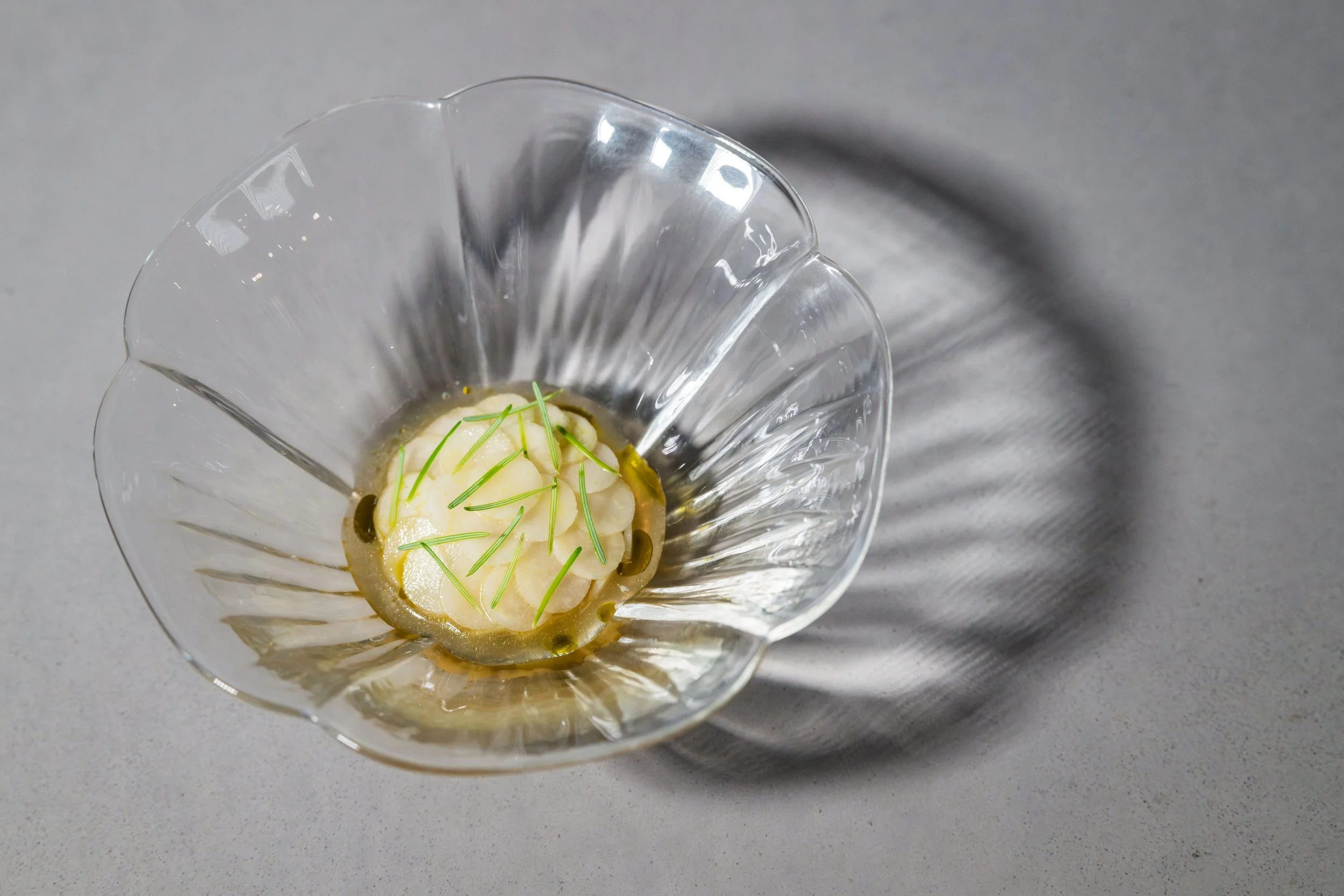
Scallops, Kohlrabi, Burnt Apple Thinnings Sauce, Spruce Vinegar, Spruce Oil, Spruce Shoots
Chef Harrison Cheney of Sons & Daughters first used pine when working at the New Nordic fine dining institution Gastrologik in Sweden, but the inspiration for his scallops in a burnt apple thinnings sauce with spruce vinegar and young spruce shoots came, in part, from the Bay Area’s abundant trees and his childhood Christmases in England. “We have slowly moved away from being a New Nordic restaurant, and we’re kind of creating our own style of cooking that is hugely inspired by California and what’s around us,” says Cheney. “Most people [here] have walked past a pine tree or a spruce tree or a redwood or wild blackberries.” To evoke this, Cheney serves raw scallops with thinly sliced kohlrabi and a burnt apple thinnings sauce made from the pruned apples that are “thinned” from apple trees to make room for a healthier crop. To this, Cheney adds a bright, nostalgic flavor of locally foraged spruce from Marin County in a few ways, showcasing its versatility. “Young spruce is very zesty and citrusy, that’s why we just put them on fresh, we don’t manipulate them at all,” says Cheney. The raw, young spruce tips offer an herbal bite. But to finish the dish, Cheney explores the more robust flavor of spruce with oil made of its branches and needles, which he blends with oil before letting it separate. “It’s a lot more mature in flavor,” says Cheney. “I would say it’s aromatic, but in a very, very different way. It’s a lot more concentrated and has a deeper and richer flavor profile.”
BARTENDER SEAN KEMPER OF SAISON
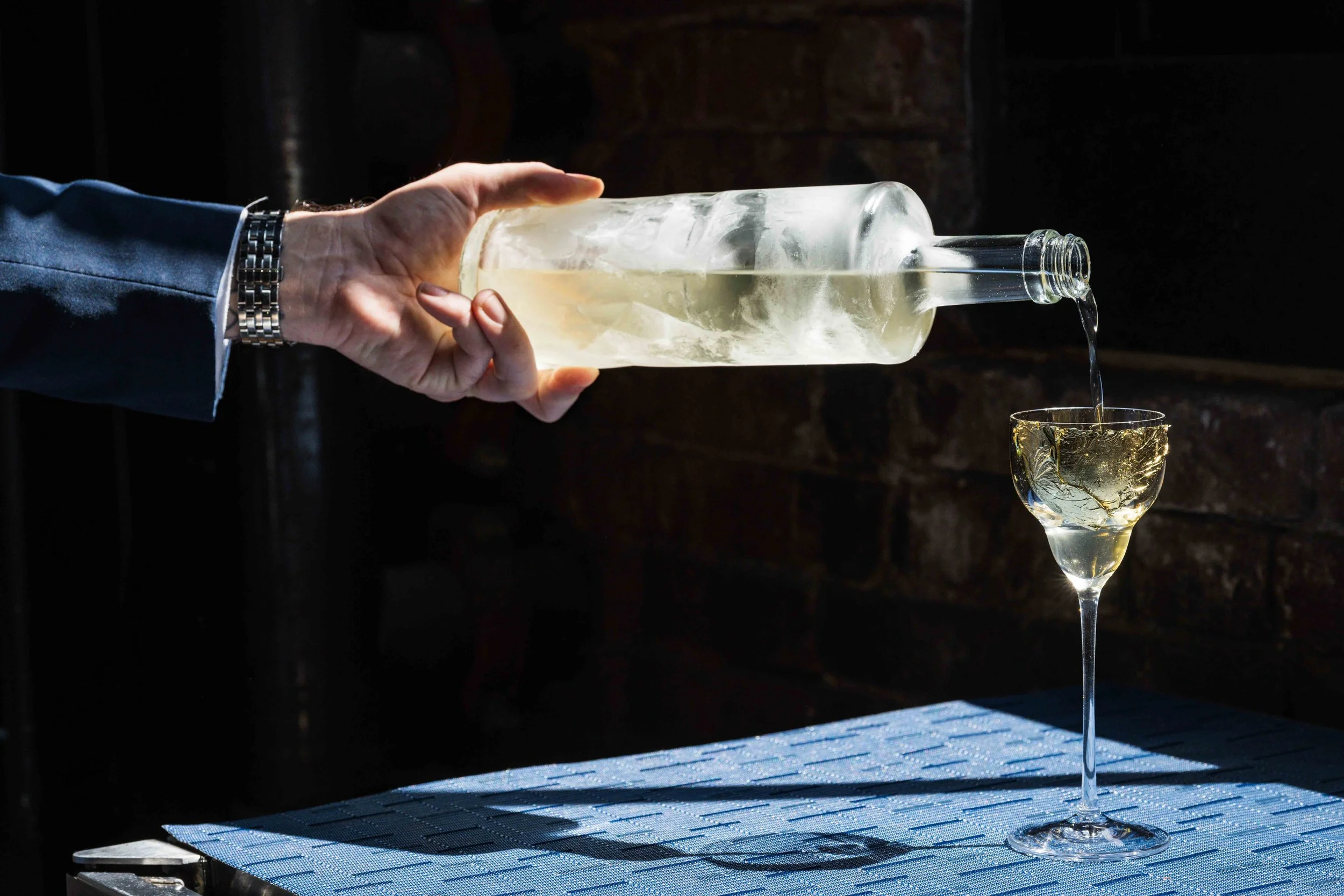
Cherry Leaf-Infused Gin, Dry Vermouth, Cocchi Americano, Fino Sherry, Orange Bitters, Saline, Gold Leaf
At Saison, Bartender Sean Kemper wanted a martini riff that would echo the tasting menu’s focus on California terroir. After trial-and-error with cypress trees and redwood tips, Kemper took inspiration from Chef Richard Lee’s duck dish with salted cherry leaf sauce, as well as traditional Japanese preserved cherry leaves, to put a twist on a classic martini. “The cherry leaves themselves might be fairly aromatic with a mid-palate kind of baking spice,” says Kemper. “They’re also a little bit bitter, which adds a nice layer.” In developing the cocktail originally, Kemper used cherry leaves sourced from Fruit Queen in Northern California, preserving them by vacuum sealing them with twenty-percent salt by weight. For the base of his cocktail, Kemper cold infuses three of the preserved cherry leaves from Japan for better consistency into two liters of gin for 24 hours before straining. To this, Kemper adds dry vermouth, Cocchi Americano, fino Sherry, orange bitters for a round martini balanced by the almost marzipan-like notes, tannins, and salinity of the cherry leaves.
CHEF BERGEN BOWNE OF BIRDSONG
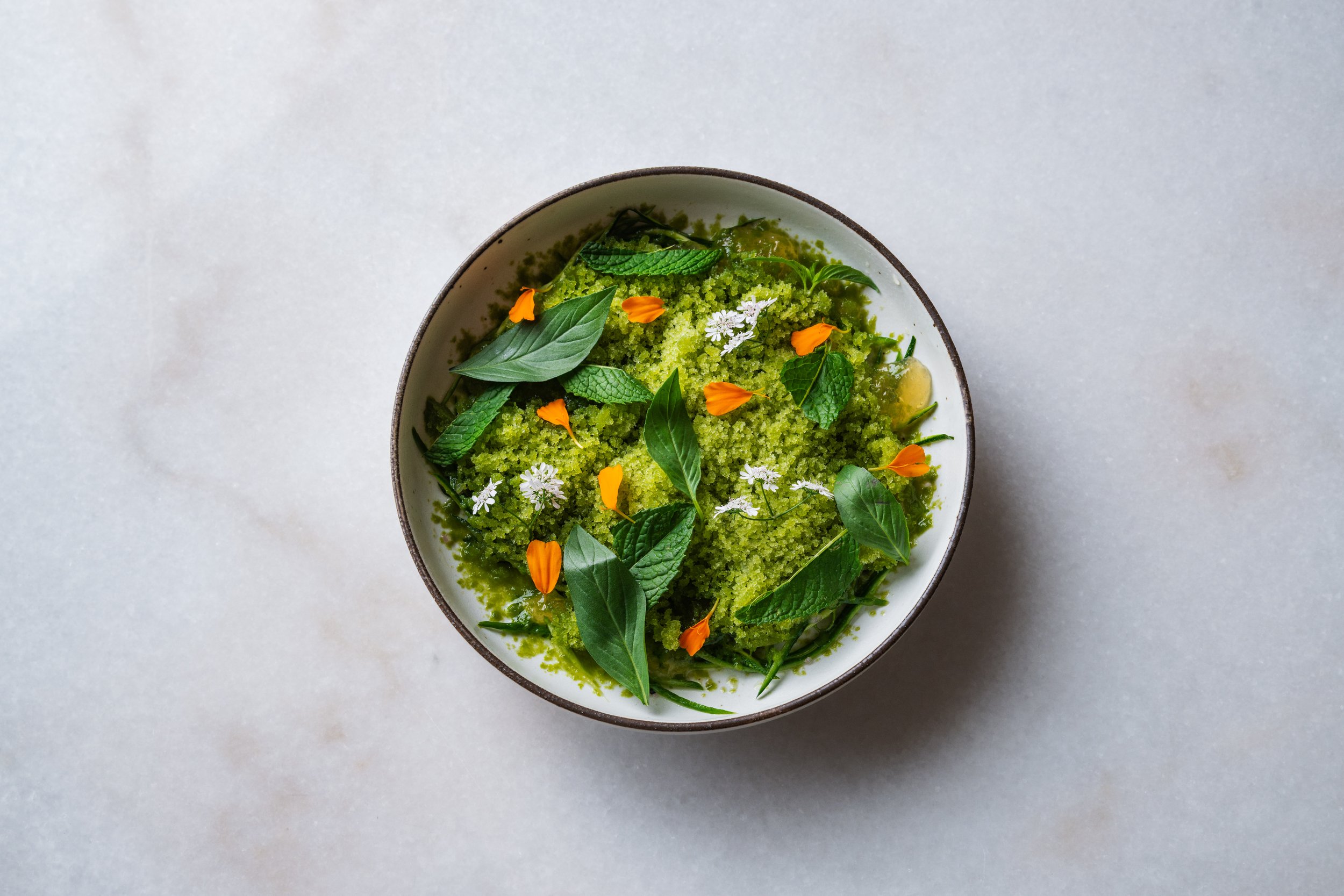
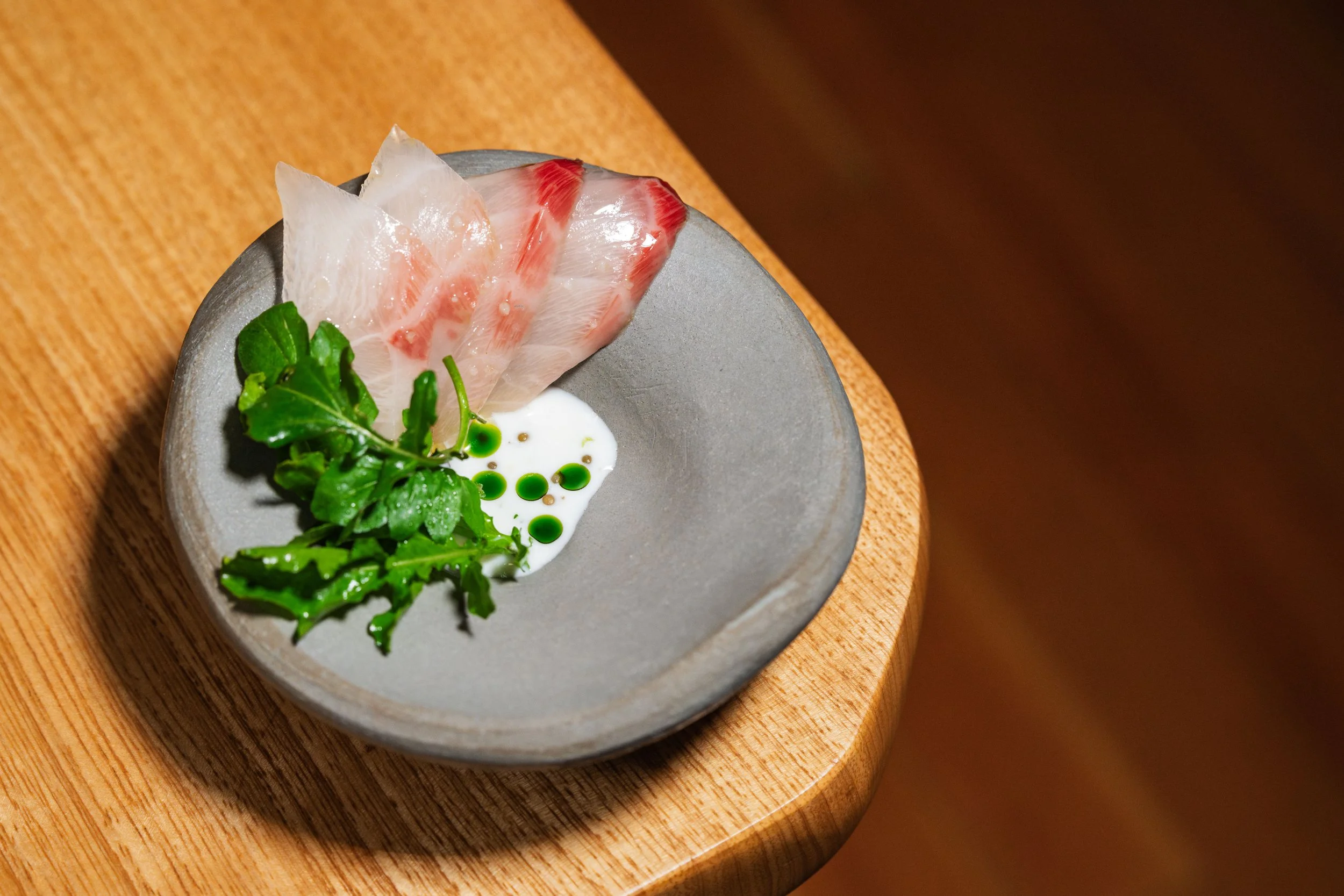
Cured Shima Aji, Watercress, Arugula, Seabean Kōsho, Pine-Infused Whey, Pickled Coriander Capers, Cilantro Oil
Chef Bergen Bowne wanted to celebrate the verdant flavors of California for Birdsong’s opening bite—a cured shima aji dish with a conifer tree-infused whey. “It gives you that really fresh, green vibe that you get from the California area,” Bowne says. Typically, they’ll source pine or Douglas fir from the Bay Area foragers at Morchella Wild Foods, but before then, Bowne used to forage it himself at a spot about two hours north of Birdsong. “The pine has got this beautiful lemony flavor,” says Bowne. “We’ll take dairy, add pine worked in a mortar and pestle, let it ferment for three or four days, let it age in the walk-in for a couple days, and then hang it so you get this really thick, almost Icelandic, super-tight Greek yogurt kind of vibe from it.” The remaining whey from the hanging process forms the base for the shima aji crudo and complements the bright flavors of the pickled coriander capers, seabean kōsho, watercress, and cilantro oil that complete the dish. “It’s clear and really fresh and has subtle juniper notes and lime notes,” says Bowne. Though Douglas Fir is evergreen, its flavors vary seasonally. “The taste goes through different seasons changing either how citrus forward [or] how tannic [it is],” says Bowne. While the tree is usable year round, Bowne says that flavors peak in late winter.