Sommelier Celine Wuu brings a sommelier’s sensibility to her bespoke non-alcoholic pairings.
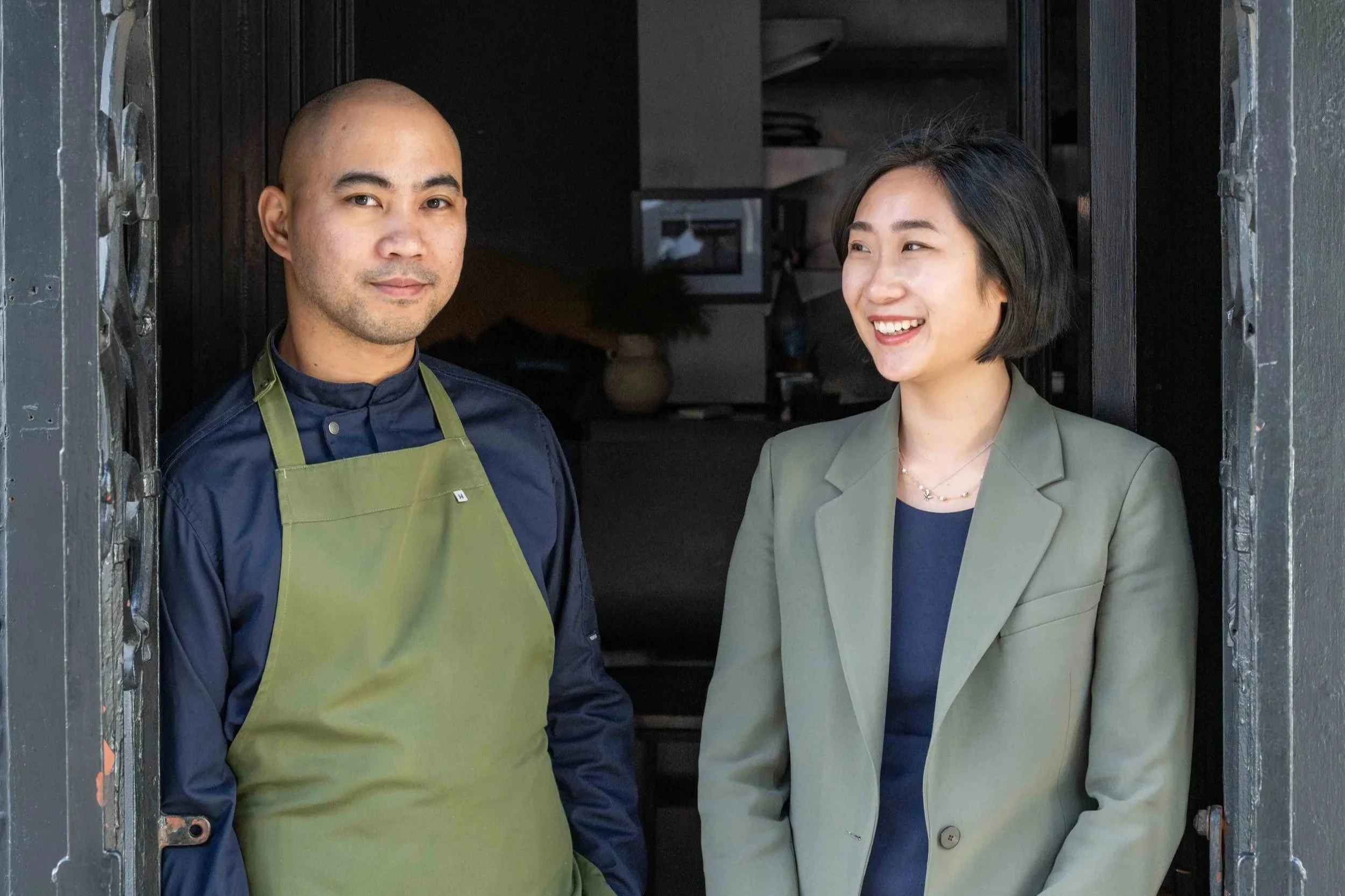
Chef Patrick Gabon’ and Beverage Director Celine Wuu of Restaurant Naides |. Photos: Will Blunt
Sommelier Celine Wuu set out to create a nonalcoholic program that didn’t feel like an afterthought—providing options that could stand in good company alongside world class wines without serving one-note juices. At Restaurant Naides, a Bay Area fine dining restaurant known for Chef Patrick Gabon’s elegant Filipino cuisine, Wuu—a part-owner and beverage director—has composed a program of nine NA beverages that are dynamic, nuanced, and bursting with flavor but are also an extension, she says, of the restaurant’s mission. “I think that’s just kind of the ethos of Filipino hospitality—they want to make everyone feel welcome,” says Wuu.
While Wuu isn’t trying to emulate wine, she is a trained sommelier, and that instinct informs how she approaches synthesizing NA beverages. “What I get from the influence of wine is paying attention to the structure of the beverage, the integrity, and kind of layers of flavor and how I want that to come about on the palate and the nose,” says Wuu.
Wuu begins with thoughtful consideration of the food and how to balance it. “The enemy of a pairing for me is if it’s static—I want to make sure it’s dynamic with the dish,” says Wuu. “There’s a minimum of three flavors that I want. I think three is kind of the perfect progression of flavor. You have the initial flavor, and then you’re like, ‘Oh, there’s something else there,’ and then your lingering flavor is a little bit different.”
Sometimes that calls for leaning on sweetness to balance the sour, acidic, and well-spiced dishes elemental to Filipino cuisine. It can also mean teasing out traditional flavor profiles that might not already be represented in Gabon’s modern interpretations.
“I wouldn’t say all of them, but some beverages started from the idea of how our taste of this classic dish is different from what you would see traditionally,” says Wuu.

Sinigang Abalone, Dry-Aged Beef-Tamarind Broth, Yam Leaf Emulsion, Kang Kong
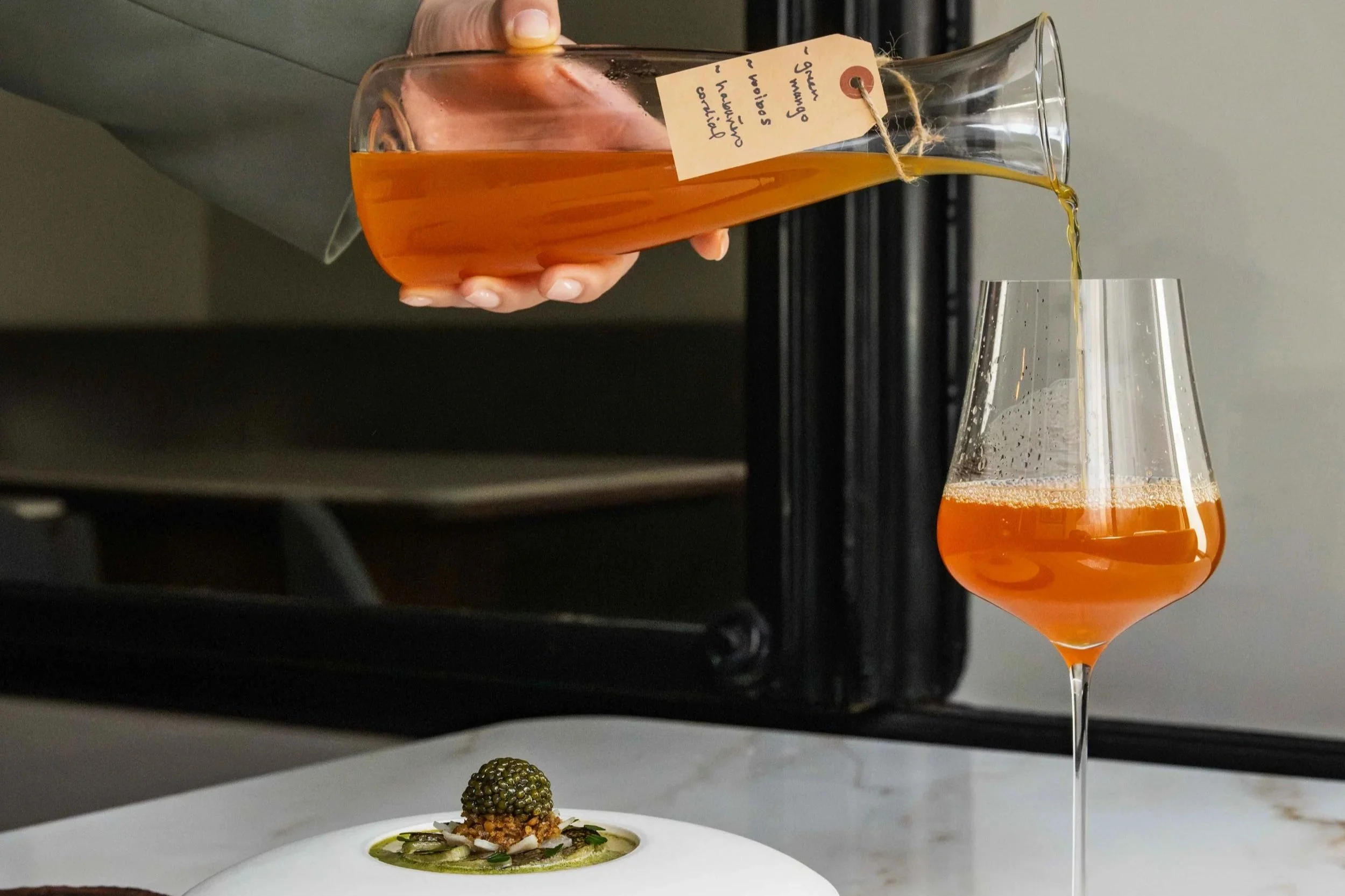
Fig Leaf-Wrapped Sayote, Crispy Duck Cracklings, Sayote Trim Gelée, Bagoong Cream, Pickled Sayote, Caviar, Moringa Leaf Oil, Parsley Coin paired with Lacto-Fermented Green Mango, Rooibos Tea, Habanero Cordial
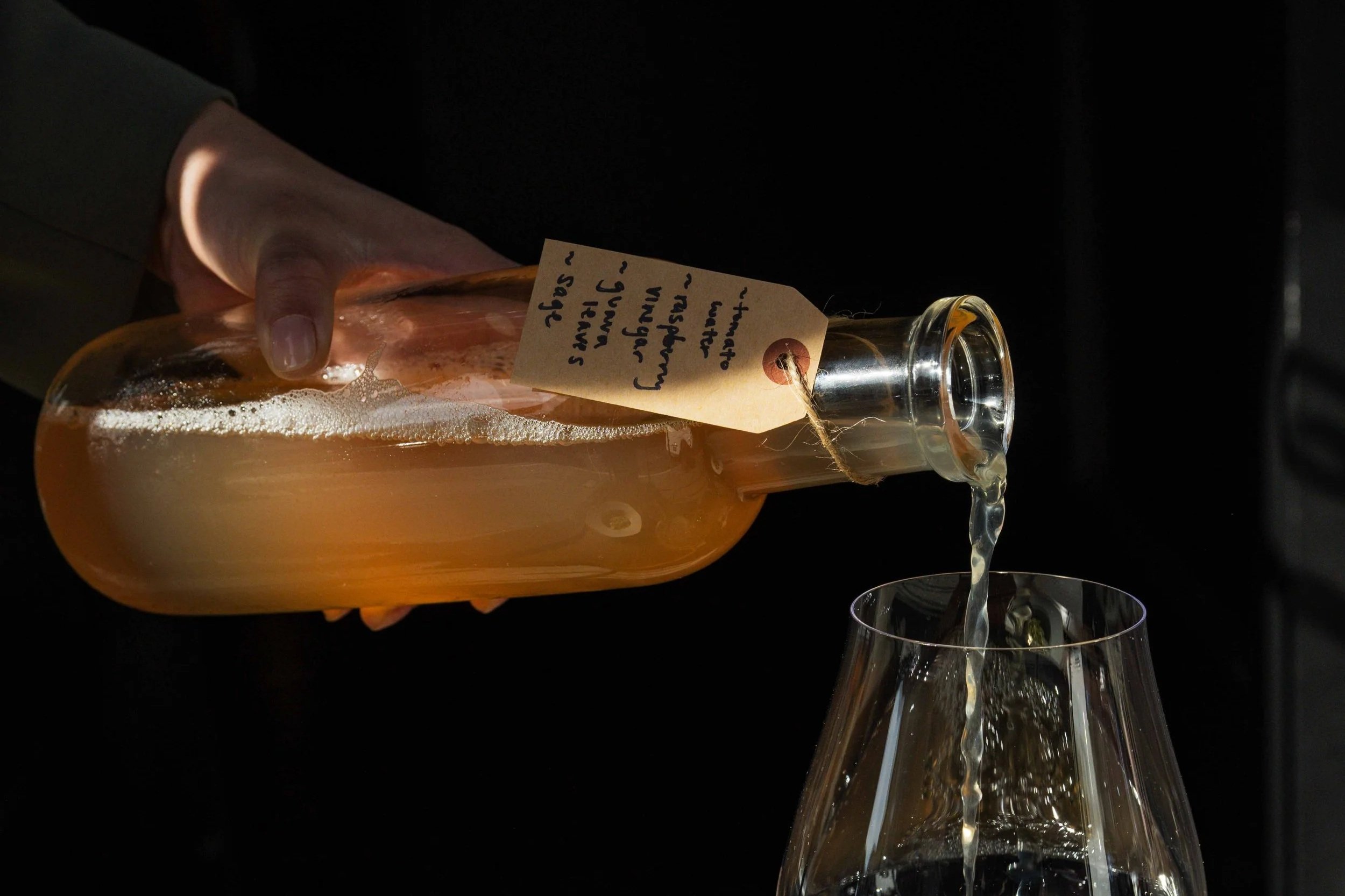
Sinigang Abalone, Dry-Aged Beef-Tamarind Broth, Yam Leaf Emulsion, Kang Kong paired with Tomato Water, Raspberry Vinegar, Guava Leaves, Sage
Gabon’s riff on the savory-sour stew, sinigang, uses tenderly braised and grilled abalone with an unctuous dry-aged beef and tamarind broth. While Gabon’s rendition leaves out traditional ingredients like tomatoes and guava leaf, Wuu’s NA pairing weaves them back in.
In this pairing, Wuu creates a clarified tomato water as the base note. To this, she adds a raspberry vinegar, guava leaf, and sage cordial to tease out floral and fruited notes that balance the savory and sour aspects of the sinigang. She finishes the beverage with invert sugar for a richer mouthfeel and enough sweetness to stand up to the acidity in the broth.
“Guava leaf is used quite a lot in the Philippines,” says Wuu. “I really like the flavor of the guava leaf, but it happens that there is sometimes, in some regions, a sinigang version that uses guava.”
Fig Leaf-Wrapped Sayote, Crispy Duck Cracklings, Sayote Trim Gelée, Bagoong Cream, Pickled Sayote, Caviar, Moringa Leaf Oil, Parsley Coin paired with Lacto-Fermented Green Mango, Rooibos Tea, Habanero Cordial
Making in-house NA pairings also means there is an opportunity to absorb any scraps and give them a second life. For the fig-leaf wrapped sayote dish with bagoong cream and crispy duck crackling, Wuu pairs a lacto-fermented unripe green mango drink that brings salinity and a little heat to cut the fattiness. Wuu takes the flesh of the mangos and lacto-ferments them with salt over three days before juicing them to form the base of the beverage. She turns the remaining pits and peels into a tepache for a different pairing. “I’m always looking at what we already have in the restaurant,” says Wuu. “Were there any vinegars that have been made earlier in the year that I can use for seasoning? What are we currently using on our menus, where I can take the peels or the skin and use that with one of our pairings?”
To the lacto-fermented green mango juice, Wuu marries in cold-brewed rooibos tea and a habanero cordial that contains a little bell pepper, to amplify the pepperiness in the drink, and Batak pepper, which brings a citrusy note.
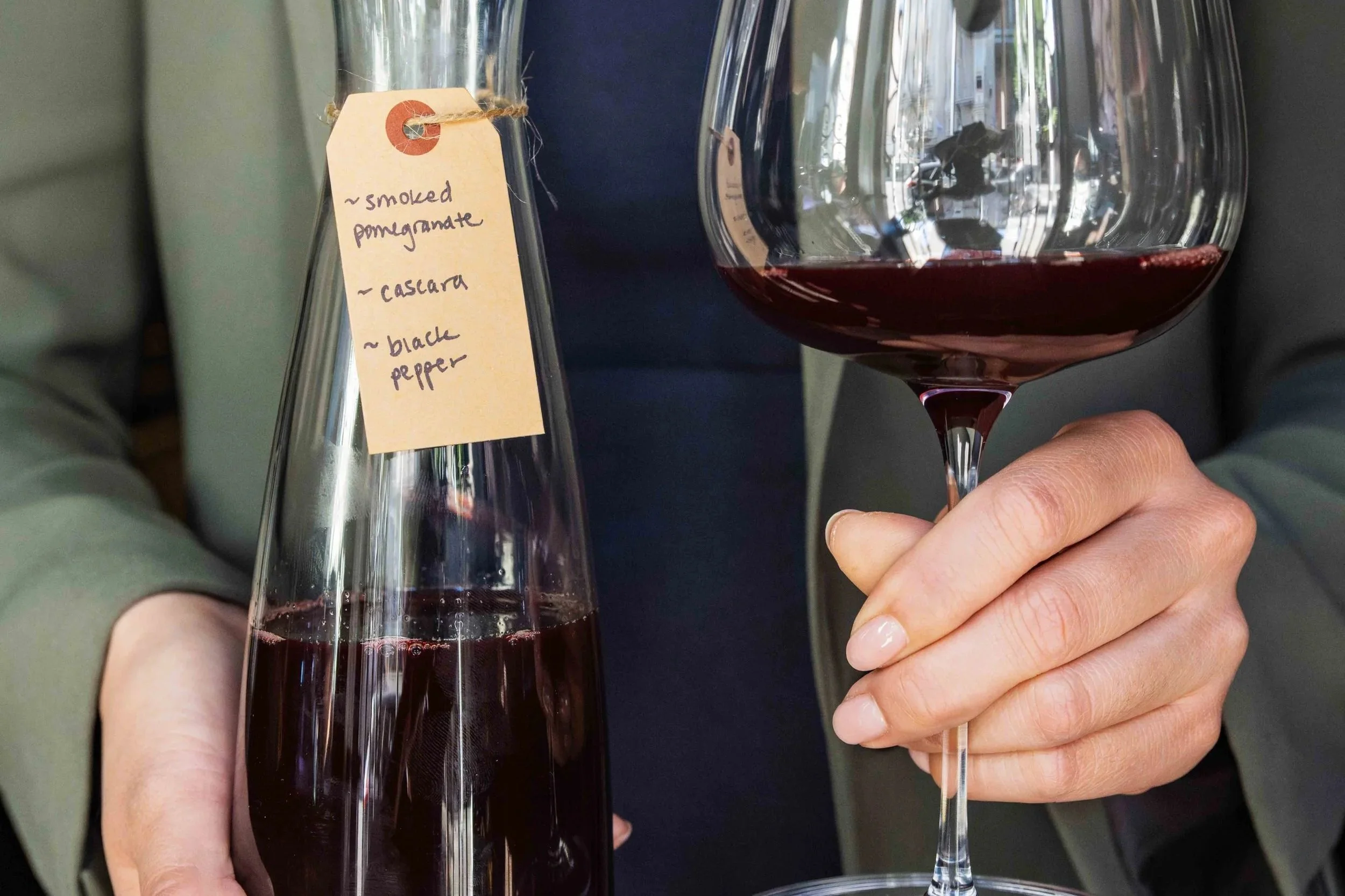
Cascara Husk- and Black Pepper-Infused Pomegranate Juice
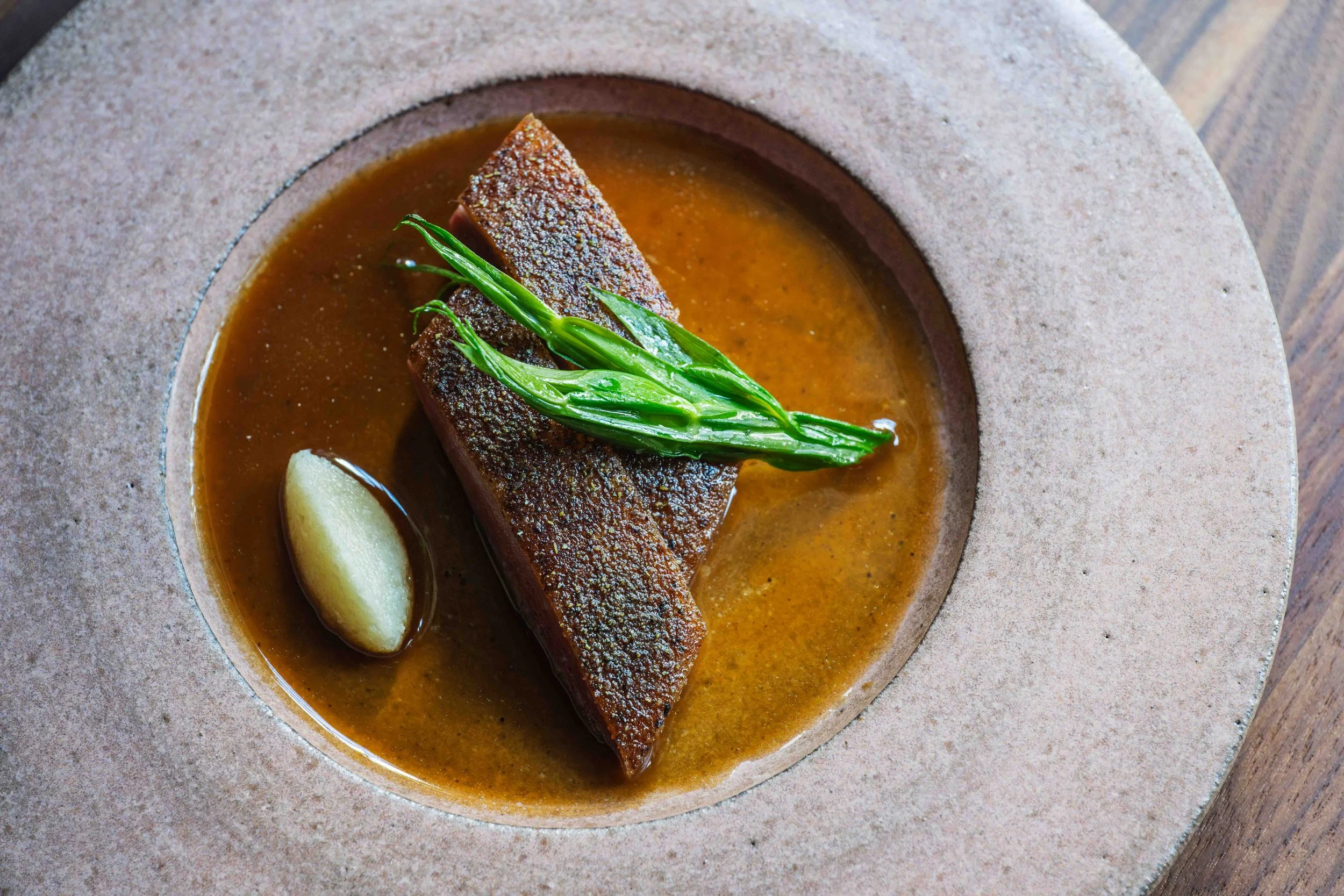
Adobo-Aged Duck Breast, Pickled Horseradish, Wild Pea Shoots, Cane Vinegar-Duck Jus
Adobo-Aged Duck Breast, Pickled Horseradish, Wild Pea Shoots, Cane Vinegar-Duck Jus paired with Cascara Husk- and Black Pepper-Infused Pomegranate Juice
While the intent is never to try to mimic wine, for heartier dishes like Gabon’s adobo-aged duck breast in a cane vinegar and duck jus, a more robust pairing is needed, something similar to say a full-bodied red wine.
To match the spice profile of adobo, Wuu starts with a base of pomegranate juice, which brings a natural sweetness and tannins that feel reminiscent of a red wine. To add smokiness, Wuu cold-smokes some of the juice with hay. She infuses the rest of the pomegranate with cascara husks (coffee berries) for an added dried fruit flavor and complexity. A little toasted black peppercorn injects peppery notes one might expect of a pinot noir and elevates the heat of the pickled horseradish.
Shifting the Status Quo in NA Pairings
Part of affirming the strength of the NA program means offering a few methods of enjoying pairings at Restaurant Naides. Wuu offers a 50/50 pairing split between wine and her bespoke creations, in addition to a traditional wine pairing or a completely NA experience. “The status quo is that you get the wine or beverage pairing,” says Wuu. “But I want people—even those who drink alcohol—to be genuinely interested in non-alcoholic beverages and see them as something beyond juice. There’s real technique involved: fermentation, infusions, utilizing parts of fruits and vegetables you wouldn’t normally use, or spice combinations you wouldn’t have thought to put together.”
As the sets change at Restaurant Naides, Wuu’s creations can also adapt more easily than an outsourced NA program would, including when it comes to pricing. “Because we can estimate our pars quite accurately, our margin is higher,” says Wuu.
While the program is time and labor-intensive, it’s adaptable and progressive. “With the non-alcoholic pairing, you can really tailor it to the dish,” says Wuu. That opens a bigger conversation on what is possible in a successful pairing, alcohol or no alcohol. “I foresee that sometimes the non-alcoholic pairing can be even better than that of a wine pairing,” says Wuu. “I think it is kind of a cool shift.”