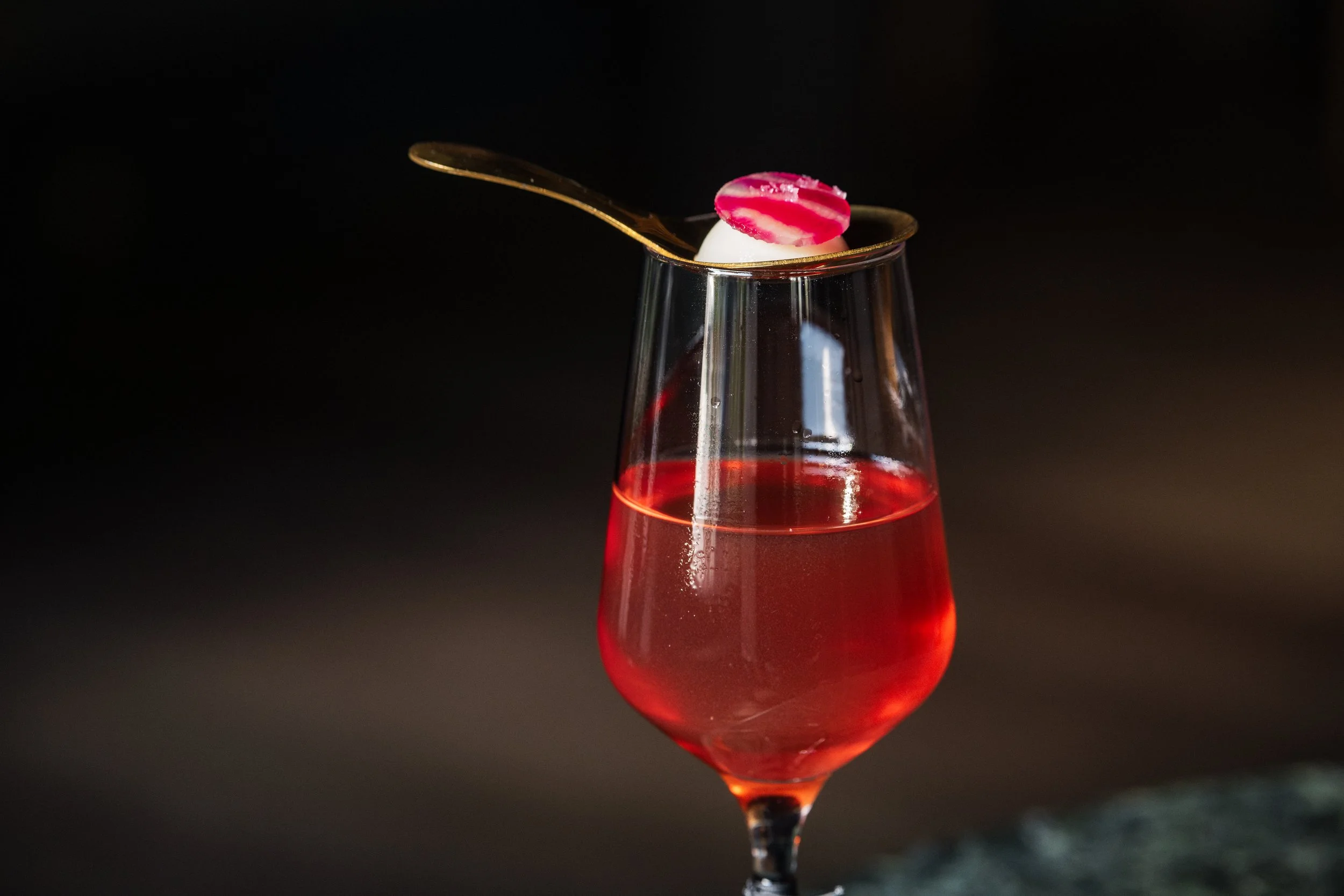
The Japanese plum is taken apart and put back together in one of the high-tech cocktails at Bar Iris.
Ume: Koji Rice Sake, Red Rice Sake, Shiso-Infused Shochu, Miso Vermouth, Housemade Umeshu, Umeboshi Vinegar, Tofu, Beet Miso |. Photos: Will Blunt
Most of the time, a bar’s original cocktails can be mapped to better known references, but that didn’t work for the Ume cocktail at Bar Iris, because “it doesn’t really taste like other things,” according to Bartender Timofei Osipenko.
“Almost all of our cocktails are close enough to something that people feel familiar with it—except for the Ume, which was very tart and salty and not for everybody,” says Osipenko. “But if people like a savory cocktail, they generally tend to enjoy it.”
The shochu chosen for this drink is a shiso shochu, but they infuse it with additional leaves to concentrate the flavor. Osipenko says the aged umeboshi vinegar in the drink reinforces and adds depth to both the shiso and ume, as well as providing all of the cocktail’s tartness. “It’s a different type of tartness than you get from either verjus, citrus juice, or younger vinegar,” he says.
Osipenko and the team at the “Japanese-inspired, California-driven, seasonal, ultra-premium cocktail bar” designed the Ume cocktail around their homemade umeshu, a liqueur they produced from a particularly great batch of California ume plums sourced two years earlier. Those plums were coated with sugar and soaked in awamori, a distilled spirit from koji-fermented rice. After aging, Osipenko looked for a way to put the umeshu to work on the spring menu.
For the vermouth, they chose the San Francisco-made Miso Sweet Vermouth from the brand Veso. Osipenko says, “The goal was not to have a miso flavor added to [the cocktail]. That vermouth just worked really well as far as balance. It was calm enough that it didn’t take over the cocktail. So even though it’s a miso vermouth, the reason for it was not the miso but actually just the flavor profile.”
Beverage development at Bar Iris “always starts with ingredients. And we usually try to challenge ourselves. So, we try to find new avenues, new ingredients, new flavor combinations, new techniques or approaches,” Osipenko says.

Bartender Timofei Osipenko. of Bar Iris

Ume: Koji Rice Sake, Red Rice Sake, Shiso-Infused Shochu, Miso Vermouth, Housemade Umeshu, Umeboshi Vinegar, Tofu, Beet Miso
While that miso in the vermouth may have been a serendipitous addition to the drink, the miso in the garnish was very much put there on purpose. Placed atop the drink is a slice of candy striped beet that was sous vide in a miso broth, connecting it to the notes of the vermouth. The beet disc rests on a half sphere dollop of gelatin-set tofu that Osipenko describes as “almost like a soy panna cotta.”
“It quickly became clear that Ume was going to become a savory cocktail, so we just started tasting all these things that kind of live in the same world, combining and eliminating things until it worked.”
At Bar Iris, many of the cocktails can have up to four base spirits, so the split between several fermented and distilled products in the Ume is in line with the rest of the menu. The drink’s final ingredients are their house umeshu, two kinds of sake, a savory vermouth, an infused shochu, and umeboshi vinegar. Plus a labor-intensive garnish.
This garnish was not intended to be eaten between sips of the drink, but as a prelude to it. “The guests would eat it first and it helped them essentially neutralize their palates to get ready for the cocktail. It was meant to be cleansing,” Osipenko says. “If you had something very sweet and very fruity before, going into this cocktail is going to be such a shock that you’re not going to like it.”
Each of the ingredients was specifically sourced for the drink, which was built around the ume. They purchased all of California’s supply of their preferred brand of awamori for the umeshu infusion spirit, and worked with their distributor to bring in the sakes to the States. “The red rice sake is coming from Kyoto and it’s very funky and fish saucy,” says Osipenko. “The koji sake that we get is also from Kyoto, but it is 100% koji rice, which is a very rare thing to find. And it’s a very different type of umami from red rice sake,” he adds.
They also tried to lessen the unexpected salinity of the cocktail with clear communication. “It’s one of those drinks that came with a lot of stipulation when it was ordered,” Osipenko says. “We were very transparent to all of our guests so people who didn’t like savory cocktails were aware of what they were getting into. Because it’s not for everybody.” But for those who favor a savory drink, the Ume hits all the right umami notes.