An in-depth look at some of our favorite dishes and cocktails from our time on the ground in New Orleans.
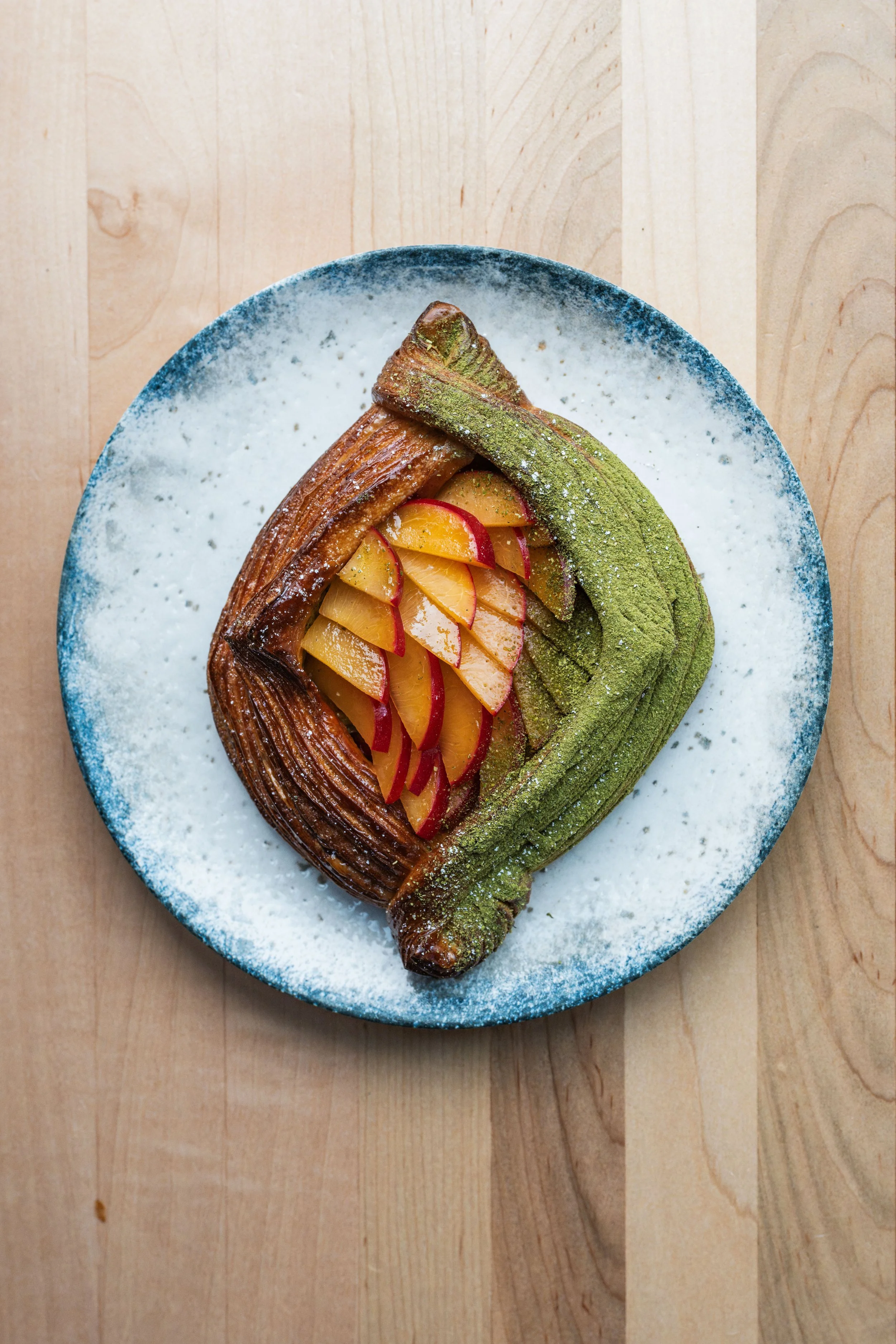
FIG LEAF AND TART PLUM DANISH
In New Orleans, there are “tons of fig trees out in the street and next to people’s houses,” says Baker Catalina Colby-Pariseau. “When it’s hot and humid and the plants are fragrant, the fig leaves have this vanilla-almond scent to them.” Those alluring fig trees inspired Colby-Pariseau to create a seasonal danish for the menu at Bearcat Baked. Since fig season tends to end just as quickly as it begins, Colby-Pariseau decided to lean into the leaves themselves. She toasts and dehydrates fig leaves before blitzing them into a powder, which she then steeps in warm milk and turns into a pastry cream. She spreads the cream onto 4½-inch squares of her standard croissant dough followed by a layer of housemade tart plum jam. “A vendor we work closely with had tart plums available,” says Colby-Pariseau. And “what pairs with almonds? I was thinking: sour cherry [or] tart plum.” In addition to acid and sweetness, the jam takes on “a tannic component from the skins of the plum.” After baking the danishes, Colby-Pariseau lets the pastries cool before filling them with thin slices of tart plum and an additional ample dusting of the fig leaf powder. “The texture is like cheese and crackers with some jam on it,” says Colby-Pariseau. The “croissant is nice and flaky and crispy, and then you get the acidic component with that nice creamy almond finish.”
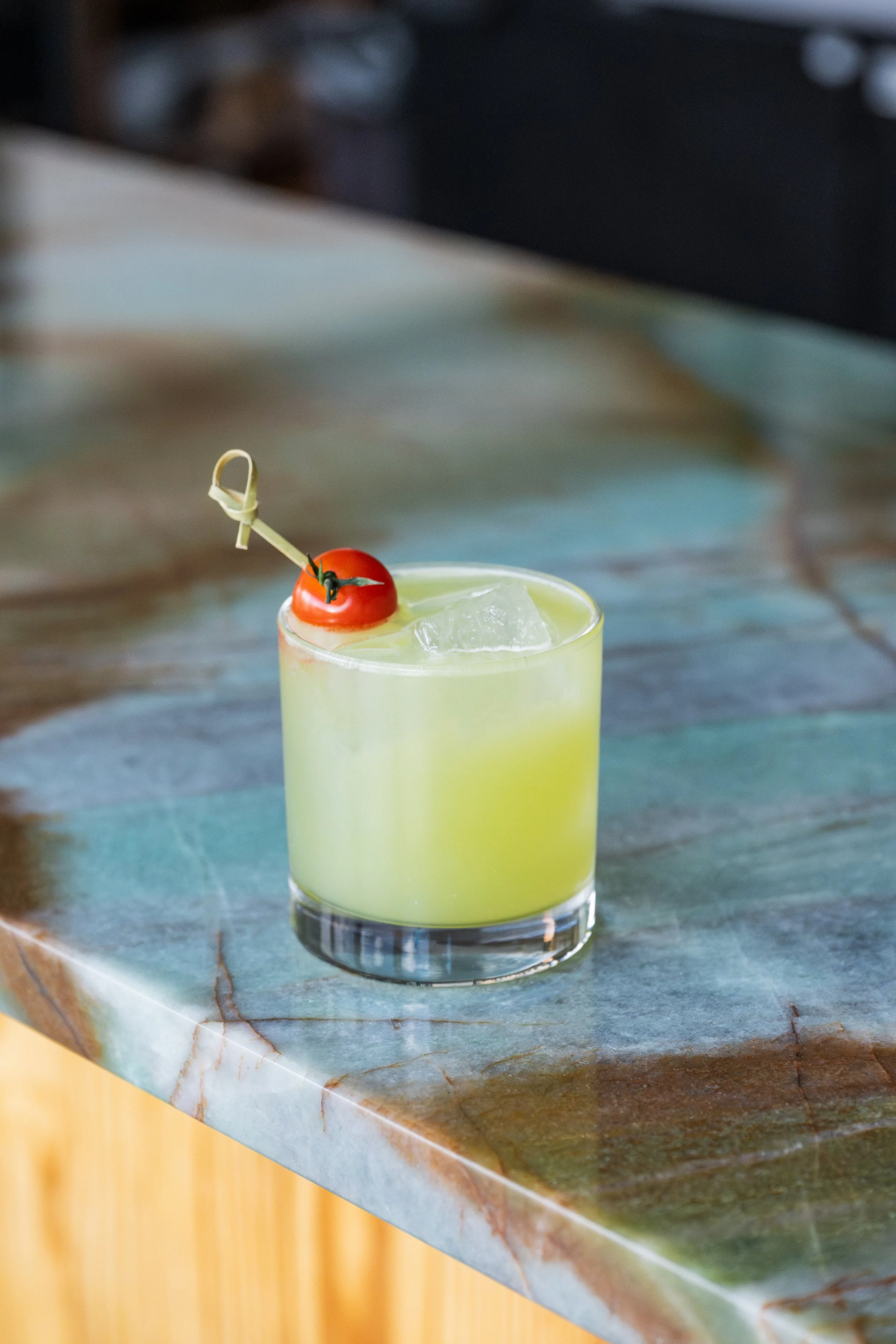
THE WHISTLE STOP
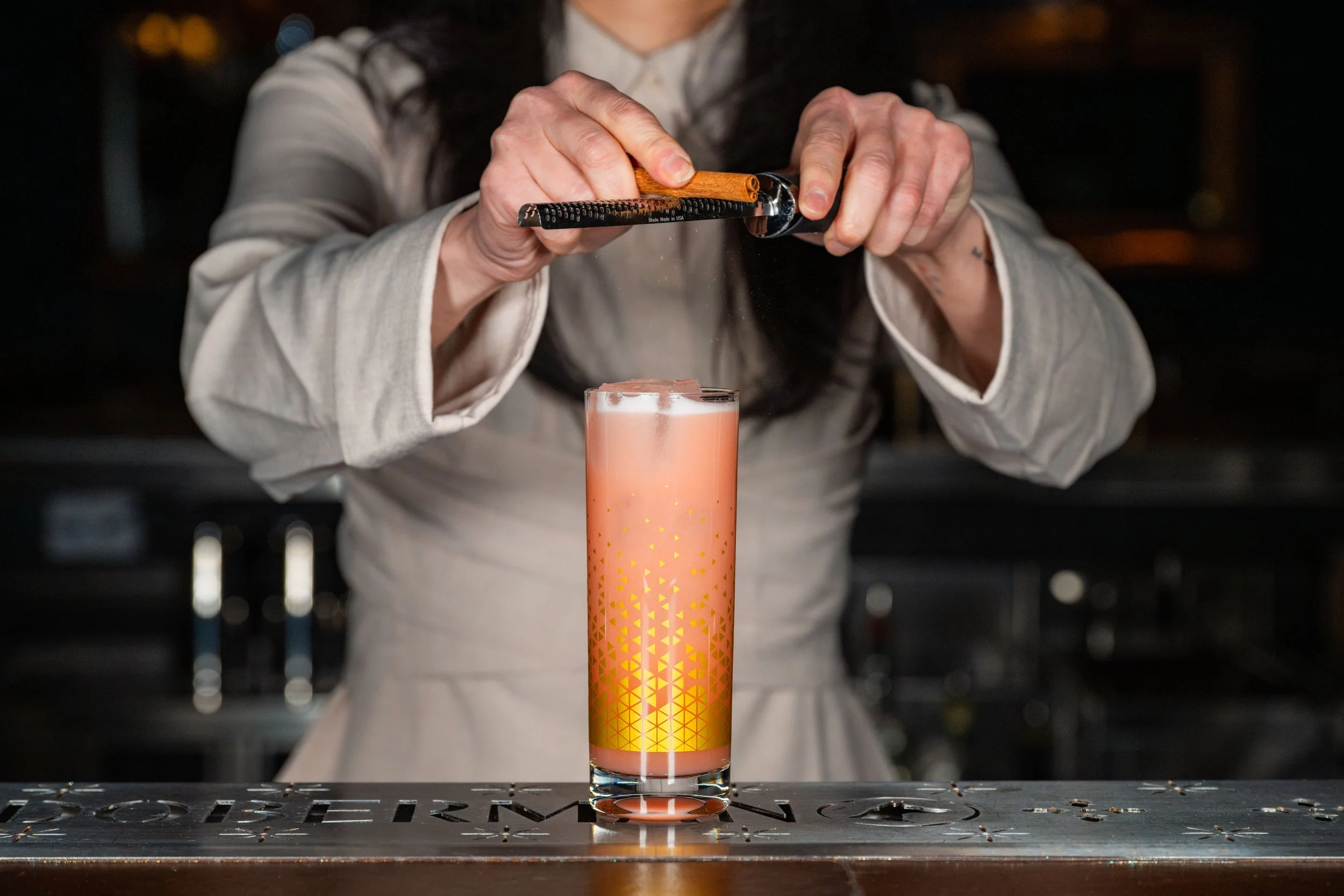
Every time tomato season rolls around, Bartender Sam Kiley looks forward to a fried green tomato. This year, she wanted to enjoy that same bite in a cocktail at Dovetail Bar. “I was thinking of something that could be enjoyed in a nighttime bar setting, but something that you could enjoy with friends on a hot cookout afternoon as well,” says Kiley. The Whistle Stop cocktail starts with a housemade green tomato sour mix. Kiley juices green tomatoes, and adds malic acid to get the pH similar to that of lemon juice. She combines that with a traditional syrup made with more juiced green tomatoes. While an integral part of this cocktail, the sour mix is versatile: “It was also really fun with tequila,” says Kiley. “We played around with it with an agricole-style rum—it really brought out the grassiness—but I loved having it in-house because it was a great product to use for non-alcoholic cocktails.” To further showcase the cookout inspiration, Kiley adds a corn whiskey, corn liqueur, and a few dashes of Kümmel for notes of caraway and cumin. She tops it all off with a black pepper tincture, which is made by toasting and grinding black peppercorns and infusing them in a high-proof grain alcohol for one week. The final dashes add a “little bit of an extra kind of spice, a little movement to the drink,” says Kiley.
BRAISED DUCK WITH TUCUPI RICE
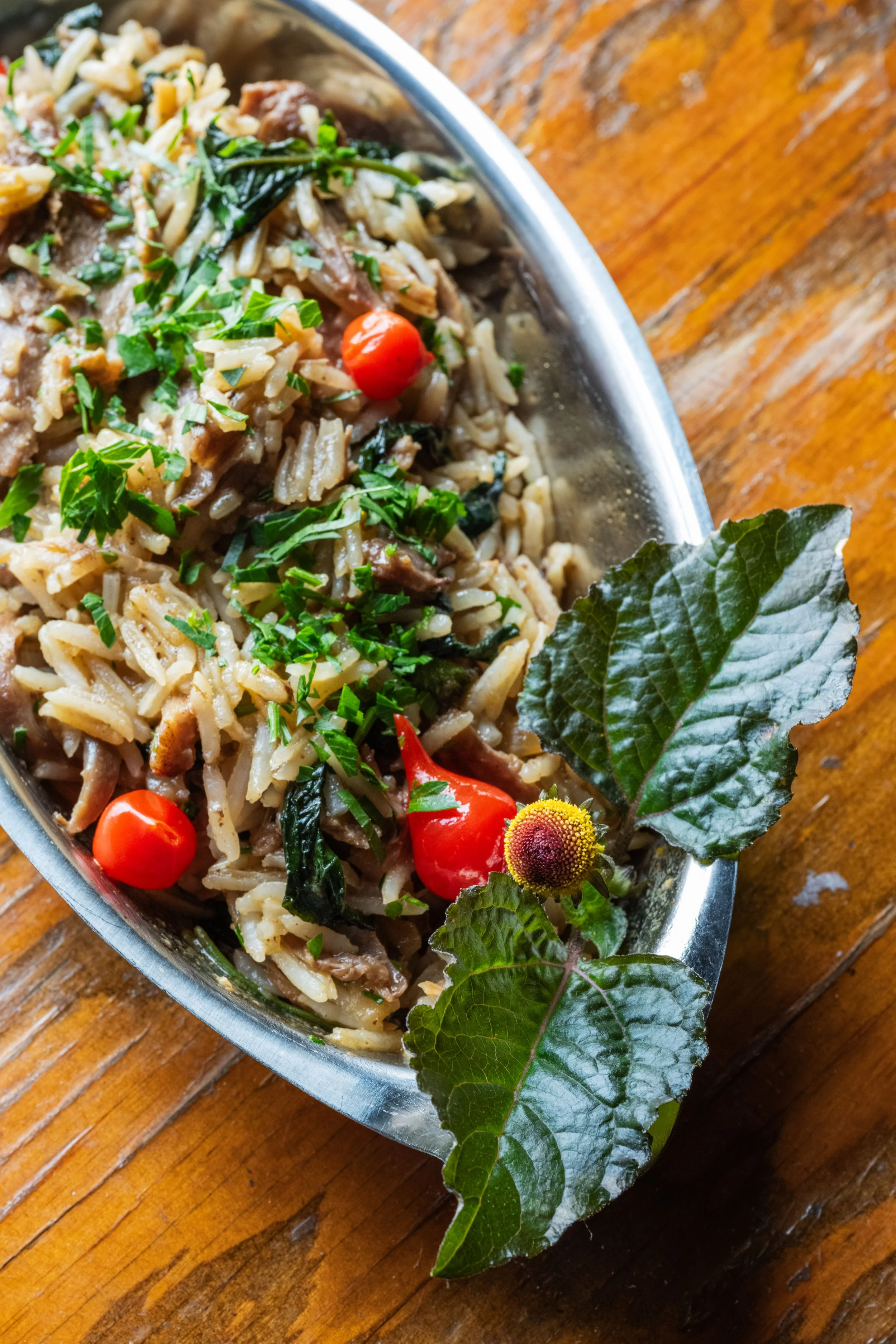
Louisiana has its fair share of iconic rice dishes—there’s jambalaya, dirty rice, red beans and rice, just to name a few. At Tropicália Kitchen, Chef Raquel Oliveira is adding another flavorful dish to the mix, drawing a connection between New Orleans and her home country of Brazil. What makes this dish distinctive is the tucupi, a fermented broth native to Brazil that is made from grated, juiced, cooked, and fermented cassava root and has a uniquely sour, earthy flavor. To begin, Oliveira marinates duck legs overnight in a tucupi broth seasoned with garlic, salt, and pepper. She then browns the duck in its own fat and adds garlic, onions, and bell peppers before topping it with more tucupi juice and braising for three hours. Once tender, Oliveira removes the duck from the braising liquid and picks the meat from the bone. In a separate pot, she cooks Louisiana jasmine rice in more tucupi broth with minced garlic. All of these components get incorporated before Oliveira adds jambú leaf, which garnishes the dish alongside Little Beak peppers. The result is a mouthwatering mountain of rice laced with fatty duck that’s balanced by the tucupi’s acidity and the jambú’s zestiness. “I think it’s such a great way of bringing in something people may not have had, but it’s still approachable and easy to understand,” says Oliveira.
MAÍZ-BATTERED STUFFED PEPPER
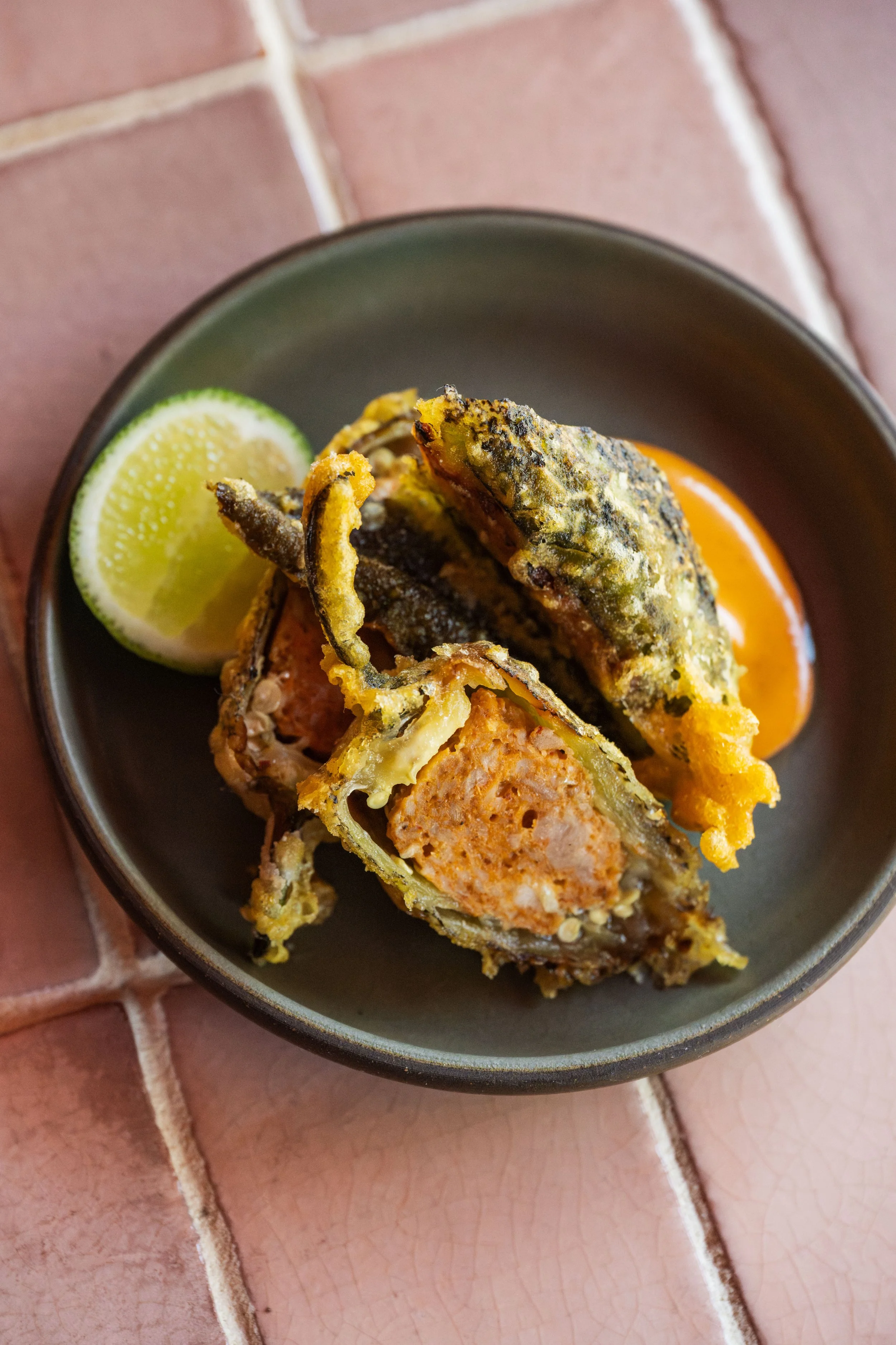
For his maíz-battered stuffed pepper dish at Acamaya, Chef Louis Parsons wanted to celebrate Louisiana's abundance of peppers with a riff on a classic dish. For his iteration, Parsons starts by making a sausage with equal parts ground pork and ground Gulf shrimp, which he spices with ginger, chile, garlic, sugar, and curry paste. He sources local varietals, such as Anaheims and cubanelles, which he cuts from the center and seeds before piping with the sausage mixture. After developing a masa batter for family meals, he landed on a base of nixtamalized masa harina, cornstarch, and Pacifica beer for a flavorful, light coating. On pick up, Parsons blisters the outside of the stuffed pepper to give the batter something to adhere to. For added texture and herbaceousness, Parsons wraps the pepper in a hoja santa leaf using a double-frying technique. “Once the leaf is [battered and] in the fryer, you kind of roll the [battered] pepper on top of it as the leaf is cooking, so it all sticks together.” The pepper fries at 350°F until the sausage is cooked through and the batter is golden brown. To finish, Parsons blends confit ají dulce peppers into a housemade aïoli for subtle sweetness and gentle heat, and serves them with a lime wedge for a kick of clean acidity. “It’s almost like the dish is wrapped in itself,” says Parsons. “It’s the same satisfaction that you get with a dumpling or filled pasta.”

COQUILLES SAINT-JACQUES
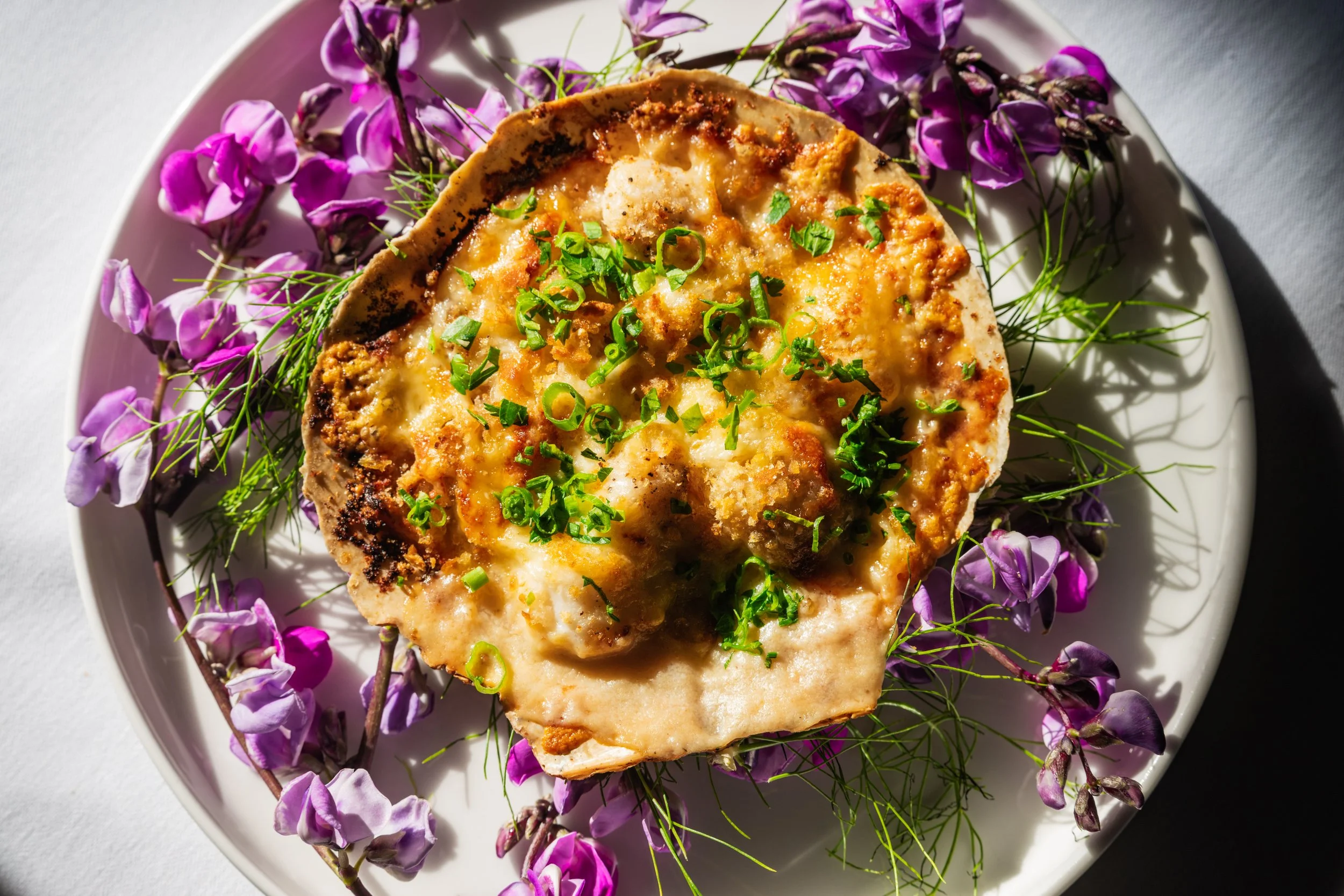
For Chef Joe Semmes, one of the biggest perks of working at Boucherie is the access he has to Humble Bumble, the restaurant’s farm on New Orleans’ Northshore. “Any way we can include our own grown produce is always the goal,” says Semmes. “If it doesn't get used, I just feel bad. So, I'm pushing it pretty hard.” This past year, Semmes made the most of the farm’s excess fennel through his take on coquilles Saint-Jacques. The dish is built in a scallop shell, layer by layer. On the bottom, Semmes starts with a creamy béchamel that is boosted by the addition of caramelized fennel bulbs. About a dozen bay scallops seasoned with salt and pepper are tucked into the béchamel alongside pieces of sherry vinegar-pickled fennel. “The addition of the pickled fennel was something we never tried before and that changed the whole thing,” says Semmes. “It was supposed to be a nice, lovely, creamy dish, but the acidity really brings it all together.” Semmes tops the scallops with a “Boucherie classic,” a compound butter made with charred fennel stalk, preserved lemon, and parmesan. He sprinkles a generous amount of toasted breadcrumbs and a little more parmesan on top before the scallops are baked at 500°F. For service, Semmes garnishes the dish with lemon and herbs, and plates the stuffed shell over flowers and fennel fronds, boosting the flavor of the dish with a final, fragrant aroma.
ROMAN-STYLE LAMB WITH ARTICHOKE TART
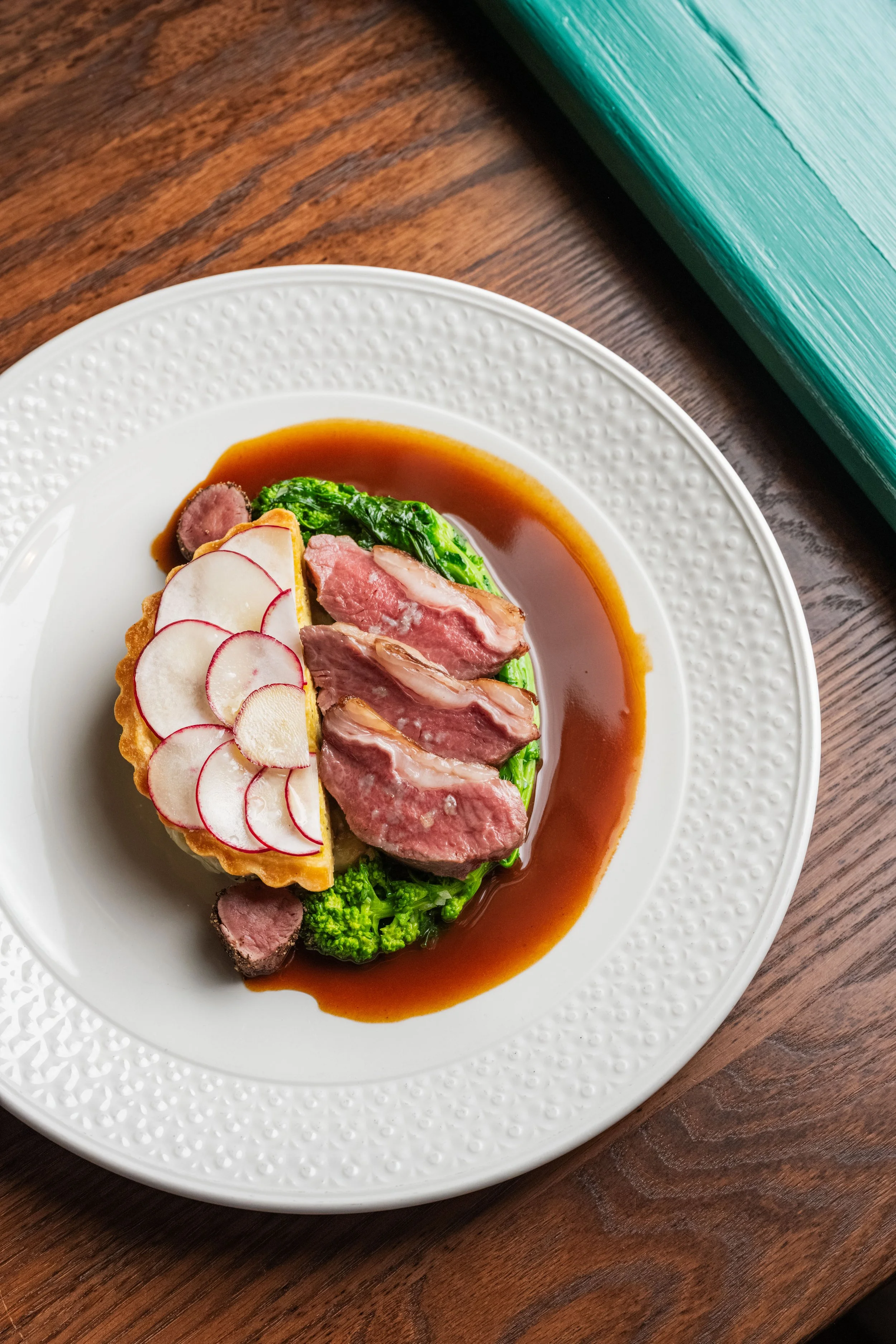
On a trip to Rome, Chef Tom Branighan ate a transformative dish with lamb and fried artichokes. “It’s one of those things where you eat it, and then you put it back in your pocket and hold on to it for a couple of years,” he says. For his take at MaMou, Branighan cooks lamb saddle sous vide at 129°F for two hours before seasoning it with salt and pepper and rendering the fat in a pan. To accompany the lamb, Branighan sweats onions, garlic, and shredded green cabbage “until you've gotten rid of that tannic, raw cabbage flavor,” he says. He then adds vegetable stock and a knob of butter to the mixture before seasoning it with salt and pepper. Instead of fried artichokes, Branighan makes an artichoke tart, which he plates over the sautéed cabbage. To make the tart, he cooks down marinated artichokes and combines them with eggs before baking in a mold at 300°F and garnishing with scales of thinly-sliced radish. Branighan tops the dish with a few more slices of lamb and a bit of rapini, which he sautées with vegetable stock, aromatics, chile flakes, and lemon zest. As a final touch, he pours a lamb jus around the edge of the dish. Branighan reduces the lamb stock in a pan for two hours before pinçage, and then strains the sauce through cheese cloth, reduces once more, thickens the sauce with cornstarch, and finishes it with lemon juice.