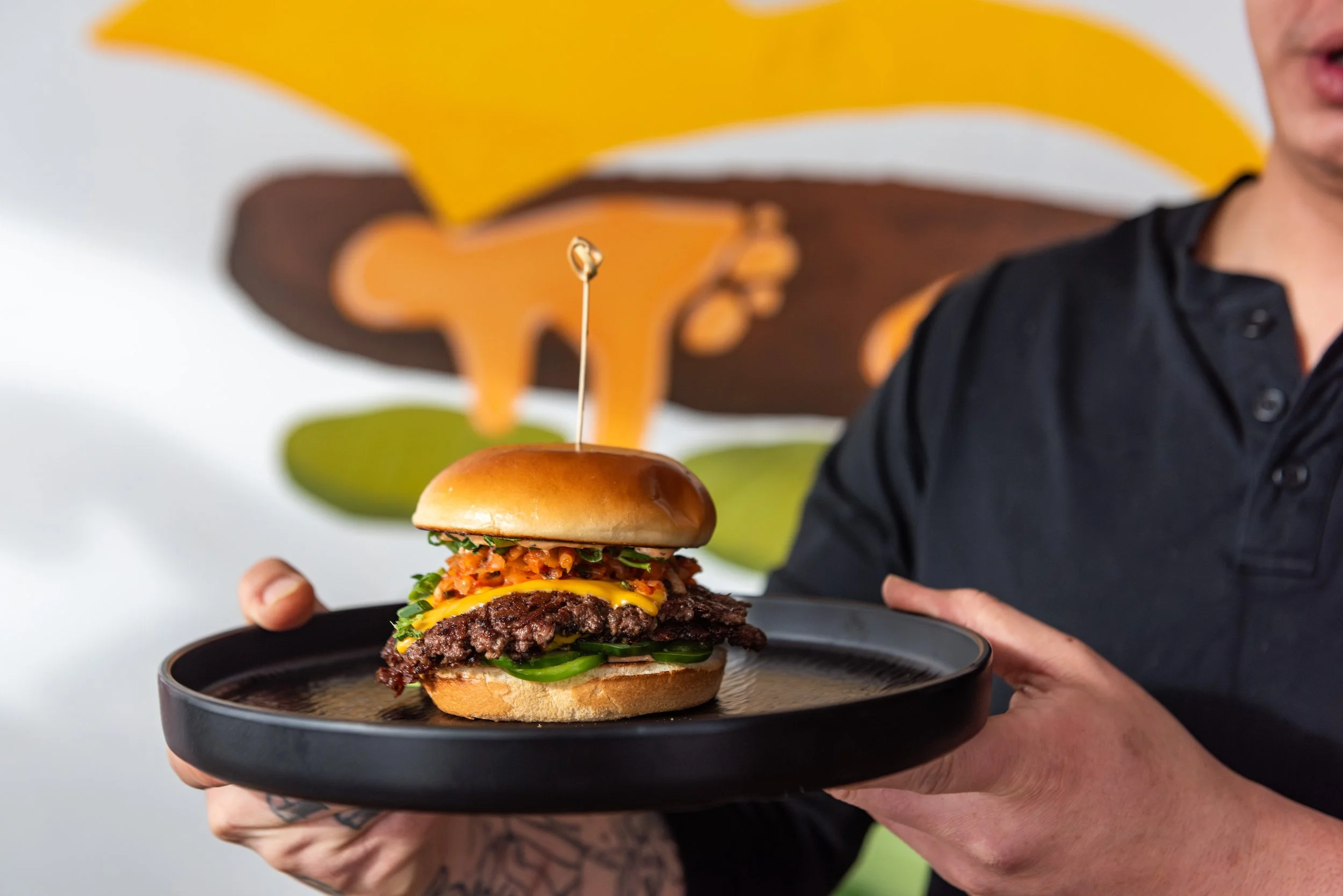
An in-depth look at some of our favorite dishes and cocktails from our time on the ground in Nashville
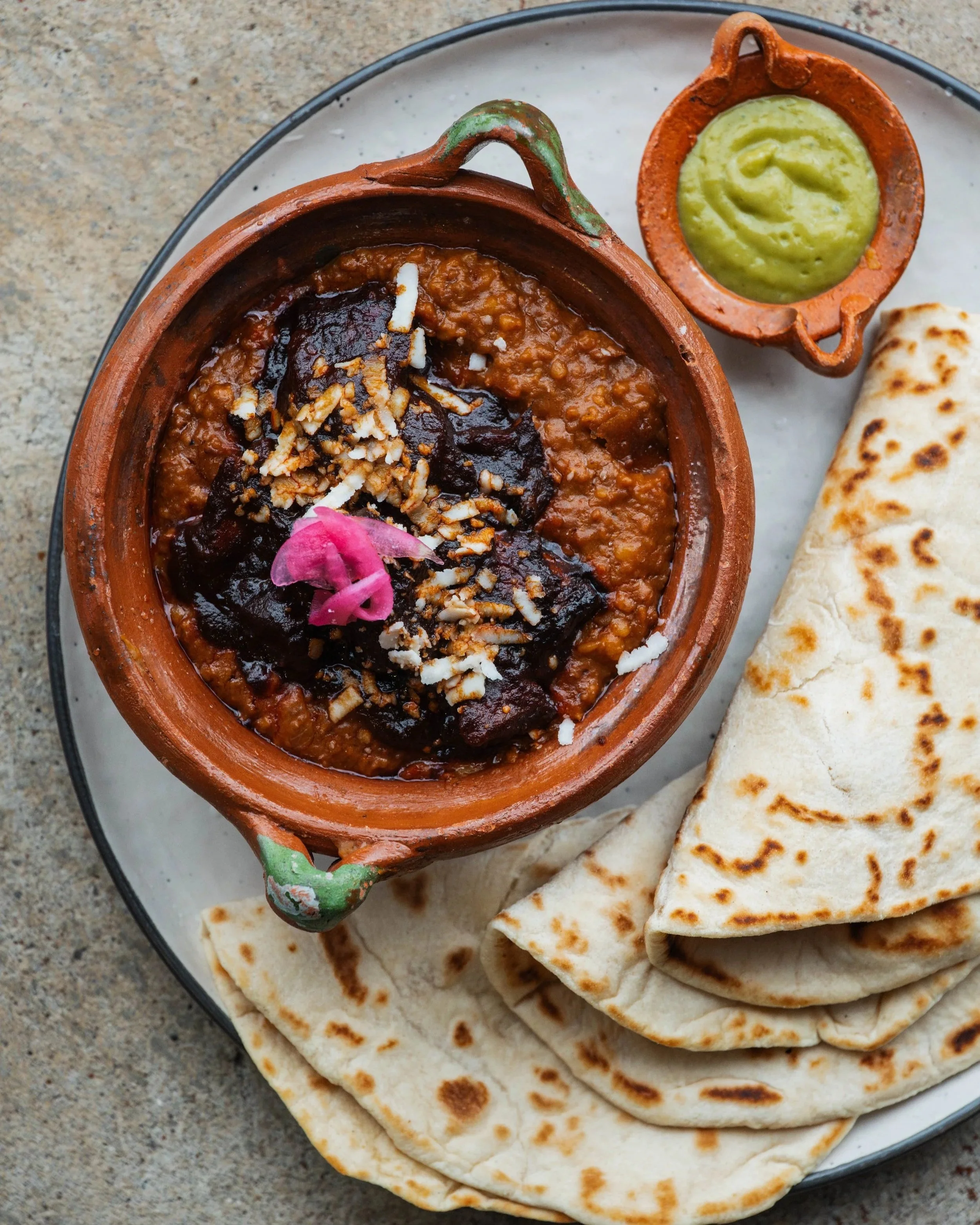
FRIJOLES CON VENENO
Chef Pepe Camero’s “poison beans" (or frijoles con veneno) won’t kill anyone, but they might piss off a mother-in-law or two. “The joke is, whenever your mother-in-law came into the house, you would make it, and the poison beans were so spicy that it would basically get rid of her,” says Camero, of Mijo Gordito, an East Nashville counter service spot selling North Mexican comfort food. The beans are prepared essentially like refried beans. Pinto beans are boiled in an aromatic stock, smashed, and then fried in lard. Camero tops them with a reserved sauce from his adobo pork ribs, adding a “poisonous” kick of heat. The adobo—made with guajillo, ancho, chipotle, and árbol chiles, as well as oregano, garlic, onions, and orange juice—lends a sweet spice to the dish that cuts through the richness of the beans. The dish is eaten by ripping off pieces of flour tortillas, which are more common than corn in North Mexico, and slathering them with spoonfuls of the spicy beans and a piece of the adobo pork rib. For added lift, Camero serves his poison beans with pickled onions, queso fresco, and an avocado salsa. Camero, who grew up in Nuevo Laredo, Tamaulipas, Mexico, hopes to offer the North Mexican cuisine of his upbringing to Nashville, where it’s less represented than other regions of the country. “I just want to represent as much of my area as I can,” says Camero.
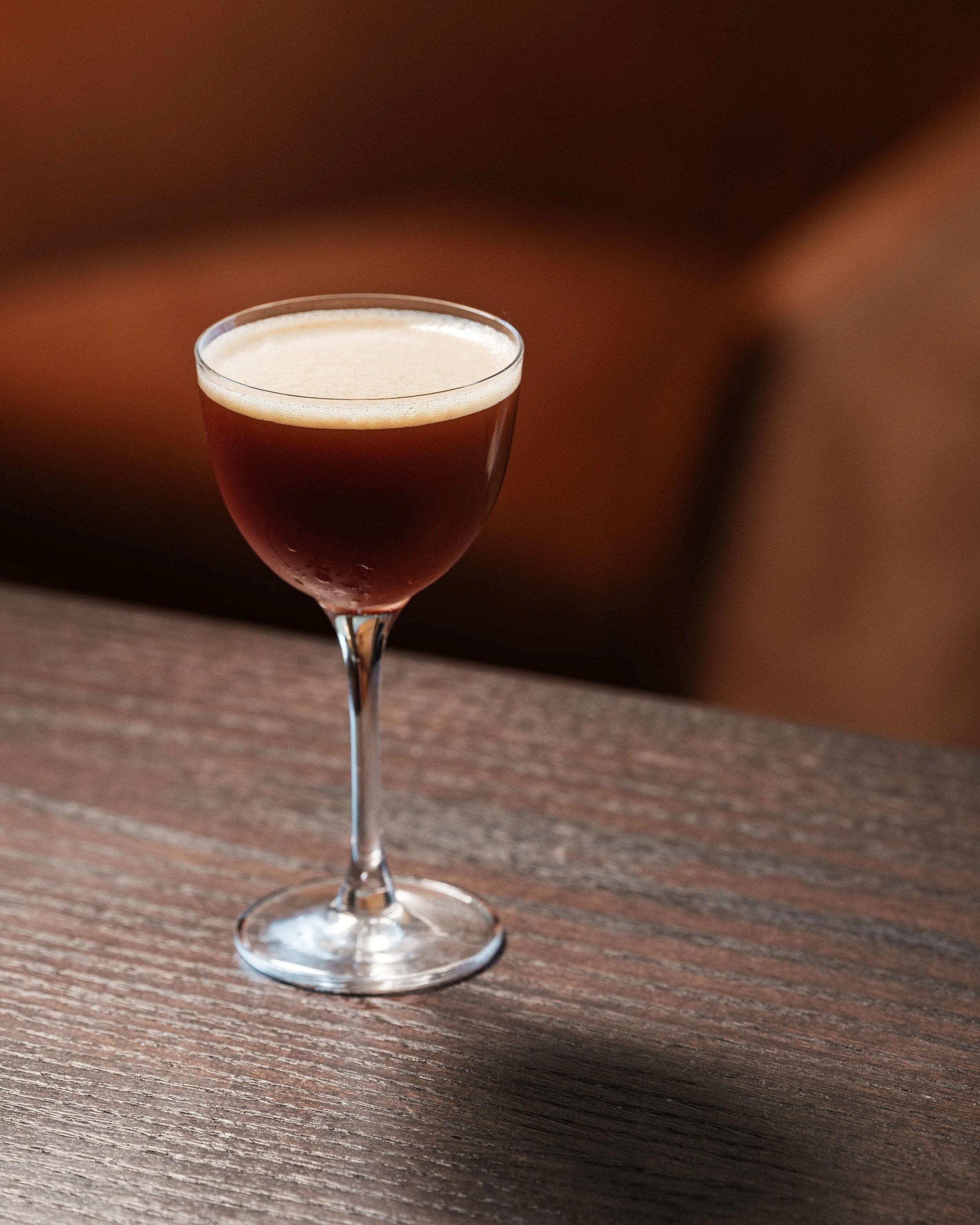
CAFÉ DE ÁTICO
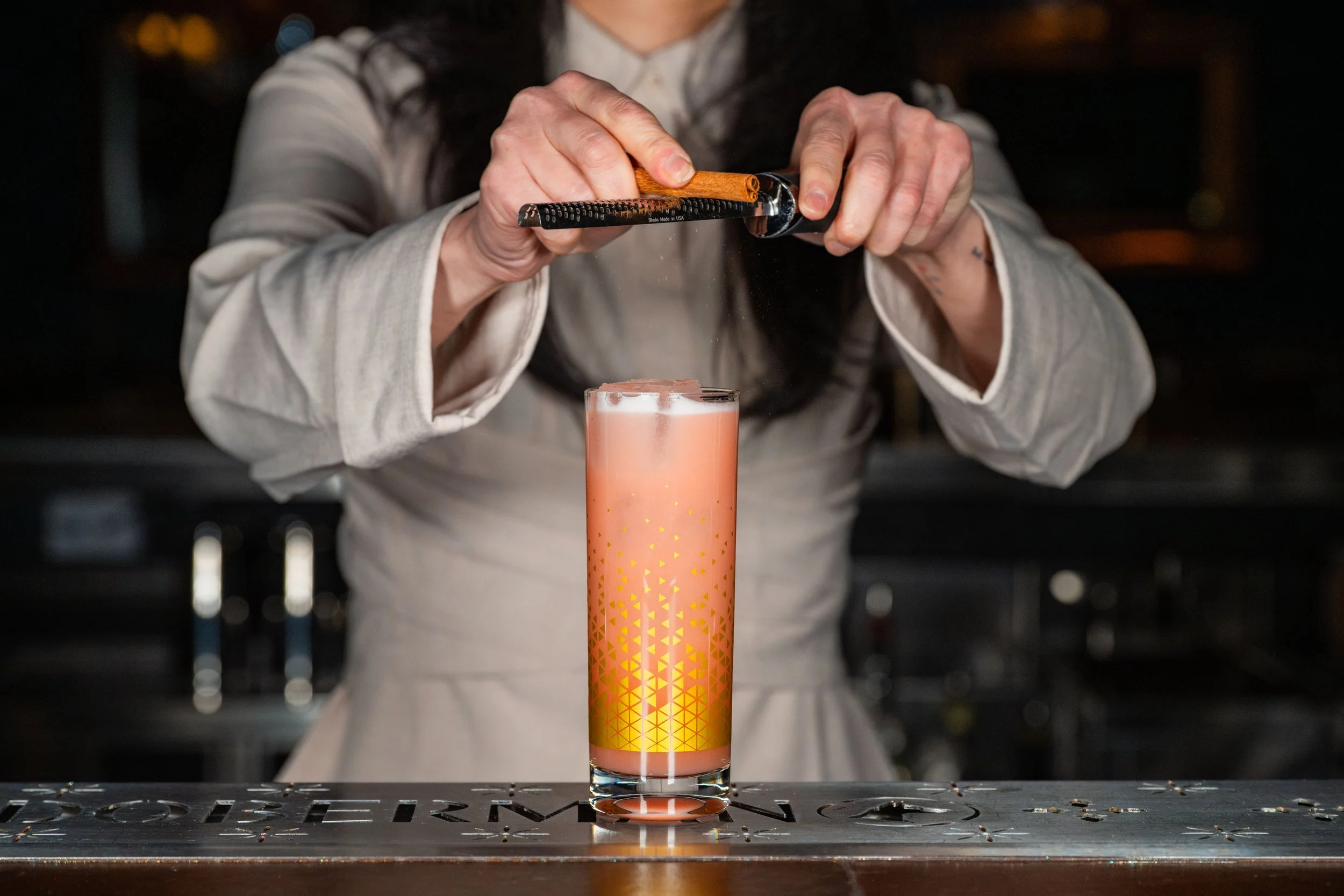
“At the old The Patterson House, we didn’t have espresso martinis,” says Bartender Alex McCutchen. But when the bar relocated to The Gulch in 2025, he wanted to “show people it can be more than coffee, sugar, and vodka.” McCutchen’s Café de Ático starts with a split base of vodka and Lustau's Brandy de Jerez, which has “caramelized fruit notes.” McCutchen then adds cranberry liqueur and Byrrh Grand Quinquina to the batch to bring an even more distinct red fruit and coffee flavor. He infuses the mixture with ground coffee from Nashville's Crema Coffee Roasters. “We are treating the liquor like water in a cold brew extraction,” he says. After 18 hours, he filters the liquid through a fine mesh sieve and then through a coffee filter. For service, McCutchen shakes the coffee-infused spirits with demerara syrup and two liberal dashes of absinthe, which “makes its way into two thirds of the cocktails we do,” he says. “It seems benign, but it can be necessary. It brings contrast to all the flavors.” Finished with an orange expression, the cocktail balances dark red fruit flavors with bitter, warming coffee notes without feeling too heavy or rich. Although no longer on the menu, “it is a bartender’s cocktail,” according to McCutchen. “The people who did enjoy it were nerds like me, industry people who don't normally order espresso martinis.”
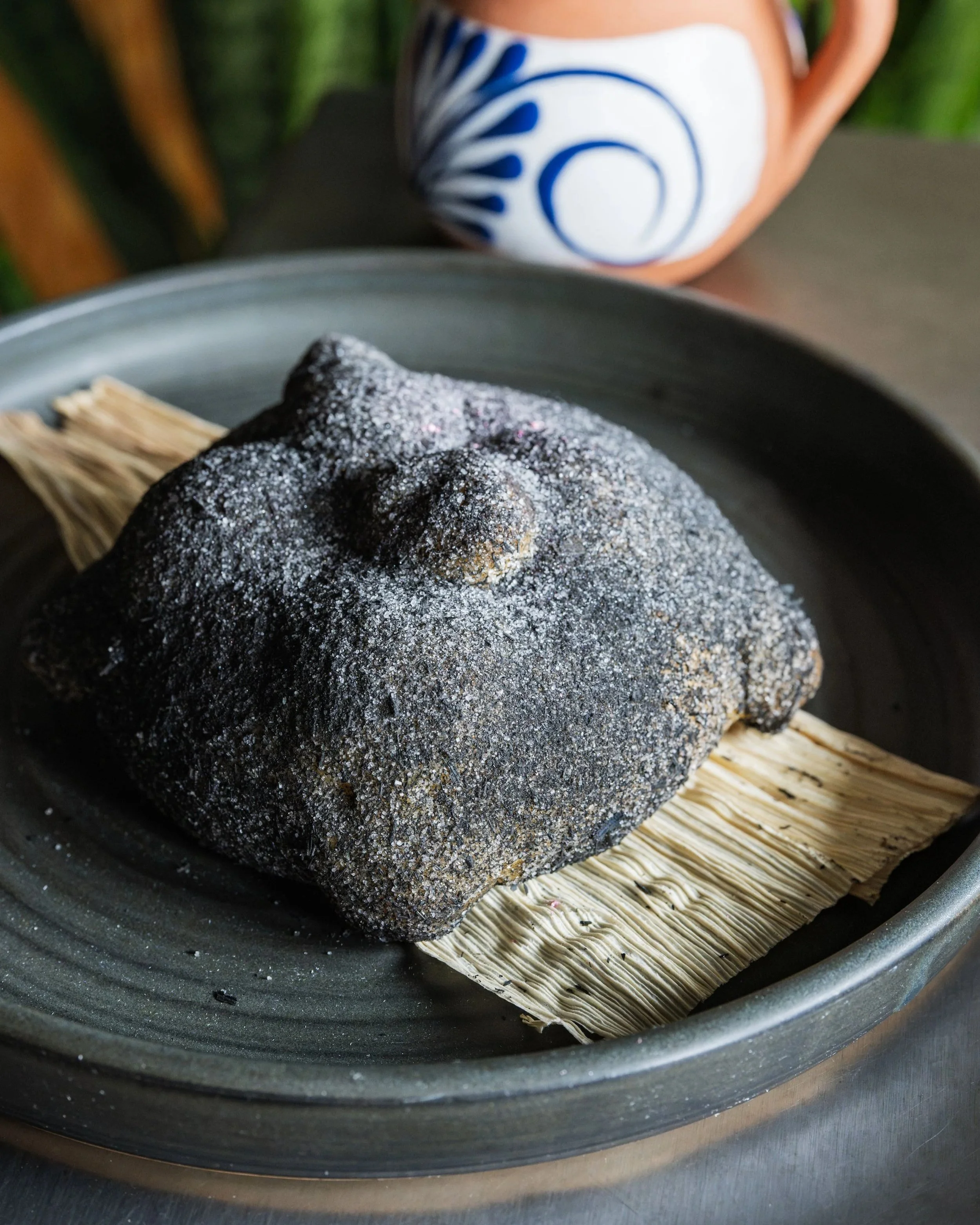
PAN DE MUERTO
In many cultures, bread is synonymous with life. In Baker Dora Martinez’s rendition of a traditional Mexican pastry, bread represents not only the cycles of life, but the importance of keeping traditions alive. Pan de muerto, or “bread of the dead,” is an enriched dough fragranced with orange blossom water and orange zest, and eaten as part of the Día de los Muertos festivities. Martinez begins by forming the dough by hand, in order to avoid overworking its delicate structure, before incorporating butter with a mixer to develop the gluten. Martinez, who sells the bread seasonally at her farmers market pop-up Panecito KaLe, first mastered the technique after apprenticing in panaderías throughout Oaxaca, Mexico. Once proofed, the circular pastry is topped with pieces of dough rolled into bone-shaped decorations and a knob, or “heart,” in the center, symbolizing a connection between the living and the dead. She flavors her pan de muerto with totomoxtle, or charred corn husks, blitzed with sugar, giving the bread a festive appearance of ash. “In many homes, pan de muerto is not only a dessert, but is part of a ritual,” says Martinez. “The bread is placed on ofrendas as an offering and later shared among the family.” She suggests enjoying the pan de muerto the traditional way, alongside a warm mug of chocolate de agua or café de olla.
WEDDING RICE
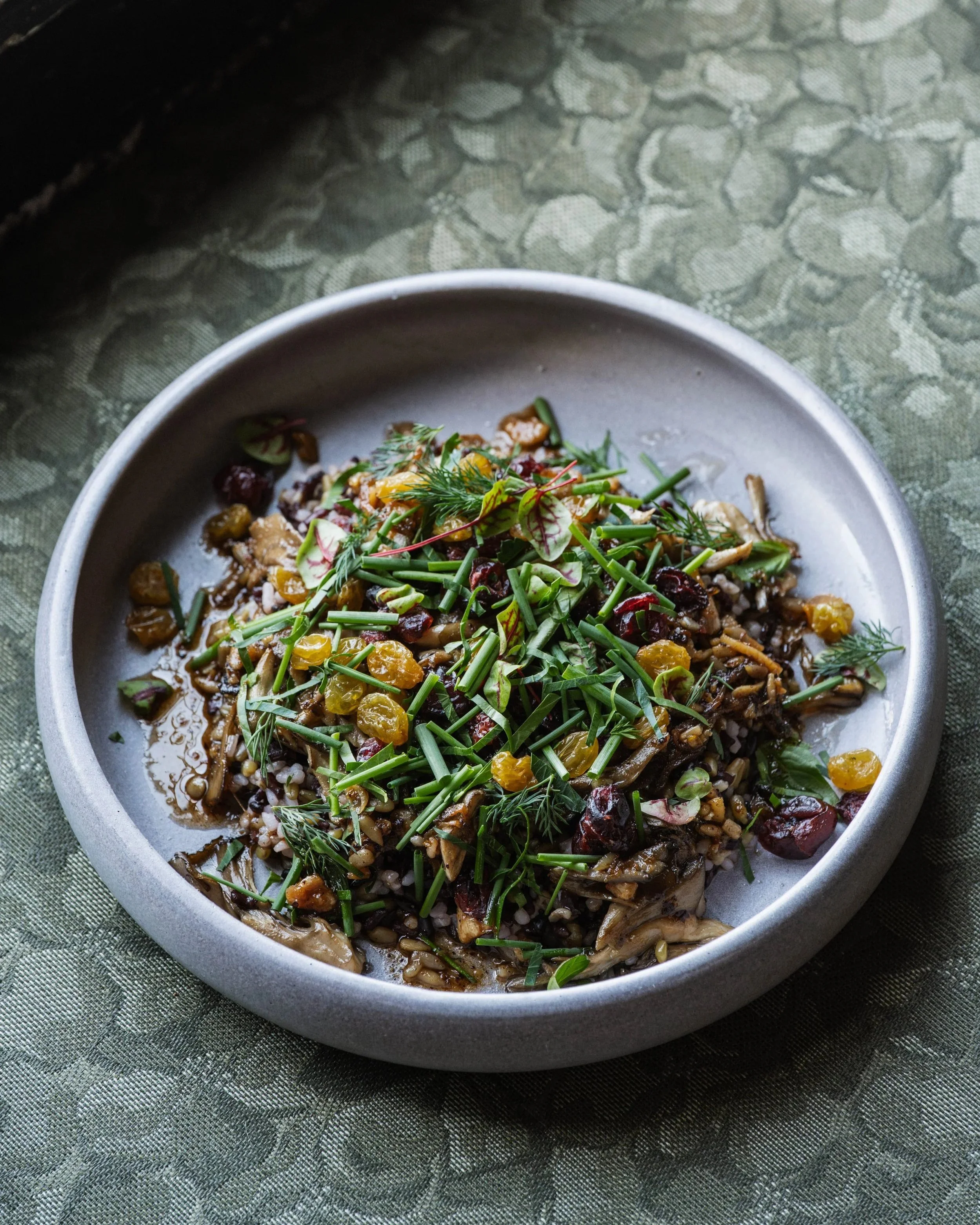
At Nashville’s Butcher & Bee, the annual Hanukkah dinner provides a rare opportunity for guests to both celebrate and eat. It also gives Chef Scott Littman a chance to get creative in the kitchen. Inspired by the story of Hanukkah, Littman and his team “always incorporate some kind of oil element” into dishes on the menu, he says. “We do latkes and doughnuts every year, but after 10 years of creating these dinners, filling in the other items is difficult.” This past year, Littman turned to a beloved product: Anson Mills grains. He steams a mixture of their Farro Verde, Carolina Gold rice middlins, and Colonial Calico rice. Separately, Littman sears maitake mushrooms in grapeseed oil and seasons them with a bit of Sherry vinegar before adding in the steamed grains and vegetable stock. He plates the mushroom rice, tops it with dried cranberries and golden raisins, then pours “a healthy dose” of chile crunch—made with Marcona almonds, fried garlic and shallots, Aleppo pepper, habanada powder, and dried mushroom powder—over the rice. Garnished with chives, dill, parsley, and red-veined sorrel, Littman’s “wedding rice” is packed with texture and flavor, and embodies the spirit of the holiday. “When we are able to utilize these ingredients in creative ways, it's very rewarding,” he says, especially since extending the life of an ingredient, like the oil, is “a big part of the Hanukkah story.”
FRANKIES' HOT BEEF
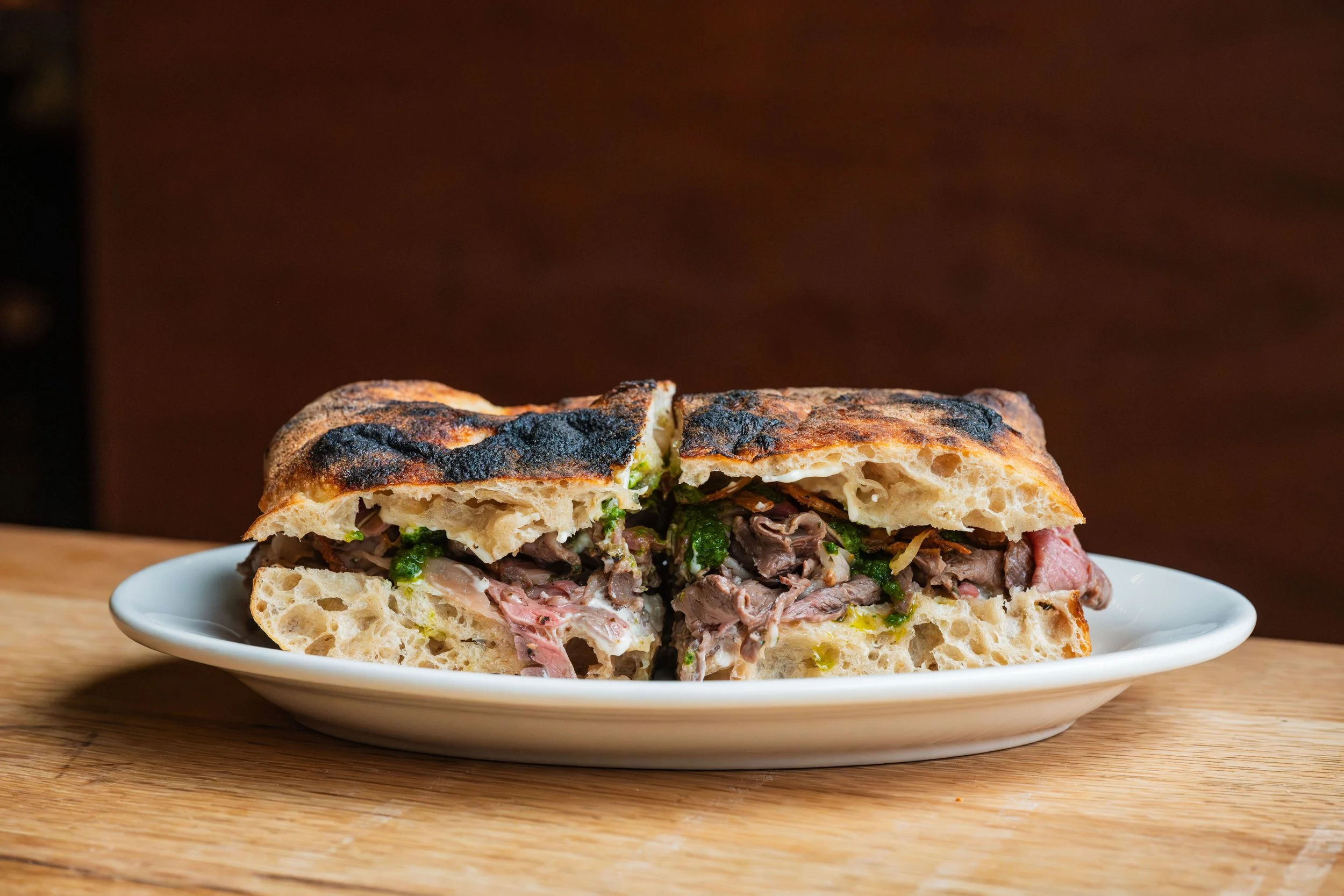
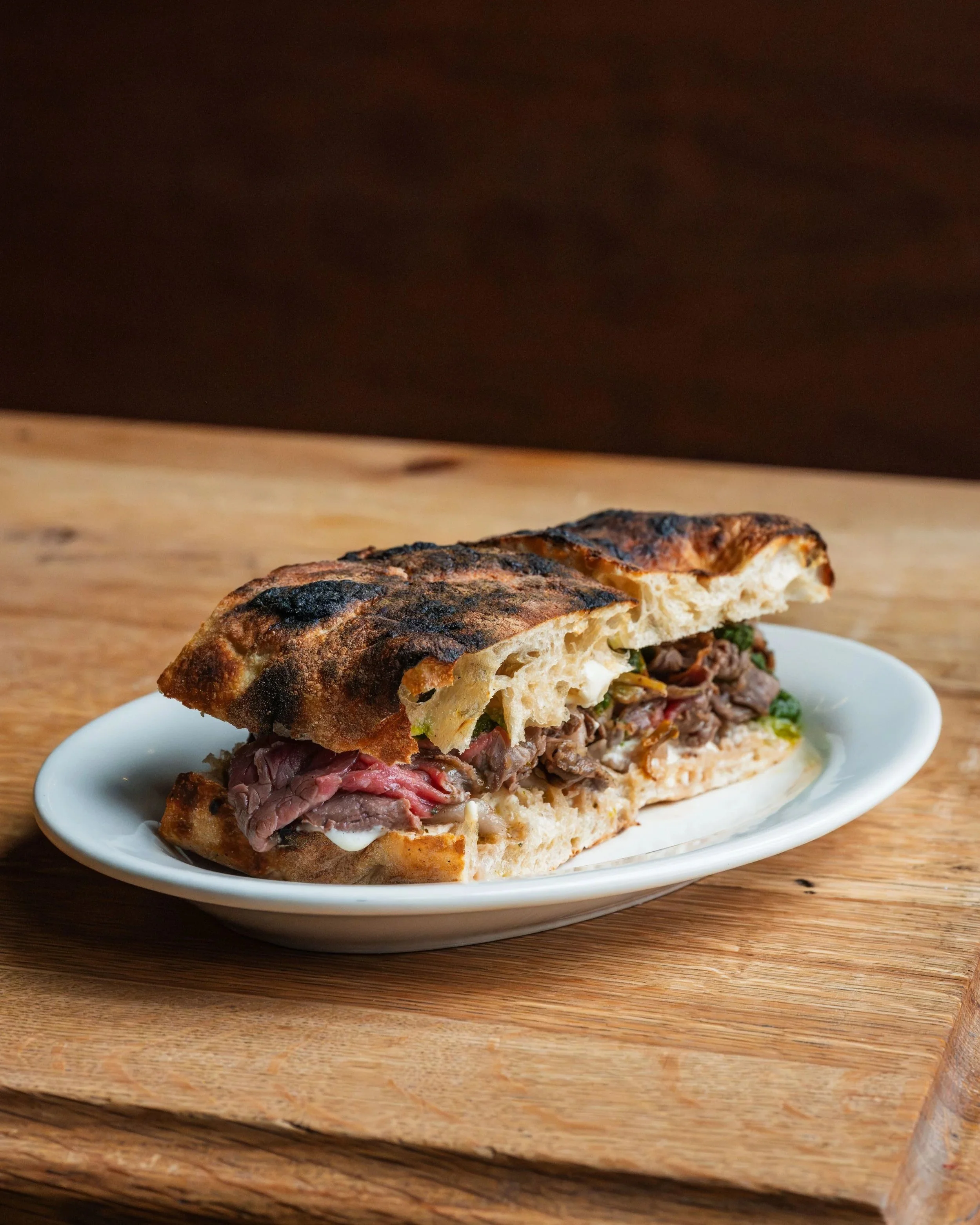
During the chilly winter months, Frankies 925 Spuntino’s cold roast beef sandwich just wasn’t cutting it anymore for Chef Corey Hargis. “People wanted a nice, hot, sloppy sandwich,” he says. Every great sandwich starts with equally great bread. Hargis’ begins with a combination of sourdough starter and poolish sitting overnight. He mixes in whole grain and whole wheat flours and lets that ferment for two hours before it’s shaped, proofed, and baked at 650°F in deck ovens for a few minutes. “We shape it pretty flat,” he says. “It’s like a flatbread.” For the beef, Hargis covers ribeye in olive oil, salt, and lots of black pepper. He then adds chopped parsley, rosemary, and garlic, and roasts the ribeye at 400°F for an hour, lowering it to 300°F, then cooking the beef until the internal temperature is 105°F. After it is chilled, the meat is thinly sliced and warmed in chicken jus on pick-up. Hargis smothers the beef in an Italian salsa verde that’s made from blended olive oil, parsley, garlic, shallots, and lemon zest. To add even more bite, he adds horseradish mayonnaise to the sandwich and tops it with crispy fried onions. “It’s the kind of sandwich you have to have a napkin for,” says Hargis. “If the bread is toasted right and it’s super crispy, it just soaks up all of the jus and the fat from the roast beef and the sauces. It hits your palate in a way that makes you feel like somebody’s giving you a hug when you eat it.”
SPECK CROQUETTE
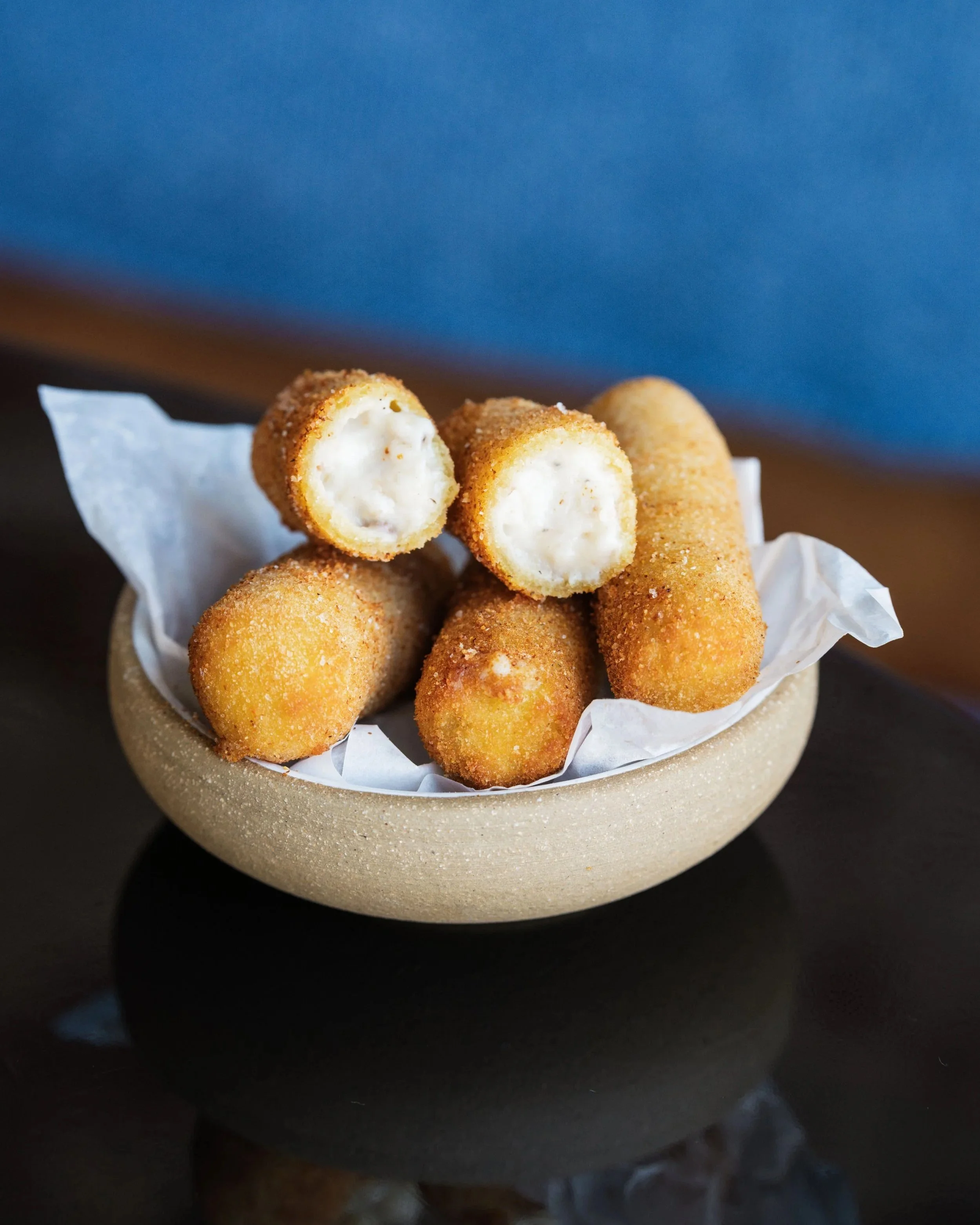
At Folk, when sliced speck is on the menu, speck croquettes are on their way. Chef Kat Kraner utilizes trim from the cured meat to make rich, gooey bites that are as addictive as they are profitable. She starts by passing the trim through a meat grinder, and then rendering out the fat in a pan. Instead of butter, Kraner adds flour to the rendered speck to make a roux. In a separate pot, she heats whole milk with garlic, peppercorns, bay leaves, rosemary, thyme, and shallots before it’s strained and added to the pork roux to make a béchamel. “It’s a really nice, thick béchamel that can stand up to being formed and breaded,” says Kraner. The béchamel is then seasoned with black pepper, salt, fennel pollen, and the excess pickling liquid from Spanish piparra peppers for “a little tiny pop of acid to cut the richness,” she adds. The béchamel is cooled, put into piping bags, frozen until it’s solid enough to cut into 2½-inch tubes, and frozen again. Kraner then does a double-breading of flour, egg, and panko before the tubes are deep-fried. This turns the béchamel back to a gravy consistency and the outside a crisp, golden brown. The finished croquette is dusted with the powder of other leftover trim, in this rendition, habanada powder. “It’s very Spanish-inspired,” says Kraner. “I think it really fits in the South, too, with béchamel being so similar to white gravy and pork being such a classic Southern staple.”