Big League Beef Jerky
At Wolfsbane, Chef Noe Jimenez is serving a knockout bite that packs a wallop of flavor.
Photos:
Beef jerky rarely felt occasion-worthy to Chef Noe Jimenez until he helped prepare Chef Amanda Kuntee Maneesilasan’s Thai fire-roasted jerky dish at Chao Krung Thai in Los Angeles.
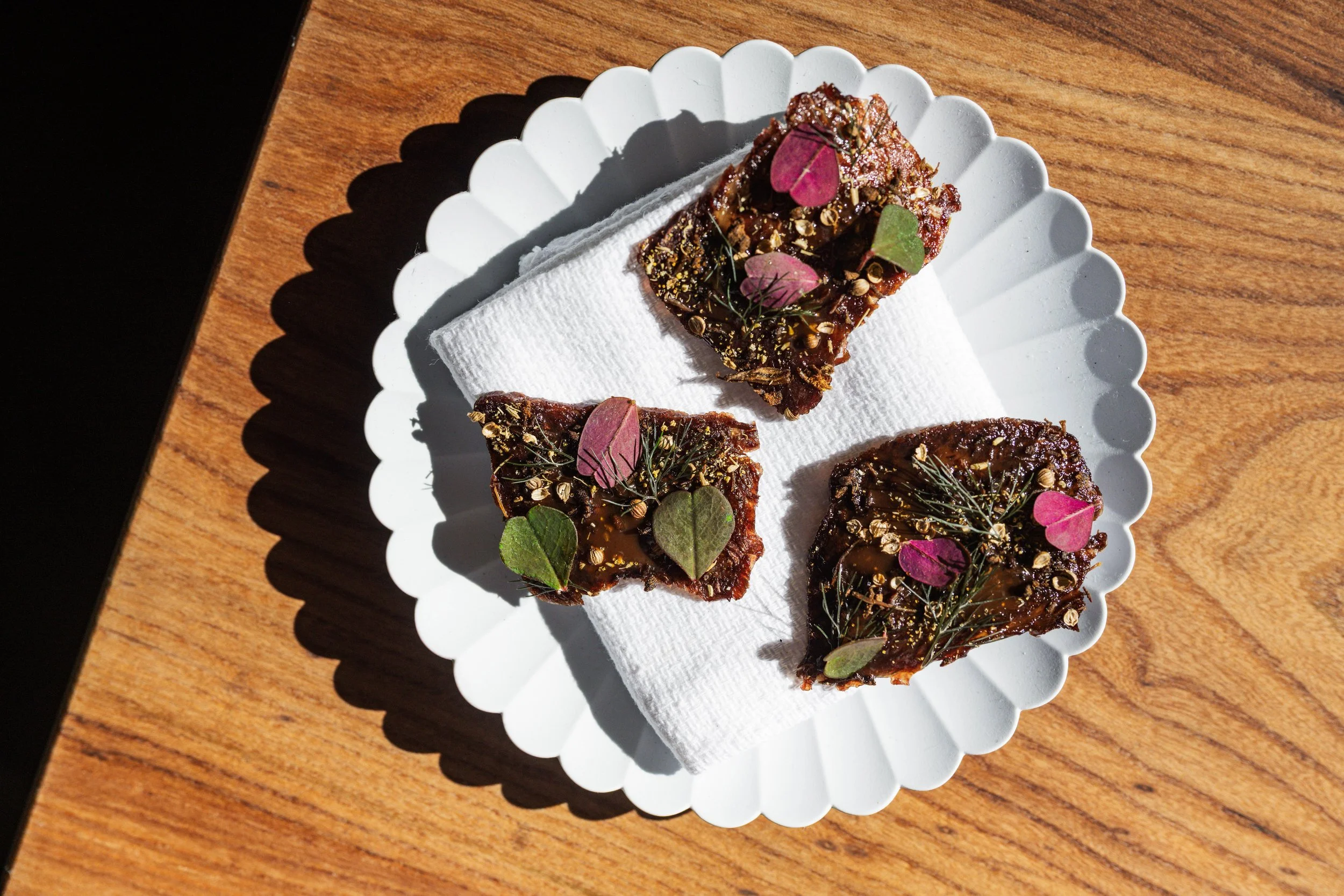
As a homage to the dish, Jimenez began developing his own take on jerky that reimagines it in a fine-dining context for Wolfsbane, a tasting menu restaurant in San Francisco’s Dogpatch neighborhood. Jimenez begins with a bavette wagyu steak, a flavorful cut well-suited for thin-slicing. He trims the steak, removing excess fat and sinew, before smoking it over hay two to three times. Once smoked, Jimenez freezes the bavette to solidify the marbled fat before cutting it into 4-millimeter slices and seasoning with salt, toasted coriander, fennel seeds, and rosemary, letting the beef cure for around two hours until the salt is absorbed.
Jimenez hangs the cured jerky above the restaurant’s grill during service where local apple wood, fig wood, and mesquite lump charcoal add additional smoky depth. The jerky dehydrates for no more than two hours at a time. “There’s so much fat in there, so we let that secondary amount of smoke hit the meat and also dry it out to about maybe eighty-percent, before it’s refrigerated,” says Jimenez. “We don’t want to dry it out completely, because it will shatter and splinter.”
To make the most of the wagyu, Jimenez transforms the excess trim from the bavette steak into two types of beef floss that garnish the finished dish. “It’s partly about texture and flavor, and partly about using as much of the product as possible,” says Jimenez. He boils the scraps in shoyu-seasoned water until cooked through. Once cooled, he separates the meat fibers by hand and places them in a large sauté pan to dry out. These get seasoned with porcini powder, fennel pollen, red wine, red wine vinegar, and black garlic shoyu, and cooked slowly over low heat until the fibers dry and caramelize. Jimenez turns the remaining scraps from trimming the smoked jerky portions into a second beef floss by pounding the meat into a paste with a mortar and pestle. The friction from this process renders out excess fat. He dehydrates this paste overnight over towels to absorb residual fat before marrying the two flosses together.
Borrowing inspiration from Japanese izakaya, Jimenez created a tare, which he lacquers onto the jerky. He caramelizes beef trim with onions and housemade black garlic, before adding shoyu, brown sugar, and then red Burgundy to deglaze. “The profile is really a combination of black garlic for deep, fermented sweetness, shoyu for umami and salinity, and anise notes to lift and focus all that richness.” He then adds a double brown chicken stock and reduces the sauce until thick and glossy. “The idea was that the lacquer should keep up with the richness of the wagyu, match its depth, and support it rather than overshadow it,” says Jimenez.
On pick-up, the slices of jerky are tempered with a quick kiss in the salamander and glazed with the tare, before Jimenez layers on the beef floss and garnishes with red wood sorrel, cracked coriander, bronze fennel, and fennel pollen for a little extra anise flavor. The jerky is one of several opening bites on Wolfsbane’s tasting menu and a permanent fixture on the à la carte bar menu due to its popularity. The dish arrives as three pieces, with two-tops often fighting over who gets the last bite.