June's Pizza's High Wire Act
Breaking down the eccentric system producing real-deal results at Chef Craig Murli’s Oakland pizza shop
Photos: Alexander Zeren
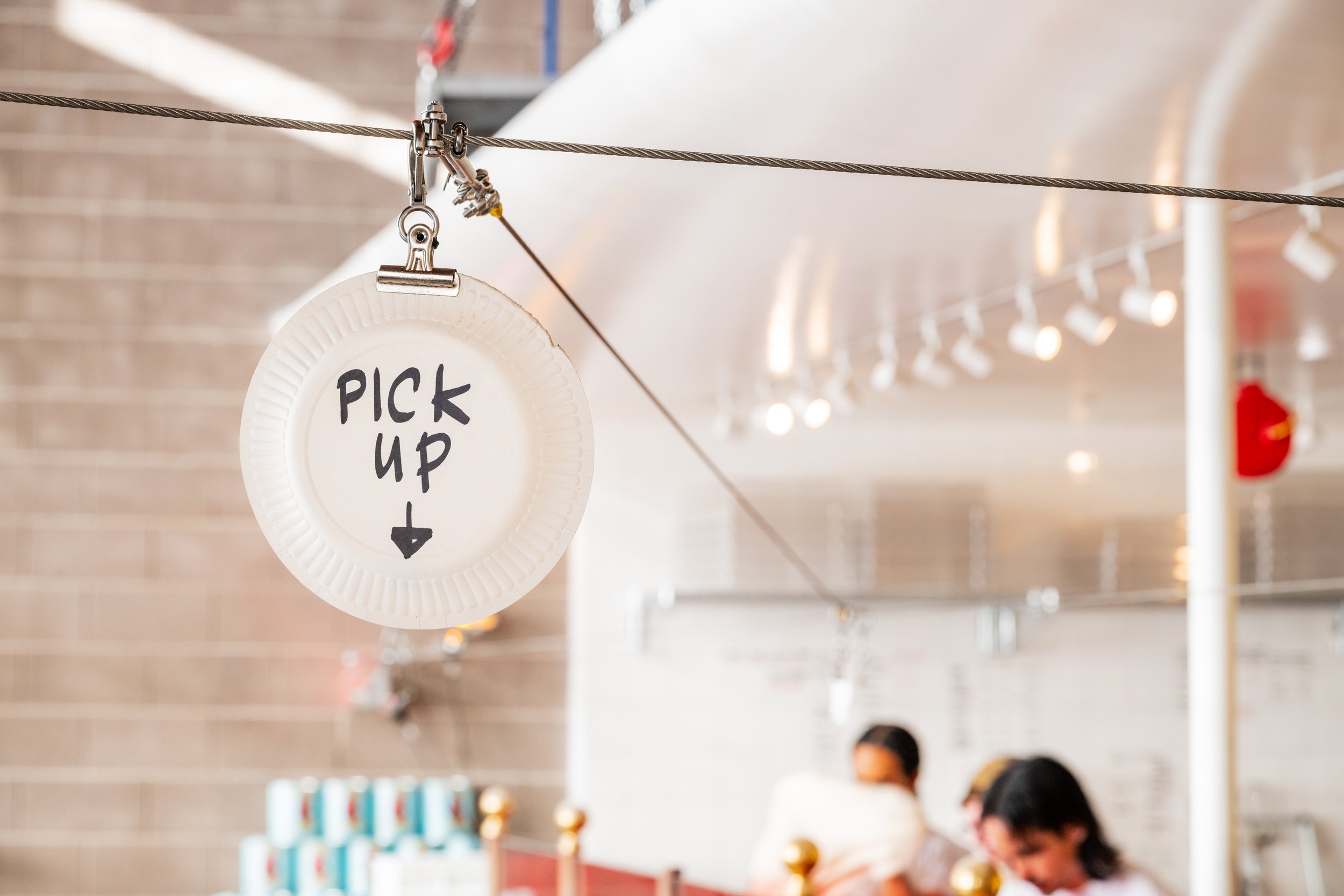
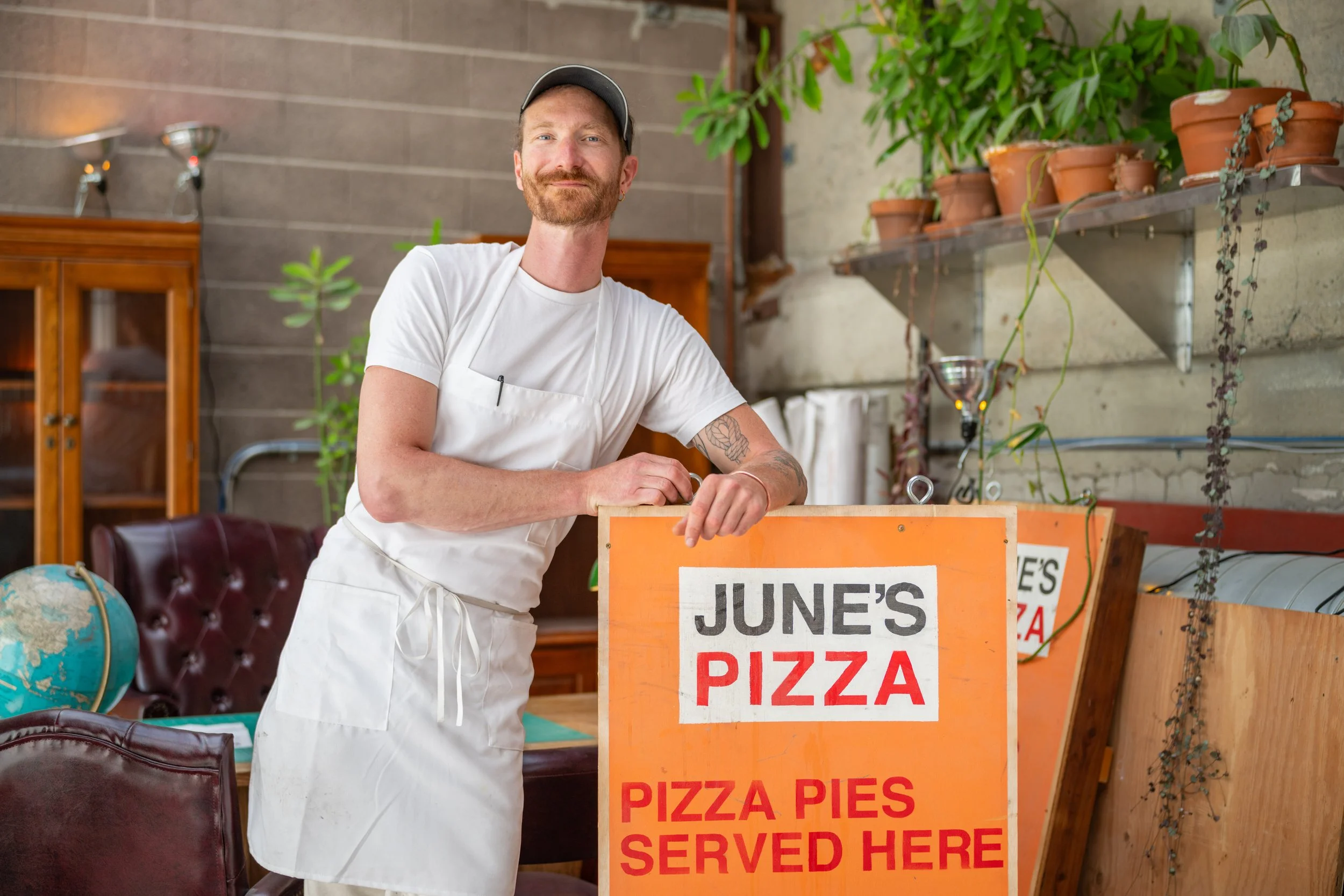
The most captivating sight at June’s Pizza in Oakland, California, isn’t the ripping flame of the restaurant’s wood-fired oven or even the pizzaiolos tossing dough through the air. It’s the zip line.
When Chef Craig Murli left behind a career in fine dining to open up a pizza shop, he knew he needed to lean into the nostalgia and comfort of the concept. So, after moving into a brick-and-mortar space in West Oakland in 2024, he developed a ticket system inspired by 1950s diners and, surprisingly, chain restaurants like Hooters.
The idea to create physical efficiencies at the restaurant “comes from my dad,” says Murli. “He was an engineer and was obsessed with productivity and streamlined operations. I studied Toyota management systems and Japanese techniques for leading businesses, and was able to apply it to pizza.”
Murli started experimenting with the zip line as a tool for sending orders from station to station, without relying on computers or digital POS systems. “Coming up in kitchens, the sound of electronic printers was traumatizing,” he says. “Doing away with that sound was the first thing.”
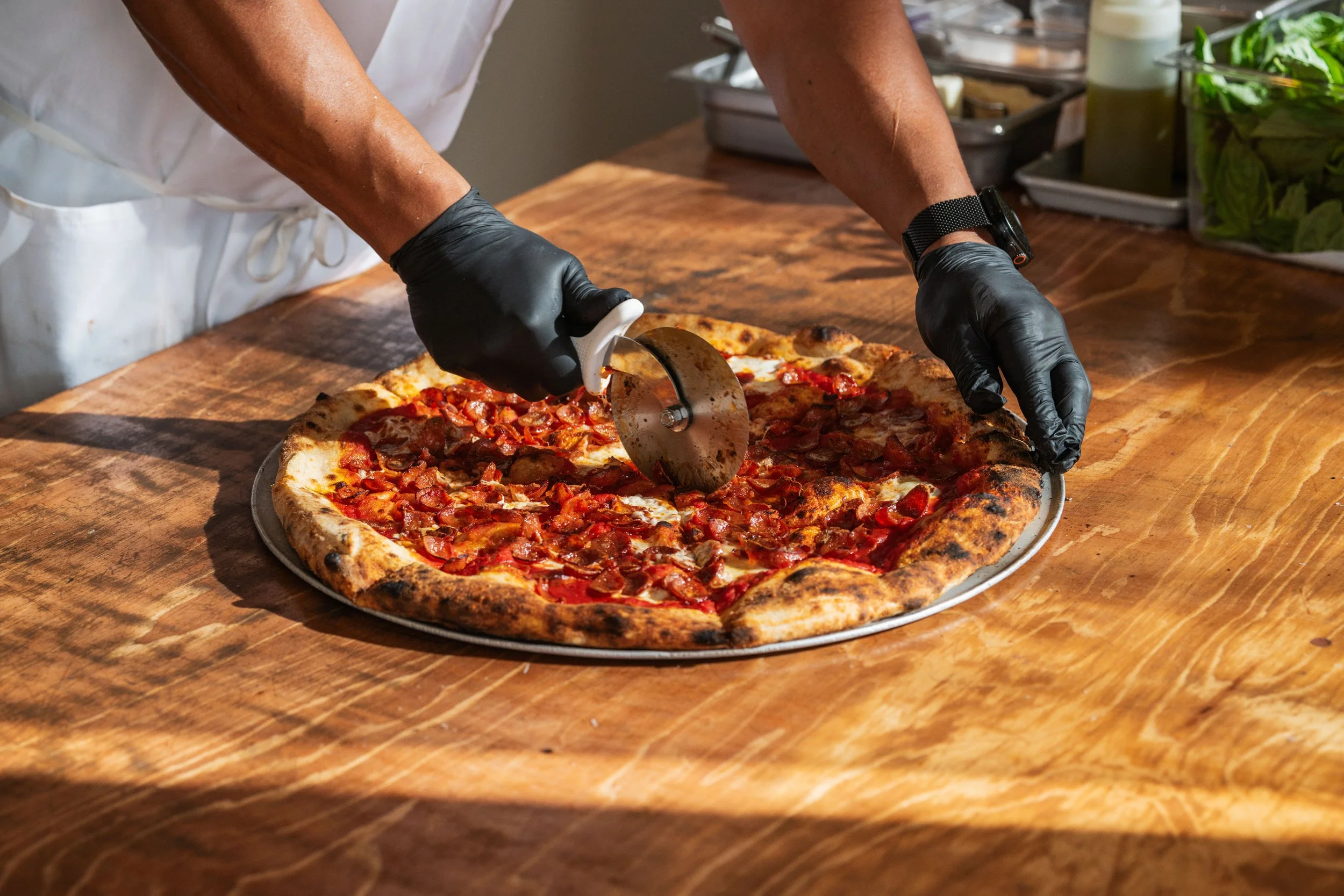
The way it works is simple. Guests order at the counter with a staff member, who then prints out the order ticket, snaps it onto an alligator clip (for the cleanest, quickest ride), and sends it down to the kitchen team tossing and topping the pizzas. They stretch out the dough and layer on the sauce, cheese, and additional toppings—June’s only offers three pizzas: a “red” pie, a pepperoni, and a rotating, seasonal “special” pie. The pizza is then sent down the line, along with the ticket, to the team working the wood-fired oven. After the pie is done, the cooks pass the pizza and slide the ticket to the “finishing” team of Murli’s make-shift assembly line, who douse the pizza in shaved parmesan and a few sprigs of basil. The ticket is then taken off of its clip, the number is read out, and the pizza is handed to the guest. But, crucially, the clip is then sent back to the counter, where it awaits another order.
Murli and his team have only four clips. They intentionally limit the number of orders they can take at any given time. “We can’t take an order until we have a clip,” he says. “It’s controlled. The trauma is removed. It never piles up as a result.”
“All in all, it’s quicker,” says Murli. “Once you order, you are in our hands and that experience is consistent. It’s a 12-minute wait after you order. But you might have to wait 25 minutes before you order.”
According to Murli, “as long as we are clear in communicating how long [the guest] will wait, and delivering on that promise, that’s how we are successful.”
The efficiency is crucial, but the theatrics of the unexpected, kinetic system are what make it worthwhile. “I wanted motion and energy in the dining room,” says Murli. “The zip line, to me, was about nostalgia; about fun; about resistance to technology. One final place where things aren’t run by computers. I wanted to make that last stand.”
The zip line, the assembly line, and the limited menu are all representative, ultimately, of what Murli calls the “one piece flow” philosophy. “An input goes in, an output comes out, one at a time,” he says.
While the zip line is “certainly fun,” it’s also proof, to Murli, that he doesn’t have to make “the same restaurant as everyone else. There are no rules,” he adds. There is always room for “new efficiencies, [new] ways to present food and write a menu.”