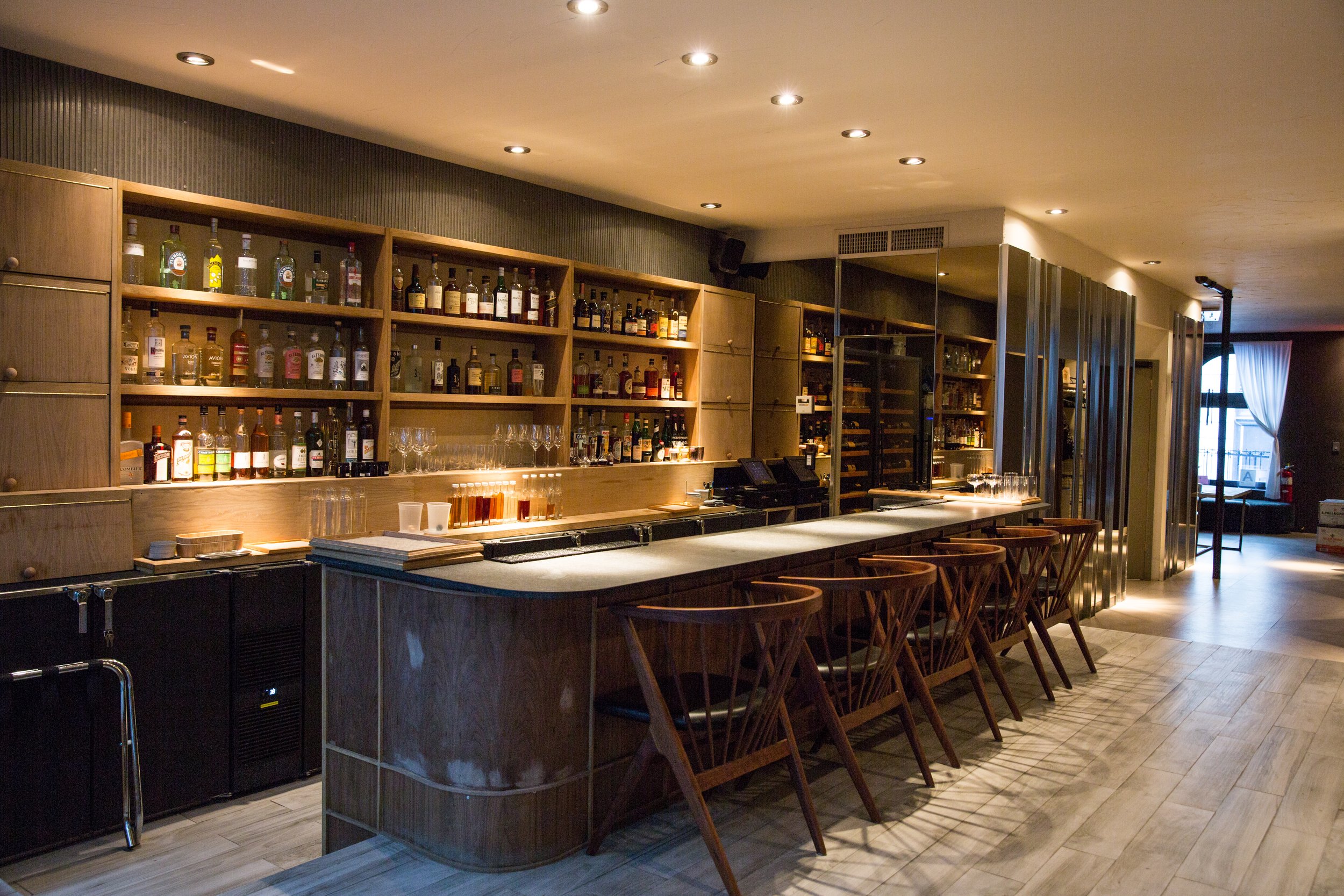
Miami chefs share tips on how to succeed in the competitive food hall landscape.
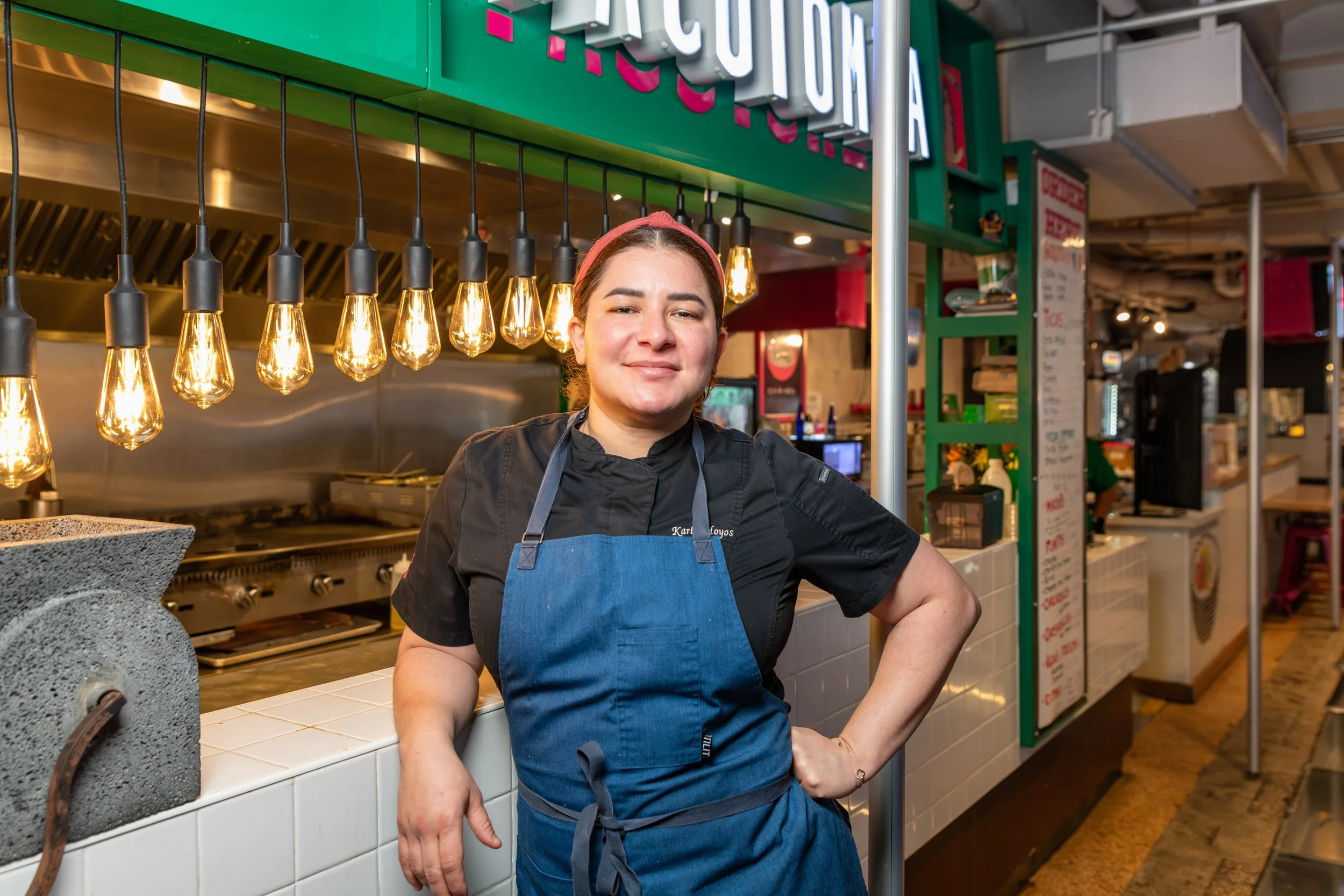
Chef Karla Hoyos of Tacotomia at Julia & Henry’s | Photos: Will Blunt
It was around eight years ago that Miami’s first food hall—the playfully-named 1-800-Lucky— debuted in the city and ushered in a wave of chef-driven culinary emporiums. Today, there are numerous food halls around the city and in the suburbs, and some that have sadly shuttered, unable to crack the formula for success in this competitive market.
But many of Miami’s food halls, and the chefs therein, are thriving, building their businesses on their own, oftentimes without the help of outside investors. Some of the city's food hall chef owners weigh in on how they have navigated this dining juggernaut and made efforts to keep their business flourishing.
Sili is possibly the smallest food hall stall in all of Miami, occupying what once was an ice cream shack in the courtyard of 1-800-Lucky, the 10,000-square foot Asian food hall in the heart of Wynwood. Chefs Nancy Dominguez and Leicel Ros had been doing pop-up dinners around town, showcasing their Southeast Asian cuisine, when the opportunity came up to try out a space at the hall in December 2023. “We actually were only supposed to be a pop-up, but we got such great feedback on our food that the owners invited us to stay,” explains Ros. "Our space is not like your traditional kitchen, we converted it into a little baby kitchen. We have a little baby oven, four induction stovetops, and a baby fryer. So it puts us in a place where we have to be not only creative with our food, but also our organization.”
Sili’s menu is short and precise, with dishes like Vietnamese street pizza (bánh tráng nướng) made from crispy rice paper and topped with a marbled egg, pork belly lettuce wraps, hamachi crudo, and a bánh mì with a Filipino spin. “We had so many dishes we wanted to bring in, but then after looking at the equipment, we had to edit,” says Ros." How are we going to evolve, how are we going to be better— that’s always the question that we're asking. How can we bring a better experience to our guests? That’s one of the challenges.”
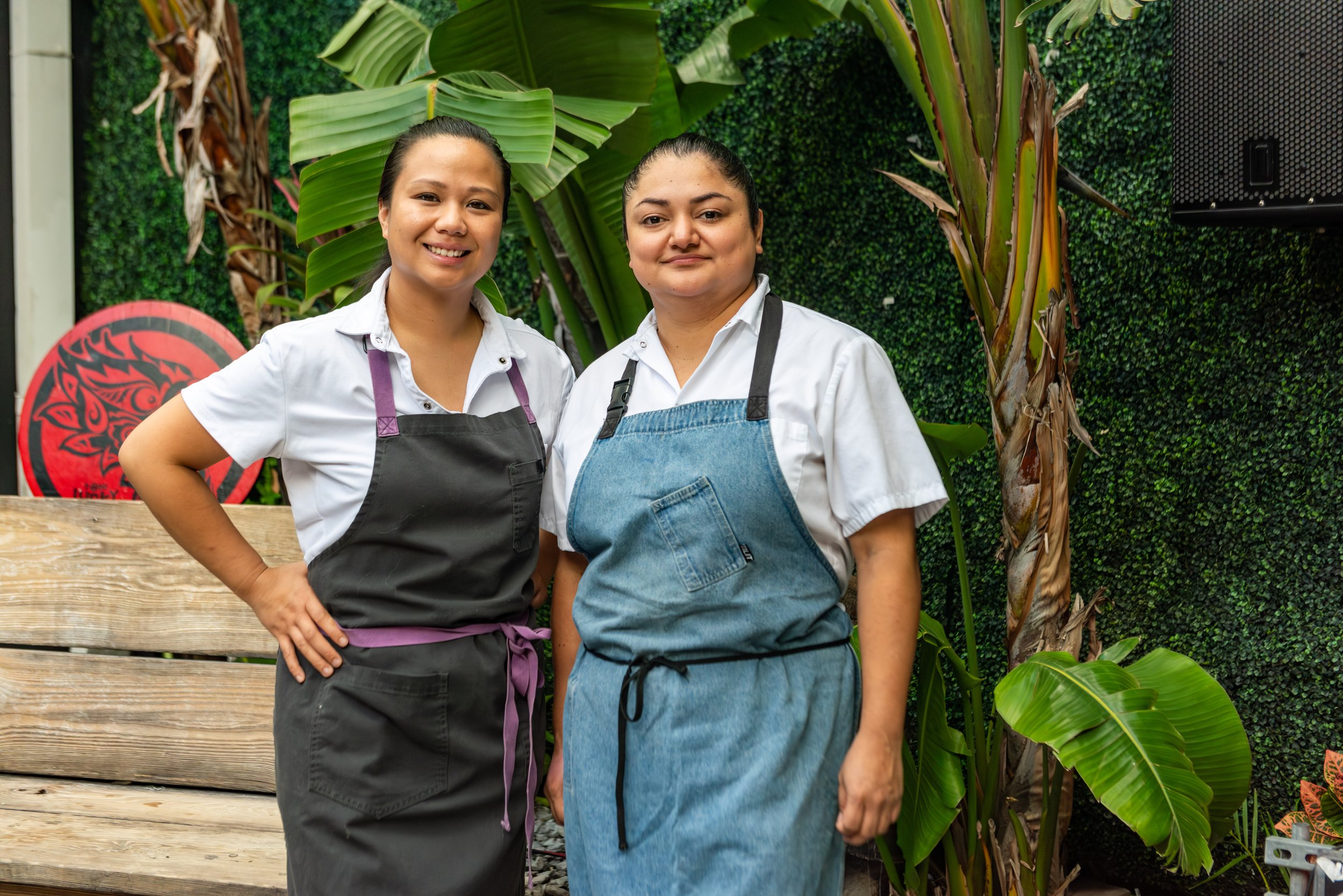
Chefs Leicel Ros and Nancy Dominguez Of Sili
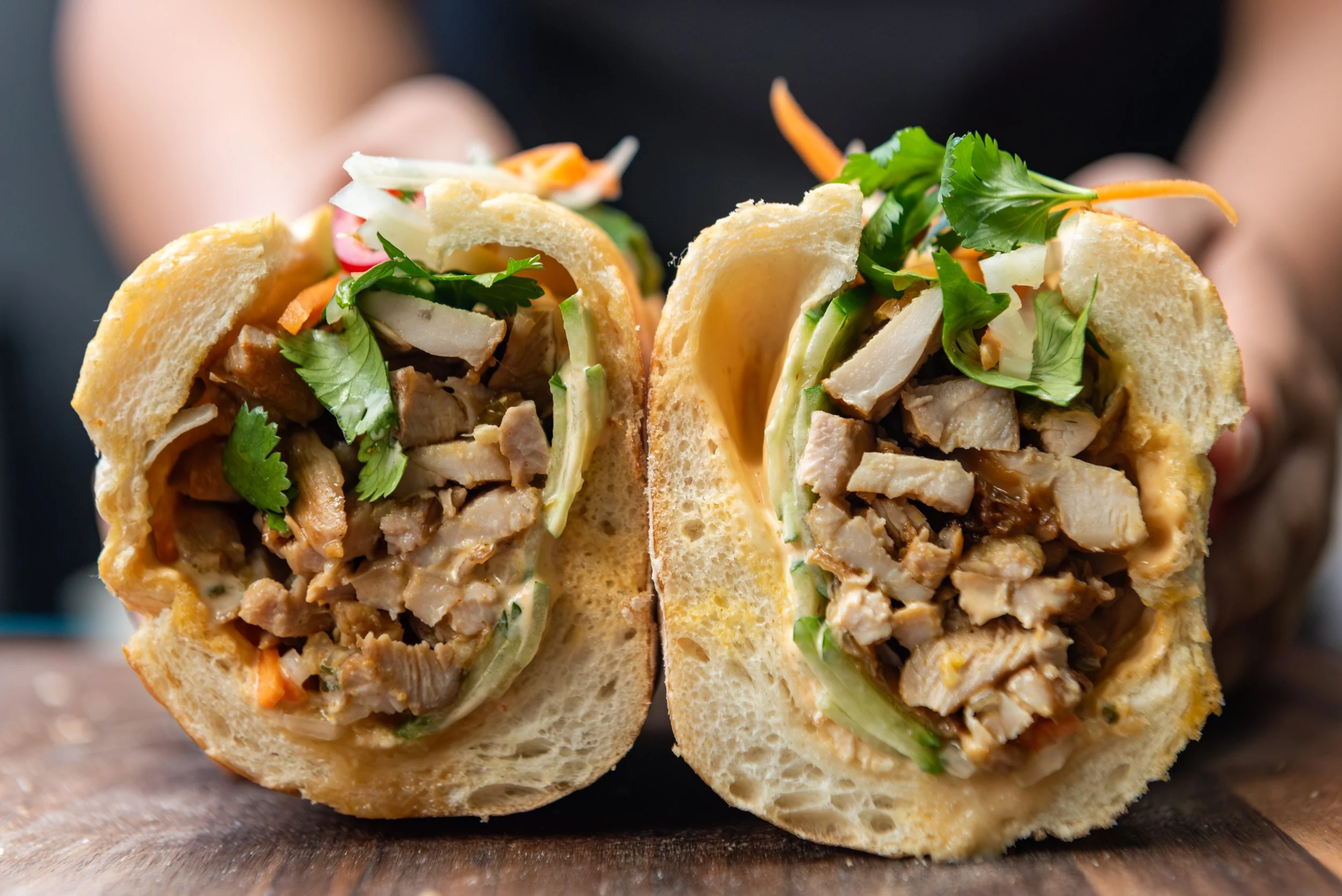
Inasal Chicken Bahn Mi, Atchara, Spicy Mayonnaise, Cilantro, Oyster-Chile Sauce
Chefs Javier Cussato and Carmen Ibarra, partners and owners of Atomica, a modern Peruvian concept at the MIA Market in the Design District, have also figured out how to make their food with a creative setup at their stall. “We run service out of our front stand. We have a small pizza oven where we cook the oven-roasted fish to order, and we have a fryer and an induction burner in the front,” explains Cussato. “The communal market kitchen is shared by 10 businesses, so we just use it for prep and for storage.”
For the couple, choosing a food hall with a reputation for incubating chef-driven concepts was paramount. “The location and the history of the food hall was important for us; what restaurants have been successful there?” says Cussato. Ibarra points out that opening at the Market was a smart move because it was already an established destination. “The design district is a very popular area. So having a structure and space that was move-in ready for us and already on the map was a huge benefit.”
But of course, that built-in exposure comes at a cost, as they explain, “We do pay a certain percentage of sales revenue to the food hall based on the season. [The food hall has] a higher rent percentage compared to a free-standing restaurant, however, there is a huge benefit because we do not need to cover certain expenses such as utilities, equipment, maintenance, service staff, etc.” They also add that they are committed to the space on a year-to-year basis, instead of a more constraining multi-year lease agreement
The couple is looking to eventually open their own brick-and-mortar, but are still dividing the responsibilities of Atomica between each other and two employees.
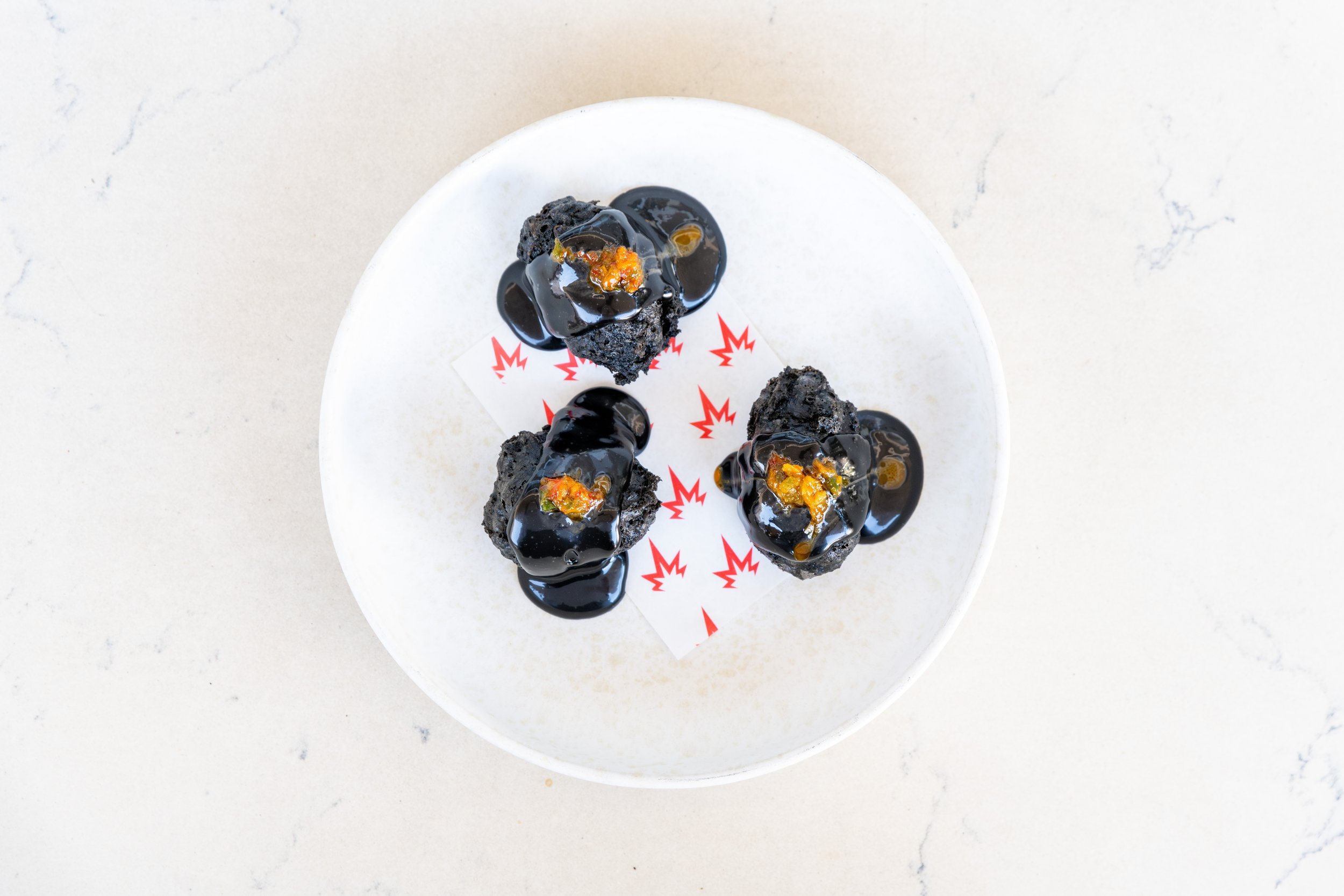
Fried Key West Shrimp, Squid Ink Tempura, Black Miso Sauce, Pachikay
Chefs Javier Cussato and Carmen Ibarra of Atomica
Chefs Mikey Mayta and Keily Vasquez, who opened United States Burger Service inside The Citadel food hall in 2020, point out that each food hall contract is structured differently. “The pros of starting in a food hall are that it’s more of a low risk entry depending on the way that you set up the contracts,” says Michael. “Some are just percentage based, others are a mix of sales and percentage. Depending on what your capital is or what your finances look like, it could be beneficial.” He also explains that food hall management can absorb other costs like a liquor license and insurance of alcohol on premise—a huge expense for business owners, but also a huge draw for customers— in addition to cleaning the premises and some supplies. “You can be laser-focused on your product and what you’re doing and not worry about, ‘Is the bathroom clean?’ Is there enough silverware?’ You know those things are taken care of.” The success of Mayta and Vasquez’s smash burger spot empowered them to expand their footprint at The Citadel and open a second concept next door: a Tex-Mex spot called Guerito’s.

Carrier Pigeon: Fried Chicken Patty, Bread and Butter Pickled Cabbage, Mayonnaise, Bun at United States Burger SErvice
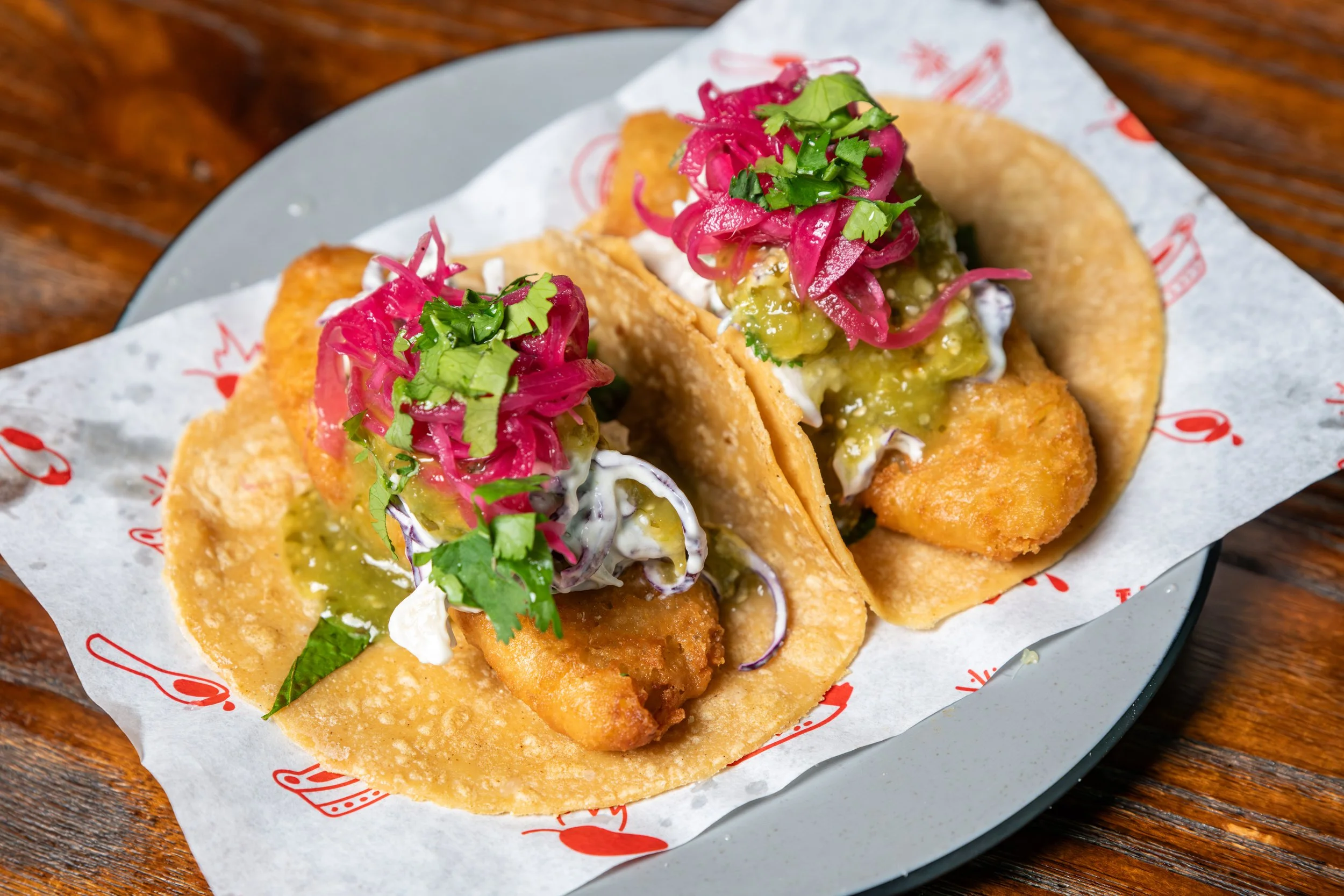
Cod Taco, Cabbage Slaw, Habanero Crema, Hibiscus-Pickled Onion, Tomatillo Salsa, Cilantro at TacoTomia
Chef Karla Hoyos took a chance on a new food hall when she opened Tacotomia at Julia & Henry’s in 2023. “As an independent business owner, you don't always have the means to start on a big project or the confidence to say, ‘Okay, I'm going to open the spot by myself now,’” says Hoyos. “It is hard to make that jump from working for someone else to doing your own thing.” Hoyos served as a lead volunteer and chef with World Central Kitchen, aiding in relief efforts in disaster and war zones like Puerto Rico and Ukraine, later going on to work as chef de cuisine at The Bazaar by José Andrés. “Opening at a food hall gives you that little bit of safety and security,” explains Hoyos.
Hoyos’s tacos were such a hit with the hungry crowds at Julia & Henry’s that she went on to open a second location of Tacotomia last year at The Doral Yard, a food hall in the suburbs of western Miami. For both locations, she tackles the issue of limited kitchen space by having an off-site commissary kitchen where she preps and cooks all of the food before it’s delivered to her two locations. “I produce everything in my commissary kitchen and everything comes already done to the food hall. Everything's going to taste the same because I make it myself.” Managing two spots—open seven days a week—and their employees is a juggling act, and Hoyos admits she doesn’t have a set schedule when it comes to dividing her time. “I'm kind of jumping around the two locations and the commissary.”
Despite the pros and cons, food halls can offer a foot in the door for independent operators, many of whom have plenty of experience in restaurants, but lack the resources to open their own brick-and-mortars. For up-and-coming entrepreneurs, it’s a way to break into the business without a lot of capital. For established chefs, it’s a way to meet the people where they are and sell their food—and their brand—to a broader audience.