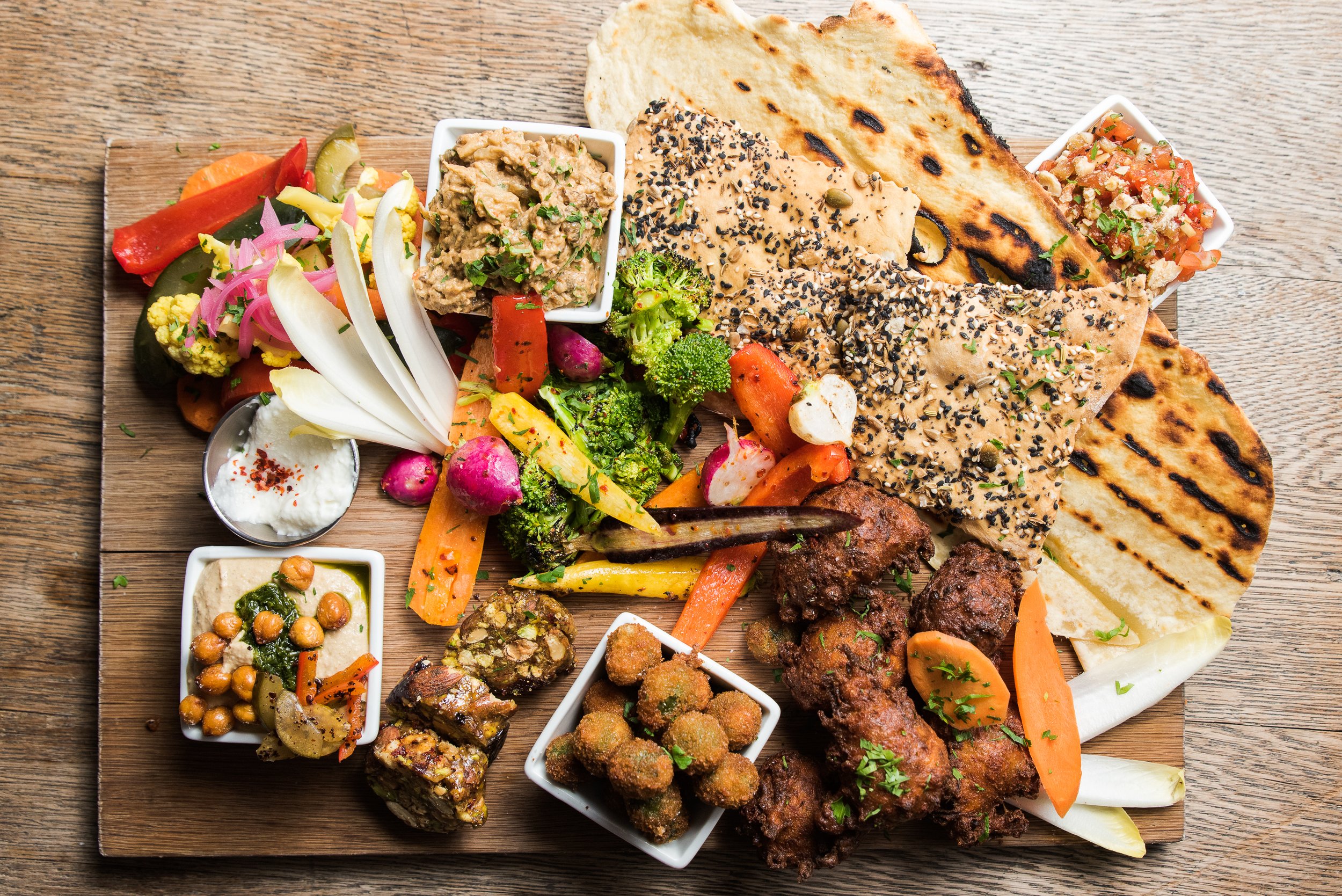
Celebrating the Flavors of the Nile
Chef Philip Sanad is digging into the past for his pop-up, cooking personal dishes informed by recipes from pre-modern Egypt.
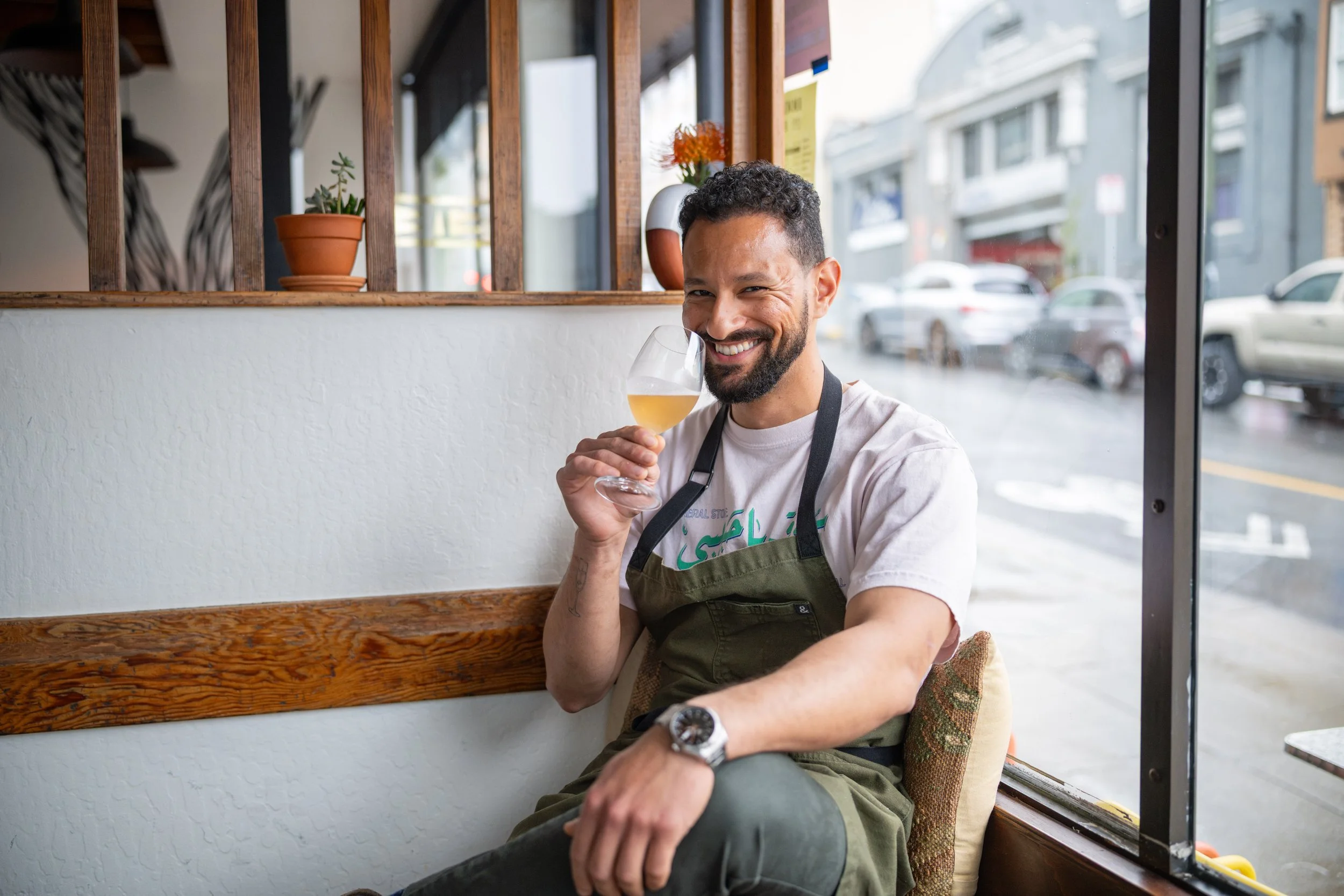
Photos: Alexander Zeren
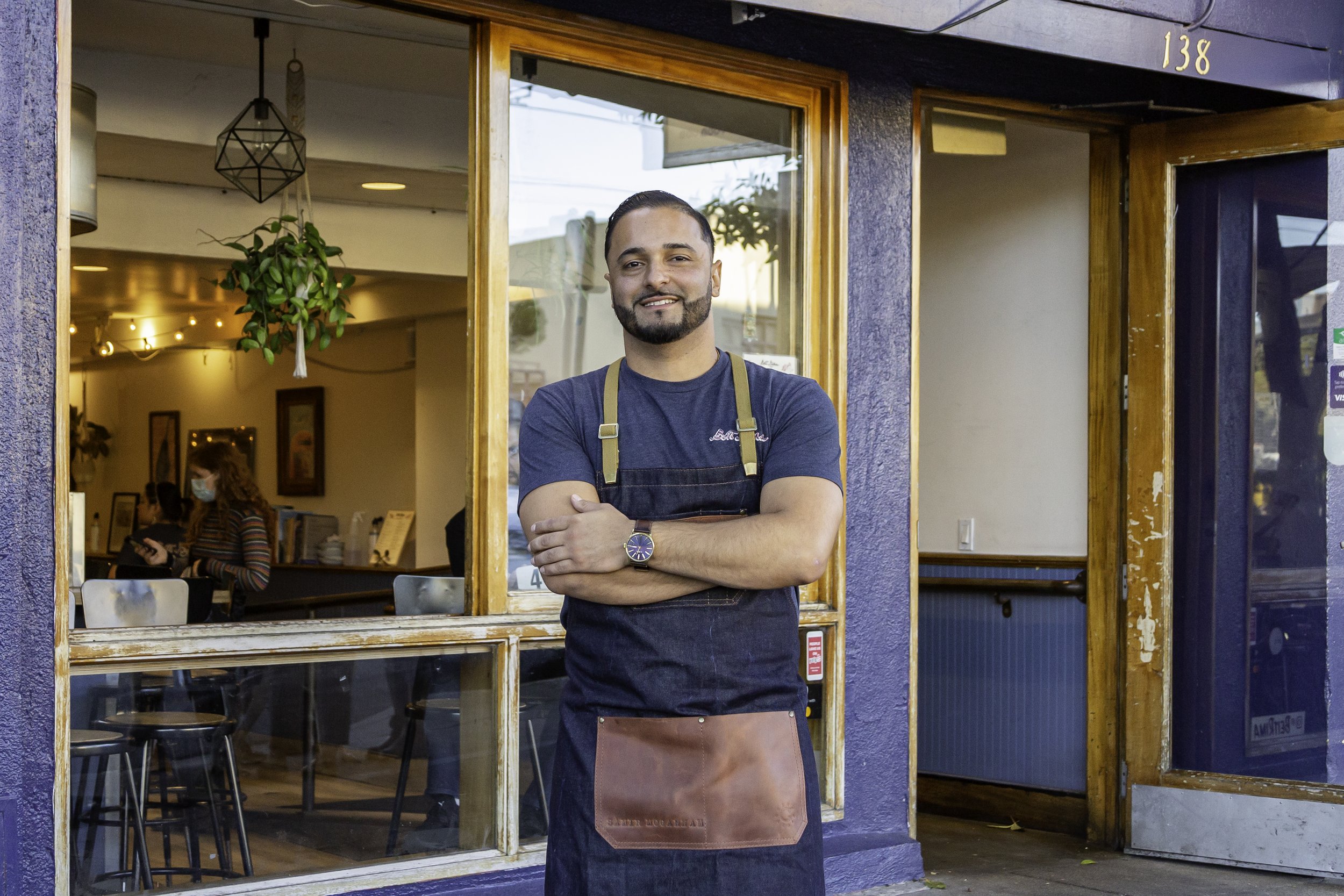
“Egyptian food is highly undiscovered and highly underrepresented in the United States,” says Chef Philip Philip Sanad Sanad. “Not many people are writing about it, cooking it, or selling it.” Before embracing the cuisine this past year, neither was he.
Although Sanad had hosted pop-ups before, a conversation with Sommelier Bahman Safari about “the lack of representation” of Iranian, Egyptian, and Middle Eastern food in the Bay Area spurred a collaboration between the two friends. Safari invited Sanad, who serves as Director of Culinary Operations for Lazy Bear, True Laurel, and JouJou, to host an event at his wine bar, Bar Bibi Bar Bibi. Together, they synthesized their memories and nostalgia for Iranian and Egyptian cooking and presented it to a sold-out crowd in January 2026.
The goal of the dinner was to “replicate the atmosphere of being at your Middle Eastern grandma’s table or at a buzzing loud cafe in Cairo serving street food,” says Sanad. “We knew people who were familiar with the culture would recognize the food, and for those who were not, it would give them a frame of reference.”
At the first dinner, Sanad mainly focused on classic Egyptian dishes—familiar, ceremonial, and celebratory plates from his childhood along with more casual, street food-inspired bites. “I was humbled by it. People were actually curious about this,” he says.
The success of the first pop-up was energizing for Sanad, but it also sparked a burgeoning interest in the history and origins of Egyptian cuisine. “I felt, and still feel, this sense of responsibility. I wanted to study more and learn more about the history,” he says.
Sanad dove into old family recipes before turning to more historical texts for insight and inspiration. “A lot of the food people eat in Cairo is incredibly modern, sub-200 years old,” he says. “There is very little that predates that, which I found interesting. It’s one of the oldest civilizations in the world.”
His research led him to books from the 15th, 16th, and 17th centuries. Chief among them was The Sultan’s Feast by Daniel L. Newman. “That was the biggest catalyst,” says Sanad. The book, a translation of the writings of 15th century Egyptian scholar Ibn Mubarak Shah, provides an account of the distinctive techniques, ingredients, and dishes that exemplified Egyptian cooking at the time. “It shed light on what role cuisine played in Egypt,” says Sanad.
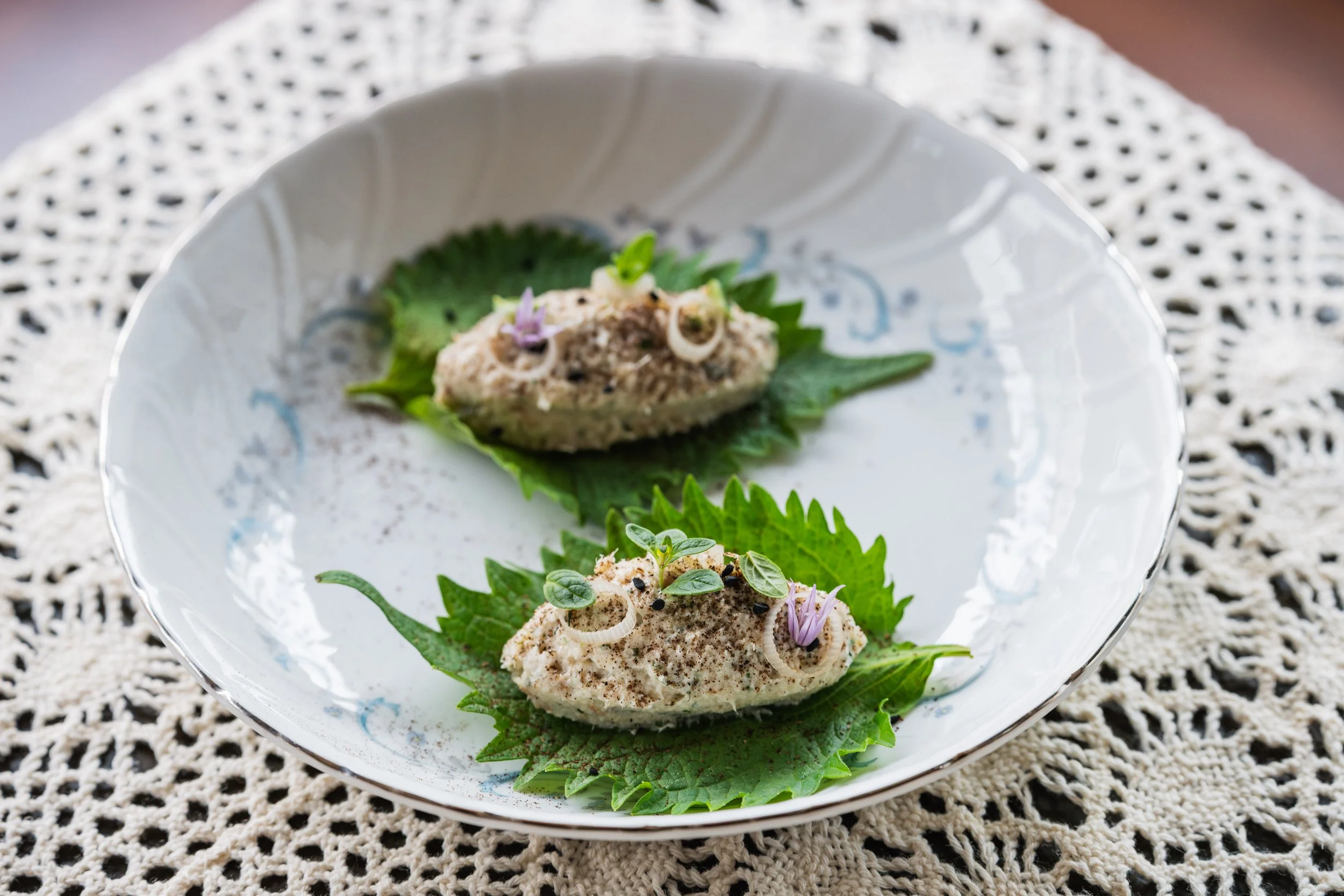
Ringa: Smoked Black Cod, Tahini, Green Garlic, Spring Onions, Pickled Green Garlic, Black Lime Powder, Nigella Seeds, Mint, Chive Blossom, Shiso
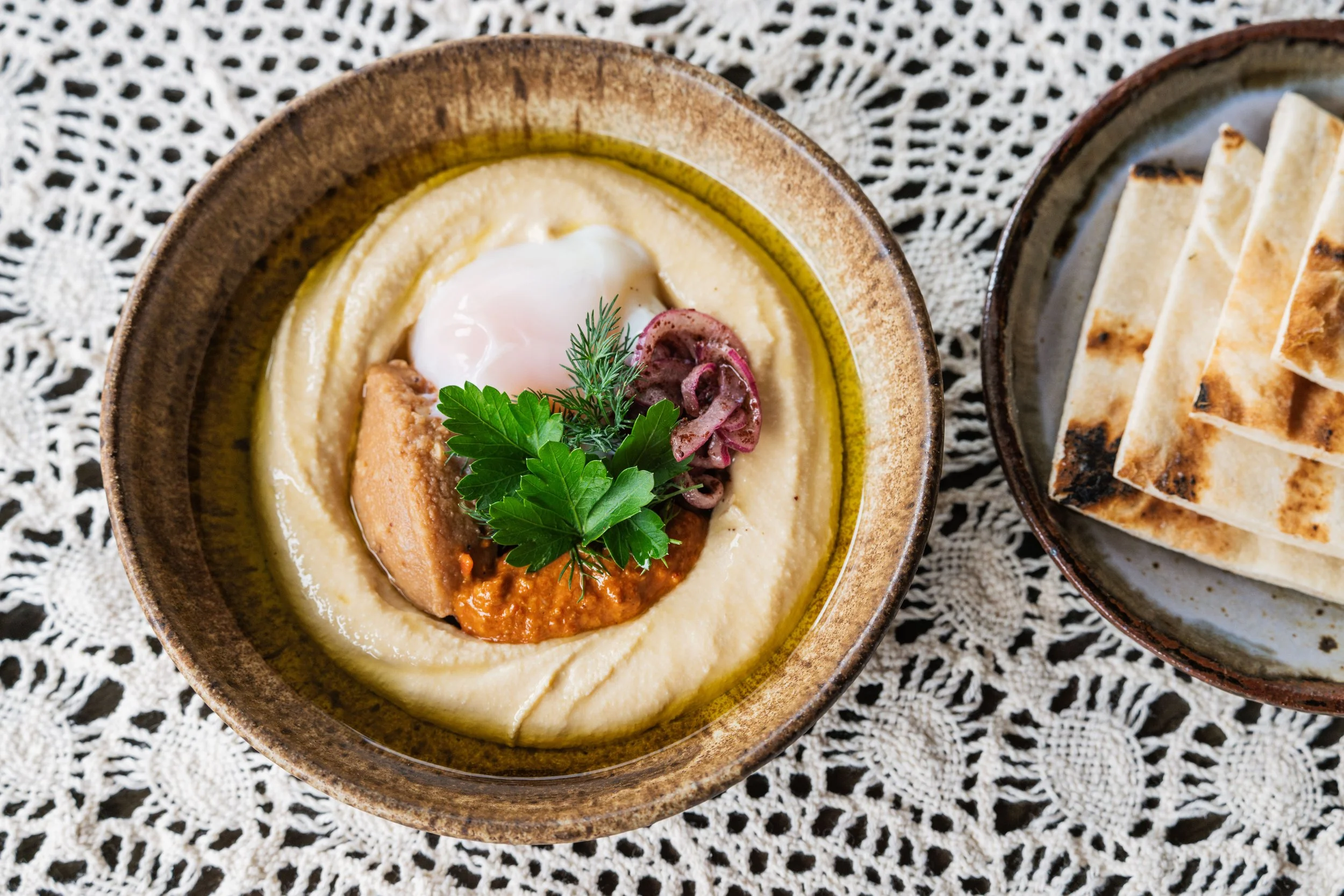
Egyptian Hummus, Ful Medames, Muhammara, Soft-Boiled Egg, Sumac Onions, Olive Oil, Dill, Parsley, Pita
The culinary history Sanad explored revealed to him a cuisine that was “incredibly thoughtful, romantic, resourceful, and highly technical.” The focus on plants, vegetables, and legumes along with heartier dishes cooked over fire—like goat or lamb stews with dates, apricots, and rose water—had hints of familiarity, yet were undeniably different from the more modern Egyptian food of his childhood.
Some of the ingredients Sanad came across in his research confused and astonished him. Mentions of sesame oil filled the pages, despite the fact that growing up Sanad’s family didn’t even have the ingredient in their pantry. “How was that our oil of choice?” asks Sanad. “But now it’s associated with Asian or Japanese cuisine, and not commonly used in Egyptian cuisine.”
As Sanad and Safari developed the menu for their second pop-up in April, these revelations were top of mind. “I’ve taken elements so far, like techniques, that are reflective of ancient cooking methods, but I’m still in the process of piecing together recipes that I want to make. I want to test it, play with it, see how it looks, how it resonates with me, and then put it on,” says Sanad.
The pop-up dinners have continued to draw a curious, enthusiastic crowd. The tables are set with white lace tablecloths and the menu is written to communicate their philosophy as well as the story behind each dish. “That ended up being really important for people,” says Sanad. “Lots of people took [the menu] home with them.”
At each dinner, Sanad showcases five Egyptian-inspired dishes while Safari contributes an Iranian-inspired course along with a dessert to round out the menu. The family-style tasting menu costs roughly $115 per person with an optional wine pairing available for around $65, which Safari curates with a focus on the Levant—think Lebanese pét-nats, Moroccan reds, and plenty of Arak.
The savory courses draw on tradition, nostalgia, and seasonality—tying Cairo to San Francisco. Sanad’s ringa dish utilizes ancient techniques and local ingredients while paying homage to Sham el-Nessim, an Egyptian spring harvest celebration.
Although modernized for the pop-up, “it’s a pharaonic tradition,” says Sanad. “Fish preservation and the allium harvest drove people to eat this way. It’s a very spring thing people still do that started back in pharaonic times.”
For his version, Sanad nestles a smoked black cod emulsion—rather than the traditional smoked herring dip—made with tahini, green garlic, and spring onion into a shiso leaf and garnishes the mixture with pickled green garlic, black lime powder, nigella seeds, and mint.
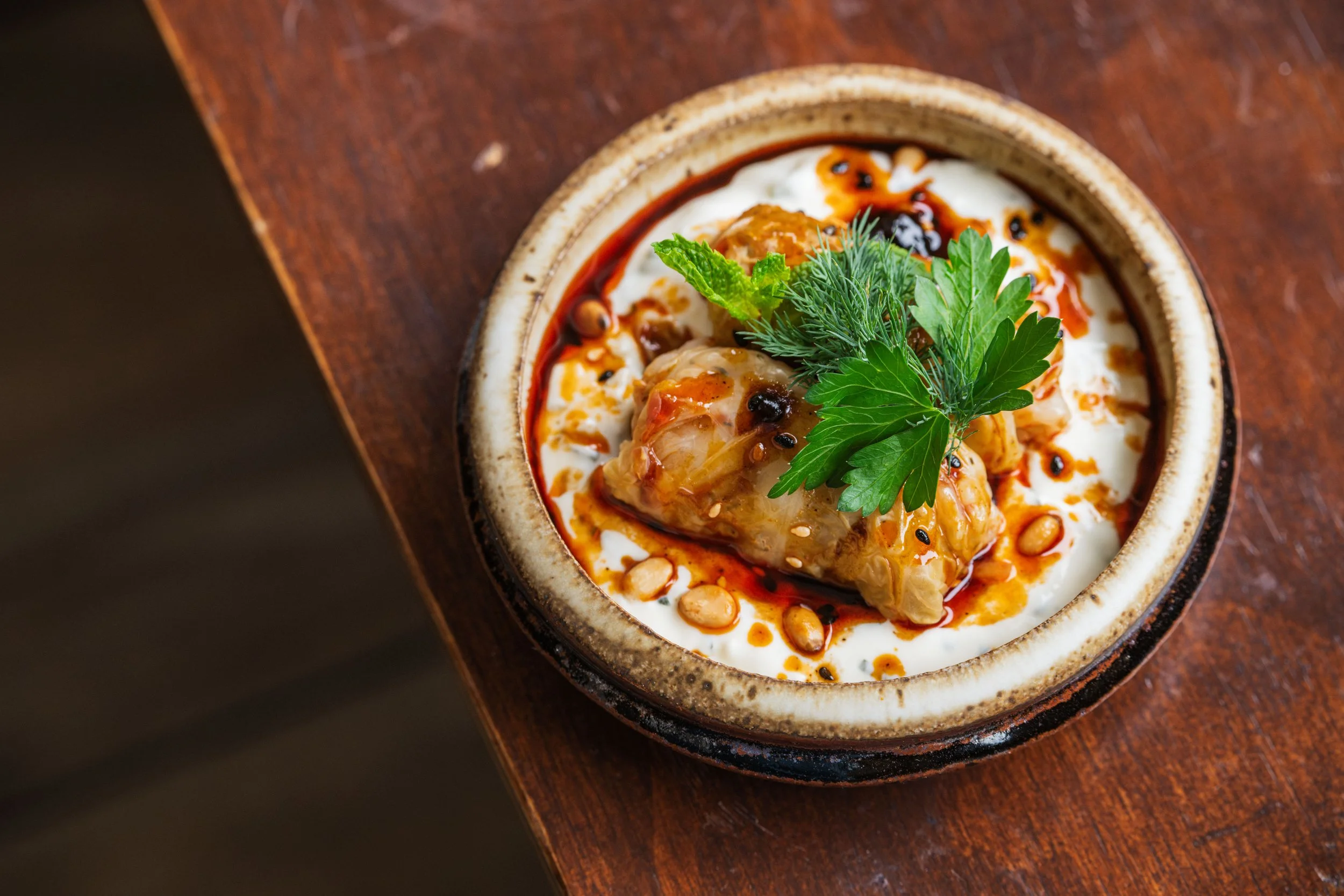
Mahshy: Stuffed Cabbage, Rice Filling, Mint Yogurt, Urfa-Aleppo Chile Oil, Toasted Pine Nuts, Dill, Mint
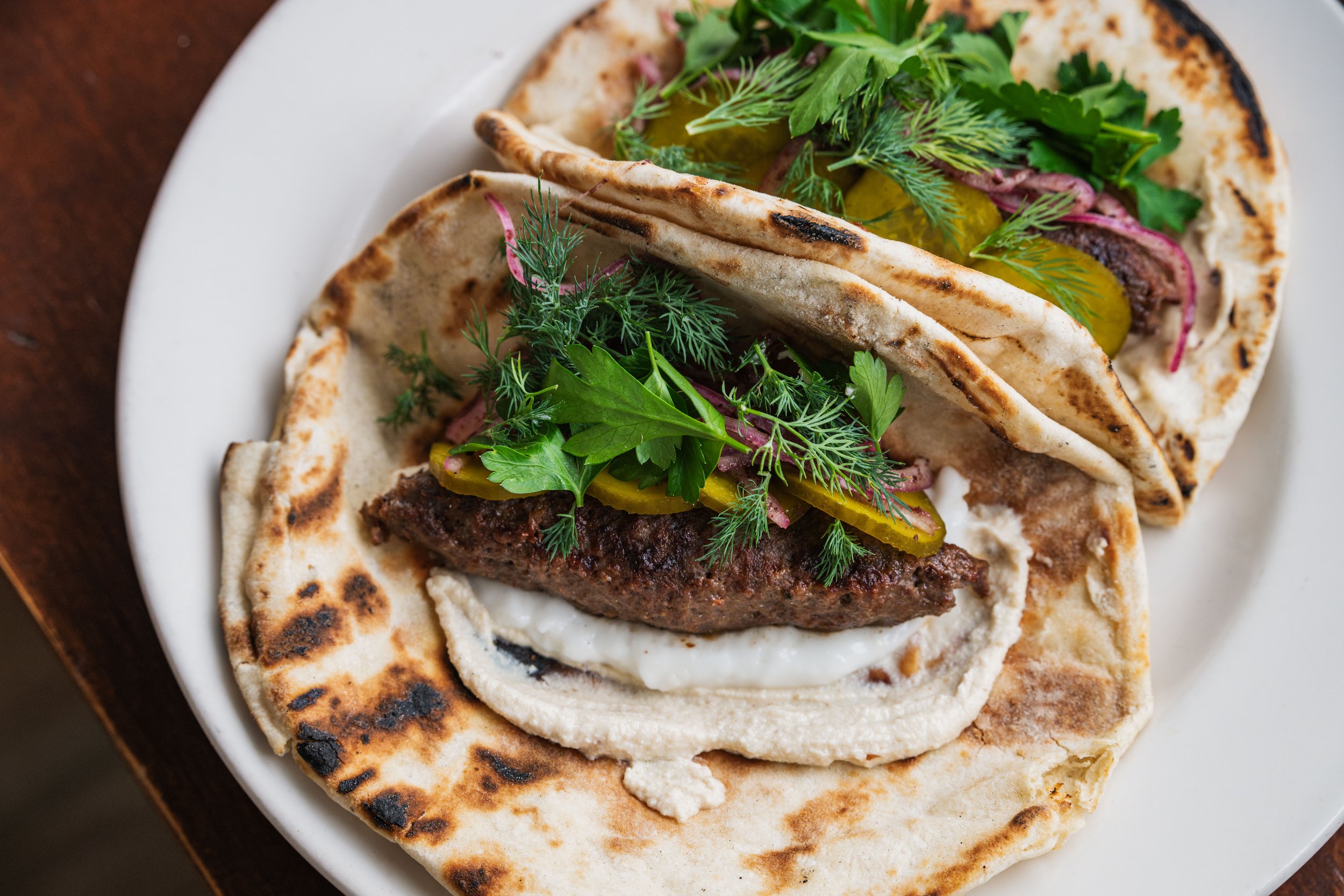
Beef-Lamb Kofta, Turmeric Pickles, Sumac Red Onions, Tahini, Toum, Dill, Parsley, Pita
Other dishes, like the mahshy, are more personal to Sanad. The stuffed cabbage, which is “one of the homiest things your mom or grandma would make,” is extremely labor-intensive, but reflective of the comforting, satisfying, and sentimental notes he is eager to hit.
While items like Sanad’s beef and lamb kofta, stuffed into pita and topped with pickles, tahini, toum, and parsley, were a fan favorite, the seasonally driven dishes continue to evolve. For the summer menu, the ringa is set to be swapped with a dish inspired by gibna bel tamatam, an aged cheese dip with tomatoes and alliums, and the hummus plate will give way to a baba ganoush.
Sanad is still hoping to push on people’s perceptions of Egyptian food. “I’m taking a risk,” he says of a new offal dish, but “it’s how I ate it growing up.” His mother’s chicken livers with pomegranate molasses, cilantro, and garlic were an annual treat around Christmas. For the upcoming dinner, Sanad is rethinking the set with muhammara, grilled grapes, and foie gras.
As Sanad continues to refine the mission and philosophy behind his pop-up (while balancing his responsibilities at JouJou, Lazy Bear, and True Laurel), he is eager to increase the pace and make an impact. “I want to keep doing more,” he says. “I realized this is all a big part of who I am. I forgot that.”
The third pop-up with Safari at Bar Bibi was in August, and Sanad has plans for a more fine dining tasting menu dinner later this year. The long term goal is a full-service restaurant centered around live fire and ancient Egyptian flavors and techniques with a wine list that complements the cuisine. “I get asked what [Egyptian food] is, which is a difficult question because I’m also figuring that out,” he says. “I’m relearning and reading and interpreting food as I cook it today, and figuring out what is uniquely and historically Egyptian versus Middle Eastern.”
Beyond the food, Sanad sees this project as a way to challenge San Francisco to be “more daring and fun” while “giving people who come from a similar background or culture a space to come and celebrate this kind of cuisine,” he says. “We want to be open late and give people a compelling reason to stay out to celebrate culture, cuisine, and community. It’s why I started cooking in the first place, [to] connect people and bring them together; share a meal and drink good wine; have a good time; express a point of view and write a story through food.”