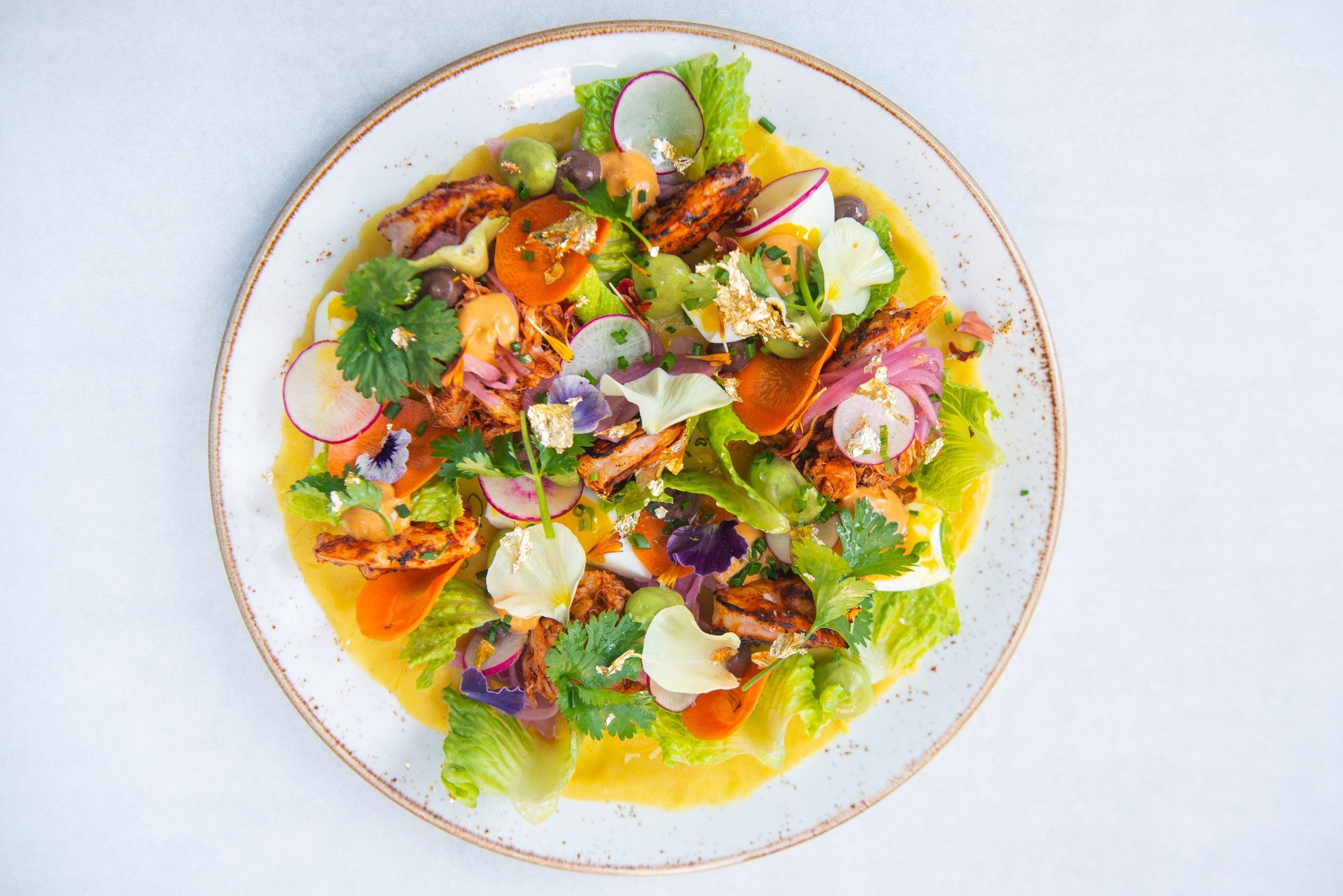
San Francisco chefs are doubling down on the humble salad, highlighting local produce as well as savvy techniques.
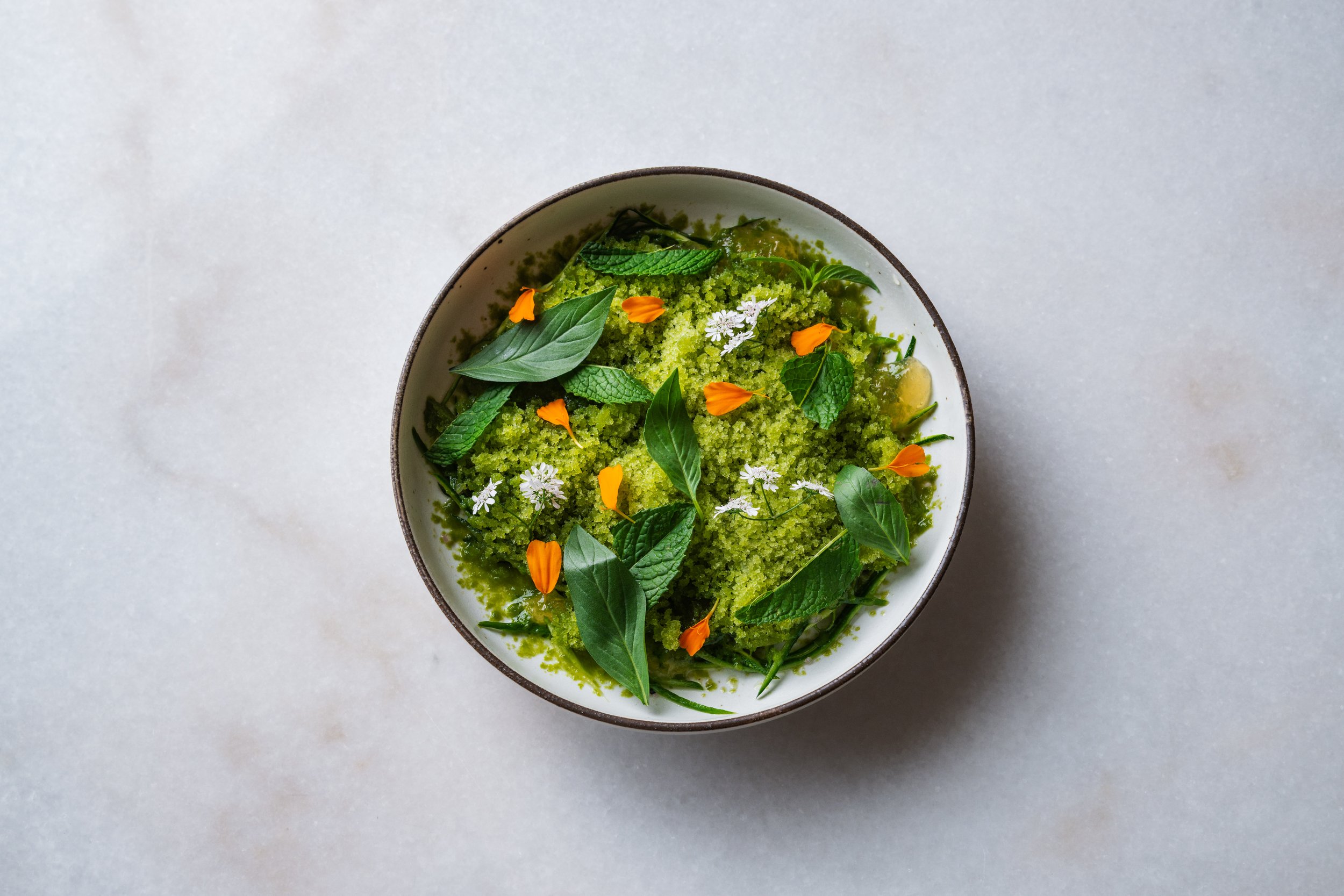
Chef Gizela Ho's Oi-Naengguk Granita, Cucumber, Zucchini,, Tomato Dashi Gelée,, Sesame, Basil Oil, HerbS. |. Photos: Alexander Zeren
Salads seem simple. The way they’re written on menus or how they appear in front of guests suggests that they are nothing more than effortless, clean, palate-cleansing plates, thrown together with an emphasis on freshness and efficiency.
While that may hold true in a few instances—and be even more common in the age of salad bowl chains—many chefs are pulling off a more impressive feat, showcasing dynamic techniques, nuanced flavors, and peak seasonal produce without making too much of a fuss. Salads hold far more potential and even provide opportunities for chefs to reduce food costs and utilize ingredients without sacrificing their creativity. Nowhere is this more evident than in California, specifically San Francisco, thanks to its abundant, enviable growing season and culinary legacy of farm-to-table cooking.
The Opening Act
“It’s not a hot take that most people are more excited for the entrée than the salad, but if you can make them fall in love with that first touch at their table, then what’s to come only builds on that excitement and enjoyment,” says Chef Brian Ishii of Kiri. Even though they are rarely seen as the main attraction, salads are an important opening act on any menu. “I think salads on a menu are the best way to see what the restaurant is about,” says Chef Tif Thomasz of The Anchovy Bar. “The simplicity of the salad is where the restaurant is at and showcases how they think and care for the food.”
In San Francisco, where similar, pristine produce makes its way onto many menus, there is something energizing and unexpected about the way each restaurant approaches its salad offerings. “You can see the personality of the restaurant and the chef and surprise people,” says Ishii.
At Kiri, Ishii is leaning into the nostalgic, comforting flavors of his childhood. His seasonal leafy green salad with peaches, fried lotus root, and an apple-carrot-ginger dressing pays homage to the “Japanese American home-style restaurants” of his youth and the bright salads that were served with every meal.
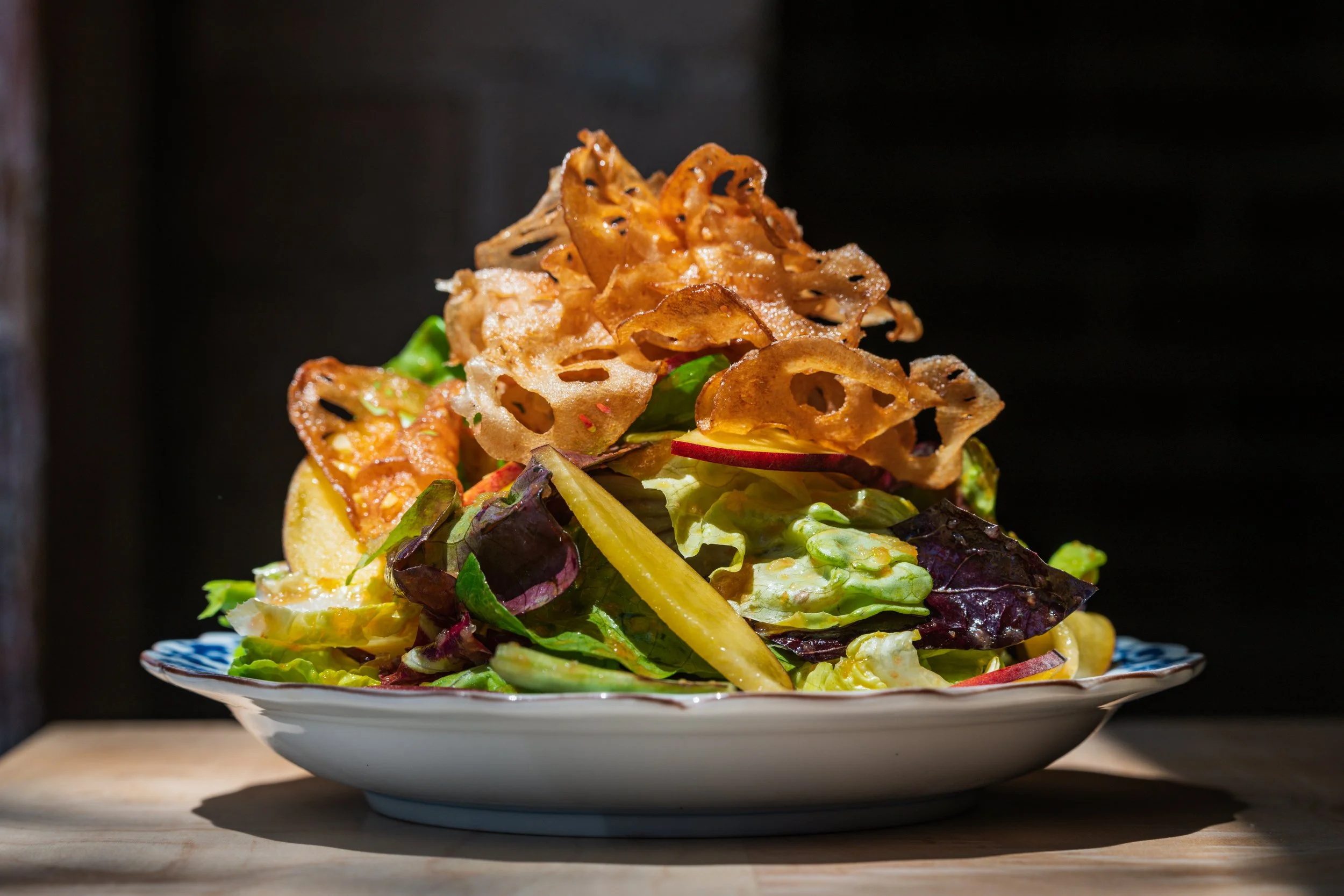
Chef Brian Ishii's Leafy Greens, Yellow Peaches, Apple-Carrot- Ginger Dressing, Fried Lotus Root
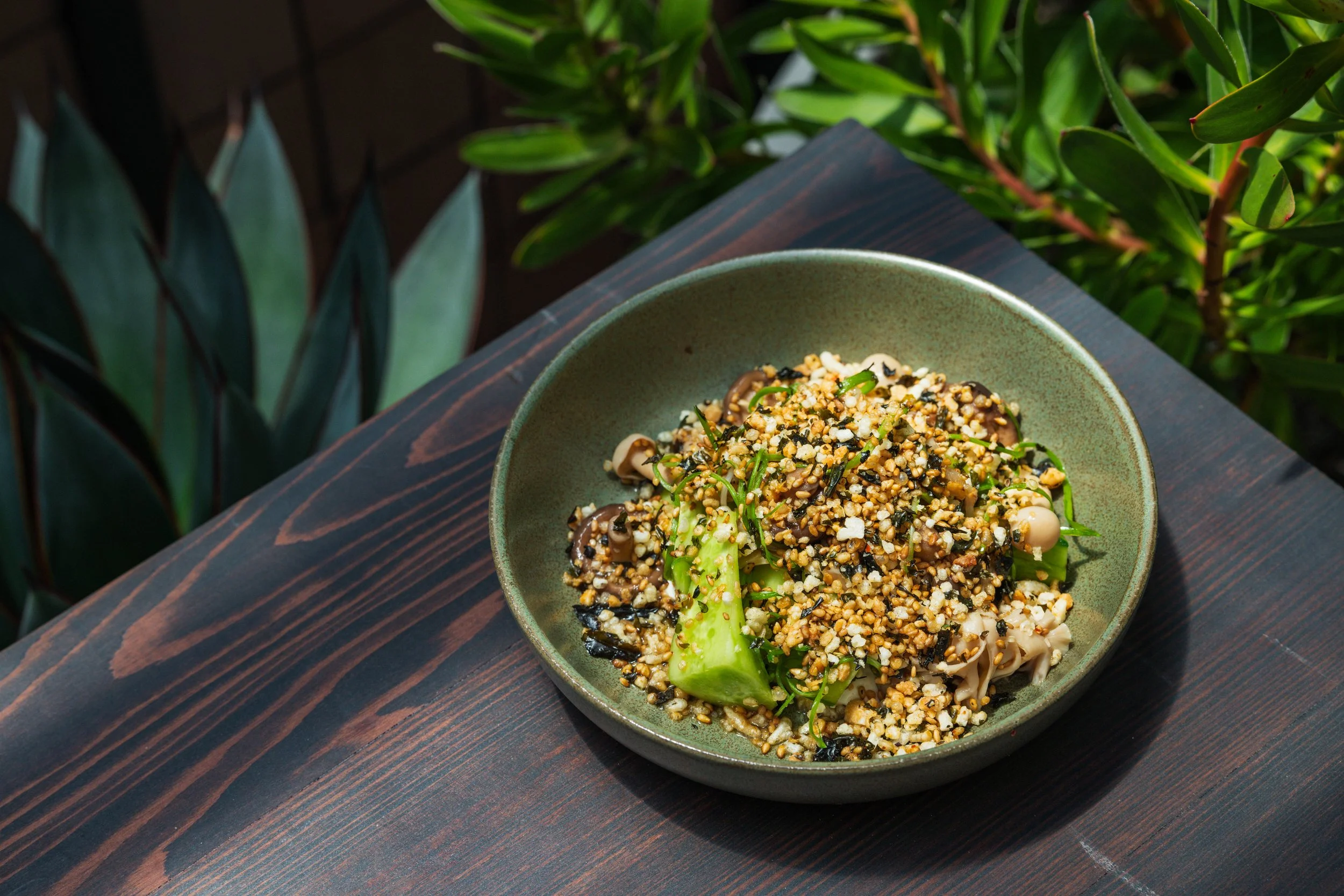
Chef Tif Thomasz's Cucumbers, Pickled Mushrooms, Yuzu-Soy Emulsion, Mushroom Yuzu Koshō Vinaigrette, Mendocino Nori Furikake
Capturing California’s Seasonality
“To be honest, I don’t think I ever enjoyed a salad before I moved to California,” says Chef Gizela Ho of Good Morning 96. “It opened my eyes to different kinds of produce.”
The dynamic agricultural landscape in the Bay Area has long fueled the success of chefs in the kitchen. It has also helped create a local community, beyond just the restaurant industry, that actively engages with local growers, farmers, and producers.
As vegetable-focused cooking becomes more dominant as well, many can trace the roots of that style back to California. It comes out of the ethos of revolutionaries like Chef Alice Waters and places like her legendary Bay Area restaurant, Chez Panisse, but it also has been “trickling down from the hippie, vegan-centric spaces” in San Francisco, says Chef Alex Lauritzen of Passages. “In America, we are just at the tip of the iceberg with creativity with vegetables.”
As a result, salads have stayed integral to the dining scene in the Bay Area. “Since the ’80s hippie crunchy culture, people do just want to eat salads all the time,” says Chef Genoa Pieron of Lazy Bear. “So, if there is nothing close to a salad on the menu they won’t go again.”
For California chefs, utilizing local ingredients in ways that are as creative as they are delicious is crucial given that guests have access to the same produce at farmers markets and specialty grocery stores. “In California, I think, diners—because they understand what we have—are like, ‘if they are not making a good salad then what else is underappreciated there?’ It’s a big part of a restaurant to take care of those small things really well, and showcase how fortunate we are to have all this abundant beautiful product all the time,” says Ishii.
For chefs like Lauritzen, who is moving his vegan pop-up into a permanent space in 2027, salads carry an even heavier weight. “I think if you are a vegan restaurant, you need to have two to three incredible salads,” he says.
Building Blocks
While salads are a wide-reaching category, there are some general elements most chefs view as crucial to their success on a menu. “It can be anything it wants to be as long as it’s produce-driven with some sort of dressing,” says Pieron. “A big thing for me is that it has multiple textural components. As long as you fulfill those things, it’s a salad.”
Following through on that simple promise can be more challenging than it seems. Although many chefs start their careers working garde manger, plating salads and cold dishes, few see an immediate passion or thrill in the surprisingly labor-intensive work.
“I think that when I first started cooking I thought it was very limiting. I didn’t understand how to approach it,” says Ho, “but now that I’ve cooked for a little longer, I find it to be very fun. It’s like a little challenge: how to make something simple, really fun and unique.”
Ishii, like Ho, didn’t see the “value in salads immediately,” but as he worked his way through various stations in several restaurants, he “started to appreciate the subtlety of the salad station,” he says. “I realized it is arguably harder or, if not, more important than anything else.”
Working garde manger provides an opportunity to understand the techniques and styles that define a restaurant. Plating concise, yet high-volume dishes and preparing dressings and purées opens the door to an early exploration of flavors with minimal risk. “Garde manger is one of those quintessential stations,” according to Pieron. “There is a reason why everyone starts on the cold station. It’s where you develop your palate, attuning it to that specific restaurant.”
Standout Salads
Developing new salads, especially when seasonal ingredients may shift or run out, can become challenging, but thinking resourcefully and having a specific, personal point of view can provide a wave of inspiration.
“I love a little gem with a vinaigrette so much,” says Lauritzen, “but there is so much potential for exploration and creativity for a chef and also discovery for the guest.”
For Lauritzen, that meant playing against the fresh, bright expectations of a typical salad and crafting a heartier, umami-rich dish that still highlighted local greens and seasonal products. The Passages salad relies on a base of frisée but is bolstered by a dressing made with nutritional yeast, vinegar, white miso, and mandarin juice that is then emulsified with a base of soy milk, oil, and cashew cream. Seasonal fruit rounds out the dish, whether that’s Asian, Bosc, or Anjou pears, or something more like a persimmon—Lauritzen’s favorite iteration of the salad.
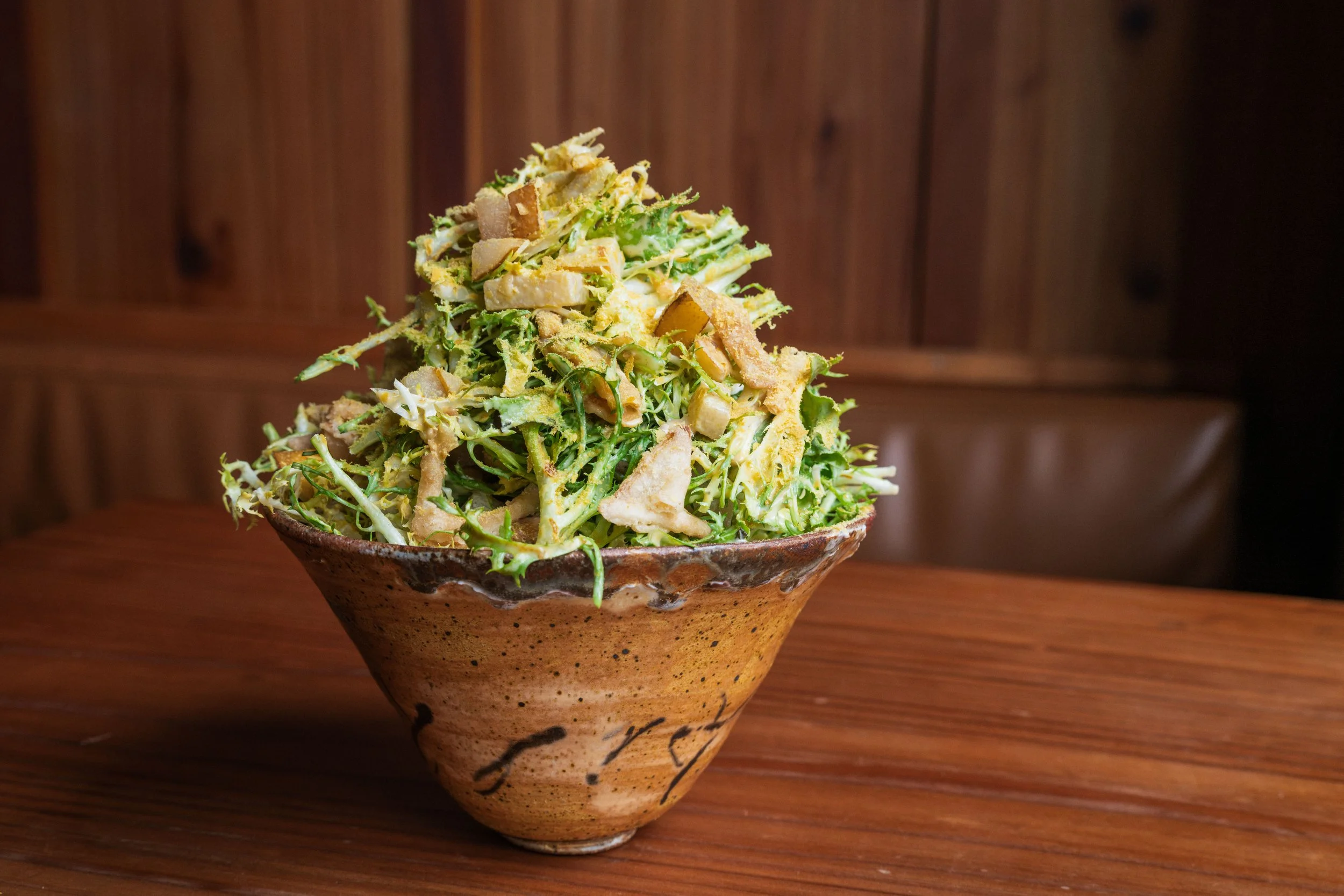
hef Alex Lauritzen's Passages Salad with Frisée, Asian Pear, Nutritional Yeast Ranch Dressing, White Miso, Mandarin Juice, Fried Shallots

Chef Genoa Pieron's Halibut Crudo, Little Gem Lettuce, New Zealand Spinach, Celtuce, Chickweed, Green Garlic, Nasturtium Vinaigrette,Sourdough Croutons, Allium Foam, Garlic Blossoms
Leaning into freshness as well as nostalgia was key for Pieron as she developed her unconventional “salad.” Although it is a crudo, thanks to luscious slices of raw halibut, the dish evokes memories of a steakhouse salad, served tableside over ice. Inspired by San Francisco’s iconic House of Prime Rib, Pieron wanted to “take that idea and boil it down to a Lazy Bear dish and focus on local seafood and house preserves, but invoke that crisp, fresh, clean salad vibe.”
The halibut is accompanied by gem lettuce and other local greens, which are tossed in a green garlic and nasturtium caper dressing—bringing a needed pop of umami after anchovies fell out of season—and reserved ramp pickling liquid. Miniature sourdough focaccia croutons adorn the plate, adding texture, while a sourdough-allium foam and garlic blossoms provide a final nostalgic finish. “It stood out,” says Pieron. “The refreshing quality of that dish was something people talked about a lot.”
Ho found inspiration for a few salads in noodle and vegetable dishes from Korea and Southeast Asia, but translated them into something distinctly Californian. Her spring salad with cucumber and zucchini noodles, tomato water jelly, basil oil, and a cucumber granita nods to a cold Korean cucumber salad—that is “literally sesame, garlic, and cucumbers,” she says—as well as cold Korean buckwheat noodles served in “a beef broth ice.”
Similarly, Ho’s Dungeness crab salad, which has evolved over time, tied Thai flavors to local California produce. “I was thinking of a papaya salad,” she says, but “I wanted to change the components of the papaya salad to reflect the diversity of California produce.”
The solution was to serve the picked crab meat over a coconut red curry sauce with spaghetti squash, dried celtuce, and pomelo or oro blanco grapefruit—mimicking the textures, flavors, and ingredients of the traditional dish without sacrificing a sense of place. The garnish, a smoked trout crumble known as pla haeng, was based on a popular pork floss-like component she discovered at Chef Lalita Souksamlane’s Bann. “It’s just dehydrated fish with sugar and a little fried shallots,” says Ho, but “I had never had anything like it before.”
Salads can also provide plentiful opportunities for utilization. An excess of fresh vegetables can become the base for some salads, while leftover trim can inspire new sauces, dressings, and garnishes. Thomasz’s cucumber and pickled mushroom salad grew out of a desire to use local produce in a low-waste, vegan-friendly format.
“At the time, our food cost was so high,” says Thomasz. “We were thinking about putting more vegetables on the menu.”
Thomasz poaches and pickles a variety of mushrooms in a ‘mushroom water’ spiked with rice vinegar, shoyu, tamari, ginger, and garlic, which develops into a loose broth. It’s a “super tasty, deep umami, mushroomy, soy, pickle sauce.” For crisp, clean flavor and a little heft, she tosses cucumbers—which rotate depending on the season—in reserved mushroom pickling liquid, yuzu koshō, chile oil, and sesame oil. The cucumbers and mushrooms are served over a yuzu emulsion made with soy milk and neutral oil, and garnished with golden sesame seeds, scallions, and a furikake made with Marcona almonds, Mendocino nori, puffed rice, and puffed quinoa. “It’s Japanese but also Californian,” says Thomasz. “It’s showcasing the produce that we have here.”