2026 San Francisco Kitchen Notebook
An in-depth look at some of our favorite dishes and cocktails from our time on the ground in the Bay Area.
RED FLAG FLEET
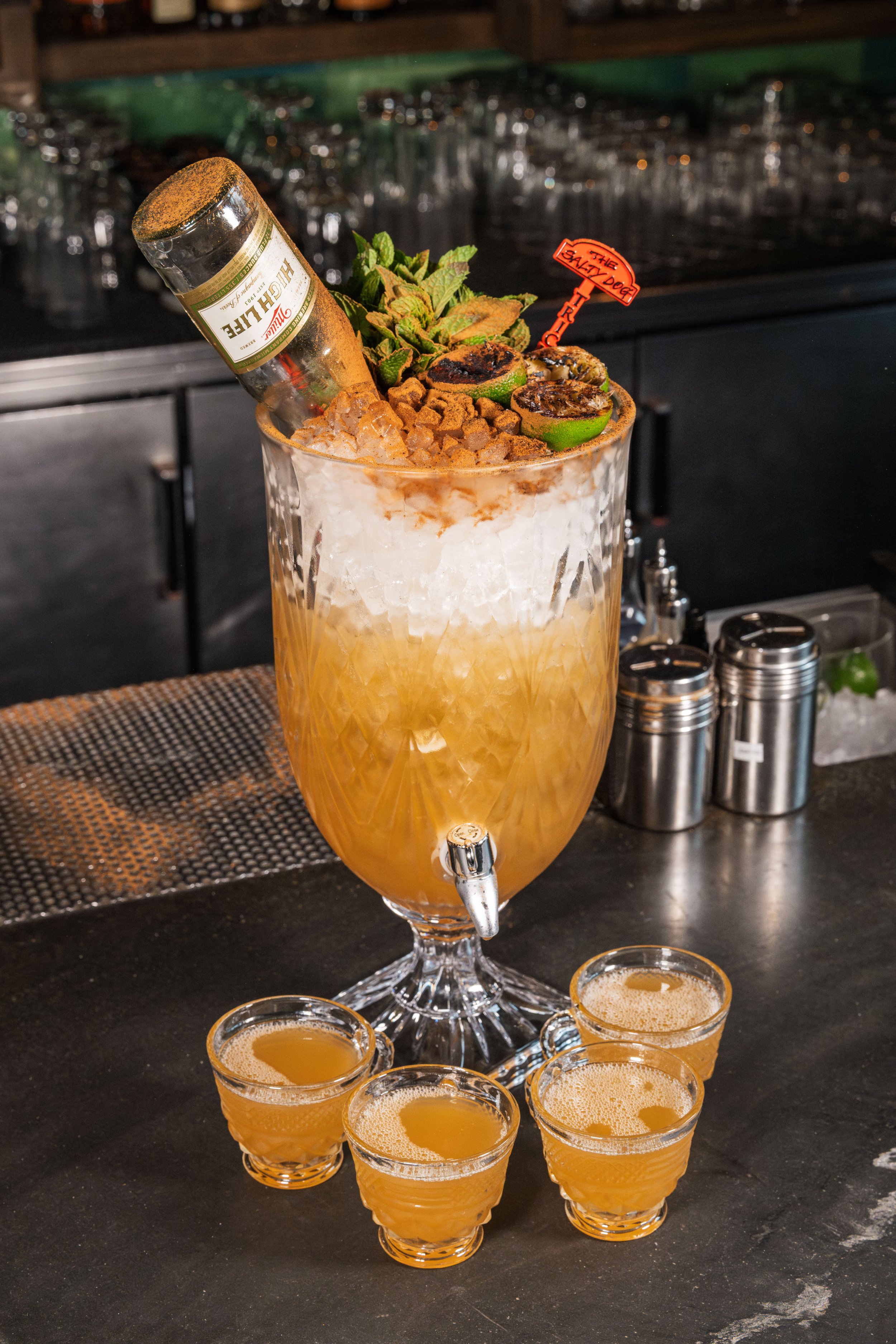
For Trick Dog’s first-ever tiki-inspired menu, Bartender Travis Howse knew he needed to create a large-format cocktail. His Red Flag Fleet, named after the armada of Zheng Yi Sao (the “Pirate Queen of China”), began when Howse was flipping through old punch recipes. He kept seeing “ambergris,” a rock-like substance produced in the digestive system of sperm whales that possesses a “meaty, salty, briny” flavor. Wanting to evoke those rich notes, Howse reached for bacon fat. Inspired by a friend’s barbecue sauce, he melts the fat and adds clove, paprika, and cinnamon before deglazing the pot with bourbon. After adding water, quince paste, grapefruit juice, honey, and apple cider vinegar, he brings the mixture to a boil, then freezes it before straining and turning it into a syrup. From there, the cocktail follows the classic recipe (and poetic rhyme) for punch: “one part sour, two parts sweet, three parts strong, four parts weak.” He starts with lime and lemon juice for acidity, then incorporates the barbecue sauce syrup for a savory sweetness. The “three parts strong” includes unaged apple brandy, 12-year single malt Scotch, and a touch of Amaro Meletti—enriching the fruitiness, smoke, and spice, respectively. Served in a vintage punch bowl, the cocktail is topped off with its “four parts weak:” Miller High Life beer. Howse garnishes the drink with mint and lime shells filled with high-proof rum, which he lights on fire along with a heavy dash of cinnamon.
POLPO SPAGHETTI NERO
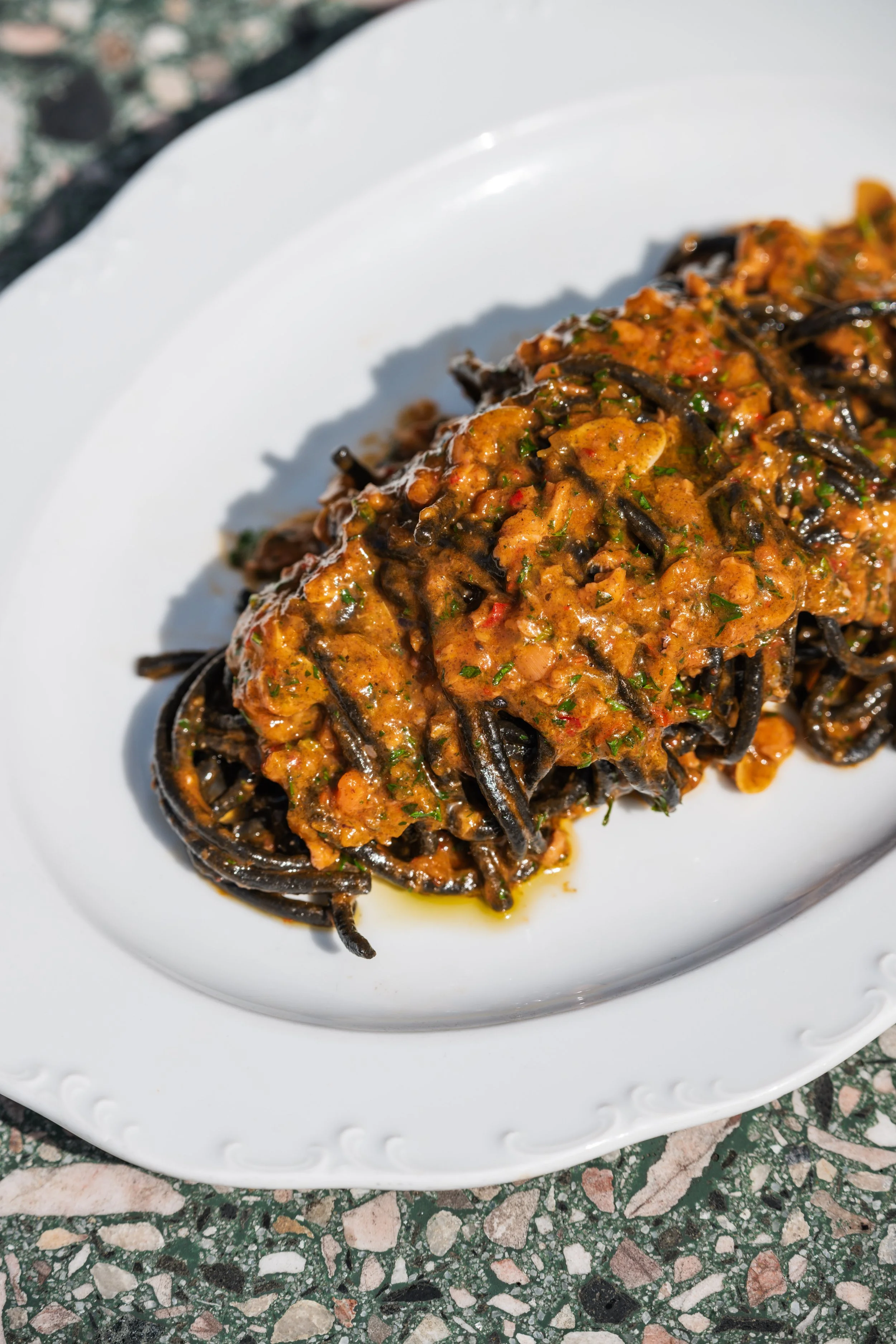
Chef Giovanni Luciani of Che Fico Parco Menlo had a little too much octopus on his hands when he was starting to develop a new pasta dish. Building on a tenderly braised and seared octopus tentacle on the menu, Luciani wanted to find a creative use for its leftover trim. “As every chef says, you don’t want to waste anything,” says Luciani. After some trial and error, including a just-shy-of-perfect ravioli, he decided to transform the leftover braised octopus into a punchy ragù. Taking the less than gorgeous tentacles not fit for service along with any trim, he starts by grinding the octopus, which has already been braised in Champagne vinegar, white wine, and aromatics. In a pot, Luciani sweats onions along with the ground octopus in oil before adding Che Fico’s housemade Calabrian Chili Bomba Paste for heat and a garlicky kick. To bring the sauce together, he pours milled Bianco DiNapoli tomatoes into the pot and simmers the ragù over higher heat for a shorter period of time to avoid toughening the octopus. Looking for a sharp visual contrast to the red sauce, Luciani landed on a squid ink spaghetti nero as a canvas for the ragù, delivering a little extra oceanic flavor to boot. He finishes the dish with fresh oregano and toasted breadcrumbs tossed in chile oil to amp up the heat. “It tastes really fresh, like you’re on the coast somewhere, and that was the thought behind it: how do we use this trim so it doesn’t go to waste and it makes sense,” says Luciani.
MASUNGIT NA DRIVER
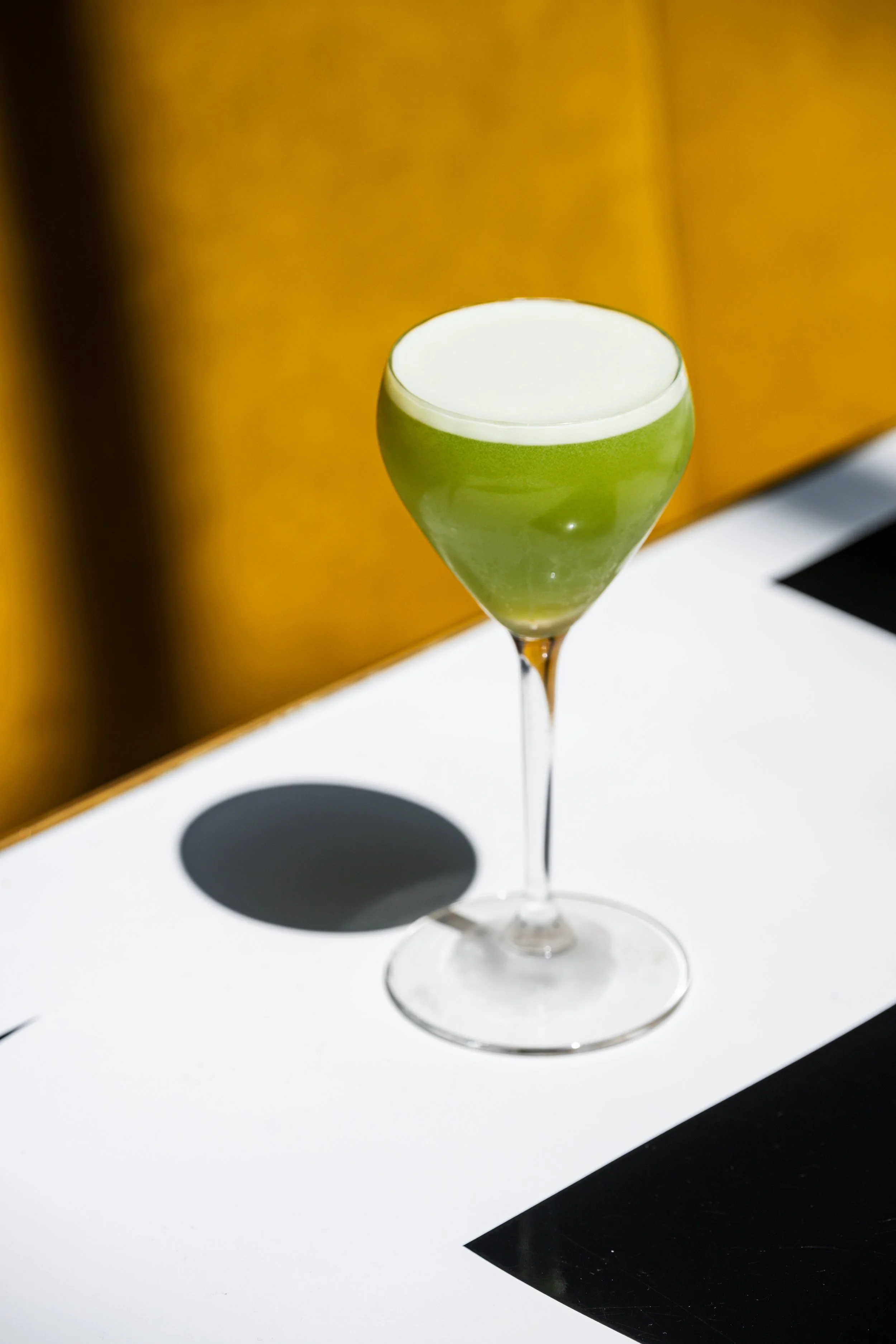
Bartender Spencer Vios wanted to offer a new perspective on the Philippines with his Masungit Na Driver, a bitter melon cocktail he added to the bar menu at Abacá. “People have misconceptions about the Philippines,” Vios says. “We want to educate people through what we do.” The cocktail is named after the notoriously stubborn—or “bitter”—Jeepney drivers of the Philippines, who transform decommissioned military vehicles into a colorful form of transportation. Today, their livelihoods are being eroded by modernization and foreign investment. To capture this, Vios started by toying around with bitter melon, which carries a quinine-like flavor. The bitter melon is seeded, juiced, and strained. To parry the metallic sensation, he adds a caramel-like syrup made of tamarind paste and turbinado sugar as well as velvet falernum to bring sweetness to the drink. A split base of woody applejack brandy and smoky mezcal forms the foundation. He then adds a quarter ounce of gentian aperitif to lift the botanical flavor of the fruit and finishes the build with lime juice and zest for acidity. The result is a strikingly green cocktail that evolves on the palate sip to sip, which Vios says often sparks conversation and an opportunity to educate. “The way I think about it is, the first time you meet the bus driver, he’s kind of bitter,” says Vios, “but he’s actually a nice guy, and
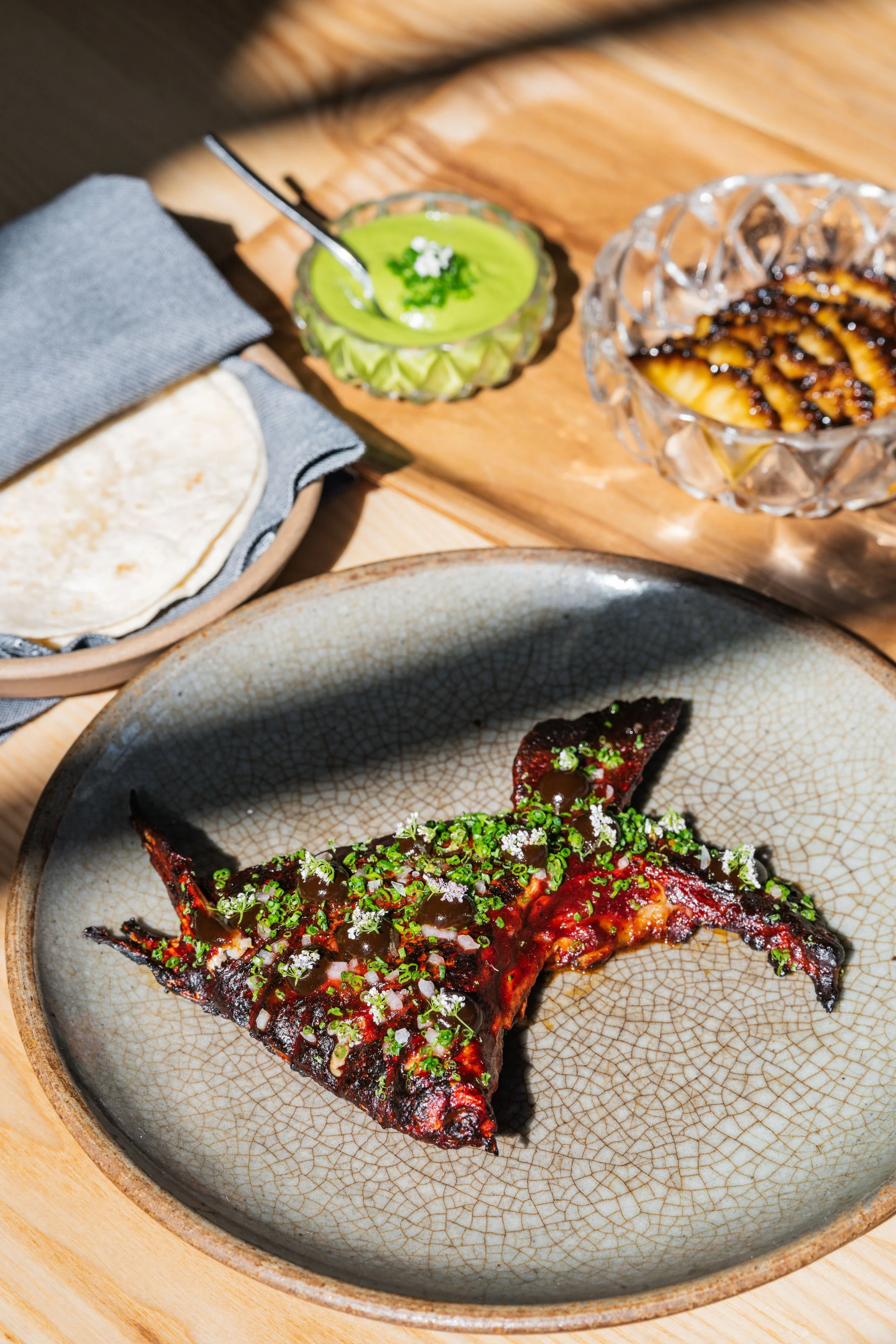
HAMACHI COLLAR AL PASTOR
“I am of Mexican descent, and that’s something I’m very proud of,” says Chef Rodolfo Sandoval. “I want to include that in dishes, whether it be a technique, a spice, a sauce—just finding ways to go ahead and put that on the menu.” At Ernest, these influences are evident in dishes like Sandoval’s hamachi collar al pastor. The collar is brushed with a marinade made with a mix of thyme, cinnamon, cumin, coriander, shirodashi, mirin, soy, and red yuzu koshō, along with more classic al pastor-inspired ingredients like guajillo chiles, ginger, garlic, shallots, bay leaves, pineapple, and a housemade pineapple syrup. After marinating overnight, Sandoval grills the collar, painting it with more of the marinade as it cooks. He seasons the fish with a shirodashi vinaigrette and finishes with chives and lime zest. Sandoval also dots the collar with a pasilla-pineapple salsa, which he modifies from his pasilla salsa base—made with rehydrated pasilla chiles, housemade nikkiri, shirodashi, and Champagne vinegar—with the addition of pineapple and extra sugar. On the side is a green yuzu koshō guacasalsa, showcasing the bright flavors of tomatillos, lime juice, lemon juice, green yuzu koshō, cilantro, and avocado. To drive home the nostalgic flavors of al pastor, Sandoval accompanies the fish with slices of chile- and mezcal-glazed pineapple. He wraps the pineapple in a cheesecloth and hangs it over the grill to smoke for six hours. To finish, he glazes it before charring the fruit on the grill three times and slicing it for service.
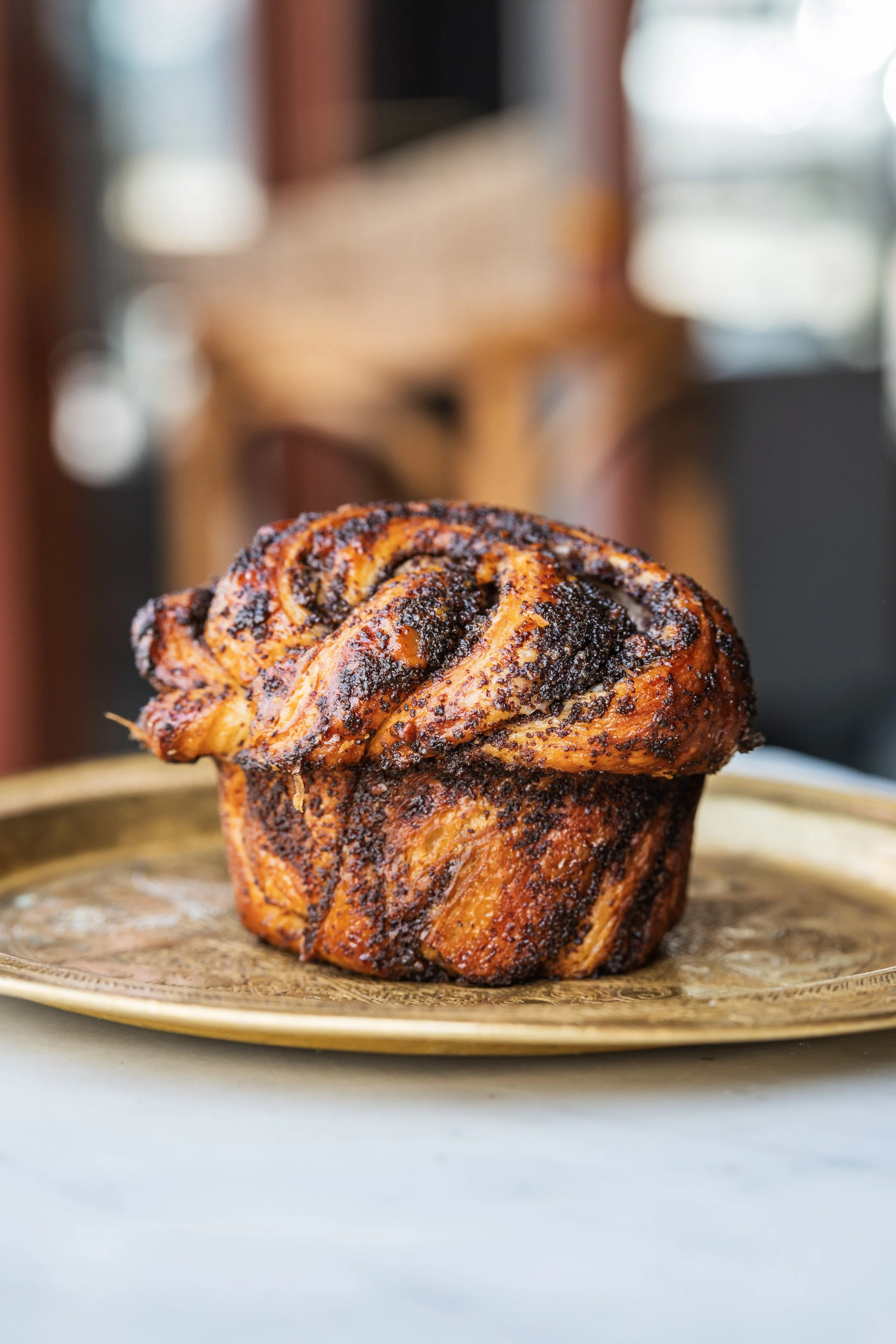
POPPY SEED-WALNUT BABKA
Pastry Chef Kristina Costa wanted to put her own spin on a traditional poppy seed filling recipe that had been passed down to Loquat’s owner, Tal Mor, by his mother. So, she decided to adapt it into a babka. The dough itself is distinct: “It’s not really like a croissant dough,” says Costa. “It’s not a Danish dough. It’s not brioche. It’s kind of just its own thing. I kept altering the recipe until I was happy with the flavor.” The three-day process to make the pastry begins with the dough, which is made using both a levain and instant yeast. It is mixed and portioned, bulk fermented, and then frozen overnight. The next day, Costa laminates the dough before layering in a filling that consists of ground poppy seeds, ground walnuts, and a mixture of milk, butter, lemon juice, and a rotating fruit jam—whichever flavor they have preserved on hand for sweetness. “Cracking [the poppy seeds] open and letting those oils do their magic gets you a really deep, earthy flavor,” says Costa. After sitting overnight in the refrigerator, the dough is proofed and baked. Though the flavor profile may be unfamiliar to guests compared to her chocolate babka, Costa knows how special it is. “I think people are sleeping on it; it’s so unique,” she says. “Poppy seeds are usually a little addition. They’re sprinkled in as a spice or a seasoning, but for this pastry, they’re the main attraction.”
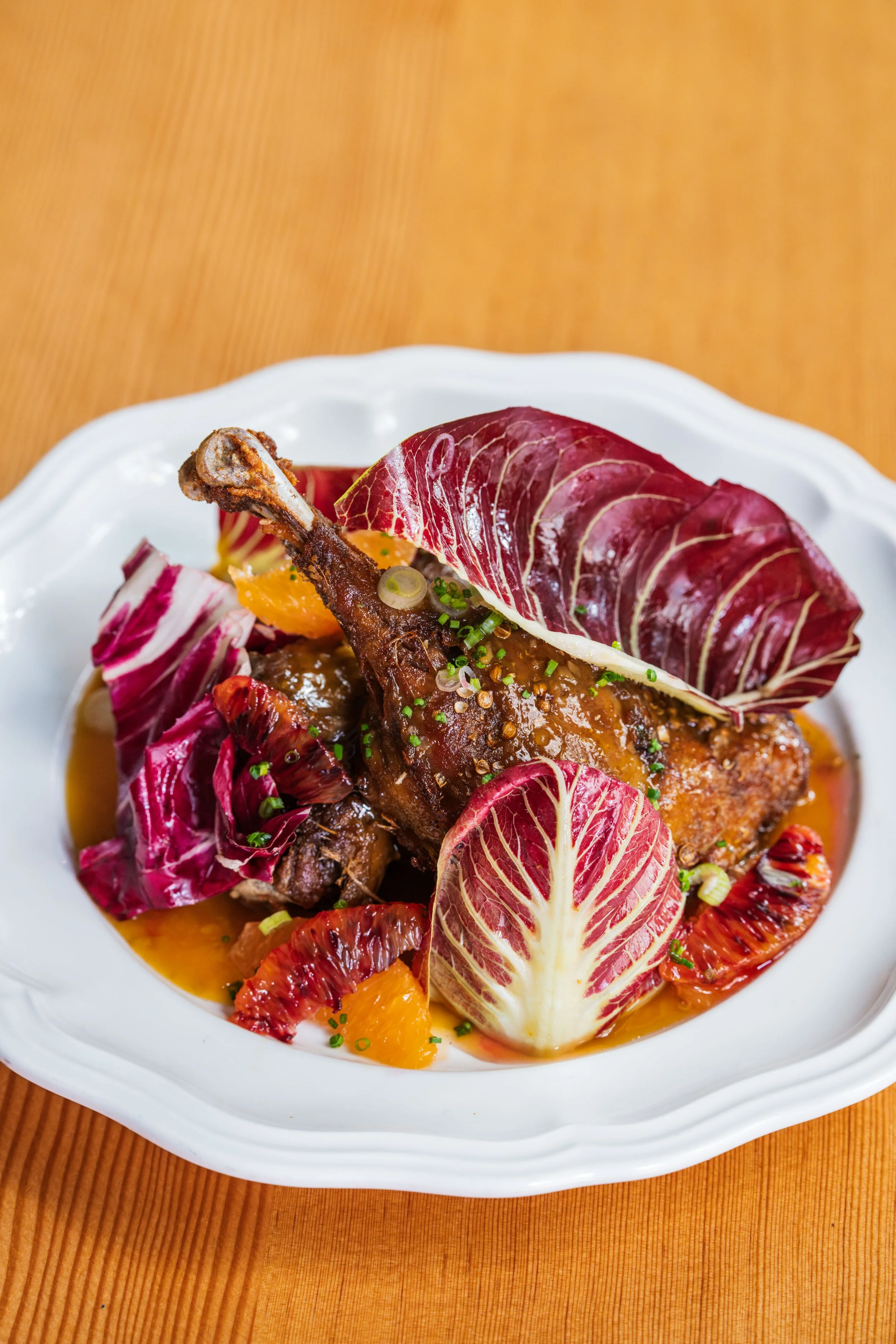
S.F. DUCK À L'ORANGE
"There is a big Chinese influence in San Francisco," says Chef Bill Wang. So, when it came time to add a duck dish to the menu at RT Bistro, he decided to do a duck à l'orange, but with "our own riff on it," turning to Chinese sweet-and-sour sauce as a cross-cultural foil. Wang and his team butcher whole ducks, separating the crown from the thighs, legs, and wings, which are cured in a mix of lemongrass, chile, and white pepper and then confited in duck fat. The duck is then deep fried, glazed with fermented orange blossom honey, and coated in crushed coriander seeds before going into the restaurant's wood-fired oven to "impart some of that smoky flavor." Similar to a traditional sweet-and-sour, Wang caramelizes garlic and ginger in brown sugar and brings it to a boil with tamari, white vinegar, and satsuma juice, before finishing the sauce with more garlic and ginger. "Instead of being delicate, our sweet-and-sour is more punchy and in your face," he says. Wang echoes the flavors of the sweet-and-sour with pieces of Cara Cara orange while balancing the sweetness with chicories dressed in a verjus vinaigrette and thinly sliced scallions and chives. Alongside the duck, he serves crispy koshihikari rice cooked in a light dashi and finished in a clay pot with a drizzle of allium oil and a garnish of chicories, scallions, and more sweet-and-sour sauce.