Flour, Butter, Sugar...and Curry
From Japanese to Madras curry, pastry chefs and bakers in the DMV are all-in on well-spiced pastries.
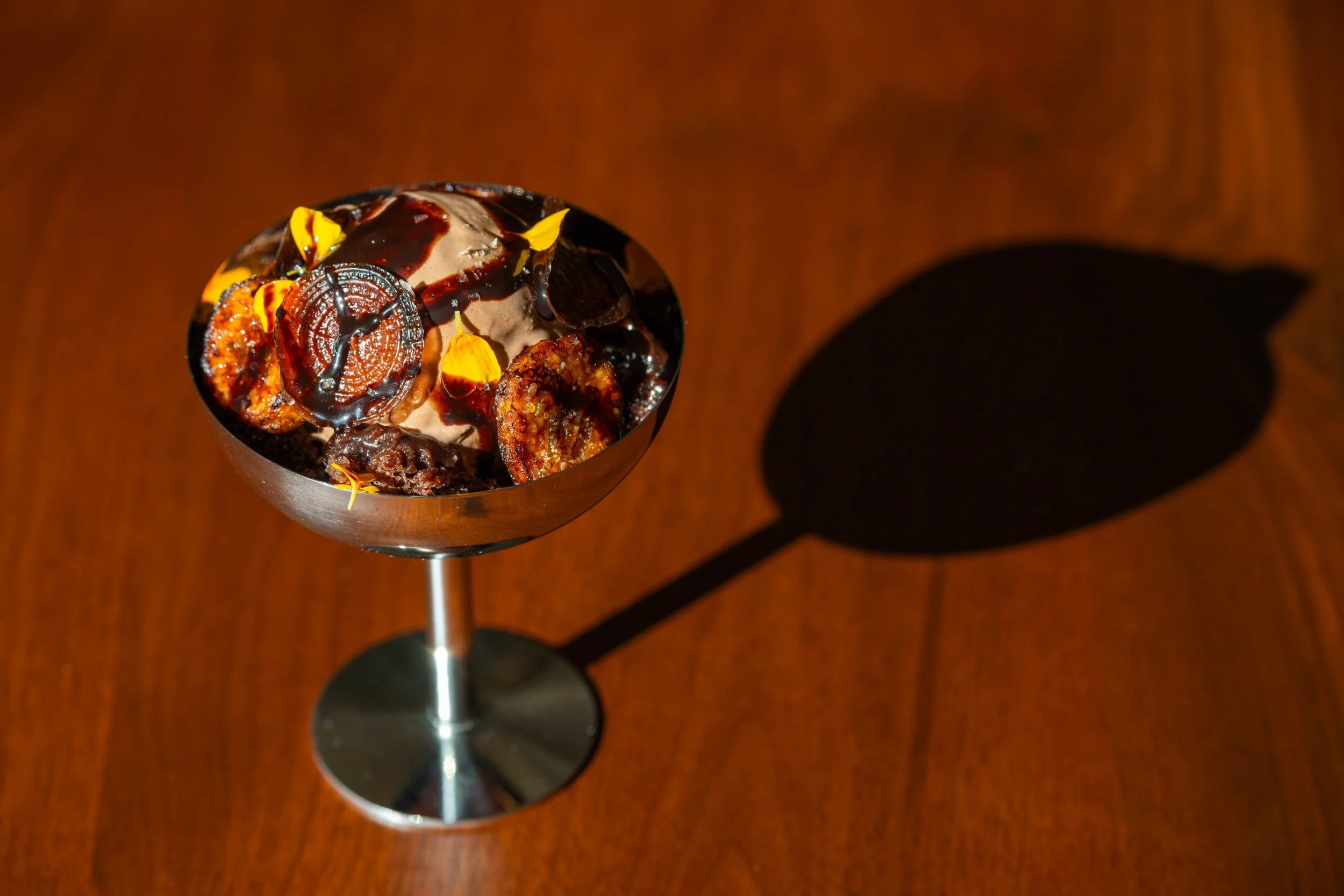
Chocolate Cobbler Sundae, Chocolate-Madras Curry Ice Cream, Brûléed Plantains, Chocolate Sauce, Smoked Maldon Salt at Marcus DC | Photos: Will Blunt and Alexander Zeren
In Washington, D.C., and Baltimore, pastry chefs and bakers are bending the boundaries of curry applications while showcasing the ingredient through personal touches.
At SakuSaku Flakerie, Pastry Chef Yuri Oberbillig offers a wagyu beef kare pan that’s not only rooted in Japanese tradition, but also in her family heritage. The dough for her pastry comes from a shokupan recipe, which Oberbillig makes in-house. She stuffs the pastry with a mixture of wagyu ground beef, caramelized onions, Worcestershire sauce, soy sauce, ketchup, sugar, and Japanese curry powder. Unlike the kare pan found in Japanese bakeries, Oberbillig bakes the pastry instead of frying it. “I wanted to bring it here so people would know what we eat for lunch in Japan,” says Oberbillig.
Using curry in her baked goods is not unfamiliar. The savory, umami flavor profile that it brings to Oberbillig’s otherwise sweet dishes is a staple at her bakery. The wagyu beef curry kare pan, in particular, isn’t just reminiscent of Japanese bakeries for Oberbillig, but also of her grandmother, who used to cook this curry at home.
“When people here enjoy it, it makes me really happy,” she says. “[My grandmother] was very much into sweets and savory like this, too. I learned a lot from her.”
Another pastry that uses Japanese curry was sold last summer at La Maison by Cafe Dear Leon in Baltimore, Maryland. Chef Cheolsoo Lee makes a tamago kare pan. Flaky Danish dough is filled with an eggplant curry and, after baking, brushed with curry butter. It’s topped with fried shallots, scallions, pickled red onions, a jammy egg, and piparra peppers. For Lee, the kare pan Danish brings him back to something he’d find in Korean bakeries.
“Korean bakeries are influenced a lot by Japanese bakeries,” he says. “Growing up, I would eat kare pan and they would be deep fried, like a donut. So I wanted to recreate it in a way using a croissant or Danish dough.”
Lee’s French spin on the kare pan is balanced equally with intention and flavor, all centered around the curry profile. “This recent version of the kare pan that we did has the piparra pepper, because sometimes it can be pretty heavy,” explains Lee. “Because it's a Danish with a curry, there's a lot of spice, a lot of flavor going on. But then you take a bite of the pepper and it kind of cleans off your palate, so it invites you back for another bite.”
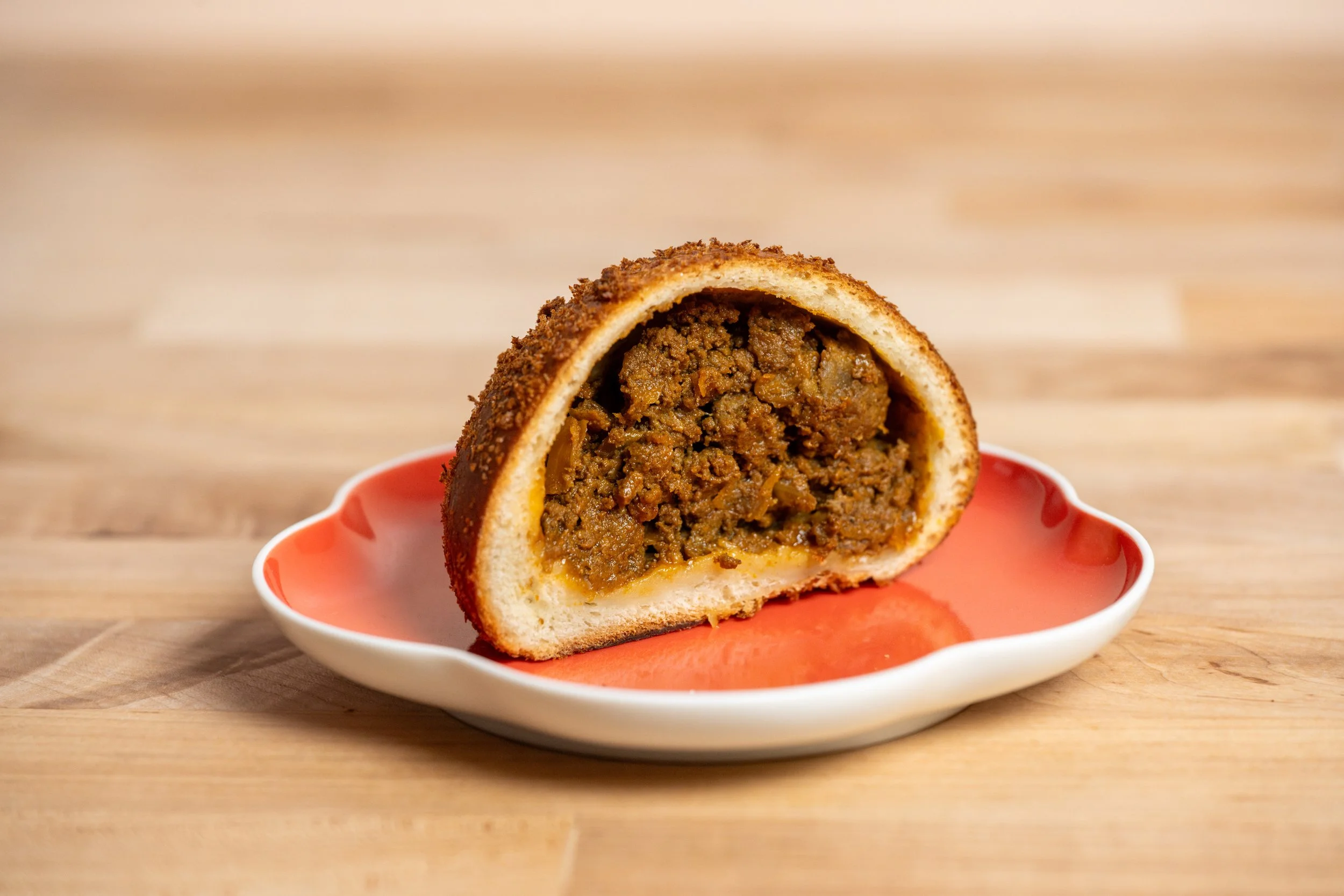
Wagyu Beef Curry Shokupan, Caramelized Onions, Soy Sauce, Worcestershire Sauce, Ketchup, Curry Powder, Panko at SakuSaku Flakerie
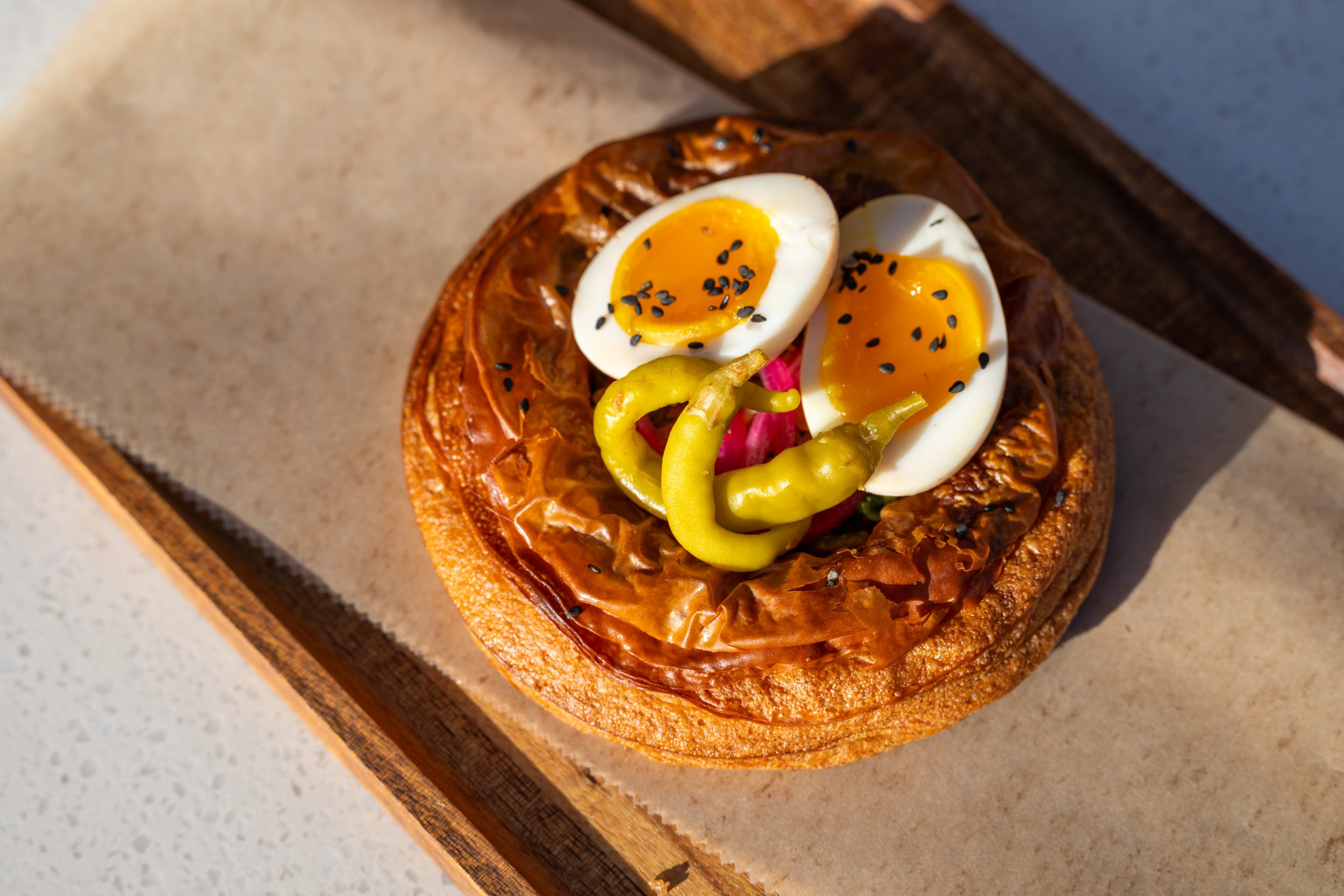
Tamago Kare Pan: Japanese Eggplant Curry Danish, Soft-Boiled Egg, Pippara Peppers, Pickled Red Onions, Curry Butter, Fried Shallots, Scallions at La Maison by Cafe Dear Leon
The celebration of traditions and cultures through curry can be seen in Pastry Chef Rachel Sherriffe of Marcus DC’s chocolate cobbler sundae. She created the dish to merge her Jamaican background with the culture of the American South. The combination: curry and chocolate cobbler.
“My background from Jamaica blends really nicely with Black food in the South because there are so many influences from Jamaica there already,” Sherriffe says.
The decadent dish is grounded in a chocolate curry ice cream, chocolate opaline, brûléed plantains, and finished with smoked Maldon salt and chocolate sauce. Sherriffe utilizes Madras curry—earlier iterations using other types of curry were “too savory”—to contrast the sometimes overpowering sweetness that the dessert would otherwise possess.
“It definitely has notes of warming spice,” she says. “Not enough to the point of your tongue on fire, but it's cool because you have the cold temperature of the ice cream itself. It’s a good confusion where your tongue is tingling, but it's also cooling down because the ice cream’s cold.”
At Moon Rabbit in Washington, D.C., Pastry Chef Susan Bae chooses to highlight the curry in her plates without any curry at all. Her green curry sponge cake “is capturing the aromatics and the flavors without the harsh allium.” She makes curry oil out of the aromatics found in green curry and folds it into her sponge cake. To mimic the creaminess of a curry, she pairs it with an avocado sorbet. To further the flavor profile, she adds a soursop yogurt foam, a fish sauce caramel, and garnishes with dill and shiso.
Bae credits the fish sauce caramel to nailing the curry flavor without it being present. It isn’t only about representing the literal flavors of curry in the dish, but instead the entire experience. Since fish sauce is foundational to many Vietnamese and Thai dishes, it adds a necessary savory component to the dessert.
“If you're thinking about it in the savory sense and how it's critical to have that umami in there, I think it would naturally bleed into pastry and desserts too, right?” Bae says. “Because you're kind of recreating that experience.”
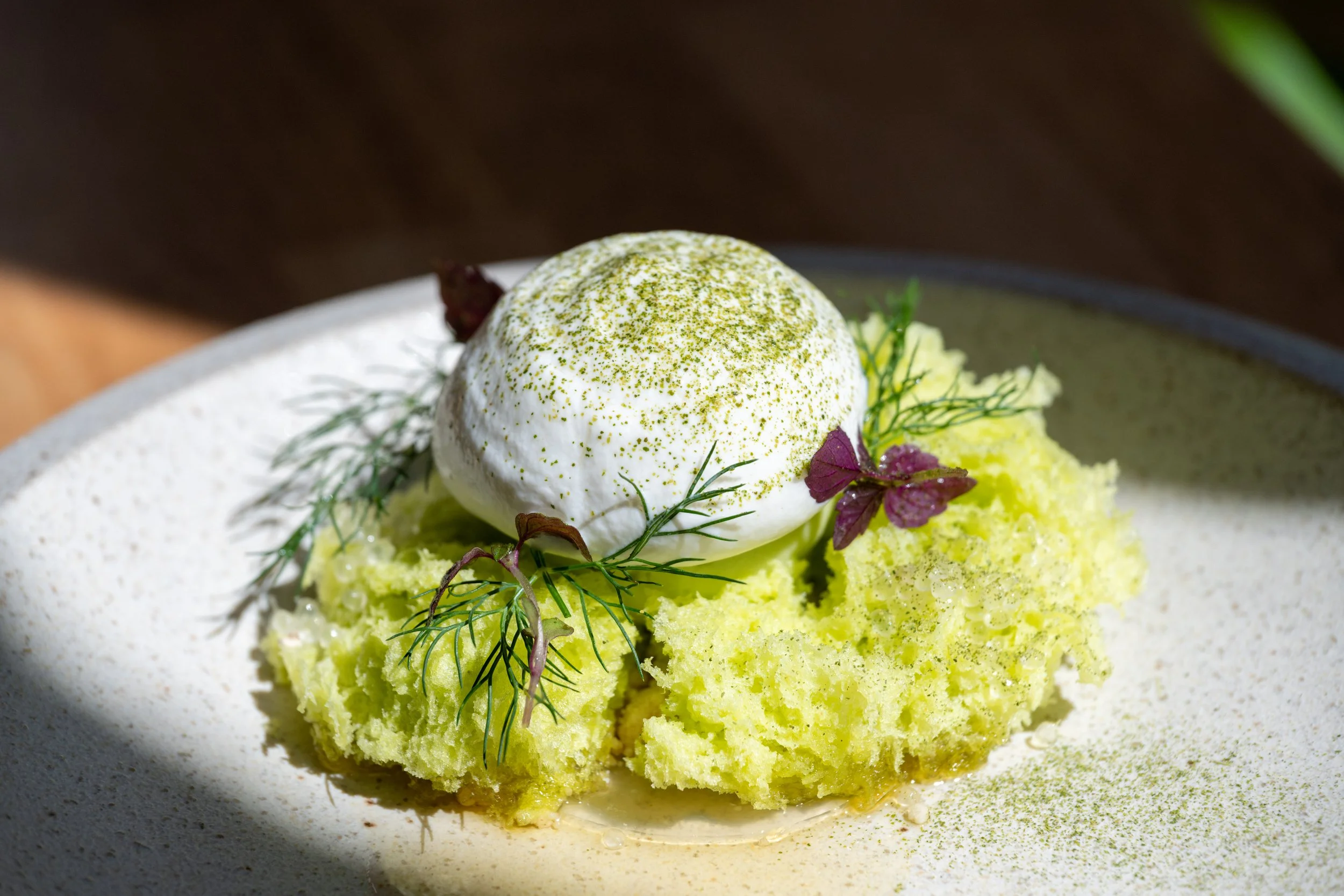
Green Curry: Green Curry Sponge Cake, Avocado Sorbet, Soursop Yogurt Foam, Fish Sauce Caramel, Lime Leaf, Dill, Shiso at Moon Rabbit