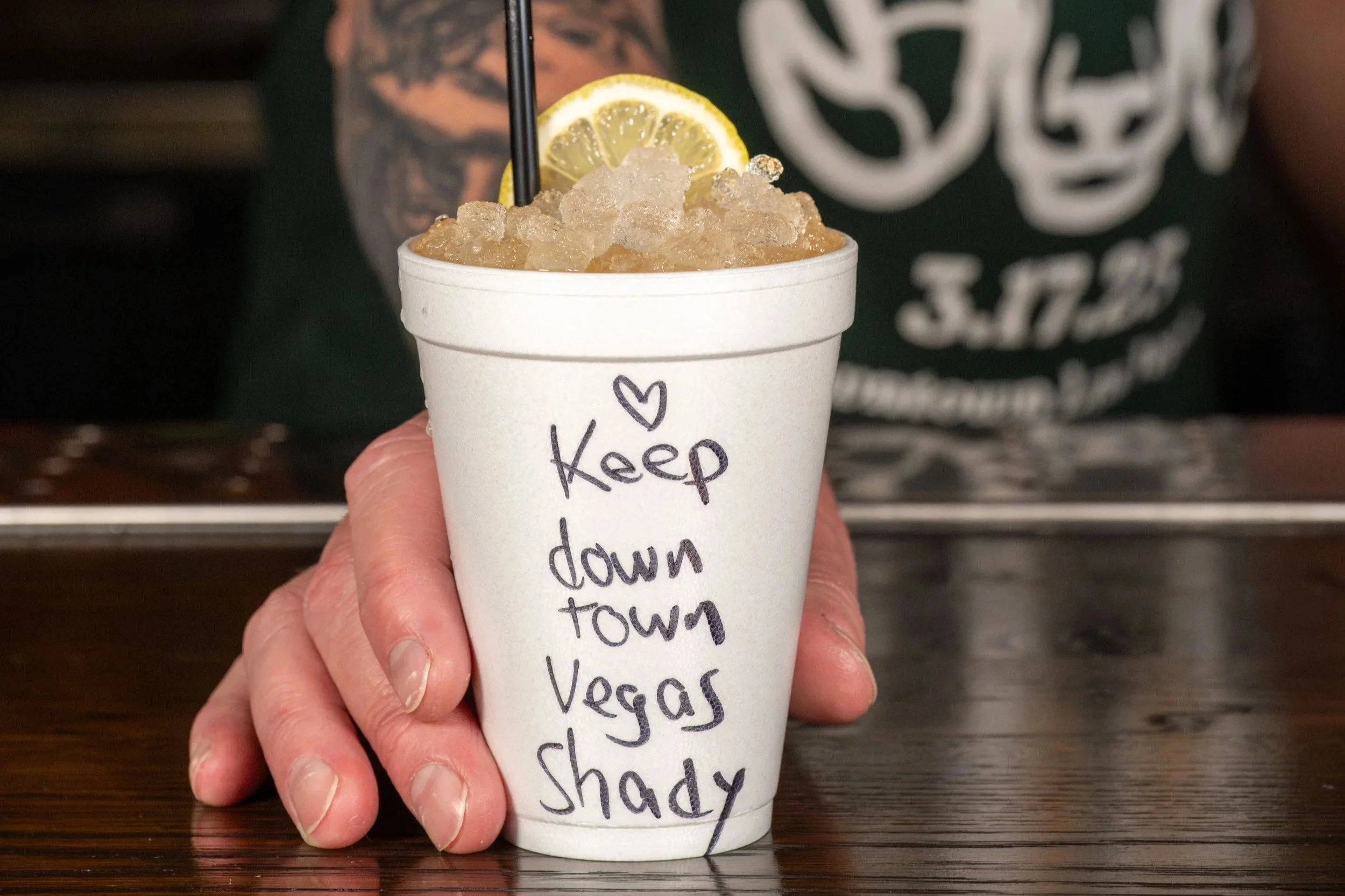
Mingalaba (မင်္ဂလာပါ): Peace Through Food
Protest, peace, and perseverance at Chef Suu Khin’s Burmalicious pop-up in Houston

Chef Suu Khin | Photos: Wil Blunt
If you’ve spent any time within the Houston food scene, you’ve probably heard the name Suu Khin. At the very least, you’ve probably heard of Burmalicious. It’s the name Khin calls her pop‑ups and tasting dinners, and the name she’s used to carve a niche unlike any other. She’s introducing Houstonians to the flavors of Burma (Myanmar)—a country whose cuisine is virtually absent from American menus—and using food as a quiet, insistent act of resistance.
Born and raised in Yangon, Burma’s former capital and commercial heart, Khin didn’t dream of being a chef. As the youngest daughter in a traditional Burmese household, cooking was more of an expectation than a passion.
“I really hated cooking growing up,” says Khin. “I saw it as a chore. I saw it as a suppression towards girls.”
Khin pursued business school in Yangon and, after graduating, left for Massachusetts to attend grad school. In the isolation of a cold dorm room, cooking resurfaced—not as an obligation, but as a source of comfort and connection. Her skills attracted fellow students—one of whom would become her husband. After three years, Khin returned to Burma to help run her father’s law firm and care for her aging grandmother, who could no longer cook for herself.
“My grandmother had this incredible way of storytelling or just teaching through food. Her kitchen became not just a place to make food, it became a classroom—it's a temple, it's a memory vault.”
Breakfast conversations became lessons in wellness, seasonality, and memory. Her grandmother would send her to the market with cryptic advice—like finding bamboo shoots and pairing them with bitter melon to neutralize toxins. Khin worked through her grandmother’s recipes, one by one, with her guidance. In time, Khin came to see food not just as sustenance, but a means of preserving identity.
“That’s when it really hit me that cooking Burmese food is a living connection to family heritage and that identity that I was looking for, that I knew that the rest of the world is completely unaware of.”
That cultural invisibility stayed with her. Burma is a diverse Southeast Asian nation bordered by Thailand, China, India, Bangladesh, and Laos—home to more than 135 ethnic groups. A former British colony, it has endured decades of political instability following the “Other Partition,” the separation of Burma from British India in 1937. In 2021, a military coup overthrew the civilian government, plunging the country into a new wave of repression—a political move that leaders and citizens alike view as a full-scale regression from the progress made in years prior.
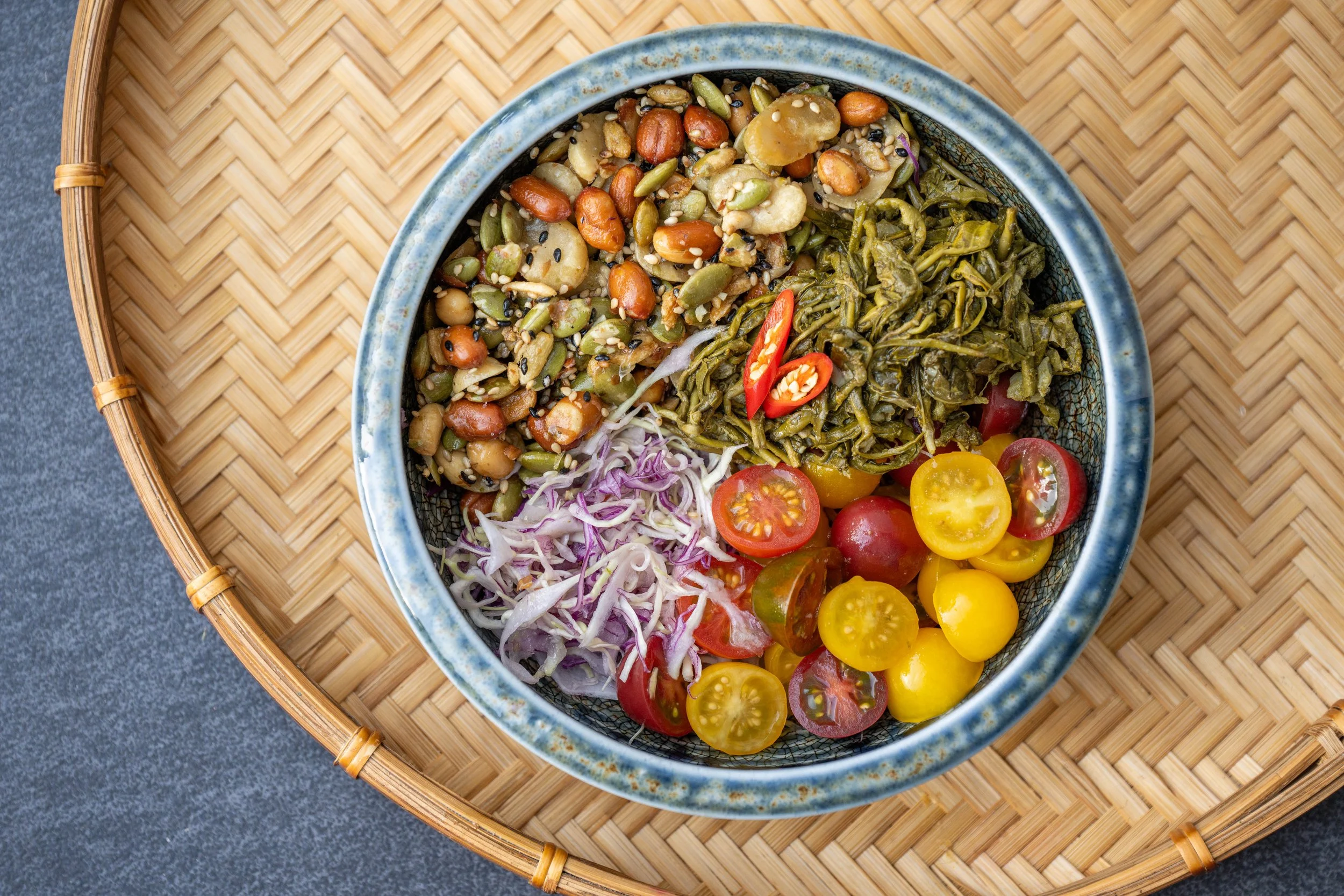
Laphet: Fermented Tea Leaf Salad, Tomato, Cabbage, Thai Chile, Fish Sauce, Lime Juice, Mixed Nuts, Pepitas, Sesame Seeds, Fried Garlic
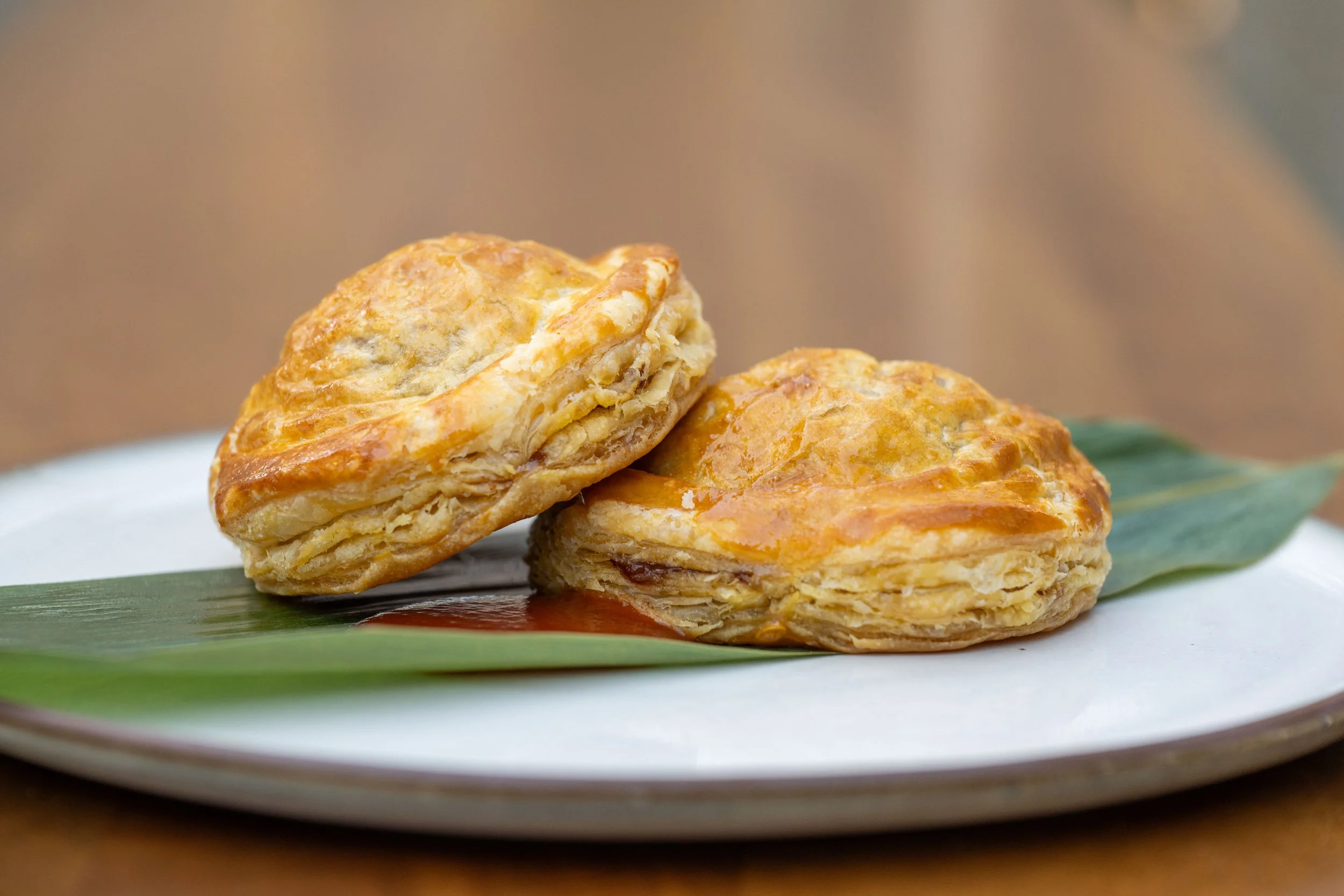
Duck Puff: Braised Duck, Puff Pastry, Chicken Liver Pâté, Five Spice, Sweet Soy, Hoisin, Caramelized Onions, Mango Sriracha
Named after the pro-democracy—and currently imprisoned—leader Aung San Suu Kyi, Suu Khin became a household name in Burma when her blog caught the attention of MasterChef US. She competed on Season 11 in 2021, making it to the finale.
“When MasterChef aired—the country had no entertainment, no media—and there was Gordon Ramsay and another ‘Suu’ on TV. People used me as a proxy. They’d say, ‘Suu must win,’ meaning she must come back from jail and lead the revolution.”
The show was banned in Burma, but pirated episodes circulated. Khin, once a food blogger, became a symbol of hope—and risk.
“Before it aired, I had been speaking out. I had to go silent—my parents were still living there, and I didn’t want them to pay for my actions.”
The visibility came with pressure. She had to find another way to speak up. Khin moved to Houston with her husband in 2018. In 2022, following her runner-up finish on MasterChef, she began hosting pop-ups and tasting menus focused on Burmese cuisine. By 2024, she was running full-service dinners in borrowed kitchens across the city.
“I can’t lie—I don’t think I’d make it anywhere but Houston,” she says.
Houston gave her a stage and an audience open to bold, unfamiliar flavors. Her thesis dish is the tea leaf salad—lahpet thoke (လက်ဖက်သုပ်)—made from fermented tea leaves, cabbage, tomatoes, lime, nuts, and fish sauce. Its idiosyncrasy—incomparably funky, spicy, bittersweet, and earthy—is a testament to its creators: The Burmese are one of the only cultures known to cultivate tea leaves for edible consumption.
“We even use tea as a peace offering to seal treaties or resolve conflicts between war states or rival clans. It’s always going to be our symbol of hospitality, respect, and reconciliation. It's a dish of coming together.”
Khin’s duck puff—bae thar mont (ဘဲသားမုန့်)—is a sticky-sweet, umami-rich colonial fusion of Burmese, Chinese, French, and Vietnamese influences, and a representation of her country’s edible history. Dishes like mohinga (မုန့်ဟင်းခါး), a clean and refreshing catfish and lemongrass noodle soup, and ohn‑no khao-swè (အုန်းနို့ခေါက်ဆွဲ), the historical predecessor to Thailand’s khao soi, offer a window into both her past and her adopted home (recipe on pg. 100).
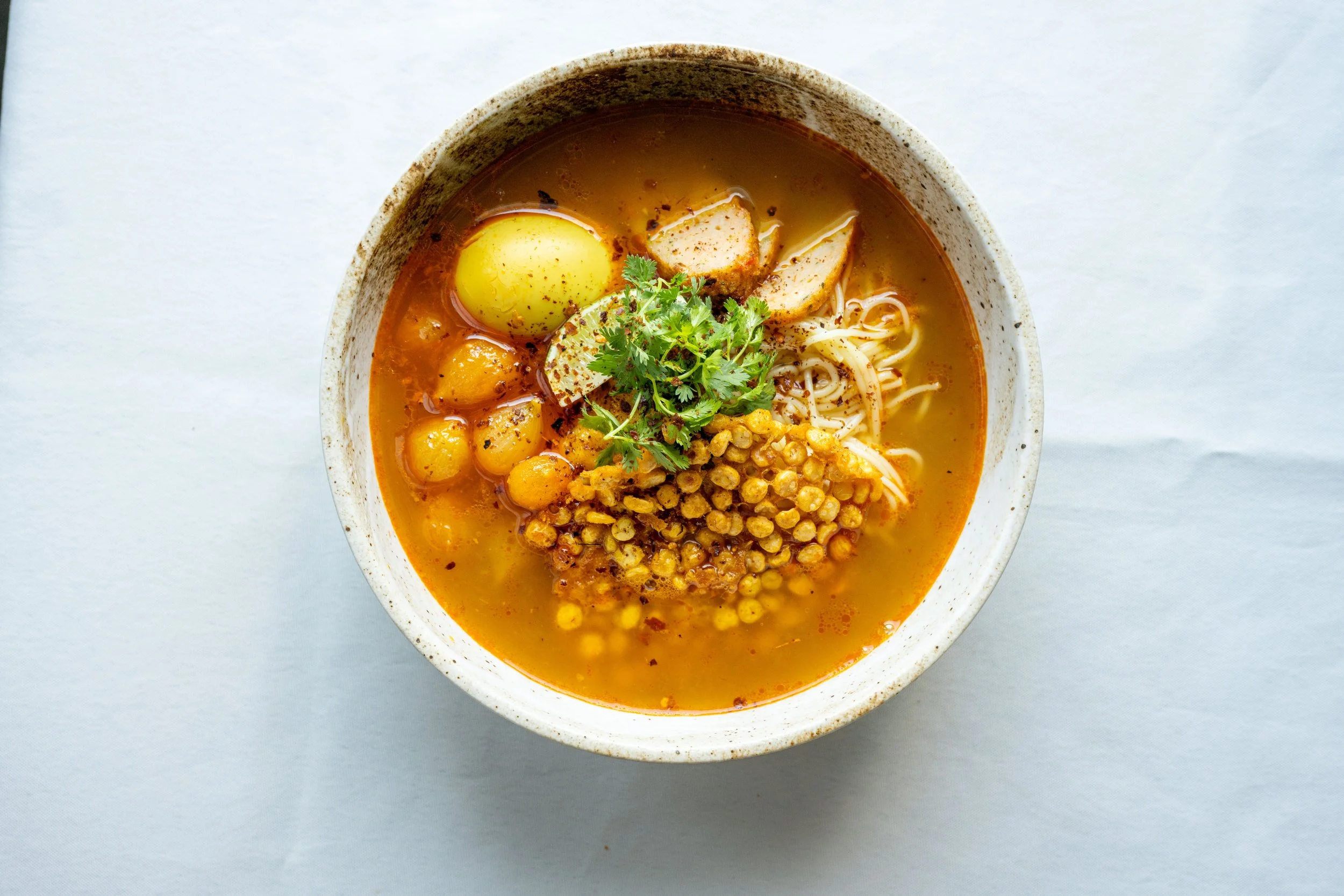
Mohinga: Catfish, Lemongrass-Catfish Broth, Rice Noodles, Cod-Shrimp Cake, Chickpea Fritter, Pearl Onions, Cilantro, Lime
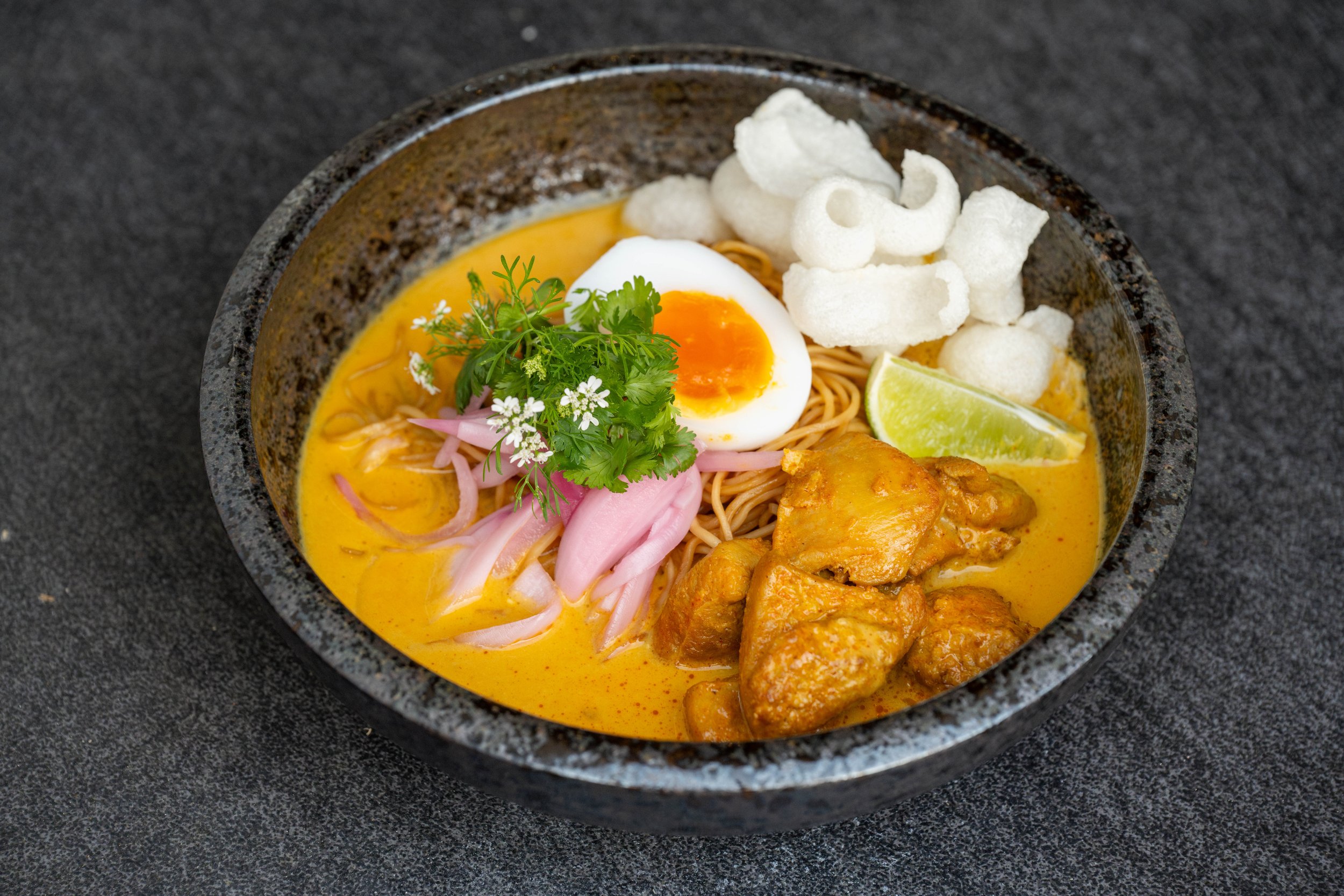
Ohn-No Khao Swè: Chicken Curry, Coconut Cream, Duck Egg, Crispy Egg Noodles, Cilantro, Lime
Henry Lu, co-chef-and-owner of Jūn, remembers their collaboration fondly.
“She has such a beautiful approach,” says Lu. “It’s almost familiar to me, but still entirely her own, deeply tied to the story and the culture she’s putting out there. She’s creating a pathway and conversation, and she’s letting other people be part of it.”
He recalls a Lunar New Year dish—lotus root stuffed with shrimp paste—as “fucking insanely good.” The combination of sweetness and funk, texture and story, encapsulated her voice.
Through collaborations, Khin has worked with around 50 chefs, drawing inspiration from their kitchens and building lasting friendships. She describes food in Houston as a team sport, one she’s now a visible leader of. She says diners tell her that her food triggers a “Ratatouille moment,” evoking a deep sense of nostalgia—whether they’re from Burma or not.
Still, she knows most guests can’t find Burma on a map. That’s why every menu is also a message.
“In a perfect world, Burmese food wouldn’t need a follow‑up explanation. People would know mohinga like they know phở.”
Her aim is cultural clarity. She wants Burmese youth to
see themselves represented, not erased. For Khin, food is a vehicle of resistance. “I’m not the authority on all things Burmese,” she says. “But I am an authority on my version of it, and that’s enough.”
Khin refuses to bow to notions of “authenticity.” Her cuisine is a living thing—shaped by her heritage and Houston’s influence. Whether plated in a fancy dining room or dished out under a tent, her cooking, she says, is always deliberate.
Her long-term dream is to open a permanent space—casual tea shop by day, white-tablecloth tasting room by night. She’s also in the middle of writing a cookbook. For both, she’ll need to spend time back in Burma traversing its cities and townships and eating its bounty. But for someone of Khin’s notoriety, entering Burma is easy, but attempting to leave comes with the risk of political imprisonment.
“I always long for home,” she says. “But I don't think that is a possibility for the next few years.”
Until then she’ll keep making her home a household name, holding space for Burma as a dinner table conversation that begets unity instead of division.