Out of the Weeds
Ladder 4 Wine Bar is cultivating more than just produce in its neighborhood garden.
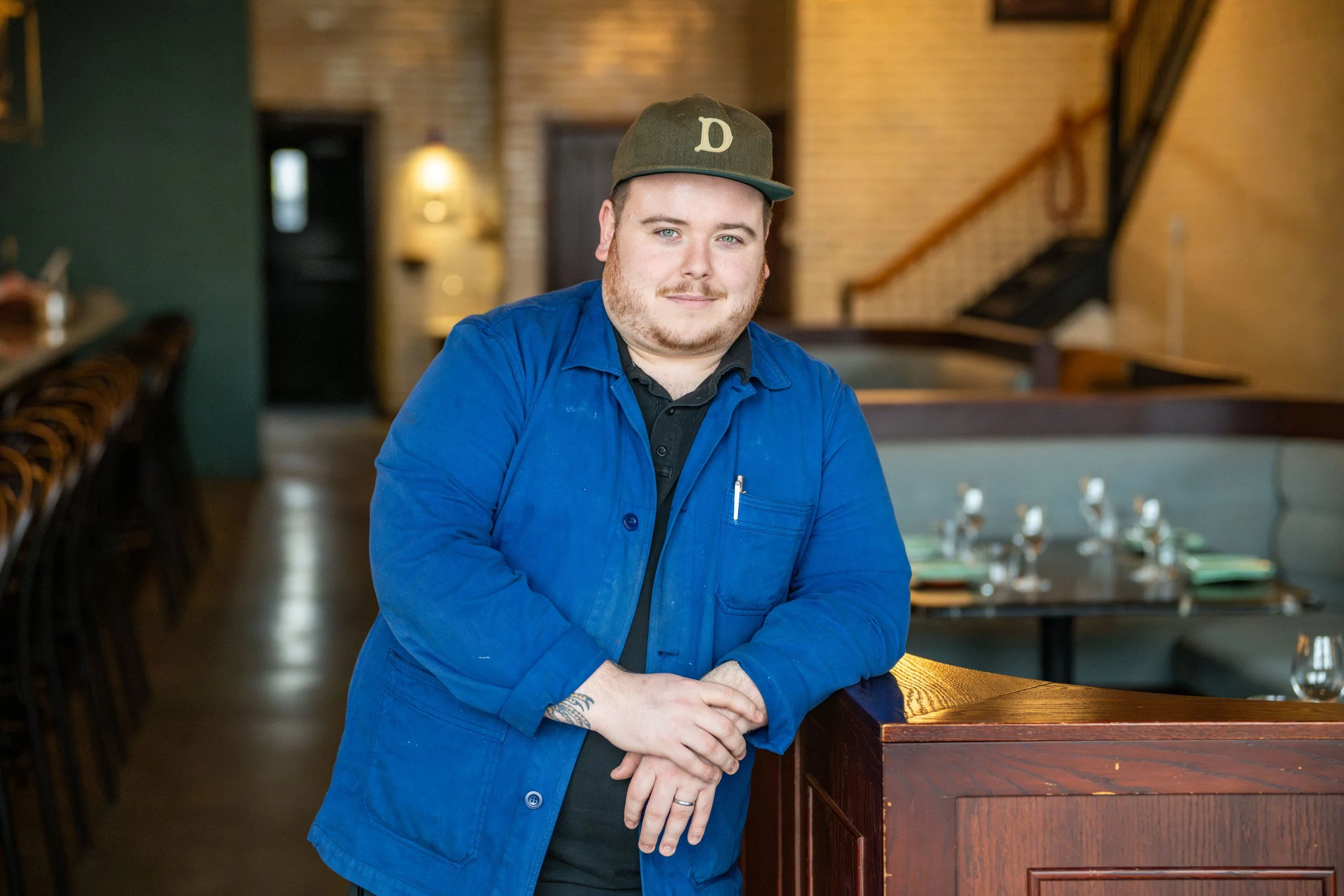
Chef John Yelinek of Ladder 4 | Photo: Alexander Zeren
It’s been almost two decades since the Great Recession devastated Detroit’s neighborhoods. Abandoned houses, derelict buildings, and overgrown lots are the scar tissue that grew over what was once the richest city in the world. In 2020, according to a University of Michigan study, nearly three-quarters of Detroit residents reported that their neighborhoods contained blighted properties. Neighborhoods like Corktown, Core City, and Southwest Detroit were no exception. But, for the last three years, Ladder 4 Wine Bar has made its home in the eponymous former firehouse at the intersection of those neighborhoods, along with a little piece of land its team repurposed. Their garden is but one gear in the larger engine of regreening that’s washing away the detritus of Detroit’s urban blight.
“There used to be homes on these lots that were eventually torn down, but there were always empty lots there, and they might have actually been a part of the Detroit Farm A-Lot program from the 1970s,” says Charlotte Gale, wife of Ladder 4’s executive chef, John Yelinek. “This one was just sitting there, being used as a parking lot.” Gale, a FoodCorps alum with a background in urban gardening and nutritional education, says Ladder 4’s co-owner, James Cadariu, approached her and her husband with the idea for a garden. “It just seemed like the right thing to do.”
As is often the case when doing the right thing, getting Ladder 4’s garden in the ground wasn’t easy. After Gale conceptualized and designed the garden in late spring, the team had to hustle to break ground. It was a community effort in the most earnest sense. Among those helping were local farmers with tractors and Gale’s dad. They started tilling the land in May and were planting by June, with Gale taking over the day-to-day operations alongside her full-time job. That was in 2023. Today, Ladder 4’s garden is in its third season.
Yelinek says that what’s harvested from the garden’s humble 1,200 square feet and 20 beds accounts for about sixty-five percent of Ladder 4’s produce from late June to mid October. Intensive intercropping and plant rotation have allowed for “better management of a smaller space.” In late spring, rows of peas are planted, trellised, and interspaced with rows of tomatoes. “By the time the peas are kind of done and ready to be ripped out, the tomatoes will be growing up and taking over that trellis with herbs all down the middle of the bed,” Yelinek says.
While there isn’t much extra space for Ladder 4’s garden to grow community produce, it’s still open to the public to “see a small little slice of some of the values that Ladder 4 has through their food program,” Gale says. “This year we have a handful of heritage Eastern European peppers, which are used in more traditional ways to make things like ajvar. We’re trying to connect our local landscape to some of the international landscapes that we have with the wine we serve.”
Year after year, as their tomato vines belt for the Michigan sky, Gale and Yelinek say that they’d like to see the garden root itself deeper in its neighborhood, its city—be it augmented with an event space, or transformed into a larger-format community-focused growing operation. But for now, at the very least, they’re using the garden to remind their guests— and themselves—of the importance of where their food comes from.
“It all contributes to the goal of having this human component be very present in the food and beverage that we serve across the board. That's not as much a foreign idea to people as it was 15 years ago,” Yelinek says. “Younger people are starting to care about those things more, which is really promising to see.”