In Michigan, grains are getting their time in the sun thanks to a decadelong friendship.
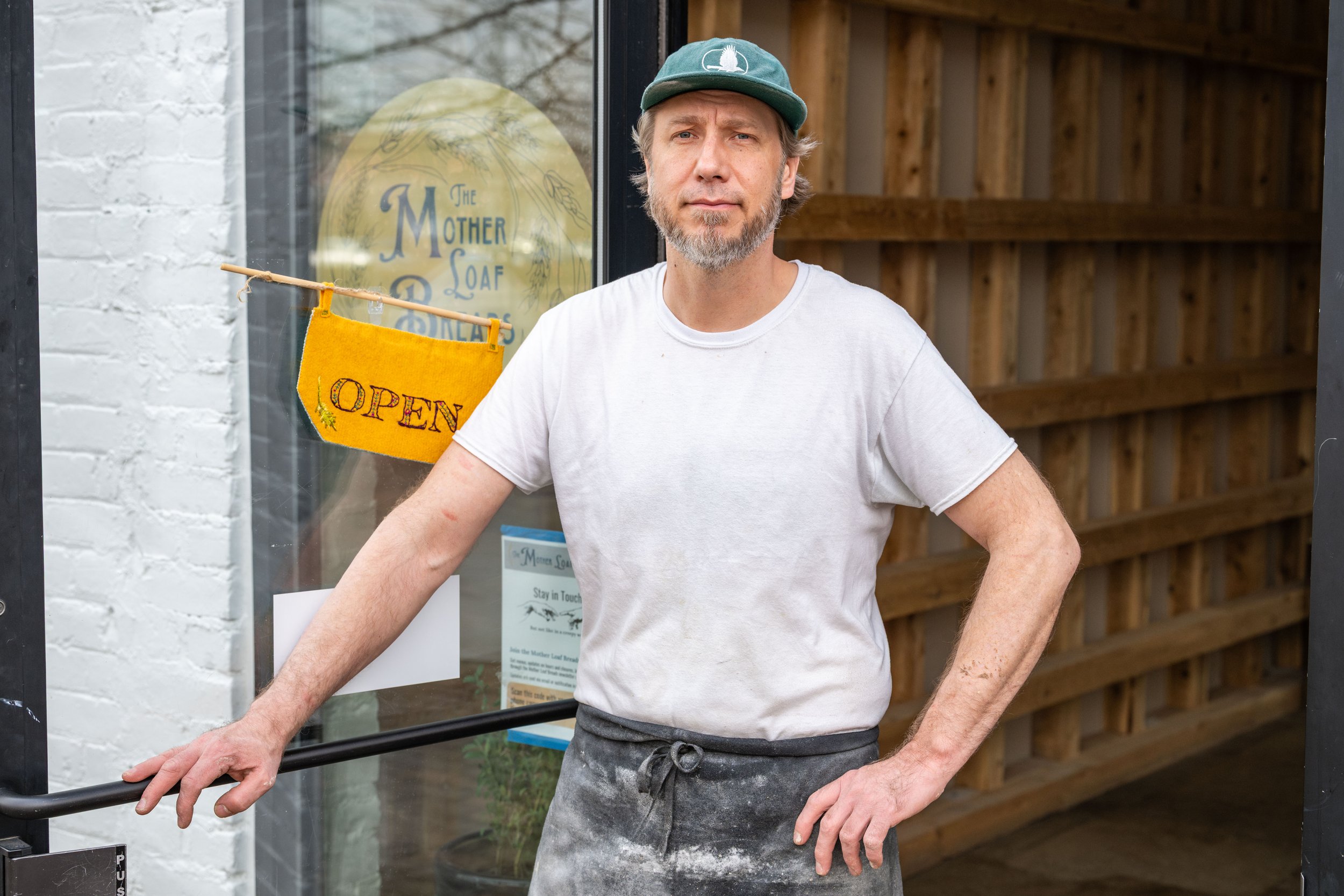
Baker Jeremiah Kouhia | Photos: Alexander Zeren
About 10 years ago, Baker Jeremiah Kouhia took a trip down to Detroit’s beloved Eastern Market in search of ingredients. What he found was more than just the grains he was looking for. Kouhia struck up a conversation, and then a friendship, with a local couple working one of the market’s many stalls.
Like most Saturdays, Randy and Shirley Hampshire of Hampshire Farms in Kingston, Michigan were selling their grains, beans, and dairy products to curious Detroiters when Kouhia stumbled upon them in their corner of the market. The Hampshires have been operating their farm in Michigan’s thumb since the 1980s. Randy left behind a career in large production agriculture and dairy farming— disillusioned and disgusted by the treatment of the cows and the top soil—to return to his family farm, which his great-grandfather started in 1896. Randy put his agriculture degree from Michigan State University and his years of farming experience to work, cultivating quality crops while raising his family before becoming certified organic in 1988.
“I needed to learn to do it like my great-grandfather did,” says Randy. “I started with grains and beans. Now, I grow things that a lot of other people don't.” So, he was more than glad to meet a baker with a zeal for learning about high quality, local grains that Saturday afternoon.
Kouhia, who started as a dishwasher and worked in kitchens before turning to baking, eventually opened a bakery of his own in Washtenaw County in 2014. When the project came to an end and the pandemic arrived, he drove up to work with the Hampshires, learning from Randy while baking alongside Shirley in their wood-fired oven. “I worked there for a year and a half on the farm with them,” says Kouhia. “Spending two days a week there, you learn a lot of things. I appreciate how hard they work and how much goes into raising a dairy herd or planting crops at the right time.” That experience solidified their professional and personal relationship, and they kept in touch as Kouhia went on to bake at Zingerman’s Bakehouse and then the Detroit Institute of Bagels (DIB).
When Kouhia took over part of the DIB space in 2024 to open The Mother Loaf, he knew he wanted to source as much as he could from Michigan and the Hampshires. While he isn’t dogmatic about local flour (he leans on King Arthur as his primary bread flour), Kouhia recognizes that “any fresh-milled grain will produce better flavor. The higher bran gives more texture to the loaf, and, if properly hydrated, it will help create a creamier crumb and texture overall.” Those structural benefits—as well as his connection to Randy and Shirley—are the driving force behind his use of Michigan whole grains. It’s a win-win situation. “A lot of high-extraction flours, if [they] pulverize the bran down to a certain point, you have to hydrate heavily,” he says. “I don't know how it all works out scientifically, but I think these are friendlier to me. With a little mix they can come together very well.”
Figuring out how to best incorporate Randy’s grains is sometimes half the fun for Kouhia. When Randy “gets something, I will figure out a way to work with it,” he says. “It is very nice to have that as a bakery, something to challenge me.”
Up in Kingston, the mission for a diverse range of grains was a long time coming. Randy—inspired by his friend, Farmer Bob Quinn—focuses entirely on ancient grain varietals at his farm, pivoting away from modern grains that are “making people sicker,” he says. From buckwheat to rye to einkorn and spelt, Randy is hoping to make these kinds of grains more accessible to bakers and chefs in the area along with his patrons at Eastern Market.
In a state like Michigan, though, grain farming isn’t without its challenges. “Grains typically grow better in dry states like Kansas, Montana, [places] like that,” says Kouhia. “Michigan can get swampy. And there have been some years where there are bad crop yields caused by flooding in early spring.” Confronting those obstacles, especially as climate patterns continue to change, is an underrepresented part of farm work. Yet those environmental uncertainties don’t rattle Randy. “That’s what we do. We grow grains. Spent a lifetime learning it,” he says.
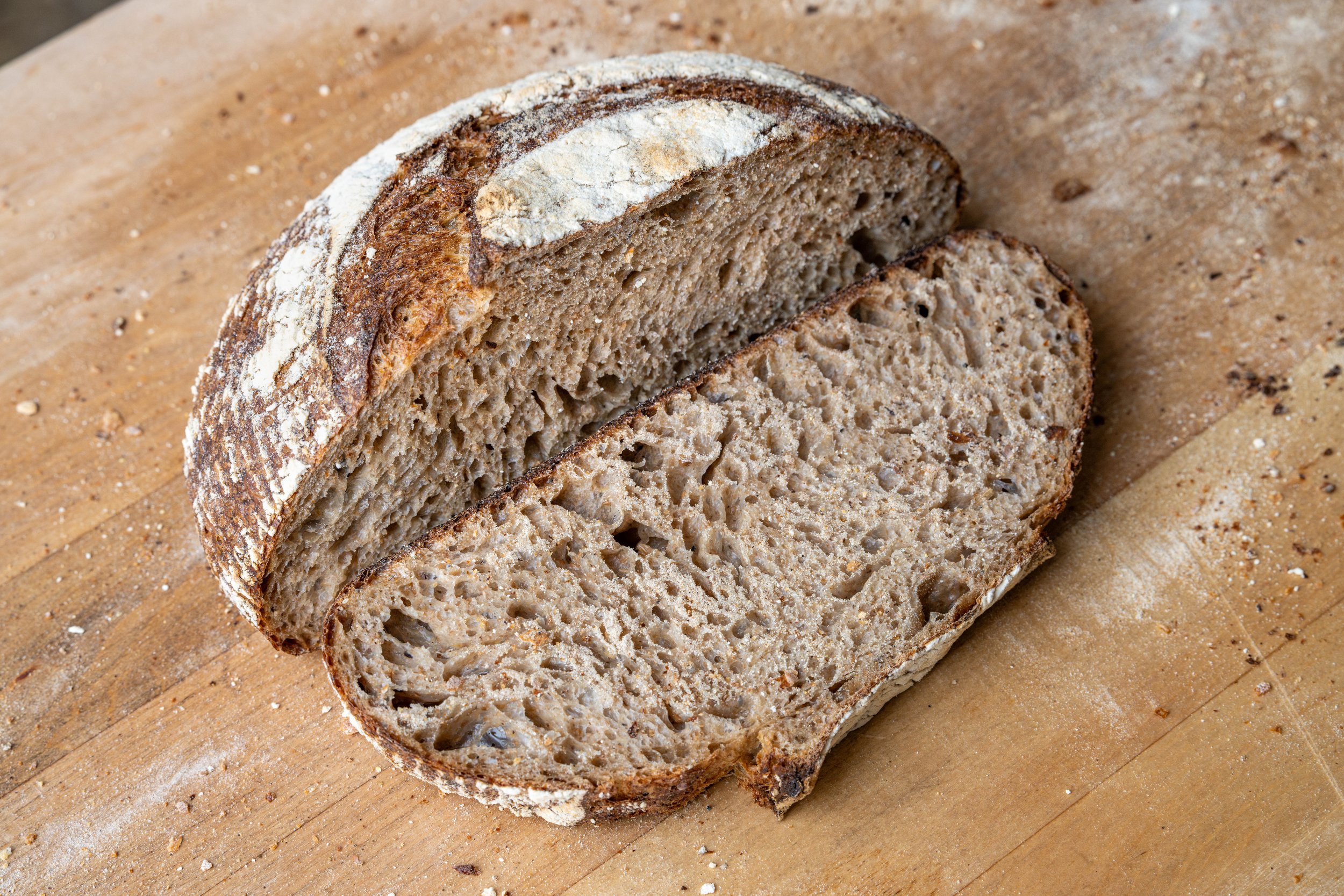
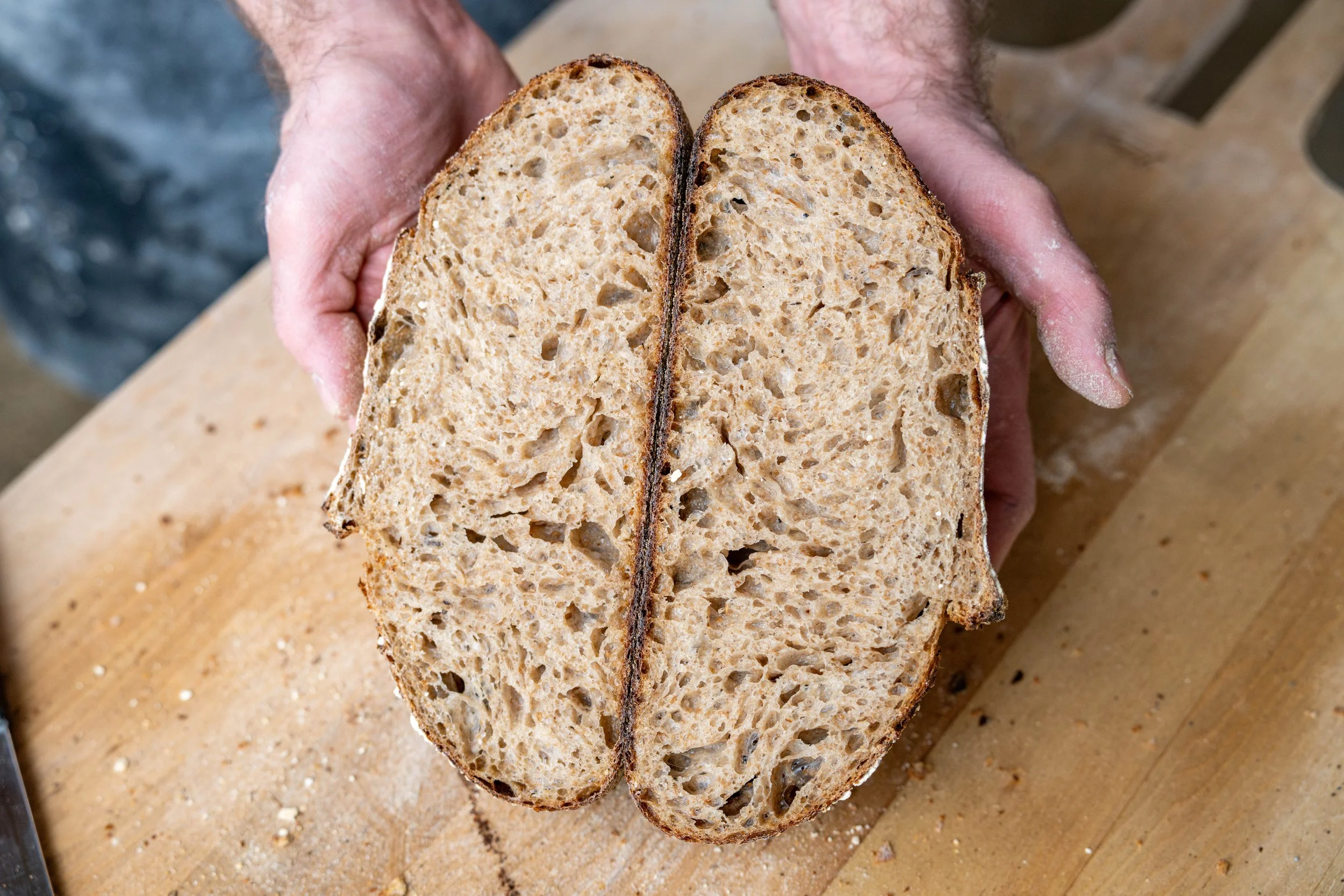
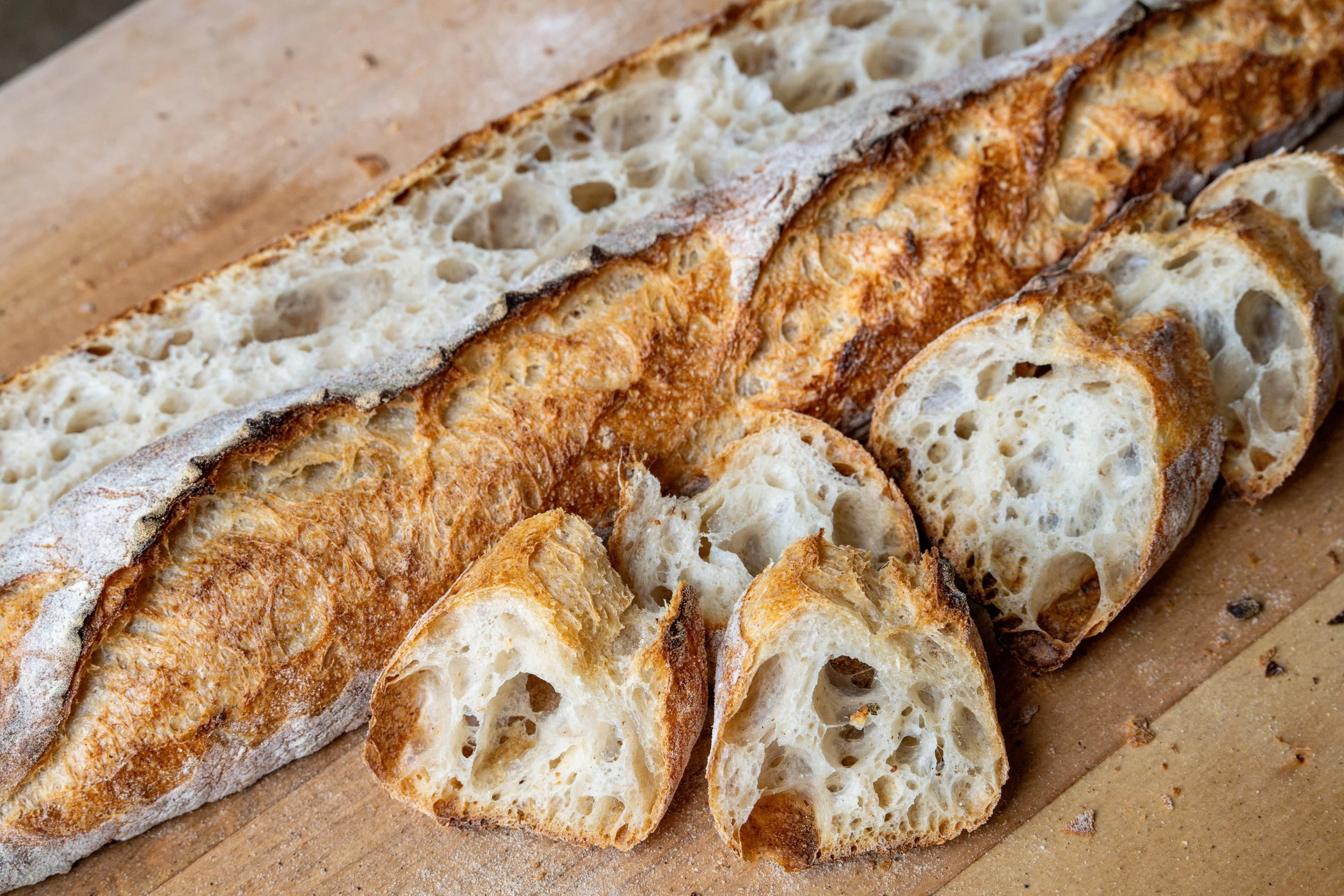
Randy’s stone-milled flours “come through coarse,” says Kouhia. “He barely sifts it which makes for an actual whole grain product. Only very large chaff and things get filtered out. The bran chunks are huge, and might resemble granola.” For some bakers, that can be off-putting, but Kouhia sees it as a strength. It supports flavor and texture, but it also sets him apart. “A million people out there are doing sourdough bread,” says Kouhia. “So, if it is a trickier flour, it may keep others off it,” he jokes. These days, The Mother Loaf features everything from baguettes and traditional white sourdough loaves to sweet potato-buckwheat loaves and 100% Michigan grain rugbrød, incorporating Hampshire Farms grains where possible
Compared to standard bread flours, which come in at around 50¢/lb, Randy’s products are an investment. His wheat and rye flours sell for around $1/lb, and hit $1.50 to $2/lb for some of his “specialty stuff” like einkorn, buckwheat, and spelt. But that’s a “fair market value for most organic flour out here,” says Kouhia. “I believe it’s a reliable, great product that is probably underpriced in this current market. I receive a bit of a break for quantity, but I think a lot of Randy’s goal is to get good food into people’s hands, not price it out as specialty or precious, even if it might be.”
Kouhia’s relationship with the Hampshires isn’t just about the product, though. “There are people who are bigger proponents of an organic system or local grain system. It's a thing I do and a thing I care about, but I am not the soap box guy about it,” he says. Kouhia’s philosophy, according to him, is about three things: flavor, quality, and personality. Or, more simply, “keep your money around those that you know. Wouldn't it be nice to shake the hand of the person you get [your product] from?”
Randy feels similarly about his partnership with Kouhia, but also with other chefs, bakers, and consumers in the area. “It's not a business relationship, it is much more than that. Our relationships are strong because they trust me,” he says. “I am on a quest for knowledge and to feed people good food.” Together, Randy and Kouhia are eager to set up an expanded in-state milling program in Detroit in the future, hoping to educate people along the way while making dynamic, flavorful grains easier to access for the local community.