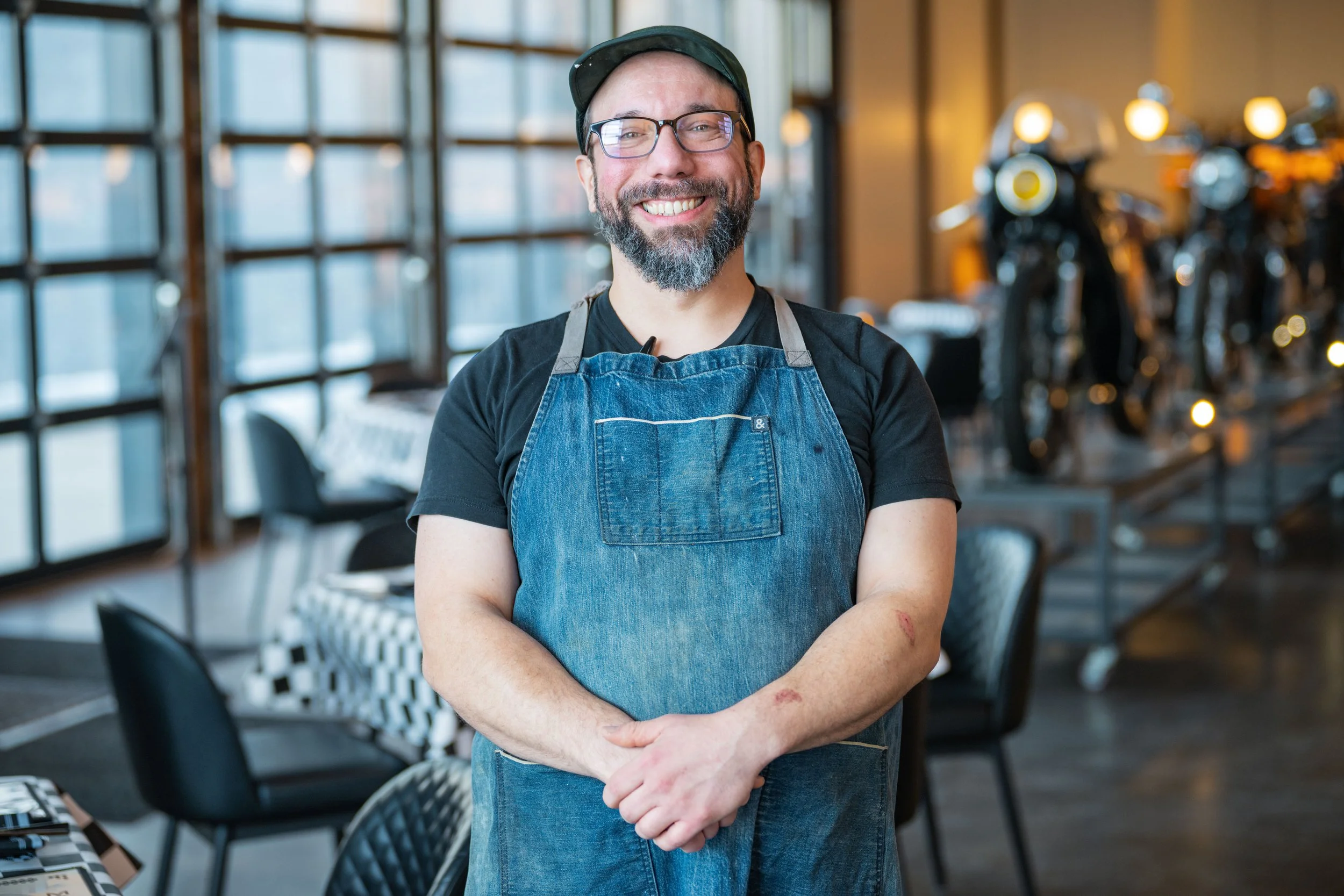
Through his pop-up, Chef Wes Scoggins is cooking at the crossroads of his Southern and Jewish heritage while sharing a powerful message.
Chef Wes Scoggins |. Photos: Alexander Zeren
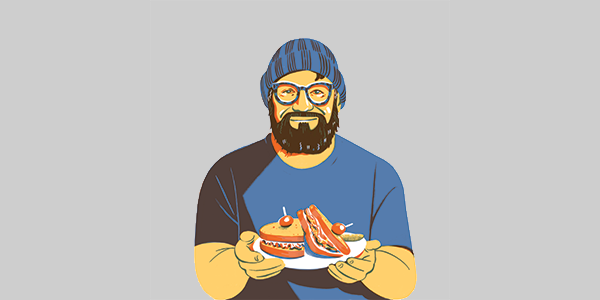
Chef Wes Scoggins chose his internet handle, Jewish Cowboy, in jest, as a reference to The Simpsons. But what Scoggins has built in Nashville is anything but a joke. Today, Scoggins is known for combating antisemitism through food.
Over the years, Scoggins has built his career in a number of Nashville pizza kitchens, including Roberta’s, Up-Down, Pinky Ring Pizza, and Moto Moda. He slings pies as he works toward his dream of expanding Jewish Cowboy from pop-ups to a permanent location.
The idea began when a co-worker asked, “Who does brisket better? Jews or Texans?” As both a Jew and a Texan, the question sent Scoggins on a path of personal and culinary discovery. “I became interested in the threads of history that led my family to Texas and connected me to my ancestors,” he says. He experimented with Texas brisket, Jewish brisket, and everything in between, playing with mirepoix, vinegars, and sweet and sour flavors. The result was a hybrid of Middle Eastern and Southern influences, still cooked low and slow.
The food truck serves dishes like black-eyed pea falafel and Southern buttermilk-fried chicken—with a black lime marinade and pomegranate-pickled onions—at events across town about once a week. And kosher pizza, too: “Unfortunately, a lot of kosher pizza is really middle of the road, and the Jewish community just accepts it,” he says. So, he set out to make it better.
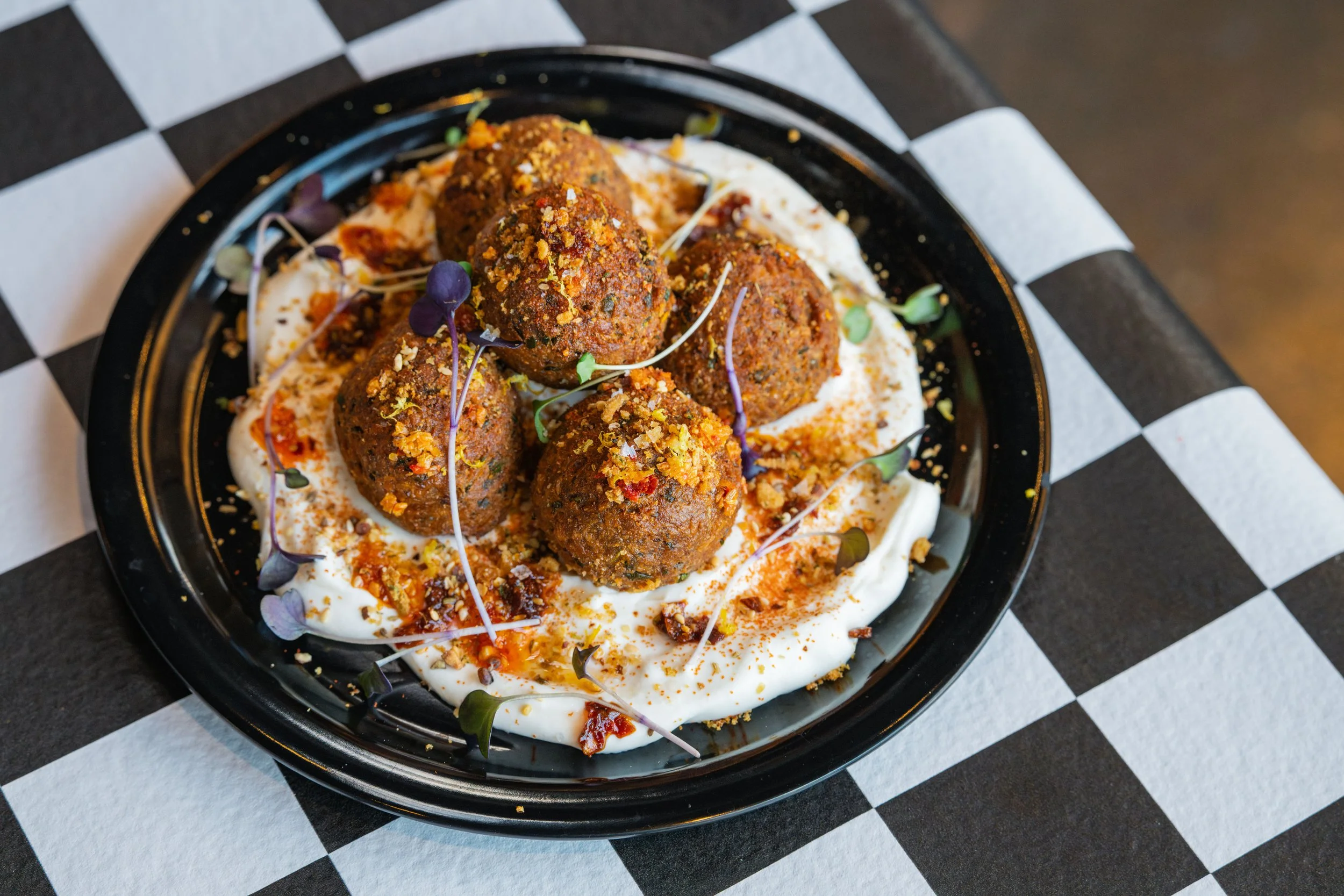
Black Eyed Pea Falafel, Buttermilk Culture Labneh, Dukkah, Sichuan Peppercorn-Calabrian Chile Oil, Lemon Zest, Radish Greens
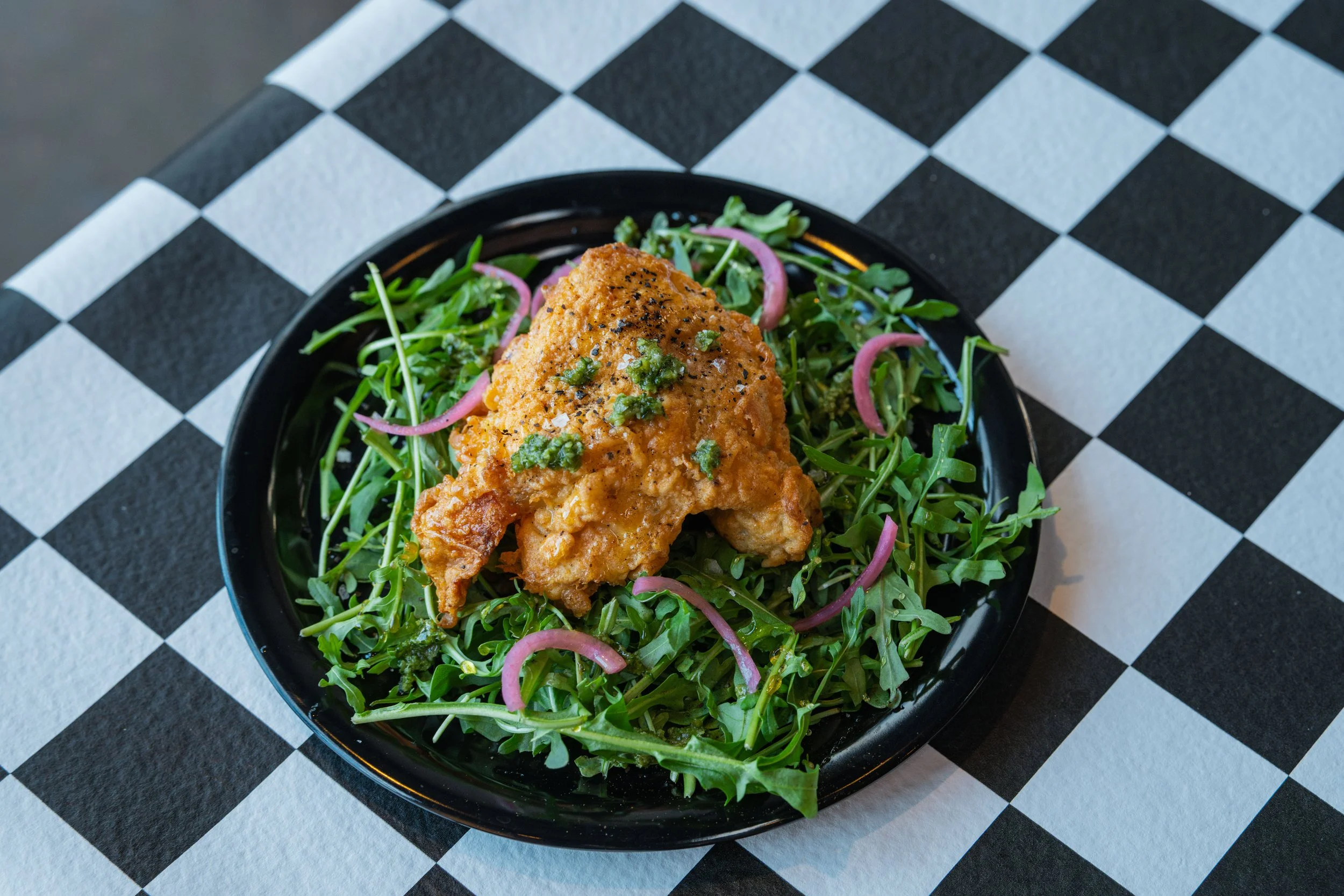
Fried Chicken, Arugula, Pomegranate-Pickled Onions, Pepita Pesto, Honey, Black Lime
As important as kosher pizza is, Jewish Cowboy’s mission is to bridge cultural differences and get people talking. Scoggins is a talker. Lines at his pop-ups are due partly to demand and partly because he’s having real conversations with folks, not just small talk.
Starting in the pandemic, Jewish Cowboy’s roots began modestly. Business was beyond slow at the East Nashville restaurant and bar where Scoggins worked; they were selling toilet paper to get by. So, Scoggins used his federal stimulus check to buy a smoker and launch his pop-up.
“I slept on that filthy couch in the [bar’s] living room, getting up every half an hour to put more fuel on the smoker. At the end, I had basically been up for almost 22 hours, running on a pile of Red Bulls,” he remembers. “We did more sales that single night than we had the previous three weeks.”
At one pop-up, a customer said she had lived her entire life as a Jewish woman in the South but always felt like an outsider: “Seeing you out here loud and proud is one of the first times I’ve felt like Nashville is my home,” Scoggins recalls her saying.
“That was the moment,” Scoggins says. “I wasn't even thinking about the implications of this. I was thinking about it being an excuse to have fun and do something whimsical. Now, I’ve slowly found myself.”