Same-Same, But Different
Chef Chris Biard’s lifelong love of chicken and Thai cooking comes home to roost at SS Gai.
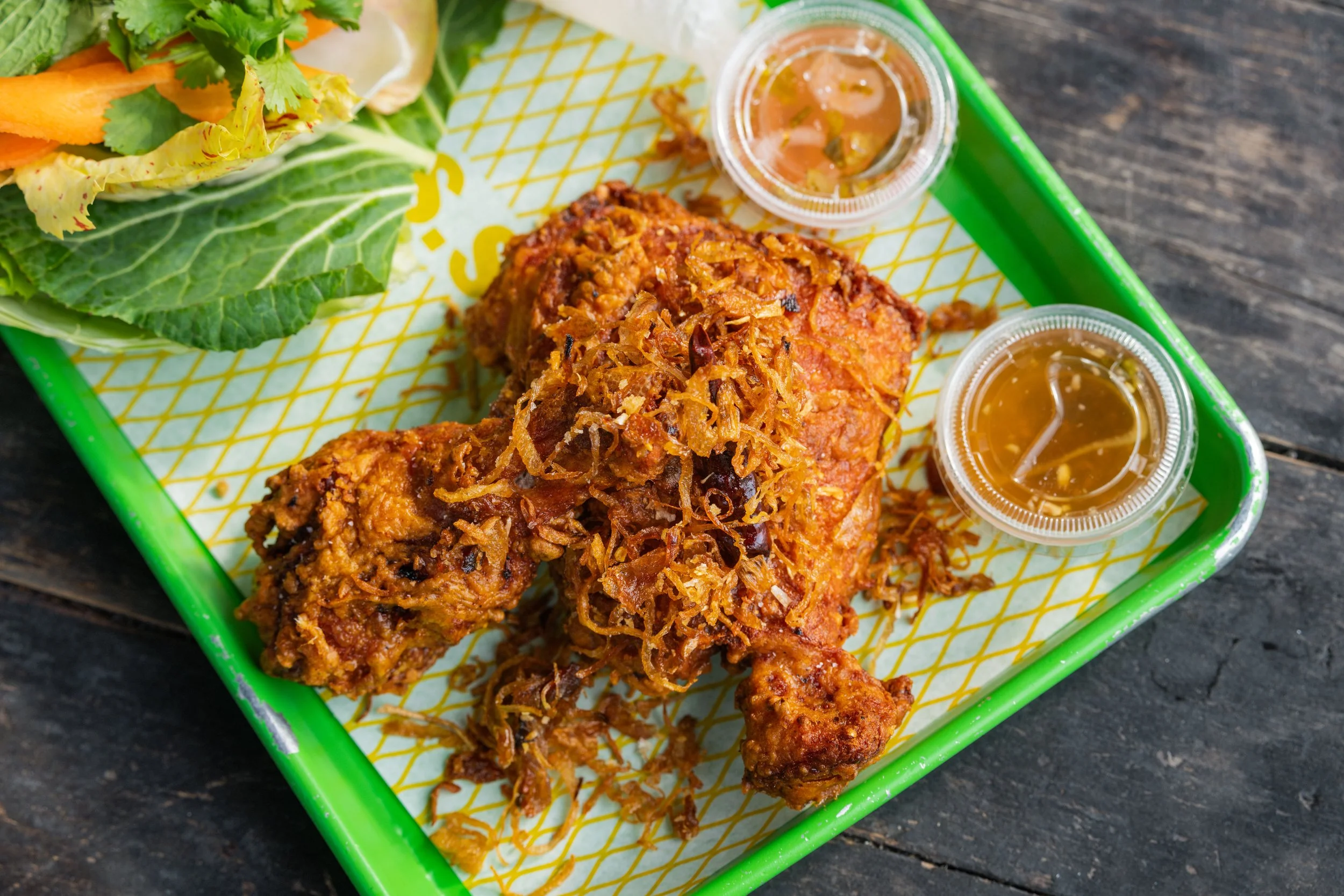
Gai Tod: Fried Chicken, Sticky Rice, Vegetables, Lettuce, Fried Shallots, Herbs, Aromatic-Chile Vinegar, Tamarind-Chile Fish Sauce. |. Photos: Alexander Zeren
Chef Chris Biard knows how to pamper a chicken and—to the disappointment of chickens everywhere—it does not involve a bubble bath. “Pampered fried chicken is just an old-school restaurateur’s way of saying it’s really good fried chicken,” says Biard, citing a phrase he nabbed from his father who operated restaurants in Oklahoma. “I grew up eating, loving, and frying chicken.”
However, it wasn’t until Biard’s honeymoon to Thailand with his wife, Emma Biard, that the vision for SS Gai came into sight—or rather, into scent. “We smelled this aroma that was just intoxicating,” says Biard. “It ended up being this real smoke from this lady who was cooking gai yang on the side of the road. We were there for like four hours just eating grilled chicken.”
Biard’s epiphany on the Thai island of Ko Pha Ngan led to years alchemizing the experience back at home. Eventually, this turned into Thai chicken pop-ups around Nashville—a town of discerning fried chicken enthusiasts. After years working in boundary-pushing, professional kitchens like The Inn at Little Washington and Husk, the idea of opening up something familiar and old-school felt refreshing to Biard. So, in 2025, he and Emma opened a brick-and-mortar at The Wash, East Nashville’s micro food-hall, with a menu centered around their take on Thai chicken.
“The inspiration for us as far as doing this restaurant is built off of what [those Thai vendors] do every day: one person cooking one thing really, really, really well,” says Biard.
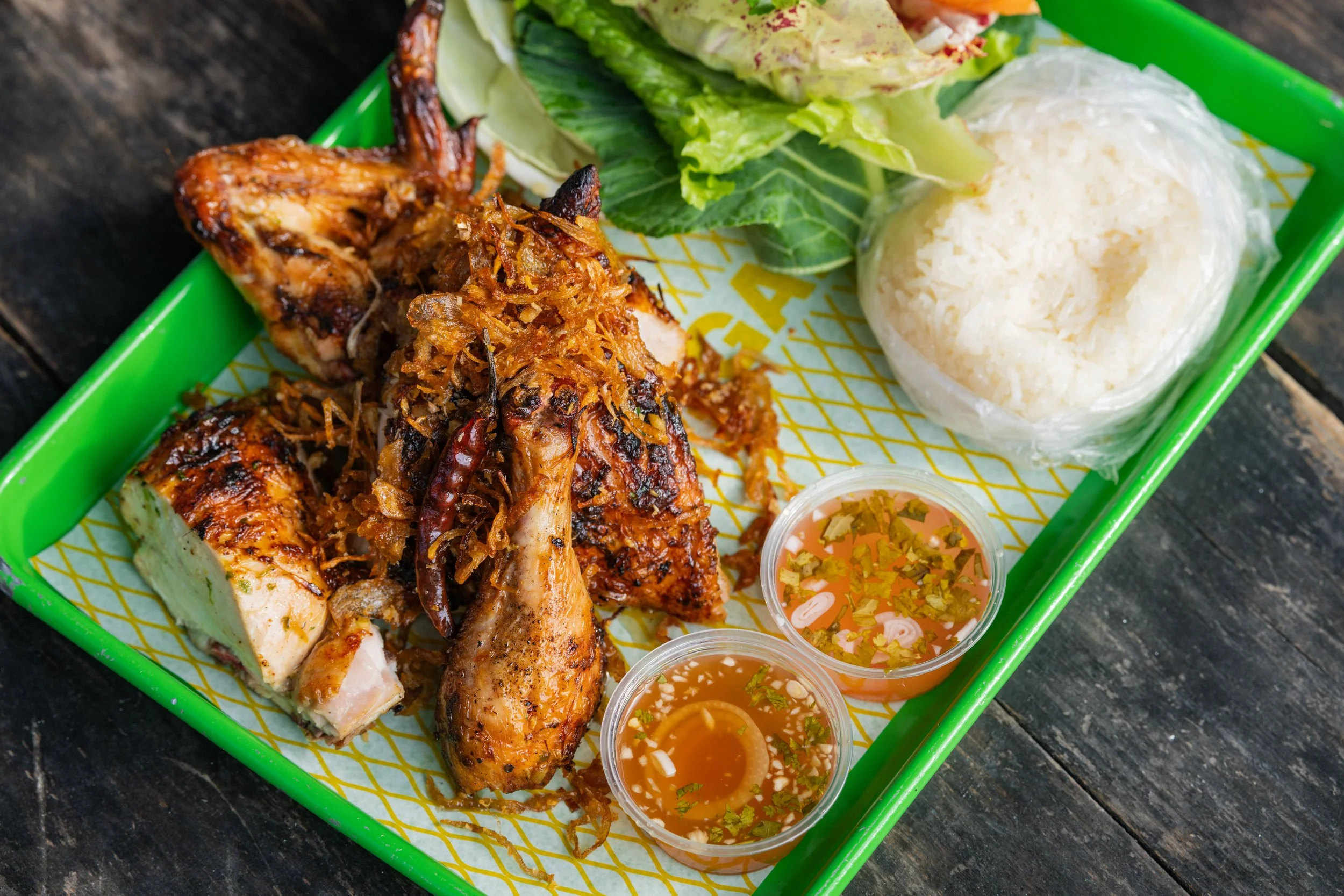
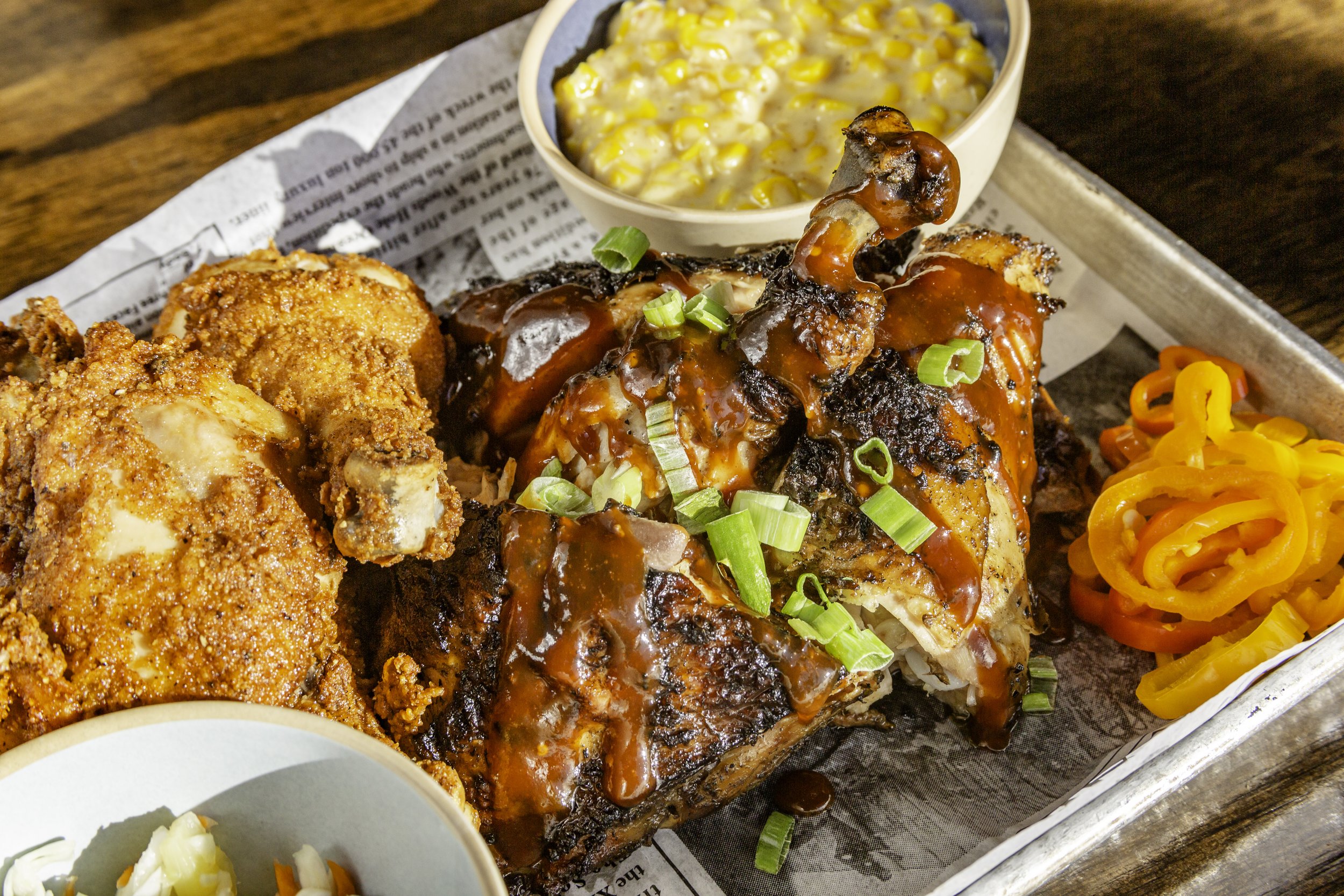
Gai Yang: Thai Barbecue Chicken, Sticky Rice, Vegetables, Lettuce, Fried Shallots, Herbs, Aromatic-Chile Vinegar, Tamarind-Chile Fish Sauce
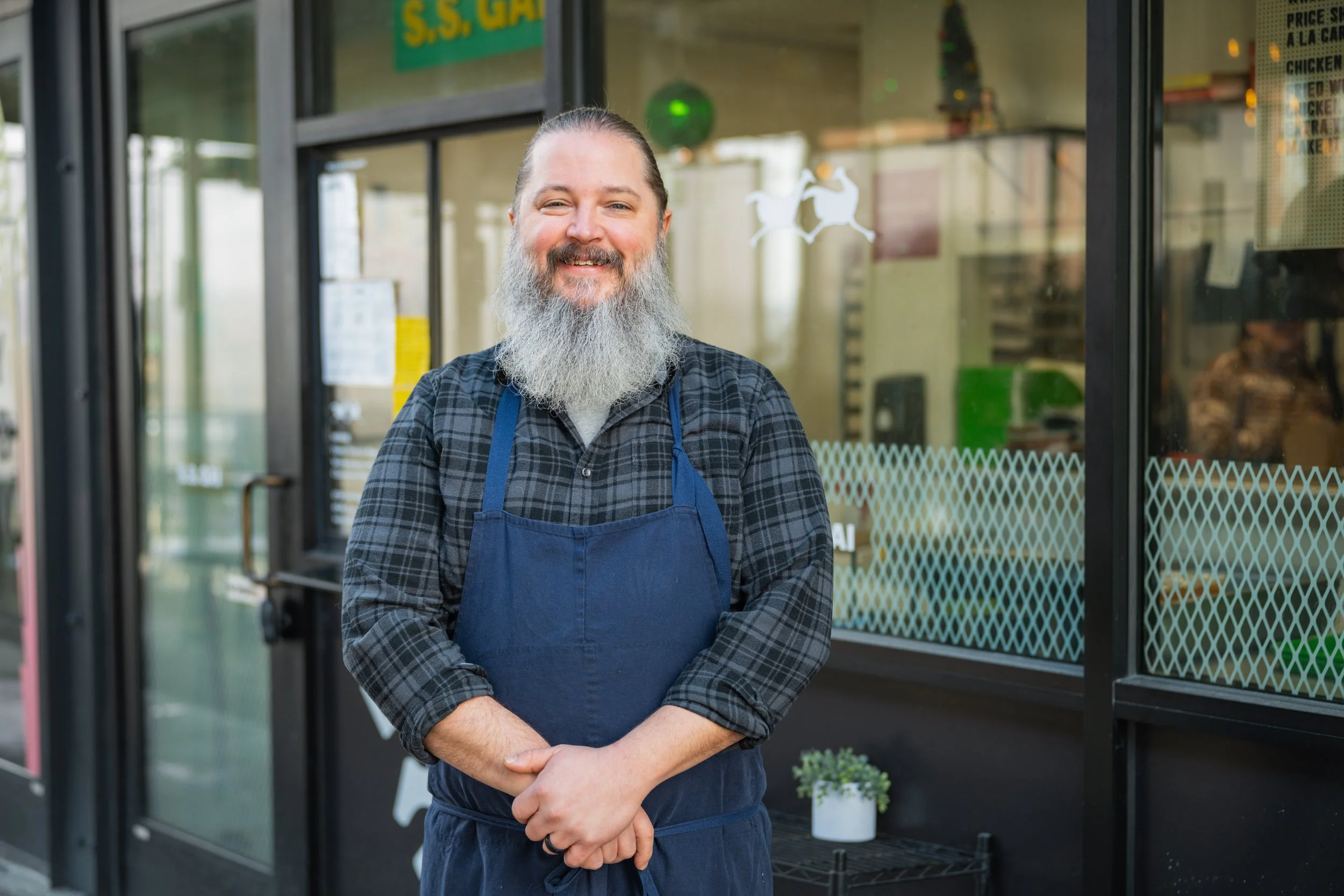
Chef Chris Biard of ss gai
PREPPING THE BIRDS
In Thai, there’s a common saying attributed to food vendors “maen-maen tàae wâa tàang-tàang,” which means “same, same, but different.” Biard symbolizes this slang term in the “SS” of SS Gai, but also gives a nod to the very similar, yet different chicken dishes at the heart of his business: the grilled (gai yang) and the fried (gai tod).
Both of SS Gai’s chickens begin the same way—with a fish sauce, palm sugar, turmeric, and coriander heavy marinade. “Our philosophy, without giving too many secrets away, is that you’ve got all this flavor you marinated the chicken with, and you want to find a way to keep all that in there,” says Biard. The marination process takes 24 hours for both the grilled and fried chicken, but that’s where their similarities en
GAI YANG
For the gai yang, Biard grills the chickens whole, lacquering them with reserved marinade, flipping them frequently, and cooking them low and slow, which allows for caramelization on the outside while locking in juiciness on the inside.
“We have a grill outside that sits pretty high above the coals, probably about three feet above,” says Biard. “As that skin starts to render, it falls down on the coals, builds up that smoke, and reinforces that flavor,” says Biard.
Biard then transfers the chicken to a second grill inside to dry out the skin, while brushing on more marinade. This setup also functions as an advertisement—aromatic smoke spills onto the street and beckons unsuspecting guests in. “You’re getting this aroma reinforced over and over again as we’re mopping the birds. Marinade hits the coals a little bit, grill smoke comes up, and it builds a flavor you can’t get grilling any other way,” says Biard.
GAI TOD
Where the gai yang is sticky, smoky, and sweet, the gai tod is the pinnacle of aromatic crispiness. For the batter, Biard begins with a traditional Thai ingredient, red lime stone paste—a sub for manufactured baking soda, which can leave an aftertaste. The calcium hydroxide in the paste creates a chemical reaction that firms up proteins, resulting in peak crackliness.
Though the batter recipe is a closely guarded secret, Biard is happy to share a little knowledge. “A lot of places will take chicken from the marinade and throw it in this big old batter, and all your marinade is lost in the batter,” says Biard. “Our process is about using as little batter as possible and making it really thick and concentrated.”
Biard doesn’t miss an opportunity to add more flavor, so he layers coriander in during the battering process “so when you get your chicken, you see coriander bits or even lemongrass bits in there.” Biard then double-fries the battered chickens first in a lower-temp fryer to avoid burning the sugar in the marinade, and then finishes it in a high-temp fryer to seal the deal.d.
TAMARIND-CHILE FISH SAUCE
In the process of opening SS Gai, Biard committed himself to a lifelong pursuit of studying Thai recipes, methods, and ingredients. But above all, Biard has become obsessed with the Thai approach to balancing flavor. By way of that, he serves his two chickens with a punchy, funky dipping sauce.
“The tamarind-chile fish sauce, commonly known in Thailand as nam jim jaew, is one of those things that’s all about balance,” says Biard. “To me, that’s the most fun way to cook: instinctual, finding balance, finding what works in different ways.”
The sauce, a mixture of fish sauce, palm sugar, and tamarind, brings sharpness and umami to the decadent chickens and, with the addition of local habaneros, some Nashville heat. “It adds this fruitiness that’s really delicious with fish sauce and brings another level to it,” says Biard.
STICKY (AND TRICKY) RICE
In lieu of a fork and knife, Biard serves each chicken with Thai sticky rice.“I tell people to treat it like injera bread," says Biard “You open up the bag, pull a little piece of rice off, and use that as a tool to rip into the chicken, because it’s a really interactive meal.”
The sweet, short grain rice soaks for 12 hours before steaming in traditional rice urns covered by bamboo baskets. Biard then airs out the rice in a large container to remove some moisture. To avoid over-drying, it’s immediately sealed in plastic bags. It’s a no-expense-spared labor of love, providing a perfectly tacky product that justifies the means.
FINISHING TOUCHES
Part of having a lean menu means Biard can afford simple, labor-intensive luxuries like house-made fried shallots. Both the gai yang and gai todd get garnished with a generous mountain of fried shallots and garlic for aroma and texture.
For freshness, Biard adds a little green, serving the chickens with a heap of seasonal vegetables and garnishes. “A lot of times when you get this meal in Thailand, you’ll have vegetables on the table—cabbages, long beans, garlic chives, cucumbers, whatever it is—to eat with your chicken,” says Biard. “We use the bounty of the stuff around us.”
Though SS Gai is growing into a larger space with a new and improved custom grill, its core principle of simple food made with precision will remain the same. “We will always have a small, intentional menu,” says Biard. “The heart of what we do is we are a chicken house, and that’s what we are going to stay.”