Beyond the Boulevard
Not far from the Strip, independent Las Vegas restaurants are on the rise, attracting locals and tourists alike.
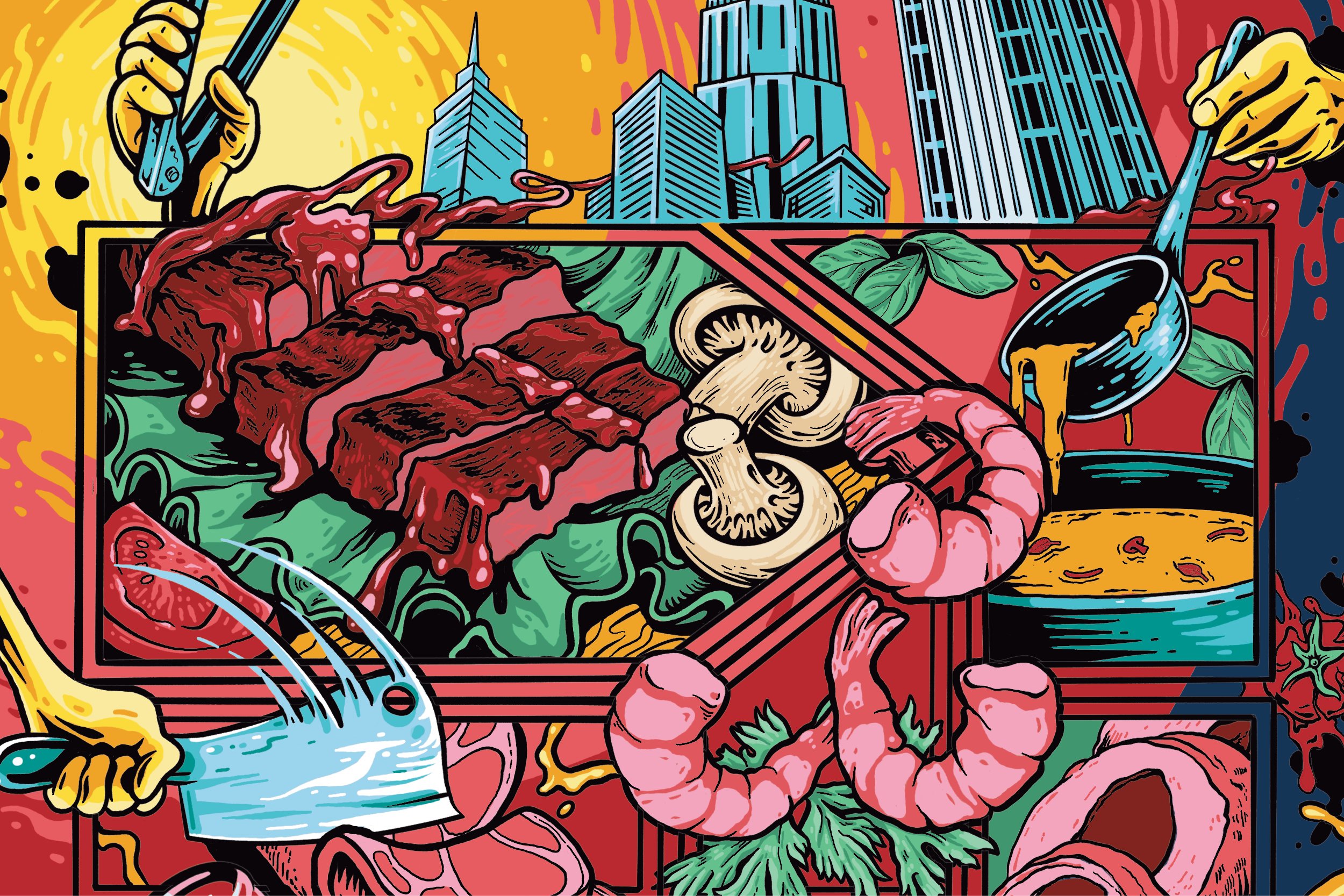
Illustration: Rachel Krohn
Las Vegas isn't a city known for subtlety or caution. But over the course of more than a decade, the city's hospitality community has undergone a somewhat slow and unexpected shift.
The reach of culinary excellence in the city has grown beyond the Las Vegas Strip, encompassing new neighborhoods and areas like the Arts District, Downtown, and Chinatown. The Strip, while undergoing its own economic and culinary transformation, has paved the way for talented chefs to develop essential skills before striking out on their own.
The Celebrity Chef Boom in Vegas
In the late '90s and early 2000s, new casinos and hotels like the Bellagio started to turn their attention to luxury experiences. As a part of that approach, there was a deliberate effort to bring in some of the most lauded chefs from around the world to open new concepts and restaurants in the city. Steadily, over the next decade or so, chefs like Joël Robuchon, Alain Ducasse, Guy Savoy, Wolfgang Puck, Thomas Keller, and Charlie Trotter brought their talents and their teams to the Strip, sending ripple effects through an already hospitality-centric community.
"What happened was these chefs needed boots on the ground," says Eric Gladstone, the co-founder of Vegas Unstripped, a local "chef-driven" food festival. "They provided an opportunity for passionate [cooks] to come and train." The influence of these chefs on the local community can still be felt today. Chef Bradley Ogden's eponymous restaurant at Caesars Palace, for example, launched the careers of several "leading lights in the industry" in Las Vegas, says Gladstone, including Chef James Trees, who has now built a collection of independent restaurants in the city's Arts District.
Chef Brian Howard got his start working under Chef André Soltner of Lutèce in Las Vegas, Andre Rochat at Alizé at The Palms in the early 2000s before spending time in the kitchens of Chefs Kerry Simon, Thomas Keller, and David Myers. At the time, Las Vegas "was still a bit of a buffet town," says Howard. "But chefs were coming up. I worked in incredible kitchens and saw the dynamic and shift of how the city evolved over time."
Eventually, hotels and casinos found success in opening Las Vegas locations of out of town restaurants and concepts from celebrity chefs, a formula that took hold and, in many ways, remains to this day. With it came fully fledged operating systems, efficient training and education programs, and consistency. But some chefs missed the flexibility and creativity that had drawn them to the industry in the first place. Licensing agreements, quick service formats, and repeatable concepts became the norm, even as some fine-dining establishments held on.
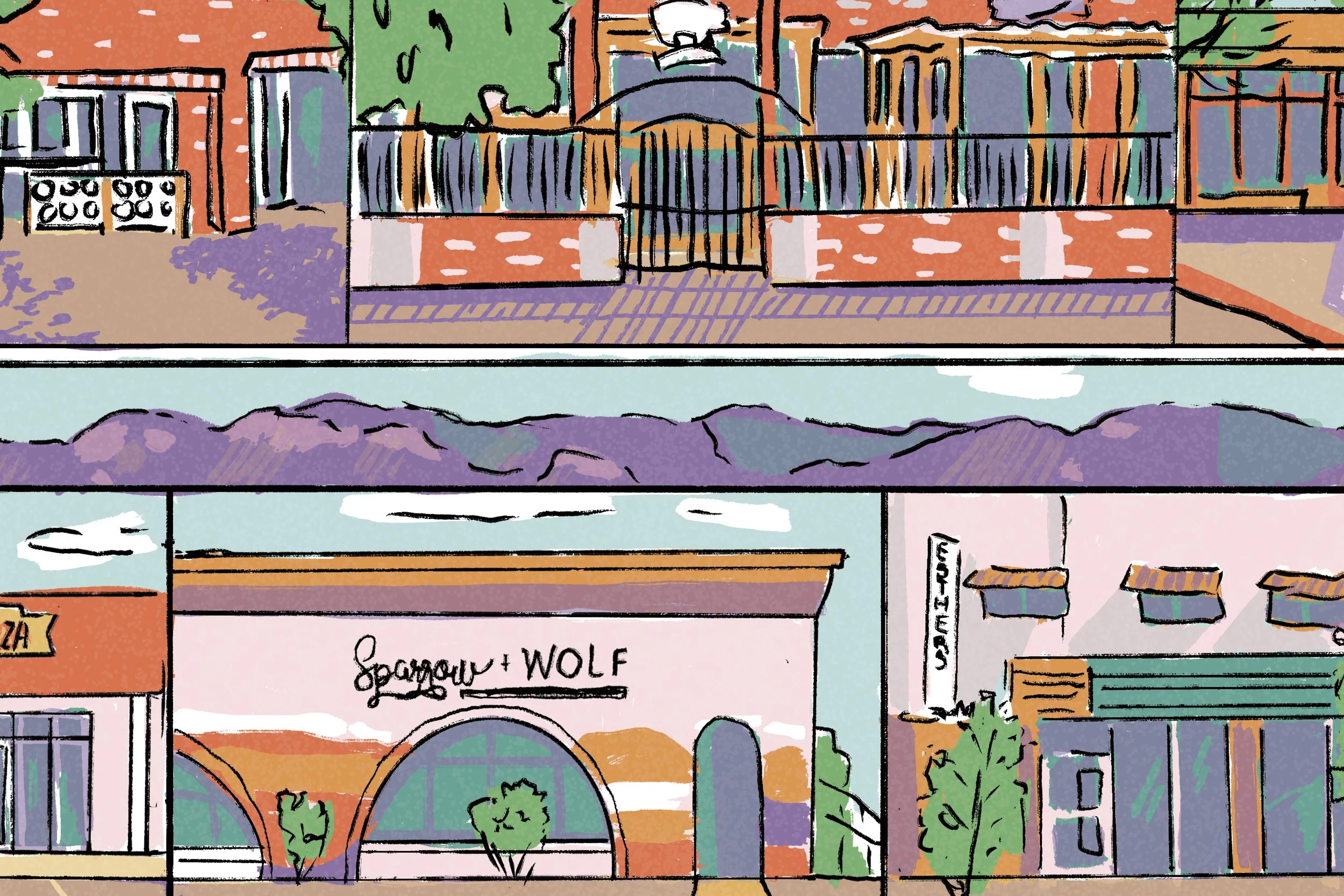
"I was going to leave because the product was becoming similar in all the rooms," says Howard. "We wanted to offer something more. I had built a good name for myself and set out to do my own restaurant. That was 12 years ago." Howard took his experience working on the Strip and opened his own restaurant, Sparrow + Wolf, in Las Vegas' Chinatown in 2017.
"I knew if I was opening something, I could cook the way I wanted in Chinatown," he says.
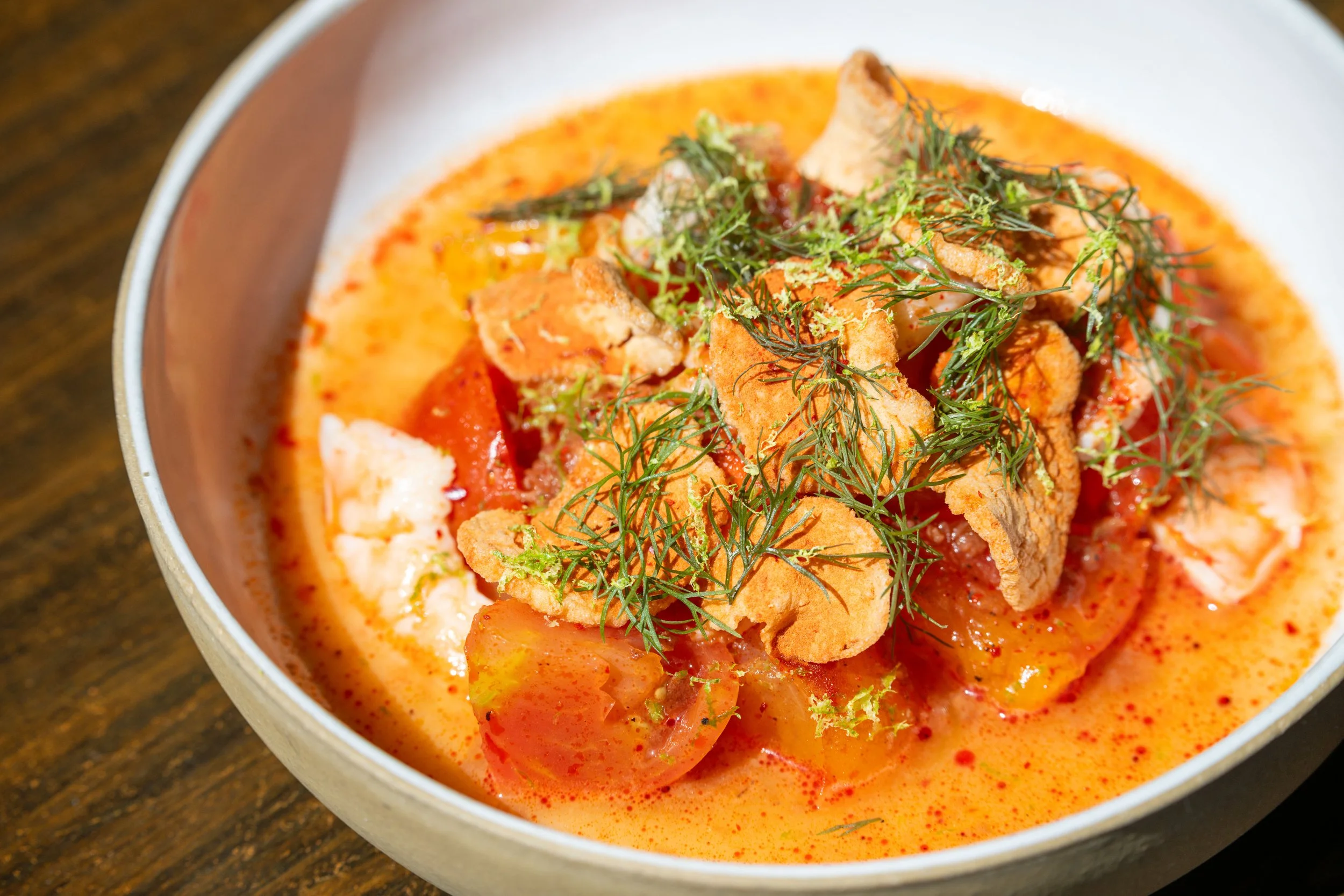
Compressed Heirloom Tomato Salad, Poached Prawns, Fermented Tomato-XO Sauce, Chile Oil, Shrimp Chips, Chile Flakes, Lime Zest, Fennel Fronds at Sparrow + Wolf
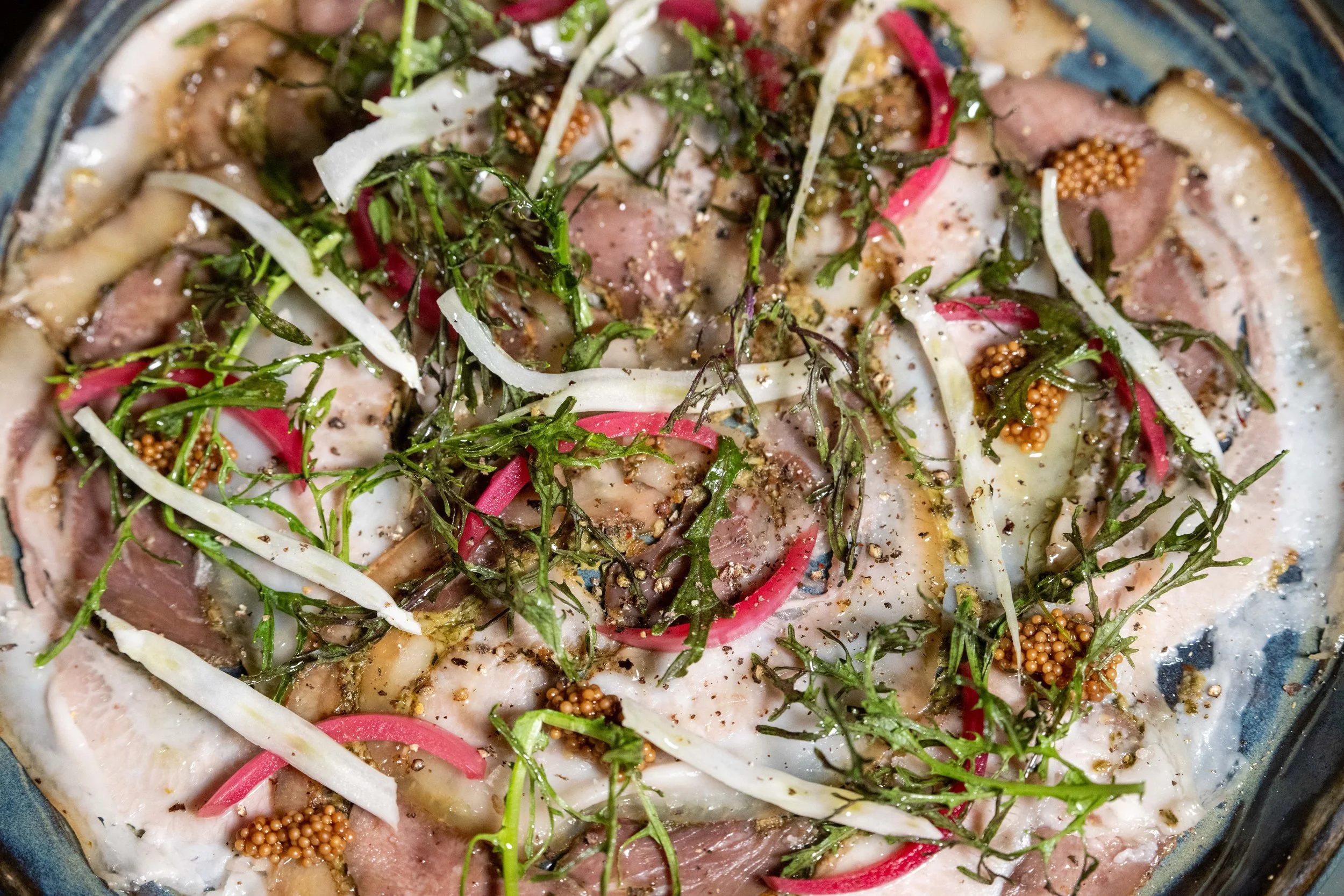
Porchetta Di Testa, Shaved Fennel, Mustard Frill, Pickled Red Onion, Mustard Seed, Smoked Sea Salt at Esther’s Kitchen
A New Era Begins
Away from the Strip, the local culinary community was made up of "small places" like Chef Dan Krohmer's Other Mama and Chef Kerry Simon's Carson Kitchen, "but really nothing was happening in Summerlin or Henderson or Downtown yet," says Howard.
In 2012, Tony Hsieh, the CEO of Zappos, launched an initiative called Downtown Project, which sought to reimagine Downtown Las Vegas. With over $350 million "allocated to small businesses, real estate, education, tech," says Restaurateur Jen Taler, the fund catalyzed growth and development in the area—most notably, the construction of the Downtown Container Park. Taler worked with Hsieh and helped with the redevelopment efforts. She eventually opened Fergusons Downtown before launching Market in the Alley, an artisan market showcasing the work of Las Vegas artists and makers, and Akin Cooperative, a storefront and natural wine shop.
"With more businesses being put in that area, and new development and residential [housing] happening, it created more diversity and density between tourists and locals," says Taler. "I do feel [Hsieh] helped highlight Downtown in a new light for some people."
In 2018, not far from Downtown Las Vegas, Trees opened his first restaurant in the Arts District. "James Trees opening Esther's Kitchen made a dynamic change in people's opinions," says Gladstone. It was proof that "a local restaurant priced for locals that treated people like neighbors could also be excellent."
At the same time, the city of Las Vegas was also investing millions of dollars into the area, attracting even more local businesses to the neighborhood. With restaurants beginning to emerge throughout the city and real improvements taking shape, other local business owners and entrepreneurs started to take note.
Restaurateur Kim Owens spent almost 20 years with Del Frisco's Double Eagle Steakhouse, traveling the country as a part of its corporate team, but when she left the group to open a restaurant in 2017, she was quickly drawn to the Arts District. "I didn't know where I wanted to go," she says. "I started looking around the Valley. I found the Arts District and knew what the city had been doing to promote it. They were incentivizing locally-owned and operated businesses." Owens got in on the ground floor and secured a space in the neighborhood, eventually opening her restaurant, Main St. Provisions, in 2020.
Keeping it Local at the Growth Stage
With countless independent restaurants taking root throughout Las Vegas, locals—many of whom work in hospitality in one way or another—have become central to the success of businesses big and small. "The Strip relies on tourism," says Chef Bruce Kalman of SoulBelly BBQ. "We do too, but our bread and butter is locals. The goal is to hopefully cash in on the benefits of being part of a community that is in a growth stage."
For Pizzaiolo Alex White of Yukon Pizza, it just makes sense to focus on regulars. "Most of our business is local business. We draw some tourism, but it's no more than 15-20% at most," he says. "The customer or consumer becomes more conscious of how they spend their dollar and where they spend it. [They want to] support the local economy."
As small hospitality businesses find success in Las Vegas, larger organizations are also seeing its potential. When the Durango Casino & Resort opened in 2023, they brought on Chef Daniel Ye to run the kitchen at Nicco's Prime Cuts & Fresh Fish. Ye, who spent time cooking in New York and San Francisco before moving to Vegas, was surprised by how the city's culinary landscape is "constantly growing." But the recent growth and expansion happening off-Strip, doesn't seem out of place.
"As more and more industry is attracted to Las Vegas and hospitality people make Vegas their home, they have to live, eat, and sleep just like everyone else," says Ye. "That demand has created a situation where there are smarter restaurants. Elevated, but approachable restaurants. The overall quality, that quotient has increased. All of that points to and identifies Las Vegas as a true culinary destination."
Ye and the team at the Durango have made it their mission to ensure the comfort of locals and tourists alike. "The locals have been a true joy," he says. "On an individual level, it's heartwarming to welcome people back. [But] being off the Strip, we have to intend to repeat. That's how we run our business."
As the city grows and opportunities arise, Las Vegas appears to be turning inwards. Rather than lean on outside concepts and hospitality groups, some are finding ways to strengthen what has naturally grown. Kalman, for example, is opening a new location at Miracle Mile on the Strip. "They reached out to us about it. What it is telling me is that Vegas is supportive of local businesses," he says. "We have our burger concept at Allegiant Stadium. A lot of stuff there is local."
Back on the Strip, a sense of ownership and culinary energy has also found its way into casinos like Wynn Las Vegas. There, a renewed emphasis on distinctive chef-driven concepts has grown, resulting in several new standalone restaurants on the property.
While the addition of NFL and NHL and soon to come NBA and MLB franchises have also acted as "economic indicators that show the growth of this city," says Ye, the city itself is also ramping up improvements to places like the Arts District, and attracting investment from local developers. "Large-scale residential complexes are set to open in the neighborhood over the next few months—totaling roughly 1,100 new units," says Owens. Added parking, a major headache for restaurant owners and guests alike, is also planned to open in the near future.
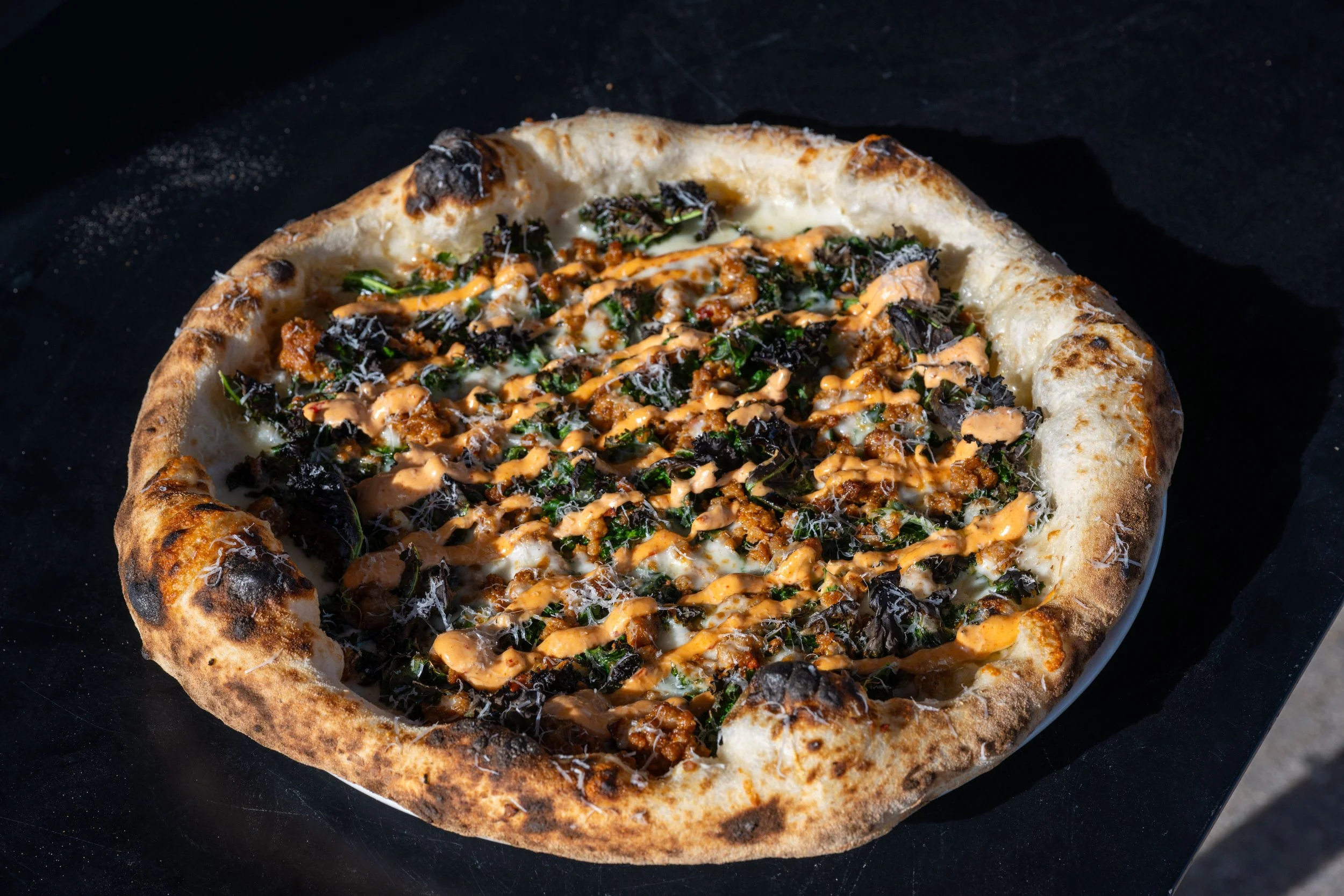
Sausage & Kale Pizza: Sausage, Kale, Mozzarella, Chipotle Aioli, Garlic Oil, Parmesan, Grana Padano, Oregano , Olive Oil, Black Pepper at Yukon Pizza
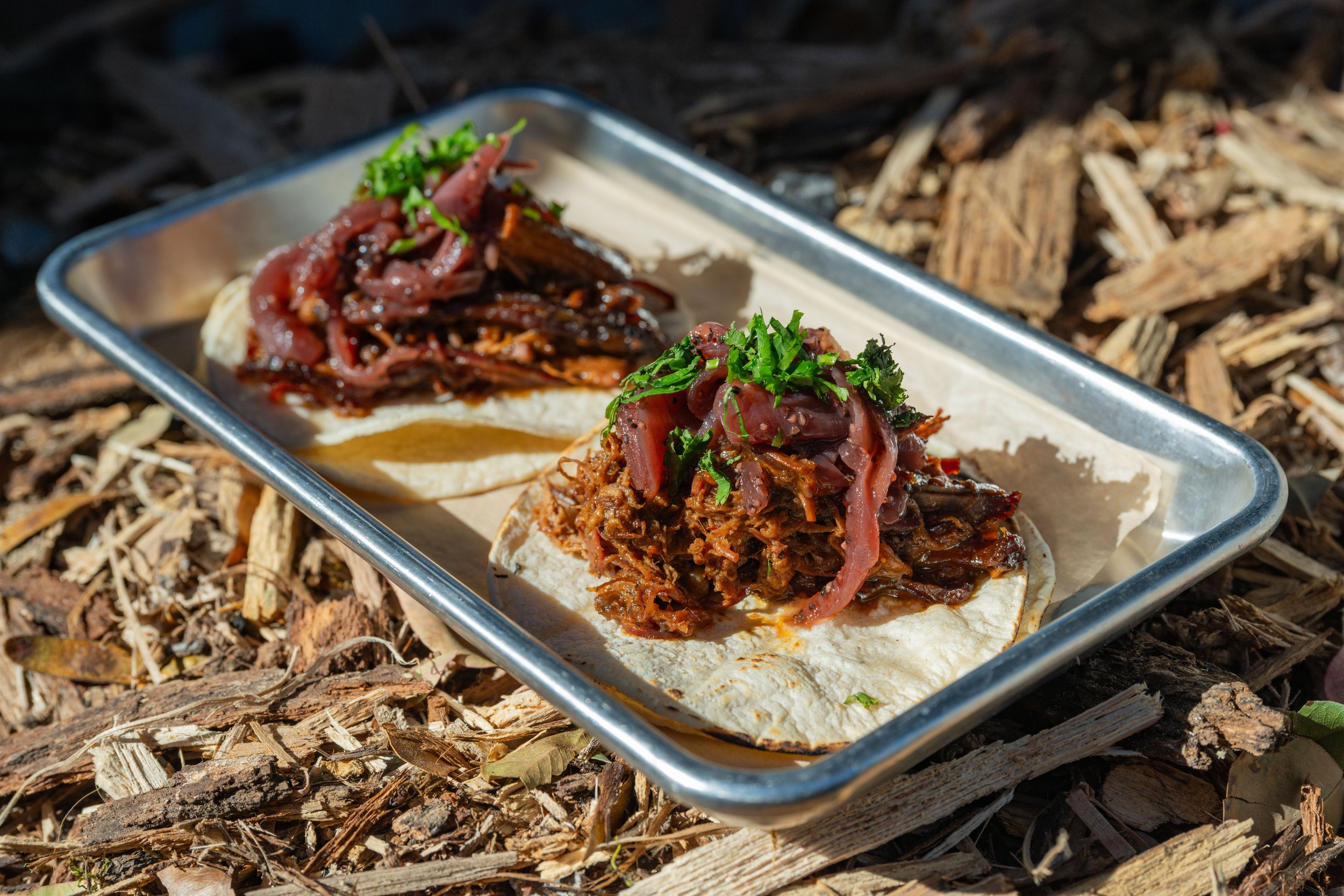
Brisket Barbacoa Tacos: Brisket, Pickled Onions, Corn Tortilla, Lime Juice at Soulbelly BBQ
Community at the Core
As development takes root and ramps up, chefs and business owners are deliberately trying to make space for collaboration and cooperation—launching new events and community-focused initiatives. One of the biggest successes has been Vegas Unstripped.
Trees and Gladstone got together and wanted to find a way to help "build up the whole scene. If we get attention it needs to be for the whole scene," says Gladstone. "So, how do we get attention for this whole scene? You do an event, so that locals who resisted driving across town for a specific restaurant, or visitors who resisted going off-Strip at all, could try many places in one setting and see what they are missing."
The annual event, which took a hiatus in 2020 and 2022 because of COVID-19 and supply chain issues, has become a hit among both industry and non-industry locals. The "chef-driven" culinary festival seeks to celebrate the dynamism, creativity, and determination of the local hospitality industry, particularly those going out on their own and building independent restaurants in a city known for big name chefs and corporate chains.
Many chefs and business owners are equally determined to support the Las Vegas community at large. Over at Yukon Pizza, White, along with his wife and brother—Dani and Cameron—have been steadily investing in and providing resources to their Downtown neighbors. "It's always been part of our culture to use the resources we have to help those in need," says White. "Help those in Las Vegas and in the Downtown corridor, where there are a lot of unhoused people."
Recognition and Responsibility
As the off-Strip community continues to grow in both population and impact, restaurateurs feel that there is fuel in the tank—even as they grapple with continuing supply chain issues, the increasing cost of goods, and a challenging labor market in their city. But what's come, most recently, is renewed national recognition for several businesses in this small, but mighty community. "What was meant to be a neighborhood restaurant for the community," says Howard, "is now 70% tourist coming through the door."
While the Strip redefines itself in a post-COVID world, chefs, bartenders, and sommeliers continue to hone their skills at these Las Vegas institutions—learning the secrets of high-level, high-intensity hospitality at the city's casinos and hotels before eventually turning to spots off of the Strip. It is a symbiotic relationship that benefits this robust community as a whole, creating a more experienced and adaptable work force for the future. And with proper investments being made in the local community, Las Vegas' young hospitality professionals have more paths than ever to chase their ambitions and train under thoughtful mentors.
"I feel…it is my duty and responsibility, as the operator today, to train up the next generation of leaders, help get them to where they want to be," says Owens. "By doing that, I'm basically training the folks that will feed me when I no longer have a restaurant. That's the responsibility we should all carry. Leave it better than we found it."