Las Vegas offers unusually fertile ground for local hospitality professionals to develop their craft and expand their horizons.
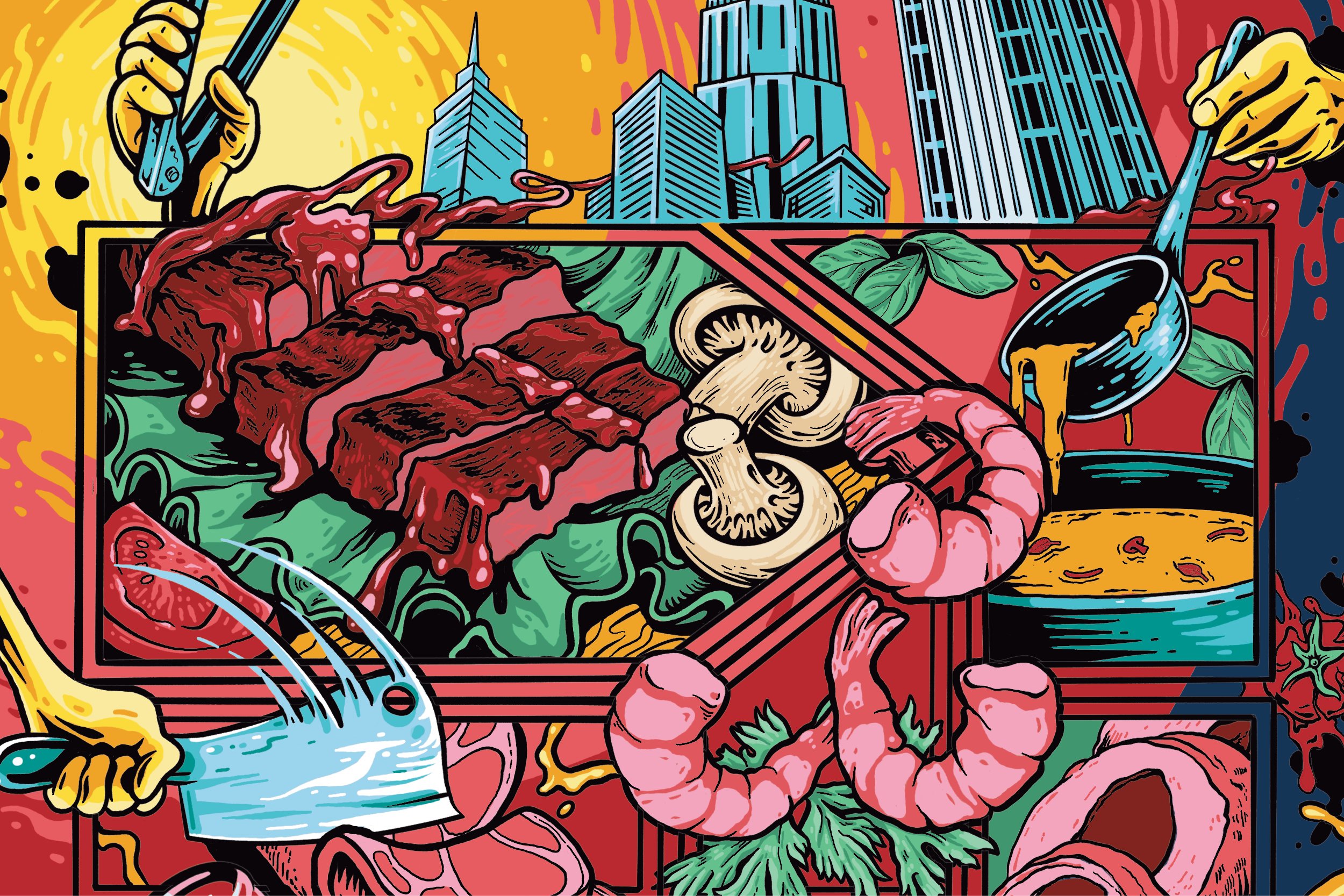
Illustration: Rachel Krohn
Las Vegas is a city energized by hospitality. For locals who have spent the majority of their lives and career here, it offers an unbridled amount of avenues into the food and beverage industry, and it's only getting better.
According to the Office of Workforce Innovation Nevada, hospitality makes up the lion's share of jobs in Las Vegas with over 300,000 people working within the industry in some way or another. MGM Resorts employs more people in Nevada than any other business. For those who grew up against the backdrop of the Strip, the city provides an exhaustive number of opportunities to enter the hospitality community and develop professionally.
From multi-billion dollar enterprises to small mom-and-pop shops, hospitality is the beating heart of Vegas, and its pulse can be felt even on the street. A born and raised Vegas native, Chef Scott Arn of Golden Boy Market & Deli got his start in the industry servicing up to 1,400 cover nights on the pasta station at Todd English's Olives. He says hospitality culture is more a way of life in Vegas than just a career.
"It's part of Las Vegas' culture to be hospitable and welcoming," says Arn. "The people who live here, the people who are part of this city, are so close to that spirit that it becomes ingrained in them—maybe not intentionally, but simply through proximity. There's this constant feeling of, come on in."
For some Vegas locals, the call to service starts at home. Seeing family members build their lives tangibly around careers in hospitality instilled an early appreciation and understanding of the industry. Bartender Tucker St. John, currently the bar director of Esther's Kitchen, has early memories of punching in cocktail orders on the POS at five years old, saddled on his mother's hip. "When I personally decided to get into the hospitality industry, I was very aware of my mom's 20+ years behind the bar," says St. John.
Chef Eleazar Villanueva, executive chef of Joël Robuchon, remembers the dedication his father put in as a cook at Jean-Louis Palladin's Napa at the Rio Hotel & Casino back in the day. When Villanueva decided to cut his teeth in the kitchen, he knew he'd sprout quickly in Vegas. He got his start at Joël Robuchon and worked his way up to executive chef in eight years. "I wanted to be somewhere where I would grow and I would be able to learn and never stop learning. Being in this restaurant, being here in Vegas, was my home away from home. I could achieve that without moving too far," says Villanueva.
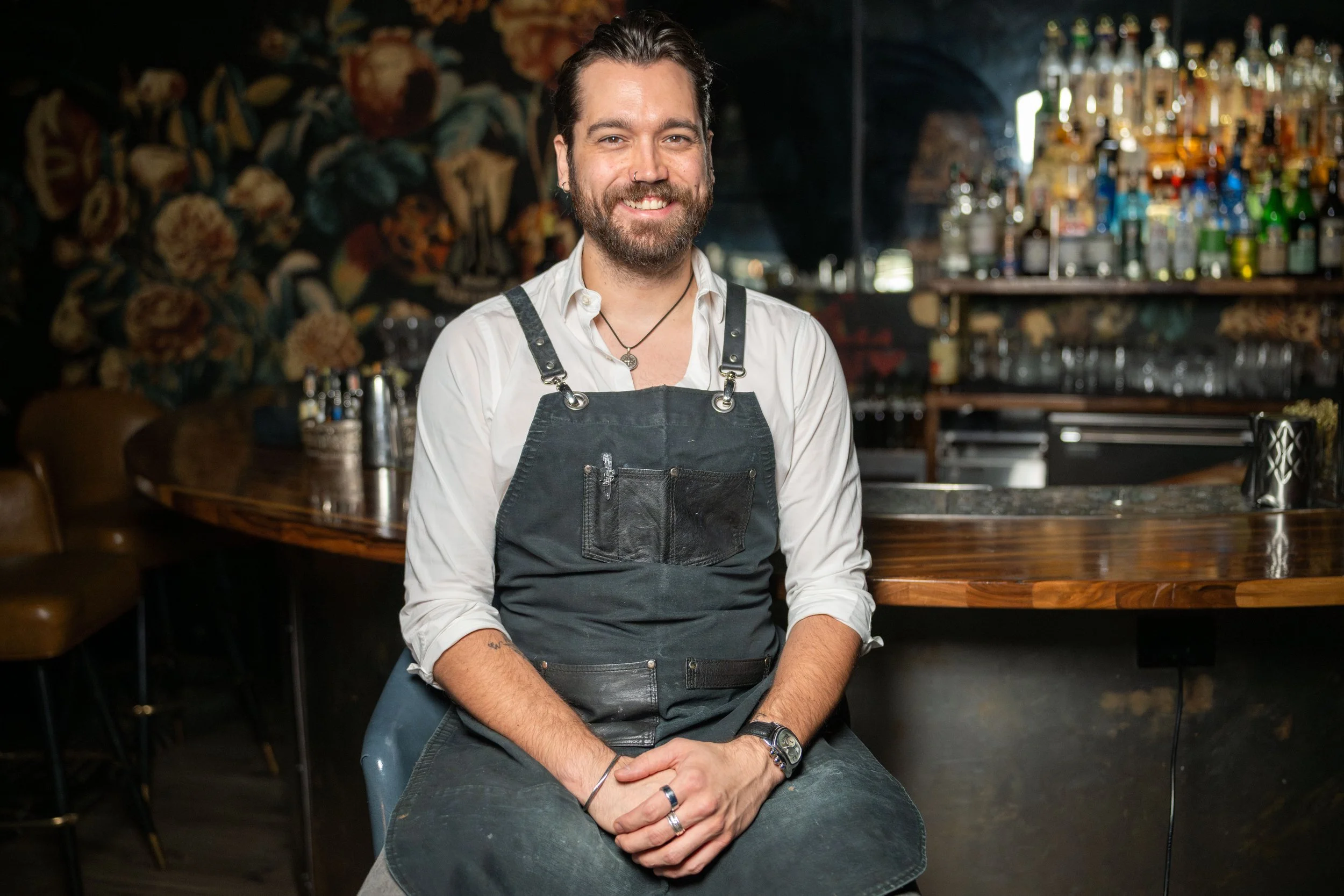
bartender Tucker St. John of Esther’s Kitchen
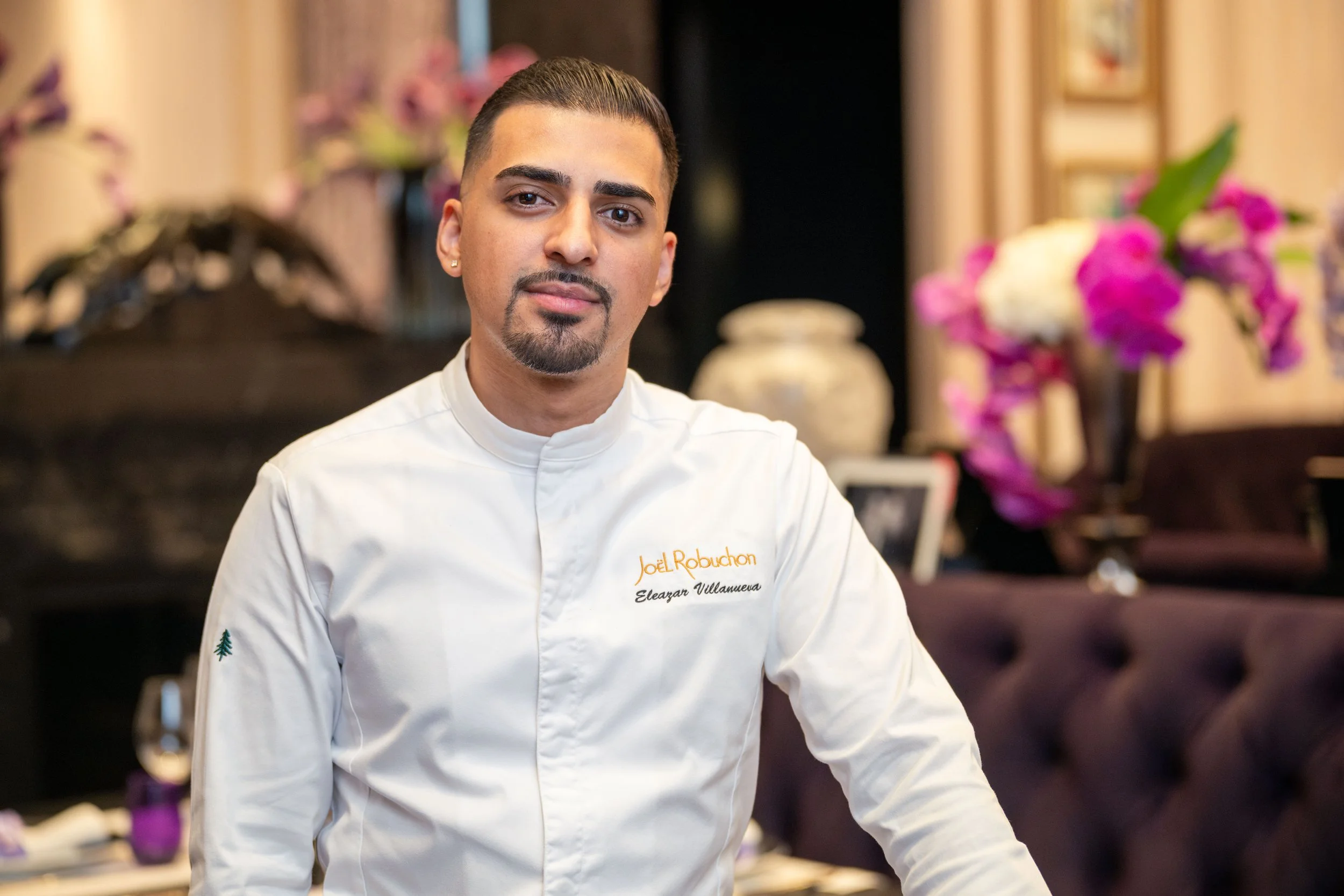
Chef Eleazar Villanueva, of Joël Robuchon
Las Vegas has long brought big restaurant names to its marquee, from internationally-acclaimed celebrity chefs to institutions from other markets bringing their encores to town. Those growing up in Vegas benefit professionally from the steady current of people bringing their experience, culture, and knowledge to the city.
One introduction for many pursuing hospitality is at the university level. University of Las Vegas, Nevada's William F. Harrah College of Hospitality is one of the most well-regarded hospitality schools in the country, with an active local alumni network and an immersive approach that exposes students to the industry early on. Dean David Cárdenas says one of the school's greatest assets is in the flourishing of its alumni like MGM president William Hornbuckle and Resorts World Chief Operating Officer Carlos Castro. "All these people are at the highest level in the industry, and they came through our program," says Cárdenas. "Now they're running the city, which is pretty amazing. There's just a vast amount of opportunities and a very supportive alumni base."
The hospitality community now is one that seeks to push the city's cocktail and food culture towards more acclaim and less transactional relationships with guests and locals. "We all want each other to be successful," says Co-owner Rudy Aguas of Palate in the Arts District. "There's no competitiveness. It's like we're kind of competing against ourselves to make sure that we're better the next day, better this year. We have a community where we all care about each other's success and making sure that we keep moving on and keep living and making sure the restaurant scene is successful."
Locals say there's plenty of room to grow. With major sports franchises like the NBA coming to town and a suburban population that continues to expand, the market is prime for more, not less hospitality. The answer to its success has been a "for locals by locals" approach.
"Our focus has been, and it always will be, aimed at the locals," says Restaurateur DJ Flores of Nivel Hospitality Group. "Treat the locals right. They're going to keep you. They'll be your loyal family forever."
Las Vegas provides an attractive offer to locals who say the city has given them plenty of reasons to put roots down—from affordable living to nearby national parks and an overall high quality of life. And there's room to grow in quality, not just quantity. Vegas' tourism-facing restaurants left a gap in pedigree that locals are eager to make up.
Bartender Luis "Lu" Lopez, the bar director of Nocturno, whose mother was an executive assistant in charge of hiring the kitchen-staff at the Bellagio, thinks Vegas is primed for the next generation. "Vegas is such a baby," says Lopez. "It's so young. It is known for being a little bit one dimensional, but I think it's at a phase now where it's starting to experience massive growth and kind of this development of culture when it comes to food and restaurants and hospitality. It's a good time to get in."
Bartender Kat Calma of The Dustland Bar, spent the majority of her adolescence in Vegas and only plans to continues investing into creating more acclaim for the city. "It means rooting myself here, being one of the people that continue to help spread a standard, instead of going to what's already a cocktail city like San Francisco or wherever else—like, this is my home," says Calma. "I want our home to be represented as best as possible. And that means staying here and doing what I need to to make sure that that is what happens."