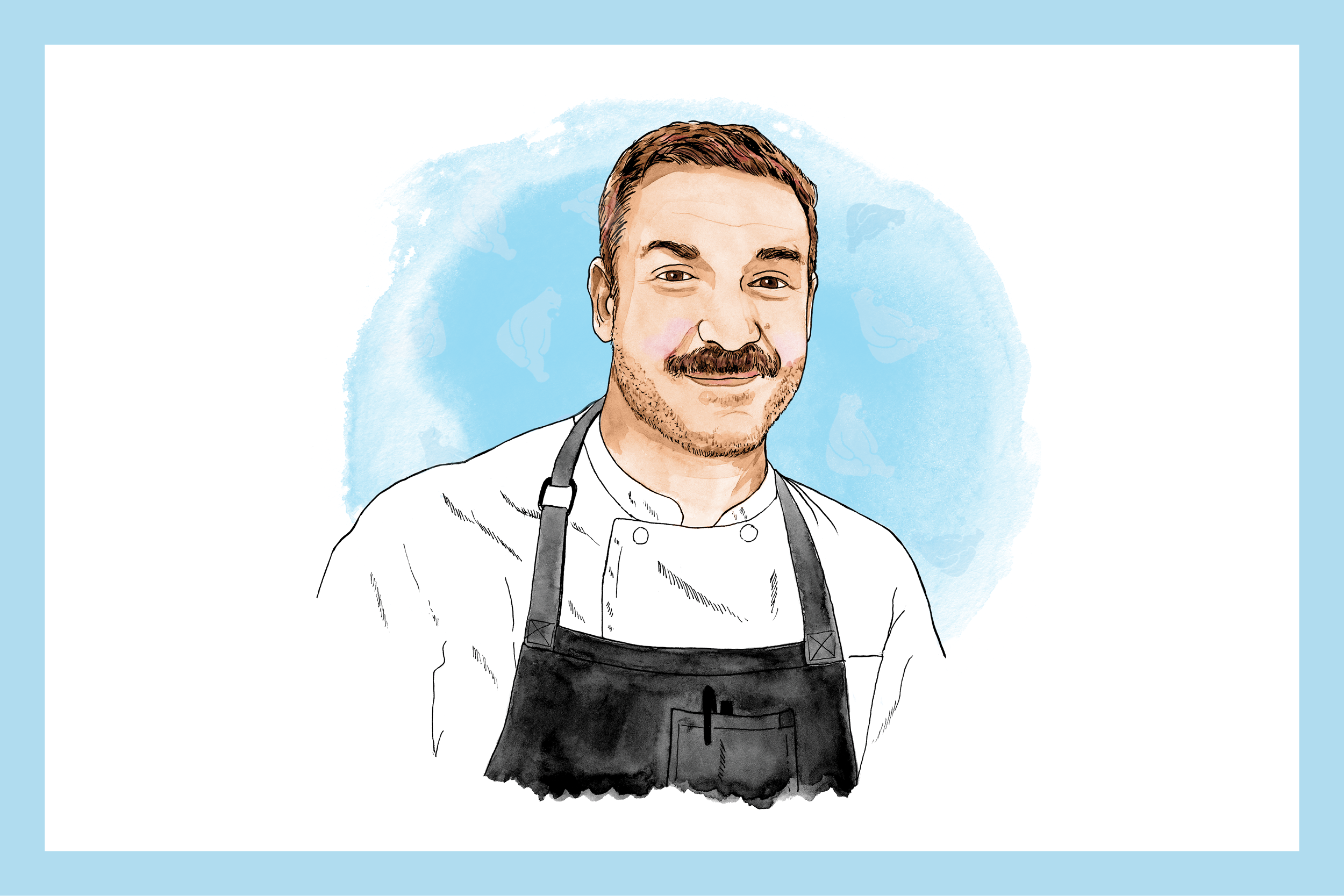
Chef David Barzelay’s letter to San Francisco-Oakland's hospitality community
Illustration: Chantal Bennett
There are times when it’s easy to love San Francisco. Our beautiful community of art and innovation. Our foggy bastion of progressivism. And there are times when it’s tough. Right now the Bay Area is playing host to the world’s AI ambitions. It’s the latest swing in San Francisco’s cycles of boom and bust. But this moment feels more fraught, with our city’s character under threat. We at least have to ask ourselves: is our very humanity under threat from this technology, too?
Thankfully, working in hospitality gives each of us a uniquely human role. We see and interact with messier parts of people’s lives than they reveal in the business world. But loving this career is a lot like loving San Francisco. There are magical moments when it’s easy to love a life lived in restaurants. And there are a lot of times when it’s tough.
Our profession comes with so many sacrifices. The challenges of a career in restaurants are well-publicized: financial difficulties, missed life events, strained relationships, sore bodies, anxiety, working when sick, working when tired. We hear about all of the negatives constantly. We share our complaints like war stories, commiserating, bragging about our rough experiences.
Nonetheless, I feel beyond lucky to have gotten to spend my career in hospitality. Another profession pushed me out (what luck!) at what turned out to be the right moment. And, fortunately for me, the Bay Area embraces the new and the interesting. San Francisco won’t just give you a shot—San Francisco will line up for blocks, wait for hours, and buy tickets in advance to give you a shot.
I got to see my chef dreams come true, so maybe I’m a little sentimental about what we do. And maybe I’m always inclined to dwell on hopeful things, on the possibilities, and to plow right through any challenges. We all know about the sacrifices our industry demands. But we should also reflect on the incredible and deeply human rewards that make our sacrifices worthwhile. We should relish reciting the joys just as deeply and as often as we relish reciting the indignities. Both are true. Here are some of those human joys:
We get to be present and mindful. To lose focus in the kitchen is to endanger oneself and others. Our bodies bear the scars of that lesson. So we meditate on our craft.
There is no option but to stay in the moment; in the real world right in front of us. We learn patience and humility. Even if everything goes right, the braise still takes time to get tender. The cream takes a week to culture. The dough proofs on its own schedule. We have limited control. Rush at your peril.
We get to work with like-minded, passionate people whose sole purpose in coming together every day is to make people happy. We work with our hands, celebrating the slow, the ephemeral, the imperfect, the impossible-to-find moment when all of the components come together in the exact right way. This is one of the only industries that can never be made remote; can never be replaced by AI.
How incredible that we lucked into it! And at just this moment! How fortunate that when we chefs celebrate the natural, the primal, the passionate—the human—people cheer us on in those endeavors, and celebrate us. Let’s lean into it!
Let’s lean into the handmade, the slow, the wabi-sabi, the small batch. Don’t follow the recipe. Reject sterile perfection. Cook by feel, by gut, and by grit. Try things out, then beat yourself up over them. Flambée often. Break sauces and bring them back together again. Channel your big, reckless, silly human emotion into everything that you do. Cook à la minute with no safety net. Occasionally serve garbage because you were maybe a little bit too ambitious. Pay attention. Learn from all of it. Wear your heart on your sleeve. Love, support, and find joy in your fellow crew. Find inspiration together in the struggle. Do it with a smile.
The best days are never the ones where everything is smooth and service runs like a machine. The best days are the ones where it’s chaos, where it’s falling apart, and we have to use every ounce of skill and wherewithal and charisma just to hold the line. Somehow we make it work and go home exhausted but content: we’ll do it a little better tomorrow.
It’ll hurt sometimes. But also, sometimes, it will feel so fucking good, like it only can when you’ve put every bit of your wild human self into it. Love—and craft—require a lot of hard work. There are no shortcuts. But that’s what we signed up for, right?
— David Barzelay
Chef/Owner of JouJou, Lazy Bear, and True Laurel