Welcome to the Pierogi Belt
How Rust Belt chefs are rethinking the beloved Polish dish
Who doesn't like pierogi? The Polish dumpling is a beloved comfort food, especially in the Midwest—a region with the highest concentration of Polish Americans in the country.
The area spanning from Indiana and Michigan to Ohio and Pennsylvania is also known as the Pierogi Pocket, and accounts for about 68% of the country’s pierogi consumption. So, it's no surprise the food is everywhere, but it seems everyone has their own opinion on what makes the perfect pieróg, from the thickness of the dough to the ratio of the filling. Across the Rust Belt, chefs are embracing the Polish staple and unapologetically making it their own, using it as a vehicle to express their culinary styles and personal histories.
Polska Laska
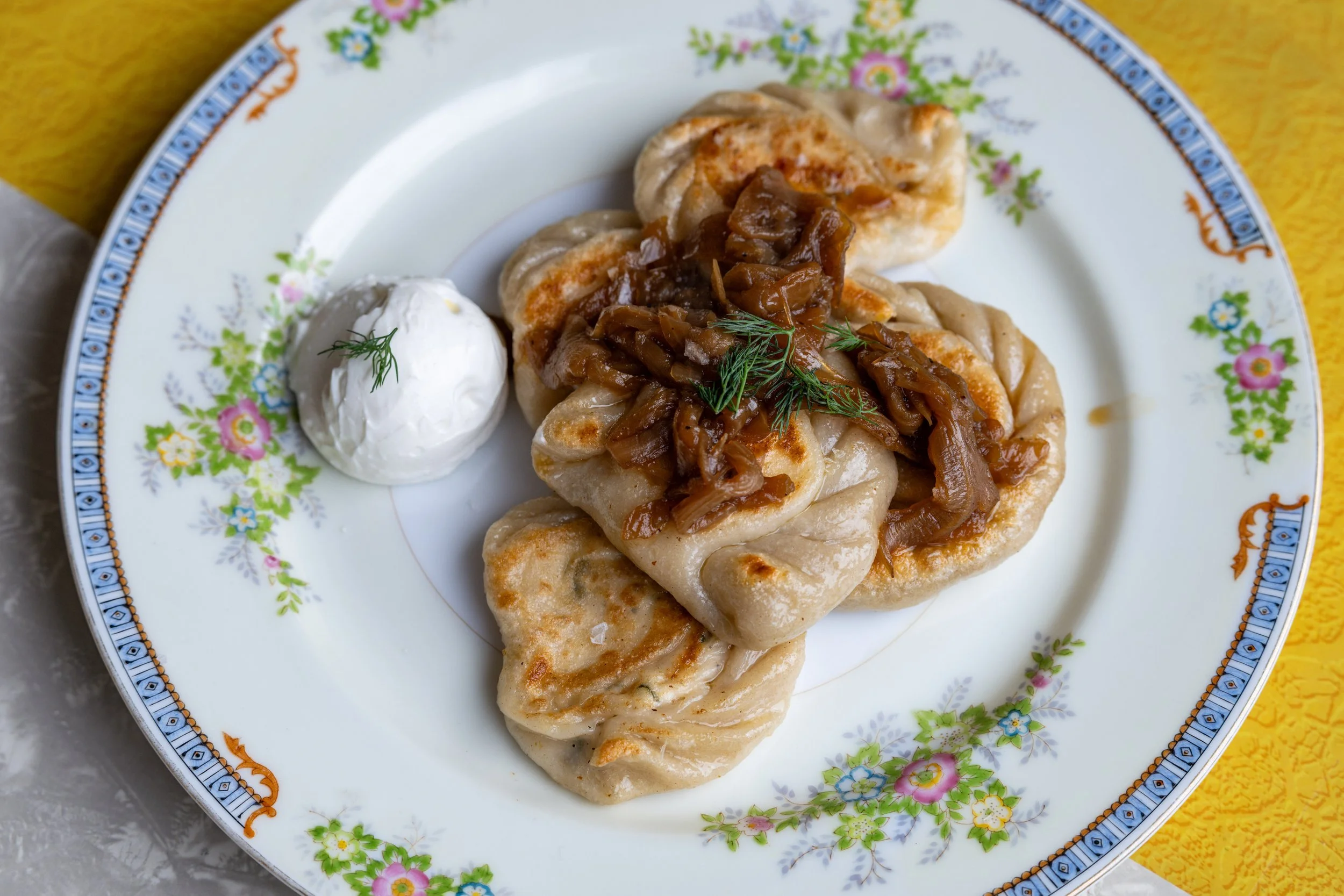
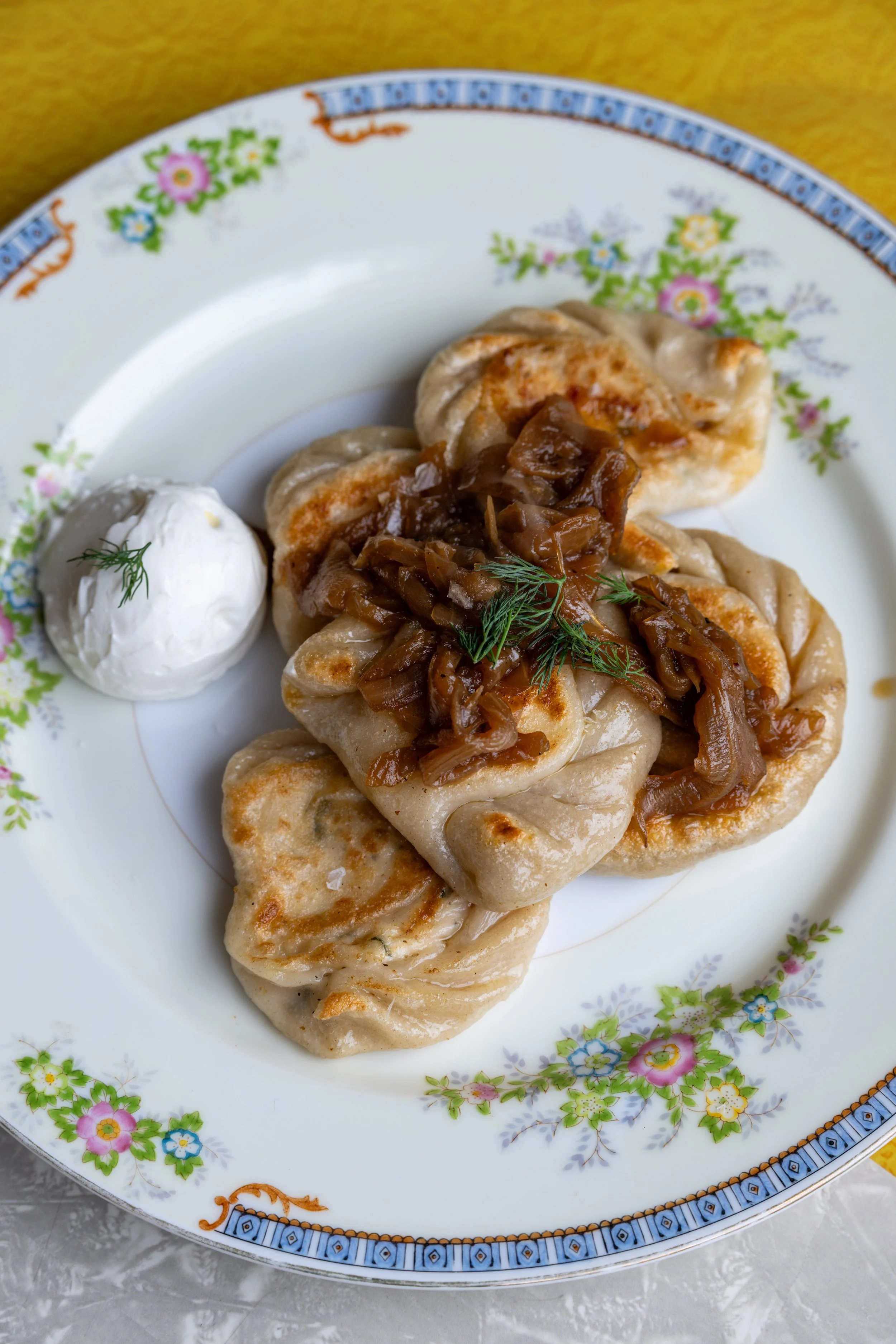
For Chef Olive Visco, pierogi are in her blood. Drawing from a childhood spent cooking with her Polish family, Visco’s menu at her Pittsburgh brick-and-mortar, Polska Laska, highlights classic Polish dishes including, of course, pierogi. She and her small team churn out an impressive 2,000 pierogi a week, mixing all of the dough by hand and intricately braiding the edges of each dumpling. One of the staples on the menu is her farmer cheese pieróg. “I grew up having farmer cheese pierogi at every Polish meal we've ever had,” she explains. Visco’s version takes inspiration from the pierogi ruskie, which is typically filled with potatoes and farmer cheese; a dairy similar to a “dried down cottage cheese” or a “grittier ricotta.” For her iteration, however, she forgoes the potatoes and instead combines the tangy cheese with parsley, dill, and marjoram. Although many opt for sour cream and egg in their dough, Visco goes with a simple combination of water, flour, and salt, allowing for flexibility when handling customer allergies. The dumplings are boiled and pan-fried in oil for a crispy finish, and are served with caramelized onions, dill, and sour cream. Despite the farmer cheese pieróg being a traditional dumpling, Visco explains it's a surprisingly difficult one to find in the Steel City. “Farmer cheese isn't everywhere, and it doesn't come in huge amounts for cheap. People will make cottage cheese pierogi instead.” Visco’s pierogi are a continuation of her family history as she continues to make her great-grandmother’s recipe her own. “I’m constantly tweaking [my recipe] to create the perfect experience. My family’s Polish, this is how they did it, and I stand by it.”
Marrow
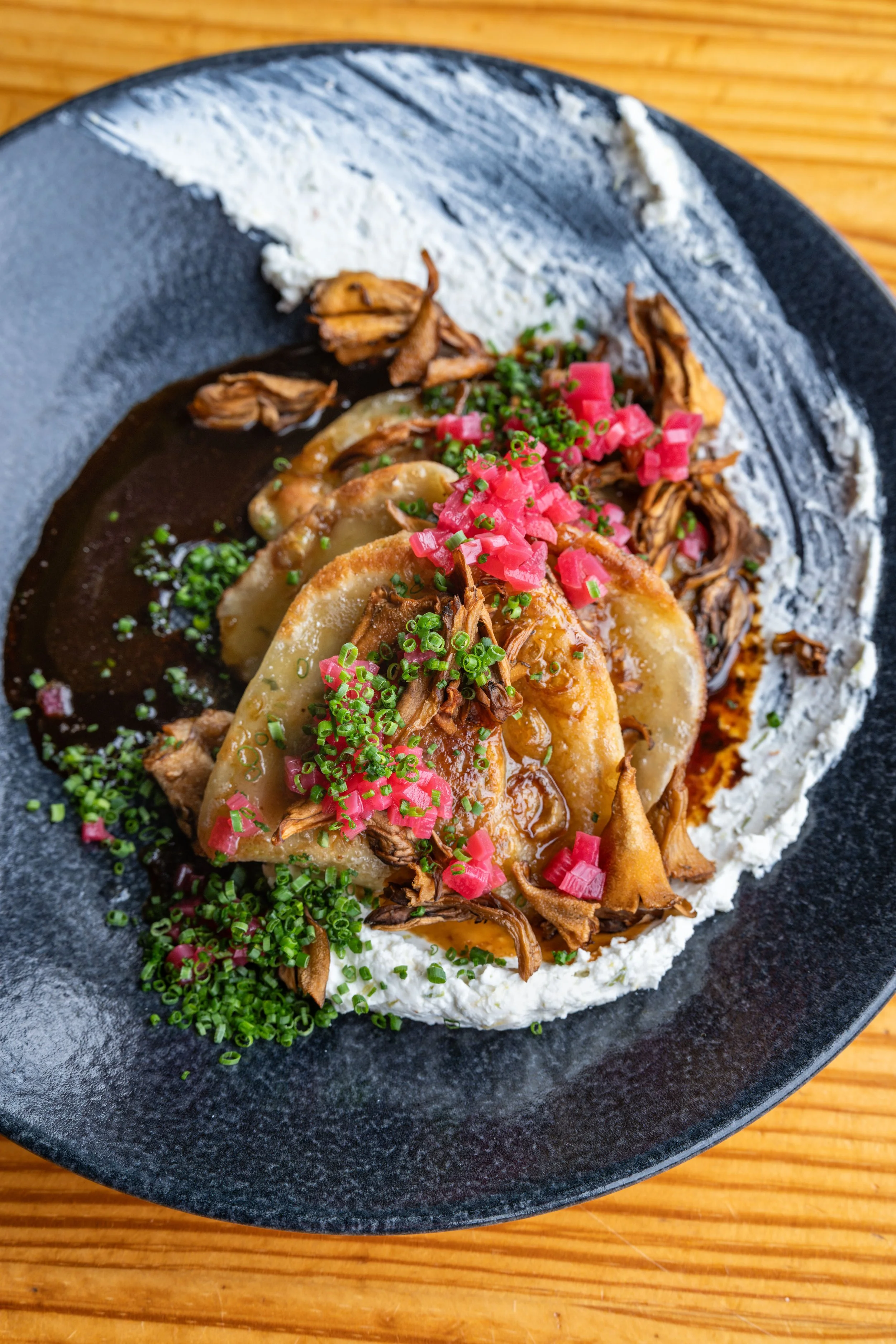
Like Visco, Executive Chef Eddie Moreau draws from his Polish heritage when developing recipes. “As a kid, I really liked learning about my grandma’s culture and what she liked to eat—pierogi always came up,” Moreau explains. All of his grandmother’s recipes were in Polish, so Moreau learned by watching her work, spending many years painstakingly refining and altering her pierogi recipe. Eventually, he brought his hard work to the menu at Marrow by way of his braised beef cheek pierogi. Moreau’s modified family recipe includes a generous amount of sour cream and butter while also incorporating fresh chives to brighten up the heavy dough. Making use of the butcher shop-restaurant’s access to quality meat, Moreau braises beef cheeks until tender for a rich, hearty filling. As a nod to the classic pierogi accoutrements, Moreau serves the dumplings with more chives, a house-made spruce tip labneh, caramelized onions, and “some kind of pickled fruit or vegetable,” settling on pickled rhubarb for the early spring menu. He finishes the dish with the reduced braising liquid, amped up with Marsala wine, and sautéed local chestnut mushrooms. “It’s an eclectic mixture of my childhood memories and products from local purveyors.” Although Moreau admits making pierogi for the restaurant’s Polish guests can be a bit intimidating, he instead views it as “a conversation starter. The best thing about cooking is that you can learn something new from anybody at any age.”
Lilith
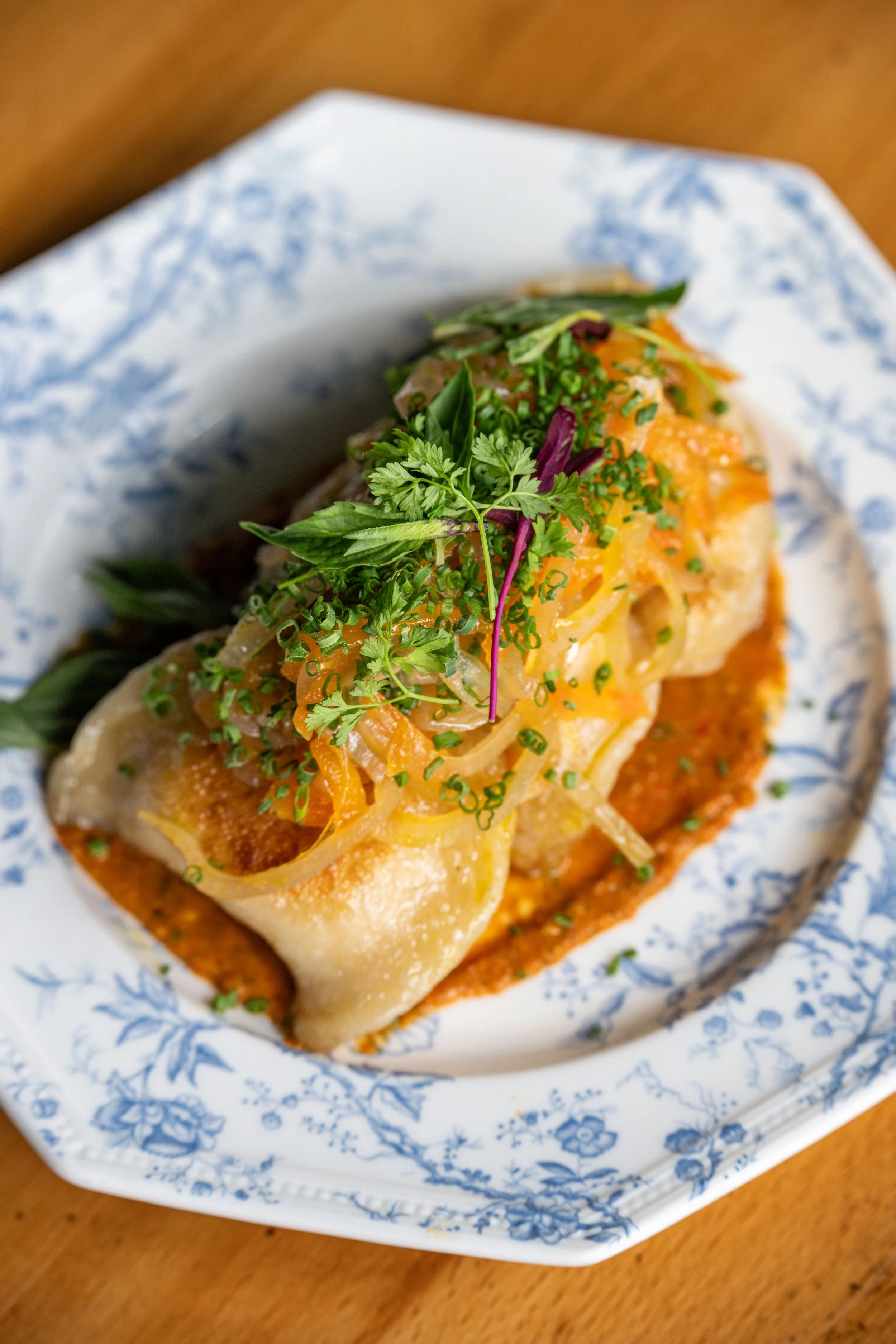
At Lilith, Chef Elizabeth Sestito uses pierogi as a medium for a variety of cultures to come together. Pierogi are always on the menu at the coastal- and Puerto Rican-inflected restaurant in order to pay homage to Pittsburgh’s Polish community. “[Pierogi are] comforting to people in Pittsburgh,” explains Sestito, which means they are also the perfect vehicle to "introduce different ingredients.” Inspired by Chef Owner Jamilka Borges’ Puerto Rican background, Sestito chose yuca as the filling for her pierogi. The root vegetable is boiled until very soft and blended with butter, sour cream, garlic, and salt until smooth, but still retaining “a little bit of consistency." The dough is a simple combination of flour, water, oil, sour cream, and egg yolks. After the dumplings are stuffed, they are par-boiled for about four minutes, shocked in ice water, and seared in butter for pick up. “I studied abroad in Spain and went back to work [there], specifically in the Catalan region,” says Sestito. “I was so enthralled by their cuisine. One of the dishes I remember having there was calçots with romesco sauce.” Drawing from her time in Spain, Sestito whips up a classic romesco sauce and finishes the dumplings with a shallot-carrot escabeche to “add some acidity” and reference the onions that often appear alongside pierogi. “There are so many good pierogi here. I'm pretty proud of our rendition. One of my favorite things is being able to take inspiration from where I’m living and past travels and bring different cultures together.”
Whether family recipes reimagined, reliable favorites, or new takes on the traditional, the pierogi legacy—solidified by the region’s Polish immigrants and bolstered by its culinary institutions—continues on across the Midwest. Chefs throughout the Pierogi Pocket are using the time-honored format to express themselves and foster connection; making the pierogi their own by honoring and expanding upon its humble beginnings