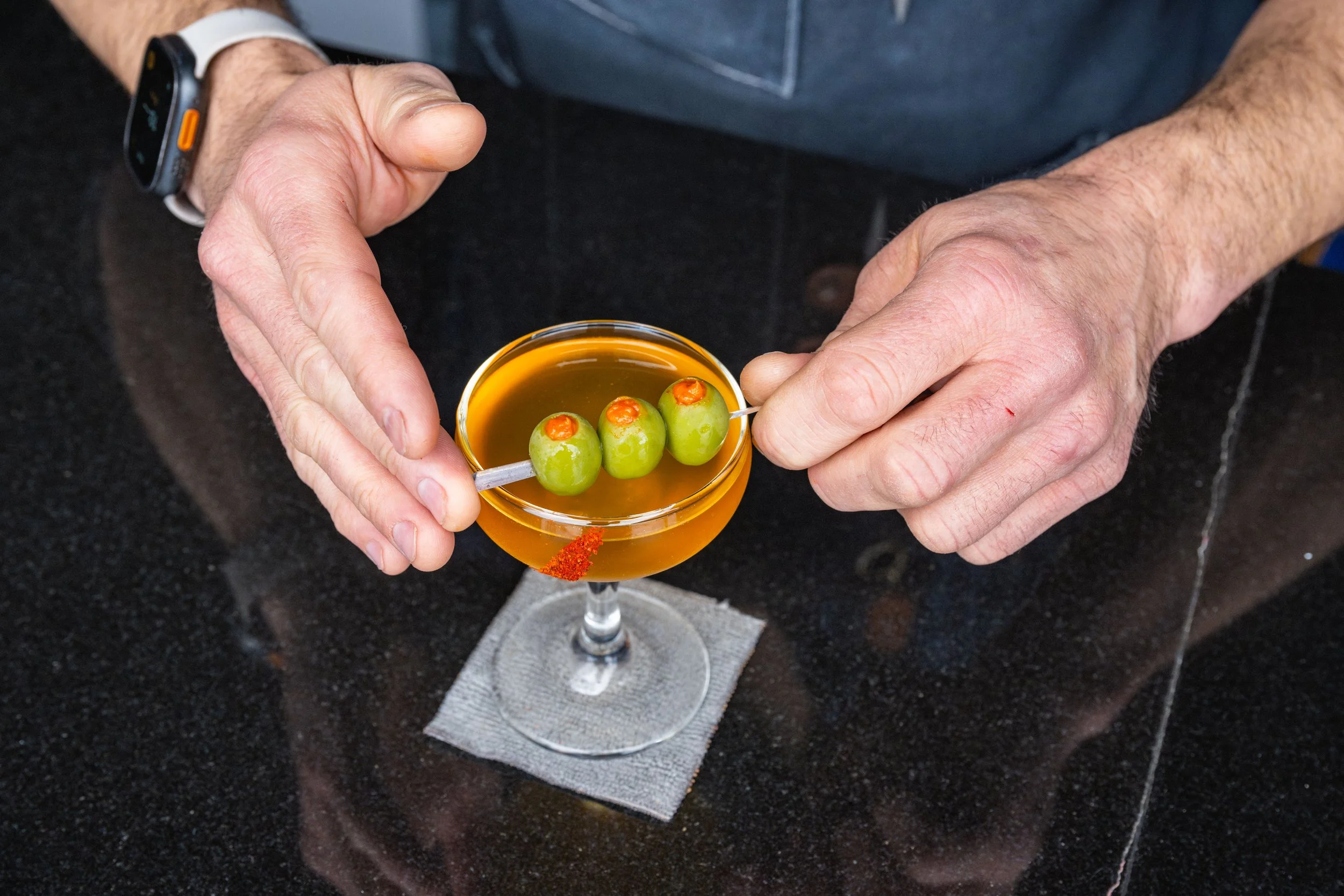
A little bit of science is the secret ingredient in this satisfying yet not-so-classic martini at Liquid Diet.
Photos: Will Blunt
At Liquid Diet, Owners Patrick Mannion and Bret Pfister forgo the traditional back bar. Instead, Mannion makes highly technical, culinary-inspired drinks with housemade syrups, juices, and infusions.
As a chef, not a bartender, Mannion crafts his cocktails behind the scenes, focused on bold flavors and skilled techniques, all batched for a quick pick up. "It's not that we won't make classics if they're called for," says Mannion, but it's up to the bartender and availability of ingredients. Popular cocktails likely have a Liquid Diet analog. If a guest orders a dirty martini, for example, to showcase what Mannion does best, the bartender will suggest the Bell Pepper Martini.
Gin Infusion
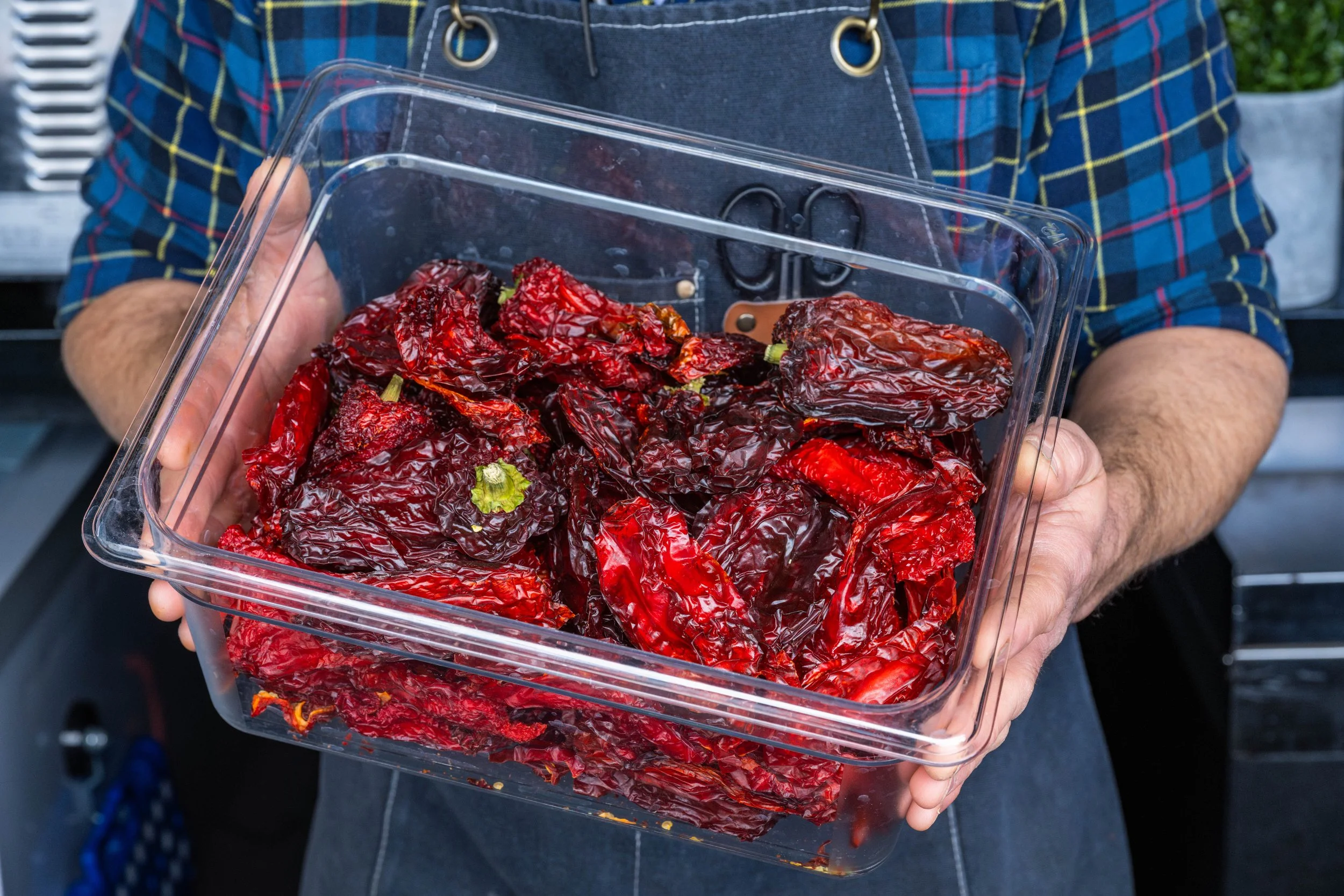
Bell peppers are "definitely an underused ingredient behind the bar," says Mannion, and so ordinary to almost be considered boring. "But they're actually a total powerhouse." To preserve their fresh, vegetal flavor, peppers go in a dehydrator at a low temperature to dry. The peppers get a "kind of stained glass look to them when you hold them up to the light," adds Mannion. "They're really beautiful."
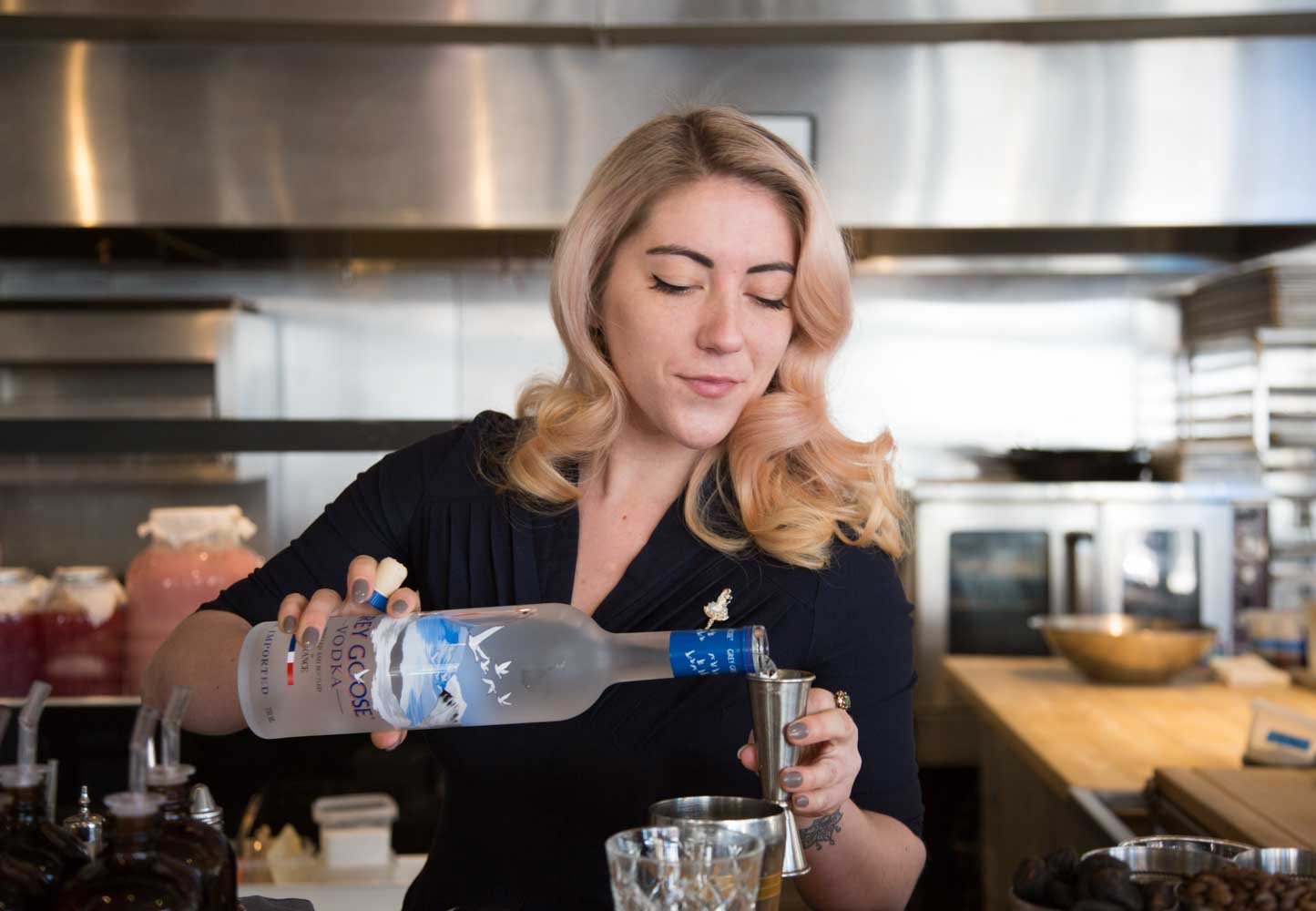
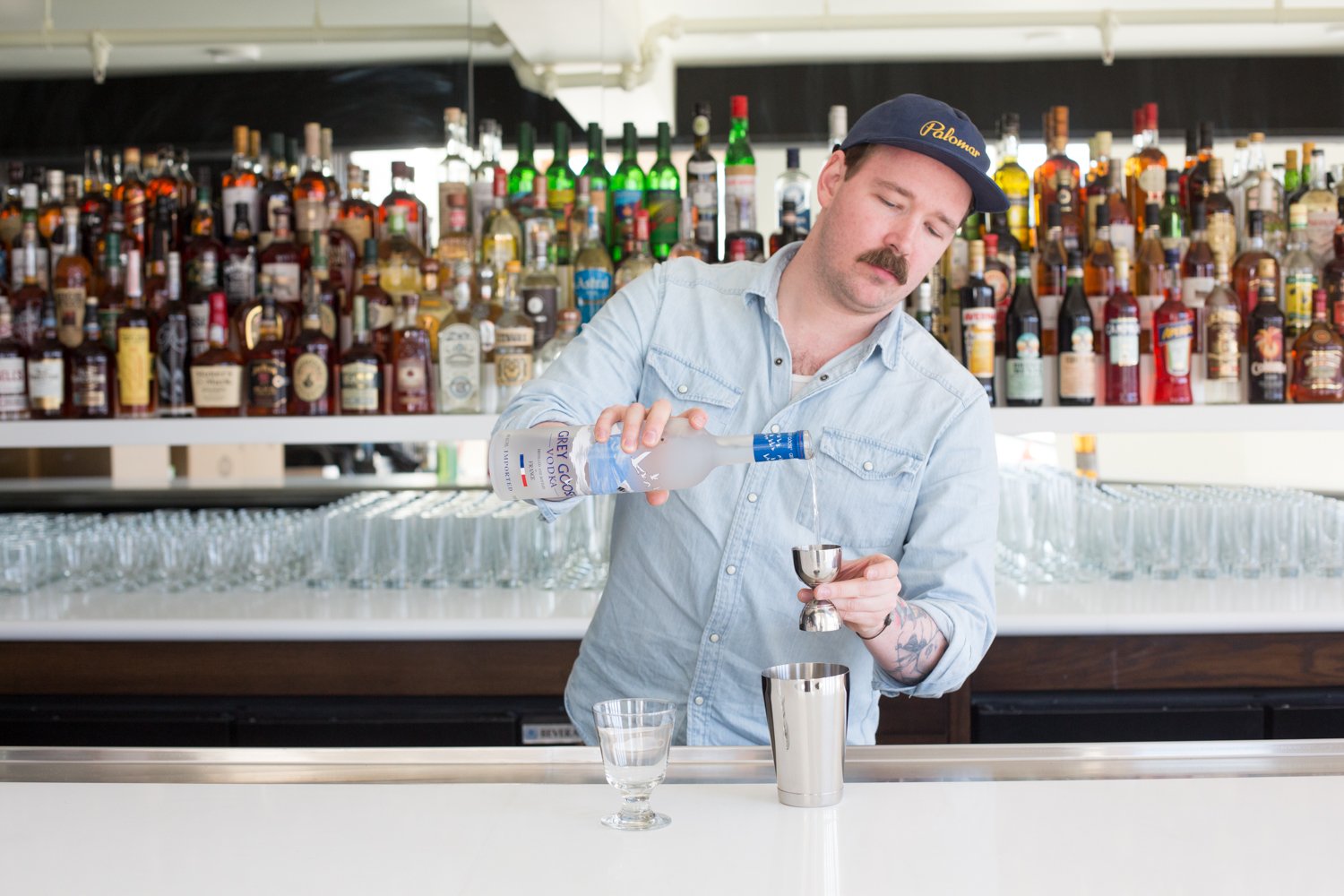
Once fully dry, the peppers soak overnight in Hayman's Royal Dock Navy Strength gin, chosen for its ability to stand up to the martini's olive brine, salt, and vinegar. "A London dry gin profile was in our focus, and it was the strongest gin I had available to me at the time of ordering," says Mannion. A high ABV better extracts flavor and also allows him to put more pepper into the mix, "sort of like when you dry out mashed potatoes so you can pump more cream and butter into them."

Gin Clarification
The peppers and gin then get blitzed in a Vitamix Commercial blender until as liquid as possible. That mix receives what Mannion calls the "standard Dave Arnold enzymatic treatment": Pectinex SP-L, Kieselsol, and Chitosan. "That's the pain in the ass part," says Mannion. "Then it just needs to all be spun [in a centrifuge] at four times the force of gravity to spin out all the solids."
Eventually, all that remains at the bottom of the centrifuge is a bone-dry puck of bell pepper solids. The clarified gin—totally clear but with a light hue from the pepper—is ready for the final step: extra dry vermouth and a martini brine, which is a mix of olive marinade, white balsamic vinegar, salt, MSG, and water.
Garnish
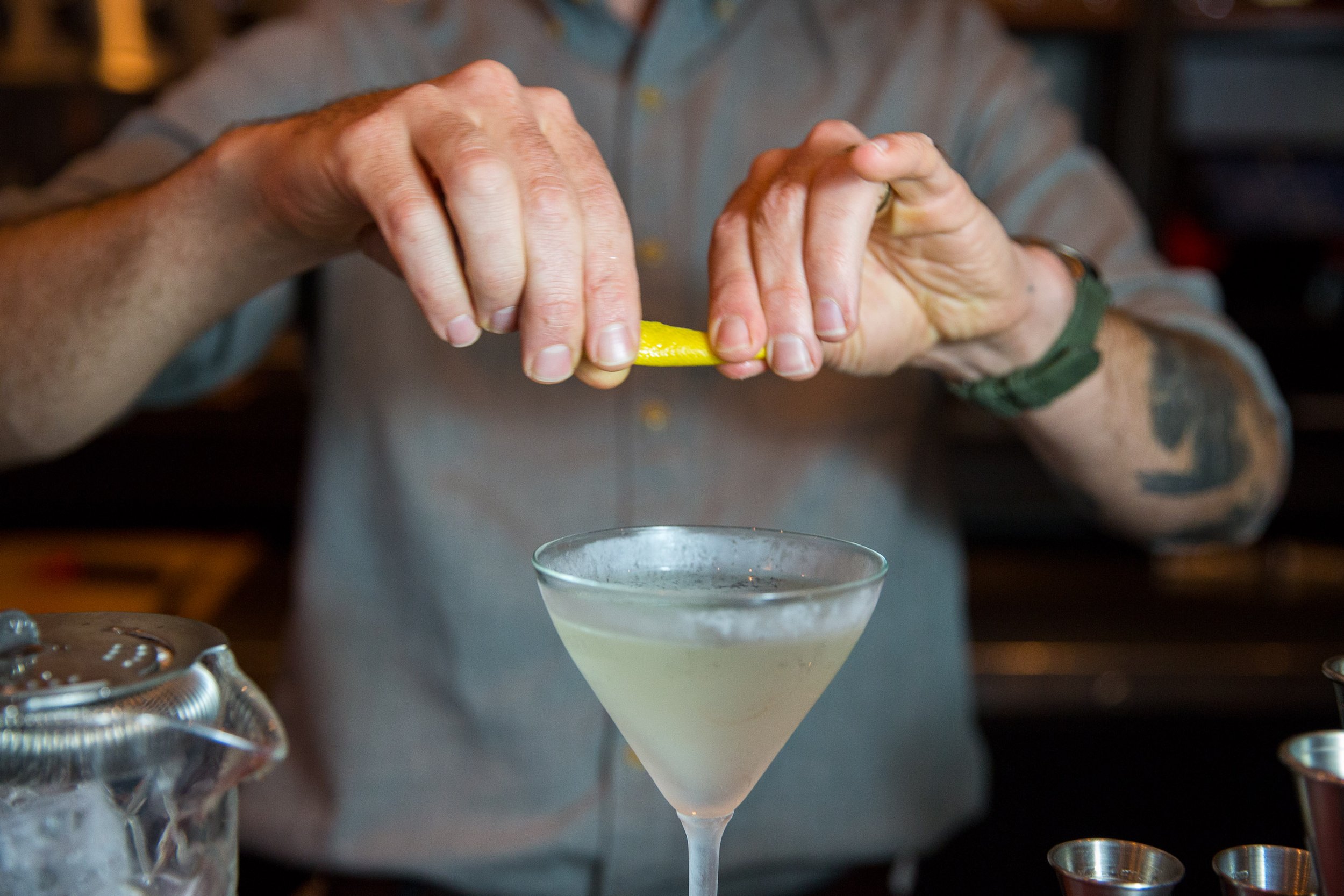
With a painstaking build on the back end, no ordinary garnish will do for Mannion's martini. Three pitted Castelvetrano olives adorn the cocktail, each stuffed with roasted red pepper, shallot, garlic, thyme, olive oil, salt, and pepper, a savory filling reminiscent of a Spanish piperade (minus the chorizo and smoked paprika). Powdered pepper, which Mannion makes with the leftover scraps from the centrifuge, is used to adjust the consistency of the filling as needed. "It's basically all pectin plant matter at that point, so no need for xanthan, no need for gellan, just the pepper will thicken it," says Mannion. Any remaining pepper puck gets fully dehydrated and pulverized to become the dust on the outside of the glass, so "no bell pepper makes it to the trash." The final cocktail perfectly satisfies a dirty martini craving with the depth of a seasoned broth.
The Bell Pepper Martini is one of the most popular drinks, just behind the Key Lime Pie, another gin cocktail. "We have a lot of people that come in that say gin is on their 'don't drink list,'" says Mannion. "I always love challenging those thoughts that people have about their tastes."